This site is supported by our readers. We may earn a commission, at no cost to you, if you purchase through links.

A Bald Eagle in Florida may already be sitting on eggs while you’re still pulling out a winter coat. That’s not a quirk—it’s a reminder that bird nesting doesn’t follow a single calendar. Timing shifts by species, latitude, and habitat in ways that catch even experienced observers off guard.
Miss the window, and you’ll find empty branches where active nests stood days before. Get the timing right, and you’ll witness some of the most precise, driven behavior in the animal kingdom—parents hunting on a schedule, chicks growing visibly day by day. Knowing when and how to look changes everything.
Table Of Contents
- Key Takeaways
- Best Seasons to Observe Bird Nests
- Best Time of Day
- Weather Conditions That Help
- Nesting Timelines by Bird Type
- Regional Nesting Season Differences
- Safest Times for Nest Checks
- Ethical Nest Watching Rules
- Tools for Better Nest Observation
- Seasonal Birdwatching Care Tips
- Frequently Asked Questions (FAQs)
- Conclusion
Key Takeaways
- Bird nesting timing shifts by species, latitude, and local weather — most songbirds peak between April and May, but owls are already incubating eggs in February and Florida’s Bald Eagles start in October.
- Your best observation windows are the first hour after sunrise and late afternoon between 3 and 6 PM, when parent birds are most active and wind is calm enough to spot nest movement clearly.
- Calm days with overcast skies give you the clearest views — avoid cold rain and midday heat, both of which shut down bird activity and make meaningful observation nearly impossible.
- Keep at least 30 meters from any active nest, limit visits to once or twice a week, stay under five minutes each time, and never touch eggs or nestlings, since even your scent can draw predators straight to the site.
Best Seasons to Observe Bird Nests

Knowing when to look makes all the difference in what you’ll actually find. Bird nesting activity follows patterns tied to season, species, and location — and once you understand those rhythms, everything clicks into place. Here’s what shapes the calendar for nest watchers.
Once you start recognizing those rhythms, spotting a golden-crowned warbler’s nesting cycle becomes a masterclass in reading nature’s timing.
Peak Nesting Months
Most songbirds hit their stride between April and May peak nesting activity, when insect populations surge and temperatures stabilize. This is when egg laying and incubation reach their highest point across temperate zones. The peak nesting season commonly occurs from March through July.
- Climate influence shapes timing — warmer years can push nesting 1–2 weeks earlier
- Food availability drives species synchronization across habitats
- Phenology shifts mean you’ll spot robins and sparrows most reliably in May
Early Spring Nesters
Before the rest of the bird world catches up, a handful of species are already building nests. Eastern Phoebes lay eggs by late February, constructing mud-and-fiber cups on bridges and building ledges. American Robins and Northern Cardinals follow closely, favoring urban garden nests in low shrubs.
Early arrival timing gives these birds a real head start on the season.
Summer Nesting Activity
By June, the breeding season hits full stride. Warblers and Baltimore orioles are mid-nest, timed perfectly around peak insect abundance — nature’s built-in meal delivery for hungry nestlings.
Many species raise two or more broods through July, so nest activity stays surprisingly busy. Watch for increased nest predation as dense summer foliage gives cover to both birds and their predators.
Regional Season Shifts
What worked in June for warblers won’t hold everywhere.
Eastern Spring Advance has pushed nesting seasons earlier by several days across Europe and North America, meaning early spring nesters arrive sooner than they did decades ago. Meanwhile, Northern Winter Warming shortens snow cover, giving ground-nesting species a longer window.
Your timing needs to account for where you actually are.
Migration Timing Clues
Migration doesn’t happen on a whim — birds follow deeply embedded rhythms called circannual clocks that sync departures with resource peaks at distant breeding sites. Timing your observations around spring migration means tracking spring green-up dates:
- Watch for tailwind departure nights — birds leave when winds favor their route.
- Monitor coastal insect bloom windows for early shorebird arrivals.
- Track island resource pulse events, which drive distinct local timing shifts.
- Study fall migration phenology to anticipate large flocks in autumn.
- Note environmental cues like temperature fronts that accelerate or delay movement.
Best Time of Day

Timing your visit right can make the difference between a quiet walk and a front-row seat to the action. Birds follow a daily rhythm that’s surprisingly predictable once you know what to look for. Here’s how the hours break down and when you’ll have the best luck.
Sunrise Observation Window
Early morning is the golden window for bird nest observation. The dawn chorus erupts at civil dawn — and silhouette visibility peaks just 5–20 minutes post-sunrise. Wind calmness keeps branches steady, revealing nest shapes with dawn light effects you won’t see later.
| Factor | Timing/Notes |
|---|---|
| Early foraging patterns | First 15–20 min of light |
| Observation session length | 5–10 minutes maximum |
| Observation blinds | Reduce disturbance, stay hidden |
Late Afternoon Activity
Late afternoon — roughly 3 to 6 PM — offers a rewarding second window for nest observation. Calm, warm afternoons extend this window noticeably.
Parent birds make final feeding rounds, often doubling activity as temperatures cool. Nestlings vocalize more frequently, signaling hunger to nearby adults.
Watch for short hops near nest sites and roost selection behavior within 200 meters.
Avoiding Midday Heat
Midday is basically a dead zone for nest observation. Between roughly 10 AM and 2 PM, heat suppresses bird activity, and bright sunlight creates harsh glare that strains your eyes and washes out detail in binoculars.
If you’re out anyway, seek shaded observation routes under tree canopies and rest frequently. Wear heat-resistant clothing — light-colored, loose-fitting layers — and keep water close.
Feeding Behavior Patterns
Feeding behavior is a window into what’s really happening at the nest. During peak morning hours, seed intake nearly doubles — songbirds shift toward larger, high-fat seeds when energy demands are highest. Three patterns worth tracking:
Pairing these observations with the right optics sharpens every detail, and budget-friendly birding gear for backyard watchers can help you catch subtle feeding shifts without breaking the bank.
- Feeding synchronization — pairs visit food patches together, cutting energy costs
- Predator impact — alarm calls instantly shorten feeding bouts
- Metabolic adjustments — smaller birds feed more frequently due to higher metabolic rates
Roosting Preparation Signs
As dusk approaches, birds basically telegraph their plans.
Watch for pre-sunset gathering roughly 30–60 minutes before dark — small groups converging on the same riparian trees or dense shrubs. Tail flick signals and soft calls tell you a roost is being negotiated. Then canopy perching patterns shift upward, birds settle through nuzzling behavior, and flight path consistency confirms tomorrow’s observation window.
Weather Conditions That Help

Weather plays a bigger role in nest watching than most people realize. The right conditions don’t just make your outing more comfortable — they make birds behave more naturally, giving you a clearer window into their routines. Here’s what to look for before you head out.
Calm, Low-wind Days
Wind is the enemy of good nest observation. On calm, low-wind days — when speeds drop below 3 meters per second — birds move more predictably, and your chances of spotting real behavior go up considerably.
Here’s why calm days work so well:
- Reduced aerial foraging keeps birds closer to nesting sites, making them easier to track.
- Insect activity shifts toward morning and evening, concentrating bird feeding where you can actually see it.
- A temperature inversion layer traps cool air near the ground, creating stable conditions that help birds stay active longer.
- Mirror-like water surfaces on nearby ponds signal true calm — a quick field check before you set up.
- Air quality improves sound travel, so distant calls carry farther, helping you locate nests before you’re too close.
Position yourself inside observation blinds early, settle in, and let the stillness do the work.
Overcast Sky Advantages
Calm days set the stage — but overcast skies take things further. Diffuse cloud light eliminates harsh shadows, making nest entrances and subtle material details far easier to spot through binoculars. Your camera’s autofocus also performs more reliably under uniform brightness, no flash needed.
Cooler temperatures reduce heat stress on nesting birds, keeping behavior steady and your observation window longer.
Warm Nesting Temperatures
Temperature inside the nest box matters more than most people realize. Warmer ambient conditions stabilize incubation by reducing the time a parent must spend off the nest — and that consistency directly speeds up early chick development. Species like American Goldfinches won’t even begin nesting until temperatures reach around 55°F.
Nest microclimate — shaped by sunlight exposure, nest material thickness, and box design — quietly drives fledging outcomes.
Avoid Cold Rain
Cold rain doesn’t just make you miserable — it actively shuts down a productive observation session.
Here’s what cold rain does to your field day:
- Wet clothing conducts heat away from your body roughly five times faster than dry layers
- Dexterity drops quickly, making binocular handling and note-taking unreliable
- Nesting birds hunker down, reducing visible activity near nesting locations
Skip it. Reschedule instead.
Extreme Weather Risks
Extreme weather doesn’t just inconvenience you — it threatens the birds you’re watching.
| Extreme Condition | Impact on Nesting Birds |
|---|---|
| Heat wave above 40°C | Reduces insect availability, stresses nestlings |
| Severe storms/microbursts | Collapses nest boxes, strips branch nests |
| Flooding/prolonged rain | Submerges ground nests, displaces adult birds |
| Wildfire smoke nearby | Elevates stress hormones, reduces parental care |
| Coastal sea level rise | Erodes shore nests, exposes eggs to predators |
Stay home on those days.
Nesting Timelines by Bird Type
Not every bird follows the same calendar, and that’s part of what makes watching them so fascinating. Some species are already deep into nesting before most people even start thinking about spring. Here’s a look at how the timing breaks down across a few key birds.
Owls and Early Nesters

When most birds are still weeks away from nesting, owls are already well into it. Great Horned Owls begin nesting as early as mid-February, using abandoned raptor nests or natural tree cavities. Males hunt while females incubate through freezing nights.
For nest monitoring, listen for territorial calls in late winter — that’s your earliest clue something’s already happening above you.
Bluebirds in Spring
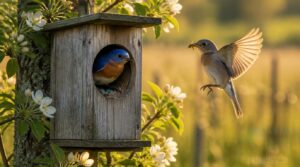
Few spring arrivals signal the season’s shift quite like the Eastern Bluebird.
By late March to early April, males are already singing from perches and chasing rivals away from prime nest box sites. Females inspect several cavities before committing. Once she chooses, expect 3 to 5 eggs and parents delivering insects every 10 to 20 minutes.
Robins and Sparrows
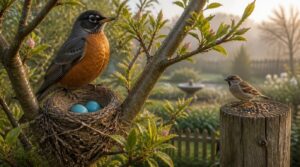
Robins (Turdus migratorius) kick off nesting by late March, filling yards with their fluted "cheerily" song at first light. Females weave mud-lined cup nests in shrubs 3–10 feet up.
House Sparrows start slightly earlier, scratching for seeds and nesting in cavities near buildings. Both can raise two broods before summer ends.
Hummingbird Nesting Habits
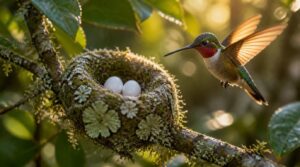
Hummingbirds are master architects hiding in plain sight. Females build compact cup-shaped nests roughly 4 cm wide using moss, lichen, and spider silk — then camouflage them against the branch with tree resin.
They usually lay two white eggs per brood, incubating alone for up to 23 days. Chicks stay in the nest nearly four weeks after hatching.
Eagles and Warm Regions

Eagles are a different league of nester. Bald Eagles in Florida begin laying eggs as early as October, while warm-region populations adjust hunting to early morning or late afternoon to beat the heat. They use thermal updrafts to soar efficiently and increasingly adopt artificial platforms as nest sites.
- Nests are lined with grasses for insulation
- Coastal eagles target fish and seabirds
- Prey shifts follow seasonal availability
- Cliff or tall-tree sites offer key vantage points
Regional Nesting Season Differences
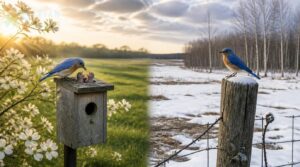
Nesting seasons don’t follow the same calendar everywhere you go. A bluebird in Georgia is already sitting on eggs while its counterpart in Manitoba is still waiting for the snow to clear. Here’s how timing shifts across different regions and habitats.
Northern Breeding Windows
In the north, nesting season timing shifts later the farther you travel from the equator. Cooler springs, delayed snowmelt, and slower insect emergence push most species to wait. Day length and latitude work together — birds read these cues before committing to a nest.
Higher elevation compounds the delay further, compressing the breeding window into late spring and early summer.
Southern Nesting Starts
The south flips the script entirely. While northern birds wait for snowmelt, southern nesting starts as early as late February, when warming temperatures and longer days trigger breeding instincts.
Bluebirds begin nest construction in March, robins initiate nesting by early spring, and coastal habitats see near year-round nesting activity — a stark contrast to the compressed windows found up north.
High-altitude Nesting Limits
At high altitudes — think above 3,500 meters — the rules of nesting change completely. Reduced oxygen availability slows embryo development, pushing birds toward extended incubation periods and smaller clutch sizes. Breeding windows shrink too, with many alpine species not starting until late May or early June.
Nests are built compact and well-insulated to fight cold. Predators shift here — fewer mammals, more raptors overhead.
Tropical Wet Seasons
Swap alpine brevity for something far more complex: the tropics don’t follow spring-to-fall rhythms.
Instead, monsoon dynamics drive nesting. When the wet season arrives — often delivering over 2,000 mm of rainfall annually — insects surge, fruit ripens, and food becomes abundant. Many tropical birds time breeding to this ecosystem boom, nesting just as resources peak.
Coastal Habitat Timing
Coastal habitats march to their own beat — shaped by tide foraging peaks, shifting winds, and shorebird arrival windows that rarely match inland calendars. Watch for pipers and plovers establishing territories along coastal migration corridors in early spring, well before inland species stir.
- Beach nesting timing peaks late spring to midsummer
- Early morning binoculars reveal incubating shorebirds at low tide
- Coastal microclimate shifts advance or delay nesting by weeks
Safest Times for Nest Checks

Checking a nest box the wrong way can do more harm than good — even with the best intentions. Knowing when and how to look makes all the difference for the birds inside. Here’s what to keep in mind before you open that box.
Afternoon Box Checks
The afternoon window — roughly 3 to 5 PM — is one of the safest times for nestbox monitoring. Temperatures cool slightly, parental foraging patterns intensify, and you can observe adults returning with food in short, predictable bursts.
Position yourself at a safe distance of 10–15 feet, use binoculars, and watch for sooty smudges or droppings near the entrance — quiet observation techniques like these reveal a lot without opening the box at all.
Once or Twice Weekly
Most ornithologists recommend once or twice weekly nest checks — no more. Visiting every two days gives you enough data to track hatch timing and feeding frequency without stressing the adults.
A consistent monitoring routine also lets you spot meaningful changes: a drop in clutch size, quieter parental activity, or signs of predation. Regularity matters more than frequency.
Under Five Minutes
Keep every nest visit under five minutes. That’s not a suggestion — it’s the threshold that separates helpful monitoring from harmful stress.
During early morning light, a focused five-minute window captures peak songbird activity right after sunrise. Late afternoon checks work equally well, often catching adults returning with food before dusk.
Avoid Fragile Stages
Some nest stages are simply too fragile to risk a visit. When eggs have just hatched, nestlings are first exposed to light and temperature fluctuations — making disturbance especially dangerous. A single intrusion during this window can trigger parental abandonment. Temperature spikes also increase dehydration risk.
During these fragile stages, limit nest visits entirely and use protective cover or distance to monitor safely without interfering with incubation or early fledging progress.
Watch Parental Behavior
Parent birds are your best real-time signal. Watch for feeding interval timing — adults return every 10–20 minutes with caterpillars or insects during peak hours.
If visits suddenly stop or nest defense calls spike, something’s wrong. Consistent, calm provisioning means the nest is stable and your presence isn’t causing stress.
Ethical Nest Watching Rules
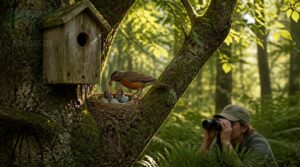
Watching a nest is a privilege, not a right — and how you behave out there matters more than most people realize. A few simple habits can mean the difference between a thriving brood and an abandoned nest. Here’s what responsible nest watchers keep in mind.
Nest watching is a privilege, not a right — a few mindful habits separate a thriving brood from an abandoned one
Keep Proper Distance
Distance is your most powerful tool as a nest watcher. Keep at least 30 meters from any active nest — that’s roughly the length of three school buses.
Even when birds look calm and unbothered, they’re monitoring you closely. Closing that gap triggers stress responses that can disrupt incubation. Stay back, use your binoculars, and let the birds breathe.
Avoid Touching Nests
Your hands can do real damage here. Never touch a nest, eggs, or nestlings — human skin transfers oils and bacteria that nestlings have no immunity to fight off. Your scent alone can attract predators directly to the site.
Even brushing a nearby branch matters. That small disturbance can trigger nest abandonment by parents, leaving eggs or chicks completely vulnerable.
Skip Flash Photography
Flash is a hard no around nesting birds. A sudden burst of light startles parents and stresses chicks during their most vulnerable stages. Instead, rely on natural ambient light — early morning and overcast days give you surprisingly rich, soft illumination without any equipment at all.
If you need fill light, use off-camera flash at low power (1/8 to 1/4 output), positioned at 45 degrees with softbox diffusion. A remote trigger system keeps you at safe distance while maintaining control.
Limit Repeated Visits
Every extra visit adds stress. Even well-meaning check-ins chip away at parental trust and nesting success.
Aim for once-weekly nest monitoring during active nesting season — that’s enough to track progress without overwhelming the birds. Space checks at least 72 hours apart, rotate your observation days to avoid predictable patterns, and keep each visit under five minutes.
Follow Wildlife Laws
Wildlife laws aren’t optional fine print — they’re the backbone of responsible nest watching. The Migratory Bird Treaty Act protects nests, eggs, and young birds from any interference, and violations can mean serious fines. Many jurisdictions also require permits for monitoring or banding.
Stay at least 50 meters back, keep visits quiet, and report any disturbances you witness to local wildlife authorities promptly.
Tools for Better Nest Observation

Having the right gear changes everything about how well you can observe nesting birds without disturbing them. It doesn’t take a lot of equipment, but what you choose really does matter. Here are the tools that make the biggest difference.
Birding Binoculars
Good binoculars are honestly the single most important piece of birding gear you’ll own.
- 8x to 10x magnification keeps images steady without a tripod
- 40–42 mm objective lenses pull in enough light during dim morning nesting hours
- Weather-sealed roof prism designs with anti-reflex coatings stay sharp in overcast conditions
During nesting season, that combination makes all the difference.
Zoom Camera Lenses
A solid zoom lens transforms your nest observation sessions. Look for at least 200mm focal length — it closes the distance without flushing the bird. Optical zoom preserves full resolution throughout.
Image stabilization matters hugely at longer reach, especially handheld at dawn. Fast autofocus tracking keeps fledglings sharp as they move. Weather sealing protects your gear in field conditions.
Observation Blinds
An observation blind is the closest thing to becoming invisible in the field. These camouflaged concealment structures use natural color palettes — greens, browns, tans — with textured finishes that mimic bark or foliage, breaking up your silhouette completely.
Anti-reflective window coatings prevent startling nearby nesters. Portable models with wheels and quick-setup systems let you reposition between nesting season months without disturbing active sites.
Neutral Birding Clothing
What you wear in the field matters more than most birders realize. Earth tone fabrics — olive, brown, gray — help you blend into the landscape without startling nesting birds.
- Silent zipper design prevents clacking sounds near active nests
- Moisture wicking base layers keep you dry during cool morning sits
- Layered camouflage gear adjusts to shifting nesting season temperatures
- UV protective finish shields you during open-habitat watching
Nest Box Mirrors
A small acrylic mirror mounted on the exterior of your nestbox can quietly change what you observe during birdwatching season. Mirror placement on the side or rear keeps glare away from the entrance hole while still reflecting useful light. Lightweight and UV-resistant, these mirrors hold up from March through August without warping.
| Feature | Benefit | Best Practice |
|---|---|---|
| Acrylic material | Shatter-resistant, lightweight | Replace after severe weather |
| Exterior placement | Avoids cavity interference | Mount on side or rear panel |
| Reflective surface | Predator deterrence | Clean with soft cloth regularly |
Behavioral impact is subtle but real — some cavity-nesting species briefly inspect their reflection before settling in. That curiosity rarely disrupts nesting. Maintenance protocols are simple: check annually for cracks or fading, and swap damaged mirrors promptly. Pair this tool with your binoculars for a fuller picture of nestbox activity throughout the season.
Seasonal Birdwatching Care Tips

Each season brings its own rhythm, and birds feel every shift before you do. The way you watch and care for your local habitat needs to change with the calendar, not stay fixed. Here are a few seasonal habits worth building into your birdwatching routine.
Spring Nesting Protection
Spring is the most critical window for early spring nesters like bluebirds and house wrens, who begin nesting as early as late February.
During nesting season months, keep binoculars ready and maintain safe distances of at least 10–15 feet. Avoid disturbing active nests — your presence alone can stress incubating parents during this fragile stage.
Summer Heat Awareness
Summer shifts the challenge from cold to heat. Nest temperatures can spike 8–12°F in direct sun, stressing eggs and nestlings fast.
Limit checks to early morning or after 4 PM, and keep visits under five minutes. Bluebirds and robins seek shade instinctively — watch for that behavior through binoculars from a distance rather than approaching the nestbox directly.
Autumn Migration Watching
Autumn turns the birdwatching world upside down. Instead of sitting with a nest, you’re tracking movement — millions of birds flowing south along coastal flyways and river corridors.
Stopover sites like Cape May or Bosque del Apache can feel electric during peak fall migration, especially after a cold front clears and northerly winds settle.
Winter Habitat Support
Winter doesn’t stop the birds — it just shifts what they need from you.
Evergreen shelter and brush pile insulation give roosting species a buffer against freezing nights. Cavity trees and nestboxes trap warmth that exposed branches simply can’t offer. Windbreak hedges cut wind chill greatly. Leave leaf litter intact — insects overwinter there, supporting year-round residents through the coldest months.
Safe Trimming Months
Tree trimming and bird nesting share the same calendar — ignore that overlap and you risk both.
Late Winter Pruning (September–February) is your safest window, falling outside most nesting activity. Three timing rules worth memorizing:
- Dormancy Growth Control — prune before buds swell
- Fruit Tree Timing — cut before new wood emerges
- Active Growth Avoidance — never trim when nests are occupied
Frequently Asked Questions (FAQs)
How do urban environments affect bird nesting success?
Like a cracked mirror, urban environments reflect a distorted version of natural habitat — enough to support nesting, but never quite whole. Habitat fragmentation, urban predation pressure, and light pollution effects quietly chip away at nesting success rates.
Can artificial lighting disrupt natural nesting behavior?
Yes. Artificial light at night shifts birds’ melatonin cycles, disrupts breeding timing, and increases nest predation risk by making nests more visible — quietly undermining nesting success without most observers ever noticing.
Which bird species reuse the same nest each year?
Several birds return to the same nest year after year. House Sparrows, Barn Swallows, White Storks, Tree Swallow cavities, and Rock Pigeons all show strong site fidelity, often refurbishing old nests before each new breeding season.
How do predators influence where birds choose to nest?
Predators act like invisible architects, quietly shaping every nesting decision a bird makes. Nesting site selection comes down to survival — birds consistently favor dense cover, concealed spots, and sheltered microhabitats that keep visual predators like jays and crows guessing.
Do birds abandon nests if humans come too close?
Sometimes, yes. Getting too close can cause parent birds to flush from the nest, leaving eggs or chicks exposed. Even brief disturbances matter — especially during early incubation when abandonment risk is highest.
Conclusion
Nesting season is less a window and more a moving train—you either know the schedule or you watch it pass. The best time to observe bird nests isn’t fixed to one date; it shifts with species, latitude, and local weather patterns.
Once you truly understand those rhythms, you stop missing moments and start anticipating them. That’s the real shift from a casual glance to genuinely meaningful observation—seeing behavior perfected over millions of years.
- https://www.montereyaudubon.org/nesting-season
- https://nestwatch.org/learn/how-to-nestwatch/code-of-conduct
- https://marin.wbu.com/attract-nesting-birds
- https://celebrateurbanbirds.org/types-of-nests/important-guidelines-to-observing-nests
- https://www.beautifulhayscounty.org/hays-humm/for-the-love-of-nesting-birds