This site is supported by our readers. We may earn a commission, at no cost to you, if you purchase through links.
Most beginners quit birding after their first frustrating hour—staring at a brown blur in the bushes, flipping hopelessly through a field guide stuffed with 900 species. The bird vanishes. The page stays open. Sound familiar?
Here’s what experienced birders know that nobody tells you at the start: you don’t need to memorize every bird. You need a system. Field marks are that system—specific physical features that reveal a bird’s identity in seconds, even when the lighting is bad and the bird won’t sit still. Understanding bird field marks for beginners starts with knowing which details actually matter and in what order to look for them.
Table Of Contents
- Key Takeaways
- What Are Bird Field Marks?
- Start With Size and Shape First
- Learn Facial and Head Markings
- Identify Wing and Tail Field Marks
- Understand Bill Shape and Body Structure
- Recognize Plumage Patterns and Color Variation
- Use Behavior as a Field Mark
- Apply The Three-Field-Mark Rule in The Field
- Frequently Asked Questions (FAQs)
- Conclusion
Key Takeaways
- Start every ID with size and shape — your brain’s first read on a bird is often your most reliable one.
- Three solid field marks beat ten fuzzy ones, so pick one shape clue, one head mark, and one wing or bill detail, then stop.
- Behavior is a field mark too — how a bird moves, feeds, and perches tells you just as much as its colors.
- Plumage shifts with age, sex, season, and light, so always cross-check color against structure before you commit to an ID.
What Are Bird Field Marks?

Field marks are the specific details that set one bird apart from another — things like a stripe above the eye, the shape of a bill, or a flash of color on the wing. Unlike general features, they’re the precise clues that point you to the right species. Here’s what you need to understand before you start using them.
Think of them as a bird’s fingerprints — and this visual guide to field marks for bird identification breaks down exactly what to look for.
Definition and Purpose
A field mark is a specific, visible feature that helps you identify a bird on the spot. Think color patches, eye rings, wing bars, or tail patterns — traits that stand out clearly in real viewing conditions.
- Field marks give you quick identification cues without needing a microscope
- They work as a practical beginner checklist during brief sightings
- They complement range maps and calls, not replace them
Why Beginners Need Field Marks
When you’re starting out, birds move fast and light changes constantly. Field marks cut through the confusion by giving you a short, repeatable checklist to run through before a bird disappears.
Instead of memorizing everything, you focus on two or three reliable visual clues. That builds confidence quickly and turns every sighting into a small, manageable puzzle you can actually solve. Focusing on key avian markings such as wing bars or head stripes can help you distinguish species more effectively.
How Field Marks Differ From General Features
General features tell you the broad category — size, shape, posture. Field marks go deeper.
They’re the small, specific details that separate one species from another. Think eyebrow stripes, wing bars, or eye rings.
A bird may share similar size with a dozen others, but diagnostic details like a bold malar stripe make the final call. That’s what field marks do.
Start With Size and Shape First

Before you notice any colors or markings, your brain is already sizing a bird up. That first read — its shape, its posture, how it carries itself — is often enough to put you in the right ballpark. Here’s how to make that instinct work for you.
Using GISS as Your First Step
Before you look for any markings, take a quick step back. GISS — General Impression of Size and Shape — gives you a fast first read on what you’re looking at.
It’s not about details. It’s about the whole picture: the bird’s overall bulk, its posture, and its silhouette. That snapshot alone can point you straight to the right species group.
Comparing Size to Familiar Birds
Once you have a general impression, anchor it to something you already know. Size comparison is one of the fastest tools in bird identification — and it’s simple. Is the bird smaller than a robin? About the size of a sparrow? Bigger than a pigeon?
- A mourning dove is roughly twice the length of a sparrow
- Small warblers run about half to two-thirds a robin’s body length
- A bluebird outpaces a sparrow by around 3 to 4 centimeters
These quick benchmarks keep your size estimates grounded.
How Posture Reveals Species Groups
Posture tells you a lot before you even check the markings. A bird’s body lean and tail rest position place it in a family instantly. Ground foragers sit horizontally; songbirds perch upright.
Pairing posture cues with bill shape makes identification click faster, as covered in this guide to visual bird identification methods.
Watch the wing fold angle at rest — it predicts flight style. Even a bird’s landing posture clues you in: stiff-legged landings versus soft, angled touchdowns separate groups quickly.
Learn Facial and Head Markings
A bird’s face tells you more than you’d expect. Once you know where to look, a few small markings can separate two nearly identical species in seconds. Here are the three facial clues that matter most.
Eyebrow Stripes and Eyelines
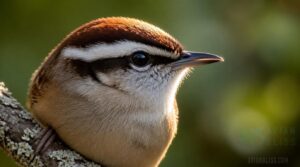
The face is where bird ID often clicks into place. Eyebrow stripes run along the brow line above the eye. Eyelines cut horizontally through or past the eye. Together, these head field marks help you separate similar-looking birds fast. Watch for three things:
- Stripe thickness variation — wider stripes stand out more
- Eyeline contrast effects — darker lines pop against pale crowns
- Seasonal stripe changes — colors shift with molt
Eye Rings and Lore Areas
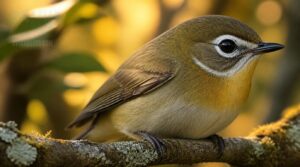
Two small features tell you a lot. The eye ring is a circle of feathers around the eye — it can be white, pale yellow, or brown. The lore area sits between the bill base and the eye. High contrast there makes the eye pop.
Both shift with season and age, so note lighting and time of day.
Malar Stripes and Whisker Marks
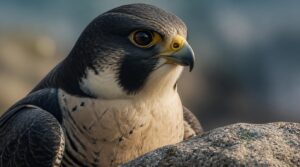
The malar stripe runs like a dark whisker from below the eye toward the throat. It’s one of the most reliable facial contrast detection tools you have. Three things to watch:
- Malar stripe identification: bold vs. faint lines on pale cheeks
- Whisker mark patterns: short streaks near the bill base
- Juvenile mark differences: incomplete stripes in younger birds
Identify Wing and Tail Field Marks
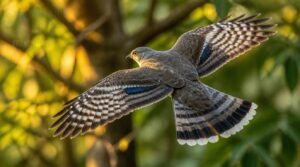
Wings and tails give you some of the clearest clues in birding. A few specific marks stand out and are worth knowing from the start. Here’s what to look for.
Spotting Wing Bars on Folded Wings
Wing bars are two pale stripes across a folded wing. They form where feather tips line up across the greater and median coverts. The longer bar sits lower; the shorter bar sits closer to the body.
| Feature | What to Look For | Why It Matters |
|---|---|---|
| Main bar | Longest stripe, lower on wing | Marks greater covert tips |
| Secondary bar | Shorter, closer to body | Marks median covert tips |
| Bar color | Pale white or buff | Contrasts against darker wing |
| Bar width | Bold or subtle | Varies by species and molt |
| Seasonal change | Brighter in fresh plumage | Fades with feather wear |
Bar contrast fades as feathers wear down after breeding season. Fresh fall migrants often show the sharpest bars. When you’re watching a perched bird, count the bars — one vs. two bars can separate species that look nearly identical otherwise.
White Rump Patches in Flight
Now shift your gaze from the wing to the lower back. A white rump patch flashes brightly when a bird lifts off.
It stays visible through wingbeats but may disappear when the bird banks tightly. Open habitats make it pop; dense cover dulls it.
Pair the patch with wing bars and body color for a reliable ID.
Duck Speculum Colors Explained
Ducks have a secret weapon on their wings: the speculum. It’s a patch of color on the secondary feathers that lights up in flight.
Mallards flash a purple-blue speculum with white borders. Teal show green. That border color is your fastest clue — white edging separates many dabblers from divers instantly.
Light changes everything, though, so trust multiple looks.
Understand Bill Shape and Body Structure

A bird’s bill tells you exactly how it makes a living. Once you know what to look for, body shape and posture start filling in the rest of the picture. Here’s what to pay attention to.
Bill Shapes and Dietary Adaptations
A bird’s bill is a direct window into what it eats. Culmen alignment — the ridge running along the top of the bill — points toward how a bird captures prey.
Hooked beaks tear flesh. Slender bills probe flowers or crevices. Some shorebirds even carry bill serrations to grip slippery prey.
Shape tells the story before behavior does.
Seed-Eater Vs. Water-Filtering Bills
Two bills, two completely different jobs. Seed-cracking mechanics rely on a short, deep bill that drives enormous force into hard coats. Filter feeding technique works the opposite way — a broad, flat bill sweeps through water to trap tiny prey.
- Bill depth comparison: deep vs. flat tells you everything
- Skull structure contrast: stout for crackers, lightweight for sweepers
- Foraging posture differences: upright ground feeders vs. forward-leaning waders
How Perching Posture Helps Identification
A bird’s posture on a branch tells you a lot before it moves. Upright perching shapes point toward thrushes and warblers. A horizontal, crouched stance suggests a ground feeder. Watch tail position cues too — a downward-pointing tail signals a secure perch.
These body alignment signals are quick, reliable field marks that sharpen your bird identification from the first glance.
Recognize Plumage Patterns and Color Variation
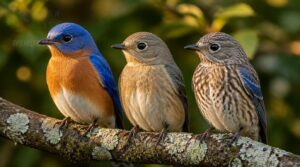
Plumage is one of the most useful tools in your birding kit — but it’s also one of the trickiest to read. Color and pattern can shift depending on the bird’s age, sex, season, and even the light you’re standing in. Here’s what to watch for.
Spotting, Streaking, and Breast Banding
Three plumage patterns will do most of your identification work: spotting, streaking, and breast banding. Spots are bold and rounded. Streaks run in narrow lines down the chest or flanks. A breast band cuts straight across.
Colors shift with season and feather wear, so streak density and band intensity are your most reliable visual clues.
Male Vs. Female Plumage Differences
Most birds you spot won’t look like their field guide photo — and that’s because sex changes everything. Males often show brighter, bolder colors with stronger facial contrast. Females stay muted for camouflage.
Watch for differences in malar stripe intensity, eye ring brightness, and wing pattern sharpness. Those subtle gaps between sexes are reliable field marks in their own right.
Breeding Vs. Juvenile Plumage
Plumage tells you a bird’s story — its age, its season, its place in life. Breeding plumage brings saturated colors and bold patterns, peaking in spring. Juvenile plumage runs duller and streakier for camouflage. Here’s what to watch for:
- Bright throat or head color signals a breeding adult
- Streaked chests often mark juveniles
- Worn, faded feathers appear late in breeding season
- Soft, downy texture hints at young birds
These age-related markings sharpen your bird identification fast.
How Lighting Affects Perceived Color
Light rewrites what you see. Warm light around 2700–3000 K boosts reds and oranges, so a rufous patch looks richer than it really is. Cool light pushes blues forward.
Even the surface around the bird matters — nearby colors shift your perception through surround contrast. Always cross-check color pattern against structure before locking in your bird identification.
Use Behavior as a Field Mark

A bird doesn’t always stay still long enough to check every feather — but the way it moves tells you a lot. Behavior is one of the most reliable field marks you can use, and it works even at a distance. Here’s what to watch for.
Flight Patterns and Locomotion Styles
How a bird moves through the air tells you a lot. Watch for bounding flight — short flaps followed by a closed-wing coast — or thermal soaring, where a bird spirals upward without flapping at all. On the ground, notice whether it hops or walks. These movement clues work alongside size and shape to narrow your ID fast.
- Hovering flight signals species like hummingbirds or kestrels
- Bounding flight is typical of woodpeckers and goldfinches
- Soaring birds use rising air — thermal soaring strategies cut energy use
- A high glide ratio means long, smooth travel between wingbeats
- Ground birds hop; shorebirds walk — locomotion style is a real field mark
Feeding Location as a Clue
Where a bird feeds is just as telling as how it moves. Shorebirds work mudflats; woodpeckers cling to bark; sparrows scratch gravel and lawns. In winter, finches stick to seed patches in open fields.
Mixed flocks gathering at one spot usually signal rich food nearby. Watch the location — it points you straight to the species.
Tail Pumping and Head Bobbing
Some movements are field marks too. Tail pumping — a rhythmic up-and-down motion — helps birds balance on uneven perches and signals alertness to predators. Phoebes do it constantly. Kestrels ramp it up just before striking prey.
Head bobbing often pairs with it, helping the bird judge distance. Spot either behavior, and you’ve got a strong ID clue.
Social Behavior and Group Patterns
How a bird acts with others is a field mark too. Flock movement synchronization — that split-second turning in unison — points straight to starlings or shorebirds. Watch for these social clues:
- Solitary hunters suggest raptors
- Tight, fast flocks signal starlings
- Loose groups hint at sparrows
- Scouts ahead mean geese
- Juveniles trailing adults confirm breeding season
Apply The Three-Field-Mark Rule in The Field

You’ve learned what to look for — now it’s time to put it all together without overthinking it. The Three-Field-Mark Rule keeps you focused when your brain wants to track everything at once. Here’s how to use it well in the field.
Limiting Observations to Three Traits
Three traits. That’s your limit. When a bird lands nearby, it’s tempting to catalog everything, but chasing too many details usually means you remember nothing clearly.
The Three-Field-Mark Rule keeps your focus sharp — pick one size or shape clue, one head or face mark, and one wing or bill trait. Three consistent details beat ten fuzzy ones every time.
Three sharp field marks beat ten fuzzy ones every time
Sketching Marks in a Field Notebook
Sketching in a field notebook locks your three marks into memory before they fade. Study the bird first, then draw.
Make your sketch as large as possible, add a quick scale indicator, and drop an orientation arrow nearby. Label each mark clearly — eyebrow stripe, wing bar, eye ring — in empty spaces so nothing overlaps.
Using Field Guides Without Overwhelm
Opening a thick field guide mid-sighting can stop you cold. Start with a regional pocket guide — fewer species means faster searching. Look for clear layouts with a strong index, so you’re not flipping aimlessly.
Focus on size, shape, and your three marks first, then find the matching page. Repeated use builds the habit; soon, common birds will click instantly.
Practicing With Side-by-Side Comparisons
Comparing two similar birds side by side is one of the fastest ways to sharpen your Bird ID Skills. Try a side-by-side comparison exercise: pick two look-alike species and focus on four things:
- Compare Silhouettes — tail length, body bulk, head size
- Match Color Bands — where stripes sit, not just their color
- Spot Subtle Differences — lore color, wingbar width
- Use Reference Birds — anchor one familiar species as your baseline
Field marks click faster when you see contrast directly.
Frequently Asked Questions (FAQs)
Why is it not recommended to start bird identification with field marks?
Field marks are a trap for beginners. Color shifts with light, shape gets misread by size, and one matching mark can point to a dozen species. Start with shape and habitat first.
Which apps work best for beginner bird identification?
Merlin Bird ID from Cornell Lab is the best starting point. It’s free, works offline, and identifies birds by photo or sound. Audubon and Sibley are solid next steps.
When is the best time of day to spot birds?
Dawn is your best window. Birds are most active just after sunrise. Midday gets quiet. A second burst hits late afternoon. Aim for dawn to 10 a.m.
How do I know if a bird sighting is rare?
A rare sighting stands out like a wrong puzzle piece. Check if the bird is outside its known range, off-season, or from a scarce population. Document field marks clearly.
Conclusion
Soon, that brown blur in the bushes won’t frustrate you—it’ll fascinate you. Understanding bird field marks for beginners starts with one honest look: size, shape, then three key details.
Over time, your brain builds a quiet library of patterns. You stop flipping pages and start seeing. The field guide becomes a tool, not a crutch. Every bird you identify adds a new layer.
The system works. Trust it, and the birds will reveal themselves.
- https://guloinnature.com/birdwatching-basics-part-2-field-marks
- https://www.birds.cornell.edu/k12/teaching-bird-id
- https://www.basicsofbirding.com/blog/how-to-identify-birds-looking-for-key-field-marks
- https://www.allaboutbirds.org/news/bird-id-skills-field-marks
- https://swibirds.org/blog/2020/5/3/a-beginners-guide-to-bird-id