This site is supported by our readers. We may earn a commission, at no cost to you, if you purchase through links.

Your studio apartment doesn’t leave room for a six-foot play gym. Your bird’s feet don’t care. They still need varied surfaces, proper grip, and enough perches to stay healthy. Skip the right setup, and you risk sore, swollen feet down the road — a condition vets call bumblefoot.
Good news: pet bird perches for small apartments don’t demand floor space. Cage-mounted designs, corner perches, and tabletop gyms pack real benefits into tight footprints. Pick the wrong ones, though, and you’re cleaning droppings off your favorite armchair by Friday.
Here’s what actually works, and what your bird’s feet are trying to tell you.
Table Of Contents
- Key Takeaways
- Top 5 Apartment Bird Perches
- Choosing Space-Saving Perch Designs
- Perch Safety and Foot Health
- Cleaning and Placement Tips
- Frequently Asked Questions (FAQs)
- Can I have a pet bird in an apartment?
- Which bird is best for an apartment?
- How to keep birds quiet in an apartment?
- Which bird species thrive best in small apartments?
- How often should apartment bird perches be replaced?
- What perch textures naturally file a birds nails?
- How do perches support aging or arthritic birds?
- Conclusion
Key Takeaways
- Varied perch diameters (3/8 to 1 inch for small birds) are essential — your bird’s toes should wrap about two-thirds around the perch to prevent bumblefoot and tendon strain.
- Cage-mounted, corner, and tabletop designs let you give your bird real enrichment without sacrificing a square foot of floor space.
- Rotating perches every 2–3 days and replacing wooden ones every 2–6 months keep feet healthy and prevent the calluses and boredom that come from a static setup.
- Untreated hardwoods like manzanita, birch, or apple are your safest material choice — no varnish, no paint, no chemicals ending up where your bird’s beak goes.
Top 5 Apartment Bird Perches
Not every perch works for a small apartment — space, safety, and your bird’s foot health all matter. These five options cover a range of needs, from cage-mounted branches to portable play gyms. Here’s what made the cut.
If you’re unsure what to look for, this guide on preventing cage injuries and choosing safer perches breaks down the basics before you buy.
1. Rypet Natural Wood U Perch
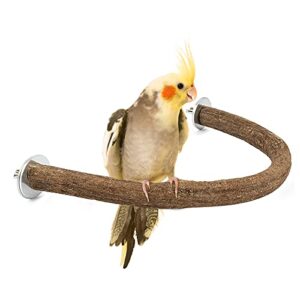
The Rypet Natural Wood U Perch is a solid pick for small cages. Its U-shaped design gives your bird two grip points at once, spreading weight evenly across both feet.
That matters — localized pressure causes sores over time. The natural wood surface gently files nails during daily use.
It installs tool-free with wing nuts, so no drilling required. Available in small and large sizes, it suits most birds up to medium parrots.
| Best For | Small to medium parrot owners who want a low-maintenance, cage-wall perch that supports natural foot health without taking up interior cage space. |
|---|---|
| Material | Natural solid wood |
| Bird Size Fit | Small to medium parrots |
| Installation Method | Tool-free wing nuts |
| Enrichment Value | Beak and foot exercise |
| Cleaning Ease | Smooth surface wipes clean |
| Large Bird Limit | Not for large parrots |
| Additional Features |
|
- Tool-free installation with wing nuts makes setup quick and hassle-free
- Natural solid wood promotes healthy beak and nail maintenance through daily use
- U-shaped design distributes weight evenly across both feet, reducing pressure sore risk
- Wood may split or screws can loosen with extended use
- Not suitable for large or heavy parrots due to weight limitations
- Shipping can sometimes damage one end, so inspection before installation is recommended
2. Natural Wood Bird Perch Stand
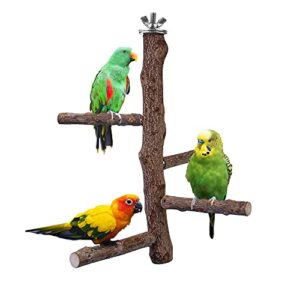
The Natural Wood Bird Perch Stand takes multi-bird setups seriously. Its multi-branch design fits 3–4 birds simultaneously, making it ideal for social species like budgies or cockatiels.
Made from prickly ash wood, it naturally files nails and enhances grip. The rough surface texture keeps feet active without extra products.
Installation is tool-free — one wing nut and bolt does it. At 7.37 oz, it’s lightweight and repositionable, a practical choice for renters who rearrange frequently.
| Best For | Bird owners with social species like budgies or cockatiels who want a shared perch that encourages natural activity and keeps nails trimmed without extra tools. |
|---|---|
| Material | Natural prickly ash wood |
| Bird Size Fit | Small to medium parrots |
| Installation Method | Tool-free wing nut |
| Enrichment Value | Climbing and nail wear |
| Cleaning Ease | Rough surface harder to clean |
| Large Bird Limit | Not for large parrots |
| Additional Features |
|
- Fits 3–4 birds at once, making it great for multi-bird households that want to encourage socializing
- Prickly ash wood naturally files nails and improves grip — no separate nail care products needed
- Tool-free installation with a built-in bolt and wing nut makes setup and repositioning quick and easy
- Takes up noticeable space, so it may feel cramped in smaller cages
- Branch diameters can vary between units, and some buyers have received thinner branches than expected
- Only one washer and wing nut included, which may not be enough if you need extra mounting security or want to install multiple perches
3. Litewoo Natural Wood Bird Perch
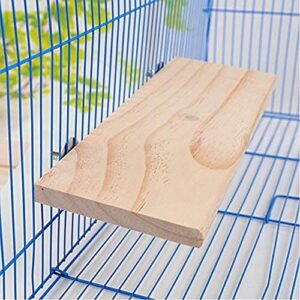
If you want something simpler, the Litewoo Natural Wood Bird Perch fits the bill.
It’s built from untreated natural wood, so there’s no varnish or paint to chip and end up in your bird’s crop. The round diameter suits small beaks and feet, giving a comfortable, secure grip.
Installation needs no tools — just attach it to your cage bars. Its natural branch texture offers varied footholds, helping exercise toes without irritating sensitive skin.
| Best For | Small to medium bird owners — especially those with parrots, budgies, cockatiels, or conures — who want a safe, natural resting platform that’s easy to install and clean. |
|---|---|
| Material | Untreated natural wood |
| Bird Size Fit | Small to medium birds |
| Installation Method | Screw-on hardware |
| Enrichment Value | Resting and play area |
| Cleaning Ease | Easy disassembly for cleaning |
| Large Bird Limit | Not for large species |
| Additional Features |
|
- Made from untreated natural wood, so there’s no risk of harmful chemicals or finishes near your bird
- Simple screw-on installation with an adjustable position makes setup quick and hassle-free
- Flat, smooth surface is easy to wipe down and doubles as a comfortable resting or play area
- The platform is thin, so cages with wide bar spacing may need extra washers to get a secure fit
- Not a good match for strong chewers — aggressive birds can damage the wood pretty quickly
- Only suited for small to medium birds; larger species may find it too small or exceed its weight capacity
4. Natural Wood Bird Perch Set
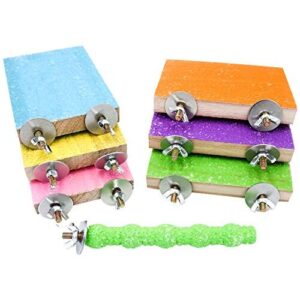
If your bird needs more variety, the Natural Wood Bird Perch Set delivers exactly that.
It includes a thoughtfully varied mix of textures and diameters, much like the options explored in this guide to bird perches designed for small birds.
It includes perches ranging from 6 mm to 25 mm in diameter — enough variety to keep foot muscles working at different angles. The untreated hardwood is free from paints and varnishes, so no chemical risk. Mixed textures mimic wild branch surfaces naturally. Your bird gets smooth rest spots and rougher grip zones in one set.
| Best For | Small bird owners looking for a natural, multi-purpose perch set that helps keep their bird’s nails and beak trimmed without a vet visit. |
|---|---|
| Material | Sand-coated natural wood |
| Bird Size Fit | Small to medium birds |
| Installation Method | Built-in bolt and wing nut |
| Enrichment Value | Nail and beak wear-down |
| Cleaning Ease | Sand coating difficult to clean |
| Large Bird Limit | Not for larger parrots |
| Additional Features |
|
- Made from 100% natural wood with food-grade stainless steel hardware, so it’s safe even for curious birds that like to chew
- The sand-textured surface doubles as a nail and beak grinder, reducing how often you need to trim manually
- Easy to hang in virtually any cage thanks to the built-in bolt and wing nut setup
- The rough sand coating can be tricky to clean and may smell if the cage gets warm
- The texture wears down over time, which means it’ll eventually lose its nail-trimming effectiveness
- Only suitable for small to medium birds — larger parrots will need to look elsewhere
5. LIMIO Natural Wood Bird Playground
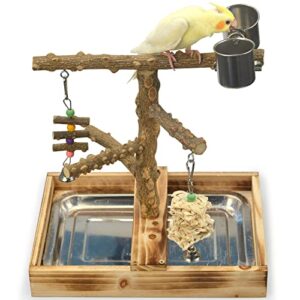
If your small apartment is short on space, the LIMIO Natural Wood Bird Playground packs a lot into 13.5 × 9.5 × 13.5 inches.
Multiple textured perches, chewable wooden elements, and stainless-steel feeding cups come built in.
Your bird gets climbing challenges, foraging stimulation, and rest spots — all in one unit.
The removable tray makes weekly cleanups fast.
Some screws may loosen over time, so check them regularly.
It’s a solid all-in-one option for parakeets, cockatiels, and lovebirds.
| Best For | Small apartment dwellers with parakeets, cockatiels, lovebirds, or other small-to-medium birds who want an all-in-one play and feeding station that’s easy to clean and move around. |
|---|---|
| Material | Natural wood |
| Bird Size Fit | Small to medium birds |
| Installation Method | Tool-free assembly |
| Enrichment Value | Chew, perch, and play |
| Cleaning Ease | Removable tray simplifies cleaning |
| Large Bird Limit | Not for large birds |
| Additional Features |
|
- Built-in stainless-steel feeding cups, textured perches, and chewable elements pack a lot of enrichment into a compact footprint
- The removable tray makes cleanups quick and hassle-free
- Tool-free assembly and a lightweight design make it easy to relocate for cage cleaning, travel, or training
- Supplied screws can loosen over time, so you’ll need to check them periodically to keep things stable
- The perch width may be too wide for very small birds, limiting how long they should use it
- Very active climbers could shift the unit if it’s not placed on a secure, flat surface
Choosing Space-Saving Perch Designs
Living in a small apartment doesn’t mean your bird has to feel cramped. The right perch design can add vertical space, keep your bird active, and leave your floors free. Here are five smart options worth considering.
Cage-mounted Perch Options
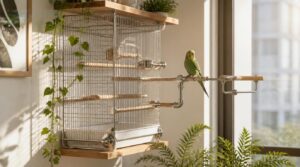
Cage-mounted perch extensions attach directly to your cage bars — no drilling, no damage. Wall mount adapters clamp securely and adjust angles for ideal positioning. Use adjustable height clips to reconfigure perch levels as your bird grows. Three key benefits:
- Expands vertical space without floor footprint
- Resists wobble with stainless steel hardware
- Removes quickly for cleaning
Corner Perch Benefits
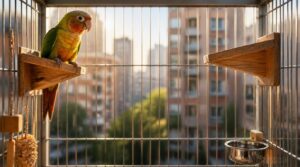
When floor space runs tight, corners are your best friend. Corner perches tuck into unused cage angles, maximizing flight space in the center.
They offer wider standing surfaces, improving weight distribution across your bird’s foot. The angled fit encourages natural foot rotation, building leg strength.
Smart enclosure organization like this stacks perches at varied heights, reducing cage clutter without crowding compact setups.
Tabletop Play Gyms
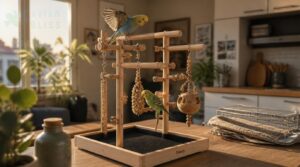
Think of a tabletop play gym as your bird’s personal activity stand. These wood playground stands fit compact cages perfectly, with non-slip base stability keeping things steady.
Look for adjustable leg height and customizable gym components. Many include foraging toy integration for mental stimulation. Best part? They’re compact storage solutions—fold them away when you need counter space back.
Portable Perch Stands
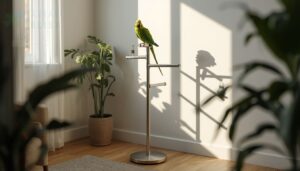
Portable perch stands offer tool-free setup and fit neatly into any room. Most weigh under 5 pounds, so you can move them effortlessly between spaces.
Look for folding designs that store flat behind furniture.
A weighted stable base prevents tipping when your bird shifts position. Its stainless steel base stability offers corrosion resistance and added stability for long‑term use.
Some models feature multi-perch versatility and height adjustment, giving your bird more movement options without extra floor space.
Renter-friendly Installation Tips
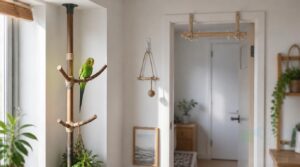
Worried about losing your deposit? You don’t have to drill a single hole.
Removable adhesive hooks rated for your perch’s weight keep walls intact. Tension rod systems wedge between surfaces—no screws, no damage. Over-door mounts hook onto door frames cleanly.
Before moving out, simply remove everything and restore surfaces to original condition.
Perch Safety and Foot Health
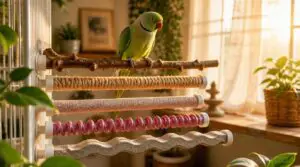
The right perch does more for your bird than just give it somewhere to stand — it directly shapes foot health over time. Getting the diameter, material, and texture right can mean the difference between strong, healthy feet and painful problems like bumblefoot. Here’s what to look for.
The right perch doesn’t just support your bird — it determines whether its feet stay healthy or break down over time
Proper Perch Diameter
Getting the diameter right is one of the most important decisions you’ll make for your bird’s foot health.
Ideal grip ratio: your bird’s toes should wrap roughly two-thirds around the perch. For small parrots and cockatiels, aim for 3/8 to 1 inch in diameter.
Offering multiple sizes lets birds self-select, reducing toe stress over time.
Natural Wood Materials
Once you’ve nailed the right diameter, the material you choose matters just as much. For small cage birds, untreated hardwood is the ideal choice. Manzanita, birch, apple, and cherry wood are all safe choices — naturally durable and non-toxic.
- Food-grade mineral oil nourishes natural wood perches without harmful residue
- Longitudinal grain alignment gives bird feet a reliable, even grip
- Certified sustainable sourcing ensures responsible forest harvesting
- Tight annual rings reduce unexpected rough patches under tender feet
- Beeswax coatings seal moisture out without chemical off-gassing
Texture Variety Benefits
Material matters — but so does texture. Varied perch textures do more than just feel different underfoot. Rough bark engages your bird’s grip muscles naturally, while smoother sections give feet a brief rest. Alternating between surfaces distributes grip force evenly, reducing pressure on any single spot.
| Texture Type | Key Benefit |
|---|---|
| Rough bark | Strengthens toe grip muscles |
| Smooth wood | Relieves pressure between grips |
| Irregular grain | Promotes natural foot flexion |
| Mixed surfaces | Reduces localized wear on pads |
Tactile variety also stimulates curiosity — birds explore, preen, and investigate different surfaces, keeping their minds active. That mental engagement matters in small apartments where cage space is limited.
Bumblefoot Prevention Tips
Texture variety reduces pressure points — but perch setup alone won’t protect your bird’s feet. Bumblefoot prevention starts with the right perch diameter: too narrow strains tendons; too wide prevents proper grip.
Offer at least four diameters.
Feed a vitamin A-rich diet, manage weight, and wrap any smooth perches with vet wrap for cushioning.
Disinfect weekly.
Aging Bird Comfort
As your bird ages, perch ergonomics matter more than ever. Match perch diameter to your bird’s feet for joint stiffness relief and better senior mobility support.
Add textured grips for circulation monitoring, use high-contrast colors for visual depth perception, and avoid drafts for thermal stress prevention. Check foot warmth daily — early detection protects long-term bird welfare.
Cleaning and Placement Tips
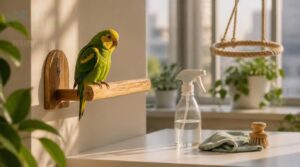
A good perch is only half the job. Keeping it clean and placed right protects your bird from infection and injury. Here’s exactly how to handle both, step by step.
Weekly Cleaning Routine
Think of your weekly cleaning routine as your bird’s first line of defense. Remove droppings daily before your deep clean to control odor and buildup.
Each week, wash perches, feeding dishes, and water bowls with mild, bird-safe cleaner. Vacuum fallen seeds around the cage.
Check mounting hardware for looseness. Inspect wooden perches for splinters and sand rough spots smooth.
Safe Disinfecting Methods
After washing, disinfection matters.
Mix a 1:32 bleach solution and wipe perch surfaces, letting it sit for full contact time. Rinse thoroughly — soap residue irritates feet.
70% isopropyl alcohol works on smooth hardware, not porous wood. Try 3% hydrogen peroxide on non-porous surfaces instead.
Apply food-safe mineral oil every 1–2 months to protect wood.
UV-C light disinfects without chemicals.
Perch Rotation Schedule
Rotate perches every 2–3 days. This shifts pressure points and keeps feet healthy.
- Swap small, medium, and large diameters across the week
- Move perches to new vertical levels each rotation
- Pair perches with toys for enrichment
- Rotate during calm periods, not feeding time
- Log dates and any foot changes
Consistent rotation prevents calluses and boredom.
Bowl Placement Safety
A tipped water bowl can soak your bird’s only dry perch. That’s a real problem in smaller cage setups where space is tight.
| Placement Rule | Why It Matters | Quick Fix |
|---|---|---|
| Stable, elevated surface | Prevents tipping | Use a clamp-on bowl |
| Chest-height position | Avoids neck strain | Adjust per perch height |
| Separate from seed bowls | Reduces contamination | Use multiple bowls |
Always choose stainless steel or BPA-free plastic.
Damage Inspection Checklist
A cracked perch won’t announce itself — you have to look.
Check weekly for these three red flags:
- Cracks wider than 1 mm near joints or mounting points
- Soft, spongy wood signaling internal rot
- Loose screws or splinting edges around chew marks
Replace any damaged perch immediately. Don’t wait.
Frequently Asked Questions (FAQs)
Can I have a pet bird in an apartment?
Yes, you can — but check your lease first. Many landlords require written approval, even for quiet birds like budgies or cockatiels. Local wildlife regulations may also restrict certain species.
Which bird is best for an apartment?
Your neighbors don’t want a rooster crowing through drywall. Budgies, cockatiels, and finches top the list — quiet, compact, and apartment-friendly. Canaries sing softly, lovebirds bond closely, and parrotlets stay small. Match the bird to your space and noise tolerance.
How to keep birds quiet in an apartment?
Run sound masking with a soft fan, keep a consistent light schedule, and offer foraging toys for enrichment. Reward quiet moments to shape behavior. These steps make for neighbor-friendly, low-noise pet birds in any apartment setting.
Which bird species thrive best in small apartments?
Budgies, budgies, brilliantly bright — they thrive in compact spaces with daily interaction. Cockatiels stay relatively quiet. Canaries sing softly without demanding handling. Finches flourish in pairs.
How often should apartment bird perches be replaced?
Replace wooden perches every 2–6 months, depending on chew activity. Rope perches fray faster — retire within 6–8 weeks. Watch for cracks, slick spots, or odor. When in doubt, swap it out.
What perch textures naturally file a birds nails?
Rough bark, sandstone, and unglazed ceramic naturally file nails during daily gripping. Cork composites and sand-coated perches offer gentler micro-abrasion. Rotate textures to target different nails evenly.
How do perches support aging or arthritic birds?
Aging birds need a soft landing, not a struggle. Softer, textured perches reduce joint pressure. Varied diameters prevent callus buildup. Lower placement eases climbing. This keeps arthritic feet moving comfortably.
Conclusion
Small spaces don’t mean small choices. The right pet bird perches for small apartments give your bird varied grip, proper diameter, and safe material—without eating your floor plan.
Think of it as fitting big care into a small footprint. Rotate perches regularly, inspect for damage weekly, and watch your bird’s feet.
Healthy toes grip with ease. Swollen ones don’t lie.
Your apartment’s size is fixed. Your bird’s comfort doesn’t have to be.
- https://flamingopetclinic.com/bird-perches-101
- https://birdsupplies.com/blogs/news/bird-perch-tips-keep-your-parrot-s-feet-happy
- https://www.revivalanimal.com/learning-center/choosing-a-perch-for-your-bird
- https://vetcarrollton.com/2026/05/09/best-bird-perches
- https://lafeber.com/pet-birds/questions/perch-diameter-sizes-for-a-cockatiel