This site is supported by our readers. We may earn a commission, at no cost to you, if you purchase through links.
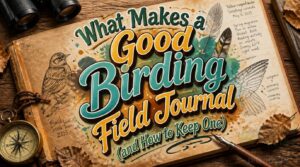
The notebook sitting in a seasoned birder’s bag tells you more about their craft than their binoculars do. Flipping through those worn pages—full of smudged coordinates, hastily sketched wing bars, and notes on barometric pressure—you start to understand what separates a memorable sighting from one that quietly dissolves into memory.
Most people start with good intentions and a blank notebook, then stall out somewhere between "small brown bird, reeds" and actually knowing what they saw. The gap isn’t enthusiasm. It’s structure.
What makes a good birding field journal isn’t just neat handwriting or pretty layouts—it’s knowing which details will still matter six months later, when you’re cross-referencing a migration pattern or finally putting a name to that confusing flycatcher.
Table Of Contents
- Key Takeaways
- What Makes a Good Birding Journal
- What to Record in The Field
- Features That Improve Field Journaling
- Top 5 Birding Journal Options
- Frequently Asked Questions (FAQs)
- What to include in a birding journal?
- What colors should I avoid when birding?
- Can beginners use a birding journal effectively?
- How do I organize multiple journals over time?
- Should I share my birding notes with others?
- How often should I update my birding journal?
- Can digital tools replace a paper birding journal?
- Conclusion
Key Takeaways
- Structure separates useful field notes from forgotten ones — knowing which details matter six months later is the real skill, not enthusiasm or neat handwriting.
- Precise location, exact time, plumage placement, and one-line behavior descriptions are the four anchors that make any sighting retrievable and worth cross-referencing later.
- Weather and habitat context aren’t optional extras — a barometric drop or a flowering plant can explain why a bird showed up, and that "why" compounds into pattern recognition over seasons.
- The right physical journal matters more than most beginners expect, since weatherproof pages, lay-flat binding, and a pocket-friendly size determine whether your notebook actually comes out in the field.
What Makes a Good Birding Journal

A good birding journal isn’t just a place to scribble names — it’s a reliable record you can actually learn from over time.
If you’re not sure where to start, this guide on what to write in a birding journal breaks down the details that actually make your notes worth revisiting.
The difference between a notebook that helps you grow and one that collects dust usually comes down to a handful of specific qualities.
Here’s what separates a truly useful field journal from one that falls short.
Accurate Sighting Details
Every solid journal entry starts with precise location data — GPS coordinates, altitude, and a note about the microhabitat radius where you spotted the bird. Log the exact time, date, and any nearby landmarks like a pond edge or trail junction.
Even a parked car or footpath matters, since human disturbance can shift a bird’s position mid-sighting.
Clear Species Descriptions
Once you’ve pinned the location, describe what you actually saw — starting with size relative to a known bird. *A warbler at 14–16 cm reads differently once you compare it mentally to a house sparrow.
*
Note precise plumage color and placement: a thick supercilium, a malar stripe, or pale underwing patches. Seasonal molt timing matters too — that streaky bird in August may look nothing like its spring self. Following the ICZN code requirements is good practice for clear taxonomic notes.
Useful Behavior Notes
Plumage gets you to the species — behavior tells you the story. Note the exact action observed: "tilts head, pauses, probes bark for 4 seconds" beats "foraging."
Plumage names the bird, but behavior tells its story
Log foraging substrate, flight takeoff type, and any territorial wing-flagging during encounters.
Even brief vocalizations deserve context — was a rival nearby? That detail separates a useful record from a forgettable one.
Weather and Habitat Context
Behavior tells you what a bird does — weather explains why. A sudden drop in barometric pressure often triggers bursts of feeding activity before a storm. Note wind speed, temperature, and sky cover every time.
Vegetation layering shapes who shows up, too. Warblers work the cool canopy understory; sparrows stick to dense ground cover. Even a one-line habitat note makes your records far more meaningful later.
Easy Review Later
Good birdwatching field notes only help if you can find what you need quickly. Keep your review simple with these five habits:
- Add a one-sentence summary per sighting
- Tag entries with date, location, habitat
- Use key behavior verbs — perched, foraging, calling
- Flag unknowns for a 24-hour follow-up
- Cross-reference nearby dates for migration patterns
That’s your memory anchor — skimmable in seconds.
What to Record in The Field
Knowing what to write down is just as important as remembering to bring your journal. A great entry doesn’t have to be long — it just needs to capture the right details while they’re still fresh. Here are the five things worth recording every time you head out.
Date, Time, Location

Every sighting starts with three anchors: date, time, and location. Without them, even a careful description becomes impossible to verify or revisit.
| Field | Recommended Format | Example (Falkenstein, Saxony) |
|---|---|---|
| Date | YYYY-MM-DD (ISO 8601) | 2026-06-26 |
| Time | HH:MM + zone (CEST) | 06:14 CEST |
| Location | Site name + coordinates | Zschopautal, 50.6451°N, 12.7832°E |
| Habitat | Brief descriptor | Forest edge, riverbank |
| Reference point | Nearby feature | Near old mill footbridge |
GPS accuracy within 5 meters makes future revisits reliable.
Weather and Seasonal Changes

Weather shapes every outing — and your notes should reflect that. Record high and low temperatures, wind speed, and precipitation each time you head out.
Spring arrivals are shifting earlier as warming trends push phenology forward, so tracking conditions helps you spot those pattern changes over seasons. Even a brief note like "overcast, 14°C, light northwest wind" adds real scientific value.
Habitat and Blooming Plants

Habitat tells you why a bird is there. Note the vegetation type — coastal marsh, scrubby dune edge, or meadow — and which plants are blooming, since flowering periods often signal insect surges that draw feeding birds.
Coastal halophytes like salt marsh grasses shift bloom timing with seasonal rainfall, so what’s flowering becomes a reliable phenological marker you’ll appreciate when comparing entries across years.
Plumage, Size, and Markings

Plumage details are your sharpest identification tool. Note solid colors, barred patterns, spots, or scaled feather edges — then add where markings appear, since a supercilium or wing patch placement matters more than color alone.
Size tells a different story. Juveniles show muted, less defined markings, which can throw you off. Record bill and leg proportions too — they confirm what plumage sometimes obscures.
Calls, Feeding, and Flight

A bird’s voice can often tell you what your eyes might miss entirely.
- Alarm calls signal nearby predator threats to flock mates
- Contact calls keep foraging birds together in low visibility
- Begging calls reveal fledgling hunger and parental feeding timing
- Flight calls shift in frequency with terrain and wind
Note feeding actions and flight style clearly in every field entry.
Features That Improve Field Journaling

Not every notebook is built for the field, and the difference shows fast when rain starts falling or you’re scribbling one-handed on a trail. A few key features separate a journal that actually works from one that stays on your desk. Here’s what to look for before you buy.
Pocket-friendly Notebook Size
The right size makes a real difference out in the field. A portable field notebook around 3.5 × 5.5 inches fits a vest pocket cleanly — no bulk, no fumbling, just your hands free for binoculars when it counts most.
| Feature | Specification |
|---|---|
| Ideal dimensions | 3.5 × 5.5 inches |
| Carrying weight | 60–120 grams |
| Page capacity | 160–240 pages |
| Pocket fit | 0.3–0.5 inches thick |
Weatherproof Pages and Cover
Size gets you into position — but weatherproof pages keep your notes intact when conditions turn. Rain, sweat, mud: all normal field hazards.
Rite in the Rain paper repels moisture without buckling, and weather-resistant ink compatibility means pencils won’t smear on damp surfaces.
A Polydura cover withstands abrasion and cold without stiffening, while UV-resistant materials prevent fading across long seasons outdoors.
Spiral or Lay-flat Binding
Once your pages survive the weather, binding durability decides how well a journal holds together.
Spiral binding rotates 360°, letting it lie flat for one-handed writing.
Five reasons binding matters in the field:
- Page rotation allows hands-free use
- Spread visibility across facing pages
- Wire-O binding distributes spine stress evenly
- Lay-flat improves writing comfort near the gutter
- Both suit portable dimensions
Sketch and Notes Layout
Good binding keeps your journal open — and a smart layout keeps your eye moving between drawing and data without losing your place.
A sketch-left, notes-right split works well for most birders. Add a light proportional grid to anchor your figures, then use arrows and color keys in the margins to link plumage details to your written observations without crowding either side.
Index and Cross-references
A quick alphabetical index at the back transforms a messy journal into a species reference you can actually use.
Route synonyms — "yellow warbler" redirected to Setophaga petechia — via See references, and add reciprocal links so your cross-referencing system never dead-ends. Place cross-references where readers naturally search:
- Species entries paired with page numbers
- Habitat notes linked to related sightings
- Behavior observations cross-linked by season
Top 5 Birding Journal Options
Not every journal works the same way in the field, and the right one depends on how you like to observe and record. These five options cover a solid range of styles, from structured life-list formats to weatherproof notebooks built for rough conditions.
Here’s a closer look at what each one brings to the trail.
1. Birding Life List Journal
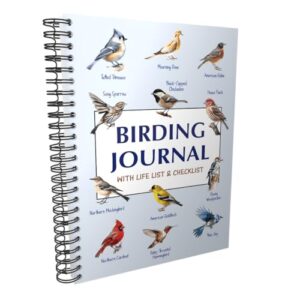
The Birding Life List Journal is built around one simple idea: every species you’ve ever confirmed gets its own dedicated place.
It holds 120 species entries across structured pages, a life list section, and a customizable checklist with eight columns per bird — all cross‑referenced by page number so you can jump between sections without hunting.
At $14.99, the cardboard cover and standard paper are functional rather than rugged, so it’s best suited to fair‑weather outings or home desk use.
| Best For | Hobbyists and casual birders who want a structured, all-in-one journal for tracking and organizing their species sightings at home or on fair-weather outings. |
|---|---|
| Binding Type | Spiral binding |
| Cover Material | Cardboard |
| Page Count | 133 pages |
| Format | A5 size |
| Species Tracking | Life List + Checklist |
| Primary Use | Field & home logging |
| Additional Features |
|
- Covers all the bases in one book — life list, detailed species pages, and a customizable checklist, all linked by page-number cross-references
- Generous capacity with 120 entries and dedicated space for written notes and hand-drawn sketches
- Lies completely flat thanks to spiral binding, making it easy to write in the field
- Capped at 120 species, so prolific birders will eventually run out of room
- Standard paper may bleed or warp with heavy ink, markers, or any moisture exposure
- At $14.99, the cardboard cover and basic paper feel a bit steep for what you’re getting
2. Rite in the Rain Birding Journal
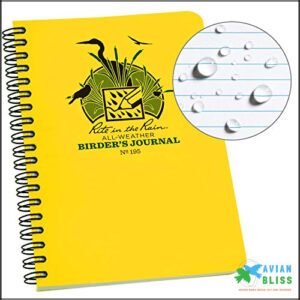
When rain moves in fast — and it always does — the Rite in the Rain Birding Journal keeps working. Its weatherproof Polydura cover and water-repellent pages resist mud, sweat, and downpours, so your notes stay legible even when the paper is wet.
At 3.2 oz and 4.625 × 7 inches, it slips into a vest pocket without bulk. The Wire-O binding lies flat, and alternating sketch and lined pages give you room for both quick plumage diagrams and detailed behavioral notes — exactly what active field sessions demand.
| Best For | Birders and outdoor enthusiasts who regularly log notes in wet or unpredictable weather and need a compact, field-ready journal that holds up to the elements. |
|---|---|
| Binding Type | Wire-O binding |
| Cover Material | Polydura (waterproof) |
| Page Count | 64 pages |
| Format | Pocket-size |
| Species Tracking | General field notes |
| Primary Use | Rainy field conditions |
| Additional Features |
|
- Pages genuinely resist water — you can keep writing through rain, sweat, and splashes without your notes smearing or the paper falling apart.
- The alternating sketch and lined layout is a natural fit for birding, giving you space to jot quick ID notes alongside a rough plumage sketch on the same spread.
- At 3.2 oz and pocket-sized, it disappears into a vest or cargo pocket so it’s always within reach without adding noticeable weight.
- Only 32 writable pages per journal, so heavy loggers will burn through one quickly and need to carry extras or buy in bulk.
- You’re locked into pencils or all-weather pens — standard ballpoints and gel pens won’t work on wet paper, which means remembering to swap out your usual writing tool.
- The 4.625 × 7 inch size is handy for pockets but tight if you prefer roomier pages for detailed sketches or longer written observations.
3. A5 Spiral Birdwatching Journal
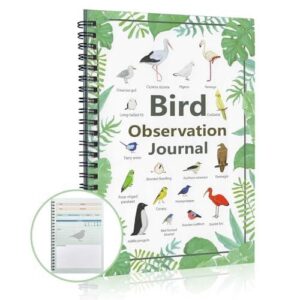
The A5 Spiral Birdwatching Journal steps up in size — 5.83 × 8.27 inches and 126 full-color pages give you noticeably more room to sketch plumage details and write extended behavioral notes.
Its spiral lay-flat binding aids one-handed writing well, and the 16-page alphabetical index makes retrieving past sightings quick. The 250 gsm laminated cover resists light moisture and daily wear. One caveat worth knowing: the small interior lines can feel cramped if your handwriting runs large.
| Best For | Birdwatchers, students, and researchers who want a structured, portable journal with enough space to sketch and write detailed field notes. |
|---|---|
| Binding Type | Spiral binding |
| Cover Material | 250gsm laminated |
| Page Count | 126 pages |
| Format | A5 size |
| Species Tracking | Index + observation sections |
| Primary Use | Field observation & sketching |
| Additional Features |
|
- Spiral lay-flat binding makes one-handed writing and sketching easy while you’re in the field
- The 16-page alphabetical index lets you quickly pull up past sightings for personal tracking or research
- 250 gsm laminated cover holds up well against light moisture and everyday wear
- Small interior lines can feel cramped for anyone with larger handwriting
- The softcover may bend or get damaged without a protective sleeve
- A misspelling on the front cover ("Eagle") could be a turn-off if you’re buying it as a gift
4. BitKan Bird Watching Notebook
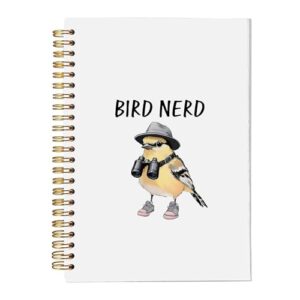
If portability tops your list, the BitKan delivers where it counts. Its pocket-friendly spiral binding lies flat on your knee, a clipboard, or a fence post — wherever you happen to be standing when a warbler drops in.
The prompted layout guides you through date, location, weather, and species without eating up writing time. *Think of it as a gentle nudge rather than a rigid form.
- Best suited for beginners and casual observers who want organized records without complexity.
| Best For | Bird watchers, students, and on-the-go note-takers who want a compact, lightweight notebook they can toss in a bag and use anywhere. |
|---|---|
| Binding Type | Metal spiral |
| Cover Material | Rigid hardcover |
| Page Count | Not specified |
| Format | Compact size |
| Species Tracking | None (blank pages) |
| Primary Use | Everyday journaling/gift |
| Additional Features |
|
- Spiral binding lets the notebook lay completely flat, making it easy to write on uneven surfaces like a knee or fence post
- Sturdy hardcover doubles as a writing surface, so no clipboard needed in the field
- Compact 5.5 × 8.3 in. size slips into most bags without adding bulk
- Blank, unlined pages can be tricky for anyone who likes straight, neat handwriting
- Only one cover color/design available, so no variety to choose from
- Paper thickness isn’t specified, meaning heavy markers or wet ink may bleed through
5. Sibley Bird Life List Diary
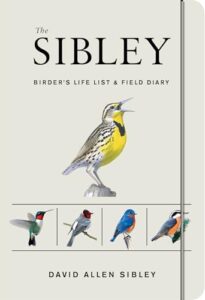
David Sibley’s name carries real weight in birding circles, and this diary lives up to it. With space for all 923 North American species — plus date, location, and personal notes for each — it doubles as a field companion and a long-term life list record.
The six-column checklist lets you track multiple years or trips without starting over. At around one pound, it’s not your lightest option, but serious listers often consider that a fair trade.
| Best For | Dedicated birders who want a single, organized place to log sightings, build a life list, and track multiple trips or years across all 923 North American species. |
|---|---|
| Binding Type | Not specified |
| Cover Material | Thin softcover |
| Page Count | 304 pages |
| Format | Compact book |
| Species Tracking | Life List + Checklist + Index |
| Primary Use | At-home reference & tracking |
| Additional Features |
|
- Covers all 923 North American species with space for dates, locations, and personal notes on each
- The six-column checklist makes it easy to track multiple trips or years without starting fresh
- Backed by the trusted Sibley name, with a built-in alphabetical index for quick cross-referencing
- Won’t include species added after 2024, so new entries have to be logged manually
- The index has some errors and is printed in light gray, which can make it tricky to read
- The cover is on the thin side and may not hold up well with heavy long-term use
Frequently Asked Questions (FAQs)
What to include in a birding journal?
A good birding journal is your field memory — capturing species, location, time, weather, plumage details, behaviors, and habitat context so every sighting stays vivid and retrievable long after you’ve left the trail.
What colors should I avoid when birding?
Avoid bright colors like neon, white, red, orange, and metallic fabrics — they reflect light, startle birds, or mimic warning signals. Stick to earth tones: olive, brown, gray, or muted green.
Can beginners use a birding journal effectively?
Yes, beginners can absolutely use a birding journal effectively. Starting simple — just date, location, and one or two birds spotted — builds a solid habit fast and sharpens your eye with every outing.
How do I organize multiple journals over time?
The journals pile up faster than you’d expect. Label each with a year and quarter, file them together, and build a master index listing start dates — so any sighting is easy to find later.
Should I share my birding notes with others?
Sharing your notes can be a real gift to fellow birders. Share selectively — trusted companions benefit most, while public posts should use vague locations to protect sensitive species from disturbance.
How often should I update my birding journal?
Update after every outing — even a quick two-line note beats a blank page. During spring and fall migration, aim for daily entries to catch rare visitors before they move on.
Can digital tools replace a paper birding journal?
Apps won’t log your wonder — but they’ll organize it well.
Digital tools can’t fully replace a paper journal, but they make a powerful backup. Use both for the best of both worlds.
Conclusion
A thousand small observations, scribbled in the margins of a worn notebook, can outweigh a single blurry photograph every time.
What makes a good birding field journal isn’t the brand you choose or how neat your handwriting runs—it’s the habit of capturing what you actually noticed, right there in the field.
Date, habitat, behavior, a rough sketch.
Details compound over time, quietly turning scattered sightings into something you can genuinely learn from.