This site is supported by our readers. We may earn a commission, at no cost to you, if you purchase through links.
By late July, a male Mallard looks nothing like himself. The emerald head is gone, replaced by streaky brown feathers that make him nearly indistinguishable from a female. This is eclipse plumage—a brief, camouflaged disguise that most birders either miss entirely or mistake for a sick bird.
The fall breeding plumage change is what brings him back. Starting in September, hormones triggered by shortening daylight fire up feather follicles, flood the bloodstream with testosterone, and drive carotenoid pigments deep into newly forming feathers. The transformation isn’t cosmetic. It runs on precise biological machinery—thyroid hormones, sulfur-rich amino acids, nanostructures that bend light into iridescence.
Understanding how it works changes what you see in the field.
Table Of Contents
Key Takeaways
- Eclipse plumage isn’t a sign of sickness — it’s a deliberate camouflage strategy that male ducks use while flightless and vulnerable after the breeding season ends.
- Shortening daylight triggers a precise hormonal chain — from deep‑brain photoreceptors to thyroid hormones to testosterone — that drives the full transition back to vivid breeding colors.
- Feather replacement demands roughly 30% more energy than baseline, requiring sulfur‑rich amino acids, minerals like calcium and zinc, and productive wetlands to pull it off.
- Even mid‑molt, you can reliably identify ducks by stable features — bill color, iridescent speculum patches, and leg tone — that shift predictably with hormone levels and age.
What is Fall Breeding Plumage Transition?
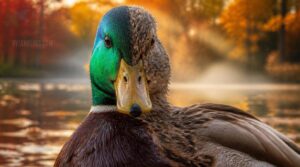
Every fall, male ducks don’t just look different — they’re going through one of the most dramatic biological transformations in the bird world. Understanding what’s actually happening beneath those feathers means knowing a few key things. Here’s where to start.
From the striking eclipse phase to full breeding plumage, fall bird plumage changes in ducks reveal a surprisingly complex molt cycle most people never notice.
Seasonal Feather Replacement
Every feather on a duck’s body has an expiration date. Through prebasic molt, worn feathers are shed and replaced in a precise sequence along feather tracts—the mapped pathways where new quills emerge from calamus follicles beneath the skin.
As each follicle activates, keratin synthesis kicks in, demanding sulfur-rich amino acids to build the new shaft. Pigment deposition in the barbs follows, restoring color.
The onset of molt aligns with hormonal changes triggered by photoperiod to avoid interference with breeding activities.
Eclipse to Breeding Plumage
Once that first molt cycle strips away the worn feathers—as covered above—what replaces them isn’t breeding plumage right away. Male ducks enter eclipse plumage first: a drab, brown camouflage that hides them while they’re flightless and vulnerable.
- Eclipse camouflage reduces predation risk during the flightless period
- Post-breeding molt temporarily sacrifices color for survival
- Seasonal plumage change follows a species-specific schedule
- Breeding plumage returns through a second molt cycle
- Molt timing variations mean some species stay eclipsed longer
That dull disguise doesn’t last. A second molt restores vivid colors for courtship.
Pre-alternate Molt Explained
The second molt cycle you’re waiting on has a name: the pre-alternate molt. It’s a partial replacement — mostly head and facial feathers — that shifts a drake from drab eclipse back toward breeding colors without a full feather overhaul.
Think of it as a targeted refresh rather than a complete wardrobe change.
Why Colors Return in Fall
So why do those colors come back at all? The short answer is survival.
As days shorten, deep-brain photoreceptors detect the declining light and trigger a hormonal cascade — one that ultimately drives pigment synthesis and feather regrowth.
It’s not coincidence. It’s precision timing, built around courtship season.
What Triggers Fall Plumage Changes?
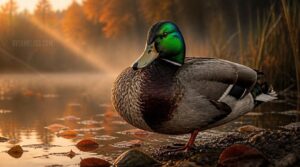
The shift from dull eclipse plumage to vivid breeding colors isn’t random — it’s a tightly orchestrated biological response, and daylight is the one pulling the strings. As days grow shorter in late summer, a chain of hormonal signals fires up inside the duck’s body, each one handing off to the next like relay runners.
Here’s what’s actually driving that transformation, step by step.
Each stage — from partial post-juvenile molts to the full post-breeding overhaul — follows a precise biological logic explained in detail in this guide to juvenile vs. adult bird feather development.
Shortening Daylight Cues
Think of it as nature’s alarm clock. As summer fades, day length shortens — and ducks are paying close attention.
Deep-brain photoreceptors sense that dusk is arriving earlier, narrowing the light window that keeps breeding biology on hold. That shift in seasonal photoperiod cues quietly unlocks the molt cycle timing that drives fall plumage changes.
Hormonal Molt Signals
Once that light cue fires, your duck’s brain doesn’t wait around. The hypothalamus releases gonadotropins — chemical messengers that kick prolactin molt initiation into gear, signaling feather follicles that breeding season is over and replacement can begin.
Follicle receptor sensitivity spikes at this stage, meaning the follicles are primed and listening. Meanwhile, glucocorticoid energy allocation quietly regulates how much metabolic fuel gets redirected toward feather growth.
Thyroid-driven Feather Growth
Here’s where the thyroid steps in. Once gonadotropins sound the alarm, the pituitary prompts thyroid hormone release — specifically T4, which deiodinase enzymes inside the feather pulp convert into the more active T3.
That conversion is what actually flips the switch. T3 drives follicle cell proliferation, ramping up keratin protein synthesis so new feathers can physically push through.
Testosterone and Color Intensity
Testosterone is the pigment foreman — it dictates how rich and saturated those newly grown feathers actually look. Higher testosterone means deeper carotenoid pigment deposition, which is what pushes a Mallard’s head from dull green to that electric iridescent emerald.
What does this look like in practice? Three honest signals:
- Carotenoid color vividness tracks directly with testosterone, making orange and red patches more vivid
- Visual contrast against surrounding plumage increases, making dominant males pop
- Color intensity scales with age and rank — older drakes simply look richer
That’s not vanity. It’s an honest signal of quality.
Stress Hormone Effects
Cortisol and corticosterone don’t just stress a bird out — they actively compete with the hormonal signals driving molt. When corticosterone stays elevated too long, it suppresses feather follicle activity, producing narrower, structurally weaker feathers.
That’s chronic stress made visible. A duck moving through poor wetlands or heavy predation pressure during molt pays the price in plumage quality come courtship season.
A duck stressed during molt wears its hardship in every feather come courtship season
Fall Molt Timing in Waterfowl
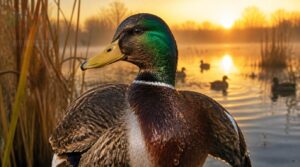
Timing is everything for fall molt, and waterfowl run on a surprisingly precise internal clock. From the drab eclipse phase of late summer to the crisp breeding colors that emerge just in time for courtship, each species follows its own schedule. Here’s how that timeline unfolds, step by step.
Late Summer Eclipse Phase
By late July, most male ducks have traded their vibrant colors for something far less glamorous — the eclipse plumage camouflage of drab, mottled brown. This postbreeding molt is a deliberate biological strategy, not a flaw. Flightless and vulnerable, these birds blend into reedy marshes while their bodies quietly rebuild.
The late summer molt sets three critical foundations:
- Primary feather replacement restores the flight capability lost during the flightless eclipse phase
- Transitional feather patches emerge across the scapulars, hinting at the breeding colors coming in autumn
- Juvenile plumage acquisition begins in first-year birds, who are developing adult-type feathers for the first time
This is your autumn color foundation — the avian molt cycle’s quiet engine running beneath the surface.
September Color Emergence
September is when the quiet work of the postbreeding molt finally becomes visible.
Pin feathers push through along the scapulars and mantle first — that dorsal color spread working its way from back to wings. Carotenoids from autumn invertebrates start loading into new shafts, deepening the oranges and warm tones.
Watch the feather sheaths: their emergence signals active seasonal color change underway.
October Feather Replacement
By October, the molt has picked up real momentum. Sequential feather tracts—breast and belly first, then flanks and back—replace worn postbreeding plumage in waves. You’ll spot pin feathers pushing through the skin, their blood quills visible under close inspection:
- Breast feathers renew first, restoring insulation
- Flank and scapular tracts follow, rebuilding color contrast
- Back feathers close the sequence, completing body coverage
Winter Courtship Readiness
By mid-winter, the hard work of feather replacement pays off. Males carry full breeding plumage—iridescent heads, crisp scapulars, bright speculums—and testosterone levels climb, sharpening display vigor.
That’s when courtship intensifies: wing flicks, tail bobs, ritualized vocalizations.
Birds on richer diets show more elaborate displays and higher pairing success.
Territory defense kicks in early, setting the stage for spring nesting.
Species-specific Schedules
Not every duck follows the same calendar. Mallards hit peak breeding coloration by October–November, while Wood Ducks in southern latitudes often reach near-prime plumage a full month earlier.
Blue-winged teal can stay partially eclipsed until December.
Diving ducks like Canvasbacks push their maximal breeding colors all the way to January–February — a timeline shaped by migration distance and local habitat quality.
Energy Costs of Feather Replacement
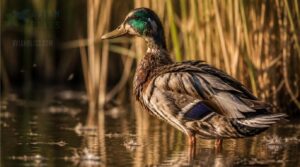
Replacing thousands of feathers isn’t free — it costs a duck real biological currency. The body has to ramp up in several specific ways just to pull it off. Here’s what’s actually happening under those new feathers:
Higher Metabolic Demand
Think of feather molt as your body simultaneously growing a new set of fingernails — across every inch of skin at once. That’s why resting metabolic rate climbs during this period.
Blood flow surges to active follicles, delivering the amino acids and minerals driving keratin construction. ATP synthesis demands spike hard.
Even thermoregulation shifts, since rapid tissue growth generates extra heat that the bird must manage alongside everything else.
Protein for Keratin Growth
Feathers are almost pure keratin — a protein built from chains of amino acids your bird must pull entirely from its diet. The key players are cysteine and methionine, both sulfur-containing, because their sulfur atoms form the disulfide bonds that lock keratin fibers into tight, durable structures.
- Sulfur amino acids cross-link keratin strands, creating tensile strength
- Lysine and glycine stabilize the helical scaffold inside each fiber
- Follicle cells rely on blood-delivered amino acids for continuous keratin synthesis
- Zinc-dependent enzymes coordinate amino acid incorporation throughout feather growth
Without adequate protein in their diet, keratin synthesis stalls — and so does the molt.
Minerals for Feather Strength
Keratin doesn’t build itself from protein alone. The mineral framework behind each feather is surprisingly complex — calcium phosphate integrates into the keratin matrix, giving barbs structural rigidity, while zinc acts as an enzyme cofactor, driving the follicle-level chemistry that assembles those protein chains.
Deficiencies in either don’t just slow growth; they produce brittle, misshapen feathers that won’t survive a full season.
Lipids and Waterproofing
Think of the preen gland as a built-in wax factory. During molt, it ramps up production of waxy, lipid-rich secretions that ducks spread across their contour feathers — creating a continuous hydrophobic film that sheds water on contact. Without that barrier, cold water reaches the skin fast, and thermoregulation collapses.
Dietary lipids — pulled straight from aquatic invertebrates — directly fuel this process.
Wetland Food Importance
Wetlands aren’t just habitat — they’re the kitchen.
During molt, a duck’s energy demands spike roughly 30% above baseline, and that fuel has to come from somewhere.
Aquatic invertebrate richness — insect larvae, snails, crustaceans — delivers the sulfur-rich amino acids keratin production requires. Snails specifically supply calcium, directly strengthening emerging feathers.
Without productive wetlands, food availability and plumage quality collapse together.
Identifying Birds During Transition
Catching a duck mid-molt can feel like a puzzle — familiar markings are half‑finished, and the bird in front of you doesn’t quite match the field guide photo.
The good news is that some features stay reliable no matter where a bird is in its molt cycle.
Here are the key things to look for when the plumage isn’t giving you easy answers.
Bill Color Clues
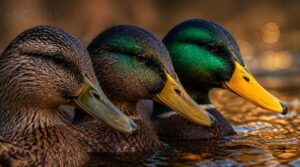
Bill color is one of your most reliable windows into where a duck stands in its molt cycle. A Mallard drake’s bill shifting from dull olive to vivid yellow signals that breeding plumage is arriving — driven by rising testosterone that triggers carotenoid uptake.
Juveniles usually show patchier, duller bills than adults, so bill hue helps you sort age classes in mixed flocks too.
Speculum Feather Markings
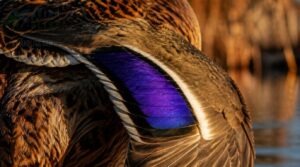
The speculum is your secret weapon during molting phase.
Unlike body feathers that shift and mottled through molt, iridescent speculum patches stay structurally vibrant — their colors arise from light interference within nanostructures, not pigment, so wear and hormonal shifts barely touch them.
A Mallard (Anas platyrhynchos) still flashes that purple-blue with white border even mid-molt.
Emerging Pin Feathers
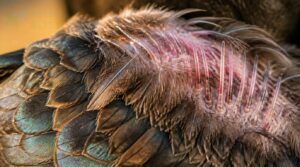
Look past the speculum and you’ll spot another clue: emerging pin feathers on the scapulars. These pinkish tubes — still encased in a blood-rich sheath — signal active feather growth.
The blood supply nourishes the developing keratin shaft until barbs unfurl and interlock. Once mature, the sheath peels away, revealing fresh plumage beneath.
Leg and Foot Color
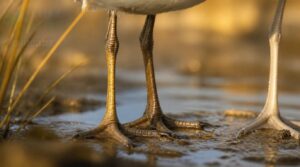
Leg and foot color rounds out your field toolkit. As pre-alternate molt advances, melanin deposits in the tarsus deepen — shifting from pale yellow or gray toward olive-brown. Blood flow changes driven by rising testosterone improve this.
- Darker leg tone signals courtship readiness
- Mottled tarsus indicates molt still in progress
- Juvenile legs stay paler than adult breeding birds
Shape and Size Cues
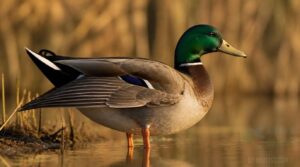
Your visual cortex picks up more than color — it reads shape.
As breeding plumage develops, wing chord length increases, and tail rectrices grow proportionally longer, creating a noticeably pointed tail profile. The bill narrows slightly relative to head height, and the overall silhouette sharpens. A sleeker duck usually means hormones are doing their job.
Frequently Asked Questions (FAQs)
What is the rarest plumage color in birds?
True albinism—a complete absence of pigment—is the rarest coloration in birds. It produces pure white feathers and red eyes, but occurs so rarely in wild populations that most birders never encounter it.
What is the plumage of indigo bunting in the fall?
In summer, a male indigo bunting blazes electric blue. Come fall, that brightness fades into mottled brown hues, with blue facial patches lingering — a subdued, camouflaged bird wearing just hints of its former brilliance.
How does climate change affect waterfowl molt timing?
Climate change is quietly reshuffling waterfowl molt schedules. Warmer autumns advance feather replacement, while storms, drought, and light pollution disrupt hormonal cues — leaving ducks racing a calendar that no longer matches their biology.
How do predators respond to molting birds in the wild?
Predators zero in fast. Wing gaps from molt make takeoffs sluggish, exposing birds to ambush. That’s why molting waterfowl push deep into dense marsh cover — refuge over visibility, survival over foraging.
Does pollution in wetlands disrupt feather pigmentation or growth?
Yes — wetland pollutants disrupt both pigmentation and feather growth. Heavy metals impair keratin synthesis, while carotenoid disruption dulls breeding colors. Endocrine interference can delay molt timing entirely.
Conclusion
The devil is in the details—and the fall breeding plumage change is proof. What looks like a battered, patchy duck in late summer is actually a bird mid-rebuild, running on hormones, amino acids, and shortening days.
Once you understand the machinery beneath those emerging feathers, you’ll never scan a wetland the same way.
That streaky brown bird isn’t confused or sick. It’s working.
And by October, the emerald head will tell you exactly how well.
- https://www.audubon.org/news/understanding-basics-bird-molts
- https://oaklandnaturalareas.com/2018/09/10/photos-of-the-week-prepping-for-change-the-fall-molt
- https://northernwoodlands.org/outside_story/article/eclipse-plumage
- https://birdsoftheworld.org/bow/species/ambduc/cur/appearance
- https://birdnationblog.wordpress.com/tag/eclipse-plumage