This site is supported by our readers. We may earn a commission, at no cost to you, if you purchase through links.

A woodpecker showing up at your suet feeder feels like a small win—until you realize the suet’s gone rancid, a squirrel claimed the cage, and the birds keep flushing back into the treeline. Placement drives everything. Most backyard birders hang feeders wherever looks convenient, then wonder why the visitors don’t stay.
The spot you choose affects which species find the feeder, whether predators can ambush them, and how well the suet holds up through heat and rain. Height, distance from cover, and window proximity aren’t guesswork—there are specific numbers that work.
Get the placement right, and your yard becomes somewhere birds actually return to.
Table Of Contents
- Key Takeaways
- Choose The Best Feeder Height
- Hang Suet Feeders Near Safe Cover
- Protect Birds From Windows
- Stop Squirrels and Predators
- Consider Weather and Seasons
- Place Feeders for Easy Care
- Frequently Asked Questions (FAQs)
- Do squirrels bother suet feeders?
- Will birds eat suet in the winter?
- Do you hang suet in the trees or on a hook?
- How to get birds to notice suet feeders?
- Which birds benefit most from suet feeders?
- Should suet feeders be moved seasonally around the yard?
- How far apart should multiple suet feeders be placed?
- Do suet feeders need to face a specific direction?
- Conclusion
Key Takeaways
- Hang suet feeders 4 to 6 feet high and 6 to 10 feet from cover to keep birds safe from cats, squirrels, and ambush predators.
- Place feeders either within 3 feet of windows or beyond 30 feet to prevent deadly bird collisions—the danger zone sits between those two distances.
- Follow the 5-7-9 rule: mount feeders 5 feet up, 7 feet from any launch point, and 9 feet below overhanging branches to stop squirrels cold.
- Match feeder placement to the season—afternoon shade in summer keeps suet from melting, while an east-facing spot in winter lets morning sun warm the cake just enough for birds to feed.
Choose The Best Feeder Height
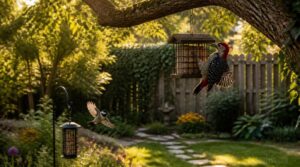
Feeder height shapes everything — which birds show up, how safe they feel, and how often you’ll actually use it. Getting it right doesn’t take much, but a few key numbers make a real difference. Here’s what to keep in mind when deciding how high to hang yours.
For a deeper look at placement, hardware, and height specifics, hanging bird feeders for backyard wildlife covers the practical details that turn a good setup into a great one.
Four to Six Feet High
Hang suet feeders 4 to 6 feet high for the best results. That range — 48 to 72 inches off the ground — keeps food reachable for small songbirds while reducing most ground-level threats.
Three reasons this height works:
- Easy refill access without a ladder
- Clear visibility from patios and windows
- Morning sun reaches the feeder naturally
Urban yards benefit most since this height matches common shrub lines.
Above Cat Reach
Cats can leap roughly 4 feet straight up. Keeping your feeder between 4 and 6 feet high puts it right at the edge of that reach — close enough to watch, far enough to protect.
| Factor | Recommendation |
|---|---|
| Minimum safe height | 4 feet |
| Maximum easy-access height | 6 feet |
Mount on a weatherproof pole with corrosion-resistant hardware to hold that height reliably.
Easy Refill Access
Getting back down to earth matters just as much as height. A feeder locked at 5 to 6 feet lets you refill without a ladder.
Look for top-loading lids, sliding refill drawers, and magnetic latching doors — these cut refill time to under 30 seconds. Transparent viewing panels show suet levels at a glance, so you’re never caught empty.
Safe for Small Birds
Height keeps small birds safe. At 4 to 6 feet, sparrows and chickadees land comfortably without stress. Keep feeders away from dense shrubs or hedges — cats and snakes hide there.
Avoid aerosol cleaners or pesticides near feeders, since small birds have tiny airways. Toxic fumes from nonstick cookware or solvents can cause real harm.
Hang Suet Feeders Near Safe Cover
Where you hang your suet feeder matters just as much as what’s inside it. Birds need to feel safe enough to land, eat, and escape if something threatens them. Here’s what to keep in mind when choosing the right spot.
Six to Ten Feet Away
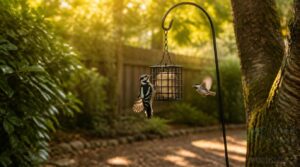
Place your suet feeder 6 to 10 feet from trees, fences, or shrubs. That gap gives birds a clear buffer — enough space to spot danger and react.
- Keeps squirrels from leaping straight onto the feeder
- Lets birds approach from multiple angles
- Reduces cover for cats or snakes near the base
- Makes refills easier without crowding nearby plants
That distance works.
Avoid Dense Hiding Shrubs
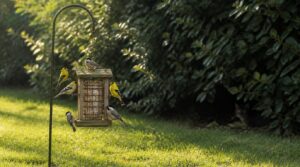
Dense shrubs within 6 to 10 feet of your feeder create predator blind spots that smaller birds like chickadees and goldfinches can’t afford. Thick cover hides cats and snakes until it’s too late.
The same instinct applies to squirrels—if you’ve ever wondered just how far a squirrel can leap toward your feeder, that distance gives you a clear picture of how much open space actually matters around your setup.
Thin nearby hedges or remove them entirely. Keep a 4 to 6 foot clearing around the base so birds always have an open escape path.
Keep Open Sightlines
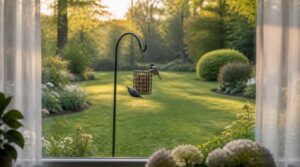
Birds scan constantly. Unobstructed view corridors let them spot threats fast and escape cleanly.
Keep these sightlines clear:
- Remove visual clutter within 8 to 12 feet
- Trim vertical garden elements blocking window views
- Use minimal window treatments during peak activity
- Test sightlines at different times of day
Sightline testing takes one minute and prevents blind spots you’d otherwise miss.
Use Nearby Perches
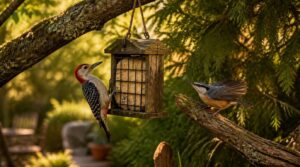
A sheltered tree limb within 2 to 6 feet gives birds a staging spot before feeding. Placing feeders near effective protective cover helps reduce the risk of predation.
| Perch Type | Best For |
|---|---|
| Natural branch | Woodpeckers, nuthatches |
| Smooth metal rod | Smaller songbirds |
| Rough bark perch | Clinging species |
Use multi-perch layouts to cut crowding. Inspect monthly for splinters. Perch material durability matters — replace cracked wood quickly.
Protect Birds From Windows

Windows are one of the biggest threats to backyard birds, and feeder placement plays a huge role in keeping them safe. The distance between your feeder and the nearest glass matters more than most people realize. Here’s what you need to know to get it right.
Within Three Feet
Hanging a suet feeder within three feet of glass is one of the smartest moves you can make for bird collision prevention.
- Birds slow down before landing
- Impact force stays low
- Your maintenance reach stays easy
- Predator sightlines stay clear
- Bird approach paths stay open
That short proximity safety zone keeps avian safety simple.
Beyond Thirty Feet
Place your suet feeder beyond thirty feet from any window and birds have room to maneuver freely. At that range, they approach from varied angles instead of flying straight toward glass. That spread reduces competition too, since birds don’t cluster.
Keep landscaping low in this zone — clear sightlines help birds spot the feeder and land without hesitation.
Avoid Danger Zones
The gap between 3 and 15 feet from your window is a high-speed impact zone. Birds build up too much speed to stop, but not enough distance to avoid glass. Keep feeders clear of this range entirely.
Dense shrubs nearby can hide cats and block aerial escape routes, leaving birds with nowhere to go if a threat appears.
Watch Glass Reflections
Large windows act like mirrors from certain viewing angles. When light hits glass at a steep angle, it reflects instead of passing through — this is total internal reflection. Birds can’t tell the difference between sky and glass. A window reflecting open habitat looks identical to real space.
Birds cannot distinguish a window reflecting open sky from real space — glass becomes an invisible wall
Position feeders away from large, unmarked windows that mirror the sky or surrounding trees.
Add Window Markers
Reflective glass is just half the problem — birds also need a visual cue that a solid surface exists. Window markers break up that invisible barrier.
Use markers with bold outlines (at least 1.5mm wide) and strong color contrast, meeting a luminance difference of 4.5:1. Place them at the window centerline for accuracy. UV-resistant materials keep them visible season after season.
Stop Squirrels and Predators
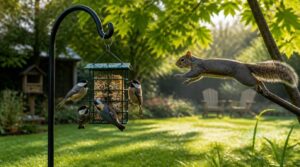
Squirrels and predators can empty a suet feeder before the birds even get a chance. The good news is a few smart placement tricks go a long way toward keeping the right visitors at your feeder. Here’s what actually works.
Follow The 5-7-9 Rule
Think of bird feeder placement like a formula that locks out freeloaders. The 5-7-9 rule keeps squirrels and predators at bay:
- Mount feeders 5 feet high on a pole
- Keep them 7 feet from any launch point
- Position them 9 feet below overhanging branches
Squirrels are impressive jumpers, so every foot of distance counts.
Add Squirrel Baffles
Squirrel baffles are your best physical defense. Dome-shaped baffles mount above the feeder, while cone-style baffles sit below on the pole — both deny grip and stop climbers cold.
Place the baffle 5 to 6 feet high for real deterrence. Wipe the surface regularly; seed residue creates grip. Choose UV-stabilized polycarbonate so it won’t crack or yellow after a season outdoors.
Use Upside-down Feeders
Flip the script on freeloaders. Upside-down suet feeders force birds to cling beneath the ports — a natural move for goldfinches, but awkward for squirrels.
Three reasons to try one:
- Gravity deters heavier birds that can’t grip inverted
- Six-plus recessed ports reduce spillage and competition
- Goldfinches thrive in specialized feeding niches others ignore
Hang your suet feeder here, and watch songbirds claim their spot.
Avoid Overhanging Branches
Branches hanging directly above your feeder are a squirrel’s highway. Keep branches at least 9 feet away overhead — that gap stops most leaping pests cold.
Dead or cracked limbs also drop without warning, especially in storms. Inspect overhangs seasonally and prune weak growth before it becomes a hazard. Open sightlines let birds spot danger fast.
Try Pole-mounted Baffles
A pole-mounted baffle stops squirrels before they reach your feeder. Slide the cone-shaped shield onto the pole below the feeder — most fit 1 to 1⅜-inch poles with adjustable clamps. Tighten hardware firmly so wind can’t shift it.
UV-resistant plastic and galvanized steel hold up through seasons. Wipe the surface clean periodically so squirrels can’t grip buildup.
Consider Weather and Seasons
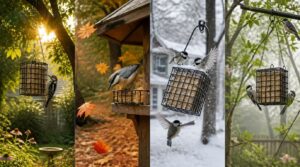
Weather plays a bigger role in suet placement than most people realize. The wrong spot can melt your suet in summer or freeze it solid in winter, and birds will simply move on. Here’s how to position your feeder to work with the seasons, not against them.
Provide Afternoon Shade
Hot afternoon sun is suet’s worst enemy. Direct sun from 1:30 pm to 4:30 pm melts fat fast, leaving feeders greasy and birds uninterested.
Pick your suet feeder placement carefully:
- Use trees or pergolas for consistent afternoon shade
- Keep open sightlines so birds spot the feeder easily
- Check shade structures after storms for stability
Proper placement in a cool microclimate keeps suet firm and birds coming back.
Catch Morning Winter Sun
Winter mornings are your suet feeder’s best friend. An east-facing orientation catches direct sun right after sunrise, gently warming the cake before birds arrive.
This solar warming benefit keeps suet soft enough to peck without melting it. Place your feeder where morning light hits it first. Birds will linger on sunlit perches nearby, conserving energy while feeding during the coldest hours.
Block Heavy Rain
Rain doesn’t just wet the suet — it ruins it fast. Wind-driven rain pushes moisture sideways through gaps standard shelter design can’t handle.
Here’s what actually works:
- Mount a 12-inch overhang above your feeder to redirect runoff away from the cake.
- Place gravel or mulch underneath to drain pooling water quickly.
- Choose feeders with water-resistant housings to keep suet dry longer.
Reduce Wind Exposure
Wind can dry out suet and knock feeders around. Plant evergreens perpendicular to prevailing winds to cut ground-level gusts by up to 20 percent. A 1.5-meter hedgerow in a staggered pattern cuts feeder-height wind by 30 percent.
On blustery afternoons, move feeders to the leeward side of slopes, fences, or sheds where calmer air naturally pools.
Use No-melt Summer Suet
Suet melts fast in summer heat. No-melt suet cakes use oats, cornmeal, or flour as binders instead of extra fat, staying firm up to 130°F. That keeps your suet bird feeder clean and drip-free on hot afternoons.
These blends still pack nuts, seeds, or dried insects — giving woodpeckers and chickadees the protein they need during breeding season. Check them daily and replace if you smell anything sour.
Place Feeders for Easy Care

The best feeder placement doesn’t just attract birds — it makes your job easier too. A little smart thinking about where you set things up can save you time on cleaning, refilling, and keeping suet fresh. Here’s what to keep in mind when setting up for easy care.
Near Seed Feeders
Hang your suet feeder 3 to 6 feet from your existing seed stations. Birds forage across both without burning extra energy flying long distances.
- Attract mixed species that switch between seed and suet
- Mirror natural foraging where birds sample nearby food sources
- Support feeding station variety without crowding any single spot
That’s why station proximity drives more consistent backyard bird feeding visits.
Easy Cleaning Access
Keeping your feeder clean starts with where you hang it — position it at a bird feeder height you can reach comfortably without a ladder.
Choose feeders with tool-free disassembly and removable suet frames so cleaning takes under a minute. Non-porous materials won’t absorb grease, and drain slit design prevents standing water. Quick-release components make bird feeder maintenance fast and genuinely painless.
Check Suet Freshness
How do you know when a suet cake has turned? Check color, smell, and texture at every refill.
- Discard suet blocks showing dark spots, mold, or slimy film
- Replace suet cakes every 7–10 days in warm weather
- Choose no-melt suet cakes during summer for texture stability
- Store extras frozen in airtight bags to protect energy-dense nutrients
Bad avian nutrition starts with rancid suet.
Stagger Multiple Feeders
When you run multiple bird feeding stations, spacing them 6 to 10 feet apart cuts competition fast. Birds are territorial, and crowded feeders cause aggression that chases smaller species away.
Vary the heights. One feeder at 4 to 5 feet, another at 6 to 8 feet. Vertical separation draws different species without conflict.
Place feeders on opposite sides of a walking path to split traffic naturally.
Keep Hardware Dry
Wet hardware ruins feeders fast. Use corrosion-resistant fasteners like stainless steel screws on every mount.
- Apply a weatherproof sealant around mounting holes
- Wipe exposed parts dry after rain with a microfiber cloth
- Use IP54-rated enclosures for any electrical components
- Add splash guards beneath hanging hardware
- Inspect and replace rusted parts every season
Dry hardware means your suet feeder placement stays solid longer.
Frequently Asked Questions (FAQs)
Do squirrels bother suet feeders?
Yes, squirrels raid suet feeders regularly. In winter, hunger drives them to seek high-calorie fat sources fast. They can chew through weak feeder materials and clear a suet cake before birds get a chance.
Will birds eat suet in the winter?
Birds are suet-crazy in winter. Cold days spike energy demand peaks, and suet cakes deliver fat-rich calories fast. Woodpeckers, chickadees, and nuthatches flock to it when insects vanish and natural food runs scarce.
Do you hang suet in the trees or on a hook?
Both work well. Hang suet from a tree branch using a rust-resistant S-hook, or mount it on a shepherd’s hook at 5 to 6 feet for easy access and predator control.
How to get birds to notice suet feeders?
Place the feeder near existing activity — seed feeders, birdbaths, or busy shrubs. Scout birds land close by, spot the suet, and signal others. Consistent placement helps birds build recognition fast.
Which birds benefit most from suet feeders?
Woodpeckers, nuthatches, and chickadees benefit most. Titmice, sparrows, and finches visit often too. Wrens and warblers drop by in cold snaps when insects vanish.
Should suet feeders be moved seasonally around the yard?
Yes, moving suet feeders seasonally — like rotating crops — helps prevent spoilage, deter pests, and match birds’ shifting needs. Shade in summer, sun in winter.
How far apart should multiple suet feeders be placed?
Keep suet feeders at least ten feet apart to reduce competition. During migration or winter, stretch that to twelve to fifteen feet for better species diversity and fewer crowding conflicts.
Do suet feeders need to face a specific direction?
No, suet feeders don’t need a fixed direction. Face them away from harsh afternoon sun and into open predator sightlines. Adjust with the seasons for shade, wind cover, and easy refill access.
Conclusion
The right spot turns a bare corner of your yard into a woodpecker’s daily stop. Where to hang suet feeders in your yard isn’t complicated once you understand the logic: height, cover, and window distance each do a specific job.
Get those three things right, and the birds will come back on their own schedule. A well-placed feeder doesn’t just attract wildlife—it keeps it. That’s the whole game.
- https://www.thebirdhousechick.com/blogs/resources/where-to-hang-suet-feeder
- https://www.housedigest.com/1719442/where-hang-suet-feeder-attract-birds-yard-garden
- https://birdseedandbinoculars.com/wordpress/where-to-hang-a-suet-feeder
- https://www.kingsyard.com/blog/bird-feeder-setup-placement-guide
- https://www.birdsandblooms.com/birding/attracting-birds/feeding-birds/common-questions-suet