
This site is supported by our readers. We may earn a commission, at no cost to you, if you purchase through links.
A chickadee weighs about as much as two nickels. Yet on a bitter January morning, that tiny bird needs to find enough calories to survive temperatures that would send most creatures into hiding. Suet makes that possible—and once you hang a feeder, you’ll quickly discover you’re not feeding just one or two species.
Winter strips the landscape bare, pushing birds to work harder for every meal. Insects vanish. Berries disappear. The birds that stay behind—woodpeckers hammering frozen bark, nuthatches creeping headfirst down trunks, cardinals flashing red against gray skies—all share one urgent need: dense, reliable calories.
Knowing which birds eat suet in winter helps you feed them smarter, not just more.
Table Of Contents
Key Takeaways
- Woodpeckers, chickadees, nuthatches, and cardinals rely on suet as a high-calorie lifeline in winter when insects and berries disappear from the landscape.
- Placing your feeder near dense shrubs gives birds a quick escape from predators while also shielding them from draining wind chill.
- The best suet blends combine rendered animal fat, peanut butter, seeds, dried fruit, and mealworms to deliver the fat and protein winter birds truly need.
- Keeping suet fresh matters as much as what’s in it — replace cakes regularly to prevent harmful mold and rancid fat.
Woodpeckers That Eat Suet
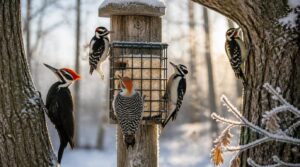
Woodpeckers are probably the first birds that come to mind when you think about suet feeders — and for good reason. These birds are built for clinging and pecking, which makes suet a perfect fit for how they naturally eat. Here are five woodpecker species you’re likely to spot at your feeder this winter.
From choosing the right suet blends to setting up feeders they’ll actually use, understanding what woodpeckers do in winter helps you give them exactly what they’re looking for when temperatures drop.
Downy Woodpeckers
The Downy Woodpecker is North America’s smallest woodpecker, weighing just one ounce. Its zygodactyl feet grip bark firmly while it chisels into dead wood with a surprisingly stout bill, extracting beetle larvae with a tongue that reaches beyond the bill tip.
In winter, suet feeders become a lifeline. High-energy suet replaces scarce insects, keeping these tiny birds warm through freezing nights. You can learn more about their distinctive physical characteristics to help identify them in your yard.
Hairy Woodpeckers
Where the Downy is dainty, the Hairy Woodpecker is built for serious work. At 9 to 10 inches long, its chisel-like bill drives deep into bark to reach wood-boring larvae — prey most birds can’t touch.
When insects disappear in winter, suet fills that gap. You’ll recognize males by the small red nape patch; females have none. Both visit high-energy suet feeders reliably through the coldest months.
Red-bellied Woodpeckers
That bold zebra-striped back makes the Red-bellied Woodpecker hard to miss. Males carry red from nape to crown; females show red only on the nape.
- Forages bark crevices for insects year-round
- Shifts to fruit, nuts, and high-energy suet in winter
- Drums loudly to claim territory
- Excavates nest cavities in dead trees
You’ll spot them at suet feeders reliably through cold months.
Pileated Woodpeckers
If Red-bellied Woodpeckers are reliable visitors, the Pileated is the crown jewel. Measuring 40 to 49 cm, this crow-sized bird sports a vivid red crest and bold white facial stripes.
| Feature | Detail |
|---|---|
| Size | 40–49 cm long |
| Weight | 350–450 grams |
| Crest | Bright red, both sexes |
| Diet shift | Insects, then suet in winter |
Offer high-energy suet in a tail-prop feeder — their powerful frame needs the support.
Northern Flickers
Unlike most woodpeckers, Northern Flickers forage on the ground, probing soil for ants and beetles. Eastern birds flash bright yellow wing patches in flight; western populations show red.
Partially migratory, northern flickers move south when cold sets in. In winter, when insects disappear, they’ll visit suet feeders for high-energy fat. A tail-prop feeder suits their size well.
Small Birds at Suet Feeders
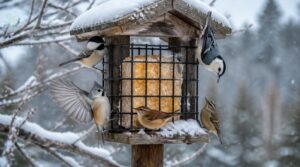
Woodpeckers get most of the attention at suet feeders, but they’re far from the only ones showing up. Plenty of smaller birds rely just as heavily on that high-fat fuel to get through the coldest months. Here are five small species you’ll regularly spot clinging to your suet cage all winter long.
Black-capped Chickadees
Weighing barely 11 grams, the black-capped chickadee punches well above its size at winter feeders. These small, agile birds visit suet regularly, caching fat-rich morsels to retrieve later when temperatures drop.
At just 11 grams, the black-capped chickadee caches fat-rich suet to survive winter’s coldest nights
- Distinctive black cap and bib set them apart instantly
- Their chick-a-dee-dee call signals flock mates to food sources
- High-energy suet supplements scarce winter insects effectively
They travel in mixed flocks, sharing feeder locations socially.
Tufted Titmice
The tufted titmouse brings a sharp, crested silhouette to your backyard bird feeders all winter long. Measuring 5.5 to 6.5 inches, it sports silvery gray upperparts, white underparts, and rusty flanks.
Its loud peter-peter-peter whistle carries far. It caches suet morsels in bark crevices for colder days, foraging in mixed flocks where it often leads other small birds to food.
White-breasted Nuthatches
The white-breasted nuthatch earns its reputation as a head-first climber, spiraling down tree bark in a way no other backyard bird quite can. That long, slightly upturned bill probes every crevice for hidden insects.
At suet feeders, it grabs a bite, then vanishes — caching food in bark for leaner days.
Watch for these three traits:
- Nasal yank-yank calls
- Head-down trunk movement
- Solo visits between flock passes
Carolina Wrens
Carolina Wrens are compact, cinnamon-brown birds, 4.7 to 5.5 inches long, with a bold white eyebrow stripe and an upright tail. They favor dense shrubs and brushy cover across the southeastern United States.
At suet feeders, their curved beak probes for fat and insects. Offer suet near low cover, and their loud, rising teakettle song will give them away first.
Pine Siskins
Small, streaky, and restless, Pine Siskins arrive at suet bird feeders in unpredictable waves. Their irruptive winter movements follow conifer seed crops, so some years you’ll see dozens; other years, none.
- Streaked brown finches, roughly 11–14 cm long
- Specialized beak anatomy pries open cone scales
- Travel in noisy, social flocks with buzzy vocalizations
- Rely on high-energy bird food during cold snaps
- Cling acrobatically to wild bird feeding stations
Cold-Weather Suet Visitors
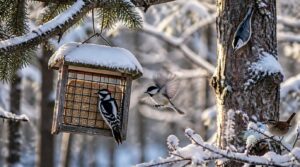
Winter brings a surprising mix of visitors to suet feeders — not just the usual suspects, but a few species you might not expect. Some birds show up mainly when temperatures drop and natural food gets harder to find. Here are five cold-weather regulars worth watching for at your feeders.
Blue Jays
Few backyard birds command attention like a Blue Jay does. Their striking color isn’t pigment — it comes from plumage microstructure that scatters light. At suet bird feeders, they prefer platform styles for accessing high-fat bird food, especially in cold months when food caching habits kick into overdrive.
| Blue Jay Trait | Winter Behavior | Feeder Tip |
|---|---|---|
| Blue Jay intelligence | Problem-solves feeder access | Use sturdy platform feeders |
| Food caching habits | Stores suet for later | Offer generous portions |
| Mimicry abilities | Mimics hawks to clear rivals | Place feeders in the open |
| Breeding season territory | Less aggressive in winter | Set up multiple stations |
| Bold, social nature | Dominates winter bird feeding | Pair with high-fat bird food |
Backyard birdwatching doesn’t get more lively than watching a jay work a feeder.
Yellow-rumped Warblers
After the bold presence of Blue Jays, the Yellow-rumped Warbler offers something quieter but just as reliable. This small bird shifts from insects in summer to berries and high-fat bird food in winter, making suet a natural draw. Their bright yellow rump patch stays visible year-round.
- Adapts diet seasonally for winter survival
- Visits suet during peak fall migration
- Joins mixed flocks near fruiting shrubs
- Emits sharp check calls at feeders
- Females show subtler markings than males
Brown Creepers
Where the Yellow-rumped Warbler stays visible, the Brown Creeper practically disappears. Its streaked brown back mirrors tree bark so precisely you might look right past it.
This bird spirals upward along trunks, probing beneath loose bark for beetle larvae, weevils, and spiders. Mature forest edges near your suet feeder may bring one in during cold months when insects grow scarce.
European Starlings
Unlike the secretive Brown Creeper, European starlings announce themselves loudly and in numbers. Introduced to North America in 1890, they’ve since spread across the continent — glossy black plumage flashing green and purple in winter light.
They’ll raid suet cakes aggressively, outcompeting smaller birds. Their cavity-nesting habits also displace native species, making them unwelcome guests at most feeders.
Northern Cardinals
Few backyard birds are as striking as the northern cardinal. Males wear bright red plumage year-round, while females show soft olive-brown tones with red accents. Their thick, conical bills crack sunflower seeds and suet cakes easily.
Cardinals don’t migrate, staying close to your yard all winter. They’ll take suet opportunistically, especially during cold snaps when high-energy food matters most.
Best Winter Suet Ingredients
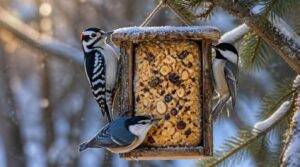
What goes into suet matters more than most people realize. The right ingredients can mean the difference between a feeder that birds return to daily and one they ignore. Here are the five best winter suet ingredients to look for when you’re choosing or making your own.
Rendered Animal Fat
Rendered animal fat — tallow from beef, lard from pork — forms the foundation of any quality suet cake. The rendering process removes water and impurities, leaving a stable fat that won’t spoil quickly.
Three reasons it works so well for winter birds:
- High calorie density fuels heat production overnight
- Firm texture holds feeders together in cold temperatures
- Saturated fat content resists rancidity longer than plant oils
Peanut Butter Blends
Peanut butter blends bring high-energy density — roughly 180–210 calories per serving — making them a natural fit for suet cakes that chickadees, nuthatches, and woodpeckers rely on through freezing nights. Mixed into rendered fat, the creamy or crunchy texture helps bind the cake firmly.
Just make sure any mix you use is unsalted and additive-free, since excess salt harms birds.
Seeds and Cracked Corn
Seeds and cracked corn bulk up suet cakes with quick carbohydrate energy, helping birds stay warm when temperatures drop hard.
A reliable seed mix might include:
- Black oil sunflower seeds — calorie-dense and easy to crack
- Cracked corn — fast fuel for ground feeders like doves and sparrows
- Millet — welcomed by small songbirds
- Oats — adds texture and binds the cake
Store cracked corn cool and dry to prevent mold.
Dried Fruit Pieces
Dried fruit pieces bring concentrated natural sugars and quick calories to suet cakes, giving birds like chickadees and Yellow-rumped Warblers a fast energy hit during cold snaps. Raisins, dried cranberries, and cherries all work well.
Keep pieces small and fully dried before mixing — excess moisture causes clumping and speeds spoilage, turning your carefully made cake rancid faster than you’d expect.
Mealworm Protein Boosts
Mealworms pack 53–60% protein by dry weight, making them one of the most efficient ingredients you can add to winter suet.
- Supply essential amino acids like lysine and leucine
- Support muscle tissue repair in cold-stressed birds
- Offer high insect protein digestibility comparable to milk protein
- Come from sustainable protein sourcing with a low environmental footprint
Insectivorous birds — woodpeckers, wrens, chickadees — rely on this protein-rich boost when insects disappear.
Top 7 Winter Suet Products
With so many suet products on the market, choosing the right one can feel overwhelming. The seven options below each bring something different to the table — whether it’s heat to deter squirrels, extra protein, or a berry mix your backyard birds won’t ignore. Here’s what’s worth your attention this winter.
1. Mr Bird Flaming Hot Feast Bird Food
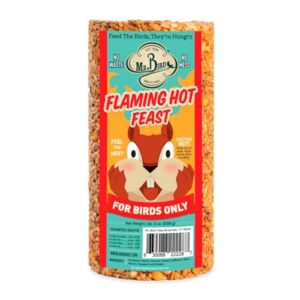
Mr. Bird Flaming Hot Feast packs sunflower hearts, shelled peanuts, golden safflower, and mealworms into a compressed cylinder that won’t melt in summer heat — making it a solid year-round choice, not just a winter one. The capsaicin formula keeps squirrels away while leaving birds completely unbothered.
At 1.19 pounds and 4 x 4 x 7.75 inches, it fits standard cylinder feeders well. Always wash your hands after handling — capsaicin irritates skin and eyes.
| Best For | Backyard bird enthusiasts who want to attract cardinals, woodpeckers, and chickadees while keeping squirrels at bay year-round. |
|---|---|
| Product Form | Seed Cylinder |
| Total Weight | 1.19 lbs |
| Primary Ingredient | Seeds & Mealworms |
| Target Species | Wild Birds |
| Year-Round Use | Yes |
| Pack Quantity | 1 Cylinder |
| Additional Features |
|
- Capsaicin formula deters squirrels without affecting birds at all
- Compressed cylinder format means less mess and fewer refills than loose seed
- High-protein blend of sunflower hearts, peanuts, safflower, and mealworms offers great nutritional variety
- Capsaicin is a strong skin and eye irritant — careful handling is a must
- Cylinders can be fragile and may crumble during installation
- Requires a compatible cylinder feeder, so it won’t work with all setups
2. Blue Seal Nuts and Berry Suet
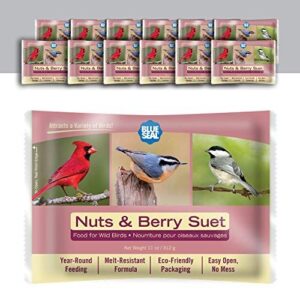
If the Mr. Bird cylinder leans heavily on seeds and heat, Blue Seal takes a different angle — rendered beef suet as the main ingredient, layered with peanut pieces, cracked corn, millet, and berry flavoring. That mix appeals to woodpeckers, chickadees, and nuthatches looking for fat and a little variety.
Each 11 oz. cake fits standard suet feeders and comes 12 to a pack. The melt-resistant formula helps it hold shape through mild temperature swings.
| Best For | Bird enthusiasts who want a high-fat, protein-rich suet option that attracts a wide variety of species — especially woodpeckers, cardinals, and blue jays — year-round. |
|---|---|
| Product Form | Suet Cake |
| Total Weight | 8.25 lbs (12×11 oz) |
| Primary Ingredient | Rendered Beef Suet |
| Target Species | Wild Birds |
| Year-Round Use | Yes |
| Pack Quantity | 12 Cakes |
| Additional Features |
|
- Melt-resistant formula holds up through temperature swings, making it reliable across seasons
- Eco-friendly packaging uses 80% less material than traditional trays and is fully recyclable
- Fits all standard suet feeders and works for birds at every life stage, so there’s no compatibility guesswork
- Bird attraction can vary depending on your region, so not every species listed may show up at your feeder
- May still soften in extreme heat despite the melt-resistant formula
- Individual bird preferences mean consumption rates can be unpredictable — some packs may go quickly while others sit longer
3. Blue Seal Hot Pepper Bird Suet Cakes
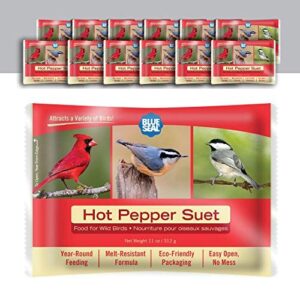
If squirrels have been raiding your feeders, this one’s built with them in mind. Blue Seal’s Hot Pepper Suet Cakes mix rendered beef suet with cracked corn, millet, and black oil sunflower seeds — then add hot pepper to the whole thing to discourage mammals without bothering birds.
Each cake weighs 11 oz. and fits standard suet feeders. The melt-resistant formula holds shape through temperature swings, and the eco-friendly packaging uses 80% less material than traditional trays.
| Best For | Bird enthusiasts who are tired of squirrels and raccoons cleaning out their feeders and want a year-round suet option that attracts woodpeckers, cardinals, nuthatches, and chickadees. |
|---|---|
| Product Form | Suet Cake |
| Total Weight | 8.25 lbs (12×11 oz) |
| Primary Ingredient | Rendered Beef Suet |
| Target Species | Wild Birds |
| Year-Round Use | Yes |
| Pack Quantity | 12 Cakes |
| Additional Features |
|
- Hot pepper deters squirrels and raccoons without affecting birds
- Melt-resistant formula holds up through temperature changes, making it genuinely year-round
- Eco-friendly packaging uses 80% less material than standard trays and cuts down on greasy handling
- Heat deterrent isn’t foolproof — some local wildlife may not be bothered by it
- Birds switching from regular suet may need time to adjust
- Extreme heat during shipping or storage can affect the cake’s consistency
4. Flaming Hot Bird Seed Cakes

Where the previous pick leans on rendered suet, this one goes a different route. Flaming Hot Bird Seed Cakes are 100% seed-based — sunflower hearts, peanuts, golden safflower, and mealworms packed into a dense 4-ounce block.
The capsaicin formula keeps squirrels away without affecting birds at all. Each pack holds four cakes sized at 4.5 x 4.5 x 1.5 inches, fitting standard suet cages cleanly. They won’t melt in warm weather, making them a reliable year-round option.
| Best For | Bird enthusiasts who want to attract a wide variety of wild birds and woodpeckers while keeping squirrels out of the feeder. |
|---|---|
| Product Form | Seed Block |
| Total Weight | 1 lb (4×4 oz) |
| Primary Ingredient | Seeds & Mealworms |
| Target Species | Wild Birds |
| Year-Round Use | Yes |
| Pack Quantity | 4 Blocks |
| Additional Features |
|
- The capsaicin formula deters squirrels effectively without harming birds, so your seed actually reaches the birds you’re feeding
- Seed-based and weather-resistant, meaning no melting in summer heat and reliable year-round performance
- Fits standard suet cages and produces less mess than loose seed or traditional suet
- Contains strong irritants for eyes, nose, and skin, so you’ll need to wash your hands thoroughly after every handling
- Blocks can arrive crumbled or broken due to their fragility during shipping
- The price-per-ounce may feel steep given you only get four 4-ounce cakes per pack
5. C&S Berry Suet Bird Treat
Berry-loving birds don’t always get enough credit at winter feeders, but C&S had them in mind with this mix. Each 11.75-ounce cake combines rendered beef suet, corn, white millet, oats, and real blueberries — a mix that draws robins, bluebirds, tanagers, and blue jays reliably.
The bulk 12-pack format totals 8.81 pounds, so you’re not constantly restocking. Store cakes somewhere cool before use, and refrigerate after opening. They fit standard wire feeders without fuss.
| Best For | Backyard bird enthusiasts who want to attract fruit-loving species like bluebirds, robins, and tanagers with a convenient, bulk-friendly suet option. |
|---|---|
| Product Form | Suet Cake |
| Total Weight | 8.81 lbs |
| Primary Ingredient | Rendered Beef Suet |
| Target Species | Wild Birds |
| Year-Round Use | Yes |
| Pack Quantity | 12 Cakes |
| Additional Features |
|
- Real blueberries in the formula reliably draw fruit-eating species that plain suet cakes often miss
- The 12-pack bulk format means fewer restocking trips and a more consistent feeding schedule
- Fits standard wire and cake feeders, so no special equipment needed
- High fat content can melt fast in direct sunlight, making warm-weather feeding messy
- May pull in unwanted visitors like squirrels and raccoons along with the birds
- Refrigeration is recommended before use, which adds a small prep step
6. C&S Woodpecker Treat 11 Ounces, 12 Pack
Woodpeckers are famously particular eaters, and this cake is built around exactly what they want. Each 11-ounce block packs rendered beef suet with roasted peanuts, almonds, pecans, walnuts, oats, and corn — a nut-dense formula that mirrors the high-fat, protein-rich diet woodpeckers depend on through cold months.
The 12-pack bulk format keeps your feeder stocked without weekly runs to the store. Chickadees and nuthatches will claim a share too, so don’t be surprised by the crowd.
| Best For | Bird enthusiasts who want to attract woodpeckers, chickadees, and nuthatches with a high-energy, nut-rich suet that works year-round. |
|---|---|
| Product Form | Suet Cake |
| Total Weight | 8.26 lbs |
| Primary Ingredient | Rendered Beef Suet |
| Target Species | Wild Birds |
| Year-Round Use | Yes |
| Pack Quantity | 12 Cakes |
| Additional Features |
|
- Nut-dense formula with peanuts, almonds, pecans, and walnuts mirrors the natural high-fat diet woodpeckers crave
- 12-pack bulk format means fewer shopping trips and a consistently stocked feeder
- Attracts a wide variety of clinging birds beyond just woodpeckers, including nuthatches and chickadees
- Can melt or go rancid in hot weather, requiring refrigeration during warmer months
- Squirrels find it just as irresistible as the birds do, which may call for a squirrel-resistant feeder
- Price can swing noticeably between online retailers and local stores, so it pays to shop around
7. Happy Hen Mealworm Frenzy Pet Treats

Dried mealworms aren’t traditional suet, but they carry 50% crude protein and around 25% fat — numbers that rival most suet cakes. Scatter them on a platform feeder or mix them into a homemade suet mix, and winter birds respond fast.
The 5 lb re-sealable pouch keeps mealworms fresh between uses. Chickadees, nuthatches, and Carolina Wrens will find them quickly. When insects vanish in freezing weather, this treat fills that nutritional gap without refrigeration or mess.
| Best For | Backyard poultry keepers and wild bird enthusiasts looking for a high-protein treat to train, bond with, or attract chickens, ducks, turkeys, and winter songbirds. |
|---|---|
| Product Form | Dried Worms |
| Total Weight | 5 lbs |
| Primary Ingredient | Dried Mealworms |
| Target Species | Poultry & Birds |
| Year-Round Use | Yes |
| Pack Quantity | 1 Bag |
| Additional Features |
|
- Packed with roughly 50% crude protein and 25% fat, making it a nutritious supplement that fills the gap when natural insects disappear in cold weather
- The 5 lb re-sealable pouch keeps mealworms fresh between uses and is easy to store without refrigeration
- Versatile enough to hand-feed, scatter on a platform feeder, toss into a pond for ducks, or mix into homemade suet blends
- Should only be used as a treat, not a staple — it’s not nutritionally complete enough to replace regular poultry feed
- Pricier than standard feed options, which can add up if you have a large flock
- Some users have noted the mealworms are imported from China, and shipping can produce dust or small fragments in the bag
How to Feed Winter Suet
Getting suet to your winter visitors is just as important as choosing the right seed mix. The feeder type, placement, and upkeep all play a role in who shows up — and how often. Here’s what works best.
Choose Cage Feeders
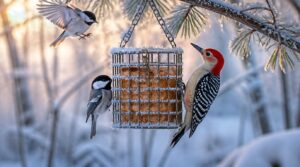
Cage feeders are the most reliable option for winter suet. Their wire mesh holds suet blocks securely, and many models include locking latches to deter squirrels. Look for metal or UV-resistant plastic construction that won’t crack in the cold.
Removable trays make cleaning simple — a quick wash keeps feeders hygienic and safe for chickadees, nuthatches, and woodpecker species returning daily.
Use Tail-prop Feeders
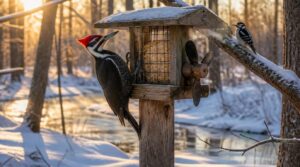
Think of a tail-prop feeder as a woodpecker’s personal tree trunk — it gives birds like Pileated and Hairy woodpeckers a rigid surface to brace their tails while feeding, mimicking how they cling to bark naturally.
Mount it 5 to 6 feet high, using cedar or metal mesh for durability. That stability turns a quick visit into a reliable winter routine.
Hang Near Cover
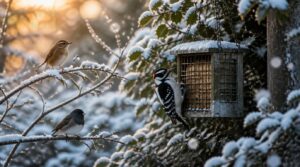
Your feeder’s location matters as much as what’s inside it. Place suet cakes near dense shrubs — birds need quick escape when hawks appear.
- Wind chill drains energy fast in open, exposed yards
- Predators patrol open spaces constantly
- Hedgerow feeders draw more winter visitors each morning
Hang at waist height right beside cover. Birds can launch into nearby shelter almost instantly.
Prevent Squirrel Stealing
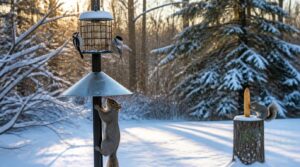
Squirrels raid suet cakes relentlessly during winter feeding season. Your best defense combines placement, hardware, and distraction.
Keep bird feeders at least 8–10 feet from any jumping point. Mount squirrel baffles on poles 4 feet high, choosing metal over plastic since squirrels gnaw plastic away quickly.
| Strategy | Method | Benefit |
|---|---|---|
| Squirrel baffles | Metal cone, 4 ft high | Blocks pole climbing |
| Placement distance | 8–10 ft from trees | Eliminates leap access |
| Weight-sensitive feeders | Auto-close mechanism | Shuts under squirrel weight |
| Squirrel diversion | Separate corn feeder | Redirects attention |
| Squirrel-resistant cages | Small mesh enclosures | Excludes grabbing paws |
A dedicated diversion feeder nearby pulls scouts away from your winter feeding station entirely.
Replace Rancid Suet
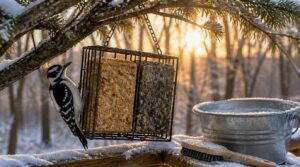
Keeping suet fresh matters as much as choosing the right mix. Give each cake a quick sniff — sour or bitter odors mean it’s time to toss it. At room temperature, replace suet every 1–2 days in mild weather.
Before refilling, scrub cages with warm, soapy water to clear old fat residue, then restock with a fresh, high-energy suet cake.
Frequently Asked Questions (FAQs)
Can suet feeders attract unwanted predators to yards?
Like a well-lit stage drawing an audience, suet feeders can attract predators. Hawks, raccoons, and cats may patrol active feeding stations. Strategic placement and cage-style feeders help reduce this risk considerably.
How often should suet feeders be cleaned in winter?
Clean suet feeders every two weeks in winter. If temperatures stay below freezing and suet looks fresh, stretching to three weeks is fine — but inspect weekly for mold, rancid fat, or pest activity.
Do migratory birds stop to eat suet?
Yes, some migratory birds do stop to eat suet. Warblers and small passerines visit feeders during fall and spring stopovers when insects are scarce, using high-fat suet to rebuild energy reserves for continued travel.
Is homemade suet safer than store-bought options?
Both options can be safe when handled correctly. Homemade suet gives you full ingredient control — no preservatives, no added salt. Store-bought offers consistency and longer shelf life. Your best strategy depends on storage habits and how often you refresh the feeder.
Conclusion
A feeder full of suet is a small thing that punches well above its weight on a frozen morning. Now you know what birds eat suet in winter—from determined woodpeckers to restless chickadees barely heavier than a coin.
Fresh, quality suet keeps them coming back. Hang your feeder near cover, check it regularly, and stay patient. The birds will find you. That quiet backyard activity feeds something in you, too.
- https://www.audubon.org/magazine/whats-bird-your-suet-feeder
- https://extension.illinois.edu/blogs/good-growing/2018-01-09-winter-bird-feeding-suet
- https://birdsconnectsea.org/2024/03/19/bird-feeding-101-suet-earthcare-northwest
- https://www.birdcollective.com/blogs/news/winter-bird-feeding-guide-best-foods-tips-for-cold-weather
- https://marin.wbu.com/suet-feeders