This site is supported by our readers. We may earn a commission, at no cost to you, if you purchase through links.
A single suet cake can attract more than a dozen bird species in one afternoon. Woodpeckers, nuthatches, and chickadees don’t wander into your yard by accident—they follow fat.
Birds burn enormous amounts of energy just staying warm. On a cold winter morning, a small chickadee (Poecile atricapillus) may burn through most of its overnight fat reserves before sunrise. Suet replaces that energy fast. Fat delivers 9 calories per gram—more than twice what protein or carbohydrates provide.
How suet feeders attract backyard birds comes down to biology. The right feeder, placed correctly and kept fresh, turns your yard into a reliable stop on a bird’s daily survival route. Here’s how to make that happen.
Table Of Contents
Key Takeaways
- Suet’s high fat content (9 calories per gram) makes it the most energy-efficient food you can offer backyard birds, especially during cold winters and migration seasons.
- Feeder design matters — tail-prop feeders welcome woodpeckers, upside-down styles block starlings, and metal cage feeders suit clinging species like chickadees and nuthatches.
- Placement is just as important as the feeder itself: mount it 5–6 feet high, 5–10 feet from shrubs, and in shade to keep suet fresh and birds safe.
- Rotating suet flavors seasonally and cleaning feeders every 2–3 days keeps birds returning and prevents the mold and spoilage that drive them away.
Why Suet Feeders Attract Birds
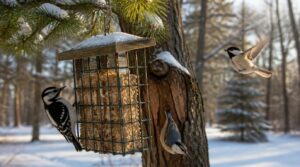
Suet feeders work because they give birds exactly what they need: fat-rich food that’s easy to reach. Birds are drawn to them the same way they’d work a dead tree — clinging, pecking, and foraging on their own terms. Here’s a closer look at why suet feeders are so effective at bringing birds to your backyard.
For insectivorous species especially, suet delivers the same fat-rich energy they’d extract from grubs — making it a near-perfect substitute, as explored in this guide to backyard birds of Idaho.
High-Fat Energy Source
Fat is the secret behind suet’s power. Birds burn 9 calories per gram of fat — more than double what carbs or protein offer. That energy comes from beta oxidation, where fat converts to fuel inside cells.
Because of their high concentrated energy source properties, fats are the highest energy sources in feedstuffs.
Suet cakes also carry fat-soluble vitamins like A, D, E, and K. For backyard birds, that’s a complete energy package in one small bite.
Easy Clinging Access
Energy gets birds to your yard, but feeder grip keeps them there.
Suet feeders work because clinging birds — woodpeckers, nuthatches, chickadees — feed naturally on vertical surfaces. Vertical cage grooves and textured surfaces guide claws to secure holds.
Birds stay longer when they feel stable. Look for feeders offering:
- Anti-slip perch design
- Tail prop stability for larger woodpeckers
- Wind guard benefits on breezy days
Natural Foraging Behavior
Birds don’t visit your feeder by accident. They’re following sensory foraging cues — spotting movement, detecting fat smells, and recognizing safe feeding spots they’ve learned before.
A suet feeder mimics natural food sources like tree bark and wood grubs. That familiarity draws birds in fast and keeps them coming back.
Reliable Backyard Food
Once birds discover a reliable food source, they return to it again and again. A suet cake delivers about 8–9 kilocalories per gram — far more than seeds alone.
That makes your feeder a dependable stop, especially when winter bird feeding matters most. Backyard birds don’t have to wander far when high energy food is waiting right outside your window.
Suet Feeders Attract Birds With Fat
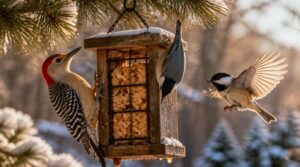
Fat is the real reason birds keep coming back to suet feeders. It fuels everything from staying warm in winter to raising chicks in spring. Here’s how fat does the work across each season.
Warmth During Winter
Winter is brutal for small birds. Their tiny bodies lose heat fast, and finding high-fat food becomes a matter of survival.
Suet cakes deliver the dense calories birds need to stay warm overnight. Think of suet as a bird’s winter coat — worn from the inside out.
Suet is a bird’s winter coat, worn from the inside out
Offering suet feeders through cold months gives backyard visitors a reliable, energy-dense food source when they need it most.
Pair your suet feeder with a varied winter menu by exploring these high-fat bird table food ideas that keep backyard birds fueled through the coldest days.
Migration Energy Needs
Twice a year, migrating birds face a formidable physical challenge. They must build up fat reserves — sometimes doubling their body weight — before launching into multi-thousand-kilometer journeys.
Suet feeders become critical at stopover sites. A bird can quickly refuel on energy-rich fat, switching between fat and carbohydrate metabolism mid-flight to keep muscles firing.
Your backyard feeder might be exactly the pit stop a warbler needs.
Breeding Season Support
Spring is when your suet feeder earns its keep most. Breeding season demands more energy from wild birds than almost any other time of year.
Parent birds are building nests, laying eggs, and feeding hungry chicks. High-fat suet placed near nesting shrubs gives them quick, reliable fuel without wandering far.
Protein promotes chick growth. Calcium helps form strong eggshells.
Protein-Rich Additions
Fat isn’t the whole story. Dried mealworms pack roughly 50 percent crude protein by weight, giving parent birds the amino acids they need to raise strong chicks.
Try mixing peanut meal or ground peanuts into your suet cakes. That alone can raise protein by 6 to 9 percent. Small cheese bits help too, adding complete protein with every peck.
Choose The Right Suet Feeder
Not all suet feeders work the same way, and the design you pick can make a real difference in which birds show up. Each style is built with a certain type of bird in mind. Here are five feeders worth knowing about.
Metal Cage Feeders
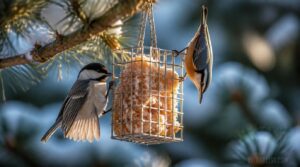
Metal cage feeders are a great place to start. The woven wire mesh — usually 3/8 to 1/2 inch — lets chickadees and nuthatches cling and peck naturally.
Look for these features:
- Stainless or galvanized steel resists rust year-round
- Hinged doors make refilling simple
- 4–6 feeding ports cut crowding
- Chew-resistant welds block squirrels
- Corrosion-resistant hardware holds up to 5 pounds
Tail-Prop Feeders
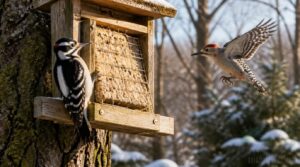
Woodpeckers need stability. A tail-prop feeder gives larger birds a horizontal ledge to brace their tail feathers against — mimicking the feel of clinging to tree bark naturally.
| Feature | Benefit | Best For |
|---|---|---|
| Tail support ledge | Reduces wing flutter | Hairy Woodpeckers |
| Reinforced frame | Long-term durability | Year-round use |
| Angled food surface | Gravity-aided cake retention | Energy-dense food sources |
Backyard birds like Hairy and Red-bellied Woodpeckers feed longer and more efficiently. That’s why bird feeder placement near trees makes this tailprop feeder an ideal suet bird feeder choice.
Upside-Down Feeders
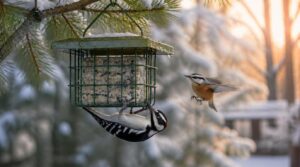
Where tail-prop feeders welcome large woodpeckers, an upside-down suet bird feeder flips the script. Starlings struggle to hold on — leaving smaller backyard birds in peace.
- Inverted feeding mechanics exclude dominant species
- Wire mesh cage withstands outdoor weather
- Squirrel deterrent caps block top access
- Port design limits seed spillage
- UV-resistant materials keep the feeder clear
Suet Log Feeders
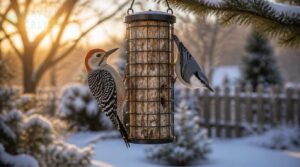
Think of a suet log feeder as a tiny tree trunk hanging in your yard. Cylindrical wooden logs slot into a powder-coated metal cage, giving backyard birds a surface that feels just like real bark.
The feeding port design spaces holes evenly around the log. Several birds can nibble from different angles at once without crowding each other out.
These cages handle 4-ounce to half-pound logs comfortably, and heavy-gauge wire keeps the frame steady even when multiple birds land together. Replace the log every two to four weeks depending on bird activity. That keeps your energy-dense food sources fresh and worth returning to.
Birdwatching gets noticeably better with this style. Woodpeckers, nuthatches, and even Brown Creepers — species that rarely visit standard suet bird feeders — show up regularly.
Mesh Ball Feeders
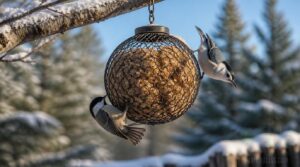
While log feeders mimic bark, mesh ball feeders take a completely different shape. The spherical feeding design lets birds cling from every angle — sides, bottom, even upside down.
Here’s what makes them stand out:
- Multi-bird access across the full 360-degree surface
- Fat ball dispensing that reduces waste
- Rust resistant materials built for year-round outdoor use
Small species like chickadees and nuthatches grip the wire mesh cage easily and feed without competition.
Place Feeders for Better Visits
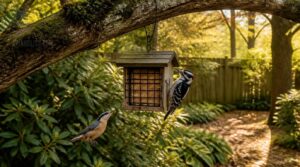
Where you hang a suet feeder matters just as much as what’s inside it. Small adjustments to placement can mean the difference between a busy feeder and one that birds ignore. Here are five simple placement tips that make a real difference.
Height Above Ground
Mount your feeder at 5 to 6 feet above the ground — that single choice does more for backyard bird feeding success than almost anything else.
| Height Range | Key Benefit |
|---|---|
| 4–5 feet | Easy maintenance reach |
| 5–6 feet | Predator clearance level |
| 6–8 feet | Stronger squirrel-resistant protection |
| Above 8 feet | Harder cleaning access |
At 5 to 6 feet, pole-mounted feeders stay out of reach for most ground predators like raccoons and cats. Going higher — around 8 feet — adds extra protection, but refilling and cleaning cage feeders gets awkward fast.
In winter, snow depth considerations matter. A heavy snowfall can quietly raise the ground level by a foot or more, shrinking that safety gap beneath your feeder. Check your mounting height after big storms.
Stability counts too. Mounting stability needs increase the higher you go, since wind puts more stress on the pole or bracket. A wobbly feeder won’t just spill suet — it can scare birds away.
That’s why 6 to 7 feet is a smart middle ground. Birds can spot the feeder easily, you can still reach it comfortably, and most ground threats stay below.
Nearby Shrub Cover
Place your suet feeder 5 to 10 feet from shrubs — close enough that birds have a quick escape route, but not so close that predators can hide and pounce.
Here’s what nearby shrubs quietly do for your backyard birds:
- Fast escape cover when hawks or cats appear suddenly
- Wind chill reduction that keeps birds feeding longer on cold days
- Insect-rich leaf litter that supplements suet between visits
- Perch staging spots where birds scan for threats before flying in
- Layered habitat structure that draws warblers and thrushes closer
Native shrubs like viburnum, serviceberry, or dogwood are especially worth planting. They host far more insects than ornamental varieties, which means more food diversity near your feeder. Dense shrubs also block gusty winds at feeder level, making visits more comfortable — and longer — for chickadees (Poecile spp.) and nuthatches (Sitta spp.).
A layered habitat design works best. Taller shrubs behind the feeder and mid-height plants to the side create natural screening without blocking your view. Birds feel safer approaching through that corridor, and you’ll notice visit frequency climb.
Regular pruning keeps a clear flight path to the feeder while preserving the protective shrub screen around it.
Window Collision Safety
Why do birds hit windows so often? Reflective glass tricks them into seeing sky or trees, leading to sudden strikes. To prevent this, keep feeders 3 to 30 feet from windows, use impact-rated window film, and add visible decals or screens. These steps protect both birds and your backyard experience.
| Distance | Film Type | Visual Deterrent |
|---|---|---|
| 3 ft | Impact | Decals |
| 15 ft | Safety | Netting |
| 30 ft | UV-block | Screens |
| 10 ft | Security | Tape strips |
Shade for Freshness
Suet melts fast in direct sun, turning rancid before birds even arrive. A shaded spot keeps blocks 5 to 8 degrees cooler, slowing fat separation and mold growth.
Shade cloth or a canopy also cuts UV exposure, protecting both the feeder and the food. Nuthatches and woodpeckers visit more often when cooler surfaces make pecking comfortable.
Squirrel Baffle Placement
Squirrels can leap up to 5 feet horizontally, so baffle placement matters more than the baffle itself. Set the top of your baffle at least 4 feet high and keep the feeder 6 to 8 feet from any branch or fence. A dome-style baffle on a stable pole clamp creates the cleanest barrier against both climbers and jumpers.
Keep Suet Fresh and Appealing
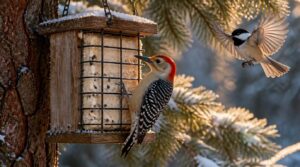
Fresh suet brings birds back again and again, but spoiled suet drives them away fast. A few simple habits keep your feeder clean, safe, and stocked with something birds actually want. Here’s what to know about keeping suet fresh through every season.
Seasonal Suet Choices
Not all suet works the same way year-round. Winter blends pack more fat to help birds stay warm when food is scarce. Spring and fall recipes shift toward protein and insects to support breeding and migration.
Rotating your suet with the seasons keeps birds coming back. Match the mix to the month, and your feeder stays busy all year.
No-Melt Summer Suet
Summer heat turns regular suet into a greasy mess fast. No-melt summer suet holds its shape up to 130°F, so your feeder stays clean and birds keep visiting. Look for blends with these helpful features:
- Insect-rich additives like mealworms for protein
- Calcium to support breeding birds
- Spicy pepper to deter squirrels
- Dried fruit for variety
It’s an easy summer swap.
Mold Prevention
Wet suet is a breeding ground for mold. Remove soggy or rancid suet cake pieces right away — don’t let them sit.
Clean every 2–3 days in warm weather. A 10% non-chlorine bleach solution kills hidden spores effectively. Rinse thoroughly and dry before refilling.
Keep feeders in shade to slow spoilage and control moisture buildup.
Regular Feeder Cleaning
Mold prevention and feeder hygiene go hand in hand.
Clean your feeder weekly in cool weather, and every 2–3 days when it’s warm. Use mild dish soap, a stiff brush, and warm water. Rinse until no soap film remains — soap residue can deter birds.
For deeper sanitation, a 10% non-chlorine bleach solution controls avian diseases effectively. Always air dry completely before refilling.
Rotating Suet Flavors
Rotating flavors keeps birds curious and coming back.
Try a peanut butter suet cake one week, then swap to a nutblend or berryblend suet cake the next. Nutrient-rich insect blends draw woodpeckers and nuthatches, while fruit-based sweetness attracts a wider mix. Savory beef options add variety too. Weekly rotation reduces spoilage and stops one species from dominating your feeder.
Frequently Asked Questions (FAQs)
Which birds rarely visit suet feeders at all?
Not every bird visits suet feeders. Raptors hunt live prey. Robins forage on the ground. Orioles prefer nectar and fruit. Goldfinches stick to small seeds. These birds simply aren’t wired for fat-based feeding.
Can suet feeders attract unwanted pests or rodents?
Yes, suet feeders can attract rodents. Spilled suet on the ground is the biggest draw. Use anti-spill feeders, mount them high, and clean up dropped pieces often to keep pests away.
How do I stop dominant birds from hogging feeders?
Dominant birds can be tricky. Try weight-activated perches or upside-down feeders to trip up bullies. Space feeders apart and use multiport saucer feeders so more birds feed at once without confrontation.
When should I temporarily remove suet feeders entirely?
Remove suet when visits drop for 7–10 days, mold appears, or temperatures spike. Natural food availability and disease outbreaks nearby are your clearest signals to pause.
Conclusion
Once you learn the ropes of how suet feeders attract backyard birds, your yard becomes something birds count on. Fresh suet, the right feeder style, and smart placement do the real work.
A chickadee that finds your yard in January will return in March. Reliable food builds trust. That’s how a simple wire cage and a block of fat quietly turns your backyard into a place worth coming back to.
- https://naturenotesblog.blogspot.com/2022/10/the-ultimate-woodpecker-feeder-suet.html
- https://duncraft.com/collections/suet-and-block-feeders
- https://www.allaboutbirds.org/news/where-to-put-your-bird-feeder
- https://neighborhoodfeed.com/keeping-birds-safe-tips-for-predator-proofing-your-yard
- https://mdc.mo.gov/attracting-wildlife/attracting-birds/landscaping-birds