This site is supported by our readers. We may earn a commission, at no cost to you, if you purchase through links.
A small bird weighing less than half an ounce can burn through 75–80% of its fat reserves in a single winter night. By dawn, it’s running on fumes—and the food you put out could make the difference between surviving and not.
Cold weather bird diets look nothing like what birds eat in spring or summer. When temperatures drop, their bodies shift into high-demand mode, requiring concentrated fats and proteins to fuel the constant internal heat generation that keeps them alive. A backyard feeder stocked with the wrong seed won’t cut it.
Knowing which foods actually support winter survival—and which birds need what—turns a generous habit into something genuinely useful.
Table Of Contents
Key Takeaways
- Black oil sunflower seeds and suet are your two best winter feeder staples, delivering the fat and protein small birds burn through just to survive a single cold night.
- Matching food to species matters — finches need nyjer in small-port feeders, woodpeckers want suet against a tree trunk, and ground-feeders like juncos and doves need scattered millet below the feeder, not in it.
- Bread, salty scraps, and sugary leftovers are actively harmful in winter because they fill a bird’s crop without providing the concentrated calories cold weather demands.
- Keeping feeders clean every two weeks and storing seed in airtight metal containers prevents mold and disease, which matter just as much as what you’re feeding.
Best Foods for Winter Birds
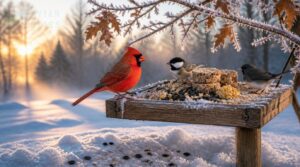
Winter birds aren’t picky by nature, but they do have real nutritional needs that change when temperatures drop. The right foods can make a genuine difference in whether your backyard visitors make it through a cold snap. Here are the best options to stock in your feeders this season.
Pairing the right seeds and suet with quality bird feeding station supplies ensures your setup is ready before the first hard freeze hits.
Black Oil Sunflower Seeds
Black oil sunflower seeds are the single best thing you can put in a winter feeder. With 50 to 60 percent fat and around 20 percent protein, they’re basically energy-dense fuel for birds burning through reserves overnight.
The thin shells crack easily, so birds spend less energy eating more. They also supply vitamin E, which helps keep feathers healthy through the cold months. This highly palatable feed is an excellent option for a variety of species.
Suet and Fat Cakes
Sunflower seeds are hard to beat, but suet comes close for sheer caloric punch. Rendered beef kidney fat holds firm in cold weather and won’t turn rancid as quickly as cheaper alternatives. For a vegetarian option, coconut oil works as a binder, though it softens faster.
Avoid anything hydrogenated. Birds don’t need artificial additives — just high-fat, high-calorie fuel in a simple suet cage.
Nyjer for Finches
Suet feeds the big players, but finches have their own winter staple. Nyjer seed — often marketed as thistle, though it’s unrelated to the plant — is packed with oil that delivers fast, concentrated energy. Finches hull each tiny seed individually, cracking it open with their beaks.
Use mesh or small-port feeders to minimize waste. Replace seed every few weeks; spoiled nyjer grows mold quickly.
Peanuts and Peanut Butter
Peanuts are a different kind of winter fuel. A two-tablespoon serving of peanut butter packs 16 grams of fat and around 7–8 grams of protein — exactly what jays, woodpeckers, and nuthatches burn through on cold nights.
Offer unsalted, unshelled peanuts in a mesh feeder or smear natural peanut butter into bark crevices. Skip salted or sweetened varieties entirely.
Fruit for Waxwings
When cedar waxwings find your yard, they’re not browsing — they’re fueling up fast. These birds can gulp dozens of berries per minute, relying on small, sugar-rich fruits like juniper, serviceberry, and dogwood to power migration and stay warm overnight.
Plant a mix of berry-producing shrubs and leave fruit on branches through winter. That’s what draws them back.
Winter Nutrition Birds Need
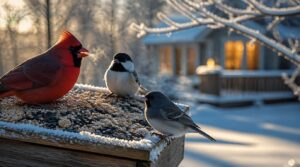
Birds don’t just need food in winter — they need the right kind of food. Their bodies are working overtime just to stay warm, so what you put in the feeder matters more than you might think. Here’s a closer look at the specific nutritional needs that help backyard birds make it through the cold months.
High-Calorie Energy Sources
Think of a winter bird as a tiny furnace that never shuts off. To stay warm, birds need fat and protein in concentrated forms — and fast.
Calorie-dense homemade treats like suet-free bird seed balls pack exactly the quick energy winter birds burn through just to survive the night.
These energy-dense foods do the real heavy lifting when temperatures drop overnight. Black oil sunflower seeds deliver roughly twice the calories of striped varieties, while suet packs about 9 calories per gram of fat alone.
Protein for Cold Survival
Fat gets the spotlight in winter, but protein does quiet, critical work behind the scenes. It fuels thermogenesis, helps feather growth, and keeps immune defenses running when cold stress peaks.
Suet, peanuts, and sunflower seeds deliver the amino acids birds need to preserve muscle mass and grow new feathers. Without enough protein, even a well-fed bird struggles to stay warm through the night.
Fats for Overnight Warmth
Songbirds can burn through 75–80% of their fat reserves in a single night. That’s why high-fat foods like suet and peanut butter matter so much — they pack 7 to 9 calories per gram, far more than seeds alone.
Songbirds can burn through 75–80% of their fat reserves in a single night — making high-fat suet and peanut butter their most vital winter fuel
Rendered suet stays solid in the cold without going rancid quickly, making it the most reliable overnight fuel you can offer.
Foods to Avoid
Not everything you set out helps the birds. Bread and sugary scraps fill a bird’s crop fast but deliver almost no usable energy — white bread especially lacks the protein and fat cold weather demands.
Salty processed foods stress kidneys. Oily or fried leftovers coat feathers, wrecking insulation. Stick to purpose-made foods, and your feeders stay safe rather than harmful.
Match Foods to Bird Species
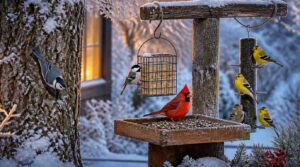
Not every bird eats the same thing, and that’s actually what makes winter feeding so rewarding. Knowing which species visit your yard helps you put out exactly what they need — no guesswork, no wasted seed. Here’s how to match your food choices to the birds most likely to show up.
Woodpeckers and Nuthatches
Woodpeckers and nuthatches are both bark specialists — one drills, the other walks headfirst down trunks probing crevices. Both burn serious energy doing it. A suet cage is your best tool here, loaded with high-fat suet or unshelled peanuts.
Hang it against a tree trunk. That mimics their natural foraging posture and draws them in fast.
Finches and Siskins
Where woodpeckers need muscle, finches need precision. Their slender, conical Fringillidae bills are built for tiny seeds — and nyjer (thistle) seed is their absolute favorite. Pair it with a tube feeder with small ports.
Pine Siskins, prone to irruptive winter movements, may suddenly flood your yard. Black-oil sunflower seeds work well too. Keep both feeders stocked.
Cardinals and Grosbeaks
Cardinals and grosbeaks belong to the Cardinalidae family, and those thick, conical beaks aren’t just for show — they’re built to crack hard seeds that smaller birds can’t touch. Black oil sunflower seeds are the go-to choice, with safflower running a close second.
Male cardinals, with their striking red plumage, tend to visit at dawn and dusk. Offer a platform feeder with a seed mix and watch them work.
Sparrows, Doves, Juncos
Where cardinals favor elevated platforms, sparrows, doves, and juncos work the ground. These are ground-feeding birds through and through.
Scatter white proso millet and cracked corn beneath your feeders and watch them gather:
- Dark-eyed juncos flash white tail feathers as they scratch through snow
- Mourning doves pace open lawns slowly, pecking fallen seed
- House sparrows cluster in brushy edges, rarely venturing far from cover
Seed mixes with black-oil sunflower keep all three happy through hard winters.
Jays and Chickadees
Unlike ground-feeders, jays and chickadees work every height — snow to canopy.
| Species | Best Winter Foods |
|---|---|
| Blue Jay | Peanuts, black oil sunflower |
| Chickadee | Suet, cached seeds |
Both use spatial memory to recover hidden caches during hard cold snaps. Jays cache aggressively; chickadees carefully tuck seeds into bark. High-fat bird food — suet and peanuts — fuels their winter survival in mixed foraging flocks.
Set Up Cold-Weather Feeders
Getting the right food is only half the job — how you offer it matters just as much. Different birds have different feeding habits, so the feeder you choose can make a real difference in who shows up and how well they eat. Here are the key setups worth having this winter.
Suet Cages
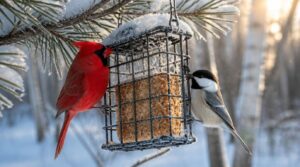
A suet cage does more than hold food — it guards it. Steel or vinyl-coated wire resists rust all winter.
- Covered roofs protect high-calorie bird food from rain
- Narrow openings deter squirrels
- Multi-cake designs add variety
- Hinged tops speed up refills
Pick a model that’s genuinely easy to clean and you’ll use it every season.
Tube Feeders
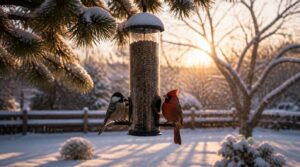
Tube feeders excel at delivering black oil sunflower seeds through winter. Clear polycarbonate keeps seed visible — you’ll always know when to refill.
| Feature | Benefit |
|---|---|
| Port size variety | Fits beaks |
| Moisture seals | Keeps seed dry |
| Vented tops | Cuts condensation |
| Removable tube | Simple cleaning |
| 1–2.5L capacity | Holds high-fat foods |
Durable tube materials handle freezing temps. Good design means less fussing, more feeding.
Platform Feeders
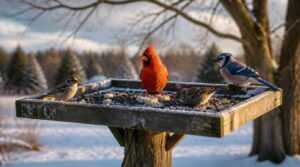
Open and welcoming, platform feeders let multiple birds feed simultaneously without jostling for position. The flat feeding surface suits cardinals, jays, and sparrows equally — birds that never quite fit around a narrow tube.
Look for drainage holes in the tray to prevent waterlogging after snow melts. Load them with black oil sunflower seeds or suet chunks, and you’ve covered most winter visitors in one spot.
Ground Feeding Areas
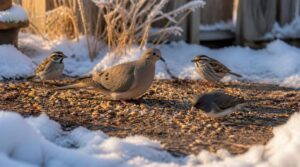
Some birds simply won’t visit elevated feeders. Doves, juncos, and sparrows are groundfeeding birds by nature.
Clear a 2–3 foot snow patch and scatter:
- Cracked corn for sparrows and doves
- Sunflower seeds for juncos
- Nuts and fruit for occasional ground visitors
Keep the area bare and sunlit, replacing wet seed within 24 hours.
Snow and Moisture Covers
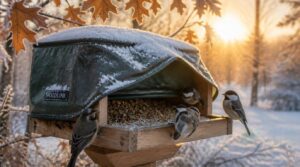
A wet feeder is a wasted feeder. Snow and moisture covers protect your seed investment and keep caloric intake high for birds burning fat reserves overnight. Choose heavy-duty laminated polyester — it stays flexible in freezing temps and won’t crack. Breathable underlays let trapped humidity escape without letting snow drift in.
| Cover Feature | Why It Matters | What to Look For |
|---|---|---|
| Insulated lining | Slows spoilage; retains seed quality | Padded interior, snug fit |
| Breathable underlay | Releases humidity buildup | Vented fabric panels |
| Snow load durability | Prevents collapse in heavy storms | Reinforced edging, adjustable straps |
| Moisture indicator | Warns when internal humidity spikes | Built-in humidity strip |
| Quick-access flap | Easy refilling without cold exposure | Zipper or hook-and-loop closure |
Keep Winter Bird Food Safe
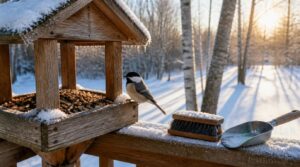
Filling feeders is only half the job — keeping that food fresh and safe is what actually matters for the birds relying on you. A few simple habits go a long way toward preventing mold, spoilage, and the spread of disease. Here’s what to stay on top of all winter long.
Clean Feeders Regularly
A dirty feeder can quietly become a disease hotspot. Clean feeders every two weeks using warm water and mild dish soap, scrubbing ports and perches thoroughly.
- Soak in a 1:9 bleach-water solution for ten minutes to loosen stubborn residue
- Rinse completely to remove all chemical traces
- Air dry in sunlight before refilling
- Inspect plastic parts for cracks that harbor mold
Store Seed Properly
Where you store seed matters as much as what you store. Keep birdseed in a large metal can with a tight-fitting lid — metal resists pests far better than flimsy plastic bags.
Aim for cool, dark conditions between 32 and 41°F, which slows spoilage a lot. A dry garage corner works well.
Remove Wet Seed
Even with seed stored perfectly, moisture sneaks in — from a scoop left in a damp feeder or a sudden freeze-thaw cycle. Discard wet seed promptly; sugars in damp grain feed mold within hours.
Spread any salvageable seed thinly on a screen, run a fan across it, and test dryness by feel before returning it to storage.
Prevent Mold and Spoilage
Keeping seed dry is half the battle. Store it in airtight metal containers with a desiccant packet inside — that small silica pouch pulls moisture from the air before mold gets a foothold.
Check for off odors or powdery residue before refilling; rancid high-fat seeds smell sour. If something seems off, toss it. Healthy birds aren’t worth gambling on questionable seed.
Maintain Storm Supplies
A blizzard doesn’t announce itself politely. Keep a two-week seed supply on hand so a sudden storm doesn’t leave your birds scrambling.
Rotate stock every six months — same schedule you’d follow for your own emergency pantry. That way, nothing goes stale before it’s needed, and the feeders stay full when it matters most.
Frequently Asked Questions (FAQs)
What to feed birds in extreme cold?
In extreme cold, birds burn through overnight fat reserves fast. Offer black oil sunflower seeds and suet — both pack the caloric punch needed to fuel metabolic heat loss and keep small birds alive through freezing nights.
Do birds migrate based on food availability?
Yes, birds migrate based on food availability. Food scarcity in their current range can trigger earlier departures, while reliable stopover sites rich in energy help birds refuel and complete long seasonal journeys safely.
Can heated birdbaths attract more winter birds?
Heated birdbaths do attract more winter birds. Open water is scarce when temperatures drop, so a reliable water source draws cardinals, chickadees, and finches that might otherwise skip your yard entirely.
How does snow depth affect ground-feeding birds?
After six inches of snow fell overnight, a flock of dark-eyed juncos abandoned the open lawn entirely and crowded under a nearby pine — the only patch still offering bare ground and exposed seed to pick through.
Which birds are active during winter storms?
Chickadees, nuthatches, and blue jays stay active through storms, foraging in flocks. Small finches increase daytime feeding, while juncos scratch for seeds on sheltered snow patches. Woodpeckers keep probing bark even in strong winds.
Do predators increase near feeders in winter?
Yes, predators do increase near feeders in winter. Hawks, cats, and foxes are drawn to concentrated bird activity. Positioning feeders in open areas away from dense cover reduces ambush opportunities a lot.
Conclusion
Think of your feeder as a lighthouse in a winter storm—birds navigate toward it when the cold grows dangerous and dawn feels uncertain.
Cold weather bird diets demand more than good intentions; they require the right fuel delivered consistently. Suet, black oil sunflower seeds, peanuts—these aren’t treats, they’re survival tools. Keep feeders stocked and clean.
The birds returning each morning aren’t just visitors. They’re proof that what you put out there genuinely matters.
- https://www.audubon.org/magazine/top-10-foods-winter-bird-feeding
- https://www.wbu.com/the-best-foods-for-birds-during-winter
- https://www.reconnectwithnature.org/headlines/news/what-to-feed-birds-in-winter
- https://sevencapes.org/feature/feeding-101-helping-birds-thrive-in-winter
- https://alpharetta.wbu.com/winter-weather-bird-feeding-tips