This site is supported by our readers. We may earn a commission, at no cost to you, if you purchase through links.
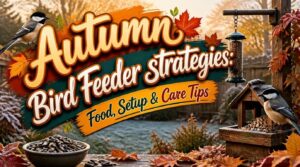
The first frost hits, and suddenly your backyard goes quiet in a way that feels wrong. Birds that spent summer filling the air with noise are either gone or quietly searching for food that’s harder to find by the day. Autumn strips the landscape fast—berries disappear, insects vanish, and the birds left behind are working harder than most people realize just to maintain body heat.
Autumn bird feeder strategies make a real difference during this window. The right foods, feeders, and placement can turn your yard into a reliable rest stop for resident birds and migrating species passing through.
The details matter more than most guides admit—from seed fat content to feeder height to how far you park everything from your windows. Get those right, and you’ll see more birds, healthier birds, and a setup that holds up through wind, rain, and the first hard freeze.
Table Of Contents
- Key Takeaways
- Choose High-Calorie Autumn Bird Foods
- Select Feeders for Fall Conditions
- Place Feeders for Safety
- Keep Autumn Feeders Clean
- Protect Feeders Through Autumn
- Frequently Asked Questions (FAQs)
- What is the 5 7 9 rule for bird feeders?
- How to attract birds to feeders in fall?
- Why put a potato in the bird feeder?
- Why put coffee grounds around bird feeders?
- Which birds migrate south and stop visiting feeders?
- Should feeders be removed during severe winter storms?
- How do I attract owls to my backyard?
- Can bird feeding disrupt natural foraging behaviors?
- Conclusion
Key Takeaways
- High-calorie foods like black oil sunflower seeds, suet cakes, and nyjer seeds give autumn birds the fat and protein they need to stay warm and survive cold snaps.
- Feeder placement is just as critical as what’s inside — keep feeders within 3 feet or beyond 25–30 feet of windows, and position them 5–15 feet from shrubs so birds have quick escape cover.
- Cleaning feeders every 1–2 weeks with a 1:9 bleach-to-water solution prevents mold and disease from spreading through your backyard flock, especially in wet autumn weather.
- Using feeders at varied heights — platforms at 3–5 feet, tubes at 5–7 feet, and suet cages at 6–8 feet — attracts a much wider range of species to your yard.
Choose High-Calorie Autumn Bird Foods
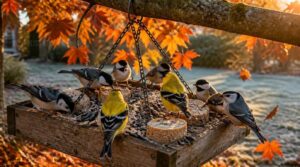
As temperatures drop and birds start burning more energy just to stay warm, what you put in your feeder matters more than ever. The right foods give visiting birds the fat and protein they need to make it through cold snaps and long migrations.
Stocking up before the season hits is easier when you have a solid go-to guide for high-energy bird food that keeps winter visitors thriving.
Here are five high-calorie options worth stocking up on this autumn.
Black Oil Sunflower Seeds
Black oil sunflower seeds are the workhorse of autumn feeding. They contain 40–50% oil by weight — mostly linoleic and oleic fatty acids — which fuels both warmth and feather conditioning as temperatures fall.
These seeds belong to the Helianthus annuus cultivar and provide high caloric energy for wildlife.
Their thin hulls matter just as much. Smaller birds like chickadees and finches crack them easily, spending less energy eating and more time surviving. That’s why they belong in every bird seed mix.
Suet Cakes for Cold Weather
Seeds carry birds through mild dips, but when temperatures really plunge, suet cakes step in. Rendered fat delivers concentrated calories that birds burn fast just staying warm.
Look for no-melt formulations — they hold shape through freeze-thaw cycles without turning greasy. Binders like oats and cornmeal keep everything together. Hang one in a suet cage, and woodpeckers will find it by morning.
Nyjer Seeds for Finches
Woodpeckers claim suet fast, but finches want something smaller. That’s where Nyjer thistle seeds earn their place.
These tiny seeds pack 20–25% fat — dense fuel that helps goldfinches, pine siskins, and redpolls handle dropping temperatures. Use a finch feeder with narrow ports, store seed cool and dry, and clear hull debris weekly to keep the station fresh and birds coming back.
Unsalted Peanuts for Protein
Finches have their Nyjer — but woodpeckers, blue jays, nuthatches, and chickadees want something with more substance.
Unsalted peanuts deliver roughly 160–170 calories per ounce, with 7–8 grams of protein and healthy monounsaturated fats. That combination helps with muscle repair and long-lasting energy through cold mornings. Offer them whole or chopped in a peanut feeder or platform tray.
Dried Fruits for Energy
Some birds crave a sweeter pick-me-up come fall. Dried fruits — raisins, apple slices, and cranberries — draw orioles, thrushes, and waxwings to your station.
- Raisins pack ~435 calories per 100g
- Fiber slows sugar absorption for sustained energy
- Antioxidants support birds during migration stress
Store dried fruit in airtight containers away from moisture to prevent mold.
Select Feeders for Fall Conditions
Not all feeders hold up well once the rain starts and temperatures dip, so fall is a good time to think about what you’re actually putting out there. The right feeder makes a real difference in which birds show up and how well your food stays fresh. Here are five options worth considering for the season ahead.
Pairing the right feeder with quality seed choices for backyard birds helps you attract more species while keeping waste and mess to a minimum this fall.
Weatherproof Hopper Feeders
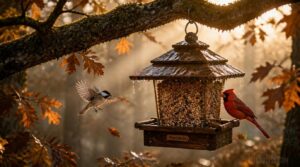
A hopper feeder is one of the smartest choices for fall. Its sloped, overhanging roof sheds rain before moisture ever reaches your seed supply.
Look for polyethylene or polycarbonate construction — these materials won’t crack when temperatures drop overnight. Integrated drainage holes in the seed tray keep things dry between showers, and a clear reservoir lets you check levels without opening the feeder.
Metal-Port Tube Feeders
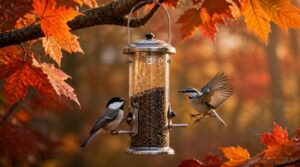
A polycarbonate tube feeder stands up to fall weather reliably. Its UV-stabilized body protects high-calorie bird food while you monitor seed levels at a glance. Metal cap construction resists moisture all season.
Look for:
- UV-stabilized tube slows seed spoilage
- Metal ports and caps resist corrosion
- Seed flow baffles prevent clumping
- Port spacing of 1.5–2 inches reduces crowding
- Perches paired to each port
Suet Cages for Clingers
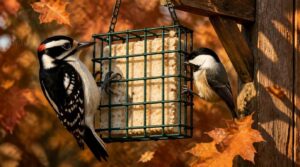
Woodpeckers and chickadees are built to hang — and a suet cage for clingers lets them do exactly that. Look for 1-inch square mesh so birds can grip the bars and peck through with ease.
Powder-coated steel resists rust season after season. A flip-top latch makes refilling fast. Hang it anywhere with a standard hook, and you’re set.
Platform Feeders for Variety
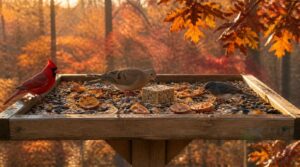
A platform feeder opens the door to nearly every bird in your yard. Doves, cardinals, and juncos all land comfortably on the flat surface, while you can scatter mixed seed blends, fruit slices, or suet blocks in one spot.
Position it 3 to 5 feet high on a sturdy pole, in morning sun to keep seeds dry and fresh.
Finch Feeders for Nyjer
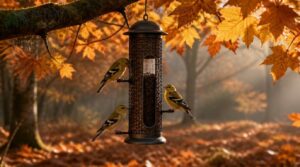
Finch feeders have ports no wider than 1.5 mm — just big enough for nyjer seeds, small enough to keep larger birds out.
Look for:
- Metal tubes that won’t crack in autumn rain
- Short perches that reduce seed spillage
- Clear panels to monitor seed levels
- Mesh sleeves that keep nyjer contained
Rotate fresh nyjer seed every few weeks to keep migrating finches returning.
Place Feeders for Safety
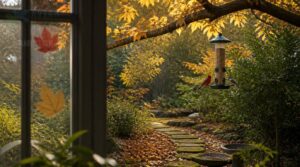
Where you put your feeders matters just as much as what’s in them. A poorly placed station can leave birds vulnerable to hawks, window strikes, or spoiled seed. Here are the key placement principles that make your setup safer and more welcoming for fall visitors.
Feeder placement is as critical as feeder content — the wrong spot leaves birds exposed to predators, window strikes, and spoiled seed
Shrub Distance for Cover
Birds need a quick escape when a hawk swoops in. Place feeders 5–15 feet from shrubs or trees — close enough to dart for cover, but not so close that a cat can ambush from the branches.
For medium shrubs maturing to 5–6 feet wide, space plants 30–36 inches apart to form solid, usable cover without crowding them into disease-prone tangles.
Window Collision Prevention
Feeders placed too close to windows create another hazard. Place feeders either within 3 feet or beyond 25–30 feet from glass — that middle range is where fatal strikes happen most.
Apply exterior UV film or decals spaced roughly 2 inches vertically and 4 inches apart horizontally. Outside application breaks up reflections before birds get close, cutting strike risk by up to 95 percent.
Feeders at Varied Heights
Spacing feeders across different heights transforms your yard into a multi-level feeding station that attracts far more species. Cardinals settle onto platform feeders at 3–5 feet, while chickadees and nuthatches prefer tubes at 5–7 feet. Woodpeckers climb suet cages at 6–8 feet.
A backyard bird feeder pole with staggered hooks makes this easy to manage in one compact setup.
Partial Sunlight Placement
Where you hang a feeder matters more than most people expect. Aim for partial sunlight — around 4 to 6 hours of direct sun daily. Morning light gently warms seeds without baking them, while afternoon shade keeps food from spoiling too fast.
A spot like this also makes bird activity more consistent and comfortable throughout the day.
Separate Ground Feeding Areas
Some birds simply won’t visit elevated feeders. Sparrows, juncos, and towhees prefer the ground — and setting up a dedicated ground zone gives them a safe, comfortable place to feed.
Keep these priorities in mind:
- Position ground areas at least 10 feet from windows
- Use a removable seed tray for easy cleanup
- Rotate zones weekly to control soil moisture
Open sightlines let birds spot predators quickly.
Keep Autumn Feeders Clean
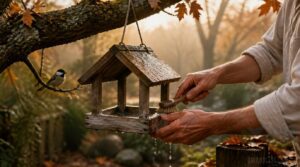
A clean feeder isn’t just tidy — it’s what keeps your backyard birds healthy through the season. Autumn’s wet weather speeds up mold and bacteria growth faster than you’d expect, so a consistent routine matters more than most people realize. Here’s what that routine should look like.
Weekly Cleaning Schedule
A dirty feeder can quietly become a health hazard. That’s why cleaning every 1–2 weeks keeps diseases from spreading among autumn visitors.
Assign one specific day to feeder maintenance so it doesn’t get pushed aside. Quick daily resets — checking seed levels and removing obvious clumps — catch early buildup before it becomes a problem.
Safe Bleach Disinfection
Mix 1 part bleach to 9 parts hot water — that’s the sweet spot for feeder disinfection. Wear gloves and eye protection, and never combine bleach with ammonia or vinegar.
Let components soak for at least 10 minutes, then:
- Disassemble all feeder parts first
- Submerge fully in solution
- Rinse thoroughly for 15 seconds
- Air-dry completely before refilling
- Test plastic parts in a small spot beforehand
Moldy Seed Removal
Soggy autumn weather turns forgotten seed into a mold factory fast. Pull out any clumped or discolored seeds by hand or mesh strainer to stop fungal spore spread before it reaches healthy batches.
A light hydrogen peroxide spray can treat borderline seeds — but discard anything still soft or discolored after drying. Then clean the feeder thoroughly before refilling.
Disease Warning Signs
Watch your feeders like a field observer. Fluffed feathers, lethargy, or drooping posture mid-day are your first red flags. Green or watery droppings, crusted eyes, and open-mouth breathing all signal active illness spreading through your station.
If multiple birds show the same symptoms, pull your feeders immediately for two weeks. Early action breaks the transmission cycle before healthy visitors get exposed.
Ground Waste Cleanup
The ground beneath your feeders tells the whole story. Hulls, droppings, and spoiled seed pile up fast — and that buildup invites bacteria, mold, and rodents straight to your station.
Rake or sweep monthly to clear the mess. Move ground-feeding trays away from main poles to spread contamination risk. Keeping the soil clean protects both visiting birds and your yard.
Protect Feeders Through Autumn
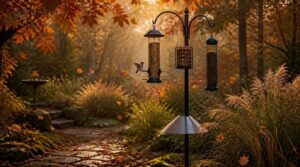
Autumn is tough on feeders — wind, rain, squirrels, and sudden migration surges can throw everything off if you’re not ready. A few practical measures make a real difference in keeping your station running smoothly through the season. Here’s what to focus on:
Squirrel Baffle Placement
Squirrels can leap up to 8–10 feet horizontally, so position your bird feeder pole well away from fences, trees, and structures.
Mount a squirrel baffle at least 4 feet above the ground, keeping the surface smooth so claws can’t grip. For hanging feeders, fix the baffle above. Check nearby branches monthly — squirrels find new angles fast.
Strong Poles and Hooks
Once your baffle is in place, the pole holding everything up deserves equal attention. Choose a heavy-duty bird feeder pole rated for at least 20 pounds — autumn winds test flimsy hardware fast. Telescoping poles (6–12 feet) let you adjust height easily.
Swivel hooks prevent tangling during gusts. Stick with stainless steel or powder-coated finishes — they resist rust through wet autumn months without failing mid-season.
Rain Guards and Domes
A sturdy pole keeps feeders stable, but rain guards and domes handle what wind can’t — moisture. Dome-shaped guards deflect rainfall outward, keeping seeds drier and slowing mold growth between cleanings.
Look for UV-stabilized plastic or aluminum versions — both resist cracking through wet autumn weeks. Most fit standard pole and hanging setups. Remove the dome during cleaning and rinse with mild soap to prevent residue buildup underneath.
Migration Traffic Monitoring
Keeping an eye on migration traffic patterns tells you when to stock up before a rush hits. Migratory birds move in waves, and feeder demand can spike overnight.
Watch for these signals:
- Sudden flock arrivals logged by automated camera monitoring
- Species composition data shifting toward warblers or sparrows
- Weather front passage — cold nights push seasonal bird migration south fast
Refill before the crowd, not after.
Fresh Water Nearby
Water matters just as much as seed. A clean, shallow dish placed near your feeder setup gives birds a place to drink and bathe — critical for feather maintenance before cold nights set in.
Refresh it daily. Stagnant water spreads disease faster than a dirty feeder ever could.
Frequently Asked Questions (FAQs)
What is the 5 7 9 rule for bird feeders?
The 5-7-9 rule sets three key distances: feeders at 5 feet high, 7 feet from structures, and 9 feet from windows — giving birds safe access while blocking squirrels and preventing deadly glass strikes.
How to attract birds to feeders in fall?
Fall is prime time for birds stocking up before winter. Offer energy-rich seed blends, fresh water, and reliable cover nearby. That combination turns your yard into a dependable stop along seasonal migration patterns.
Why put a potato in the bird feeder?
Cooked potato chunks give birds a rapid carbohydrate boost — quick fuel for flight and warmth. They support feather health through B vitamins and potassium, making them a smart, occasional seasonal supplement alongside seeds.
Why put coffee grounds around bird feeders?
Used coffee grounds spread in a thin layer around your feeder base can discourage ants, snails, and even squirrels. The scent disrupts pest trails naturally. Just keep grounds away from seed and birds.
Which birds migrate south and stop visiting feeders?
As the days shorten like a closing door, swallows, warblers, and flycatchers head south and vanish from feeders entirely. Robins, chaffinches, and blackcaps increasingly overwinter closer to home now, shifting where — not whether — they feed.
Should feeders be removed during severe winter storms?
No. Keep feeders up. Small birds like chickadees can’t survive long without food in freezing temps. If drifting snow blocks access, move feeders to a sheltered spot temporarily.
How do I attract owls to my backyard?
Owls need more than luck — they need the right setup. Mount a barn owl nest box at 10–20 feet, face it away from wind, and keep brush piles nearby to support the rodents they hunt.
Can bird feeding disrupt natural foraging behaviors?
Feeders fuel foraging shifts. Birds may rely less on wild seeds and insects, alter social hierarchies at stations, and reduce natural seed dispersal — yet most quickly return to natural foraging when feeders are removed.
Conclusion
The backyard falls silent without help. With the right autumn bird feeder strategies, it hums again—seeds cracked open on cold mornings, wings flashing between feeders, life holding steady against the season’s pull. That contrast is the whole point.
One yard won’t stop winter. But it shelters the birds riding it out, one careful choice at a time. Clean feeders, quality food, smart placement. That’s what turns a quiet yard into something worth watching.
- https://www.allaboutbirds.org/news/types-of-bird-seed-a-quick-guide
- https://realgardensgrownatives.com?p=2407
- https://www.massaudubon.org/nature-wildlife/birds/bird-feeding
- https://underatinroof.com/blog/how-to-make-homemade-suet-for-birds
- https://www.kingsyard.com/blog/expert-advice-should-bird-feeders-be-removed-in-fall-for-migration