This site is supported by our readers. We may earn a commission, at no cost to you, if you purchase through links.
A Downy Woodpecker burns through roughly ten percent of its body weight in energy just surviving a single winter night. That math only works if it finds calorie-dense food fast, and a suet cake sitting at 9,000 calories per pound solves that problem better than almost anything else you can offer.
This is exactly why suet draws such a specific, surprising crowd. Which backyard birds benefit from suet feeding stretches well past woodpeckers into nuthatches, wrens, bluebirds, even winter warblers you’d never expect at a feeder.
Once you know who’s actually showing up and why, choosing the right suet type stops being a guessing game.
Table Of Contents
- Key Takeaways
- Backyard Birds That Benefit From Suet
- Woodpeckers: Reliable Suet Visitors
- Nuthatches and Chickadees
- Wrens, Titmice, and Jays
- Bluebirds, Orioles, and Fruit Eaters
- Winter Warblers and Tiny Insect Eaters
- Best Suet Types by Species
- Top 5 Suet Feeding Products
- Feeding Tips for Healthier Birds
- Frequently Asked Questions (FAQs)
- Conclusion
Key Takeaways
- Suet’s high calorie density (around 9,000 calories per pound) makes it essential winter fuel, since birds like the Downy Woodpecker can burn roughly 10% of their body weight surviving a single cold night.
- Suet attracts a far wider range of birds than expected, including not just woodpeckers but nuthatches, chickadees, wrens, bluebirds, orioles, and even winter warblers and kinglets when insects become scarce.
- Matching suet type to species matters most for feeding success, with nut-based blends favored by woodpeckers, fruit blends by bluebirds and orioles, insect-based suet by wrens, and no-melt formulas needed for summer feeding above 85–90°F.
- Feeder placement and maintenance directly affect bird safety and suet effectiveness, so positioning feeders 6–15 feet from cover, refilling every 2–4 days, and cleaning cages weekly all help prevent spoilage, disease, and predator risk.
Backyard Birds That Benefit From Suet
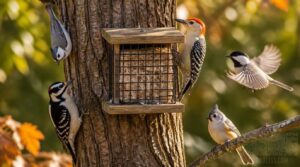
Many backyard birds rely on suet as a key energy source, especially when natural food is scarce. You’ll find that certain species visit suet feeders far more often than others. Let’s look at which birds benefit most from suet in your yard.
Woodpeckers, nuthatches, and chickadees are among the most frequent visitors, so choosing the best suet feeder for backyard birds can make a real difference in attracting them.
Woodpeckers
Woodpeckers thrive on high-calorie suet cakes thanks to their chisel-like beaks and shock-absorbing skulls, which allow them to drill for insects. These birds use specialized cranial anatomy to withstand the intense force of pecking. Suet helps:
Their zygodactyl feet grip feeders, and drumming displays mark territory. Cavity nesting in snags benefits other wildlife.
Nuthatches
If woodpeckers drill for insects, nuthatches take the opposite approach: acrobatic climbing headfirst down bark. Their strong feet grip trunks during vertical foraging, letting them probe crevices other birds skip entirely.
We often see them wedge seeds into bark gaps, a caching habit that pairs well with suet. Sharp, chattering calls mark their territory, especially near feeders offering steady avian nutrition through winter.
Chickadees
Black-capped chickadees weigh in at just 0.3 to 0.6 ounces, yet they cache suet pieces in bark crevices for winter survival. Their spatial memory rivals any forager’s. Species identification is easy: black cap, white cheeks, gray back.
- Black-capped: broad range, bold bib
- Carolina: lighter cap, southeastern US
- Mountain: pale crown stripe, high elevation
Wrens
Wrens bring a different feeding style to your suet station. At just 4 to 5 inches long, these insectivorous foragers rely on their slender, downcurved bills to probe bark crevices, so they’ll readily switch to suet cakes when insects grow scarce.
Listen for their surprisingly loud, trilling songs from dense undergrowth; that’s often your first clue they’re nesting nearby and worth feeding.
Bluebirds
Picture a flash of ultraviolet blue settling onto a fence post—that’s your cue a bluebird’s nearby. Unlike bark-foraging insectivorous species, bluebirds hunt from open perches, then shift diets seasonally:
- Breeding season: beetles, caterpillars
- Winter: fruit and berries
- Nesting cavities: 6-15 meters up
- Males: flight displays for courtship
Fruit-based suet mimics their natural diet shift, supporting sound avian nutrition through backyard bird feeding.
Woodpeckers: Reliable Suet Visitors
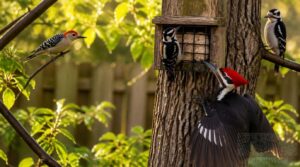
No bird group answers the call of a suet feeder quite like woodpeckers do, since their diet naturally leans on insects and larvae tucked under bark.
You’ll find that different species bring their own size, strength, and feeding style to your yard. Here’s a look at five woodpeckers you can expect to see, from the smallest visitor to the largest.
Downy Woodpecker
Smallest, scrappiest, and most reliable of all suet visitors, this 6-inch bird earns its keep at feeders year-round.
Its zygodactyl feet and shock-absorbing skull let it hammer bark relentlessly, while its 4cm tongue extracts hidden larvae. When insects run scarce, high-energy suet fills the gap, fueling the drumming displays that mark its territory.
Hairy Woodpecker
Scale up from its Downy cousin and you’ll spot the difference immediately: a bill nearly as long as its head is wide, built for deeper excavation into bark beetles. Males carry a red nape patch females lack.
At 9-10 inches, this woodpecker species favors mature trees with standing dead wood, drumming loudly to claim territory and locate hidden larvae beneath the surface.
Red-bellied Woodpecker
Don’t let the name fool you—the "belly" in Red-bellied Woodpecker is barely a blush, while the red cap stretching forehead-to-nape is your real field mark for males.
This zebra-backed regular readily takes suet, using its chisel bill and zygodactyl grip to work bark crevices for insects. It nests in cavities and drums rhythmically, announcing territory across eastern backyards year-round.
Northern Flicker
Ever watched a woodpecker feed on your lawn like a robin? That’s the flicker, hammering soil for ants rather than bark. We recognize shaft color variations—yellow east, red west—in flight.
Three traits define flicker suet visits:
- Ground foraging habits
- Winter insect scarcity
- Migratory winter patterns
Diet supplementation needs peak when ants disappear, drawing this insect-eating bird to suet cakes.
Pileated Woodpecker
Imagine a woodpecker nearly two feet long, thundering its presence with rapid drumming communication on dead trees.
The pileated woodpecker relies on high-calorie suet, especially during winter, when carpenter ants vanish. Its deep excavation foraging and large plumage demand rich energy—nut suet or no-melt suet cake feeder. Mature forests with standing snags are essential for their nesting cavities and territory.
Nuthatches and Chickadees
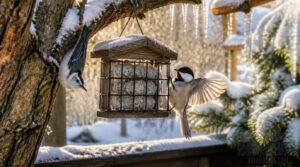
Nuthatches and chickadees bring a mix of acrobatics and resourcefulness to your backyard feeders. Their feeding habits and energy needs make suet especially valuable during colder months. Let’s look at which species benefit most and how they use suet to thrive.
White-breasted Nuthatch
Spotting a White-breasted Nuthatch at your suet feeder means you’re hosting a specialist. This stocky bird climbs headfirst down tree trunks, prying insects from bark with its upturned bill.
In winter, it shifts to seeds and suet, caching small pieces in crevices. Its nasal “yank yank” call stands out, especially as it joins mixed flocks and relies on cavity nesting.
Red-breasted Nuthatch
If you hear a nasal “yank” echoing through your conifers, you’re likely hosting a Red-breasted Nuthatch. This compact bird—with its bluish-gray back and rusty belly—clings head-down on bark, seeking insects, seeds, and suet.
In harsh winters, it’s drawn to energy-dense suet for calories, caching small bits in crevices and defending feeders with surprising aggression.
Black-capped Chickadee
You’ll recognize the Black-capped Chickadee by its black cap, white cheeks, and sharp “chick-a-dee” calls echoing from nearby trees.
This species relies on dense winter plumage and a compact body to conserve warmth, caching hundreds of suet bits in bark crevices. Suet feeders offer a high-calorie food source that fuels their rapid movement and sustains their strong spatial memory.
Carolina Chickadee
Farther south, its near-twin the Carolina Chickadee takes over, ranging from New Jersey to Texas and Oklahoma, south through northern Florida and the Gulf Coast, at lower elevations than its cousin.
At just 4.7 inches long, it forages by gleaning insects and spiders from bark, then relies on bird suet as a high-calorie food source when caterpillars and beetles grow scarce in winter.
Caching Winter Energy Reserves
Watching chickadees dart between feeder and bark crevice reveals a survival strategy years in the making. They cache sunflower bits and suet fragments across dozens of sites, relying on spatial memory function to relocate stashes days later.
Chickadees cache sunflower bits and suet across dozens of sites, then rely on sharp spatial memory to find them days later
- Scattered caching limits cache theft prevention risk
- Fat reserve accumulation buffers cold snaps
- Overnight torpor lowers metabolic rate regulation
- Consistent suet access stabilizes winter survival odds
Wrens, Titmice, and Jays
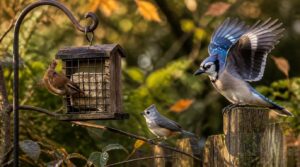
Not every suet visitor clings to bark or hangs upside down. Wrens, titmice, and jays bring their own habits and appetites to the feeder, each one shaped by what they need to thrive. Here’s what makes these three backyard regulars worth knowing.
Carolina Wren
A bubbling, rapid-fire song erupting from a brush pile often announces this bird before you ever spot it. Look for rusty-brown plumage, a bold white eyebrow stripe, and an upturned tail.
Thryothorus ludovicianus holds year-round territories, so suet feeding pays off in every season. These insect-eating birds favor insect-based or high-protein suet, supporting their year-round presence in dense, sheltered backyard habitat.
Bewick’s Wren
A tangle of brush rustles, then a wren pops up, tail cocked, tossed skyward. Identifying eyebrow stripes—long, white, striking—separates this species from cousins. At 12-14 cm, it forages bark crevices for caterpillars and beetles, occasionally hanging upside down.
Nest cavity types include hollow branches and stumps. Offer insect-based suet cakes; these backyard birds respond well when territorial song patterns mark established ground.
Tufted Titmouse
That snub-nosed look, punctuated by a crested plumage, makes this bird instantly recognizable at your feeder. We see them join winter foraging flocks, sounding sharp antipredator calls that alert chickadees nearby.
Their social nesting habits show older siblings helping raise young—true backyard habitat adaptation. Offer high-fat suet; titmice need this energy-dense food, especially through breeding season insect scarcity.
Blue Jay
Nine to twelve inches of bold blue plumage, white underparts, and a black necklace collar make this corvid unmistakable at your feeder. That rising crest signals mood, while their vocal mimicry skills fool other species entirely.
We value Blue Jays for corvid intelligence and omnivorous habits—they’ll crack acorns, raid suet cakes, and cache food for later, bringing constant activity to backyard birdwatching setups.
Protein-rich Suet Benefits
Why does protein matter as much as fat when we’re talking suet bird food? Because muscle development and feather health both depend on it, especially during molt.
We see measurable gains in immune system support and vitality and metabolism when birds get consistent protein intake alongside essential fatty acids—meeting basic avian dietary needs through one high-calorie food source that promotes whole-bird nutrition, not just quick energy.
Bluebirds, Orioles, and Fruit Eaters
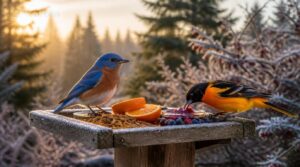
Not every backyard visitor cares for seeds or suet cakes made purely of fat. Bluebirds and orioles are fruit lovers at heart, and you’ll need a different approach to bring them in. Here’s what draws these colorful feeders to your yard, and how to keep them coming back in colder months.
Eastern Bluebird
Eastern Bluebirds skip the seed feeder entirely, but offer them fruit-based suet and you’ll see why they’re worth the effort. These thrushes shift from insects to berries each winter, nesting in cavities with 60-70% success when starlings don’t muscle in.
Their gentle "chur-lee" song and rusty-orange chest make them a favorite among gardeners cultivating insect-eating birds in open, tree-scattered yards.
Baltimore Oriole
Male Baltimore Orioles bring that same fruit-loving instinct, but with unmistakable flame-orange and black plumage that stops you mid-stride. Females wear softer yellow-olive tones, less flashy but still striking against green foliage.
They’ll happily take grape jelly or orange halves alongside suet. Their hanging, woven nests—built from plant fibers and hair—hang like little pouches from branch tips, while flute-like songs announce territory during breeding season.
Orchard Oriole
Scale down that Baltimore flash and you’ll find the Orchard Oriole, just 6.5 inches with chestnut-and-black males and olive-yellow females. They nest in willows and elms, favor open woodland mosaics, and shift diets seasonally:
- Spring insects for protein
- Late-summer mulberries and cherries
- Nectar sipping
- Occasional aerial insect hawking
- Fall migration fattening toward Central America
Fruit Suet Blends
Both orioles turn to fruit suet when natural sugars run low, and manufacturers now formulate mixes specifically for them. We look for fruit inclusion benefits like raisins, cranberries, and mealworms for added protein.
| Mix Type | Key Ingredient | Best For |
|---|---|---|
| Berry Mix | Cranberries | Orioles |
| No-melt | Palm oil | Summer feeding |
| Nut-Fruit | Peanuts + raisins | Chickadees |
Sustainable fat sources keep vitamins intact without spoiling.
Cold-weather Fruit Alternatives
Suet isn’t the only high-calorie food source worth offering. When natural insects vanish, we supplement with citrus energy boosts like orange halves, plus winter berry substitutes such as pomegranate arils. These high fiber fruits double as antioxidant-rich snacks.
Store extras at 4–7°C to keep them fresh. This rotation helps meet diverse seasonal dietary needs during winter bird feeding, giving fruit-eaters options beyond suet cakes alone.
Winter Warblers and Tiny Insect Eaters
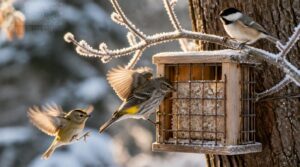
When insects disappear in the cold months, you’ll notice some unexpected visitors showing up at your suet feeder. These small, often-overlooked species rely on fat reserves to survive when their usual food source dries up. Here’s who to watch for and why suet matters so much to them.
Yellow-rumped Warbler
Yellow-rumped Warblers flash a bright rump patch as their calling card, visible year-round in both sexes. They arrive at feeders when insects grow scarce, shifting to berries and suet for calories.
- Gray body, black streaks
- Yellow rump, crown, flanks
- Two subspecies groups: Myrtle, Audubon’s
- Winter plumage turns brownish-gray
Their migration corridors span both coasts, making suet a reliable high-calorie food source during seasonal diet shifts.
Golden-crowned Kinglet
At just 5 to 7 grams, this tiny bird’s metabolism demands constant fuel. Its yellow-and-black crown flashes against olive plumage as it flicks through boreal conifers, gleaning insects with rapid, restless movements.
| Trait | Detail |
|---|---|
| Weight | 5–7g |
| Habitat | Boreal forest |
| Diet | Insects, spiders |
| Movement | Frantic foraging |
| Season | Winter cold spells |
Suet becomes a high-calorie food source when insects vanish.
Brown Creeper
Bark-colored plumage makes this bird nearly invisible against tree trunks, measuring just 4.7–5.5 inches. It spirals upward from a trunk’s base, probing crevices with its curved bill for insect eggs and larvae, then drops to a neighboring tree’s base to start again.
This spiraling foraging technique, paired with hammock-style nests tucked under loose bark, means suet offers backup calories when bark insects run scarce.
Bushtit
A gray puffball with a tail longer than its body, the bushtit travels western yards in noisy, tumbling flocks of 10 to 40. We watch them glean tiny insects from foliage nonstop, weave hanging, football-shaped nests from moss and spider silk, and occasionally sample suet blends when insects thin out:
- Constant soft peeping calls
- Acrobatic branch-hanging foraging
- Strong flock bonds year-round
Insect Scarcity Support
What happens when the bugs run out? We plant our way to a solution. Habitat heterogeneity—native shrubs, undisturbed leaf litter, layered ground cover—keeps insect populations cycling through winter and early spring.
Cutting pesticide use protects these same insects, while shallow water features draw in aquatic larvae. Suet fills the gap as a high-calorie food source, but bird-friendly gardening remains our best long-term insect diet strategy.
Best Suet Types by Species
Not every suet cake works for every bird, and matching the mix to the visitor makes all the difference. Your feathered guests have distinct preferences shaped by beak shape, feeding style, and the season on the calendar. Here’s how to choose the right suet for the right species, and the right conditions.
Nut Suet for Woodpeckers
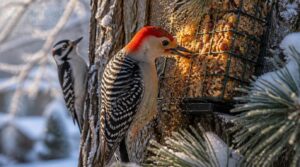
Drum a tree hard enough and you’ll burn calories fast—which is why nut-enriched energy matters so much for woodpecker foraging styles. Roasted peanuts blended into rendered fat give downy, hairy, and red-bellied woodpeckers essential fatty acids plus winter metabolic support.
- High-calorie fat-to-protein ratio
- Vertical suet cake feeder compatibility
- Sustains drumming and pecking stamina
Nut suet benefits go beyond taste; they’re survival fuel.
Fruit Suet for Bluebirds
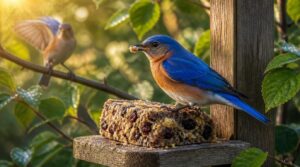
Woodpeckers crave nuts, but bluebirds want something sweeter. Fruit suet blends mix raisins, currants, or dried blueberries into cornmeal and rendered fat, delivering natural sugars without the excess bluebirds don’t need.
We recommend chopped, not whole, fruit pieces—easier to swallow, less choking risk. Watch for spoilage in humid weather, and skip homemade blends left unrefrigerated past a week.
Insect Suet for Wrens
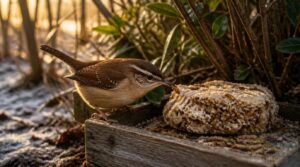
Wrens don’t crave nuts or fruit—they want bugs. Insect-eating birds like Carolina and Bewick’s wrens thrive on mealworm protein and cricket meal blends mimicking their natural diet.
We recommend bite-sized suet at low-height feeders near cover, supporting thermoregulation during cold snaps.
- Dried mealworms boost feather molt
- Cricket meal adds calcium
- Crumble forms reduce waste
High-fat Winter Cakes
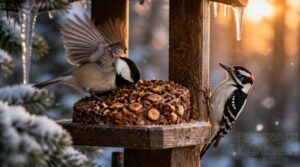
High-fat winter cakes trade crumble protein for pure calorie density. Butter or cream cheese bases, run 150–200 grams per 900-gram batch, create moisture that survives cold storage.
| Ingredient | Fat Contribution | Effect |
|---|---|---|
| Butter | 150–200g/batch | Dense crumb |
| Walnuts | 10–20g/cup | Crunch + oils |
| Cocoa | 5–15g/serving | Richness |
Cinnamon and nutmeg round out flavor for winter bird food that fuels metabolism.
No-melt Summer Suet
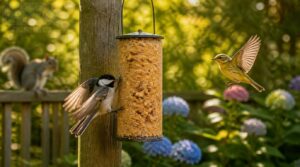
Once summer temperatures climb past 90°F, standard suet turns to soup fast. No-melt summer suet solves this with palm oil binders offering high temperature stability up to 130°F.
Key traits we look for:
- Heat resistant formulas that hold shape
- Squirrel deterrent capsaicin additions
- Summer protein blends with mealworms
- Cylindrical or plug shapes for mess free feeding
- Reliable high-calorie food source for warblers and chickadees
Top 5 Suet Feeding Products
Choosing the right suet product matters as much as choosing the right feeder, since fat content, ingredients, and cake design all shape which birds show up.
We’ve tested and researched options that balance durability, nutrition, and species appeal across every season. Here are five suet products worth stocking in your backyard.
1. More Birds Double Suet Cake Feeder
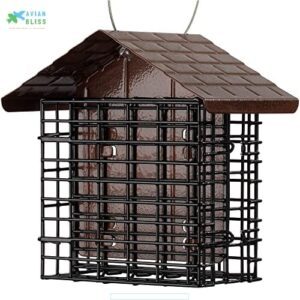
Two feeding stations in one housing — that’s the practical appeal of the More Birds Double Suet Cake Feeder. Independent cages hold separate cakes, so a downy woodpecker and a nuthatch can feed simultaneously without competing. The shingle-patterned roof diverts rain and snow, while powder-coated steel resists corrosion outdoors.
We’d note the double-locking closure simplifies refills, though there’s no perch, which limits access for larger clinging species like blue jays looking to steady themselves while feeding.
| Best For | Backyard bird enthusiasts who want to attract clinging birds like woodpeckers, nuthatches, chickadees, and titmice with a durable, weather-resistant feeder that holds two suet cakes at once. |
|---|---|
| Target Species | Woodpeckers, Nuthatches, Chickadees, Titmice |
| Primary Use | Suet Feeder |
| Weight | 16 oz |
| Seasonal Use | Winter Months |
| Weather Durability | Weather Guard Roof |
| Ease Of Use | Double-Locking Closure |
| Additional Features |
|
- Dual suet cages let two cakes be offered at the same time, so multiple birds can feed without competing
- Shingle-patterned weather guard roof and powder-coated steel construction stand up well to rain, snow, and outdoor wear
- Double-locking closure system makes refilling simple while keeping food secure
- No included perch or base, making it harder for larger birds like blue jays to feed comfortably
- Not built with squirrel resistance in mind, so you may need to add baffles separately
- Thin suet cakes can tip forward or backward inside the compartment
2. Kaytee Woodpecker Seed Cake Wild Bird Food
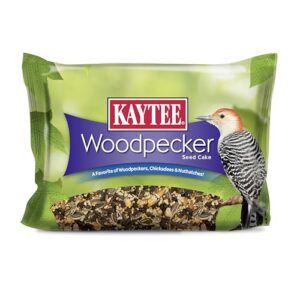
Peanuts, sunflower, safflower, pecans, and pine nuts get pressed into one compact block, giving woodpeckers a nut-heavy energy source they instinctively seek. Gelatin and honey bind the cake so it clumps less than loose seed, while listed crude fat sits near 23% and crude protein around 13%, supporting both winter energy needs and feather maintenance.
It slips easily into standard cake feeders, ready to feed without mixing. Downy, Hairy, and Red-bellied Woodpeckers respond well, and chickadees or nuthatches often join in.
| Best For | This seed cake is best for backyard bird enthusiasts who want to attract woodpeckers, chickadees, and nuthatches while cutting down on the mess loose seed usually leaves behind. |
|---|---|
| Target Species | Woodpeckers, Chickadees, Nuthatches |
| Primary Use | Suet Cake |
| Weight | 1.85 lbs |
| Seasonal Use | All Seasons |
| Weather Durability | May Soften In Rain |
| Ease Of Use | Ready-To-Feed |
| Additional Features |
|
- Packed with peanuts, sunflower, safflower, pecans, and pine nuts for a high-energy, nut-rich blend
- Compressed cake design means less mess and wasted seed compared to loose birdseed
- Ready to use right away in cake or suet feeders, with no mixing or prep required
- Edges can soften or lose shape if exposed to heavy rain
- Some blocks may arrive with minor damage or loose edges from shipping
- The larger block size might need trimming to fit smaller suet cages
3. C&S Woodpecker Suet Bird Food
 View On Amazon
Rendered beef fat forms the backbone of this formula, giving woodpeckers a fast-digesting energy source rather than a slow-burning one. Roasted peanuts, almonds, pecans, and walnuts add textural variety that keeps hairy, downy, and red-bellied woodpeckers coming back.
You’ll find it as soft nuggets or cakes, and both work in standard wire feeders. We recommend blending it with 5-10 pounds of seed if you’re feeding a mixed flock. It holds up to temperature swings reasonably well, though warm spells still soften it.
| Best For | backyard bird enthusiasts who want to attract hairy, downy, red-bellied, and other woodpecker species with a high-energy, protein-rich food source. |
|---|---|
| Target Species | Woodpeckers (Multiple Varieties) |
| Primary Use | Suet Cake |
| Weight | 5.5 lbs |
| Seasonal Use | Year-Round |
| Weather Durability | May Melt In Heat |
| Ease Of Use | Rawhide-Free Cakes |
| Additional Features |
|
- High-energy suet blend with roasted peanuts, almonds, pecans, and walnuts provides essential fat and protein for year-round feeding
- Works in standard wire suet feeders and comes in convenient cake form
- Made in the USA by a brand with decades of experience since 1986
- Can become soft, mushy, or messy in warmer temperatures
- Requires refrigeration for easier removal from packaging
- Risk of melting or mold if not stored in a cool, dry environment
4. High Energy All Season Suet
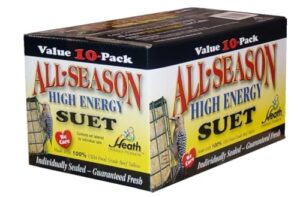
What good is a suet cake if it turns to mush the moment the sun hits it? This recipe solves that with a no-melt formula stable up to 85–95°F, so you get reliable energy from winter through late summer.
Crude fat runs 15-25%, protein 4-8%—leaner than pure beef suet, but the corn, millet, and sunflower mix draws woodpeckers, chickadees, and nuthatches consistently. It’s a solid year-round staple for mixed-species feeding stations.
| Best For | Backyard bird enthusiasts who want a reliable, no-melt suet they can feed across multiple seasons without worrying about it turning to mush in the heat. |
|---|---|
| Target Species | Woodpeckers, Chickadees, Nuthatches, Wrens |
| Primary Use | Suet Cake |
| Weight | 6.88 lbs |
| Seasonal Use | Year-Round |
| Weather Durability | Not Specified |
| Ease Of Use | Bulk 10-Pack |
| Additional Features |
|
- No-melt formula stays stable in temperatures up to 85–95°F, so it holds up from winter through late summer
- Attracts a wide range of songbirds, including woodpeckers, chickadees, nuthatches, and wrens
- Comes in a bulk 10-pack, giving backyard birders a long-lasting supply without constant repurchasing
- Lower in crude fat (15-25%) and protein (4-8%) compared to pure beef suet, so it may offer less concentrated energy
- Individual cakes aren’t labeled, making it hard to tell them apart once out of the packaging
- Can attract squirrels, which may mean adding feeder guards or other deterrents
5. Blue Seal Woodpecker Suet Cake
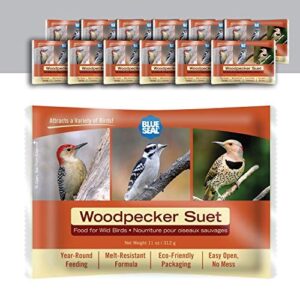
Blue Seal built this 11-ounce cake for one job: staying put in your feeder without turning into a greasy puddle come thaw. The melt-resistant formula holds shape through winter’s swings, and rendered beef suet plus seeds gives Downy and Hairy Woodpeckers a solid fat source when insects vanish.
It fits any standard cage or platform feeder, so compatibility isn’t a concern. Nuthatches, chickadees, and titmice show up regularly too, though which species stop by depends heavily on your yard’s geography and placement.
| Best For | Backyard bird enthusiasts who want a mess-free, melt-resistant suet cake that keeps woodpeckers, nuthatches, chickadees, and other feeder birds fed year-round. |
|---|---|
| Target Species | Woodpeckers, Cardinals, Nuthatches, Chickadees |
| Primary Use | Suet Cake |
| Weight | 12 oz per cake |
| Seasonal Use | Year-Round |
| Weather Durability | Melt-Resistant Formula |
| Ease Of Use | Easy-Open Wrapper |
| Additional Features |
|
- Melt-resistant formula holds its shape through temperature swings, so it won’t turn greasy or drip
- Easy-open, 100% recyclable wrapper made with 80% less packaging material means less mess and a smaller environmental footprint
- Fits all standard suet feeders and attracts a wide variety of birds, from woodpeckers to chickadees
- Cakes are thin and can break apart easily during handling or feeder refills
- May soften in direct sunlight or when temperatures climb into the 70s
- Contains millet, which some bird enthusiasts view as a filler ingredient rather than a nutritional benefit
Feeding Tips for Healthier Birds
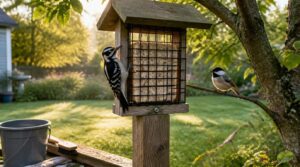
Choosing the right suet matters, but where and how you feed it matters just as much. A few adjustments to placement, cleaning, and timing can protect the very birds you’re trying to help. Here are five practical habits that make your feeding station safer and more effective.
Place Feeders Near Cover
Think of cover as a bird’s insurance policy. Position feeders within 6 to 15 feet of evergreen shrubs, giving chickadees and nuthatches an instant escape route.
This strategic shrub placement keeps predator distance safety in mind—5 to 10 feet from ground-level threats—while native plant benefits add extra insects, rewarding your backyard bird feeding efforts with longer, safer visits.
Use Shaded Feeder Locations
Cover keeps birds safe from predators, and shade keeps them comfortable. A shaded feeding station drops ambient temperature by 5 to 10°C, cutting thermal stress and lowering panting rates roughly 20 percent. Dense canopy adds predator visibility management without exposing birds.
Aim for north or east-facing placement—this microclimate stability extends suet feeding well into warmer months without spoilage.
Try Upside-down Feeders
Once your feeder’s shaded and settled, consider flipping the script entirely. Upside-down feeders exploit inverted feeding mechanics that favor clinging species like woodpeckers and nuthatches while acting as a natural squirrel deterrent. The grip-and-retreat motion suits chickadees perfectly.
Look for durable mesh and weatherproof housings—these hold up through repeated clinging without sagging or tearing over time.
Clean Cages Regularly
Cage feeders demand the same daily sanitation you’d give any bird enclosure. Wipe surfaces daily, then commit to a weekly deep clean—scrubbing with bird-safe disinfectant, rinsing fully, and drying before reassembly.
This routine prevents bacterial growth and keeps ammonia from building up around perches. Consistent feeder hygiene protects the woodpeckers, chickadees, and nuthatches counting on that station daily.
Discard Spoiled Suet
Trust your nose before your eyes. A sour or rancid odor signals fat oxidation has begun, often paired with a slimy texture or visible mold.
Bag spoiled suet sealed, then toss it in outdoor trash—never compost where wildlife can reach it. Rancid fat causes digestive upset, so birdlife suffers when we skip this basic feeding station maintenance and avian disease prevention step.
Frequently Asked Questions (FAQs)
How often should suet feeders be refilled?
We refill every 2 to 4 days during peak seasons, checking daily in cold snaps or hot spells. High-traffic feeding stations with woodpeckers and chickadees deplete faster, while proper hygiene and spoilage checks keep your backyard bird feeding schedule reliable.
Can suet feeding attract unwanted pests or rodents?
Yes—spilled suet and fat residue draw rodents, especially in winter.
We recommend rodent-resistant cage feeders, elevated placement away from structures, prompt cleanup of debris, and sealed storage to keep your backyard bird feeding station pest-free year-round.
Is homemade suet safer than store-bought suet?
Homemade suet gives you control over salt content and fat sourcing, avoiding toxic additives like chocolate or xylitol. Commercial suet cakes offer convenience but rely on preservatives.
Proper refrigeration and clean utensils reduce mold risk, making homemade recipes the safer, more customizable choice for bird nutrition.
Does suet feeding stop birds from migrating naturally?
Not entirely. A single suet cake can shift fuel accumulation timing by days, but supplemental feeding mostly helps with winter survival and stopover refueling—it doesn’t override the hormonal, daylight-driven triggers that govern true seasonal bird migration.
What time of day do birds eat suet most?
Morning peak foraging drives most suet activity, right after sunrise when birds break their overnight fast. Afternoon feeding stays steadier but lighter.
Cold snaps and overcast days extend visits, while sunny warmth melts suet faster, shortening the afternoon window.
Conclusion
Like a telegraph dispatch delivering urgent news, your feeder sends a message every winter morning: help is here. Which backyard birds benefit from suet feeding comes down to one truth—energy scarcity levels the playing field between woodpeckers and warblers alike.
Match suet type to species, place feeders wisely, and clean them often. Do that, and you’re not just filling a cage. You’re keeping tiny engines running through the coldest nights of the year.
- https://birdbrella.com/bird-feeding-guides/best-bird-feeders/suet-bird-feeders
- https://www.birdscanada.org/choosing-the-right-feeder-and-seed-a-guide-to-keeping-backyard-birds-healthy
- https://marin.wbu.com/suet-feeders
- https://ask.ifas.ufl.edu/publication/UW192
- https://www.allaboutbirds.org/news/how-to-choose-the-right-kind-of-bird-feeder