This site is supported by our readers. We may earn a commission, at no cost to you, if you purchase through links.

Most backyard birders set up their feeders wherever it’s convenient—a hook by the patio door, a post in the middle of the lawn, maybe near a window for a good view. Birds show up, so it seems to work. But placement does far more than determine your sightlines.
Where you position a feeder shapes which species visit, how safe they feel, and whether they keep coming back. A feeder too close to dense shrubs hands squirrels an easy route. One too near a window becomes a collision hazard. The wrong height, and ground-feeding doves or high-perching woodpeckers never get comfortable.
Ideal feeder positioning in your backyard isn’t complicated—but a few precise adjustments make a measurable difference in the birds you attract.
Table Of Contents
- Key Takeaways
- Why Backyard Feeder Position Matters
- Choose The Safest Yard Location
- Set The Right Feeder Height
- Prevent Windows and Predator Risks
- Position Feeders for Specific Birds
- Frequently Asked Questions (FAQs)
- What is the 5 7 9 rule for bird feeders?
- Where not to place a bird feeder?
- Do wild birds remember where bird feeders are?
- How many feet off the ground should a bird feeder be?
- How often should backyard feeders be cleaned?
- What seeds attract the most bird species?
- Can feeders be used during summer months effectively?
- Do weather conditions affect feeder placement decisions?
- How do I store birdseed to keep it fresh?
- Conclusion
Key Takeaways
- Place feeders either within 3 feet of windows or beyond 30 feet to sharply cut the risk of deadly bird collisions.
- Match feeder height to the species you want: songbirds thrive at 5–8 feet, woodpeckers at 8–15 feet, and hummingbirds at 4–6 feet.
- Keep feeders 10–15 feet from protective cover like shrubs, while maintaining a 10-meter buffer from dense vegetation that hides predators.
- Using multiple feeder heights and seed types — nyjer, suet, millet, sunflower — creates distinct feeding zones that attract a far wider range of species.
Why Backyard Feeder Position Matters
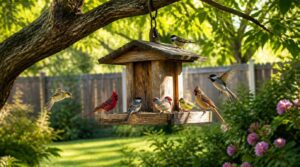
Where you place your bird feeder changes everything. The right spot brings in more birds, keeps them safer, and makes your yard easier to watch. Here’s why feeder position matters more than most backyard birders expect.
If you’re ready to take it a step further, building your own setup with these homemade bird feeder plans gives you full control over size, style, and placement from the start.
Safer Feeding Zones
Where you hang a feeder matters more than most people realize. A poorly placed feeder can expose birds to window collisions and ambush predators daily.
Proper placement helps birds manage the starvation and predation risk encountered when leaving safe refuges. Keep feeders within 3 feet of windows or beyond 30 feet. Mount them on smooth poles with baffles to block climbing predators. That’s why placement — not just seed — builds a truly bird-friendly environment.
Better Bird Visibility
Feeder position shapes your entire birdwatching experience. Place window feeders within 3 feet to cut glare and sharpen your view.
- Use transparent feeder designs to reveal plumage details clearly
- Apply high contrast backdrops so birds stand out
- Make the most of natural lighting by facing feeders east or south
- Set feeders at eye level for quick species identification
Good placement turns backyard birding from guesswork into clarity.
More Species Variety
Where you set your feeders shapes which birds arrive. Different heights and feeder types create niche habitats that attract unique species. A yard with varied levels can host dozens of birds — from ground-feeding doves to high-perching woodpeckers.
Varied feeder heights and types create niche habitats that can fill your yard with dozens of species
Seasonal species turnover means new visitors appear as conditions shift, keeping your backyard birdwatching fresh year-round.
Easier Feeder Access
Variety draws new species, but placement also shapes how easily you can maintain your feeding stations.
- Quick-release brackets let you adjust heights by season
- Non-skid footing prevents slips near wet feeders
- Removable seed reservoirs simplify cleaning without full disassembly
- Universal port designs welcome multiple species without crowding
Adjustable perch lengths and weatherproof mounting stability keep your birdwatching experience consistent year-round.
Choose The Safest Yard Location
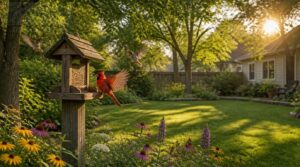
Where you place your feeder can make or break how often birds actually show up. The right yard location keeps them safe, comfortable, and coming back daily. Here are the key placement factors to get it right.
Near Protective Cover
Place your feeder 10 to 15 feet from natural cover like shrubs or trees.
This spacing gives birds a safe escape route—for help attracting specific species, check out this guide to yellow birds commonly spotted in Ohio.
| Cover Benefit | Why It Matters |
|---|---|
| Weather shielding | Keeps seeds dry and fresh |
| Predator barrier | Blocks ground predator sight lines |
| Bird shelter | Offers quick refuge from raptors |
| Microclimate stability | Reduces heat and wind stress |
Birds need a nearby escape route to feel safe enough to feed regularly.
Away From Predator Hideouts
Brush piles, dense hedges, and debris near your feeder create hidden ambush points that predators exploit daily. Keep a 10-meter buffer zone between feeders and any thick cover. Trim ground vegetation within 2 meters of the pole.
Open sightlines break stealth approach routes, giving birds time to spot danger and escape before a predator closes in.
Quiet Low-traffic Areas
Birds rarely settle where noise is constant. Low-traffic streets keep daytime sound below 50 dB — calm enough for birds to feed without stress.
Choose spots with:
- Tree canopies that muffle wind and road noise
- Vegetation buffers reducing sound by 5–10 dB
- Morning shade for quieter feeding windows
- Dense evergreen hedges for year-round shielding
Quiet zones attract more species.
Stable Mounting Spots
A wobbly mount is a failed mount. Use a concrete wall or heavy wooden post to cut vibration and sway. Always pre-drill holes and install weather-resistant screws and brackets rated for outdoor temperature swings. Check for rot or hidden corrosion before installing — a weak mount fails without warning. Keep mounts away from open gaps where wind builds dangerous pressure.
| Mount Type | Stability Benefit | Watch Out For |
|---|---|---|
| Concrete wall | Minimal vibration | Hidden surface cracks |
| Heavy wooden post | Flexible positioning | Moisture rot over time |
| Metal pole | Wind-resistant base | Corrosion on hardware |
Stable mounting keeps your feeder level and debris-free from above.
Partial Sun and Shade
Sunlight shifts throughout the day, and that matters for your feeder. Choose a spot with partial sun and shade — roughly three to six hours of direct light daily. Morning sun warms birds early, while afternoon shade keeps seeds fresh longer.
Seasonal light changes can alter this balance, so watch how your backyard microclimate shifts and adjust feeder placement when needed.
Set The Right Feeder Height
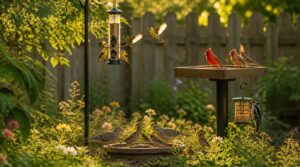
Height is one of the most overlooked parts of feeder setup, but it makes a real difference in which birds actually show up. Different species are comfortable at different levels, and matching that matters. Here’s what you need to know about placing your feeders at the right height for the birds you want to attract.
Five to Eight Feet
Most songbirds feel safest at five to eight feet above the ground. That sweet spot keeps feeders out of reach for cats and foxes, while staying low enough to refill without a ladder.
At this height, finches and chickadees can land without extra effort. You’ll also spot seed levels and bird activity clearly from a window or deck.
Ground Feeding Zones
Not every bird wants to eat up high. Sparrows and doves are natural ground foragers — they prefer pecking at bare soil or short grass.
Keep each zone 10 to 20 square feet and stock it with millet, cracked corn, and sunflower bits. Rotate zones weekly to prevent parasite buildup.
- Clear tall grass from feeding areas
- Replenish seed daily during peak hours
- Clean spillage every week to stop mold
- Space zones at least 6 feet from elevated feeders
Woodpecker Feeder Height
Ground zones work well for sparrows, but woodpeckers need height. They feed vertically, clinging to surfaces — a behavior that shapes where you hang their suet feeders.
| Feeder Purpose | Height Range |
|---|---|
| Juvenile feeding access | 6–7 feet |
| Standard adult station | 8–9 feet |
| Predator deterrence elevation | 9–10 feet |
| Seasonal height shifts (winter) | Raise 1–2 feet |
Mount suet at the best clinging heights of 6 to 9 feet. Use hardware rated for woodpecker weight support — they peck hard.
Hummingbird Feeder Height
Hummingbirds fly differently than woodpeckers. They hover and dart along mid-air flight paths, so height placement directly affects how quickly they spot your feeder.
Hang nectar feeders 4 to 6 feet high. This range helps keep nectar temperature stability and aligns with typical garden flower heights, making feeders easier for hummingbirds to find. Raise slightly in summer to reduce territorial disputes between males.
Multiple Feeder Levels
Placing feeders at a single height limits which birds visit. Vertical space optimization solves this. Stack levels between 3 and 12 feet to serve sparrows, finches, and woodpeckers simultaneously.
- Lower levels attract ground feeders like doves
- Mid levels suit cardinals and chickadees
- Upper levels support woodpeckers and suet eaters
Each level experiences species competition management by giving birds separate feeding lanes.
Prevent Windows and Predator Risks
Two of the biggest threats to backyard birds are windows and predators — and both are easier to manage than you might think. Knowing where and how to position your feeders makes a real difference in keeping birds safe. Here’s what you can do to reduce those risks.
Three-foot Window Rule
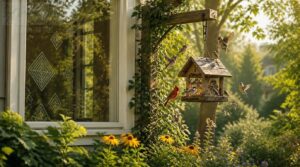
Keep feeders three feet from windows to cut collision risk. At that distance, birds can spot the glass before impact. Apply window decals to improve glass barrier visibility. During migration, bird traffic spikes — spacing matters most then. Overcast days increase reflections, so check your setup often.
| Setup Element | Recommended Action | Benefit |
|---|---|---|
| Feeder distance | 3 feet from window | Reduces impact speed |
| Window decals | Apply on glass facing feeder | Improves glass visibility |
| Morning glare | Face feeder away from sunrise | Limits reflection confusion |
| Migration season | Maintain strict 3-foot spacing | Protects high bird traffic |
| Glass surface | Inspect and clean regularly | Prevents misleading reflections |
Thirty-foot Distance Option
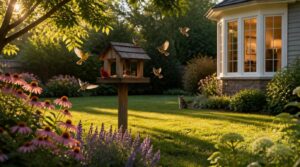
Some yards give you more room to work with. If yours does, place feeders 30 feet from windows to give birds a wider, safer approach path. That distance reduces mid-flight panic and lowers collision risk a lot. Birds can swing in from multiple angles without glare confusion.
It also creates a natural predator buffer zone, keeping cats and other threats well outside the feeding area.
Pole Baffles and Guards
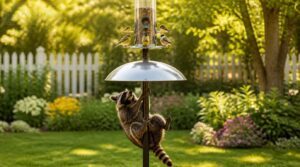
A pole baffle stops climbing predators before they reach your feeder. Raccoons, snakes, and squirrels can’t grip smooth metal or poly surfaces, especially when the baffle wobbles. That wobble effect breaks their balance and sends them back down.
Mount your baffle above four feet on a compatible pole. Aluminum guards fit round poles from 3/4 to 2 3/8 inches wide. Check hardware twice yearly.
Trim Jumping Branches
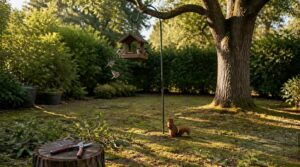
Squirrels treat overhead branches like a launchpad to your feeder. Trim jumping branches to close that gap.
- Clear limbs within 9 feet of the feeder mounting point
- Remove decayed wood promptly — it falls without warning
- Use sharp bypass pruners for clean live growth cuts
- Apply three-step cuts to safely control heavier limb removal
- Check clearance after wind damage each season
Avoid Dense Shrubs
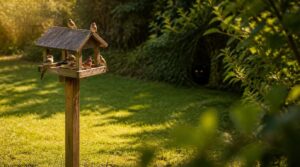
Dense shrubs hide cats, raccoons, and other predators from view. That blind spot creates real predator ambush risks near your feeder. Keep shrubs at least 10 to 12 feet away.
Thick growth also traps fallen seeds underneath, speeding up mold. Trim shrub edges regularly to protect natural escape routes and keep your sightlines clear for safe, easy feeder monitoring.
Position Feeders for Specific Birds
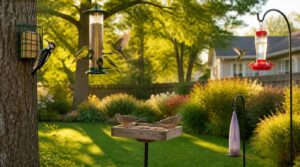
Different birds need different feeders placed at different spots in your yard. Matching the feeder type and position to the species you want is what turns a quiet yard into a busy one. Here’s how to set things up for five common groups.
Finches and Chickadees
Finches and chickadees share a preference for narrow tube feeders with small ports. Fill them with nyjer or black oil sunflower seeds to draw both species reliably. Place feeders between 5 and 8 feet high.
In winter, finches flock in groups and can drain feeders surprisingly fast. Chickadees prefer a clear approach path, so keep any nearby branches trimmed back.
Cardinals and Grosbeaks
Cardinals and grosbeaks both belong to the Cardinalidae family, built around strong, conical bills made for cracking hard seeds. That’s why black oil sunflower seeds work so well — their thick beaks handle the shells easily.
Use a hopper feeder set 5 to 8 feet high. Males flash vivid red; females show softer brown tones, both worth watching.
Doves and Sparrows
Where cardinals prefer height, doves and sparrows work closer to the ground. Both species forage naturally in open spaces, so platform or ground feeders suit them best.
Stock feeders with cracked corn or millet — their preferred seeds. Sparrows flock noisily; doves arrive calmer, in pairs. Keep the area clear of tall grass to reduce predator cover nearby.
Woodpeckers and Nuthatches
Unlike doves, woodpeckers prefer height. Hang suet feeders at 8 to 15 feet to match their natural climbing range.
Woodpeckers use stiff tails to brace vertically while drilling. Nuthatches descend headfirst, caching food in bark crevices nearby.
- Suet cages on rough-barked poles
- Smooth mounting surfaces discourage squirrels
- Placement near mature trees invites both species
Both are nature’s little helpers worth attracting.
Hummingbirds Near Flowers
Hummingbirds thrive where nectar feeders meet flowers. Hang feeders at 4 to 6 feet, near tubular blooms like trumpet vine or cardinal flower.
Red and orange flowers send strong visual signals. Nectar around 20 to 25 percent sugar keeps them coming back.
Native plants extend your backyard’s natural food sources beyond the feeder alone.
Frequently Asked Questions (FAQs)
What is the 5 7 9 rule for bird feeders?
The 5-7-9 rule places feeders 5 feet high, 7 feet from structures, and 9 feet from windows. These three distances create safety buffer zones that reduce squirrel jumping, predator access, and window collisions.
Where not to place a bird feeder?
What spots actually work against you? Avoid placing feeders near windows, dense shrubs, shaded damp areas, or high-traffic zones. These locations increase collision risk, predator ambush, mold growth, and bird disturbance a lot.
Do wild birds remember where bird feeders are?
Yes. Wild birds remember feeder locations using spatial memory and visual cues. Species like chickadees and jays build cognitive maps of your yard. Consistent refilling strengthens their return visits over time.
How many feet off the ground should a bird feeder be?
Most bird feeders work best 5 to 6 feet above ground. This height blocks ground predators and suits small songbirds well. It also keeps maintenance simple for you.
How often should backyard feeders be cleaned?
Think of your feeder like a kitchen counter — it needs regular upkeep. Clean feeders every two weeks. In hot weather, switch to weekly cleaning. Hummingbird feeders need scrubbing every 2–3 days in summer.
What seeds attract the most bird species?
Black oil sunflower seeds attract the widest variety, including cardinals, chickadees, and woodpeckers. Nyjer draws finches. Safflower appeals to cardinals while deterring pigeons. Millet suits ground feeders like doves. Peanuts bring jays and nuthatches.
Can feeders be used during summer months effectively?
Feeders work well in summer with the right care. Use black oil sunflower seed and protein-rich mealworms for nesting birds. Clean weekly, avoid melted suet above 80°F, and keep nectar fresh every few days.
Do weather conditions affect feeder placement decisions?
Yes, weather affects placement. Use windbreaks to cut seed scatter by 40%. Choose partial shade to slow spoilage. In winter, move feeders near walls. Sheltered spots keep seeds dry and birds safe.
How do I store birdseed to keep it fresh?
Fresh seed is like clean water — birds won’t touch it if it’s gone bad. Store birdseed in airtight metal containers in a cool, dry spot. Rotate stock every 6–12 months.
Conclusion
Like the old naturalists who mapped bird territories with nothing but patience and a notebook, you already have what it takes. Ideal feeder positioning backyard success isn’t about expensive gear—it’s about placement done with intention.
Three feet or thirty from windows. Cover nearby, predators blocked. The right height for the right bird. Small shifts, lasting results. Make those adjustments once, and your yard becomes the kind of place birds choose to return to.
- https://www.nationalgeographic.com/animals/article/how-to-set-up-bird-feeders
- https://neighborhoodfeed.com/keeping-birds-safe-tips-for-predator-proofing-your-yard
- https://mcallen.wbu.com/how-to-prevent-bird-window-collisions
- https://www.fws.gov/library/collections/bird-friendly-home-toolkit
- https://www.allaboutbirds.org/news/where-to-put-your-bird-feeder