This site is supported by our readers. We may earn a commission, at no cost to you, if you purchase through links.

A patio the size of a parking spot can still pull in a surprising variety of wild birds — you just need to be strategic about what you put out and where. Suet cakes are one of the best-kept secrets in small-space bird feeding. They pack serious calories into a compact block, attract species that seed feeders often miss, and take up almost no room to hang.
The catch? Not all suet cakes handle heat, humidity, or tight quarters equally well. Insect-based cakes need refrigeration. No-melt varieties hold up through summer. Fruit-flavored options draw in birds you wouldn’t expect during winter.
Pick the right type, hang it smart, and even the smallest garden becomes a genuine feeding station.
Table Of Contents
Key Takeaways
- No-melt suet cakes with a higher grain-to-fat ratio stay solid past 100°F, making year-round feeding practical even through hot summers.
- Matching your suet type to your target birds — fruit-flavored for cardinals and warblers, insect-based for woodpeckers and nestlings — pulls in species that plain seed feeders miss entirely.
- Small-space feeding success comes down to smart placement: hang feeders at least 10 feet up, in partial shade, with 12–16 inches of clearance below to keep birds safe and suet fresh longer.
- Keeping feeders clean matters as much as what’s in them — a weekly bleach-and-water scrub in summer stops mold and rancid fat from driving your regulars away.
Best Suet Cakes for Small Gardens

Not all suet cakes are created equal, especially when you’re working with a small garden and limited feeder space. The right pick depends on your local birds, your climate, and how hands-on you want to be. Here are five types worth knowing about.
If you’re new to the hobby, brushing up on safe backyard bird feeding practices can help you make smarter choices before stocking your first feeder.
No-melt Suet Cakes
Hot summers used to mean pulling feeders down entirely. No-melt suet cakes changed that. Their higher grain-to-fat ratio keeps them solid even past 100°F — no puddle, no mess.
- Hold shape through warm spells
- Oats and cornmeal act as natural binders
- Work in standard feeders without special equipment
That balance of solid fats and binding agents makes them a reliable year-round high-calorie food for your garden birds. You can choose from various no melt suet cakes to keep your feeders stocked during the heat.
Seed-packed Suet Cakes
Where no-melt cakes hold up in heat, seed-packed suet cakes hold up in variety. Loaded with black oil sunflower, millet, and cracked corn, they draw both seed-lovers and insect-eaters to the same feeder — a useful trick in a small garden.
| Feature | Detail | Benefit |
|---|---|---|
| Fat content | 40–60% by weight | Cold-weather endurance |
| Seed mix | Sunflower, millet, cracked corn | Attracts diverse species |
| Shelf life | Up to 6 months frozen | Prevents fat oxidation |
Store them cool and dry — fat oxidizes fast, and moisture invites mold. Once at the feeder, expect most cakes gone within two to four weeks.
Fruit-flavored Suet Cakes
Seed cakes win on variety — but fruit-flavored suet cakes win on charm. Packed with dried cranberries, blueberries, or raisins, they pull in cardinals, tanagers, and berry-loving songbirds that ignore plain seed blocks entirely.
- Use unsweetened dried fruit only — added sugars attract pests
- Denser cakes hold together better on windy days
- Unsalted nuts boost fat without overwhelming the fruit flavors
Insect-based Suet Cakes
Fruit draws in the singers — but if you want the acrobats, insect-based suet cakes change the game entirely.
Mealworms deliver digestible protein that nestlings absorb quickly, while black soldier fly larvae pack calcium that helps breeding birds through their most demanding weeks.
| Insect Ingredient | Primary Benefit |
|---|---|
| Mealworms | Fast-absorbing protein for nestlings |
| Black soldier fly larvae | Calcium for breeding season |
| Crickets | Amino acids and trace minerals |
| Mixed insect meal | Broad-spectrum nutrition |
| Roasted insects | Stable shelf life, low spoilage risk |
Store these cakes refrigerated — fat turns rancid fast without it.
For more on keeping bird-friendly treats fresh through the season, this guide on what birds eat suet in winter explains which species rely on fat-based foods most when temperatures drop.
Small-batch Homemade Cakes
Making your own suet cakes gives you complete control over what lands in your feeder. A simple base — 16 oz lard plus 16 oz peanut butter — scales down easily for small batches.
Stir in cornmeal for bulk, press flat onto parchment, then freeze two to four hours before cutting. Small garden, small batch, zero waste.
Space-Saving Suet Feeding Tips
A small garden doesn’t have to mean a small welcome for birds — it just means being a little smarter about how you set things up. The right feeding habits can make a surprising difference, even in the tightest backyard corners. Here are five practical tips to help you get the most out of your suet setup.
Choose Compact Feeders

Small gardens don’t have room for bulky feeders that hog every branch. Vertical cylindrical wire feeders hold up to 24 ounces of suet and take up almost no horizontal space — perfect for tight patios.
Here are five compact feeder types worth knowing:
- Upside-down suet feeders — deters jays, welcomes woodpeckers
- Caged wire feeders — blocks squirrels without blocking views
- Cylindrical nugget feeders — vertical footprint, easy refill
- DIY cookie-cutter hangers — fits gaps other feeders can’t
- Single-cake tail-prop feeders — mimics natural bark feeding
Thick-walled construction helps these feeders last through repeated use and weather cycles. Self-centering cage geometry makes hanging and reloading genuinely simple — no fussing, no dropped cakes.
Use Shaded Placements

Direct sun is suet’s worst enemy. Partial shade or dappled sunlight keeps cakes firm, slows spoilage, and prevents that rancid smell that sends birds elsewhere.
Orient feeders away from sun-facing walls and tuck them near dense foliage. That natural canopy acts like a tiny microclimate — cooler air, longer-lasting cakes, and happier woodpeckers showing up on schedule.
Hang at Safe Heights

Height matters more than most backyard bird feeding guides admit. Aim for at least 10 feet off the ground — enough to avoid ground strikes and minimize mammal access from cats or raccoons.
- Leaves 12–16 inches of clearance below the feeder to prevent wing collisions
- Elevated spots reduce debris spillover when gusts hit
- Open sightlines help birds spot threats fast
Higher up, safer for everyone.
Prevent Window Collisions

Feeders placed near windows are a collision setup. Reflective film on exterior glass cuts dangerous glare — especially during migration, when new birds cross your yard. Space external decals every 2–4 inches. A shrub buffer between open sky and glass slows their final approach.
| Method | Placement | Benefit |
|---|---|---|
| Reflective film | Exterior surface | Reduces glare |
| External decals | 2–4 inch gaps | Signals glass |
| Shrub buffer | Near windows | Slows flight paths |
Keep Feeders Clean

A dirty feeder is a health hazard in miniature. Suet goes rancid fast — especially in warm weather — and moldy residue spreads illness through your whole visiting flock.
Scrub feeders weekly in summer, monthly in cooler months. Use a 1:9 bleach-to-water solution, rinse for at least 10 seconds, and dry completely before refilling. Wet feeders grow mold overnight.
Birds Attracted to Suet Cakes

Suet is basically a VIP buffet for certain birds — and once word gets out in your garden, the regulars show up fast. Knowing which species to expect helps you choose the right cakes and feeders for your small space. Here’s a closer look at the five birds most likely to become your loyal visitors.
Woodpeckers
Woodpeckers are suet’s biggest fans. Their zygodactyl foot grip — two toes forward, two back — lets them cling and chisel on vertical surfaces with ease.
- High-calorie suet cakes replace beetle larvae they’d otherwise excavate from bark
- Beak shock absorption protects their brain during every strike
- Upside-down feeders mirror natural trunk foraging perfectly
Try a woodpecker cake: sunflower seeds, chopped apple, raisins.
Nuthatches
Woodpeckers hog the spotlight, but nuthatches are just as entertaining — and just as hungry. These compact birds climb headfirst down trunks, which makes them easy to spot and impossible not to love.
They go wild for a suet mix of 1 lb suet, cornmeal, walnuts, and peanuts. That varied texture matches how they forage: wedging food into bark crevices, caching it for later.
Chickadees
Nuthatches cache food like pros, but chickadees just show up hungry — and often. These tiny birds, measuring just 4.5 to 5.5 inches, punch well above their weight in personality and appetite.
Their chick-a-dee-dee call is hard to miss on a cold morning. In winter, pull them close with 1 lb suet, cornmeal, blueberries, and grape jelly — they’ll thank you loudly.
Cardinals
Chickadees are loud about their love of suet — cardinals are quieter, but just as devoted.
The male’s brick-red plumage makes him impossible to miss, while the female’s warm brown hints at red. Both share a thick orange bill built for cracking seeds. Try fruit-flavored suet cakes to pull them in — cardinals have a soft spot for sweeter blends, especially during nesting season.
Warblers
Warblers rarely get credit as suet visitors, but winter scarcity changes everything. When insects disappear, these slender, pointed-billed migrants — think bold yellows, olives, and streaked breasts — will work a fruit-flavored suet cake with surprising enthusiasm.
When winter empties the insect buffet, even warblers will gladly work a suet cake
Listen for their rapid, high-pitched songs near the feeder. That’s your cue they’ve found it.
Top 5 Small-Garden Bird Items
Getting the right tools makes a real difference when you’re working with a small garden space. These five picks cover everything from feeding to maintenance, so you’re set up for success from day one. Here’s what’s worth having on hand.
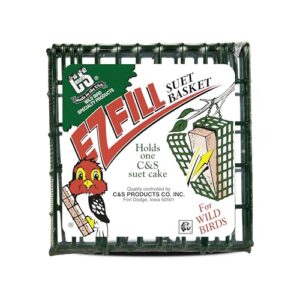
1. C&S EZ Fill Suet Bird Feeder
 View On Amazon
The C&S EZ Fill Suet Feeder takes the fuss out of backyard feeding. Its top-opening design lets you drop in a fresh cake without unhooking anything — a small win that actually keeps you consistent.
The vinyl-coated wire basket resists rust through rain and frost, and the steel roof shields your suet from melting too fast. It holds up to 56 ounces, so refills stay less frequent. For a compact garden, that’s one less thing to chase.
| Best For | Backyard bird enthusiasts who want a low-maintenance way to attract woodpeckers, nuthatches, and other suet-loving birds year-round. |
|---|---|
| Material | Vinyl coated wire |
| Build Quality | Rust-resistant coating |
| Dimensions | 1.8×4.8×5.5 inches |
| Primary Color | Green |
| Intended Use | Backyard bird feeding |
| Care Instructions | Bleach solution cleaning |
| Additional Features |
|
- The side-opening design makes refilling quick and hassle-free — no unhooking or fumbling required
- Vinyl-coated wire resists rust, so it holds up through wet and cold seasons without deteriorating
- Ten feeding perches let multiple birds feed at once, keeping things lively at your backyard station
- Squirrels can still access the suet, so it’s not a great fit if you have persistent critters
- The included hanging chain is on the thin side and may need to be replaced with something sturdier
- Regular cleaning with a bleach solution is a must to keep bacteria at bay, which adds to the upkeep
2. Stainless Steel Double Boiler with Silicone Spatula
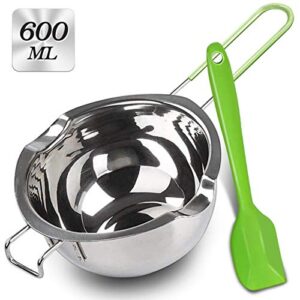
Making your own suet from scratch means you’ll need the right setup — and that’s where the Stainless Steel Double Boiler earns its place. It melts lard or beef suet slowly over indirect heat, so nothing scorches.
The 304-grade stainless steel resists rust, and the included silicone spatula can take temperatures up to 450°F without warping. At 20 oz capacity, it’s sized for small-batch recipes. Simple, sturdy, and easy to rinse clean after each use.
| Best For | Home crafters and small-batch makers who want a simple, reliable way to melt suet, chocolate, wax, or soap bases without scorching. |
|---|---|
| Material | 18/8 stainless steel |
| Build Quality | Rust-resistant stainless |
| Dimensions | 10.89×8.66×3.11 inches |
| Primary Color | Silver/Steel |
| Intended Use | Melting and cooking |
| Care Instructions | Hand wash recommended |
| Additional Features |
|
- 304-grade stainless steel is rust-resistant and built to last
- Dual pour spouts and an included silicone spatula make handling melted ingredients clean and easy
- Works for food and non-food projects alike — from suet and chocolate to candle wax and soap bases
- 20 oz capacity is limiting if you’re making large batches
- Hand washing only, so it takes a bit more care to maintain
- The handle can heat up if it rests against a hot pan, so keep an eye on it
3. Watering Heavy Duty Thumb Control Nozzle

Keeping your bird garden tidy means more than just feeders — you need a reliable way to rinse them down. The Heavy Duty Thumb Control Nozzle gets the job done without fuss. Its metal barrel resists drops and pressure, and the thumb lever gives you a full range from gentle mist to solid stream with zero grip-squeezing.
The swivel base prevents hose kinking mid-task, which matters when you’re maneuvering around tight planting beds.
| Best For | Gardeners and bird enthusiasts who want precise, hands-free water control without the strain of a traditional squeeze nozzle. |
|---|---|
| Material | Metal construction |
| Build Quality | Reinforced impact points |
| Dimensions | 2.63×5.38×8.5 inches |
| Primary Color | Silver/Metal |
| Intended Use | Watering and cleaning |
| Care Instructions | Inspect swivel connections |
| Additional Features |
|
- Thumb lever gives you smooth, one-handed control over water flow — from a soft mist to a full stream — without tiring out your hand
- Swivel base keeps the hose from kinking or twisting as you move around beds and feeders
- Metal barrel holds up to drops and daily outdoor use better than plastic-only nozzles
- The swivel connection and housing can develop leaks over time with regular use
- The thumb control may stiffen up after extended use, making adjustments less smooth
- Some plastic components can crack if the nozzle is dropped, despite the metal barrel
4. Ames Round Point Mini Shovel

A mini shovel might seem out of place on a bird garden list, but hear this out. When you’re tucking a new feeder post into a crowded raised bed or clearing a tight planting pocket for a ground-level water dish, the Ames Round Point Mini Shovel earns its keep.
Its 26-inch compact build lets you work kneeling or seated without fighting for room to move in cramped spaces — exactly the low-fuss tool small gardens demand.
| Best For | Gardeners who work in raised beds, tight spaces, or from a seated or kneeling position and need a lightweight, easy-to-maneuver digging tool. |
|---|---|
| Material | Plastic handle |
| Build Quality | Sturdy construction |
| Dimensions | 26x6x2.5 inches |
| Primary Color | Green |
| Intended Use | Digging and gardening |
| Care Instructions | Avoid heavy soil impact |
| Additional Features |
|
- Compact 26-inch size makes it easy to work in cramped raised beds or small planting pockets without bumping into plants or structures
- Comfortable D-style handle gives you a solid grip while kneeling or sitting on a garden wagon
- Light and portable enough to toss in a bag for campsite use or keep stashed in your car for emergencies
- Too short for comfortable use while standing, so it’s not a great everyday all-purpose shovel
- Struggles with heavy, compacted, or clay-heavy soil — it’s built for lighter digging tasks
- Limited handle length can feel awkward depending on your seated position or working angle
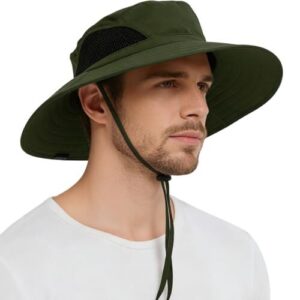
5. Wide Brim Waterproof Sun Hat
You’re out there in full sun, crouching over a feeder hook or wrestling a cage latch — and that’s exactly when a good hat earns its place in the garden.
The Wide Brim Waterproof Sun Hat blocks 98% of UV rays with its UPF 50+ fabric, while the 3.9-inch brim shades your face, ears, and neck. Mesh side panels keep airflow moving, and the chin strap holds firm on breezy days. Lightweight, packable, and quick-drying — it’s built for long sessions outdoors.
| Best For | Outdoor enthusiasts — gardeners, hikers, and anglers — who need reliable sun protection and a secure fit during long sessions in the elements. |
|---|---|
| Material | Water-repellent fabric |
| Build Quality | Durable UPF fabric |
| Dimensions | 3.9 inch brim, 22-24 in circumference |
| Primary Color | Varies by option |
| Intended Use | Outdoor sun protection |
| Care Instructions | Hand wash mild detergent |
| Additional Features |
|
- UPF 50 fabric blocks 98% of UV rays, shielding your face, ears, and neck with a generous 3.9-inch brim
- Mesh side panels and quick-drying material keep you cool and comfortable even during extended wear
- Adjustable chin strap and packable design make it a practical grab-and-go choice for windy days or travel
- Darker color options may trap more heat, which can be uncomfortable in peak summer temperatures
- Not built for heavy or sustained rain — it handles light showers but isn’t a substitute for a rain hat
- New hats may carry a faint adhesive odor and require hand washing rather than a machine cycle
Frequently Asked Questions (FAQs)
Do suet cakes attract rodents?
Yes, suet cakes can attract rodents — especially at night. Rats and mice are drawn to the high fat content. Caged feeders, hot pepper suet, and prompt cleanup keep unwanted visitors away.
Can squirrels be deterred from suet feeders?
Squirrels can absolutely be deterred. Weight-activated feeders close when anything heavy lands, and capsaicin-infused suet stops squirrels cold — birds can’t taste the heat, so they feed on happily.
How long do homemade suet cakes stay fresh?
Freshness fades fast — homemade suet cakes last about 2–3 weeks at room temperature, up to 3 months refrigerated, and 6–12 months frozen. Toss any cake that smells sour or looks oily.
Which fats are safest for wild birds?
Rendered beef or sheep fat is your safest bet. Peanut butter and seed oils work well too. Skip butter, lard, and anything salted — they melt fast, smear feathers, and can upset digestion.
Do suet cakes attract unwanted pests or rodents?
They can — but it’s easy to manage. Spilled suet and crumbs draw rodents fast. Keep feeders elevated, clean up debris promptly, and use caged or baffled feeders to stay one step ahead.
Should suet feeding stop during warmer summer months?
Not necessarily. No-melt suet stays solid up to 100°F in shade, making summer feeding viable. Replace cakes every 1–3 days during heat spells to keep things fresh and safe for birds.
Conclusion
The tiniest patch of garden can transform into a full-blown wildlife destination overnight — that’s not wishful thinking, that’s suet working its magic.
Choosing the right suet cakes for small garden spaces means even a single feeder pulls in woodpeckers, nuthatches, and chickadees that most gardeners never see up close. Pick your cake, hang it smart, and step back. The birds will find you faster than you’d ever expect. Your small space, their big reward.
- https://www.pennington.com/all-products/wild-bird/resources/the-best-types-of-suet-and-feeders-for-wild-birds
- https://marin.wbu.com/suet-feeders
- https://deckers-nursery.com/garden-learning-center/guide-to-suet-cakes-for-backyard-wild-birds
- https://gardeningsolutions.ifas.ufl.edu/design/gardening-with-wildlife/suet-diy
- https://birdsconnectsea.org/2024/03/19/bird-feeding-101-suet-earthcare-northwest