This site is supported by our readers. We may earn a commission, at no cost to you, if you purchase through links.
I hung my first feeder from a low porch hook, three feet off the ground. Squirrels treated it like a buffet line, and my cat watched from the bushes like it was dinner theater. Turns out, height isn’t a small detail. It’s the difference between a feeder that feeds birds and one that feeds everything else in the yard.
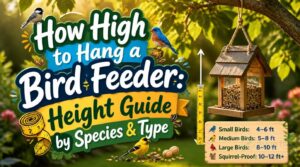
So how high should you hang a bird feeder? The sweet spot depends on who’s visiting: finches want it lower, woodpeckers want it higher, and squirrels want it wherever you’re not looking. Get the height right, and you’ll spend less time refilling raided feeders and more time watching wings.
Table Of Contents
- Key Takeaways
- Hang Bird Feeders 5–6 Feet High
- Match Height to Bird Species
- Choose Height by Feeder Type
- Use Height to Deter Squirrels
- Protect Birds From Predators
- Prevent Window Collisions
- Pick The Best Hanging Location
- Install Feeders Securely
- Frequently Asked Questions (FAQs)
- What is the best height to hang a bird feeder?
- What is the 5 7 9 rule for bird feeders?
- Do birds like feeders high or low?
- Where is the best place to put a hanging bird feeder?
- How often should I clean my bird feeder?
- How long does hummingbird nectar stay fresh?
- What tools help secure feeders on windy days?
- Do feeder heights need adjusting between seasons?
- Which mounting hardware works best under gutters?
- Conclusion
Key Takeaways
- Hang most feeders 5 to 6 feet off the ground to keep seeds easy for birds to reach while making it harder for squirrels and other ground predators to raid them.
- Match feeder height to the species you want: ground feeders like sparrows and juncos prefer 2 to 4 feet, finches and chickadees like 3 to 5 feet, and woodpeckers and suet feeders do best at 5 to 7 feet.
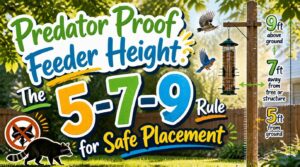
- Follow the 5-7-9 rule to squirrel-proof your setup by placing feeders 5 feet high, 7 feet from trees or structures, and 9 feet below overhanging branches.
- Prevent window strikes with the 3-30 rule by hanging feeders within 3 feet of glass or beyond 30 feet, since that middle distance tricks birds into flying full speed at reflections.
Hang Bird Feeders 5–6 Feet High
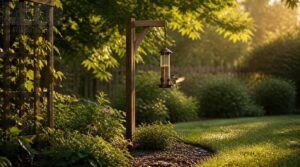
Not sure where to start with feeder height? Five to six feet off the ground is your sweet spot for almost any setup. Here’s why this range works so well.
This height keeps seed accessible to most backyard birds while making it harder for squirrels and other critters to raid the buffet, as this detailed guide to bird feeder placement explains.
Best All-purpose Feeder Height
Five to six feet. That’s the sweet spot for standardized mounting height on most all-purpose feeders, and it’s not just a guess.
This range balances predator risk reduction with comfortable ideal viewing distances, giving you strong bird feeding success whether you’re hosting cardinals, finches, or chickadees in one healthy, backyard biodiversity-friendly setup.
Easy Refilling and Cleaning
That 5–6 foot range isn’t just about the birds. It’s maintenance accessibility at its best, letting you refill without a stepstool.
Keep a small bucket of seed nearby for efficient refill methods. Wipe ports with a bottle brush from your cleaning tool kits every two weeks. This height keeps bird feeder maintenance quick, honestly kind of satisfying.
Safer Feeding Visibility
Peace of mind matters just as much as convenience. That mid-range height gives you clear predator detection sightlines from your window, so you’ll spot a cat or hawk before trouble starts.
- Watch bird behavior from indoor seating
- Trim nearby vegetation for open views
- Add evening lighting near the feeder
- Keep clear ground for threat-spotting
- Reduce cover for stalking predators
Works for Common Feeders
That clear sightline pays off no matter what feeder you’re using.
Tube feeders need 4-6 perches spaced evenly for finches and chickadees. Hopper feeders want stability, so mount them on a level pole. Suet stays firmer in shade. Nectar feeders need wind protection to stop leaks. Platform leveling keeps seed from sliding off, no matter which style you pick.
For the best safety, hang feeders 4-8 feet above the ground.
Match Height to Bird Species
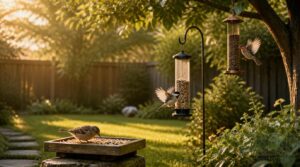
Not every bird eats the same way, so height matters more than you’d think. Some birds like their feet on the ground, while others want to swoop in from above. Let’s break it down by species so you know exactly where to hang each feeder.
Ground-feeding Birds
Ground feeders scratch, not soar. Juncos, sparrows, and doves hunt at soil level, so skip the pole entirely.
- Scatter seed on bare, mulched patches
- Offer millet or cracked corn
- Watch flocks grow in winter
- Skip trays taller than 3 feet
They’re built for ground-level feeding, mimicking natural foraging instincts birds already trust.
Finches and Chickadees
Watch a goldfinch crack sunflower seed and you’ll see why its conical beak matters so much. Finches and chickadees both like feeders 3 to 5 feet up.
| Bird | Favorite Food |
|---|---|
| Goldfinch | Nyjer |
| House Finch | Sunflower |
| Chickadee | Suet/peanuts |
| Pine Siskin | Thistle |
Chickadees switch to suet come winter, foraging bark for insects between visits.
Woodpeckers and Suet Feeders
Woodpeckers cling like they’re scaling bark, so suet feeders mimic natural bark to give them that grip.
Downy and Hairy species show up year-round; hanging at 5 to 7 feet works best.
Choose high-fat blocks, especially in winter, since Red-bellied Woodpeckers need that dense energy. Suet texture matters to: warm weather softens it; cold keeps it firm and peckable.
Hummingbird Feeder Height
Tiny wings, big appetite: hummingbirds burn through energy fast, so placement matters as much as food quality.
Hanging your feeder somewhere shaded and sheltered helps, and pairing it with the right bird feeder roof accessories keeps nectar fresh and hummingbirds coming back.
Hang nectar feeders 4 to 6 feet high, shaded from harsh afternoon sun to slow spoilage.
- Refresh nectar every 2-3 days in summer
- Keep feeders visible from a window for easy viewing
- Avoid dense shrubs that hide cats nearby
Good lighting at dusk helps hummingbirds spot predators before it’s too late.
Mixed Backyard Bird Setups
Want the whole neighborhood flock, not just one species? Stagger your stations.
Set up vertical feeding zones: ground trays at 2-3 feet, tube feeders at 4-5 feet, suet at 6-7 feet. This layered approach creates diverse bird habitats where nobody’s competing for the same perch. Come spring, bump everything up a notch. Seasonal height adjustments keep your buffet working year-round, and multi-species attraction happens naturally when height variety does the inviting.
Choose Height by Feeder Type
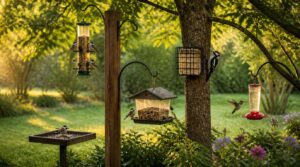
Not every feeder hangs at the same height. The right spot depends on what style you’re using, whether it’s a tube, hopper, platform, suet cage, or nectar feeder. Let’s break down each type so you know exactly where to hang yours.
Tube Feeder Placement
Six feet is your sweet spot for tube feeders, tall enough to keep ground predators guessing but easy for you to refill.
Hang tube feeders 5 to 8 feet up, within 6 to 10 feet of shrubs for quick cover. Keep 10 feet from windows.
Watch sun exposure too; morning shade protects seed freshness and cuts moisture buildup on those feeding ports.
Hopper Feeder Height
Hopper feeders like a 6 to 8 foot perch, a bit higher than tube feeders since that roof catches wind like a sail. In gusty yards, lean toward 8 feet to cut down seed spillage.
Anything under 5 feet invites ground moisture into the tray. For a universal default, split the difference at 6 to 7 feet, easy on your back at refill time too.
Platform Feeder Options
Platform feeders work best at 5 to 6 feet, that same sweet spot as hoppers. Their open tray design means good drainage design and weatherproof tray construction matter more here than roof style.
- Durable powder-coated steel resists rust
- Mesh bases prevent seed loss
- Accepts mixed seed, fruit, suet
They’re great for bird species preferences across your yard, from cardinals to jays sharing space comfortably.
Suet Feeder Positioning
Woodpeckers and chickadees need clinging room, so suet feeders belong a notch higher than trays. Best Suet Height sits at 5 to 6 feet, climbing to 7 for yards with pushy squirrels.
| Height | Benefit | Watch For |
|---|---|---|
| 5 ft | Easy refills | Ground pests |
| 6 ft | Predator sightlines | Sagging hooks |
| 7 ft+ | Squirrel jump prevention | Harder access |
Keep suet shaded—melting’s a real problem come summer!
Nectar Feeder Placement
Hummingbirds need their own rules. Hang nectar feeders 4 to 6 feet high, in morning sun with afternoon shade—that combo slows spoilage and stops glare from hiding the ports.
Place feeders 10 to 15 feet from native flowering plants. This spacing encourages foraging station variety and keeps pollinators cruising your yard instead of squabbling over one spot.
Use Height to Deter Squirrels
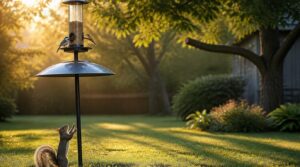
Squirrels are smart, and they will find a way onto your feeder if you let them. Height alone won’t stop them, but the right setup can. Here’s how to use distance and placement to keep those acrobats grounded.
The 5-7-9 Rule
579 rule: stack your feeder heights at 5, 7, and 9 feet for smart vertical spacing.
- 5 feet — easy access for songbirds, harder for mammals
- 7 feet — beats most squirrel jump distances
- 9 feet — cuts ground splash, boosts predator visibility
This tiered layout plans your whole backyard at once, matching species-specific height preferences without guesswork.
Distance From Jump Points
Ever wonder why squirrels seem to vanish once you move a feeder just a few feet? Distance is your best defense.
Keep feeders 7 feet from trees or structures and 9 feet below branches; this blocks their launch points entirely.
Squirrels are athletic, but they can’t leap what they can’t reach. Combine this spacing with proper height, and you’ve built a squirrel-proof zone without a single trap.
Pole-mounted Feeder Setups
A sturdy pole beats a shaky one every time. Look for modular pole assembly, where sections screw together in 12 to 16 inch pieces, letting you fine-tune ideal feeder height as seasons change.
A deep ground sleeve keeps things stable in wind. Add anti-sway arms and a finial hood, and you’ve got a setup squirrels simply can’t rattle loose.
Hanging Wire Solutions
Squirrels are smart, but they’re no match for the right wire. A thin, slippery cable beats rope every time for hanging tube feeders.
Look for:
- Stainless steel wires for corrosion resistance
- Rated wire load limits matching your feeder’s weight
- Secure anchor points with adjustable pulley mechanisms
That combo keeps your bird feeders steady, high, and squirrel-proof.
Squirrel Baffle Placement
A dome baffle only works if it sits in the right spot. Ideal baffle clearance means the bottom edge sits 4 feet up, with the top clearing your feeder by several inches, no footholds allowed.
For hanging setups, keep gaps from branches. Mount pole baffles below the feeder for solid preventing lateral access, and you’ve nailed preventing squirrel access for good.
Protect Birds From Predators
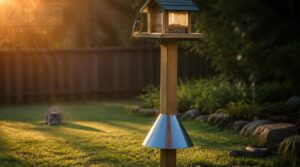
Height keeps birds safe, but it’s not the whole story. Cats, snakes, and other hungry visitors can still sneak up if you’re not careful about placement. Here’s what to watch for.
Keep Feeders Above Five Feet
Five feet is your magic number for ground predator deterrence. Cats, raccoons, and even curious dogs can reach higher than you’d think, so anything lower is basically a buffet.
Hanging feeders at this height creates real vertical feeding safety, giving birds a fighting chance to spot trouble and bolt. It’s simple height-based protection that costs nothing but a little planning.
Avoid Hidden Cat Cover
Height alone won’t save your birds if a cat can hide six feet away and pounce. Keep a 6-foot clearance from shrubs, fences, or furniture cats could crouch behind.
Trim low branches, skip dense ground cover, and add gravel cats dislike walking on. A little citrus scent near likely hideouts helps too—cats hate it, birds don’t notice.
Clear Ground Below Feeders
What’s happening under your feeder matters as much as the height above it. A messy pile of hulls and spilled seed gives rodents cover, and rodents attract bigger predators.
Keep a bare 3-foot circle below, swept clean often. Pea gravel drains well, dries fast, and makes cleanup easy—just sweep hulls off the stones every couple days.
Safe Distance From Shrubs
Shrubs look cozy but they’re basically a cat’s front porch. Keep a 6-foot buffer between feeders and dense shrubbery so predators can’t stage an ambush.
- Trim shrubs yearly to hold that clearance
- Face feeders toward the open side
- Skip planting new cover nearby
- Check sightlines each spring
Good buffer zone management gives birds a clean escape route when trouble shows up.
Open Sightlines for Birds
Once that shrub buffer’s set, think about the whole view. Birds want a clear 180-degree line toward open lawn, not just escape room.
Skip clutter, stacked pots, tall grass, within 10 feet.
That open horizon lets them scan for hawks and cats before trouble lands. Good sightlines mean faster reactions, safer landings, and more relaxed feeding all around.
Prevent Window Collisions
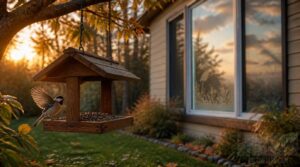
Windows cause more bird injuries than most folks realize. The good news is, feeder placement can fix most of the problem. Here’s how to pick a spot that keeps your feathered visitors safe.
Follow The 3-30 Rule
Ever wonder why a bird slams into your window even with feeders up? Distance matters more than you’d think.
The 3-30 Rule solves this: place feeders within 3 feet of glass, or beyond 30 feet. That middle zone tricks birds into full-speed flight paths toward reflections. Too close, they can’t build momentum; too far, they lose the illusion. It’s a simple fix for avian safety and smarter bird feeder placement overall.
Hang feeders within 3 feet of glass or beyond 30, so birds never mistake reflections for open sky
Near-window Feeder Placement
So how close is "close enough" to keep your window feeder safe? Stick within that 3-foot zone from the previous rule, then add UV reflective tape or decals so birds can actually see the glass.
ThisThis setup also boosts indoor viewing comfort and gives you great pollinator viewing angles for hummingbirds sipping just outside your screen.
Far-window Feeder Placement
Why go far instead of near? Because 30 feet gives birds enough runway to judge the glass isn’t open sky.
- Keep 15 to 20 feet clear sightline from your window
- Pick a wall offering wind shelter
- Avoid spots facing reflective surfaces
- Leave open landing zone below
Watch for seed spills and reassess after nearby plants grow, since sightlines shift.
Window Decals and Screens
Glass looks invisible to birds, which is exactly the problem. Window decals break up that reflection so birds see a barrier, not open sky.
Look for UV-cured ink and weatherproof vinyl for lasting color. Static clings work great too, no sticky residue. One-way vision decals let you watch birds while breaking reflections outside, cutting down window feeders’ collision risk near glass.
Safer Viewing From Indoors
Watching birds from your couch should feel relaxing, not straining.
Set up a cozy chair by the window, keep 3 to 4 feet of clear space for glare-free views, and use shades to control harsh light. Sit with the sun behind you when possible.
A clean window and steady binocular rest make spotting your backyard visitors easy, comfortable, and safer for everyone watching.
Pick The Best Hanging Location
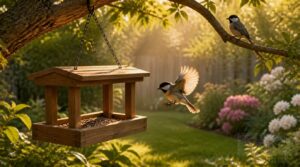
Height matters, but location seals the deal. The right spot keeps birds safe, seed fresh, and your feeder easy to reach. Here’s what to look for when choosing where to hang it.
Balance Cover and Openness
Too much cover invites cats. Too little leaves birds exposed to hawks. The trick is balance.
- Keep shrubs 6+ feet away for escape routes
- Clear 20 feet around for safe landings
- Trim low branches within 6-8 feet
- Skip dense hedges near feeders
- Rotate plantings seasonally
This gives birds clear sightlines while still offering nearby refuge.
Shelter From Harsh Weather
Wind and rain matter as much as height. Face feeder openings away from prevailing winds, and tuck them behind a hedge or fence for a windbreak. A sloped roof (2-5 degrees) sheds rain fast. Choose cedar or treated lumber with UV-resistant coatings for durability.
| Weather Factor | Solution |
|---|---|
| Wind | Windbreak placement |
| Rain | Sloped roof pitch |
| Cold | Thermal insulation |
| Moisture | Water-resistant coating |
| Storms | Inspect hardware |
Shade for Fresher Seed
Once you’ve got that roof sorted, think about shade too. A shady spot keeps seed cooler and drier, cutting spoilage and preserving freshness longer.
- Lowers seed temperature 5–10°F
- Slows moisture loss
- Reduces UV damage to coatings
- Helps with even germination
- Prevents heat stress on seed
Shade moderates the whole microclimate around your feeder, so seed stays appetizing, not stale.
Easy Access for Maintenance
Keep filling in mind when picking your spot. Ergonomic refilling heights of 5–6 feet let you top off seed without straining your back.
Leave 12–18 inches of clearance around the feeder so your hands fit easily. Look for detachable cleaning components, spill prevention designs, and quick-release hardware — they turn feeder maintenance from a chore into a quick weekly habit.
Visibility for Bird Watching
Once maintenance is handled, think about your own view. That 5–6 foot range puts birds right at eye level, clear of foreground clutter.
Grab 8x binoculars, face the morning or late-day sun, and watch plumage pop against open sky. Overcast light sharpens contrast too, making backyard birdwatching easier from a comfy 16–50 foot distance.
Install Feeders Securely
Picking the right height is only half the job. That feeder still needs a sturdy setup to hold it there, day after day and through every wind storm. Here are the mounting options that’ll keep things steady.
Shepherd’s Hooks and Poles
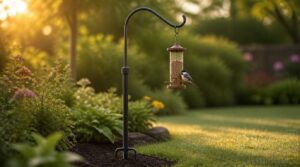
Shepherd’s hooks are the workhorse of any feeding station. Look for adjustable poles between 48 and 92 inches, with five-prong bases for grip in soft soil.
- Powder-coated steel resists rust
- Twist collars lock height fast
- Auger feet add stability
- Reinforced arms handle wind
- Stainless steel suits coastal yards
Choose corrosion-resistant materials for lasting durability.
Tree Branch Hanging
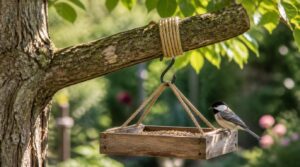
Nothing beats a real tree for hanging feeders, but pick your branch wisely. Choose thick limbs near the trunk for branch load capacity, staying 6 to 12 inches from the junction for solid attachment point stability. Skip cracked or outer branches.
Wind load and winter brittleness weaken wood over time, so inspect monthly. Strap hooks firmly, and check them after storms.
Pulley Systems for Height
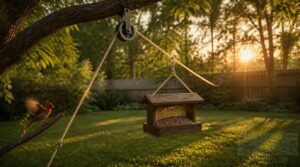
Getting feeders way up high gets tricky fast, and that’s where pulleys come in handy. A simple pulley system gives you mechanical advantage, so raising a full feeder to 8 or 10 feet won’t strain your shoulder.
Match rope diameter to the pulley groove, keep friction low, and confirm your anchor strength before loading up. Test it empty first, then filled.
Deck and Balcony Brackets
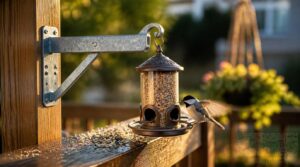
No deck? No problem. Bracket-mounted feeders let you hang bird feeders right off your railing without a pole in sight.
Look for corrosion resistance options like galvanized or stainless steel, plus solid joist mounting techniques. Choose decorative styles if looks matter, but always check load capacity testing ratings before hanging your feeding station setup.
Test Fully Loaded Feeders
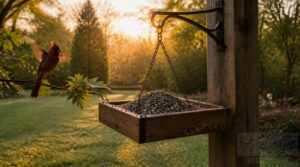
Ever wonder if your feeder can handle a full scoop of seed without wobbling? Before you walk away, fill it completely and watch how it settles—this is your discharge load stability check.
A sturdy setup shouldn’t sag or swing under starting surge requirements. If it holds steady, your feeding station setup is ready, no matter how high to hang bird feeders in your yard.
Frequently Asked Questions (FAQs)
What is the best height to hang a bird feeder?
Aim for 5 to 6 feet off the ground, the sweet spot for ideal feeding zones. This height suits most bird feeders, balances predator avoidance strategies, and matches species-specific height preferences better than any single fixed number could.
What is the 5 7 9 rule for bird feeders?
Funny enough, squirrels can leap almost 7 feet horizontally, which is exactly why the 5-7-9 rule works: 5 feet high, 7 feet from structures, 9 feet below branches, blocking every jump angle squirrels rely on.
Do birds like feeders high or low?
Both, depending on the bird! Ground-feeders like sparrows stick to 2 to 4 feet, while finches and woodpeckers prefer higher perches. Most backyard species do well at 5 to 6 feet, balancing safety and easy access near cover.
Where is the best place to put a hanging bird feeder?
Location matters as much as height, so don’t just pick the nearest tree branch.
Balance shelter and open sightlines: 10-12 feet from shrubs, clear ground below for spillage, and good viewing angles from your window make the spot work for birds and you.
How often should I clean my bird feeder?
Give feeders a two-week cleaning baseline, weekly if it’s humid or wet. Hummingbird nectar spoils fast, so swap it every 2-3 days. A quick bleach rinse (9:1 water) stops mold before it spreads disease.
How long does hummingbird nectar stay fresh?
The sweetest treat can turn deadliest fastest: nectar looks fine while fermenting. Homemade nectar lasts 1 to 2 weeks refrigerated, but only 24 hours in summer heat once feeders are filled. Watch for cloudiness or mold, and toss it immediately.
What tools help secure feeders on windy days?
Heavyweight mounting posts with ground spikes, guy lines, and ballast weights cut sway fast. Add windbreak placement near hedges, tighten hardware after storms, and check pulley systems, shepherd’s hooks, and suction cups regularly for wear.
Do feeder heights need adjusting between seasons?
Lower feeders slightly in winter for energy conservation, raise them come spring for fledgling ranges, then nudge up again in summer once foliage thickens. Autumn migration brings new visitors, so small seasonal height increments keep everyone fed safely.
Which mounting hardware works best under gutters?
The sturdiest hangers are the ones nobody sees. Hidden brackets mount under the eave with corrosion resistant fasteners, keep gutter pitch true, and hold steady—perfect for hanging feeders below without disturbing your carefully planned mounting poles or shepherd’s hook.
Conclusion
My porch-hook mistake taught me a few feet make all the difference between feathers and fur at the feeder. Once I raised it to five feet, the raids stopped and finches settled right in.
That’s the real answer to how high to hang a bird feeder: high enough for safety, low enough for you to enjoy the show. Get it right, and your yard becomes a stage where birds, not squirrels, take the spotlight.
- https://www.perkypet.com/articles/how-high-should-i-hang-my-bird-feeder
- https://www.birdcollective.com/blogs/news/hummingbird-feeders-where-to-place-them-and-why-it-matters
- https://www.kingsyard.com/blog/bird-feeder-setup-placement-guide
- https://duncraft.com/blogs/birding-tips/bird-feeder-placement-guide-attract-more-birds-stop-squirrels-and-prevent-window-collisions
- https://feederwatch.org/common-feeder-birds