This site is supported by our readers. We may earn a commission, at no cost to you, if you purchase through links.
Hang one feeder in the wrong spot and you’ll draw more window strikes than warblers. Place it too close to a fence line, skip the water source, or crowd three feeders onto one pole, and birds either stay away or get hurt trying to visit. Most backyard setups fail for reasons that have nothing to do with the seed inside.
An best backyard feeding station setup comes down to placement, feeder variety, and food quality working together. Get those three right, and you’ll pull in cardinals, chickadees, woodpeckers, and goldfinches within days.
Here’s how to build a station that keeps birds fed, safe, and coming back all season.
Table Of Contents
- Key Takeaways
- Plan Your Backyard Bird Buffet
- Choose The Right Feeder Types
- Select High-Energy Bird Foods
- Place Feeders for Safety
- Add Water and Weather Protection
- Build or Install Your Station
- Maintain a Healthy Feeding Station
- Frequently Asked Questions (FAQs)
- What is the 5 7 9 rule for bird feeders?
- Do birds recognize their owners?
- Do wild birds remember where bird feeders are?
- Where is the best place to put a bird feeder in your yard?
- How long does it take to attract birds?
- What time of day do birds feed most?
- Can I feed birds without any feeder at all?
- Why are birds suddenly avoiding my feeding station?
- Do feeding stations need to be taken down in summer?
- Conclusion
Key Takeaways
- Placement matters more than gear: keep feeders 3-5 meters from windows, 5-6 feet high, with shrubs nearby for escape cover to prevent strikes and predator attacks.
- Match feeder types to species (tube feeders for finches, hopper feeders for cardinals, suet feeders for woodpeckers, platform feeders for ground birds) so each bird can feed comfortably and safely.
- Space multiple feeders at least ten feet apart to reduce crowding, competition, and disease spread among visiting birds.
- Regular maintenance—cleaning feeders biweekly with a diluted bleach solution, storing seed dry, and refreshing water every 7-14 days—keeps birds healthy and coming back consistently.
Plan Your Backyard Bird Buffet

A great feeding station doesn’t happen by accident. It takes a little planning before you buy a single feeder or bag of seed. Here’s what to think through first.
If your setup will host finches or other small-seed visitors, it’s worth browsing this guide to bird feeders built for small seeds before you commit to a design.
Match Feeders to Target Birds
Since every bird species has its own foraging style, one feeder won’t feed them all. Match beak shapes and perch needs to feeder types:
- Tube feeders – small ports for finches
- Hopper feeders – wide perches for cardinals
- Suet feeders – clinging woodpeckers
- Platform feeders – ground-loving sparrows and doves
Providing high‑energy suet nutrition can attract woodpeckers and nuthatches during cold months.
Right feeder, right birdseed, right species at your buffet.
Start Small, Then Expand
Picking one feeder type and one seed builds your baseline system fast. Watch for two weeks, jot down which species show up, then add a second feeder or new birdseed.
This slow, incremental hardware upgrade approach beats a big beginner setup all at once—your backyard wildlife habitat grows stronger with each tested addition.
Separate Busy Feeding Zones
Once you add that second feeder, give it breathing room. Space feeding stations at least ten feet apart to cut down on competition and food fights.
Use shrubs or trellises as natural barriers between zones. This keeps finches at their tube feeder and cardinals at the hopper, without birds crowding or fighting over turf.
Plan Open Flight Paths
Birds need clear runways, not obstacle courses. Keep at least 60 cm of unobstructed space in front of each feeder for safe approach and takeoff.
Avoid hanging feeders where branches or wires cross their path. That open flight route also helps with window safety—fewer sharp turns near glass means fewer bird-window collisions.
Include Cover and Visibility
Think of cover as your birds’ safety net, not just landscaping. Layered shrubbery at different heights blocks predator sightlines while giving quick escape routes.
- Watching a hawk miss its target because your birds vanished into the hedge
- Feeling proud of a bird safe placement you built yourself
- Knowing your feeder placement works through every season
Track seasonal foliage changes, add windbreak placement upwind, and keep sight lines open.
Choose The Right Feeder Types
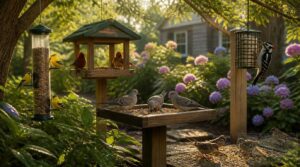
Not every bird eats the same way, so one feeder won’t cut it. Some birds cling and peck, others perch, and some just like to hop around on the ground. Here are the five main feeder types you’ll want to know before you buy anything.
Tube Feeders for Finches
Tiny ports, big payoff. Nyjer seed feeders use 1 to 2 millimeter ports sized just for finch beaks, keeping larger birds out.
| Feature | Why It Matters |
|---|---|
| Polycarbonate tube | Won’t crack outdoors |
| Weighted perch | Blocks heavy pests |
| Mesh sides | Keeps seed dry |
Clear tubes let you check seed levels fast, while airflow prevents spoilage and spillage stays minimal.
Hopper Feeders for Cardinals
Cardinals need room to perch and feed comfortably, and that’s exactly what a hopper feeder delivers.
Best of all, you can mount one in minutes using tool-free wild bird feeder setups perfect for beginners, no drilling or hardware required.
Look for wide, forward-facing perches and a 2–9 lb seed capacity. Choose weatherproof housing with a pitched roof, load black oil sunflower seed for efficient dispensing, and add a squirrel baffle.
Place it near shrub cover for safety.
Suet Feeders for Woodpeckers
Woodpeckers need vertical support to feed comfortably, and a tail prop design gives them exactly that. Choose a cage-style suet basket over log feeders for easier cleaning and better squirrel deterrence. Look for a weatherproof roof, rust-resistant coating, and solid suet refilling capacity.
Suet blocks pack the fat and protein insect-eating birds need through cold months.
Platform Feeders for Ground Birds
Not every bird likes to perch and dine — some prefer solid ground beneath their feet. Platform feeders answer that need with an open tray, ideal for ground-foraging species like doves, juncos, and towhees.
- Platform drainage holes stop water pooling
- Durable mesh tray material resists rust
- Built-in squirrel guard designs limit raiding
- Open sightlines give birds a clear predator escape route
Hummingbird Feeders for Nectar Lovers
Sugar water, four parts to one — that’s all migratory hummingbirds really want from you.
Skip the food coloring. Clear nectar keeps nectar lovers safe and won’t attract wasps. A good nectar guard blocks bees while letting slender beaks through, and narrow ports slow fermentation. Add an ant moat for extra defense. Fresh nectar weekly, more often in heat, keeps this water source for birds — and your birdwatching sessions — running smoothly.
Select High-Energy Bird Foods
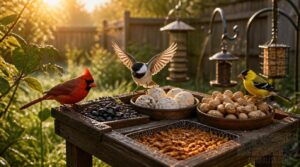
Your feeders are only as good as what you put in them. Different foods pull in different birds, so picking the right mix matters. Here’s what to stock up on and why each one earns its spot in your feeder.
Black Oil Sunflower Seed
Black oil sunflower seed is your best starting point for any bird feeding station. Thin shells make it easy for small birds to crack open, and the high fat content—40 to 50 percent—delivers serious calories per bite.
Rich in oleic and linoleic acids, it stores well and stays fresh longer. Fun fact: you can even grow your own in a sunny garden spot.
Sunflower Hearts for Less Mess
Got a patio to keep clean? Sunflower hearts are the hull already removed, so birds get straight to the kernel. Less mess, more energy—no shells piling up below your feeder.
Small beaks love them too: chickadees and finches feed easier without cracking work. Works great in tube, hopper, or platform feeders alike, giving you pure kernel nutrition with zero waste.
Nyjer for Goldfinches
Want goldfinches mobbing your yard? Nyjer’s the ticket. This tiny, oil-rich seed—also called thistle—fits perfectly in a tube feeder with fine ports, letting finches feed fast without waste.
Goldfinches flock hard for reliable nyjer sources, so keep seed fresh and dry. Store it airtight, replace every 3-4 weeks, and watch your feeding station design turn into a finch magnet.
Peanuts for Winter Energy
Peanuts in the shell attract jays and woodpeckers, while shelled peanuts suit chickadees and nuthatches. Loaded with protein and healthy fats, they’re a dense energy source for cold weather.
Keep shelled peanuts in an airtight container, stored cool and dry, so oils don’t turn rancid. A wire-mesh feeder full of peanuts gives your winter feeding station real staying power.
Safe Hummingbird Nectar Ratio
How much sugar does a hummingbird actually need? Stick to 4 parts water, 1 part sugar — plain white sugar only, never honey or dye.
- Skip red dye entirely
- Change nectar every 2-3 days (daily in heat)
- Dissolve sugar in warm water, don’t boil
- Keep concentration steady year-round
Stronger mixes stress kidneys; weaker ones shortchange energy. Your hummingbird feeder stays safer, fresher, longer.
Place Feeders for Safety
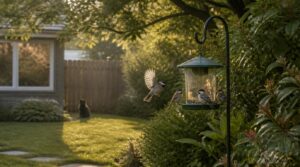
Good food means nothing if birds get hurt visiting it. Where you place each feeder matters just as much as what’s inside it. Here’s what to think about before you hang a single one.
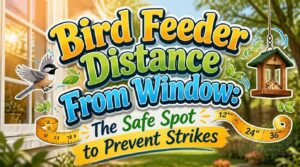
Window Collision Distance Rules
Ever watched a bird veer off at the last second, then hit the glass anyway? Distance matters more than instinct.
Effective buffer zones run 3–5 meters out, or within three feet of a window with decals applied. Reflective glass adds a meter. Use safe approach angles of 30 degrees to cut window collision risk.
| Condition | Buffer Adjustment |
|---|---|
| Standard glass | 3–5 m |
| Reflective glass | +1 m |
| Migration season | +0.5–1 m |
| Glare/bright sun | +0.5 m |
| Windy days | +0.5 m |
Ideal Feeder Hanging Heights
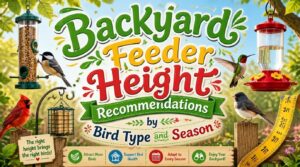
Height matters as much as distance from windows. Most tube and hopper feeders belong 5 to 6 feet up, right at eye level for finches and cardinals, keeping them out of easy reach for ground predators.
Platform feeders? Same range, 5 to 6 feet, even for ground-loving juncos and sparrows. Hummingbird feeders can sit lower, around 4 to 5 feet, for better visibility without sacrificing safety.
Nearby Shrubs for Escape
A hawk swoops in, and your feeder birds need an exit plan. Plant shrubs within a few feet of the station, close enough for a quick dash.
Mix evergreen and deciduous varieties for year-round layered cover, and add thorny species like native holly to block ground predators. This habitat boost provides safe, natural escape routes birds rely on daily.
Predator and Cat Avoidance
Cats cause real predation risk, even friendly neighborhood ones. Keep feeders at least 1.5 meters from cat approach zones, and rotate scent deterrents like cedar shavings or peppermint oil weekly to prevent habituation.
- Motion-activated cameras flag intrusions fast
- Avoid dense cover within 2 meters (ambush prevention)
- Ask neighbors about cat containment during peak feeding hours
Small habitat tweaks add up to real predator protection.
Ten-foot Station Spacing
Give your feeders room to breathe. Spacing stations ten feet apart cuts down on crowding, limits disease transmission, and eases species competition between finches and cardinals.
It also improves flight path safety and predator stalking prevention. Bonus: you get simple maintenance access logistics, since each feeder stays a separate, manageable zone for cleaning and refilling.
Add Water and Weather Protection
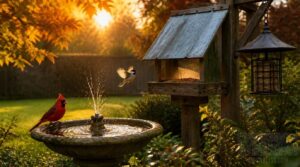
Feeders alone won’t complete your setup. Birds also need clean water, and your food needs protection from the elements. Here’s what to add next.
Bird Bath Placement Basics
Once you’ve got feeders sorted, water seals the deal. A bird bath rounds out your station and pulls in species seed alone won’t.
Set it on stable, level ground for ground stability. Choose partial shade to fight algae growth. Keep it 10 feet from cover for clear flight path safety, and skip window-adjacent spots to avoid collisions. Raise it on a pedestal—elevation benefits birds, not predators.
Fresh Water Cleaning Routine
That pedestal only stays inviting if the water inside it does too. Clean every 7–14 days with mild soap or a diluted bleach solution—1 tablespoon per gallon. Scrub with a dedicated brush, rinse until odor-free.
- Check clarity daily
- Watch for algae film
- Rinse tools separately
- Dry fully before refilling
This keeps mosquito breeding and disease risk low.
Covered Feeders for Rain
Water’s clean, but rain will still ruin a good seed pile. A weatherproof roof in UV-stabilized polycarbonate sheds water to the sides, keeping ports dry.
Port shields stop moisture at each opening, preventing clumps and mold.
Choose feeders with built-in drainage channels—no soggy seed, no waste. A dry feeder is a healthy one, plain and simple.
Seed Trays for Mess Control
A seed catch tray under your feeder stops that scattered mess before it starts. Look for spill guard design with deep walls, plus efficient drainage holes so rain doesn’t pool.
Food-grade, UV-resistant material holds up season after season. Detachable trays make cleaning simple, and mess reduction here means less waste on the ground below.
No-melt Suet in Summer
When temperatures climb, regular suet turns into a greasy mess. No-melt suet solves that, holding firm up to 130°F in your suet feeder.
Look for berry or hot pepper flavors—pepper deterrent benefits keep squirrels away while woodpeckers and other insect-eating birds get solid summer nutrition. These temperature tolerant blends pack high energy for nesting season, no seasonal food adjustments required.
Build or Install Your Station
Now it’s time to get your hands dirty. You’ve got options here, from quick pole kits to full wooden posts to budget PVC builds. Let’s walk through each one so you can pick what fits your yard and skill level.
Pole Kits for Beginners
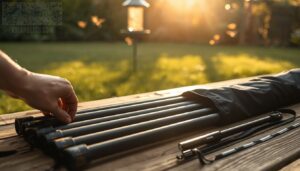
Not sure where to start? A beginner pole kit is your quickest path to a stable feeder pole.
Look for Kit Materials like carbon fiber, plus:
- Interchangeable sections
- Elastic Options
- A carry bag
For Assembly Alignment, extend each section until it clicks. Good Ergonomic Design and a quick start make this an easy beginner setup—way simpler than a shepherd hook alone.
Wooden Post Feeding Station
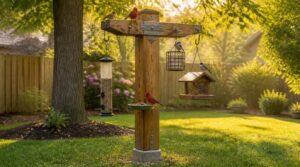
Want something sturdier and more permanent? A wooden post feeding station is your best bet.
Go with cedar or pine for natural rot resistance. Set an 8-ft pressure-treated post in concrete footings, then add galvanized hardware and a ground sleeve for easy seasonal removal. Seal all exposed wood surfaces against moisture. This classic DIY bird feeding station design holds multiple feeders and lasts for years with basic upkeep.
PVC Frame Budget Build
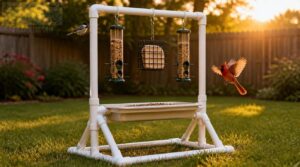
PVC pipe won’t rot, rust, or need painting—hard to beat for a beginner setup. Grab ½-inch schedule 40 pipe, elbows, and tees from any home center; total cost usually stays under $30.
Snap-fit joints let you break it down for winter storage, or cement slip joints for a permanent PVC bird feeding station. Add UV-resistant spray to stop brittleness, and brace diagonals for stability.
Balcony and Deck Setups
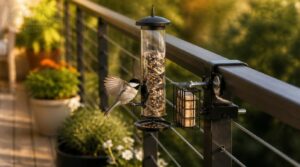
No yard? No problem. A deck rail feeding station clamps right onto your railing—no posts, no digging.
- Aluminum or vinyl rails handle clamp mounts best; wood needs padding to avoid scratches
- Choose tube or suet feeders for balcony-friendly, compact profiles
- Keep feeders clear of dining areas and lighting fixtures for easy cleanup
Check weight limits before hanging anything heavy.
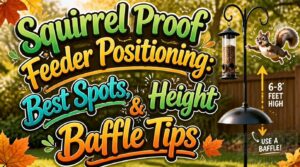
Baffles for Squirrel Control
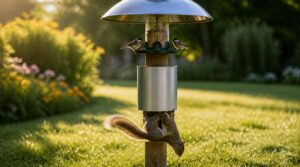
Squirrels can outsmart most feeders—unless you outsmart them first.
A dome baffle (16-18 inches wide) mounted above your feeder blocks overhead access. Stovepipe baffles slide onto poles below the feeder, stopping climbers cold. Try combining both for stubborn raiders.
| Baffle Type | Best For | Height |
|---|---|---|
| Dome | Hanging feeders | 5-6 ft |
| Stovepipe | Pole mounts | 4.5-6 ft |
| Weight-sensitive | Squirrelproof tube feeders | Varies |
Maintain a Healthy Feeding Station
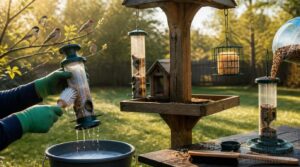
Your station is built and ready, but the work doesn’t stop there. Regular upkeep keeps your birds safe and coming back for more. Here’s the routine that’ll keep everything running smoothly.
Daily Feeder Safety Check
Before you fill a single feeder, give it a quick once-over. Check mounting bolts and brackets for wobble, inspect guards for cracks, and confirm any moving parts stop on command.
Look for spilled seed piling up below—it draws predators and spreads disease.
Jot a quick pass/fail note in your log. Thirty seconds now saves birds later.
Weekly Debris Removal
Once your daily check is done, zoom out to the week. Pick one day—say, every Sunday—and sweep or blow spilled seed and shells from the ground.
Bag leaves and twigs before they trap moisture and grow mold. Rake moss near feeders, and clear walkways too.
During fall seed drop, bump cleanups up. Clean tools after each use.
Biweekly Bleach-solution Cleaning
Sweeping takes care of the mess. Bleach takes care of the germs.
Sweeping clears the mess, but bleach is what truly stops the germs
Every two weeks, mix a fresh 1:9 bleach-to-water ratio, wearing gloves in a ventilated spot. Never combine bleach with ammonia.
- Scrub with soap and water first
- Apply diluted bleach solution
- Let sit one minute on nonporous parts
- Rinse thoroughly
- Air dry fully before refilling
This routine curbs avian disease spread.
Dry Seed Storage
Your bleach routine keeps feeders germ-free, but the seed you pour in matters just as much.
Store seed dry to prevent mold growth. Use airtight containers—glass jars or sealed bins—away from heat. Toss in a silica gel packet for extra moisture control.
Rotate stock often. Old, damp seed loses viability and spoils fast, so buy only what you’ll use in a few weeks.
Seasonal Hardware Inspections
Once a season, give your whole station a hardware once-over—not just the feeders.
- Bearing wear on rotating baffles: spin them, listen for grinding
- Mounting bolts: retighten to prevent wind loosening
- Enclosures and cords: check for cracks, moisture, frayed insulation
- Seed bin latches: confirm rodent-proof seals
This seasonal check catches small problems—rust, bent brackets—before they become costly repairs or safety hazards.
Frequently Asked Questions (FAQs)
What is the 5 7 9 rule for bird feeders?
Simple math: 5 feet high, 7 feet from structures, 9 feet clearance above launch points. This spacing blocks squirrel jumping distances and predator ambush spots, while keeping window strike reduction in mind for safer, more relaxed backyard bird watching.
Do birds recognize their owners?
Yes, especially smart species. Parrots and corvids show strong facial recognition and vocal association, treating consistent feeders as flock members.
Your regular feeding routine, voice, and appearance become familiar cues, building trust during backyard bird observation and daily wildlife attraction.
Do wild birds remember where bird feeders are?
Absolutely — birds build spatial memory maps using nearby landmarks like trees and fences. Chickadees and jays recall multiple sites for weeks. Keep your feeding routine consistent, and they’ll return reliably, making backyard birdwatching much more predictable.
Where is the best place to put a bird feeder in your yard?
Think of it as picking a safe corner for a dinner party guest: near cover, away from glass. Aim for 10-15 feet from windows, 5-6 feet high, with shrubs close by for quick escapes and clear predator sightlines.
How long does it take to attract birds?
Some birds show up within hours; most yards see a real flock within 1 to 2 weeks. Winter hunger speeds things up, nyjer draws finches in 48 hours, and consistent feeding plus nearby cover always beats a one-time seed dump.
What time of day do birds feed most?
At dawn birds refuel, at dusk they stock up: dawn feeding peaks and dusk energy reserves drive most bird activity. Morning foraging habits dominate, though midday activity patterns and seasonal timing shifts affect your feeding station’s daily rhythm too.
Can I feed birds without any feeder at all?
Scatter millet on the ground or plant native shrubs for berries and insects.
Add a shallow water feature nearby.
This encourages natural foraging behavior for ground feeding species like sparrows and doves.
Why are birds suddenly avoiding my feeding station?
A sudden drop usually means predator detection, moldy seed, weather shifts, or territorial bullies scaring others off. Check nearby cover, clean feeders regularly, and confirm placement gives safe escape routes away from windows and prowling cats.
Do feeding stations need to be taken down in summer?
Not always, but heat changes the game. Nectar ferments fast, seed molds quicker, and bears wake up hungry. Clean weekly, watch for spoilage, and pull feeders only if wildlife conflicts or disease risks show up nearby.
Conclusion
One backyard in Ohio went from zero visitors to a full cardinal family in nine days—just by moving one feeder ten feet from a window and adding a water dish. That’s the whole game.
A perfect backyard feeding station setup isn’t about fancy gear or endless seed variety. It’s about placement, safety, and consistency working together. Get those right, and the birds will do the rest. Build it once, tend it weekly, and watch your yard come alive.
- https://www.funkyjunkinteriors.net/bird-feeding-station/
- https://www.allaboutbirds.org/news/
- https://www.fws.gov/library/collections/bird-friendly-building-toolkit
- https://www.wigglywigglers.co.uk/products/subscribe-save-sunflower-hearts
- https://www.farmandfleet.com/products/313484-kaytee-wild-bird-food-sunflower-hearts-and-chips-8-lb-hulls-removed-easy-eating-less-mess.html