This site is supported by our readers. We may earn a commission, at no cost to you, if you purchase through links.

Hang a feeder too low, and squirrels treat it like a buffet table. Hang it too high, and you’ll need a ladder just to refill it. Somewhere between those two headaches sits a sweet spot most backyard birders never quite nail down.
Here’s the thing: bird feeder height from ground isn’t one-size-fits-all. Cardinals want different real estate than chickadees. Hummingbirds hover at levels that would leave a mourning dove confused.
Get the height right, and you’ll pull in more species while keeping raccoons and cats guessing. Below, you’ll find exact measurements for every feeder type and the birds that actually use them.
Table Of Contents
- Key Takeaways
- Best Bird Feeder Height
- Height by Bird Species
- Predator and Squirrel Protection
- Safe Feeder Placement
- Mounting and Maintenance Tips
- Frequently Asked Questions (FAQs)
- How high off the ground should I put a bird feeder?
- What does vaseline do to squirrels?
- How tall should a hopper feeder pole be?
- What height stops raccoons from reaching feeders?
- How high should tube feeders hang from branches?
- Does feeder height affect how fast seed empties?
- How do I adjust feeder height as birds change?
- Conclusion
Key Takeaways
- Most hanging feeders work best at 5–6 feet off the ground, keeping seed dry and deterring squirrels while still allowing easy refilling and clear viewing.
- Different feeder types and bird species need different heights: platform and hummingbird feeders suit 4–5 feet, ground feeders belong at 0–1 foot, and winter placement should rise to 5–7 feet.
- Height alone won’t stop predators, so combine elevation with pole baffles, distance from fences (12–15 feet), and open sightlines (10-foot clear radius) for real protection.
- Safe, effective feeder placement also depends on keeping feeders 3+ feet from windows, adding nearby shrubs for cover, providing shade, and placing water within 10 feet.
Best Bird Feeder Height
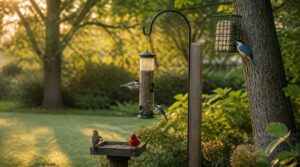
Height matters more than most people think regarding feeding backyard birds. The right spot keeps seed dry, keeps birds safe, and keeps pests away. Here’s how to match feeder height to your setup and the season.
For suet feeders especially, mounting around five to six feet off the ground strikes that sweet spot, and pairing this with seasonal bird feeding strategies for migration helps you adjust placement as flocks pass through.
General 5–6 Foot Rule
Five to six feet off the ground is the sweet spot for most feeders. This ideal feeder height keeps seed dry, blocks ground predators like cats, and gives you easy backyard viewing.
Birds approach from side angles instead of straight lines, cutting window collision risk.
It’s a simple feeder mounting height guideline that works for most yards and setups.
Platform Feeders: 4–5 Feet
Platform feeders work best a bit lower, at 4 to 5 feet. That’s roughly chest height, making refills and observation easy without bending or stretching.
This range keeps seed accessible to birds while allowing seed drainage through mesh floors during rain. Platforms handle mixed seed, suet, and fruit, giving you real food variety. Deck mounting at this height fits railings perfectly for quick, comfortable viewing.
The Eco‑Friendly Covered Platform provides a sustainable choice for these lower installations.
Hummingbird Feeders: 4–5 Feet
Nectar sippers need their own rules. Hummingbird feeders work best at 4–5 feet, letting birds spot bright ports from a distance while keeping nectar safe from ground predators.
This height also eases refilling and spotting spoiled nectar fast.
- Clear sightlines for easy viewing
- Predator prevention near ground level
- Comfortable refill height, no bending
That’s the best height for bird feeder placement in most gardens.
Winter Height: 5–7 Feet
Winter calls for a boost. Raise feeders to 5–7 feet once snow starts piling up, keeping seed above drifts and away from ground moisture.
This range also cuts wind chill for perching birds and makes winter maintenance access easier when you’re bundled up.
Snowmelt won’t splash into feed trays, and seed moisture stays controlled through icy stretches—solid answer for how high bird feeders should sit in cold months.
Ground Feeders: 0–1 Foot
Sparrows, doves, and juncos won’t visit hanging feeders. They want dinner on the ground, so skip the pole entirely and use a shallow tray at 0–1 foot.
Choose a perforated bottom for seed drainage, and set the tray on bare, level soil to manage moisture. Keep sightlines open—dense shrubs nearby invite ground-based predators to ambush your feeding station.
Height by Bird Species
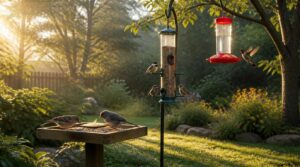
Not every bird eats at the same level. Some like it low, some like it high, and a few just hover in place. Here’s how to match feeder height to the species you want to see.
Finches and Chickadees
Finches and chickadees both do well at 3–5 feet, right at eye level for easy viewing.
Finches favor thistle and sunflower seed; chickadees prefer sunflower, suet, and peanut bits. Watch for winter irruptions boosting finch numbers.
- Sturdy perches stop spillage
- Morning feeding peaks activity
- Nearby cover protects chickadees
Keep feeders clean to prevent mold both species avoid.
Cardinals and Woodpeckers
Since cardinals and woodpeckers both like a bit of elevation, aim for 5 to 6 feet when mounting your feeder.
Cardinals need platform feeders for their broad beaks and favor sunflower and safflower mixes. Woodpeckers use their chisel-like beaks and reinforced skulls to hammer bark, so nearby dead trees encourage natural drumming and feeding. Both species appreciate perches for easy landing and nesting cover close by.
Sparrows and Doves
Ground level tells the real story here: doves and sparrows both feed low, so keep seed within 0 to 1 foot of the ground or on low platforms under 3 feet.
House sparrows forage in flocks and adapt well to urban settings, while mourning doves feed slowly on scattered seed. They share suburban yards, though sparrows often dominate shallow feeders, pushing doves toward open ground patches nearby.
Hummingbirds and Orioles
Hummingbirds and orioles both love nectar, but they don’t share the same setup. Hummingbirds need 4 to 6 feet with narrow-port feeders; orioles prefer 5 to 7 feet with wide-mouth designs for fruit access.
- Nectar ratio: 20-25% sugar for hummingbirds, 15-18% for orioles
- Hummingbirds hover; orioles perch
- Both favor red/orange colors
- Orioles enjoy fruit-juice nectar blends
- Space feeders apart—hummingbirds guard territory fiercely
Mixed Backyard Flocks
Mixed flocks need layered heights, not one setup. Offer 3–5 feet for chickadees, 5+ for cardinals, ground scatter for doves.
| Height | Species Role |
|---|---|
| 0–1 ft | Doves forage, alarm calls |
| 3–5 ft | Finches, niche partitioning |
| 5+ ft | Cardinals, deterrent presence |
Shared stations need biosecurity—clean weekly to prevent cross-species disease spread.
Predator and Squirrel Protection
Height alone won’t stop a determined squirrel or a hungry raccoon. You need a few smart strategies working together to keep your feeder safe. Here’s what actually works.
Squirrel Jumping Limits
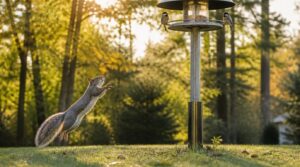
Squirrels routinely jump 5 feet straight up from a standing start, so a low feeder is basically an invitation.
Squirrels can leap 5 feet from a standstill, turning a low feeder into an easy invitation
Four factors decide their limit:
- Hind leg power driving the launch
- Ankle flexibility for quick release
- Nutrition and age affecting strength
- Surface grip on the launch point
A squirrel-resistant feeder needs height beyond that reach to work as a real deterrent.
Use Pole Baffles
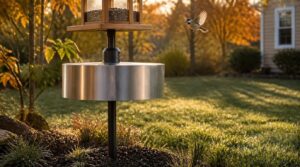
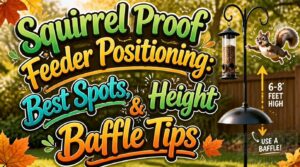
Pole baffles stop climbers cold once height alone isn’t enough. Pick one 16 to 23 inches wide, mounted below the feeder with the bottom edge at least 18 inches down.
Dome styles shed rain; cylinders offer a straight barrier. Secure hardware with a locking collar to stop rotation, and wipe the surface clean each season so grip-friendly grime doesn’t build up.
Keep Away From Fences
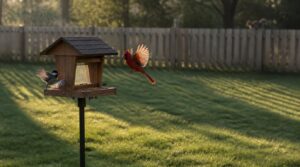
Fences give squirrels a launch pad and predators a hidden path, so keep feeder placement 12–15 feet away.
- Reduces Squirrel Jump Routes off rails
- Cuts Fence Predator Ambush cover
- Lowers Entanglement Risk near wire or wood
- Minimizes Fence Shadow Impacts on visibility
- helps Rodent Shelter Reduction near posts
Open ground beats fence-hugging cover every time.
Limit Predator Ambush Spots
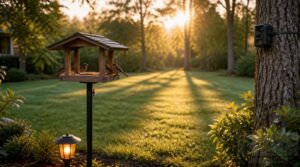
Open sightlines stop ambushes before they start. Keep a 10-foot clear radius around the feeder base, trim nearby vegetation, and avoid dense hedges within 15-20 feet.
Add dawn-and-dusk lighting and a wildlife camera to catch stalking predators early. Clear, well-lit feeding zones give birds time to spot danger and escape before ground predators close the gap.
Raise Feeders Near Wildlife
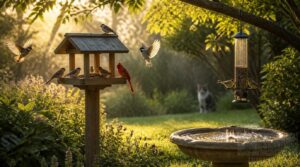
Height alone won’t out-smart every predator, so pair elevation with habitat design. Combine feeder mounting height guidelines with cover:
- Native shrubs for escape routes
- Multi-station feeding to spread risk
- Water within 10 feet for hydration
Rotate stations seasonally, keep some near trees, others open. This layered approach beats relying on best height for bird feeders alone.
Safe Feeder Placement
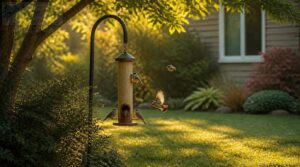
Height isn’t the only thing that keeps your feeder safe and effective. Where you place it matters just as much, from window distance to nearby cover. Here’s what to check before you settle on a spot.
Distance From Windows
Glass reflections cause more window collisions than most backyards realize. Keep feeders at least 3 feet from windows, or push out past 10 feet for safer flight corridors.
Platform and hummingbird feeders do best at 4-5 feet away, giving birds a clear, safe approach path. Window decals help too, but distance alone cuts strike risk dramatically.
Nearby Shrubs for Cover
Since ground predators often prowl low, planting shrubs 3 to 6 feet from feeders gives birds instant cover to dash into. Native shrubs, like sumac, add berries and support local insects while blending into the landscape.
- Layer low groundcover, mid shrubs, taller trees
- Choose evergreens for winter density
- Keep a 2-3 foot clearing near the feeder itself
Mix evergreen and deciduous varieties for year-round texture and protection.
Shade for Seed Freshness
Sun beating down on seed all day speeds up spoilage faster than most folks realize. Shade keeps seed fresh by stabilizing temperature and slowing metabolic activity that causes premature aging.
UV rays degrade oils and nutrients, while shaded spots reduce humidity swings and condensation. Hang feeders under a tree canopy or roof overhang, but keep branches 10–12 feet back to limit squirrel access and predator ambush routes.
Wind and Snow Protection
Wind cuts feed and warmth fast, so windbreak design matters as much as height. A solid barrier 6–8 feet high slashes wind speed 60–80%.
- Use V-shaped windbreaks facing prevailing wind
- Plant shelterbelts 150 feet upwind
- Choose porous fencing with 2–2.5 inch gaps
- Keep 12 inches ground clearance below barriers
- Install weatherproof, corrosion-resistant hardware
This drift management keeps snow diverted, not piled, around your feeder.
Water Within Ten Feet
Birds need to drink almost as much as they need to eat. Set up a bird bath within 10 feet of your feeding station so birds get water and seed in one safe stop.
Skip digging near buried lines, too. Utility trenching safety and water main separation rules exist for good reason, so call before you dig any post holes.
Mounting and Maintenance Tips
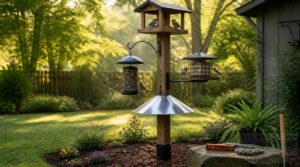
Getting the height right is only half the job. The setup holding your feeder matters just as much for safety and longevity. Here’s what to check before you hang anything up.
Choose Sturdy Poles
Pole diameter matters more than most people think. Look for 38–50 mm poles, with 40 mm and 1.2 mm walls hitting the sweet spot for backyard stability.
Choose galvanized steel or powder-coated aluminum for wind resistance. For in-ground installs, auger anchors 18–24 inches deep keep your setup steady even during storms.
Use Rust-Resistant Hardware
Even the sturdiest pole won’t help if the bolts rust through by spring. Stainless steel benefits include resisting rain, seed acid, and years of bird activity without seizing.
- Choose 304 or 316-grade fasteners
- Galvanized steel options for budget builds
- Powder coating durability protects joints
- Marine grade alloys near coastal air
Corrosion prevention tip: dry hardware after cleaning your feeder mounting setup.
Adjust Height Safely
Rust-proof hardware only helps if you can actually move the feeder when seasons change. An adjustable pole system lets you raise or lower height without re-drilling or wobbling the mount.
Always use load-rated hooks and check for hardware loosening before climbing anything. Adjust from a stable stance, never a wobbly ladder rung, to avoid preventing user injury while resetting your feeder mounting height.
Clean Feeders Regularly
Clean feeders regularly, at least every two weeks, to keep mold and bacteria from building up.
Wash with mild soap, then sanitize using 1 part bleach to 9 parts water for 10 minutes.
- Rinse thoroughly
- Dry completely
- Check for clumped, moldy seed
- Sterilize nectar reservoirs weekly
Skip harsh disinfectants — they leave residue birds shouldn’t ingest.
Check Hardware Monthly
A quick monthly walkaround catches problems before wind or weather turns them into a broken feeder.
Give the pole a firm push — wobble past 1 inch signals trouble. Check bolts, brackets, and coating for rust.
| Check | Look For | Action |
|---|---|---|
| Pole base | Cracks, sinking | Reset, stabilize |
| Fasteners | Loose, corroded | Retighten, replace |
| Brackets | Cracks, bending | Swap immediately |
Log findings — future you will thank you.
Frequently Asked Questions (FAQs)
How high off the ground should I put a bird feeder?
Picture a squirrel launching 8 feet from a standstill—that’s why height matters so much. The best mounting height sits at 5–6 feet for most feeder mounting height recommendations, balancing easy refills with solid predator deterrent strategies against jumpers and climbers alike.
What does vaseline do to squirrels?
A thin coat causes squirrel grip reduction, making poles too slippery to climb. It’s a non-toxic deterrent, but reapply often since rain washes it off, and avoid using it near feeders where birds might contact the greasy surface directly.
How tall should a hopper feeder pole be?
Think of your hopper’s pole as a goldilocks zone, not too low for raccoons, not too high for you. Set it at 5 to 6 feet for easy refills, snow clearance in winter, and solid predator reach protection.
What height stops raccoons from reaching feeders?
Raccoons can leap 4 to 6 feet, so mount feeders 6 to 7 feet high. Pair that with a proper baffle for solid predator protection—this combo blocks nearly all climbing routes raccoons rely on for nocturnal theft.
How high should tube feeders hang from branches?
Branch choice matters as much as height. Hang tube feeders 5 to 6 feet up, on a stable horizontal branch with solid load capacity. Avoid thin limbs prone to wind sway, which spills seed and stresses hanging mechanisms over time.
Does feeder height affect how fast seed empties?
Feeder height does affect how fast seed empties. Gravity-driven flow speeds up at mid heights, but wind dispersal effects and seed spill management becomes harder at taller setups.
Mechanical feeders may jam at high placements; best height aids distribution uniformity.
How do I adjust feeder height as birds change?
Small tweaks matter most: adjust in 2–6 inch increments, watch for hesitation, then shift seasonally—lower in summer for finches, higher by 5–7 feet come winter—tracking migration shifts and daily usage before settling on a new height.
Conclusion
Ready to watch your yard fill with wings? Getting bird feeder height from ground right isn’t guesswork, it’s a formula.
Five to six feet stops most jumpers cold. Ground feeders belong low, hummingbird feeders sit lower still, and winter calls for a few extra feet of clearance.
Match the pole to the species, add a baffle, and step back. Your yard becomes a place birds trust, one measured foot at a time.
- https://duncraft.com/blogs/birding-tips/bird-feeder-placement-guide-attract-more-birds-stop-squirrels-and-prevent-window-collisions
- https://www.birdsandblooms.com/birding/attracting-birds/feeding-birds/squirrel-proof-bird-feeders
- https://mckinney.wbu.com/Problem-Solving-Gray-Squirrels
- https://birdsnap.com/blogs/news/the-ultimate-guide-to-squirrel-proofing-your-bird
- https://growitbuildit.com/bird-feeder-squirrels-deer