This site is supported by our readers. We may earn a commission, at no cost to you, if you purchase through links.
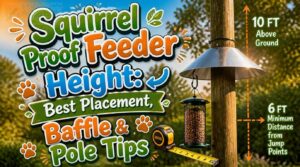
Squirrels can leap 10 feet horizontally and 5 feet straight up, which means most backyard feeders sit right in their strike zone. You’ve probably watched one launch off a fence post, hang upside down like a furry acrobat, and clean out a full feeder in an afternoon. Frustrating? Absolutely.
Here’s the fix: it’s not fancier hardware, it’s proper squirrel proof feeder height. Get the pole tall enough, the baffle positioned right, and the clearances dialed in, and squirrels simply can’t reach the ports, no matter how hard they try.
Below, you’ll find the exact measurements pros use, from baseline pole height to baffle placement, so your feeder finally works the way it’s supposed to.
Table Of Contents
- Key Takeaways
- Best Squirrel Proof Feeder Height
- Placement Distances That Block Jumps
- Baffle Height and Pole Setup
- Top 9 Squirrel Proof Feeder Items
- 1. Metal Bird House Feeder Pole
- 2. Heavy Duty Smart Bird Feeder Pole
- 3. Metal Squirrel Proof Spring Barrier
- 4. Galvanized Wrap Around Squirrel Baffle
- 5. Dispense Rite 3 Hole Replacement Baffle
- 6. Aspects 182 Super Dome
- 7. Garbuildman Squirrel Baffle for Bird Feeder Pole
- 8. Wide Squirrel Baffle Bird Feeder Guard
- 9. North States Two-Way Squirrel Baffle
- Safer Heights for Backyard Birds
- Frequently Asked Questions (FAQs)
- Conclusion
Key Takeaways
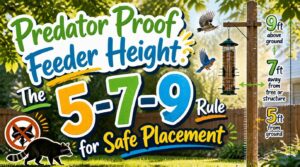
- Mount feeders at a 5-foot minimum height, raising to 6 feet in winter and 7 feet if deer are around, since squirrels can jump 4 feet straight up from a standstill.
- Keep at least 7 feet of clearance from fences, decks, and posts, 10 feet from trees, and 9 feet of overhead clearance to block squirrels from using launch points to jump onto the feeder.
- Install a baffle 4-6 feet up the pole, at least 15 inches in diameter, positioned 18 inches below the feeder, on a smooth metal pole to prevent climbing and gripping.
- Combine proper height, distance, and baffle placement as a complete system, since relying on just one element alone won’t stop determined squirrels.
Best Squirrel Proof Feeder Height
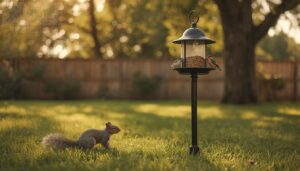
Squirrels can launch four feet straight up without breaking a sweat, so height matters more than you’d think. Get it wrong by even a foot, and you’re basically running an all-you-can-eat buffet. Here’s exactly how high to go, and why each number matters.
If you’re just starting out, pairing proper feeder height with the right setup makes all the difference—check out this guide to choosing squirrel-proof bird feeders for beginners for practical tips.
Five-foot Minimum Height
Four feet is all a squirrel needs to launch straight up from a standstill. That’s why five feet is your baseline, not a suggestion. Mount the feeder base five feet up, minimum, and you’ve cleared their natural jump plus a safety margin.
Think ground predator deterrence too—height keeps raccoons and rodents guessing. Measure from the ground, not your porch step. This height is equivalent to 60 inches in total.
Six Feet for Winter
Winter changes the math. Snow piles up fast, and squirrels use those drifts like a boost pad to close the gap. Bump your feeder to six feet once temperatures drop.
That extra foot conserves bird energy too, fewer squirrel raids mean less wasted feed and calmer feeding stops. Check ground cover after storms, packed snow shrinks your safety margin overnight.
Seven Feet for Deer
Got deer wandering into the mix? Bump your feeder to seven feet — that height puts ports out of reach even when they rise on hind legs.
This ideal height also blocks side-approach nibbling, since deer rarely attempt edge jumps risking antler snags. Pair it with sturdy mounting; ground settling can quietly shrink your clearance. Seasonal deer behavior shifts too, so recheck after mating season or scarce food months.
Measure Feeder Base
Grab a tape measure before you grab a shovel. Measure from ground level to the base plate itself, not the pole top, since that’s where feed actually dispenses.
Base height alone should hit 18 to 36 inches on ground setups, then stack your pole height on top. A telescoping post makes fine-tuning painless without extra tools.
Avoid Low Hanging Setups
Once you’ve nailed your base measurement, don’t cheat the final number. A feeder sitting at 3 or 4 feet is basically a buffet table for squirrels, well within their vertical reach limits.
That’s a classic mounting height error, and it invites low-level scrounging fast. Stick to that 5-foot minimum, no shortcuts, no "close enough.
Placement Distances That Block Jumps
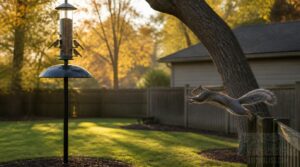
Height alone won’t stop a determined squirrel with a running start. These acrobats use nearby trees, fences, and rooftops as launch pads to close the gap. Here’s exactly how much space you need on every side to keep them grounded.
Seven-foot Side Clearance
Squirrels don’t just jump—they launch, using fences and posts like diving boards. Seven feet of side clearance stops that runway approach cold.
- Measure to fixed objects only (walls, posts, fences)
- Use a laser measure for exact readings
- Recheck monthly and after landscaping
- Watch for seasonal vegetation creep
- Mark distances with ground stakes
Multi-feeder setups need this spacing on every side, every unit.
Ten Feet From Trees
Trees are basically squirrel superhighways, so a 10-foot rule keeps launch points out of range. Check tree canopy gaps and trim branches creeping into that zone.
This vertical structure buffer blocks aerial approach from every angle. Foliage clearing strategies matter here—thick canopy overlap shortens the real jump buffer, no matter what your tape measure says.
Nine-foot Overhead Clearance
Overhead space matters as much as ground clearance. Give your feeder at least nine feet of open air above it, measured straight up to branches, eaves, or wires.
Level ground slopes when measuring, and recheck after storms or seasonal limb growth. Sagging branches steal your buffer fast. This overhead cushion also cuts wind collision risk during your bird feeder installation.
Clear Launch Points Nearby
Think of every open branch, ledge, or rock as a diving board. Clear a 15-meter radius of overhang, keep hard surfaces 2.5 meters back, and push shrub cover 3 meters out—squirrels use these as staging grounds.
- Trim branches within 15m
- Keep patios 2.5m from feeder
- Push shrubs back 3m
- Recheck monthly for new debris
Skip motion lights within 4 meters; glare just draws more attention.
Avoid Decks and Fences
A deck railing is basically a squirrel’s diving board, giving them horizontal launch advantage they don’t get on flat ground. Fences work the same way. Keep 7-10 feet of perimeter clearance from any vertical structure.
A deck railing gives squirrels a horizontal launch pad, so keep feeders 7-10 feet from any fence or ledge
| Structure | Minimum Clearance |
|---|---|
| Deck railing | 7-10 ft |
| Fence line | 7-10 ft |
| Pergola | 9 ft overhead |
| Rooftop edge | 9 ft overhead |
Baffle Height and Pole Setup
Height alone won’t stop a determined squirrel if your baffle and pole aren’t set up right. Think of the baffle as your feeder’s bodyguard, and the pole as its backbone. Here’s exactly how to size, place, and mount both so nothing sneaks past.
Four-to-six-foot Baffle Height
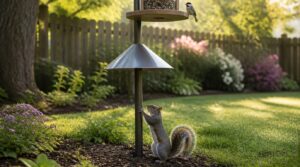
Four to six feet of baffle height stops squirrels cold before they even get close. That range creates a real vertical barrier, discouraging tail-first ascent up the pole.
- Blocks climbing grip
- Covers pole segments evenly
- Frustrates repeated attempts
Skimping on baffle placement height just invites persistence. Consistent squirrel baffle height beats patchy coverage every time.
Fifteen-inch Minimum Diameter
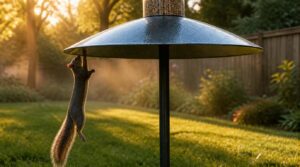
Height keeps squirrels out, but width matters just as much. A fifteen-inch minimum diameter baffle gives real base stability, resisting bending under wind or a determined climber’s weight.
| Feature | Benefit |
|---|---|
| Wide base | Tipping resistance |
| Thick material | Load durability |
| Corrosion coating | Weatherproofing |
| Standard sizing | Mounting hardware compatibility |
| Extra clearance | Easier baffle setup |
Skimpy diameters practically invite gymnastics.
Eighteen Inches Below Feeder
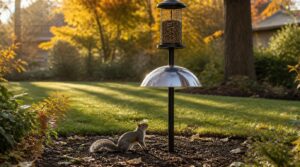
Width covers the base — now let’s talk gap. Set the baffle eighteen inches below the feeder for a real vertical barrier. Squirrels jump close to 4 feet standing still, so this ground-to-baffle distance disrupts their launch angle badly.
- Confirms best height even after storms
- Blocks ground predator access
- Needs seasonal rechecks for pole stability
Ice or leaning poles shrink that gap fast, so inspect it often.
Smooth Metal Pole Choice
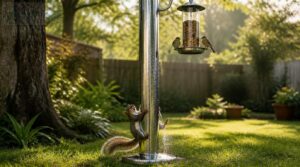
Squirrels can grip and scale rough bark with ease, but a smooth metal pole takes that advantage away fast. Chrome and stainless steel offer a hard, slick surface finish with almost zero grip, while staying corrosion resistant through rain and humidity.
Skip powder coating — dirt buildup restores traction. Lightweight aluminum works too, though it may bend. Wider poles (41-45mm) add stability, turning your bird feeder pole into a real climbing deterrent.
Stable Ground Installation
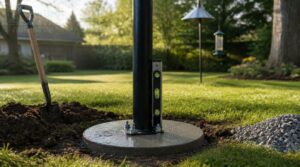
A wobbly pole ruins everything, no matter how perfect your baffle height is. Soil bearing capacity needs to handle 1.5 times the feeder’s live load, so test before you dig.
Pour a concrete pad for even weight distribution and zero settling. Use stainless anchor bolts for durability, and dig footings deep enough to prevent frost heave. Your pole should shrug off 90 mph wind loads without flinching.
Top 9 Squirrel Proof Feeder Items
Height and distance only get you halfway there. The right hardware seals the deal, turning your setup into a fortress squirrels can’t crack. Here are 9 tested poles, baffles, and feeders worth adding to your yard.
1. Metal Bird House Feeder Pole
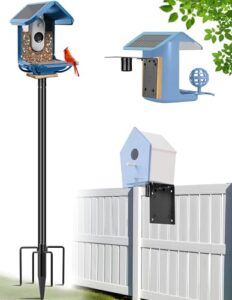
A 109-inch pole doesn’t leave squirrels much to work with. That’s over 9 feet, tall enough to satisfy the 5-7-9 rule with room to spare.
The five-prong ground stake keeps it locked in soil, even after storms roll through. Electro-coated metal resists rust, so you’re not fighting corrosion every spring.
Best part? It’s universal fit, so your existing feeder, birdhouse, or weather station just clicks onto that wooden mounting board. No custom brackets needed.
| Best For | Backyard bird enthusiasts who want a tall, stable, squirrel-resistant mount for their existing feeder, birdhouse, or weather station. |
|---|---|
| Material | Metal |
| Weather Resistance | Rust-resistant |
| Squirrel Deterrence | Indirect (pole) |
| Pole Compatibility | Ground stake |
| Installation | Ground insertion |
| Outdoor Use | Yes |
| Additional Features |
|
- Nine-foot height helps keep squirrels and other critters away from feeders
- Rust-resistant electro-coated metal holds up to weather year-round
- Universal wooden mounting board fits most feeders, birdhouses, and weather stations without extra brackets
- Requires digging into soil for the ground stake, so it’s not ideal for paved or rocky areas
- Only one pole is included per package, so multiple stations mean multiple purchases
- At 109 inches tall, it may be too imposing for smaller yards or patio setups
2. Heavy Duty Smart Bird Feeder Pole
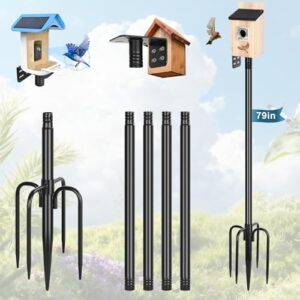
Camera feeders need a steady stand, and this pole delivers with 1.25-inch heavy duty steel. That thickness kills wobble even when your Bird Buddy’s motion sensor triggers a dozen times a day.
Telescoping sections stretch from 3 feet to 6.6 feet, so you can dial in the sweet spot for jump resistance. The 20-pound weight capacity covers most smart feeders without sagging.
A dedicated top platform keeps your unit level, which matters for clear photos and steady video.
| Best For | Homeowners and bird enthusiasts who want a sturdy, weather-resistant pole to mount smart bird feeders, birdhouses, or hummingbird feeders in their yard or garden. |
|---|---|
| Material | Powder-coated steel |
| Weather Resistance | Rust-resistant |
| Squirrel Deterrence | Indirect (pole) |
| Pole Compatibility | 1 inch pole |
| Installation | Screw sections |
| Outdoor Use | Yes |
| Additional Features |
|
- Five-prong base provides excellent stability in windy or rough weather conditions
- Tool-free threaded height adjustment makes setup and customization quick and easy
- Durable black anti-rust powder-coated steel construction built to withstand outdoor elements
- Bird feeder or birdhouse is sold separately and not included with the pole
- Mounting holes may not align with all smart birdhouse models, sometimes requiring an extra wooden board bridge
- Must be installed directly into the ground for the base to remain stable and functional
3. Metal Squirrel Proof Spring Barrier
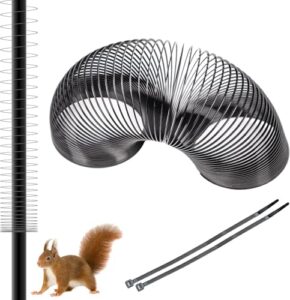
Think of it as a trapeze act your feeder never asked for. This coil mounts at the pole’s top and stretches up to 28 inches, so any climber loses footing before reaching the seed.
At just 2.7 inches wide, it’s a sleeker option than bulky cone baffles. The zinc-coated metal shrugs off rust, and installation takes minutes with the included zip ties.
Skilled climbers occasionally muscle through, so pair it with proper height for best results.
| Best For | Bird lovers who want a sleek, low-profile way to keep squirrels off their feeders without resorting to bulky cone baffles. |
|---|---|
| Material | Metal |
| Weather Resistance | Rust-resistant |
| Squirrel Deterrence | Spring barrier |
| Pole Compatibility | Zip tie mount |
| Installation | Zip ties |
| Outdoor Use | Yes |
| Additional Features |
|
- Compact 2.7-inch diameter offers a more discreet, elegant look than traditional baffles
- Rust-resistant metal coating and smooth edges make it durable and safe for hands and animals alike
- Quick to install with the included zip ties, and doubles as a humane, non-harmful deterrent
- Extra-skilled or "adroit" squirrels may still find a way past it
- Effectiveness can vary depending on the squirrel species you’re dealing with
- A few users noticed an odd smell when first unboxing the product
4. Galvanized Wrap Around Squirrel Baffle
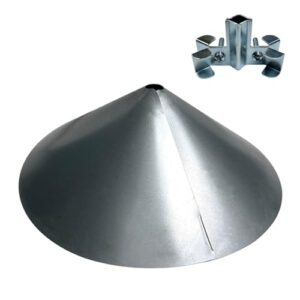
Picture a steel collar that hugs your pole like a python with good intentions. This wrap-around baffle locks around 1/2 to 1 1/8-inch poles without disassembling your feeder setup.
At 17 inches wide, it clears the diameter minimum for stopping outstretched squirrels cold. The galvanized steel shrugs off rust for years outdoors.
Best part? Retrofitting takes minutes, not tools and swearing. Slide it on, snap the collar shut, done.
| Best For | Bird lovers who want a simple, no-tools way to keep squirrels off their pole-mounted feeders for good. |
|---|---|
| Material | Alloy steel |
| Weather Resistance | Rust-resistant |
| Squirrel Deterrence | Wrap barrier |
| Pole Compatibility | 0.5-1 inch |
| Installation | Pole wrap |
| Outdoor Use | Yes |
| Additional Features |
|
- Fully galvanized steel resists rust, so it holds up through years of outdoor weather
- Easy to install with just a metal mounting collar — no disassembly or extra tools required
- 17-inch diameter provides solid, reliable protection against squirrel interference
- Only fits specific pole sizes (1/2 to 1 inch round or 7/16 to 5/8 inch square), so it won’t work with every setup
- Requires a compatible pole or mounting surface to install properly
- Being made of alloy steel, it may add noticeable weight to lighter pole systems
5. Dispense Rite 3 Hole Replacement Baffle
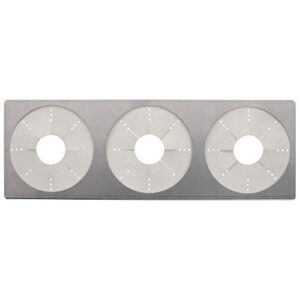
Wait, this one’s not actually a squirrel baffle, it’s a cone dispenser part. The Dispense Rite 705-DB is a three-hole replacement baffle built for the 705-DS Cone Dispenser, not your bird feeder pole.
It measures 11.5 x 3.88 x 11.5 inches and weighs just 3.66 ounces. Great for restoring a worn condiment dispenser, useless against squirrels.
If squirrel-proofing is your goal, skip this one entirely and look toward dome or wrap-around baffles instead.
| Best For | Foodservice operators and restaurant owners needing an exact-fit replacement baffle to restore a worn or damaged Dispense-Rite 705-DS cone dispenser. |
|---|---|
| Material | N/A |
| Weather Resistance | N/A |
| Squirrel Deterrence | N/A |
| Pole Compatibility | N/A |
| Installation | Component swap |
| Outdoor Use | N/A |
| Additional Features |
|
- Exact manufacturer replacement part, ensuring proper fit and function
- Lightweight and compact design at just 3.66 ounces
- Restores full dispensing functionality to worn-out units, extending equipment life
- Only compatible with the specific Dispense-Rite 705-DS model
- Requires precise model matching, limiting flexibility for other dispensers
- Not usable for any purpose outside condiment/cone dispensing (e.g., no bird feeder or outdoor applications)
6. Aspects 182 Super Dome
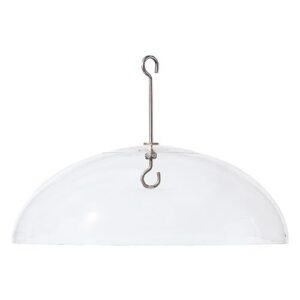
Now that dispenser part’s out of the way, let’s talk actual squirrel armor. The Aspects 182 Super Dome uses a lamellar, multi-ring design that gives birds wide-open feeding space while keeping climbers guessing.
Mount it around six feet up, and squirrels hit a dead end trying to shimmy past the smooth, weather-resistant shell. It pairs nicely with a pole-mounted baffle underneath for a true one-two punch.
One catch: determined squirrels sometimes try the center post. Combine height and baffle placement for best odds.
| Best For | bird lovers who want to keep feeders full of seed and empty of squirrels, especially anyone hanging a feeder in a spot exposed to rain, snow, or wind. |
|---|---|
| Material | Polycarbonate |
| Weather Resistance | UV-stabilized |
| Squirrel Deterrence | Baffle cover |
| Pole Compatibility | Hanging hook |
| Installation | Hook attach |
| Outdoor Use | Yes |
| Additional Features |
|
- UV-stabilized polycarbonate construction holds up to sun and weather over time
- Clear, wide dome design keeps birdseed dry while still giving birds an open, unobstructed feeding view
- Stainless steel hardware included, so it fits most hanging feeders right out of the box
- The large dome surface can catch wind like a sail, so it may need a sheltered spot
- The included top screw hook may run too long for certain feeder setups
- Extra-determined squirrels can still try climbing the center post or reaching underneath
7. Garbuildman Squirrel Baffle for Bird Feeder Pole
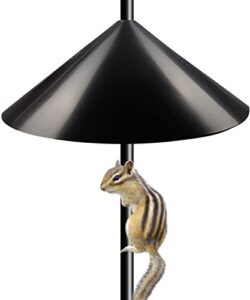
Squirrels treat plastic baffles like a joke, but the Garbuildman model earns its keep with a 19-inch diameter, leaving no edge to grip.
Its glossy polypropylene shell shrugs off rain and won’t rust like metal cousins. Mount it 6 feet up, keep it 8 to 10 feet from trees, and watch climbers hit a dead end.
Tool-free snap assembly means setup takes minutes, not a wrestling match with your shepherd’s hook.
| Best For | Bird lovers who are tired of squirrels raiding the feeder and want a rust-proof, no-fuss baffle that actually stops climbers. |
|---|---|
| Material | Polypropylene |
| Weather Resistance | Weather-resistant |
| Squirrel Deterrence | Dome baffle |
| Pole Compatibility | 2/3-1 3/8 inch |
| Installation | Snap-button |
| Outdoor Use | Yes |
| Additional Features |
|
- 19-inch diameter gives squirrels nothing to grip or climb over
- Weather-resistant polypropylene won’t rust like metal baffles
- Tool-free snap assembly makes setup quick and easy
- Segments must be snapped together firmly, or squirrels can pry them apart
- Assembly may require a second person to hold sections steady
- Cleaning can cause the three-part segments to come loose if not handled carefully
8. Wide Squirrel Baffle Bird Feeder Guard
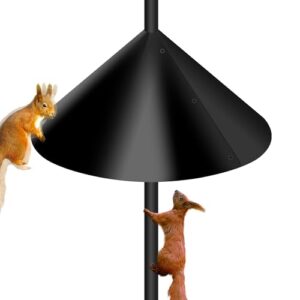
Some feeders sit low enough that a determined climber barely breaks a sweat. That’s where a wide baffle earns its spot, spanning 16 to 19 inches across so no squirrel can stretch around the rim.
Galvanized steel or heavy-duty polymer construction shrugs off rust and weather for years. Mount it 1.5 to 2 feet below the feeder, and keep that surface clean, dust buildup kills the slippery factor that sends climbers sliding right back down.
| Best For | Backyard bird enthusiasts dealing with low-mounted feeders that squirrels can easily reach by climbing or jumping from nearby structures. |
|---|---|
| Material | PP plastic |
| Weather Resistance | Weather-resistant |
| Squirrel Deterrence | Dome baffle |
| Pole Compatibility | 2/3-1 inch |
| Installation | No tools |
| Outdoor Use | Yes |
| Additional Features |
|
- Wide 16 to 19 inch span keeps squirrels from stretching around the edges
- Sturdy galvanized steel or heavy-duty polymer build holds up to years of outdoor weather
- Clean surface design stays slippery enough to send climbers sliding back down
- Needs regular cleaning to maintain its slippery, squirrel-deterring surface
- Requires precise mounting 1.5 to 2 feet below the feeder for best results
- Larger size may not suit compact feeder setups or tight spaces
9. North States Two-Way Squirrel Baffle
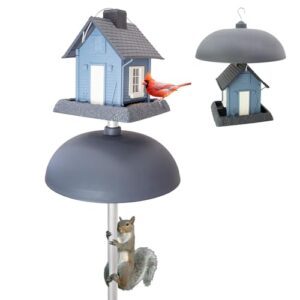
Round out your defense with the classic inverted bowl design, spanning a full 15.75 inches across. Squirrels can’t grip a curved dome, and gravity does the rest.
Mount it on a pole or hang it, either way works. Set it 16 to 18 inches below the feeder for that sweet-spot barrier. At 1.2 pounds, it won’t sag your shepherd’s hook. Just check the mounting screws monthly, a loose fit turns this champ into a squirrel see-saw fast.
| Best For | Bird lovers dealing with persistent squirrels or raccoons who need a wide, weatherproof barrier that works on both pole-mounted and hanging feeder setups. |
|---|---|
| Material | UV-protected plastic |
| Weather Resistance | UV-protected |
| Squirrel Deterrence | Bowl baffle |
| Pole Compatibility | 0.5-1.25 inch |
| Installation | Dual mount |
| Outdoor Use | Yes |
| Additional Features |
|
- Wide 15.75 inch inverted bowl design creates a strong barrier squirrels can’t climb or grip
- Lightweight at 1.2 pounds, so it won’t strain or sag a shepherd’s hook
- Flexible dual mounting system works for both pole and hanging feeder setups
- Determined squirrels may still chew through the plastic construction over time
- Needs proper clearance from fences or nearby structures to stop squirrels from jumping over
- Loose mounting hardware can shift the baffle out of position, so it needs regular checks
Safer Heights for Backyard Birds

Squirrel-proofing isn’t the only job your feeder height does. The right setup also keeps birds safe from hawks, cats, and window strikes. Here’s what to check once your feeder’s up and out of jumping range.
Near Protective Shrubs
Shrubs earn their keep when planted 6-8 feet from your feeder, giving birds a quick escape hatch without giving squirrels a launch pad.
Pick thorny deterrent species like Berberis, and keep evergreen screening dense for year-round cover.
- Space plants 2-4 feet apart
- Prune yearly for visibility
- Leave 1-2 foot gaps for airflow
- Avoid blocking sunlight (mold risk)
- Trim to 4-5 feet
Clear Predator Sightlines
Ever wonder why cats stalk through tall grass instead of open lawns? Predators hate exposure.
Give your birds a predator visibility corridor with 120-degree open angles and 10 feet of unobstructed ground. Trim branches within 3-6 feet to kill blind spots, and keep sky exposure open overhead for aerial threat monitoring.
Clear sightlines mean birds see danger before it lands.
Safe Window Distance
Why do birds smack into glass on sunny mornings? They see sky reflections, not barriers. Keep feeders within 3 feet of windows—close enough that birds can’t gain collision speed. This vegetation buffer zone cuts strike risk dramatically:
- Under 3 feet: low-speed bumps
- 3-10 feet: dangerous acceleration zone
- Beyond 12 feet: clear vegetation radius needed
Open but Sheltered Spots
Birds don’t want a cave, they want a porch. A pergola lattice or lean-to wall shelter gives partial overhead cover while sides stay open for airflow and quick escape routes.
Pick sunlit edges for your feeding station setup—warmth without full exposure. This balance keeps your ideal height effective while adding weather comfort birds actually notice.
Weekly Height Inspections
Nothing stays put forever, especially outdoors. Rain softens soil, wind rattles bolts, and squirrels test every inch daily.
Make weekly checks part of your routine:
- Pole sagging detection—look for tilt
- Storm damage assessment after rough weather
- Hardware wear checks on bolts and mesh
- Ice accumulation monitoring in winter
Ground stability matters too. A five-minute walk-around keeps your perfect height locked in through every seasonal adjustment.
Frequently Asked Questions (FAQs)
How high should I put my squirrel feeder?
Funny thing about squirrels: they’re basically furry acrobats training for the Olympics every time they eye your feeder. With explosive jumping power and a five-foot vertical leap from standing start momentum, your best height starts at five feet minimum.
Can squirrels jump higher on hills or slopes?
Slopes shift squirrel jumping ability toward vertical launches, trading horizontal reach for height. Inclined surface friction cuts grip, so squirrels take shorter hops for landing stability. This matters for squirrel proof feeder positioning near hillsides.
Are tube feeders harder for squirrels to climb than platforms?
Yes. Tube feeders offer fewer handholds than platforms. Smooth columns and narrow seed ports frustrate vertical climbing, while weight sensitive shrouds slam shut on heavier squirrels. Platform ledges give them a foothold buffet instead.
Conclusion
Some folks swear a taller pole alone beats squirrels—test that theory and you’ll find it falls apart without proper baffle placement too. Height matters, but it works as a system, not a solo trick.
Nail your squirrel proof feeder height, add that baffle sweet spot, and clear the launch pads nearby. Squirrels are gymnasts, sure, but even acrobats need a runway. Take theirs away, and your feeder finally belongs to the birds.
- https://duncraft.com/blogs/birding-tips/bird-feeder-placement-guide-attract-more-birds-stop-squirrels-and-prevent-window-collisions
- https://wintersprings.wbu.com/squirrel-proofing
- https://www.audubon.org/magazine/how-stop-squirrels-raiding-your-bird-feeders
- https://www.mixxidea.com/blogs/how-to/protect-bird-feeders-guide-to-squirrel-proof-poles-and-baffles
- https://birdsnap.com/blogs/news/the-ultimate-guide-to-squirrel-proofing-your-bird