This site is supported by our readers. We may earn a commission, at no cost to you, if you purchase through links.

Imagine this: a wren scoping out your balcony rail like it’s prime real estate, twist-lock mechanism and all. City birds are hunting for nest sites now more than ever, and your fourth-floor perch might be exactly what they need.
Here’s the catch — not just any box will do. A dove needs 8×8 inches of floor space, while a wren squeezes through a 1-inch hole and calls it home. Get the size wrong, and you’ll attract nobody but pigeons.
Choose the right nesting boxes for apartment balconies, and you’ll turn a few square feet of railing into a genuine urban nursery.
Table Of Contents
- Key Takeaways
- Best Balcony Nesting Box Options
- Key Features to Compare
- Choosing The Right Size
- Safe Balcony Installation Tips
- Maintenance and Bird Comfort
- Frequently Asked Questions (FAQs)
- How do I attract birds to my apartment balcony?
- What nesting materials should birds be provided with?
- Are bird feeders allowed under most apartment lease agreements?
- What foods should never be offered to visiting birds?
- How often should birdbath water be changed or refreshed?
- Which screws and tools work best for assembly?
- Conclusion
Key Takeaways
- Match your entrance hole size to your target species—1-inch openings suit wrens, 1.5-2 inch holes fit doves, and getting this wrong just invites pigeons or sparrows instead.
- Build or buy boxes with weather-resistant materials, sloped roofs, and proper drainage and ventilation to keep nests dry and comfortable through rain, sun, and temperature swings.
- Mount boxes securely using corrosion-resistant hardware and non-permanent options like strap brackets, positioning them away from prevailing winds and facing east to avoid overheating.
- Support your balcony birds year-round with seasonal cleaning, mold control, predator guards, and nearby food, water, and native plants to create a true urban habitat.
Best Balcony Nesting Box Options
Ready to turn your balcony into a bird haven? Not every nest box fits every space, so picking the right style matters. Let’s check out five solid options that work great for city living.
Whether you’re short on space or want something decorative, this guide to bird houses for balconies breaks down which designs actually attract feathered visitors.
1. Wooden Outdoor Dove Nesting Box
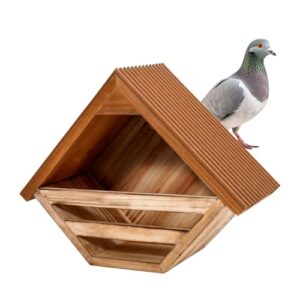
Picture doves cooing right outside your window. A solid wood dove box brings that dream to life, with cedar or redwood standing up to rain and sun for years.
Look for a sloped, grooved roof that sheds water fast, plus an open front with perches for easy landings. Interior floor space should hit at least 8×8 inches — doves need room to stretch.
Watch for thin nails; add screws for extra durability!
- Solid wood construction with a sloped, grooved roof holds up well against rain, snow, and sun
- Open-front design with perches and built-in ventilation makes it easy for birds to come and go while staying comfortable
- Pre-drilled mounting holes make it simple to install on a tree, fence, or wall in just a few minutes
- The entrance opening may be too small for some larger dove species
- Built with staples and thin nails, so reinforcing with screws is recommended for long-term durability
- How well it works can depend on local bird activity and how motivated birds are by nearby food sources
2. Plastic bird breeding nest boxes
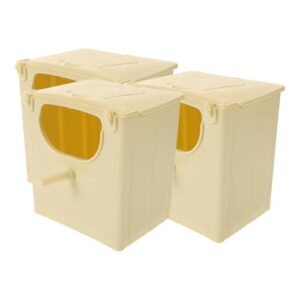
Not into woodworking? No problem. Plastic breeding boxes skip the sanding and staining entirely, made from tough polypropylene that shrugs off rain without warping.
Look for a hinged roof for quick chick checks, plus a translucent viewing window so you can peek without disturbing anyone. Drainage holes at the base keep things dry after storms.
Best part: these clip right onto railings with anti-twist mounting hardware, so wind won’t send them swinging like a pendulum!
- Hanging design with integrated hooks makes placement quick and easy
- Large access door simplifies cleaning and everyday interaction
- Smooth plastic construction is durable and easy to maintain
- Compact size isn’t suitable for larger parrot species
- Plastic material may need specific cleaning routines to stay hygienic
- Outdoor performance depends on having a stable surface or branch to hang from
Small Cavity-Nester Boxes
Tiny birds need tiny doors. The best hole size sits between 25 and 28 mm, letting chickadees in while blocking bigger, bossier species.
Look for beveled entrance edges that stop squirrels from gnawing openings wider, plus rough interior grip texture so fledglings climb out easily.
This small apartment nest box fits neatly with compact rail mounting and color blending aesthetics—natural wood tones disappear against your railing. Using natural untreated wood ensures the structure remains safe and durable for local wildlife.
Large Balcony Nest Boxes
Ready to think bigger? A large apartment nest box offers roomy interior dimensions—think 20.5 x 16 x 9.5 inches—perfect for robins or larger cavity nesters.
If you’re hoping to attract an even bigger tenant, check out this guide to choosing the right owl house dimensions for cavity nesters that need extra headroom.
Sturdy exterior-grade plywood boosts material durability, while a sloped roof adds real predator deterrence.
Recessed 4.25-inch entrances and smart ventilation design keep drafts out. It’s a bigger commitment, but a serious upgrade in bird nesting solutions.
Best Uses by Species
Match the box to the bird, and everyone wins. Different species have wildly different nesting preferences, so targeting specific nesters matters.
- Wrens: 1-inch openings, cozy perches
- Bluebirds: 1.5-inch holes, deep chambers
- Finches: small cavity boxes
- Doves: 2-inch openings, open platforms
The right apartment nest box turns your balcony into real bird habitat, not just decoration.
Key Features to Compare
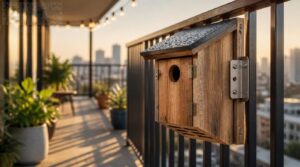
Not all nest boxes are created equal, so picking the right one takes a little know-how. Some features matter more than others when your box lives on a balcony, exposed to wind and rain. Here’s what to check before you buy.
Entrance Hole Size
Size the hole, and you pick the tenant! Go 1 1/4 inch for chickadees, 1 1/2 inch for bluebirds.
| Hole Size | Species Attracted |
|---|---|
| 1 1/8" | Chickadees |
| 1 1/4" | Nuthatches |
| 1 1/2" | Bluebirds |
| Oversized | House sparrows (unwanted!) |
Round holes deter predators better than gaps. Get sizing wrong, and invasive squatters move in fast.
Weather-Resistant Materials
Weather beats up balconies fast — sun, rain, and freezing snaps all take their toll. Choose exterior-grade plywood or hardwood panels treated with borate for termite and mold resistance lasting up to five years.
Look for UV coating longevity rated 5-7 years, plus silicone sealant benefits like decade-long water repellence. Clear finishes with moisture barriers keep wood grain visible while blocking rot underneath.
Ventilation and Drainage
Picture a stuffy attic in July — that’s a birdhouse with bad airflow. Skip that fate with vents that align straight into the cavity, keeping air moving without blasting perched birds.
Inside, a sloped drainage trough (2 degrees minimum) sends moisture toward exit holes, far from nesting material. Add mesh-screened vents and a rain hood, and condensation control practically takes care of itself!
Easy Cleaning Access
Nobody wants to scrub a nesting box hanging ten feet up. Look for tool-free access panels and quick-release latches you can pop open one-handed.
- Removable debris trays
- Front-facing inspection ports
- Integrated drainage channels
- Brush-gasket sealed ports
- Rounded, crevice-free interiors
These features turn messy cleanups into quick wipe-downs, keeping your nesting box fresh and your feathered tenants happy!
Secure Mounting Design
A ten-story drop is no place for a wobbly box. Load distribution across multiple points keeps stress off your railing, with corrosion resistant hardware (grade 304 stainless) fighting rust for decades.
| Feature | Why It Matters |
|---|---|
| Backing plates | Spread wind load safely |
| Rubber grommets | Vibration dampening |
Whether you pick left or right mounted boxes, mounting stability protects both your bird box and your balcony.
Choosing The Right Size
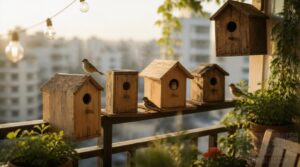
Size matters more than you’d think for happy, healthy birds. Too small feels cramped, too big invites the wrong squatters. Let’s break down exactly what fits best, species by species.
Dove Nesting Box Needs
Two doves can turn any balcony into a nursery, if you get the sizing right.
Go with a 2 inch entrance hole—wide enough for mourning doves, tight enough to block bigger intruders. Interior needs 6-8 inches of clear height. Aim for:
- Best hole diameter: 1.5–2.5 inches
- Rounded edge safety at entry points
- Entrance hole placement 6-8 inches up
Finch and Sparrow Boxes
Doves need room, but finches and sparrows want cozy. Shrink that entrance hole diameter to 1 1/4–1 5/8 inches—big enough for finches, too tight for bullies.
Keep interiors shallow, single-chamber, with soft interior substrate selection like wood shavings. Add drainage holes for moisture control, skip the perch to block raiders, and you’ve got a solid little birdhouse made for small-clutch success.
Bluebird Hole Dimensions
Bluebirds are pickier than a picky bird can be. Get the entrance hole size right—1.5 inches for Eastern species, 1 9/16 for Western or Mountain—and place it 5.5 inches up.
- Keeps starlings out
- Protects fragile chicks
- Guides safe fledging
- Builds real nesting trust
Smooth edges matter too, sanded clean so returning adults glide through without a snag.
Interior Space Requirements
Size matters more than looks here. Match floor area to species roosting posture—finches want cozy 4×4 inch floors, doves need roomy 8×8 inch spaces to stretch out.
Internal volume counts too. Dove boxes need 0.5-0.6 cubic feet; bluebird cavities work with 0.4-0.5. Skip internal partitions—open space keeps cleaning easy and nesting comfortable for your feathered tenants!
Balcony Space Limits
How much balcony can you actually spare? Check your rail openings first—codes cap them at 12 centimeters for safety.
- Keep rail clearance several centimeters back
- Confirm guardrail height meets 0.90-1.10 meter rules
- Mind floor load capacity with multiple boxes
- Leave egress paths clear, no blocking exits
Small space solutions like Apartment Boxes fit snugly without crowding your footpath or neighbor’s privacy.
Safe Balcony Installation Tips
Got your box picked out? Great, now let’s get it up safely. A wobbly nest box helps no one, so let’s cover the setup basics that keep both birds and your balcony happy.
Rail and Wall Mounting
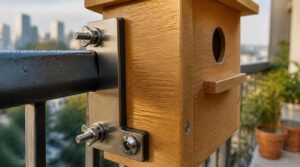
Your railing is only as good as what’s holding the box up. Choose corrosion-resistant hardware — stainless steel bolts won’t rust from balcony humidity. Skip cable ties alone; they can’t handle wind gusts.
Check mounting substrate stability first, whether left or right mounted boxes on rail brackets. Add gasketed weather seals around gaps, and pick wing nuts for tool-free cleaning access whenever you need it.
Wind-Proof Placement
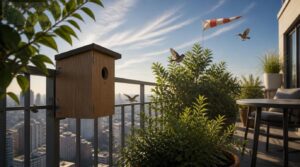
Fifteen floors up, wind hits different — that’s why prevailing wind orientation matters most. Face the entrance away from gusts, broad side into the wind.
Keep 1.5 meters of open space around your nesting box, whether it’s left or right mounted. Add a windbreak — dense shrubs work — for storm season adaptations. A solid wind shield beats a shaky birdhouse every time!
Shade and Sun Exposure
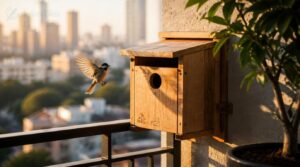
Bake in an oven, and your birdhouse becomes a death trap — that’s what happens without proper shade.
Choose east-facing placement for your nesting box. Morning sun warms it gently, then afternoon shade kicks in before things get brutal, cutting UV radiation and easing heat stress on chicks.
Watch sunlight angle shifts through seasons. Adjust positioning yearly, keeping surface temperature management in mind for happy, cool nesting materials inside.
Window Strike Prevention
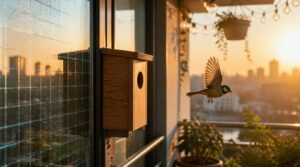
Ever watch a bird crash into glass it never saw coming? Your balcony window can look invisible to birds, especially near a busy nesting box.
To a bird in flight, your balcony window can look like open sky until it’s too late
Add UV window films or decals in tight patterns — they cut strikes dramatically. Keep window bird feeders three meters back. Watch spring and fall migration spikes closely, and manage glare on bright days to minimize hazards near your birdhouse setup.
Lease-Friendly Setup
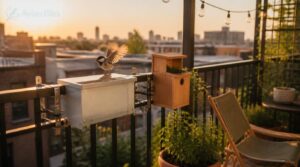
Landlords worry about drilled holes and damaged railings — so skip both. Choose non-permanent mounting like strap brackets or tension rods for damage-free installation.
Pick lightweight material selection: aluminum or prefinished cedar birdhouse options won’t strain rails. Add tenant-safe hardware, think stainless screws, not nails. Quick-detach designs make rental agreement compliance simple. When building or making a nest box, keep bird box dimensions compact for easy, landlord-approved apartment balcony bird house setups.
Maintenance and Bird Comfort
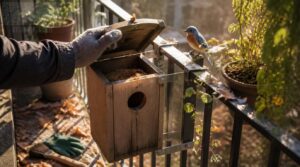
Your box is up and looking great. Now comes the part that keeps birds coming back: upkeep. Here’s what to check on, season by season.
Seasonal Box Cleaning
Once the last chick fledges, it’s cleaning time. Scrub the box with warm soapy water and a stiff brush, then rinse and dry fully before storing nesting material.
Skip bleach near active birds — a mild vinegar solution works safely. Check for cracks or splinters, swap out old nesting blocks, and jot the date down. Simple log, happier tenants next spring!
Mold and Moisture Control
Log’s done, now let’s stop mold before it starts. Keep humidity between 30-50% using a small hygrometer near the box.
Add drainage slats and ventilation louvers so moisture escapes instead of pooling. Choose mold-inhibiting coatings on wood boxes, or switch to composite materials — they shrug off dampness way better than bare wood ever could!
Predator and Pest Protection
Moisture’s under control — now guard against critters. Add a metal baffle below your bracket to stop climbing predators cold.
Screen entrance holes with mesh, keep nesting blocks intact, and try motion-activated lights or scent repellents.
- Install baffles
- Seal gaps
- Add lighting
- Log predator signs
A predatorproof birdhouse stays peaceful — and safe.
Nearby Food and Water
Predators aren’t the only visitors — birds need food and water nearby, too. Set up a bird feeder with black-oil sunflower seed and suet, plus a shallow bird bath, 1-2 meters from the box.
Local markets stock fresh seed and seasonal fruit like apple slices. Skip bread! Keep dishes clean daily — stagnant water and scattered seed attract pests fast.
Native Plants for Cover
Dress up your balcony with native plants and your nesting box turns into a real bird-friendly habitat, not just a lonely block of wood.
Try container-planted lyreleaf sage for sun, or foamflower in shady corners — both support pollinators and spill nicely over pot edges.
Their roots fight soil erosion, too, keeping your containers stable while giving birds natural cover to feel safe.
Frequently Asked Questions (FAQs)
How do I attract birds to my apartment balcony?
Add a shallow bird bath, rotate seed varieties, and tuck in native flowering pots for natural snacks. Toss in a roosting pocket for safe perch placement — soon your balcony becomes a cozy little bird habitat hotspot!
What nesting materials should birds be provided with?
Think of your birdhouse as a cozy sleeping bag, not just a box. Fill it with dry grasses, soft moss, feathers, and pesticide-free twigs. Skip synthetic fibers — they trap moisture and invite mold, turning a snug nest into a soggy mess fast.
Are bird feeders allowed under most apartment lease agreements?
Not always. Many leases treat feeders as unauthorized fixtures, tied to common area appearance or safety egress rules.
Check your lease’s exterior-modification clause first — some communities also restrict wildlife feeding to prevent pests, risking deposit deductions for apartment balcony setups.
What foods should never be offered to visiting birds?
Ever wonder why that "harmless" snack could kill a visitor?
Skip chocolate, avocado, and salty chips near your bird feeder. Stone fruit pits carry cyanide compounds. Caffeinated drinks and processed foods stress tiny hearts — stick to proper bird seed at feeding stations instead.
How often should birdbath water be changed or refreshed?
Hot days call for daily refreshes to fight algae and stop mosquito breeding. Moderate weather? Every 1-2 days works. Cooler months stretch to 2-5 days. Cloudy or smelly water means change it now—don’t wait on the schedule.
Which screws and tools work best for assembly?
Grab stainless steel screws with a Phillips or Robertson drive to fight rust and cam-out. Use an adjustable-clutch drill, matching pilot holes, and a countersink bit for a flush finish that prevents splitting your nesting box wood.
Conclusion
That wren checking out your balcony rail? She’s not picky by accident — she’s testing your nesting boxes for apartment balconies like a landlord reading a lease. Get the hole size right, the drainage right, the mounting tight, and she’ll sign on the dotted line every spring.
Your fourth-floor railing isn’t just concrete and metal anymore. It’s a tiny promise kept to the wild things still finding room in the city.