This site is supported by our readers. We may earn a commission, at no cost to you, if you purchase through links.
Your kid’s covered in sawdust, gripping a screwdriver like it’s a sword, and grinning ear to ear. That’s what happens when you turn a Saturday afternoon into a nesting box project. It’s messier than screen time, sure, but it teaches patience, teamwork, and where baby birds actually come from.
Good nesting boxes for families with children do double duty: safe hands-on building for your kids, real homes for robins, wrens, and sparrows in your yard. FSC-certified wood, kid-friendly tools, drainage holes that keep chicks dry — the details matter more than you’d think.
Ready to pick the right box and build it together? Here’s where to start.
Table Of Contents
- Key Takeaways
- Top 9 Family Nesting Box Picks
- 1. Wooden Montessori Stacking and Nesting Boxes
- 2. Wooden Life Cycle Nesting Blocks
- 3. Wooden Montessori Stacking Nesting Boxes
- 4. Wooden Rainbow Stacking Nesting Cubes
- 5. HABA On The Farm Stacking Cubes
- 6. Farm Animal Nesting and Stacking Toys
- 7. Magnetic Wooden Car Stacking Toys
- 8. Montessori stacking garage and car set
- 9. Dinosaur Sorting and Stacking Nesting Blocks
- Best Bird Box Features
- Matching Boxes to Garden Birds
- Safe Family Building Tips
- Placement, Care, and Learning
- Frequently Asked Questions (FAQs)
- What are the disadvantages of nest boxes?
- How to make a nest with children?
- What can I use instead of a nesting box?
- Where should you not put a bird box?
- How long does a nesting box last outdoors?
- Can nesting boxes be painted or decorated safely?
- What time of year should boxes be installed?
- How do you know if birds are nesting?
- What height should nesting boxes be mounted at?
- Conclusion
Key Takeaways
- Choose nesting boxes with FSC-certified untreated wood, drainage and ventilation holes, and hinged panels so building stays safe and cleaning stays easy each season.
- Match the box style and entrance size to the specific bird you want, since robins need open shelves, wrens need small 1 1/8–1 1/4 inch holes, and sparrows need narrow slot openings.
- Assign age-appropriate building tasks, like toddlers gathering twigs and older kids pre-drilling, while always using safety gear and checking tools beforehand.
- Place boxes 5 to 6 feet high in a spot away from wind, direct sun, and predator paths, then maintain them with yearly cleaning and predator guards for lasting use.
Top 9 Family Nesting Box Picks
Picking the right nesting box doesn’t have to feel overwhelming. You want something sturdy, safe, and made with your kids in mind, whether that’s building it together or just watching birds move in. Here are nine picks worth a closer look.
Adding a few thoughtful extras, like the essential bird nesting box accessories, can make the difference between a box that’s merely occupied and one where a family truly thrives.
1. Wooden Montessori Stacking and Nesting Boxes
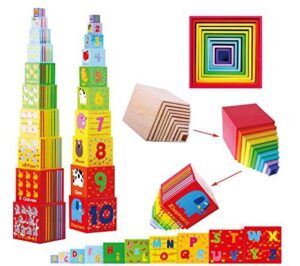
Ten boxes, one skill-building adventure. These nest snugly to about 25 cm tall, made from solid wood with smooth, rounded edges kids can grip safely.
Color-coded lids turn cleanup into a game, while size sequencing quietly teaches order and problem-solving. Untreated, low-VOC finishes mean no worries about little hands (or mouths).
Best part? The whole set tucks into a footprint under 30 cm square — tidy shelves, happy toddlers, zero fuss.
| Best For | This ten-cube wooden stacking and nesting set is best for parents and educators looking for a Montessori-style toy that helps toddlers aged 2 and up build counting, alphabet, color, and animal recognition skills while also developing fine motor coordination. |
|---|---|
| Material | Sustainable wood |
| Nesting Capability | Yes |
| Non-Toxic Paint | Yes |
| Recommended Age | 2+ |
| Adult Supervision | Recommended |
| Educational Focus | Numbers, animals, alphabet |
| Additional Features |
|
- Multifunctional design lets kids stack towers up to 115 cm tall or nest all ten cubes into a compact 15.5 cm x 15.5 cm storage box
- Made from sustainable wood with non-toxic, environmentally friendly paints, and certified to EN71 and CPSA safety standards
- Combines learning (numbers, letters, animals, colors) with imaginative play, like using the cubes as drums or storage containers
- Building tall towers requires a fair amount of open floor space
- Adult supervision is recommended throughout play sessions
- Not suitable for children under 2 years old
2. Wooden Life Cycle Nesting Blocks
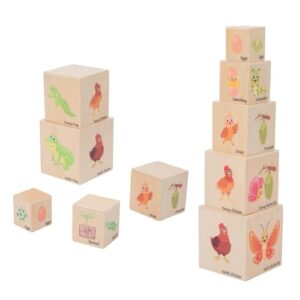
Beech wood blocks that turn backyard curiosity into a science lesson. Five life cycles — egg, larva, pupa, adult — carved right into each piece, sized from about 3 cm up to 5.8 cm so kids naturally sort smallest to largest.
That sizing isn’t just cute: it teaches sequencing skills while stage names build early vocabulary. Finishes stay non-toxic and water-based, edges rounded smooth.
Sturdy enough for daily classroom handling, gentle enough for home storytelling time.
| Best For | These nesting blocks are best for parents, teachers, and gift-givers looking for a screen-free, hands-on toy that helps toddlers aged 3 and up learn about nature while building fine motor and cognitive skills. |
|---|---|
| Material | Solid wood |
| Nesting Capability | Yes |
| Non-Toxic Paint | Yes |
| Recommended Age | 3+ |
| Adult Supervision | Recommended |
| Educational Focus | Life cycles, biology |
| Additional Features |
|
- Teaches real biological life cycles (butterfly, sunflower, frog, and chicken) through colorful, fade-resistant illustrations
- Made from solid wood with non-toxic paint and smooth, rounded edges for safe, comfortable handling
- Doubles as a stacking and nesting game that builds size comparison, sequencing, and hand-eye coordination skills
- Needs gentle care — only a damp cloth for cleaning, and no direct sunlight to preserve the wood and print quality
- Not designed for rough play, which may limit durability in very active classroom settings
- Small block sizes (as tiny as about 1 inch) mean close supervision is needed for very young children
3. Wooden Montessori Stacking Nesting Boxes
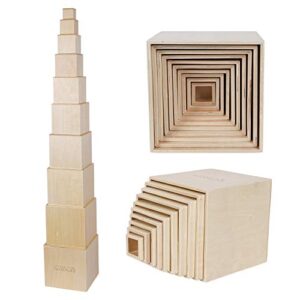
From counting bug stages to plain nesting practice, this set keeps things simple. Solid wood, natural finishes, no dyes or varnish, just smooth sanded edges safe for little hands.
Sizes fit neatly inside each other for tidy storage, then stack tall for building fun. Light wood tones suit that classic Montessori look, calm and uncluttered.
Easy: swap between stacking and nesting anytime. A steady pick for toddlers still mastering grip and balance.
| Best For | toddlers aged 2 and up who are building fine motor skills, hand-eye coordination, and early math concepts through hands-on stacking and nesting play. |
|---|---|
| Material | Sustainable pure wood |
| Nesting Capability | Yes |
| Non-Toxic Paint | Yes |
| Recommended Age | 2+ |
| Adult Supervision | Required |
| Educational Focus | Size, weight, counting |
| Additional Features |
|
- Made from sustainable solid wood with non-toxic, natural finishes and smooth sanded edges
- Versatile play options—stack into tall towers up to 115 cm or nest compactly down to 15.5 cm for storage
- Meets major safety certifications (EN71, CPSA, ASTM F963, EC Toy Safety Directive) for parental peace of mind
- Small cubes (as tiny as 3.3 x 3.3 x 3.3 cm) pose a choking hazard, requiring close adult supervision
- Not suitable for children under 2 years old
- Natural wood finish means less vibrant color variety compared to painted or dyed alternatives
4. Wooden Rainbow Stacking Nesting Cubes
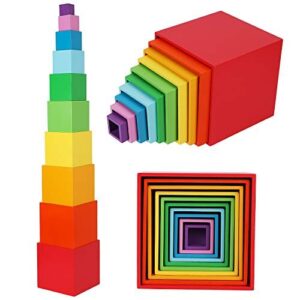
Seven arches, one gorgeous rainbow when lined up right. These cubes bring color recognition and size sequencing together in one smooth beech build.
Each arch nests inside the next, smallest to biggest, teaching sizing without a single worksheet. Non-toxic, water-based finishes keep things safe for curious mouths and grabby hands.
No sharp seams, no loose parts to swallow. Kids stack them, tunnel them, turn them into bridges — open-ended play that never gets old.
| Best For | These nesting and sorting boxes are best for toddlers aged two and up who are just starting to explore size, color, and counting through hands-on play. |
|---|---|
| Material | Sustainable wood |
| Nesting Capability | Yes |
| Non-Toxic Paint | Yes |
| Recommended Age | 2+ |
| Adult Supervision | Advised |
| Educational Focus | Size, weight, color |
| Additional Features |
|
- Made from sustainable wood with non-toxic paints, so it’s safe for little hands
- Meets EN71, CPSA, ASTM F963, and EC Toy Safety Directive standards, giving parents peace of mind
- Ten pieces nest down to a compact 15.5 cm storage height, making cleanup and space-saving simple
- Not suitable for children under two years old
- Requires adult supervision during play
- Smallest cube (3.3 x 3.3 x 3.3 cm) could pose a choking risk if left unsupervised around younger siblings
5. HABA On The Farm Stacking Cubes
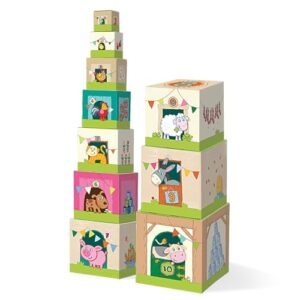
Ten cardboard cubes, one whole barnyard’s worth of storytelling. Farmer Tim and friends show up on every side, alongside numbers 1 through 10 for early counting practice.
If all that farmyard play sparks a love of animals, why not pair it with real backyard fun, like setting up a Carolina wren nesting guide to welcome feathered visitors nearby.
This PAL Award-winning set (HABA model 5879) builds speech and language skills through stacking, nesting, and tower-building. Lightweight and travel-friendly, though little ones under 12 months need supervision, since cardboard won’t hold up to rough handling like wood does.
Bookshelf storage is a breeze: cubes nest right into each other.
| Best For | parents and preschool teachers looking for a durable-feeling, travel-friendly toy that builds fine motor skills and early counting through open-ended stacking and storytelling play. |
|---|---|
| Material | Cardboard |
| Nesting Capability | Yes |
| Non-Toxic Paint | Not specified |
| Recommended Age | 12 months+ |
| Adult Supervision | Recommended |
| Educational Focus | Numbers, farm theme |
| Additional Features |
|
- Farm-themed illustrations and numbers 1–10 encourage imaginative play and counting practice
- PAL Award-winning design supports speech and language development
- Compact, nesting cubes make storage on shelves or in a bag easy
- Cardboard construction is less durable than plastic or wooden alternatives
- Requires supervision for children under 12 months
- May show wear over time with frequent, rough handling
6. Farm Animal Nesting and Stacking Toys
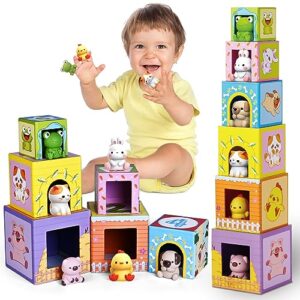
Six farm friends, one matching game. Cow, pig, sheep, horse, chicken, and duck each nest inside their color-coded box, so toddlers learn sorting by sight before they can count.
Boxes stack into a tower or collapse flat for storage—handy for small playrooms. Rounded corners and smooth sanding keep little fingers splinter-free, and the untreated wood stays safe for chewers and stackers alike.
It’s simple, sturdy, and genuinely educational: matching, sequencing, and hand-eye coordination, all wrapped into cheerful barnyard play.
| Best For | This toy is best for parents and caregivers of toddlers aged 1 to 3 who want a hands-on way to teach colors, numbers, shapes, and animal recognition at home or in a preschool setting. |
|---|---|
| Material | Cardboard |
| Nesting Capability | Yes |
| Non-Toxic Paint | Not specified |
| Recommended Age | 1-3 years |
| Adult Supervision | Recommended |
| Educational Focus | Colors, animals, numbers |
| Additional Features |
|
- Combines six nesting boxes and matching finger puppets for varied, engaging play
- Supports fine motor skills, hand-eye coordination, and early problem-solving
- Encourages parent-child bonding through shared interactive play
- Made of cardboard, which may wear out faster than sturdier materials
- Only suitable for a narrow age range (1 to 3 years), so kids may outgrow it quickly
- Cardboard construction may not hold up well to rough handling or moisture
7. Magnetic Wooden Car Stacking Toys
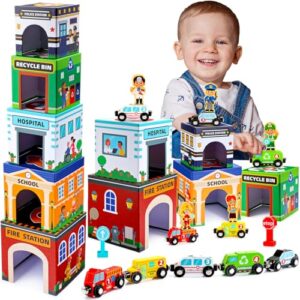
Click, connect, roll. These magnetic wooden cars snap together with hidden neodymium magnets, so stacking rows or linking a little convoy feels almost like magic to small hands.
Each piece is sized for tiny grips, sanded smooth, and finished with child-safe, non-toxic coatings—no splinters, no worries.
Beyond the fun, there’s real learning here: color sorting, cause-and-effect reasoning, and fine motor practice as kids align magnets just right.
Durable, chip-resistant, and built to survive hundreds of stacking sessions—this one earns its shelf space.
| Best For | Parents seeking an engaging, educational gift for toddlers and preschoolers who love hands-on, imaginative play with vehicles and community helper themes. |
|---|---|
| Material | Wood and cardboard |
| Nesting Capability | Yes |
| Non-Toxic Paint | Yes |
| Recommended Age | 3+ |
| Adult Supervision | Required |
| Educational Focus | Careers, vehicles |
| Additional Features |
|
- Magnetic connection system makes assembly easy and encourages creative, open-ended play
- Supports early learning through career recognition, fine motor skills, and sensory development
- Made with eco-friendly cardboard and wood, plus rounded edges and non-toxic paint for safety
- Contains small parts and magnets, so it isn’t suitable for children under 3 and needs close supervision
- Compact 20-piece set may feel limited for kids wanting more variety or bigger builds
- Requires ongoing adult supervision, which may not suit caregivers looking for independent play options
8. Montessori stacking garage and car set
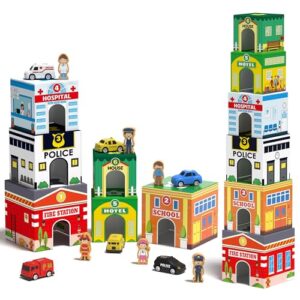
Ever watched a toddler park (and re-park) the same tiny car forty times? That’s the magic of this multi-level wooden garage.
Ramps let cars roll between levels, bays are sized for standard toy cars, and everything’s finished with child-safe, rounded edges. Kids build spatial awareness and counting skills as they match cars to numbered bays.
Beech or birch construction, wipe-clean surfaces, and snap-together panels mean easy assembly and easy upkeep—no tools required for most versions.
| Best For | toddlers and preschoolers (ages 2 and up) who love hands-on play and are just starting to learn counting, colors, and sorting. |
|---|---|
| Material | Wood |
| Nesting Capability | Yes |
| Non-Toxic Paint | Not specified |
| Recommended Age | 2+ |
| Adult Supervision | Recommended |
| Educational Focus | Numbers, community helpers |
| Additional Features |
|
- Builds fine motor skills and hand-eye coordination through pull-back cars and stacking pieces
- Teaches early math and literacy basics like numbers, counting, and color recognition
- Great pick for homeschool or classroom settings thanks to its practical, teaching-friendly design
- Friction-powered vehicles need manual pull-back action, which may be tricky for younger toddlers
- Small pieces like the wooden figures and number blocks call for adult supervision during play
- Not suitable for children under 2 years old
9. Dinosaur Sorting and Stacking Nesting Blocks
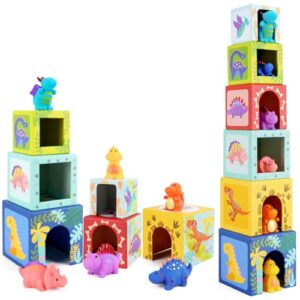
Dinosaurs and counting go hand in hand for a reason: kids love a bit of prehistoric drama with their learning.
This six-piece set nests together for storage and stacks up as a tower for play. Numbered blocks build early counting skills, while matching dinosaur figures sharpen sorting and memory.
Non-toxic paints and sturdy paper-and-vinyl construction meet EN71 safety standards, suited for ages 1 to 3. Bright colors hold attention, and rounded edges keep little hands safe—no supervision worries beyond the usual toddler watchfulness.
| Best For | Toddlers ages 1 to 3 who are learning to count, sort, and match while building fine motor skills through stacking and nesting play. |
|---|---|
| Material | Paper and vinyl |
| Nesting Capability | Yes |
| Non-Toxic Paint | Yes |
| Recommended Age | 1-3 years |
| Adult Supervision | Recommended |
| Educational Focus | Numbers, dinosaurs |
| Additional Features |
|
- Combines counting, color, and size concepts with fun dinosaur-themed matching activities
- Made with certified non-toxic paints and eco-friendly materials, meeting EN71 and CPSA safety standards
- Stackable and nestable design doubles as both a toy and a tidy storage solution
- Adult supervision is recommended during play, so it’s not fully hands-off for parents
- Paper and vinyl construction may not hold up as well as harder plastic or wood over time
- Limited to six pieces, which may feel small for kids who want more variety in shapes or patterns
Best Bird Box Features
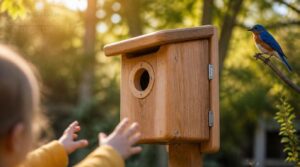
Not every nesting box is built the same, and the little details really do matter. Some features keep small hands safe during building, while others keep birds safe for years after. Here’s what to look for before you buy.
Child-safe Assembly Materials
Little hands will touch every part of this project, so materials matter as much as design.
Look for a DIY nest box kit using low VOC finishes and non-toxic resin binders—no harsh fumes, no worries. Formaldehyde-free adhesives keep panels safe indoors and out. Pair that with child-safe hardware coatings and safe sanding practices, and you’ve got real nature education for children: hands-on, wildlifefriendly paints included, step-by-step instructions guiding every screw and nail.
FSC-certified Untreated Wood
Safe hands deserve safe wood, too. Choose panels that are responsibly sourced FSC materials—untreated, chemical-free, and gentle on nesting birds.
Look for:
- FSC 100% label (fully certified forests)
- No chemical treatments or coatings
- Natural color, minimal processing
- Verified chain of custody
- Helps protect biodiversity conservation
That’s real sustainable sourcing—protecting forests and feathered friends alike.
Easy-clean Hinged Panels
Good wood matters, but so does keeping it clean. Look for a hinged front panel that swings open, no tools needed, so you can scrape out old nesting material each season with ease.
| Feature | Why It Matters | What to Check |
|---|---|---|
| Hinge durability | Won’t rust or stick | Stainless hardware |
| Coating | Repels moisture, grime | Ceramic or polymer finish |
| Access | Full scrub, both sides | 180-degree swing |
Drainage and Ventilation Holes
Two small holes, drilled at the base, keep every nest box dry after a storm. Getting the hole placement right matters: low corners drain fast, top vents pull air through without inviting rain in.
That balance protects against mold and prevents debris buildup, too. Sanded, safe hole edges guard little fingers, while breathable, untreated wood keeps moisture regulation working all breeding season, boosting nesting success for your feathered visitors.
Safe Tool Requirements
Safe assembly starts before the first nail: check every hammer and screwdriver for cracks or loose grips. Grab safety glasses for eye protection, then clear your workspace of clutter.
Your nest box kit needs just two hand tools, no power tools required. Follow step-by-step instructions closely. This beginner-friendly build makes woodworking for beginners simple, safe, and genuinely fun family time outdoors.
Matching Boxes to Garden Birds
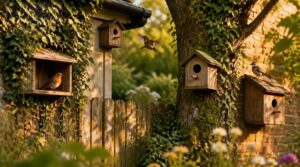
Not every bird wants the same front door. Robins, wrens, sparrows, and wagtails each have their own idea of a cozy home. Here’s how to match your box to the birds you actually want to welcome.
Robin Nesting Shelves
Robins won’t nest in a box with a hole—they need an open shelf. Mount yours 6 to 12 feet up under an eave, with a slight tilt to stop water pooling.
Look for untreated cedar or pine, finished with non-toxic, weatherproof coatings like boiled linseed oil. A solid nest box kit here builds real skills and helps backyard bird conservation.
To keep things safe, use non-pressure treated wood for the entire construction.
Wren Entrance Holes
Size matters here: wrens need an ideal hole diameter of 1 1/8 to 1 1/4 inches, no more.
Place it 4-6 inches above the floor, facing away from prevailing winds for wind direction orientation that keeps nests dry.
Sand every edge smooth—splinters hurt tiny wings. This simple detail turns any nest box kit into a safe, welcoming home during bird breeding season.
Sparrow-resistant Openings
House sparrows are tough competitors, so shape matters as much as size. Look for a slot height of 7/8 inch—a Kentucky style opening—paired with a recessed portal design that’s hard to grip.
Sloped roof edges shed debris, while sturdy, well-fitted frames prevent entrance enlargement over time. Small details, big difference for your nestbox’s future residents.
Pied Wagtail Shelter Needs
Ever wonder why a wagtail skips your fancy box entirely? These birds want crevices, ledges, or old machinery, not enclosed boxes.
Give them:
- Natural nesting materials nearby (grass, roots, plant stems)
- Shelter close to a water source
- Microclimate stability, dry and draft-free
They build cup nests tucked into odd, sheltered corners, so garden bird care means offering options, not one box.
Local Species Planning
What’s actually nesting in your neighborhood? That’s the real starting point.
Check local priority species lists and simple citizen science reports before you build a nestbox. Falkenstein’s habitat connectivity mapping shows which birds need help most, so your box helps create real avian habitat, not guesswork.
Align choices with regional biodiversity goals. Good garden bird care means matching land-use setup to what’s already thriving nearby.
Safe Family Building Tips
Building a nest box with your kids is more than a fun weekend project: it’s a chance to teach real skills, safely. A few smart habits keep little hands protected while everyone still gets to help. Here’s what safe, age-appropriate building looks like from start to finish.
Age-appropriate Tasks
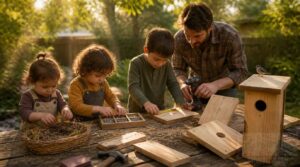
Little hands, big helpers: match the task to the age, and building a nestbox becomes a true family win.
Toddlers gather twigs and yard debris, building fine motor skills. Preschoolers sort screws by size, practicing sequencing. Older kids handle pre-drilling and measuring, building responsibility. Everyone learns safety-conscious habits together, checking tools before use. Small jobs, done gradually, keep confidence growing while your DIY nestbox plans stay stress-free.
Measuring and Pre-drilling
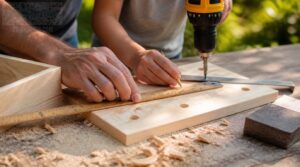
Grab a pencil, not a pen: precise marks matter more than speed here. Mark hole centers to within a millimeter, then double-check spacing with a tape measure before anyone touches a drill.
- Pilot holes slightly smaller than screws prevent splitting
- Keep the bit perpendicular using a square
- Clear wood chips often
- Sand rough edges smooth
- Follow your step-by-step instructions closely
Hammer and Screwdriver Safety
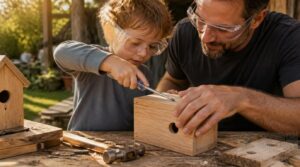
Now the fun part: hammer and screwdriver time. Check your tools first — no cracks, no loose heads, no bent tips.
| Tool | Check | Safe Use |
|---|---|---|
| Hammer | Head secure | Strike squarely |
| Screwdriver | Tip matches screw | Steady wrist |
| Both | No damage | Wear eyewear |
Keep a steady stance, match tip to screw, and always wear protective eyewear during your Build a Nestbox craft for kids.
Sanding Rough Edges
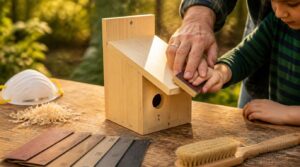
Once the frame’s built, those cut edges can feel splintery. Sand with the grain, not against it, working from 80 grit up to 220 for a smooth finish.
Use a sanding block to avoid rounding corners. Wipe away dust between passes, wear a dust mask, and let kids handle the finer grits — safe, satisfying work for any nestbox craft for kids.
Outdoor Supervision Checklist
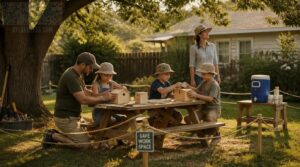
Sawdust cleaned up, tools put away — now it’s time to think outdoors. Set a clear boundary with cones or rope before kids start building a home for birds.
Use a buddy system, schedule hydration breaks every 20 minutes, and watch the sky for a weather contingency. Calm voice commands keep everyone safe during this outdoor garden craft and DIY nesting material box project.
Placement, Care, and Learning
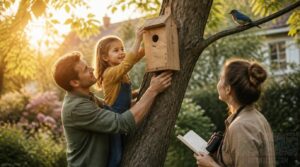
Building the box is only half the job, where you put it matters just as much. A little care through the seasons keeps your feathered visitors safe and coming back. Here’s what you need to know about placement, upkeep, and turning it all into a family learning moment.
Predator Guard Options
Predators are clever, but you can outsmart them. Wrap the pole with a metal pole wrap a foot below the box, add squirrel mesh, and top it off with a sloped baffle overhang.
Want extra peace of mind? Motion deterrents and anti-torque collars keep climbers guessing. Together, they turn your nesting box into a safe, welcoming bird habitat.
Where Not to Install
Where you hang your box matters just as much as how you build it.
Skip windy walls, dripping eaves, and shady corners with no morning sun. Avoid busy paths where vibration spooks nesting birds, and steer clear of enclosed spots with poor airflow or nearby fumes.
A safe spot means a safer bird habitat, plain and simple.
Seasonal Cleaning Routine
Nesting boxes need a yearly once-over, ideally between fall and late winter, once fledglings have flown.
Empty out old nesting materials, scrub with an eco-friendly cleaner, and check for wear. Add this to your quarterly schedule planning alongside other seasonal chores.
Assign kids age-appropriate cleaning tasks, then build a reusable checklist. Rotating this focus each season keeps your bird nesting box construction sturdy and weatherproofed for years.
Bird Watching Activities
Morning viewing habits work best: birds are busiest right after sunrise.
Grab a notebook, jot down what you spot near the box, and try identifying calls before you see the bird. Simple binoculars (8×42 works great) bring details into focus.
Track visitors over weeks, watch for migratory patterns, and turn backyard birdwatching into real STEM learning—measuring, recording, predicting. It’s nature connection your kids won’t forget.
Conservation Lesson Ideas
A birdhouse is a doorway into real wildlife conservation, right in your backyard.
A backyard birdhouse can be a child’s first real doorway into wildlife conservation
Turn observations into citizen science: log species on eBird, join neighborhood habitat restoration days, or track pollinators with local gardens.
- Map local species and cavity preferences
- Join a bird count event
- Start a backyard biodiversity tracker
- Partner with schools for wildlife monitoring
- Practice environmental stewardship together
It’s outdoor education, STEM learning, and nature connection—wrapped into one meaningful family habit.
Frequently Asked Questions (FAQs)
What are the disadvantages of nest boxes?
Picture a sunny box turning into an oven by afternoon: that’s the risk. Thermal heat risks, parasite buildup, and material toxicity can harm chicks.
Poor placement or overcleaning causes nesting cycle disturbances, threatening the very wildlife conservation and garden biodiversity your family’s hoping to support.
How to make a nest with children?
Gather twigs, grass, and leaves for natural material gathering, then shape a circular base. Add moss for texture, measure the nest diameter together, and let kids role-play as birds tending pretend eggs afterward.
What can I use instead of a nesting box?
No box handy? Try natural ground nests, bird-friendly ledges, or mud nesting sites in your yard. Add woven fiber baskets, artificial nesting platforms, or a simple DIY nesting material box stocked with twigs and moss for birds to build their own.
Where should you not put a bird box?
Skip south-facing sun and windy walls, where nesting birds face overheating and exposure.
Avoid low branches or ground cover near predator access paths, noisy patios, and feeder proximity, all of which threaten wildlife protection and successful avian nesting sites.
How long does a nesting box last outdoors?
Cedar and FSC-certified wood usually lasts 15 to 25 years outdoors, especially with regular cleaning, good drainage, and a shaded spot. UV exposure, salt air, and skipped maintenance shorten that lifespan considerably, so weatherproofing matters more than you’d think.
Can nesting boxes be painted or decorated safely?
A splash of color turns the outside into a cheerful welcome mat.
Choose non-toxic, VOC-free paint, light shades to reflect heat, never the interior or entrance hole, and let it cure fully before hanging—simple, sustainable crafting the whole family can enjoy.
What time of year should boxes be installed?
Late winter to early spring works best, giving birds a pre-breeding window before nesting starts. Aim for dry, mild days—climate-based timing boosts occupancy rates and helps biodiversity.
Turning your DIY nesting material box project into a truly environmentally friendly family activity.
How do you know if birds are nesting?
Watch for repeated nesting material collection, shifting songs into territorial vocalizations, visible twig-and-moss construction, and steady chick feeding trips. These patterns confirm active nesting, turning your backyard into a hands-on lesson in nature and biodiversity for curious little birdwatchers.
What height should nesting boxes be mounted at?
Higher isn’t always safer: 5 to 6 feet balances predator deterrence with child observation distance. This range suits wrens and bluebirds, keeps great viewing heights within reach, and offers safe maintenance access for cleaning your nest box together.
Conclusion
Little acorns grow mighty oaks, and so do little hands building something real.
The best nesting boxes for families with children turn scrap wood and Saturday afternoons into lasting memories: safe tools, sturdy joints, a home ready for spring. Hang it, watch it, wait for wings.
Your kids won’t just learn to build. They’ll learn to care for something smaller, and that lesson lasts far longer than the box does.
- https://swoptics.co.uk/blogs/news/the-benefits-of-nesting-boxes-for-birds-the-environment-and-you
- https://www.audubon.org/get-outside/activities/audubon-for-kids
- https://www.gardengatemagazine.com/articles/how-to/support-pollinators-wildlife/bird-nesting-box
- https://www.birds.cornell.edu/k12/educators-guide-to-nest-boxes
- https://www.talkinbirds.com/getting-kids-interested-in-birds