This site is supported by our readers. We may earn a commission, at no cost to you, if you purchase through links.

I found my first crushed egg under a busted plastic bin nailed to the coop wall, and that’s the day I got serious about nesting boxes. A hen doesn’t care what she lays in, but you sure will when it’s cracked shells and muddy straw every morning. Good nesting boxes for rural homesteads save you time, protect your eggs, and keep pests from moving in where you least want them.
Whether you’ve got three hens or thirty, the right box makes chores easier and mornings less messy. I’ve tested metal, wood, and a few homemade contraptions that’d make your neighbors chuckle. Let’s get your girls set up right.
Table Of Contents
- Key Takeaways
- Top 10 Nesting Boxes for Homesteads
- 1. GarveeLife Metal Chicken Nesting Boxes
- 2. Two Compartment Roll Away Nesting Boxes
- 3. Metal Three Hole Chicken Nesting Boxes
- 4. Durable Poultry Nesting Boxes Orange
- 5. Wooden nesting boxes for chickens
- 6. Six Compartment Wooden Chicken Nesting Boxes
- 7. Wooden Portable Chicken Nesting Coop
- 8. ZenxyHoC Metal Nesting Box
- 9. Metal 4 Compartment Rollout Nesting Box
- 10. Three Compartment Rollaway Hen Nesting Box
- Choosing Rural Homestead Nesting Boxes
- Nesting Box Size and Placement
- Bedding, Cleaning, and Egg Safety
- DIY Homestead Nesting Box Alternatives
- Frequently Asked Questions (FAQs)
- What can I use instead of a nesting box?
- How far off the ground can nesting boxes be?
- What are the disadvantages of nest boxes?
- What are some common nesting box mistakes?
- How many hens can share one nesting box?
- Can nesting boxes work for ducks, not just chickens?
- What time of year should nesting boxes go up?
- How do you keep rodents out of nesting boxes?
- Should nesting boxes be placed above or below roosting bars?
- Conclusion
Key Takeaways
- Choosing between metal and wooden nesting boxes depends on your climate, since metal resists rust and pests while wood insulates better against temperature swings.
- Roll-away nesting boxes with a 7-15 degree slope protect eggs by guiding them into a hidden tray away from pecking hens.
- Proper sizing and placement matter most, with standard boxes at 12x12x12 inches, mounted 12-18 inches off the ground, and set below roosting bars in a quiet corner.
- Bedding choice, moisture control liners, and regular cleaning with a bleach or vinegar solution keep nests sanitary and reduce cracked eggs.
Top 10 Nesting Boxes for Homesteads
You’ve got a lot of choices for nesting boxes, and picking the right one makes chore time so much easier. I’ve rounded up ten solid options that hold up well on a rural homestead, from metal to wood to roll-away styles. Take a look below and see which one fits your flock best.
If you’re just starting out, this guide to choosing nesting boxes for new flock owners breaks down what really matters before you buy.
1. GarveeLife Metal Chicken Nesting Boxes
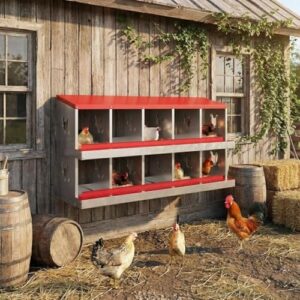
If you want a nesting box that’ll outlast your rooster’s bad attitude, GarveeLife’s metal setup is a solid bet. It’s built from hot-dipped galvanized steel with powder-coated panels, so rust and weather don’t stand a chance.
The multi-compartment layout keeps hens comfy without crowding, and that roof overhang keeps rain off the nests. Ventilation holes along the sides cut down humidity, which your birds will thank you for.
| Best For | Backyard hobby farmers and small-to-large poultry keepers who want a durable, low-maintenance nesting solution for chickens, ducks, geese, or rabbits. |
|---|---|
| Material | Galvanized steel |
| Compartment Count | 10 |
| Egg Collection Method | Roll-away |
| Mounting Options | Wall/elevated/floor |
| Weather Resistance | Rust-resistant |
| Assembly Required | Yes |
| Additional Features |
|
- Roll-away egg collection system with a gentle tilt significantly reduces egg breakage
- Heavy-duty galvanized steel construction resists rust and holds up well outdoors
- Integrated ventilation holes keep the nesting area cool and dry, supporting better hen welfare
- Requires manually adding padding under the lid to fully protect eggs from breakage
- Dimensions (53.54” L x 16.93” W x 26.57” H) may not fit every existing coop layout
- Assembly takes time and requires carefully following instructions with included hardware
2. Two Compartment Roll Away Nesting Boxes
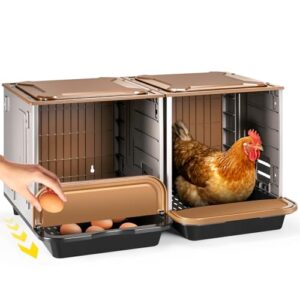
If steel isn’t your priority but egg protection is, this two-compartment setup earns its keep. The roll away trays slope forward, guiding eggs into a collection zone the second they’re laid, so hens can’t peck or crush them.
Each compartment gets its own front access, which keeps things tidy for cleaning and cuts down on squabbling between hens. Ventilation holes and drainage keep moisture from building up, and at 8.62 pounds, it’s light enough for wall-mounting without a fuss.
| Best For | Backyard chicken keepers with medium to large hens who want an easy, indoor roll-away system for cleaner, better-protected eggs. |
|---|---|
| Material | Plastic |
| Compartment Count | 2 |
| Egg Collection Method | Roll-away |
| Mounting Options | Wall/horizontal/vertical |
| Weather Resistance | Rust-proof |
| Assembly Required | Yes |
| Additional Features |
|
- Sloped roll-away trays move eggs to a collection area right away, keeping them safe from pecking and crushing
- Separate front access on each compartment makes cleaning simple and reduces hen competition
- Lightweight at 8.62 pounds, so wall-mounting is easy without extra reinforcement
- Indoor use only, so it won’t work for open-air or outdoor coops
- Plastic construction may not hold up as long as steel alternatives
- Requires some initial setup for wall-mounting or drill-free placement before use
3. Metal Three Hole Chicken Nesting Boxes
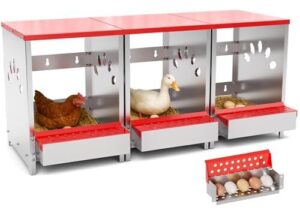
Rust resistance for the long haul is what this three-hole box brings to the table. It’s built from galvanized steel, so it’ll shrug off outdoor weather season after season without flaking apart like a cheap coop add-on.
Each of the three compartments has its own hinged lid, which makes cleaning or egg pickup quick work. A removable bottom tray cuts your sanitation time way down, and side ventilation keeps humidity from turning your nesting area into a swamp.
| Best For | Backyard chicken keepers with small-to-medium flocks who want a durable, low-maintenance nesting solution that can handle outdoor exposure year-round. |
|---|---|
| Material | Alloy steel/metal |
| Compartment Count | 3 |
| Egg Collection Method | Roll-away |
| Mounting Options | Wall mount |
| Weather Resistance | Predator resistant |
| Assembly Required | Yes |
| Additional Features |
|
- Galvanized steel construction resists rust and holds up to repeated outdoor use
- Roll-away egg collection and a tilted design help keep eggs clean and unbroken
- Ventilated, wall-mountable build supports dryness and flexible installation
- Each compartment only fits 3-5 hens, so larger flocks will need multiple units
- Requires assembly and secure wall or beam mounting before use
- At nearly 17 pounds, it needs a sturdy mounting surface to stay stable
4. Durable Poultry Nesting Boxes Orange
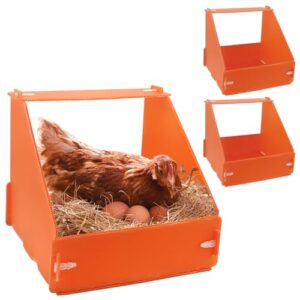
If you want your hens’ nests to stand out and last, these orange poultry boxes are a smart pick. Their bright powder-coated finish means you’ll never miss them, and it holds up against sun and rain.
Each box has three roomy compartments, sturdy galvanized steel, and top vents to keep things dry. Hinged lids and secure latches protect eggs, while modular units make scaling up for bigger flocks easy.
Cleaning is simple—just pop out a compartment and wash.
| Best For | This nesting box is best for small backyard chicken keepers who want a lightweight, easy-to-set-up option that encourages hens to lay comfortably. |
|---|---|
| Material | Polypropylene |
| Compartment Count | 1 |
| Egg Collection Method | Manual |
| Mounting Options | Velcro attach |
| Weather Resistance | Durable poly |
| Assembly Required | No tools |
| Additional Features |
|
- Bright orange color helps stimulate egg production
- Soft, durable polypropylene protects laying poultry
- Quick, tool-free assembly in about a minute
- Relies on Velcro for stability, which may loosen over time
- Compact dimensions may not suit larger poultry breeds
- Needs regular cleaning to stay sanitary
5. Wooden nesting boxes for chickens
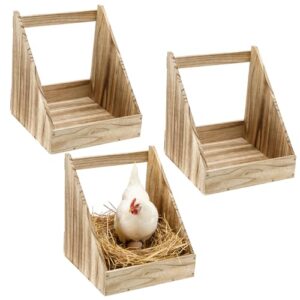
Nothing beats plain solid wood when you want a nest that feels like home to your hens. Pine or cedar boxes resist decay for five to seven years with regular cleaning, and that natural insulation keeps things comfortable no matter the season.
Whatever material you choose, getting the right nesting box height from the ground matters just as much for keeping hens comfortable and eggs rolling smoothly into their tray.
Sloped tops shed rain, side vents fight moisture, and a front door makes egg collection easy peasy. Just seal the wood with a non-toxic finish, reapply every year or two, and you’ve got a nest box that’ll outlast most trends in your coop.
| Best For | Owners of large chicken breeds who want a secure, comfortable, and easy-to-access nesting solution for their coop. |
|---|---|
| Material | Paulownia wood |
| Compartment Count | 3 |
| Egg Collection Method | Open-back manual |
| Mounting Options | Wall/table/floor |
| Weather Resistance | Weatherproofing needed |
| Assembly Required | Yes, screwdriver |
| Additional Features |
|
- Solid Paulownia wood construction offers natural insulation, keeping hens comfortable in both summer and winter
- Open-back design makes egg collection and pest inspection quick and stress-free for hens
- Flexible mounting options let you install the boxes on walls, tables, or coop floors to fit your space
- Requires manual assembly, and a power screwdriver isn’t included
- At 0.4 inches thick, the wood may be less durable than heavier-gauge builds over time
- Suitability for indoor or outdoor use depends on your specific coop setup, so some planning is needed
6. Six Compartment Wooden Chicken Nesting Boxes
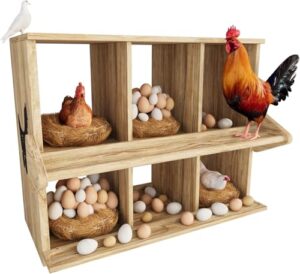
Six hens, six private rooms, zero squabbling over who called dibs. This wooden unit gives each bird her own dip-and-perch space, so egg-laying stays calm instead of a barnyard shouting match.
Built from solid fir, it stands up to rain and sun without warping, and dividers between compartments cut down on cross-traffic and broken shells. A hinged front panel means you’re not army-crawling to grab eggs.
| Best For | Backyard flocks of six hens (chickens, ducks, quails, or pigeons) needing separate, private nesting spots for calm, low-stress egg-laying. |
|---|---|
| Material | Solid wood |
| Compartment Count | 6 |
| Egg Collection Method | Manual with baffles |
| Mounting Options | Floor/stand/wall |
| Weather Resistance | Waterproof |
| Assembly Required | Yes |
| Additional Features |
|
- Six individual compartments with perches and baffles keep eggs from rolling and cut down on hen squabbles
- Solid wood construction is waterproof, weather-resistant, and easy to clean for both indoor and outdoor coops
- Hinged front panel makes egg collection quick and easy without disturbing the birds
- Only suited for small to medium poultry breeds, so larger birds may not fit comfortably
- At just over 18.75 pounds and 37 inches wide, it needs a sturdy, stable spot for floor, stand, or wall mounting
- Dimensions should be double-checked against your specific bird breed before purchase to ensure a proper fit
7. Wooden Portable Chicken Nesting Coop
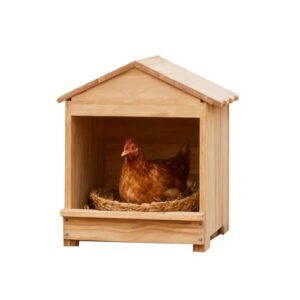
Ever wish your coop could just roll to greener grass on laundry day? This wooden portable model does exactly that, with built-in wheels for easy relocation around the yard.
The integrated nesting box sits right in the design, so you’re not bolting on extras. A removable tray underneath makes cleanup quick, and the weather-resistant finish experiences outdoor life without fuss.
Fold-down ramps on some models help hens climb aboard, and the frame’s weight distribution keeps things steady when you push it.
| Best For | backyard chicken keepers with limited space who want a simple, low-maintenance nesting box for a small flock. |
|---|---|
| Material | Natural wood |
| Compartment Count | 1 |
| Egg Collection Method | Manual raised platform |
| Mounting Options | Wall/floor stand |
| Weather Resistance | Needs weatherproofing |
| Assembly Required | Yes, hardware |
| Additional Features |
|
- Space-saving wall-mount or floor-stand setup fits easily into tight coop areas
- Detachable ramp and raised nesting platform make it easy for hens to access and use naturally
- Simple solid wood design allows for quick cleaning and hassle-free egg collection
- Compact size means only a few hens can use it at once
- Unfinished wood needs extra weatherproofing if kept outdoors long-term
- Wall installation requires proper hardware and can be tricky given the unit’s weight
8. ZenxyHoC Metal Nesting Box
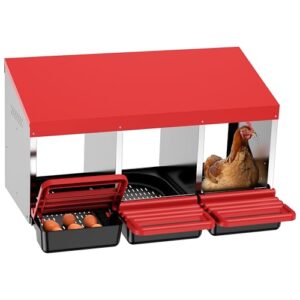
Three hens, three private doors — that’s the setup with the ZenxyHoC, and it keeps squabbles at the entrance to a minimum.
Each compartment gets its own rollout tray, so eggs slide out front without you reaching into the box. Galvanized steel and a powder-coated finish handle humid coops without rusting on you.
The swing perch gives hens a spot to roost, and reinforced divider walls stop pecking between neighbors. Mounting holes line up fast, so one person can hang it solo.
| Best For | Backyard chicken keepers with three hens who want clean egg collection and a wall-mounted box that saves floor space in the coop. |
|---|---|
| Material | Galvanized steel/plastic |
| Compartment Count | 3 |
| Egg Collection Method | Roll-away |
| Mounting Options | Wall mount |
| Weather Resistance | Rust resistant |
| Assembly Required | Yes |
| Additional Features |
|
- Slanted rollout trays let eggs collect safely without hens pecking or stepping on them
- Breathable side vents in each compartment help keep temperature and airflow in check
- Wall-mount design with pre-drilled holes frees up valuable floor space
- Requires a sturdy wall or surface to hang the box securely
- Galvanized steel can heat up in direct sunlight, which may bother hens in warm climates
- Rollout tray may need extra padding to prevent egg breakage during collection
9. Metal 4 Compartment Rollout Nesting Box
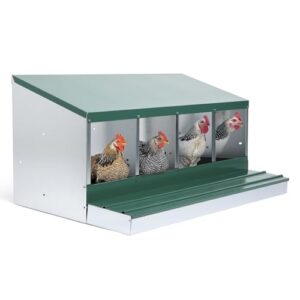
Four hens, four doors, zero drama — this one’s built for a slightly bigger flock without eating up more coop wall than it needs to.
Galvanized steel keeps things sturdy through rain and heat, and each compartment has its own rollout tray so eggs stay clean and crack-free. A single front lid protects all four nests at once, which makes daily collection quick — no fumbling with separate covers. Removable plastic trays wipe down in minutes, easy peasy.
| Best For | backyard chicken keepers with medium to large hens who want a durable, easy-to-clean nesting solution for a slightly bigger flock. |
|---|---|
| Material | Galvanized steel |
| Compartment Count | 4 |
| Egg Collection Method | Rollout/rollaway |
| Mounting Options | Not included hardware |
| Weather Resistance | Rot/rust resistant |
| Assembly Required | Yes |
| Additional Features |
|
- Galvanized steel construction resists rust, rot, and corrosion for long-term outdoor use
- Single protective lid covers all four compartments, making egg collection fast and simple
- Removable, washable plastic trays keep cleaning quick and hassle-free
- Mounting hardware is not included, so you’ll need to source it separately
- Assembly is required before use
- Mounting requirements can vary depending on where it’s installed, which may add extra planning
10. Three Compartment Rollaway Hen Nesting Box
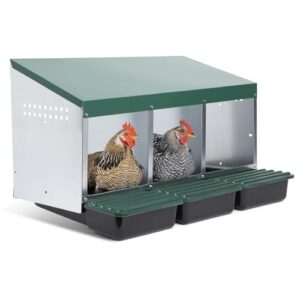
Rounding out our list, this box lets three hens lay at once without anyone squabbling over the good spot.
Eggs roll out to a protected collection tray outside the nest, so you’re not reaching past a broody hen just to grab breakfast. Galvanized steel holds up fine in the weather, and vents keep things from getting stuffy inside.
Sized right for 10 to 15 hens total, it’s a solid middle-ground pick — bigger than a two-holer, easier to mount than a four-door unit.
| Best For | Backyard chicken keepers with a mid-sized flock of 10 to 15 hens who want a durable, low-maintenance nesting solution that keeps eggs clean and hens from fighting over space. |
|---|---|
| Material | Galvanized metal/plastic |
| Compartment Count | 3 |
| Egg Collection Method | Rollout |
| Mounting Options | Pre-drilled holes |
| Weather Resistance | Weather resistant |
| Assembly Required | Yes |
| Additional Features |
|
- Rollout tray design automatically moves eggs to a protected collection area, reducing breakage and pecking
- Filtered tray base and vents help keep the nesting area clean and well-aired
- Galvanized steel construction is built to hold up against outdoor weather
- Requires assembly before use, which may take some time and tools
- Built specifically for outdoor setups, so it’s not ideal for indoor coops
- Only accommodates medium to large breed hens, not suited for smaller or bantam breeds
Choosing Rural Homestead Nesting Boxes

Picking the right nesting box comes down to more than just looks. You’ve got to think about materials, egg protection, and how it fits your coop setup. Let’s break down what actually matters before you buy.
Metal Versus Wooden Boxes
Deciding between metal and wood comes down to your climate and how much upkeep you’re willing to do.
- Metal nesting boxes resist dents, rot, and pests
- Wooden crates insulate better, keeping eggs from temp swings
- Metal fights rust in wet climates; wood needs sealing
- Wood stays cooler in heat; metal can get hot
- Metal cleans easier, but wood cushions eggs gently
Research shows that species preference patterns vary a lot between these two materials.
Roll-away Egg Protection
Once you’re set on your material, think about how the eggs actually land. Rollaway nest boxes use a gentle slope angle (7-15 degrees) so eggs roll into a hidden tray, away from pecking hens.
| Feature | Benefit |
|---|---|
| Slope | Smooth roll |
| Hidden tray | Egg protection |
| Removable tray | Easy cleaning |
| Smooth track | Fewer shell cracks |
| Enclosed design | Less pecking |
Weather-resistant Coop Materials
Sloped trays only help if the whole coop keeps weather out. Galvanized steel and fiber cement siding shrug off rain for decades without warping. Pair that with a metal roof and good eaves, and moisture stays outside where it belongs.
Add rigid foam insulation and hardware cloth vents, and your nesting boxes stay dry, mold-free, and comfortable through every season.
Portable Coop Compatibility
If your coop rolls, your nesting boxes need to roll with it. Check wheel stability on soft ground, hitch attachment to your ATV or truck, and frame folding for shed storage.
Handle ergonomics matter too — you shouldn’t strain hauling it. Good poultry equipment and coop accessories keep chicken nesting boxes secure through every bumpy move across pasture.
Small Flock Sizing
Six to eight hens covers most backyard egg goals, but your box count depends on flock purpose, not just headcount.
One box per 4-6 hens keeps competition low for small-medium sized hens. Quick sizing guide:
- Eggs only – 4-8 hens, 1-2 boxes
- Meat birds – skip nesting boxes entirely
- Mixed flock – size for layers only
Scaling later? Choose nesting box designs that add on easy.
Nesting Box Size and Placement

Size and placement matter just as much as the box itself. Get either one wrong, and your hens will let you know by laying eggs anywhere but where you want them. Here’s what you need to know before you pick a spot and start measuring.
Standard Hen Box Dimensions
A 12 by 12 by 12 inch box fits most standard hens comfortably. Give her room to turn around without feeling like she’s rattling in a shoebox.
Keep the floor smooth and free of protrusions, since sharp edges or bolts can cause injury.
Don’t forget a 4-inch front lip to hold bedding and eggs in place.
Simple, sturdy, done.
Large Breed Requirements
Big girls need big houses. Brahmas and other heavyweight breeds do best with a 14 by 12 by 12 inch box, plus 18 inches of interior clearance so heads don’t bump the roof.
- Give each bird real turning space
- Keep density to 2 birds per box
- Choose heavyweight, warp-resistant materials
Skimp on size and you’ll find eggs laid on the floor instead.
Bantam Nesting Needs
Little birds need little boxes — a 10 by 10 by 10 inch nest suits bantams just fine, since anything bigger just feels unsafe to them.
Aim for one box per 3 to 4 hens, add 2-3 inches of shavings for egg cushioning, and keep perches low around 2-3 feet. Good ventilation matters too, so moisture doesn’t build up in these smaller, cozier setups. Low roosts keep short-legged bantams safe and steady overnight.
Ideal Mounting Height
Get the height right, and you’ll save your back and your eggs. Aim for 12 to 18 inches off the coop floor, right at belt level for easy collection.
That range also keeps nesting boxes above mud and moisture, discourages rodents, and still lets you reach in for quick cleaning without bending double every single day.
Quiet Corner Placement
Ever notice how your hens go quiet right before laying? That’s your cue. Tuck nesting boxes in a low-traffic corner, away from doors and feeders, for real stress reduction.
When hens go quiet, that’s their cue for a calm, low-traffic corner away from doors and feeders
Indirect lighting and acoustic dampening (a burlap curtain works!) keep things calm. Dark corners also act as natural rodent deterrents—good for hen comfort and easier chicken coop management overall.
Bedding, Cleaning, and Egg Safety

A good nesting box is only half the battle, what you put inside it matters just as much. You’ll want to know what bedding keeps things clean, how to stop cracked eggs, and when to break out the scrub brush. Here’s what you need to keep your hens happy and your eggs safe.
Safe Poultry Bedding Options
Pick your bedding like you’d pick a mattress—comfort and dryness matter most. Absorbent material benefits show up fast with pine or hemp shavings, both low-dust and cozy for nesting material.
- Aspen shavings (low dust)
- Hemp bedding
- Recycled paper
- Kiln-dried pine
- Straw (refresh often)
Avoid cedar resins—they irritate lungs. Good dust control strategies and regular moisture content monitoring keep chicken coop hygiene solid, whatever substrate for poultry you choose.
Moisture Control Liners
Even with good bedding, moisture sneaks in and causes clumping. That’s where moisture control liners earn their keep—cutting moisture vapor transmission by 60% or more.
Form-fit designs hug your nest box, closing air gaps. Multi-layer polyethylene structures add real humidity resistance.
Install liners snugly and check closures often, since sloppy fitting invites moisture ingress and undoes all that coop hygiene work.
Dropping Prevention Tips
Liners solve moisture, but droppings need their own game plan. A spatter shield around the box opening stops mess before it starts, and a two-box rotation lets one nest rest while the other stays in use.
- Install spatter shields
- Rotate two boxes weekly
- Use removable liners
- Watch for repeat offenders
Deep Cleaning Schedule
Rotating boxes helps with daily mess, but every so often you need to go deeper. Wipe surfaces down with a 10 percent bleach solution or diluted vinegar, quarterly, to keep coop sanitation on track.
| Season | Focus |
|---|---|
| Spring | Mold check |
| Summer | Dust control |
| Fall | Bedding swap |
| Winter | Ammonia watch |
Logging each session keeps your poultry bedding routine honest and prevents cross-contamination.
Cracked Egg Reduction
Cracked eggs cost you money, plain and simple, so let’s fix that. Calcium-rich layer feed boosts shell strength up to 15%. Keep coop humidity between 50-70% and light nesting areas well.
- Collect gently
- Use padded liners
- Avoid stacking eggs
- Check nests daily
Good nest box design with sloped floors preserves shell elasticity and cuts cracks fast.
DIY Homestead Nesting Box Alternatives
You don’t need to spend a fortune to give your hens a good nesting spot. Plenty of homesteaders make do with items already sitting around the house or garage. Here are five DIY options worth trying before you buy anything new.
Five-gallon Bucket Nests

Five-gallon buckets make surprisingly cozy nests! Mount one with sturdy bucket mounting hardware, add a custom vent for airflow, and line it with a textured liner to stop egg rolls. Stick to food grade materials and UV resistant plastic if it’ll sit near sunlight. It’s a cheap, clever chicken nesting box idea using stuff you’ve probably got lying around.
Milk Crate Nest Boxes
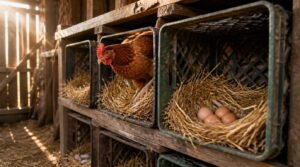
Milk crates work great as upcycled nesting boxes—turn one on its side, add 2-3 inches of straw for egg cushioning, and you’re set.
- Stack crates in a frame for a multi-hen station
- Add custom lids to block stray droppings
- Sanitize with soap and water, air dry fully
Their plastic durability beats wood for resisting rot and pests in your DIY chicken coop.
Repurposed Cupboards and Shelves

Got an old cupboard sitting around? Don’t haul it to the dump. Pull the doors off for cabinet door shelves, or gut a wardrobe panel for sturdy compartments.
Builtin module reuse works too—just cut shelves down to size. These repurposed household items make a solid, upcycled chicken nesting box design, and your hens won’t know the difference between store-bought and DIY chicken coop charm!
Old Mailbox Egg Access

Old mailboxes make a clever egg-access point—mount one waist-high on the coop wall, and hens lay right through the door while you collect from outside. Weatherproof the seal to keep rain out, add a small tray to catch eggs, and check that mounting hardware is solid to block rodents. Simple, sturdy, and downright neighborly reuse.
Low-cost Plywood Boxes

Why buy boxes when a scrap sheet of plywood builds four? Plywood grade selection matters most for cost—softwood works fine for light loads in lowcost coop builds.
- Sheet thickness impacts price and waste
- Simple butt joints cut labor time
- Hardware adds 8-15% to totals
- Weatherproof finishing extends outdoor life
Homemade boxes with basic screws mean easy field repairs. Easy peasy, and your wallet thanks you.
Frequently Asked Questions (FAQs)
What can I use instead of a nesting box?
Picture a cozy hideaway your hens would happily tuck into.
Five-gallon buckets, milk crates, and kitty litter containers all work great. Ground nests, plastic baskets, and even natural cavities give budget-minded flock owners plenty of low-cost, portable options.
How far off the ground can nesting boxes be?
For chicken coops, mount boxes 18 to 20 inches off the floor, keeping them lower than roosting bars. This height deters rodents, keeps ground clearance clear for airflow, and still gives hens easy, low-hassle access for daily egg collection.
What are the disadvantages of nest boxes?
Downsides include predator attraction risks, temperature swings, and pathogen spread.
Poor ventilation causes ammonia buildup and respiratory damage.
Regular cleaning, dust-extracted bedding, and liners help, but maintenance labor demands stay real—skip upkeep, and problems multiply fast.
What are some common nesting box mistakes?
Common mistakes include poor ventilation, which traps moisture and promotes mold, wrong hole size that blocks or invites unwanted birds, neglecting cleaning, using unsuitable bedding, and bad placement near predators or noisy spots, risking egg collection.
How many hens can share one nesting box?
Three to five hens per box works well since they lay in shifts, not all at once. Watch flock behavior—bigger breeds need more room, and frequent egg breakage or squabbling means it’s time to add another box.
Can nesting boxes work for ducks, not just chickens?
Not exactly a one-size-fits-all setup. Ducks need wider entry holes, extra moisture management, and even a duckling exit ladder near water.
Regular chicken boxes work in a pinch, but true duck nesting behavior favors roomier, wetland-adjacent digs.
What time of year should nesting boxes go up?
Late winter to early spring works best, right before breeding season kicks in. Southern flocks should have boxes ready by February, while northern setups can wait until mid-March, giving hens time to settle before egg laying starts.
How do you keep rodents out of nesting boxes?
You’ll never fully outsmart a determined rat, but you can make life hard for them. Sealing entrance gaps with steel wool and caulk, choosing rodent-proof material, and running quick perimeter checks weekly keeps most critters looking elsewhere for dinner.
Should nesting boxes be placed above or below roosting bars?
Below roosts, always. Roosting height importance matters here — hens instinctively pick the highest perch to sleep, so boxes 12-24 inches lower keep them laying, not roosting overnight, which protects egg cleanliness and prevents messy contamination.
Conclusion
A hen lays roughly 300 eggs a year, and that’s 300 chances for a cracked shell if your setup’s sloppy. Good nesting boxes for rural homesteads turn that math in your favor—fewer messes, healthier hens, calmer mornings.
Whether you build from scrap wood or buy a roll-away metal unit, the goal stays the same: a clean, safe spot your girls actually want to use. Get that right, and the rest of homesteading feels a whole lot easier.
- https://audreyslittlefarm.com/chicken-nesting-boxes
- https://backyardpoultry.iamcountryside.com/coops/best-nest-box
- https://overezchickencoop.com/blogs/from-the-chicken-coop/why-coop-hygiene-matters-more-than-you-think
- https://thriftyhomesteader.com/chicken-nesting-boxes
- https://georgiawildlife.com/out-my-backdoor-what-makes-great-nest-box