This site is supported by our readers. We may earn a commission, at no cost to you, if you purchase through links.
A raccoon can empty a full feeder in one night. It doesn’t just eat the seed—it bends metal, snaps hooks, and leaves the whole thing in pieces on your lawn.
Squirrels aren’t much gentler. They chew through plastic ports and leap distances that seem impossible for their size.
That’s why you need more than a pretty feeder hanging from a hook. You need a real plan to protect bird feeders from predators, one that covers the right equipment, smart placement, and habits that keep unwanted visitors away for good.
Table Of Contents
- Key Takeaways
- Choose Predator-Resistant Bird Feeders
- Place Feeders Beyond Predator Reach
- Add Baffles and Physical Barriers
- Reduce Predator Attractants Nearby
- Maintain a Safer Feeding Station
- Frequently Asked Questions (FAQs)
- Do bird feeders attract predators?
- What is the 5 7 9 rule for bird feeders?
- Why should you sprinkle coffee grounds around your bird feeder?
- Why put a potato in your bird feeder?
- Do ultrasonic deterrents actually work on cats?
- Can reflective tape really scare away hawks?
- Are hot pepper seed blends safe for birds?
- How much does a seed tray reduce rodents?
- Conclusion
Key Takeaways
- Choose predator-resistant feeders with metal cages, weight-activated ports, and dome guards to physically block raccoons and squirrels from reaching seed.
- Follow the 5-7-9 rule—5 feet high, 7 feet from structures, 9 feet below branches—to keep feeders out of climbing and jumping range.
- Add baffles and barriers like cone guards for squirrels, long baffles for raccoons, and stovepipe guards for snakes to reinforce feeder placement.
- Keep the feeding area clean and well-maintained by clearing spilled seed, storing seed in metal bins, and inspecting feeders regularly to remove predator attractants and damage.
Choose Predator-Resistant Bird Feeders
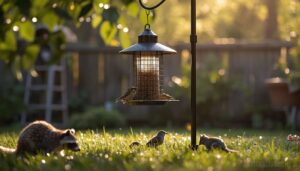
The right feeder does most of the work for you. Some designs simply keep raccoons, squirrels, and cats from ever reaching the seed. Here’s what to look for before you buy one.
For extra backup, pairing a squirrel-proof feeder with proven tricks to keep raccoons away from your bird seed makes your setup nearly foolproof.
Metal Cage Feeder Designs
Think of a caged feeder as a suit of armor for your birdseed. Small aperture cages let finches in but block squirrels out. Look for:
- 14-18 gauge steel
- Stainless steel for coastal resistance
- Powder coated aluminum, lighter option
- Welded joints for strength
- Anti-chew coatings on edges
These metal wire constructions provide a durable, chew-proof surface that helps deter squirrels.
Corrosion resistance matters most in humid climates, so choose wisely.
Weight-activated Seed Ports
A weightactivated perch senses squirrels instantly, closing the port before they feed.
| Feature | Function | Benefit |
|---|---|---|
| Port calibration | Sets trigger weight | Blocks squirrels |
| Rapid response | Closes in seconds | Predator proof |
| UV housing | Resists sun damage | Longer lifespan |
Impact resistant materials keep this bird feeder squirrel proofing tough through seasons of use.
Chew-proof Feeder Materials
A calibrated port only works if teeth can’t wreck it first. Look for stainless steel corrosion resistance in caged feeders, plus powder coated durability on metal poles.
- Polypropylene with UV stability resists cracking
- Stainless steel resists rust and gnawing
- Composite bite resistance stands up to squirrel teeth
- Hardwood sealant efficacy blocks moisture damage
Combined, these materials keep your setup predator proof for years.
Dome and Spinning Guards
Dome-shaped tops shield seed ports from above, keeping raccoons and larger birds from reaching in. Spinning devices add another layer, rotating when squirrels grip on and knocking them off balance.
Look for weatherproof mounting hardware and UV-stable materials built to last outdoors. Together with squirrel baffles, these guards give you real predator protection while keeping visibility clear enough to spot trouble early.
Small-bird Access Openings
Size matters more than you’d think. Best hole sizes run about 1 1/8 to 1 1/2 inches, letting chickadees or bluebirds in while blocking bigger birds.
If you’re aiming for a specific species, this guide to attracting birds with the right nesting box features breaks down hole sizes and placement tips in detail.
Smooth entrance edges protect wings during entry, and preventing entrapment risks keeps small feet safe. Color contrast helps birds spot openings fast.
Match hole size to your target species using tube feeders, hopper feeders, or metal cages for a truly predator proof bird feeder.
Place Feeders Beyond Predator Reach
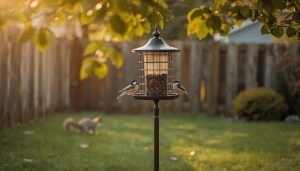
A predator-resistant feeder only works if you put it in the right spot. Location matters just as much as the cage or dome you chose. Here’s where to place your feeder for the best protection.
Keep Distance From Trees
Trees look harmless, but they’re basically a predator highway. Squirrels and raccoons use trunks and branches as launch pads, so keep feeders 10 feet from any tree. Watch for canopy gaps and branch ambush points too. This spacing also protects against wind gusts, root growth issues, and seasonal debris:
- Fallen leaves and nuts
- Overhanging branch drops
- Shade-hidden predators
- Snapped limb debris
- Root-heaved footings
Raise Feeders Five Feet
Height does more work than most people expect. Placing feeders five feet above ground puts seed ports beyond easy reach for raccoons, cats, and other ground predators.
This elevation also boosts surveillance—birds spot danger sooner and escape faster. Approaching from multiple angles keeps birds safe, since predators can’t strike from the sides. It’s a simple, effective form of ground predator deterrence.
Avoid Fences and Structures
Fences look harmless, but they’re launch pads for hungry climbers. Squirrels and raccoons use nearby structures to leap straight onto your feeder, skipping ground defenses entirely.
Keep feeders 10 feet from fences, walls, or trees. This closes off ambush zones and blocks climbing predator pathways, giving birds open space and real protection.
- Fences
- Walls
- Sheds
- Tall trees
- Trellises
Follow The 5-7-9 Rule
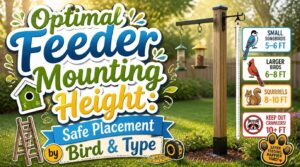
Want a shortcut that covers every angle at once? Try the 5-7-9 rule: place feeders 5 feet high, 7 feet from structures, and 9 feet below branches.
This combo blocks climbing, leaping, and dropping predators together. Test it in your backyard setup, then watch predator activity. Seasonal adjustments help too, since bare winter branches change ambush zones completely.
For a deeper dive into layout details like baffle sizing and safe mounting distances, check out this guide to setting up an optimal backyard feeding station.
Reduce Window Collision Risks
Glass can be as deadly as any predator. Window strikes kill birds who see reflected sky or trees, not a barrier.
Glass can kill like a predator—birds see sky and trees reflected, never the barrier itself
Add effective window patterns like dots or stripes spaced close together outside your glass. UV decorative films work too, staying invisible to you but visible to birds. Exterior screen benefits include lasting durability. Adjust nearby landscaping, then use collision monitoring methods to confirm your bird-friendly space actually works.
Add Baffles and Physical Barriers
Feeders alone won’t stop every clever critter. You need physical barriers to back them up. Here are five options that actually work.
Cone Baffles for Squirrels

Picture a squirrel eyeing your feeder like a jungle gym. A cone baffle stops that leap cold. Wrapping around the pole, its wide diameter blocks climbing and reaching.
Mount it 4 to 5 feet up, with galvanized steel resisting rust and chewing. A locking collar keeps it snug—no slipping, no shortcuts for determined squirrels.
Long Baffles for Raccoons

Long baffles handle a heavier climber. Raccoons are stronger and smarter than squirrels, so you need a longer, slicker barrier—usually 28 inches, 6 to 8 inches wide.
- Fear of falling
- Frustration turning to retreat
- Relief for you, watching them give up
Galvanized or powder-coated steel keeps the surface slippery, blocking any grip and stopping reach-arounds cold.
Stovepipe Guards for Snakes
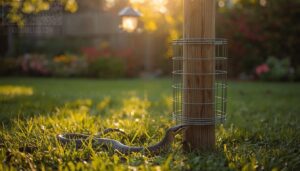
Snakes climb poles too, so an Ideal Guard Diameter of 8 inches blocks coiling. Galvanized Pipe Durability keeps surfaces slick and rust-free.
| Feature | Purpose | Standard |
|---|---|---|
| Diameter | Blocks coiling | 8 in |
| Length | Blocks reach | 24 in |
| Fit | Eliminating Squeeze Gaps | None allowed |
Smooth Surface Installation and Annual Guard Inspection keep this predator protection method working season after season.
Smooth Pole-mounted Barriers

Smooth pole-mounted barriers work above your snake guard, blocking climbers with a slick, low-friction coating instead of a fixed diameter.
The rounded cap prevents snags, while non-penetrating mounting protects your feeder from tipping.
Good designs look natural and preserve wind resistance and maintenance access.
- Slick coating
- Rounded cap
- Non-penetrating clamps
- Snag-free surface
Ground Fences for Cats

Cats stalk from cover, so your best defense is a low ground fence around the feeding zone.
These systems bury a boundary wire just below the soil and pair it with a cat-specific collar for gentle correction. Start with tone-only training, then expand coverage as your cat learns. Check wiring after storms, and never leave the collar on unsupervised. Combine this barrier with smart placement to block predator ambush zones and keep birds safe.
Reduce Predator Attractants Nearby
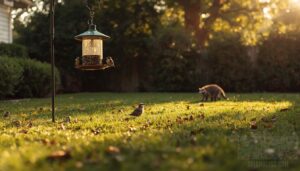
A predator-resistant feeder only does half the job. What surrounds your feeder matters just as much as the feeder itself. Here’s how to clear out the things that pull predators into your yard.
Clean Fallen Seed Quickly
A messy feeding zone practically invites trouble. Sweeping up spilled seed daily prevents seed germination and keeps pests away.
- Seeds sprouting into weeds
- Mold creeping into fallen hulls
- Rodents drawn to easy meals
- Disease spreading among visiting birds
Dry collected seed before disposal, then bag it. Quick cleanup, done consistently, protects both avian health and your yard’s overall balance.
Use Seed Catch Trays
Slide a seed catch tray under your feeder and watch spillage practically vanish. Trays cut fallen seed and reduce pest attraction, keeping rodents from turning your yard into a buffet.
| Feature | Benefit |
|---|---|
| Drainage holes | Prevents mold, standing water |
| Metal vs. plastic | Metal resists rust; plastic resists cracking |
| Clip-on design | Easy installation, no tools needed |
That’s preventative maintenance working quietly for you.
Store Seed in Metal Bins
Rodents love easy meals, and a bag of birdseed left out is exactly that. Store leftover seed in a sealed metal bin with an airtight lid to block moisture and pests. Metal resists chewing far better than plastic. Keep bins in a cool, dry closet, away from garages, for the best protection and easier feeder maintenance overall.
Avoid Dense Shrub Cover
Thick shrubs make perfect predator ambush zones, hiding foxes, snakes, and cats near your feeders.
Trim shrubs back to improve sightlines and boost bird vigilance. Managing understory density removes mesopredator hiding spots and opens escape routes.
This kind of habitat management helps with smarter feeder placement, giving birds clear views and safer feeding conditions all around your yard.
Space Feeders Safely Apart
One busy feeding station can turn into a predator hotspot fast. Crowding feeders together raises disease transmission risks and pulls in more wildlife foraging patterns than your yard can handle safely.
Give each feeder its own space when planning your backyard layout. This kind of strategic feeder placement breaks up predator ambush zones and keeps your bird feeder predator proof setup working the way it should.
Maintain a Safer Feeding Station
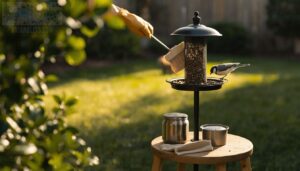
A predator-resistant feeder only works if you keep it that way. Regular upkeep keeps pests away and stops small problems before they grow. Here’s what a safer feeding station routine looks like.
Clean Feeders Regularly
Dirty feeders attract more than birds—they invite mold and avian pathogens that spread disease fast.
Stick to a regular cleaning schedule: every two weeks normally, weekly in wet seasons. Nectar feeders need attention every 2-3 days in heat. Always dry parts fully before cleaning and refilling.
This simple habit cuts disease transmission and keeps your feeding station safe year-round.
Disinfect With Safe Solutions
Scrubbing isn’t enough on its own—you need an EPA registered disinfectant to kill avian pathogens. Citric acid works well and won’t irritate skin.
Follow label dilution ratios exactly, and choose biodegradable, unscented formulas when you can. Wear gloves as PPE, keep surfaces wet for the required contact time, then rinse before refilling. This step matters most for disease prevention.
Inspect for Feeder Damage
A clean feeder still needs a close look for housing crack detection and weak spots. Check mounting bracket stability, seals, and hinges for wear.
Run a quick corrosion assessment on metal parts, then confirm fastener tightness verification throughout. Small cracks or loose bolts turn a predator proof bird feeder into an easy target—so catching damage early keeps your protective accessories doing their job.
Adjust Placement After Sightings
Spotting a predator near your feeder is a signal to act, not just watch. Move the feeder to a new spot, increase distance from cover, and recheck escape routes.
Track patterns over a week’s sightings before settling on a permanent location. Seasonal shifts matter too—raptor migration calls for extra distance. Document each change so you can spot what’s working.
Use Humane Deterrents Only
Predators deserve caution, not harm. Choose non-lethal deterrents like decoys, motion lights, or scent sprays over anything that traps or injures.
Rotate your methods often, since animals grow used to the same trick fast—that’s habituation at work. Pair sensory tools with seasonal monitoring, and you’ll keep both birds and unwanted visitors safe while protecting your feeder for the long run.
Frequently Asked Questions (FAQs)
Do bird feeders attract predators?
Yes, feeders do attract predators. Predictable food sources mean predator density increases nearby, drawing raccoons, cats, and hawks. This raises nestling predation risks for backyard birds, since these hunters treat feeders as easy hotspots for scavenging and ambush.
What is the 5 7 9 rule for bird feeders?
This simple formula keeps feeders safe from ground predators and jumpers.
Set feeders five feet high, seven feet from structures, and nine feet below branches. That vertical clearance and horizontal jump distance combo makes bird feeder placement genuinely predator-proof, without guesswork.
Why should you sprinkle coffee grounds around your bird feeder?
Ants avoided, soil enriched, moisture held, ground pests discouraged—coffee grounds pull real weight.
This scent-based deterrent adds nitrogen for nearby plants and helps with pest control naturally.
Apply a thin, safe layer away from perches for effective, humane wildlife protection.
Why put a potato in your bird feeder?
Cooked potatoes give birds a quick carbohydrate energy boost plus vitamin C, especially helpful in winter. Crows and songbirds both show interest. Cut pieces small, cool before serving, and skip raw or salted potatoes to keep the treat safe.
Do ultrasonic deterrents actually work on cats?
Sound scares them, yet silence doesn’t guarantee safety. Ultrasonic frequency ranges disrupt resident cats most, cutting visits by half, but habituation risk grows over time.
Check battery life often, since weak signals fail fast and stubborn cats simply wait them out.
Can reflective tape really scare away hawks?
Yes, but only somewhat. Glare causes hawk visual disruption, briefly startling them. Prismatic tape works best, though habituation risk is real. Pair it with other deterrent strategies for real bird feeder predator proofing.
Are hot pepper seed blends safe for birds?
Worried spice might hurt your feathered visitors? Birds don’t sense capsaicin, so low-level pepper blends are generally safe.
Keep concentrations mild, watch for digestive upset, and never let spicy mixes replace balanced seeds like sunflower or millet.
How much does a seed tray reduce rodents?
A seed tray under your feeder can cut rodent foraging by around 42%. It traps spillage before it hits the ground, removing the scent trail rodents follow. Less spilled seed means fewer ground predators lurking near your feeding station.
Conclusion
Somewhere out there, a raccoon is testing your fence, waiting for one slip. Don’t give it the chance.
Every baffle, every clean patch of ground, every raised pole works together to protect bird feeders from predators who never stop looking for an opening.
This isn’t a one-time fix. It’s a habit you build, season after season. Stay consistent, stay watchful, and your feeder becomes something predators simply learn to leave alone.
- https://duncraft.com/collections/squirrel-proof-bird-feeders
- https://growitbuildit.com/bird-feeder-squirrels-deer
- https://www.perchme.com/blogs/birdfeeders/squirrel-proof-bird-feeder-pole-guide
- https://www.fernsfeathers.ca/main-blog/squirrel-proof-bird-feeder-strategies
- https://bearwise.org/keep-bears-out/electric-fencing-deters-bears