This site is supported by our readers. We may earn a commission, at no cost to you, if you purchase through links.

Most bird feeders go unused — not because the birds aren’t there, but because the feeder is in the wrong spot. A poorly placed station can sit full for weeks while a thrush or finch scouts the area, decides something feels off, and moves on. Birds are far more attuned to their surroundings than most people give them credit for.
Feeder placement shapes everything: which species visit, how often they return, and whether your yard becomes a reliable stop on their daily circuit. Small decisions — five feet this way, ten feet from that shrub — make a measurable difference. Getting those details right is where the real results live.
Table Of Contents
Key Takeaways
- Place feeders either within 3 feet or beyond 30 feet of windows — the 3-to-10-foot range is where most fatal bird strikes happen.
- Position feeders 10 to 15 feet from trees or shrubs so birds get clear sightlines to spot predators while still having quick access to cover.
- Match feeder height to the species you want: tube feeders at 5 feet for finches and chickadees, suet feeders at 5–7 feet for woodpeckers, and hummingbird feeders at 4–6 feet to align with natural flight paths.
- Clean seed feeders every two weeks and sanitize hummingbird nectar feeders every 3 to 5 days in summer, since mold and fermented nectar spread disease quickly through local bird populations.
Choose a Quiet, Trusted Spot
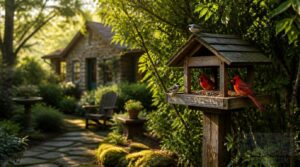
Birds are creatures of habit, and they notice disturbance more than most people realize. Where you place your feeder matters just as much as what you put in it — a spot that feels safe and predictable will draw far more consistent visitors than one full of surprises. Here are the key location factors worth thinking through before you hang anything up.
Thinking through those factors carefully pays off, and this guide to feeding wild birds walks you through the details that make the biggest difference.
Low Foot Traffic Areas
Birds are creatures of habit, and they’ll abandon even a well-stocked feeder if the surrounding area feels unpredictable. Quiet corner privacy matters more than most people expect.
Pick spots that see fewer than 10 visitors per hour. Good candidates include:
- Back corners of the yard, away from main pathways
- Edges beside fences or hedges with minimal daily foot traffic
- Areas you don’t regularly cross during morning routines
Reduced visitor interaction lets birds build genuine confidence in the space over time.
Away From Noisy Equipment
Foot traffic isn’t the only disturbance that keeps birds away. Lawn mowers and power tools within 30 meters push them off entirely.
| Equipment Type | Recommended Distance |
|---|---|
| Lawn mowers | 30+ meters |
| Power tools | 30+ meters |
Mount your bird feeding station on a freestanding pole with anti-vibration pads underneath — solid mounting reduces resonance that unsettles feeding birds noticeably.
Calm Morning Activity Zones
Noise equipment aside, human routines matter too. Early mornings — roughly 5 to 8 AM — are peak feeding windows, so placing your bird feeding station away from high-traffic household zones gives birds the undisturbed calm they need.
Keep that area between 68 and 72°F where possible, with soft natural light and minimal movement nearby to support relaxed, consistent backyard birdwatching.
Clear Bird Approach Paths
Timing matters, but so does the path birds take to reach your feeder. An unobstructed flight lane — free of hanging branches, garden stakes, or sudden structural edges — lets birds approach without last-second course corrections.
Think of it like a clear runway: landing zone visibility reduces hesitation, encouraging more confident, frequent visits rather than cautious flyovers that never quite land.
Place Feeders Safely Near Windows
Windows are one of the most overlooked hazards in a backyard setup — birds simply can’t distinguish glass from open air. Where you place your feeder relative to the nearest window actually matters more than most people realize. A few straightforward adjustments can make the difference between a safe feeding station and a dangerous one.
Within Three Feet
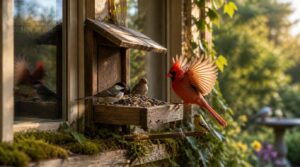
Placing your feeder within three feet of glass is one of the smartest collision risk mitigation moves you can make. At that distance, a bird simply can’t build enough speed to injure itself if it misjudges the surface.
You also get easy maintenance access — refilling and cleaning stay well within arm’s reach, making it easy to keep things sanitary without disrupting the feeding area.
Beyond Thirty Feet
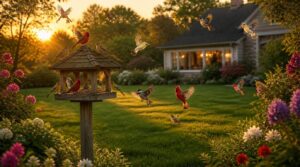
At the other end of the spectrum, positioning feeders more than 30 feet from glass gives birds enough airspace to recognize and avoid reflections before impact.
That buffer also creates a natural surveillance zone — birds can scan the yard calmly, spot threats early, and forage without the stress of nearby human movement disrupting their rhythm.
Avoid Collision Danger Zones
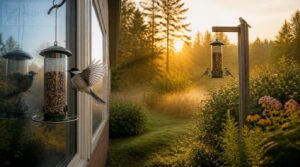
The 3-to-10-foot danger zone between glass and feeder is where most fatal strikes happen — birds build enough speed to cause serious injury on impact.
Avoid that range entirely:
- Under 3 feet limits flight momentum
- Beyond 30 feet allows reaction time
- Reflective glass masks open sky convincingly
- Bird feeder placement directly determines strike risk
Position feeders deliberately, not conveniently.
Add Window Markers
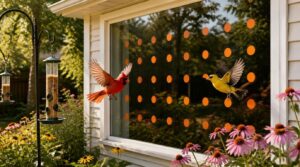
Window markers are one of the simplest tools you can add to your avian safety setup. Apply high-contrast vinyl decals — bright orange or white — to the exterior glass surface, spaced at the midpoint of each window segment.
UV-stabilized, matte-finish markers hold up for three-plus years without fading, and removable adhesive means no damage when you reposition them.
Reduce Glass Reflections
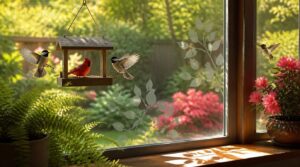
Glass acts like a mirror to birds — they see sky, not danger. Anti-reflective coatings cut external reflections down to roughly 1.3%, dramatically reducing window collisions.
Quick options that work:
- Glazing tint softens harsh reflections without blocking your view
- Sheer diffusion screens break up reflected light paths
- Indirect lighting reduces specular glare near feeder-facing glass
- Regular cleaning removes smudges that make dangerous reflections worse
Balance Trees, Shrubs, and Cover
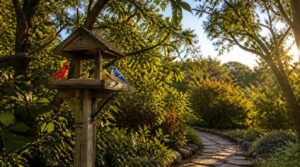
Where you place your feeder relative to trees and shrubs makes a real difference in how comfortable birds feel using it. The surrounding cover shapes everything from how quickly they can escape a hawk to whether a cat can sneak up undetected. Here’s what to keep in mind when choosing your setup.
Ten to Fifteen Feet Away
Positioning feeders 10 to 15 feet from trees or shrubs hits a practical sweet spot most backyard setups overlook. Birds get clear perfect viewing distances to scan for approaching threats, while still reaching cover quickly if needed.
Morning light reaches the feeder cleanly here, and the open corridor keeps foraging activity visible without crowding the surrounding vegetation. This spacing ensures that distance measurement interpretations remain clear for observing bird movement.
Nearby Escape Routes
That 10-to-15-foot buffer isn’t just about sightlines — it’s about giving birds somewhere to escape quickly. Quick retreats depend on:
- Hedgerow movement routes along property edges for concealed flight paths
- Dense cover like shrubs offering sudden retreats
- Creek bank pathways creating natural shelter corridors
- Natural terrain breaks that redirect fleeing birds safely
Without these, even a well-placed feeder becomes a trap.
Avoid Dense Hidden Foliage
Escape routes matter, but so does what surrounds the feeder. Dense foliage too close blocks your sightlines — and theirs. Shifting shadows confuse arriving birds, while hidden pockets behind leaves harbor pests and parasites that transfer directly to feed and feathers.
| Risk | Effect |
|---|---|
| Blocked airflow | Mold and seed spoilage |
| Shadow interference | Fewer bird arrivals |
| Pest harborage | Parasite transfer |
Thick, overgrown shrubs also hide approaching predators. Keep vegetation open so birds can spot threats early.
Open Sightlines for Safety
Birds are wary creatures — they won’t linger where they can’t see trouble coming. That’s why clear viewing angles matter as much as cover does. Aim for 15 to 25 feet of unobstructed space around the feeder so birds can scan for hawks and cats before landing. Open sight lines don’t just comfort them; they keep them alive.
Open sightlines don’t just comfort birds — they keep them alive
Brush Piles for Ground Birds
Sightlines help birds spot danger, but ground-dwelling species like sparrows and towhees need somewhere to bolt when it arrives. A brush pile positioned near your feeder station gives them exactly that.
Stack larger logs as a base, layer smaller branches on top, and leave the edges loose so birds can slip in and out quickly without crowding.
Pick The Right Feeder Height
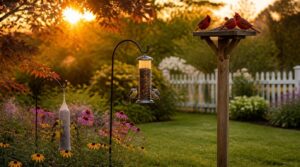
Height matters more than most backyard birders realize. Different feeders attract different species, and each one has a sweet spot that keeps birds comfortable and visits frequent. Here’s what to know about positioning each type at the right level.
Tube Feeders Five Feet
Tube feeders perform best when hung five feet off the ground — right in the mid-flight zone where chickadees, finches, and sparrows naturally cruise.
The cylindrical design lets seed flow downward by gravity, reducing waste, while evenly spaced ports cut down on crowding. Clear tubes let you monitor levels at a glance, and that accessible height makes cleaning straightforward enough that you’ll actually do it.
Suet Feeders Five to Seven
Suet feeders belong five to seven feet off the ground — a sweet spot that suits woodpeckers, nuthatches, and chickadees perfectly. That range matches their natural clinging posture on bark.
Three reasons this height works:
- Keeps suet cakes out of reach of ground predators
- Lets clinging birds grip vertically without awkward angles
- Makes swapping fresh suet blocks quick and easy
Hummingbird Feeders Four to Six
Four to six ports let multiple hummingbirds feed at once, cutting wait times and improving your backyard patio views. Hang your nectar feeder at four to six feet to match natural flight paths.
| Height | Benefit |
|---|---|
| 4 ft | Easy to clean |
| 5 ft | Aligns with flight paths |
| 6 ft | Reduces ground splash |
Mix 4:1 water to sugar — no red dye needed.
Ground Feeders Need Clearance
Ground feeders sit at surface level, which makes predator ambush points a real concern. Keep at least 3 feet of open clearance on all sides.
Seasonal clearance maintenance matters too:
- Trim surrounding vegetation each spring
- Clear ice and snow in winter
- Remove standing water after rain
- Sweep spilled seed weekly
- Rotate placement to confuse predators
Dense cover nearby invites trouble — keep sightlines open.
Keep Refills Easy
Height isn’t just about the birds — it’s about you, too. Tube feeders and hoppers mounted around five feet high hit a natural ergonomic sweet spot, letting you refill without crouching or stretching.
Use a platform feeder with a wide port to reduce spillage. Refill in the calm early morning, when birds are less likely to startle, and keep a brush nearby for quick cleanup.
Avoid Predator and Squirrel Access
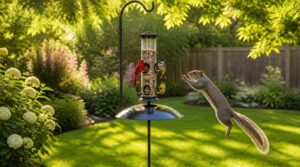
Even the best feeder placement can fall apart if squirrels and predators have an easy route in. Where you set up matters just as much as what you put out. A few positioning habits go a long way toward keeping your visitors safe and your feeder busy.
Seven Feet From Structures
Squirrels are remarkably athletic — they can leap up to seven feet horizontally from a fence post, wall, or shed edge. That’s why positioning feeders at least seven feet from any structure isn’t arbitrary; it genuinely cuts off their most reliable launch points.
Keep these placement priorities in mind:
- Measure seven feet from walls, sheds, and decks
- Account for overhanging eaves as potential drop zones
- Avoid corners where climbing predators gain easy grip
- Reassess placement seasonally as vegetation changes
Away From Fence Lines
Fence lines create natural ambush corridors — predators move along them unseen, and birds feeding too close don’t have enough clearance to spot threats early.
Keeping a three to four foot buffer from fence lines opens up sightlines and removes those hidden approach angles. It also makes routine cleaning far easier without disturbing your feeding station.
Block Squirrel Launch Points
If you’re serious about deterring squirrels, pay close attention to their launch points. Place sturdy barriers at least 2 meters tall behind potential springboards, like trees or sheds. Level and clear a 1.2-meter radius pad to keep the surface safe and predictable. Monitor launch direction and maintain restricted access during tests to protect both wildlife and curious pets.
- Tall, sturdy barriers block squirrel paths
- Level, non-slick ground prevents surprise launches
- Restricted buffer zones keep pets safe
- Launch direction markers help track activity
Watch for Outdoor Cats
Squirrel-proofing your setup won’t matter much if a cat is crouched beneath the feeder. Outdoor cats are skilled, patient hunters, and birds feeding close to the ground are easy targets.
GPS tracking collars and leash supervision can limit a neighboring cat’s range, while a catio keeps your own cat safely contained without curbing their outdoor instincts.
Use Open Viewing Angles
Positioning your feeder with a clear viewing cone from your window — ideally within ±30 to ±60 degrees off-center — means you’ll catch every arrival without craning your neck.
Matte glass or anti-glare film reduces reflection-based color shifts that can distort your view of visiting birds. The cleaner your sightline, the faster you’ll spot a hawk circling before the birds do.
Consider Sun, Shade, and Weather
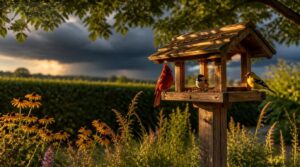
Where you place your feeder matters, but so does what’s happening around it — sun, shade, and wind all play a bigger role than most people expect.
The wrong spot can spoil seed in days, turn nectar into a sugary mess, or leave birds fighting gusty conditions just to grab a bite. Here’s what to keep in mind when reading the weather into your setup.
Choose Partial Shade
Dappled light — the kind that filters through a deciduous canopy — is genuinely ideal for feeder placement.
Track these four things before committing to a spot:
- Count direct sun hours daily
- Use a light meter app to confirm partial shade ranges
- Note seasonal light shifts when leaves drop
- Check soil moisture — shaded ground stays cooler and wetter
Three to five sun hours keeps seeds fresh without baking them.
Prevent Nectar Fermentation
Nectar turns fast. When temperatures climb above 80°F, microbial activity converts sugar into alcohol within days — sometimes hours. That’s why the 1:4 sugar-to-water ratio matters: less available moisture means slower fermentation.
Watch for cloudiness, bubbles, or a sour smell. Those are your cues to replace immediately and rinse hummingbird feeders thoroughly before refilling.
Reduce Seed Spoilage
Seed spoils faster than most people expect. Heat and humidity are the real culprits — triggering mold within days if conditions aren’t controlled.
Three habits keep birdseed mixes fresher longer:
- Store in airtight containers away from direct heat
- Target moisture levels below 10% using a hygrometer
- Refresh your bird feeder weekly with fresh seed
Humidity control and temperature stability dramatically slow deterioration in any wildlife gardening setup, and preventing seed mold starts long before seeds reach your feeder.
Shelter From Strong Winds
Wind rattles feeders and scatters seed. Leeward placement behind a house or windbreak cuts gusts noticeably — a straightforward habitat enrichment move in any wildlife gardening setup.
| Strategy | Wind Benefit |
|---|---|
| Leeward placement, house wall | Blocks direct gusts |
| Dense evergreen shelterbelt | Deflects prevailing wind |
| Porous windbreak nearby | Reduces turbulence |
| Gravel ground buffer | Stable after rain |
| Anchored post, guy wires | Resists storm sway |
Avoid Soggy Ground
Soggy ground beneath a feeder breeds mold, attracts rats, and discourages birds from visiting at all.
Yard grading methods that slope the surrounding soil gently away from your setup prevent pooling after heavy rain. A gravel path around platform feeders improves drainage fast. For persistent wet spots, French drain installation channels water deeper into the soil where it can’t cause problems.
Match Locations to Bird Species
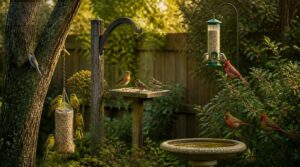
Not every bird wants the same thing from a feeder location — where you place it matters as much as what’s inside it.
Different species have their own instincts about cover, sight lines, and proximity to food sources they already trust. Matching your setup to those habits is one of the easiest ways to bring in the birds you actually want to see.
Songbirds Near Light Cover
Songbirds are surprisingly drawn to feeders positioned near outdoor light covers, where insects congregate at dusk, creating a natural buffet. That concentration of prey extends foraging well into crepuscular hours.
Even so, cooler blue and white light spectrums can disrupt dawn chorus timing and predator awareness. Keep escape routes — dense shrubs within 15 feet — close enough for quick retreats from cats or hunting raptors.
Woodpeckers Near Mature Trees
Woodpeckers are drawn to mature tree habitat for good reason — they forage bark for bark beetle larvae and depend on cavity nesting sites year-round. Place a suet cake feeder near a standing snag to tap that instinct directly.
- Target trees with visible deadwood or decay
- Mount suet feeders 5–7 feet high
- Preserve snag habitat for secondary cavity nesters like owls
- Add a birdhouse if natural cavities are scarce
Hummingbirds Near Flowers
Where woodpeckers gravitate toward bark and decay, hummingbirds chase color and sweetness. Place your nectar feeders within a few feet of a pollinator garden — ideally near tubular, red-bloomed natives like cardinal flower or trumpet vine, which deliver nectar concentrations between 15 and 25 percent.
| Plant | Flower Shape | Attraction Strength |
|---|---|---|
| Cardinal Flower | Tubular | Very High |
| Trumpet Vine | Trumpet | High |
| Salvia | Verticillaster | Moderate–High |
Seasonal bird feeding stays consistent when bloom times overlap your feeders.
Sparrows Near Brush Piles
Unlike hummingbirds drawn to vivid blooms, sparrows are ground-level birds that need brush pile cover positioned close to your feeder station.
- Arthropod foraging beneath leaf litter
- Winter wind and snow shelter
- Nesting cavity access in loose branch tangles
- Predator escape routes during hawk sorties
- Moisture retention supporting insect prey populations
Place brush piles 10–15 feet away for clear open sightlines.
Cardinals Prefer Quiet Edges
Cardinals are drawn to quiet edge habitats — places where dense shrubs meet open feeding areas — because that boundary gives them cover and visibility at once.
Keep a feeder within 15 feet of shrub cover, away from foot traffic and noise. Soft morning light filtered through vegetation lets them approach calmly, reducing predator risk throughout every season.
Keep Feeder Areas Clean

A clean feeding station is just as important as where you place it — birds won’t linger somewhere that feels unsafe or smells off. Waste buildup, mold, and spoiled seed can spread disease quickly and quietly through your local flock. Here’s what to stay on top of to keep things healthy and welcoming.
Clean Every Two Weeks
A dirty bird feeder isn’t just unsightly — it’s a disease vector.
- Clean feeders every two weeks as a baseline
- Increase frequency if you spot lethargic or fluffed-up birds
- Scrub with a diluted bleach solution, rinse thoroughly, and dry before refilling
Moldy seed and accumulated waste spread avian illness fast. Healthy bird seed blends mean nothing in a contaminated feeder.
Sanitize Nectar Feeders Often
Hummingbird nectar feeders need far more attention than seed feeders. Sanitize every three to five days in summer heat — fermented nectar causes serious harm.
A solution of one part white vinegar to four parts water cleans effectively without leaving residue. Rinse each part at least three times. Cloudy nectar or a pink film means microbial growth has already taken hold.
Remove Fallen Seed
Sweeping up spilled seed regularly is one of the most overlooked habits in feeder maintenance. Rake beneath feeders within two hours of feeding when seed is dry, and bag all hulls promptly — they’re a fast track to mold and weed germination.
After storms, do a full sweep of the perimeter. Mice and rats follow neglected debris, so a tidy ground keeps unwanted visitors away.
Prevent Mold and Pests
Mold doesn’t need much of an invitation — a little moisture and leftover seed residue is enough.
Store seed in airtight containers off the ground to cut off the supply chain that attracts rodents and insects. Keep indoor humidity below 50 percent, and sanitize feeder trays with a diluted bleach solution to disrupt mold before it takes hold.
Move Feeders When Needed
Sometimes a fresh location solves more than cleanliness alone.
Move your bird feeder after heavy rain, or shift it seasonally during peak migration to reduce bird mortality near predator hotspots.
- Away from shrub-hidden predator zones
- Toward partial shade for nectar stability
- At least 10 meters from dog runs
- Timed to dawn or dusk
Birds usually rediscover the new spot within 72 hours.
Frequently Asked Questions (FAQs)
Where not to place a bird feeder outside?
Ironically, the spots that feel most convenient — near busy doors, dense shrubs, or close to windows — are exactly where birds face the highest risk of collision, predator ambush, and disturbance-driven stress.
Which bird foods cause the most nutritional deficiencies?
Seeds alone can’t sustain birds long-term. Black oil sunflower seeds, while popular, lack vitamin A and calcium. Without suet cakes or mealworms, protein gaps weaken feathers and immunity, leaving birds vulnerable during molt.
How do seasonal migrations affect backyard feeder activity?
Migration turns your yard into a rest stop. Feeder visits jump up to 60% in May and June, then spike again in fall as birds build fat reserves before flying south.
What feeder materials are safest for wild bird health?
Stainless steel and BPA-free plastics are the safest choices. Non-toxic seed blends free of mold protect avian health. Airtight storage keeps feed fresh and uncontaminated between refills.
How does local climate affect which feeders work best?
Cold climates demand calorie-dense suet and sunflower seeds. Humid zones need mold-resistant feeders. Wind calls for sheltered spots. Heat spoils nectar fast. Match your feeder type to your local climate and birds will come consistently.
Conclusion
There’s a theory worth testing: that birds are simply "too wild" to be predictable. Spend a season refining the best backyard feeder locations — quiet zones, clean stations, thoughtful cover — and that theory quietly collapses.
Birds aren’t random. They’re reading your yard like a map. Give them safety, visibility, and consistency, and they’ll return on a schedule that feels almost deliberate. The yard doesn’t change much. Your understanding of it does.
- https://duncraft.com/blogs/birding-tips/bird-feeder-placement-guide-attract-more-birds-stop-squirrels-and-prevent-window-collisions
- https://www.nationalgeographic.com/animals/article/how-to-set-up-bird-feeders
- https://ask.ifas.ufl.edu/publication/UW192
- https://www.kingsyard.com/blog/bird-feeder-setup-placement-guide
- https://www.cnet.com/home/yard-and-outdoors/dont-know-where-put-your-bird-feeder-what-wildlife-expert-recommends