This site is supported by our readers. We may earn a commission, at no cost to you, if you purchase through links.
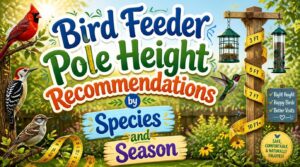
Six inches can make or break your feeder setup. Mount it too low, and raccoons treat it like a buffet table. Mount it too high, and you’re hauling a ladder out every time it needs a refill.
Most yards do best somewhere between 54 and 72 inches, but that’s just a starting point. Cardinals want different clearance than woodpeckers. Hummingbirds need a totally different view than ground-feeding sparrows. Get the bird feeder pole height recommendations wrong for your specific birds, and you’ll wonder why nothing shows up.
The right height depends on who’s visiting, what’s lurking nearby, and even the season. Here’s how to nail it for every bird in your yard.
Table Of Contents
- Key Takeaways
- Recommended Bird Feeder Pole Height
- Heights for Different Bird Species
- Predator-Safe Pole Placement
- Window-Safe Feeder Heights
- Seasonal Height Adjustments
- Frequently Asked Questions (FAQs)
- How high should my bird feeder pole be?
- Can bird feeders be hung too high?
- Where is the best place to put a bird feeder pole?
- What pole diameter and material resist rust best?
- How often should feeder poles be sanitized?
- What cleaning solution prevents disease spread on feeders?
- Should poles be secured with ground spikes or concrete?
- How often should poles be inspected for damage?
- Conclusion
Key Takeaways
- Mount your feeder pole between 54 and 72 inches high, with 60 inches being the best all-purpose height for easy refills and predator safety.
- Follow the 5-7-9 rule by setting feeders 5 feet high, 7 feet from structures, and 9 feet below branches to block predator sightlines and access.
- Different birds need different heights: ground-feeders want 0-3 feet, finches and chickadees prefer 6-8 feet, and woodpeckers need 5-15 feet of clearance.
- Keep feeders either within 3 feet or beyond 10 feet of windows, since the 3-to-10-foot zone gives birds deadly collision speed without enough room to react.
Recommended Bird Feeder Pole Height
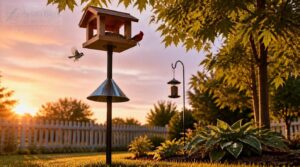
Picking the right pole height isn’t just guesswork. A few simple numbers can make your feeder safer and easier to enjoy. Here’s what you need to know before you plant that pole in the ground.
Setting your feeder at that 5.5 to 6.5 foot sweet spot also plays a big role in keeping ground predators at bay, so it’s worth pairing your pole placement with these tips for protecting backyard birds from cats.
Best All-purpose Height
Somewhere between 54 and 72 inches usually hits the sweet spot for most backyard setups. A 60-inch mounting height gives you easy refill access while keeping curious pets at bay.
This mid-range works well for balancing species access, since it welcomes small songbirds without shutting out larger visitors. Consistent feeding zones also help birds settle in and return, session after session.
Minimum Safe Height
Four feet is your floor, not your target. Below that, ground predators can reach the feeder with barely a stretch.
That height keeps spilled seed off the turf, cutting down on pest attraction. It also protects structural stability in wind and gives you room for maintenance without bending double. When performing maintenance, always prioritize proper fall prevention to stay safe.
- Predator access prevention
- Ground clearance benefits
- Maintenance accessibility
Maximum Practical Height
Twelve feet is your ceiling. Beyond that, refilling convenience drops fast and you’ll need a ladder for basic maintenance accessibility.
Most yards do fine around 8 to 10 feet. Open yards can push toward 10 for better viewing balance. Wooded yards suit 8 feet, keeping raccoons out. Stability requirements matter too, use a wide base once your bird feeder height nears that top range.
Easy Viewing Height
Height matters less than what’s comfortable for your eyes. Sit in your favorite viewing chair and measure your seated eye level — that’s your target.
Aim for the feeder center 2 to 6 inches above that mark. For most folks, this lands between 5 and 7 feet. This eyelevel placement cuts neck strain during long backyard birdwatching sessions.
Feeder Access Considerations
Ready to hang that feeder? Ideal feeder height isn’t just about eye level — access matters too.
- Perch diameter of 0.3–0.5 inches
- Multi-port access for several birds at once
- Ground clearance of 6–12 inches to block rats and skunks
Landing angle and seed moisture control matter too. Tilted perches help small feet grip, while covered ports keep seed dry.
Heights for Different Bird Species
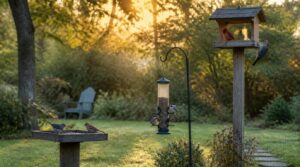
Not every bird eats at the same level. Different species have their own comfort zones, from ground level to well above your head. Here’s how to match your feeder height to the birds you want to see.
For cavity-nesting species like chickadees and bluebirds, mounting boxes 5 to 15 feet off the ground keeps predators at bay while still letting you check in easily.
Ground-feeding Birds
Sparrows, doves, and juncos don’t want a pole at all — they want the dirt. Keep food at 0 to 3 feet, in open, short-grass spots near light cover. Stick to black oil sunflower and white proso millet, sweep up leftovers daily, and skip shrub-heavy corners where predators ambush groundfeeders.
| Species | Ideal Height | Best Seed |
|---|---|---|
| Sparrows | 0-1 ft | Millet |
| Doves | 0-2 ft | Sunflower |
| Juncos | 1-3 ft | Millet |
Finches and Chickadees
Six to eight feet off the ground is the sweet spot for finches and chickadees. Tube feeders work best here, letting these small flock birds perch and crack sunflower seeds or nyjer without competing with bigger species.
Chickadees hover briefly, grab a seed, then dart to a branch. Watch for their black caps and quick, darting foraging style at this height.
Hummingbird Feeder Height
Eye level is the magic number here. Keep hummingbird feeders at 4 to 6 feet, right where you can watch without craning your neck.
This height also cuts down on nectar loss, keeps pets from bumping the pole, and makes ants work harder to reach the sippers. Mount it steady, minimize sway, and refill without a ladder in sight.
Cardinals and Blue Jays
Bright red flashes and bold blue crests bring instant backyard drama. Cardinals and Blue Jays both do well at 4 to 8 feet, matching their perching and hopping habits.
- Cardinals hammer seeds against perches, favoring sunflower mixes
- Blue Jays cache food and travel in flocks
- Both nest in nearby shrubs or trees for quick feeder access
Keep feeders within this range, and you’ll invite steady visits without inviting predators closer than you’d like.
Woodpeckers and Nuthatches
Watch a woodpecker work, and you’ll see nature’s jackhammer in action. These birds brace with stiff tail feathers, climbing bark headfirst upward while chiseling for insects. Nuthatches do the opposite, creeping down trunks.
Suet cages need 5 to 15 feet of clearance. This height matches their bark-foraging habits and keeps cavity-nesting engineers safe from ground predators while they hunt hidden insects.
Predator-Safe Pole Placement
Height alone won’t keep your feeder safe. Placement matters just as much, especially with cats and squirrels nearby. Here’s what to know before you plant that pole.
The 5-7-9 Rule

Three numbers, one simple system: that’s the 5-7-9 rule at its simplest.
The 5-7-9 rule distills feeder safety into three simple numbers: height, distance from structures, and clearance from branches
Set feeders at 5 feet high, 7 feet from structures, and 9 feet below branches. This spacing breaks predator sightlines and access points.
- 5 feet: easy viewing, harder ground access
- 7 feet: blocks jump-launch spots
- 9 feet: clears climbing branches
Stick to this framework across your yard for consistent safety and viewing comfort.
Distance From Fences
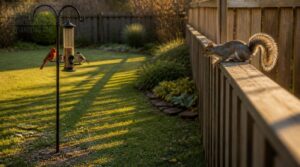
Fences aren’t just property markers. They’re launch pads for hungry squirrels, so keep feeders 7 to 12 feet away from any fence line.
| Distance | Result |
|---|---|
| Under 7 feet | Easy squirrel leap |
| 7-12 feet | Safer sightlines |
| Near boundary | Check setbacks |
| Along fence | Leave root clearance |
Also mind property line encroachment and maintenance access space when placing poles nearby.
Squirrel Jump Prevention
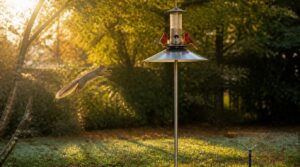
Squirrels are athletes. They can leap 7 to 10 feet horizontally, so launch point removal matters as much as pole height.
- Trim overhanging branches
- Rotate feeder routes seasonally
- Add motion activated deterrents
- Use 18-inch baffle diameters
Mount poles 5 to 6 feet up with smooth metal surfaces. Weight activated ports add backup protection once basic prevention fails.
Cat Access Reduction
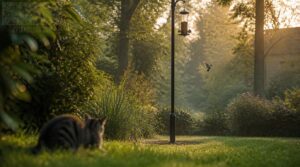
Cats are patient hunters, not jumpers like squirrels, so height alone won’t save your feeder.
Mount poles at 6 to 8 feet for stable footing loss. Add smooth ground proximity deterrence with a mulch-free zone within 1 foot of the base. Slope soil away from the pole, and keep sightline obstruction in mind using nearby shrubs to block a cat’s approach view.
Baffle Height Guidelines
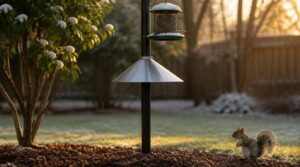
Getting the baffle itself right matters as much as pole height. Keep ground clearance between 6 and 12 inches to dodge debris buildup, then shift to 36–60 inches for serious predator deterrence.
Near trees or fences, aim for 42–66 inches for reliable predator avoidance strategies. Snowy winters call for raising baffles another 6-12 inches. Sturdy mounting keeps structural stability intact against wind and climbing pests alike.
Window-Safe Feeder Heights

Windows cause more bird deaths than most people realize. Where you place your feeder matters just as much as how high it sits. Here’s what you need to know to keep birds safe near the glass.
Within Three Feet
Three feet feels safe and close, but it’s actually risky territory. That short distance gives birds almost no room to build up escape speed before hitting glass.
It does make refilling easy on your back, though. Just weigh that comfort against the collision risk, especially near windows or walls with reflections.
Beyond Ten Feet
Ten feet gives you real breathing room. Your birds get a fighting chance to spot glass and change course before they build dangerous speed.
This distance also creates a natural predator buffer zone, keeping stalking cats farther from the action.
- Fewer window strikes
- Safer flight paths
- Better predator distance
- Easier viewing angles
- Calmer feeding activity
Avoid Danger Zones
That middle zone between three and ten feet from your window is a trap. Birds build enough speed for real collision momentum, but not enough distance to react.
Watch for other hazards too. Skip spots near electrical shock hazards, pesticide contamination risks, or predator ambush zones where cats wait in cover. Good feeder placement means checking height from ground and distance together, not just one or the other.
Glass Reflection Reduction
Cutting the glare is half the battle. Anti-reflective coatings knock reflections down to just 1.3 to 3 percent, so birds see through the glass instead of a mirror image of sky. Even with a coated window, pairing it with smart feeder placement to prevent window strikes gives birds an extra layer of protection.
Tinted glass helps too, absorbing light that would otherwise bounce back. Combine that with surface texture structuring or index matching, and you’ve got real avian safety built right into the window itself.
Safer Viewing Angles
Where you stand matters as much as where the feeder sits. Aim for a 30 to 60 degree viewing corridor, keeping your body angled away from glare.
- Face the main sightline away from harsh sun
- Stagger feeder placement instead of lining them up straight
- Add a slight forward tilt for neck comfort
Open sightlines paired with smart glare reduction techniques keep viewing posture relaxed and species accessibility high.
Seasonal Height Adjustments
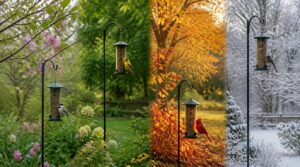
Your feeder height shouldn’t stay the same all year long. Seasons change, and so do your birds’ needs. Here’s how to adjust as the weather shifts.
Winter Snow Clearance
Winter piles up fast, and a low feeder disappears under it. Raise your pole to 6 or 7 feet before the first real snowfall.
This keeps seed accessible even after plows push drifts against your yard’s edges. Check monthly for wobble or ice buildup, and reposition away from areas where deicing salt runoff might reach the ground below.
Spring Fledgling Access
Once snow melts, lower your pole to about 5 feet. This puts food within easy reach for fledglings still building flight muscle.
Keep feeders 6 to 12 feet from perches so young birds have a safe landing zone. Watch for these signs:
- Short, wobbly flights between branches
- Parent birds guiding chicks to seed
- Frequent ground time near shrubs
- Hesitation before longer hops
Summer Shade Placement
Once fledglings are steady on their wings, summer heat becomes the next challenge. Shade your feeder pole on the south or west side to block afternoon sun while keeping morning light strong.
Partial shade cuts glare and stops nectar overheating. It also slows seed mold in humid spells and creates a cool microclimate birds return to daily.
Growing Plant Interference
Ivy can wrap your pole fast, sometimes covering it within 4 to 6 weeks. That extra vine load adds up to a kilogram of weight, throwing off balance.
Creeping ground cover hurts base stability too, especially on uneven soil. Tall shrubs act like windbreaks, changing how your feeder swings in gusts.
Keep sightlines open. Trim growth back so birds can spot the feeder easily.
Monthly Height Checks
Every month, measure your pole from the same spot. A digital ruler or laser measure gives readings accurate to the nearest centimeter.
Log the date, weather, and height each time. Compare against last month’s numbers to catch drift detection early.
One to two centimeters is normal settling. Anything past 5 centimeters over two months means it’s time to relevel that pole.
Frequently Asked Questions (FAQs)
How high should my bird feeder pole be?
Aim for five to six feet — the sweet spot for the best refill height, balancing predator safety, and easy backyard feeder placement.
This range suits most songbirds, keeps vertical feeding zones accessible, and adapts well to typical backyard terrain impact and yard obstacles.
Can bird feeders be hung too high?
Like a ladder that’s too tall to climb comfortably, a feeder set too high causes real problems. Refilling difficulties increase past 7 feet, and bird visibility drops. Stick to 5-6 feet for the best balance.
Where is the best place to put a bird feeder pole?
Pick open ground 10 feet from shrubs and fences — those are common squirrel launch points and predator hiding spots. Good escape route planning matters for backyard safety layouts, so give birds a clear flight path in every direction.
What pole diameter and material resist rust best?
Galvanized steel poles at 25 to 5 inches resist rust best inland. For coastal spots, choose stainless steel (304/316) or powder-coated aluminum—both handle salt spray without flexing or corroding over time.
How often should feeder poles be sanitized?
Funny how a pole built to survive storms and squirrels can still lose to something as small as mold. Clean every two weeks normally, weekly in humid spells, using a 1:9 bleach solution for 3 to 5 minutes.
What cleaning solution prevents disease spread on feeders?
A 1:9 bleach solution kills pathogens fast during outbreaks. Vinegar or 3% hydrogen peroxide work as gentler, safer alternatives for routine cleaning.
Always rinse thoroughly. Soap residue or scented cleaners can harm birds and disrupt healthy feeding habits.
Should poles be secured with ground spikes or concrete?
A gale-force wind could rip an unanchored pole clean out of the ground.
Ground spikes install fast, but soil type matters.
Concrete bases win on wind resistance and frost heave prevention, offering better long-term stability for your bird feeder pole.
How often should poles be inspected for damage?
Give your pole a monthly once-over: check hardware corrosion, wobble, and cracks. Look deeper yearly for internal decay or rot. Keep quick notes—maintenance records help you catch problems early and keep your feeding station safe and sturdy.
Conclusion
Think of your pole like a telegraph pole for birds, an old-fashioned signal post standing tall in a modern yard.
Get the bird feeder pole height recommendations right, and everything else falls into place. Predators stay out. Birds feel safe. You get a clear view from your window without hauling a ladder around. Seasons will shift your setup a little, but the basics hold steady. Measure once, adjust as needed, and enjoy the show.
- https://duncraft.com/blogs/birding-tips/bird-feeder-placement-guide-attract-more-birds-stop-squirrels-and-prevent-window-collisions
- https://www.birdsandblooms.com/birding/attracting-birds/feeding-birds/squirrel-proof-bird-feeders
- https://www.perkypet.com/articles/how-high-should-i-hang-my-bird-feeder
- https://birdsnap.com/blogs/news/the-ultimate-guide-to-squirrel-proofing-your-bird
- https://www.audubon.org/magazine/how-stop-squirrels-raiding-your-bird-feeders