This site is supported by our readers. We may earn a commission, at no cost to you, if you purchase through links.
 You’ll notice why the species of Gemma’s bird change throughout Sons of Anarchy because the show’s creators used it as both a deliberate running gag and practical solution to production challenges.
Working with live animals brings unpredictable costs and scheduling conflicts, so switching between different bird species—from cockatoos to ravens—became creatively liberating.
This wasn’t sloppy continuity; it was intentional symbolism reflecting Gemma’s evolving psychological state and the show’s darker themes.
Each bird species carried different symbolic weight, mirroring her character’s transformation from protective matriarch to destructive force.
The changes also kept eagle-eyed fans guessing and sparked countless online discussions about hidden meanings behind each feathered appearance.
Table Of Contents
- Key Takeaways
- Evolution of Symbolism
- Impact on Character Development
- Production Considerations
- Engaging Viewers
- Interpreting Bird Changes
- Frequently Asked Questions (FAQs)
- What happened to Gemma’s cockatiel?
- Does Gemma Teller own a cockatoo?
- Why do some birds look different than they appear in field guides?
- What causes dark pigmentation in birds?
- Is Gemma good to Jax?
- What happened to Gemmas cockatoo?
- What happened to Gemma’s bird soa?
- Why does Gemma like birds?
- What happened to Gemma’s birds?
- What kind of bird did Gemma have?
- Conclusion
Key Takeaways
- You’re watching intentional symbolism, not sloppy continuity – The bird species changes from a white cockatoo to a grey cockatiel to a black crow deliberately mirror Gemma’s moral decline and character transformation throughout the series.
- Production challenges became creative opportunities – Budget constraints and the practical difficulties of working with live exotic birds forced the creators to make species switches that they turned into meaningful storytelling elements.
- You’ll find it’s both a running gag and deeper meaning – While showrunner Kurt Sutter admits the changes were partly a humorous running gag, they also function as visual metaphors that enhance the narrative’s symbolic layers.
- You’re part of the engagement strategy – The mysterious bird changes sparked countless fan theories and online discussions, creating deeper viewer investment and turning a simple prop into a symbol that fans analyzed for years.
Evolution of Symbolism
If you’ve watched Sons of Anarchy, you’ve noticed Gemma’s bird changes species throughout the series. This isn’t accidental—it’s narrative symbolism at work.
The species metaphor tracks her character progression from innocence to darkness. You’ll first see a white cockatoo, representing purity and initial moral clarity. The color symbolism here is deliberate—white traditionally signifies innocence in visual storytelling.
As Gemma’s character arc develops, you’ll spot a cockatiel replacing the cockatoo. This grey-and-white bird reflects her growing moral ambiguity. The mixed colors mirror her complex choices and thematic interpretation of her evolving nature.
The use of birds as symbols can also be seen in the context of spiritual messenger roles, where they convey important messages about character development and moral growth.
Impact on Character Development
As you watch Gemma’s journey unfold, her changing bird species serves as a visual metaphor for her character progression and moral decline.
The transformation reflects her personality shift through symbolic narrative elements.
The bird species evolution mirrors Gemma’s emotional state and thematic interpretation:
- White cockatoo: Represents initial innocence before her character arc takes darker turns
- Grey cockatiel: Symbolizes growing moral ambiguity as her freedom loss becomes apparent
- Black crow: Foreshadows her complete descent into darkness and corruption
This bird symbolism creates layers of meaning, showing how external elements can reflect internal character development in storytelling.
Production Considerations
You’ll find that showrunner Kurt Sutter openly admits the bird changes were simply a running gag with no deeper meaning intended.
Sometimes the best symbolism is just creators having fun with props.
The practical reality behind Gemma’s rotating avian companions involves budget constraints and creative decisions that prioritized storytelling over continuity, which can be seen as a key factor in the show’s development, highlighting the importance of creative decisions.
Running Gag
Beyond character development lies the production side – specifically how the running gag became a humor device.
Kurt Sutter intentionally used bird species evolution as comedic effect, creating anticipation through unpredictability. This gag theory worked because viewers noticed Gemmas bird changes but couldn’t predict the next species.
The symbolic irony enhanced the joke – while bird symbolism suggested deeper meaning, the species change was simply entertainment, keeping audiences guessing about bird choices.
The show’s creators likely drew inspiration from various bird product designsGemmas Bird products to inform their creative decisions.
Budget Constraints
How do budget constraints shape what you see on screen? The reality is that maintaining exotic birds throughout a series requires serious financial planning and resource allocation.
Financial Limits: Exotic birds cost thousands per episode to train, handle, and insure. Production teams faced tough funding decisions between maintaining bird continuity and investing in core story elements.
Production Costs: Studios prioritize essential expenditures like lead actors and sets. When budget reviews hit, specialized animal props often get cut first, forcing practical choices over creative ideals.
Resource Allocation: Cost control meant finding alternatives that delivered symbolic impact without breaking budgets. The crew balanced financial reality with storytelling needs, selecting cost-effective birds that still conveyed Gemma’s character journey.
Here’s what budget constraints meant for the show:
- Animal trainer fees exceeded most prop budgets, making species swaps inevitable
- Storage and maintenance costs for live birds created ongoing financial pressure
- Insurance requirements for exotic animals pushed productions toward cheaper alternatives
Smart financial limitations actually enhanced the symbolic storytelling. Production teams must navigate tariff induced costs to maintain budget efficiency.
Creative Freedom
Beyond budget concerns, the show’s creators embraced creative freedom to experiment with bird species as visual representation.
Each species offered fresh symbolic significance through color theory and natural behaviors.
This artistic vision allowed creative decisions that enhanced symbolic expression.
Writers gained narrative control and storytelling freedom, using birds as flexible metaphors that evolved with Gemma’s character arc, creating deeper thematic layers.
The concept of creative freedom products(creative tools) played a significant role in shaping the show’s unique narrative approach.
Engaging Viewers
You’ve likely noticed how Gemma’s changing bird species sparked countless Fan Theories and Viewer Speculation across forums and social media.
This detail created powerful Character Connection and Emotional Investment, turning a simple cage prop into a symbol fans dissected for years.
The bird species shifts enhanced Audience Engagement through their rich symbolism and narrative impact, offering visual representation of Gemma’s transformation.
Here’s how the birds captivated viewers:
- Online forums buzzed with theories linking each species to plot developments
- Reddit threads exploded analyzing color symbolism from white to black
- Fan wikis documented every bird appearance with thorough detail
- Social media debates connected species changes to character arcs
- Rewatching sessions focused specifically on spotting bird changes
Interpreting Bird Changes
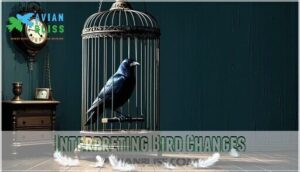
While Gemma’s bird changes might seem random, they actually reveal deeper layers of storytelling that you can decode through careful observation. The Bird Symbolism creates a visual roadmap of her Character Arc, with each Species Shifts marking significant transformations.
Here’s how to interpret these avian speciation factors:
- White to Black Progression: The bird plumage variation from cockatoo’s white feathers to crow’s black plumage mirrors Gemma’s Moral Decline—innocence literally darkening before your eyes.
- Freedom Metaphor: Each caged bird represents Gemma’s shrinking liberty. The Freedom Metaphor becomes ironic as these symbols of flight remain trapped, just like her.
The bird species diversity reflects psychological complexity. Different species suggest genetic drift birds in her moral compass—small changes accumulating into major character shifts.
This gemmas bird adaptation technique lets writers show character development without heavy-handed dialogue.
Frequently Asked Questions (FAQs)
What happened to Gemma’s cockatiel?
You’ll find that Gemma’s cockatiel simply vanished without explanation between seasons, replaced by a crow in her cage.
The show never addressed what happened to Clay, the cockatiel, leaving viewers guessing about its fate.
Does Gemma Teller own a cockatoo?
Yes, you’ll see Gemma owns an umbrella cockatoo in the early seasons of Sons of Anarchy.
She keeps it caged in her home, though it’s later replaced by different birds throughout the series.
Why do some birds look different than they appear in field guides?
Birds often appear different from field guides because you’re seeing natural variation, seasonal changes, or juvenile plumage.
Lighting conditions, molt patterns, and subspecies differences also create discrepancies between real birds and illustrated guides.
What causes dark pigmentation in birds?
Dark pigmentation in birds comes from melanin production, controlled by genetics and influenced by diet, hormones, and environmental factors.
You’ll notice melanin creates blacks, browns, and grays while protecting against UV damage and strengthening feathers.
Is Gemma good to Jax?
Love’s a hurricane here – you’ll witness Gemma’s complex relationship with Jax unfold through manipulation disguised as maternal protection. She genuinely cares but consistently makes choices that ultimately harm him.
What happened to Gemmas cockatoo?
According to deleted scenes, Gemma explains that her cockatoo died from a heart attack. You’ll notice the show replaced it with a cockatiel named "Clay" without much fanfare or explanation.
What happened to Gemma’s bird soa?
You’ll find Gemma’s birds change throughout Sons of Anarchy without explanation. Her cockatoo mysteriously disappears, replaced by a cockatiel named Clay, then eventually a crow appears in the cage instead.
Why does Gemma like birds?
You’re drawn to birds because they symbolize freedom while you’re trapped in violence. Their caged existence mirrors your own entrapment, creating ironic comfort through shared captivity.
What happened to Gemma’s birds?
Like disappearing acts in a magic show, you’ll find Gemma’s birds simply vanished without explanation.
The cockatoo reportedly died from a heart attack, while the cockatiel named "Clay" disappeared mysteriously, replaced by a crow.
What kind of bird did Gemma have?
Gemma started with a white umbrella cockatoo, then switched to a cockatiel named Clay, and finally kept a crow in her cage throughout the series’ progression.
Conclusion
Ever wonder how writers turn production hiccups into storytelling gold? The changing bird species in Sons of Anarchy proves that why does the species of Gemma’s bird change isn’t just about budget constraints.
You’ve witnessed clever storytelling that transforms practical limitations into powerful symbolism. Each feathered switch deepened Gemma’s character arc while keeping you engaged in online debates.
This creative approach shows how smart writers can turn production challenges into narrative strengths, making every bird change meaningful rather than accidental.