This site is supported by our readers. We may earn a commission, at no cost to you, if you purchase through links.

Most birders don’t fail because they lack patience—they fail because they’re holding the wrong guide. A bird flickers through the canopy for three seconds, and suddenly you’re flipping through 600 pages of species organized in ways that make sense to taxonomists, not to someone standing in wet boots trying to remember if that warbler had an eye ring.
The guide in your hand shapes everything: what you notice, what you confirm, and how fast your skills actually develop. Knowing what features make a bird guide useful turns a frustrating hobby into a genuinely rewarding one—and the difference between guides is bigger than most beginners expect.
Table Of Contents
- Key Takeaways
- Key Identification Features
- Clear Field Marks for Beaks, Wings, Tails, Eye Rings, and Plumage
- Size Comparisons Using Familiar Birds Like Robins, Crows, or Geese
- Multiple Views, Including Side, Front, Perched, Flying, and Overhead Angles
- Similar Species Comparisons to Prevent Common Identification Mistakes
- Notes on Age, Sex, Seasonal Plumage, and Regional Variation
- Accurate Range and Habitat Maps
- Behavior, Songs, and Seasonal Clues
- User-Friendly Field Guide Design
- Logical Taxonomic Organization by Bird Families
- Quick-reference Sections by Color, Shape, or Bird Type
- Alphabetical and Taxonomic Indexes for Fast Lookup
- Portable Size, Durable Binding, or Pocket-friendly Format
- Consistent Page Layouts With Maps, Descriptions, and Visuals Easy to Compare
- Space for Notes, Sightings, Dates, and Personal Observations
- Top 8 Useful Bird Guide Picks
- 1. Sibley Birds Guide Second Edition
- 2. Crossley Raptors Identification Guide
- 3. KAVU Mini Rope Crossbody Sling
- 4. Browning Trapper Creek Sage Black Vest
- 5. National Audubon Society Birds of North America
- 6. Stokes Birds of North America Guide
- 7. Sibley West Bird Field Guide
- 8. Sibley Field Guide Birds Eastern North America
- Frequently Asked Questions (FAQs)
- How do I find the best bird identification book?
- What are the best bird field guide books?
- What is a good field guide?
- What are the 5 S’s of birdwatching?
- What are the 4 keys to bird identification?
- How do beginner birders choose their first guide?
- Are digital apps better than printed field guides?
- Can one guide cover multiple countries or continents?
- How often are bird guides revised or updated?
- What guides work best for children or young birders?
- Conclusion
Key Takeaways
- The guide you carry shapes what you notice: strong field marks, multiple viewing angles, and side-by-side species comparisons are what separates a useful guide from dead weight in your pack.
- Accurate, color-coded range maps paired with habitat and elevation details tell you whether a bird should even be where you’re standing—cutting your ID time before you lift the binoculars.
- Behavior, song, and seasonal timing are just as diagnostic as plumage—a guide that covers feeding habits, flight patterns, and migration windows gives you multiple ways to name a bird when it won’t sit still.
- The best guide is the one you’ll actually use: portable size, consistent layout, quick-reference tabs, and space for personal notes turns a field guide into a skill-building tool that grows with you.
Key Identification Features

A good bird guide lives or dies by how clearly it shows you what to look for. Before anything else, you need visuals and details that cut through the confusion fast.
A birdwatching field guide comparison can show you exactly which guides nail those quick-ID details — plumage, calls, habitat, and range all in one glance.
Here’s what strong identification features actually look like in practice.
Clear Field Marks for Beaks, Wings, Tails, Eye Rings, and Plumage
Field marks are the quickest path to a confident ID. Focus on beak color contrast first — a two-toned bill separates species instantly.
Wing bar patterns, tail shape variations, and eye ring intensity each tell a different part of the story.
Plumage seasonal shifts matter too, since breeding and non-breeding birds can look surprisingly different.
Train your eye on these visual bird cues; identification features click faster. Don’t overlook the distinct malar stripe, a key facial field mark for many species.
Size Comparisons Using Familiar Birds Like Robins, Crows, or Geese
Once you’ve locked in those plumage details, size becomes your next anchor. Scale benchmarks like robins, crows, and geese provide instant relative silhouette comparisons.
A robin measures 9–11 inches; a crow nearly doubles that. Weight proportions tell the same story — crows outweigh robins seven times over. These object comparisons and wing span ratios serve as visual bird cues no field guide should skip.
Multiple Views, Including Side, Front, Perched, Flying, and Overhead Angles
Size gives you a foothold — but angle seals the deal. A bird’s silhouette shifts dramatically depending on viewing distance and perspective distortion. That’s why strong guides use angle-based sketches and multiple illustrations and photography together:
- Side views expose wing shape and tail notch clearly
- Front views reveal facial patterns and beak depth
- Perched angles highlight posture and crown detail
- Flying profiles show wingbeat cadence and wingtip shape
- Overhead perspectives confirm wingspan-to-body ratios
Lighting cues change everything in field photography tips — illustrations vs. photos each have strengths, and the best bird guide illustration styles blend both for accuracy.
Similar Species Comparisons to Prevent Common Identification Mistakes
Angles tell you a lot — but when two birds look nearly identical, species comparison becomes your sharpest tool. Pay attention to bill curve distinction, tail length ratio, and subtle plumage patches.
Common mistakes in birdwatching often happen when birders skip call pitch interval or syllable rhythm analysis. Field mark analysis techniques, applied side by side, expose the differences fast.
Notes on Age, Sex, Seasonal Plumage, and Regional Variation
The same species can look like three different birds depending on age, sex, and season.
A solid guide covers all of it.
- Juvenile plumage shows duller wing bars and shorter tails before first molt
- Breeding colors peak in spring through sexual dimorphism
- Molt timing signals age and season simultaneously
- Seasonal plumage changes shift identification features noticeably
- Regional morphs reflect regional avifauna documentation worth noting
Accurate Range and Habitat Maps
A good range map does more than show where a bird lives—it tells you whether you should even expect to see it on a given day in a given season. The best guides break this down with color-coded regions, habitat types, elevation notes, and data pulled from real, up-to-date observations.
Accurate range and habitat mapping actually looks like this in a quality field guide: It combines these layered details to provide a dynamic, seasonally relevant understanding of a species’ distribution.
Color-coded Breeding, Migration, and Wintering Ranges

A good range map tells a story at a glance. Breeding ranges appear in red, wintering grounds in blue, and where the two overlap, you get a purple gradient — a clear sign of year-round presence.
Seasonal Color Legends decode these layers instantly, while Migration Line Widths and Range Confidence Shading keep your interpretation honest. Interactive Layer Toggles in digital guides make tracking seasonal variations seamless.
Habitat Details for Forests, Wetlands, Grasslands, Coasts, and Urban Areas

Range maps become far more powerful when paired with habitat overlays. Canopy stratification shapes which forest birds you will find at what height. Water level dynamics drives wetland species turnover. Grazing and fire cycles defines grassland specialists. Coastal tidal flux dictates shorebird presence by the hour. Urban green corridors support surprising diversity.
A strong field guide map weaves all these habitat layers directly into its range coverage.
Regional Coverage That Limits Choices to Likely Local Species

A regional bird guide cuts through the noise. Instead of sifting through 900 species, you’re working with a curated list shaped by local checklists, citizen science updates, and verified county-specific species records pulled from eBird and regional avifauna documentation.
- Range maps reflect actual regional phenology — when birds arrive, peak, and leave.
- Microhabitat filters narrow species to your exact forest, marsh, or urban patch.
- Species distribution maps update as regional bird guides incorporate new citizen science data.
Elevation Notes for Mountain, Lowland, and Coastal Birds

Elevation shapes everything. A guide with clear Altitudinal Range Bands shows whether you’re looking at a mountain specialist or a lowland generalist — without guessing.
Species Distribution Maps using Regional Avifauna Documentation mark Habitat Zone Shifts across Temperature Gradient Impacts, while Upslope Migration Timing notes tell you when to expect arrivals.
That’s Habitat and Range Mapping working exactly as it should.
Updated Mapping Based on Modern Bird Observation Data
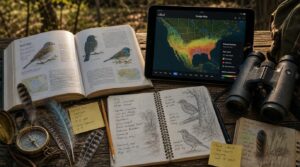
Modern Range Maps have come a long way. Platforms like eBird now combine citizen science integration with satellite data to generate real-time heatmaps and evolving habitat layers that update as observations arrive.
Seasonal data filters show breeding versus wintering presence, while uncertainty visualization flags areas of likely versus confirmed occurrence.
These digital tools for bird identification make species distribution maps sharper and far more trustworthy than older printed editions.
Behavior, Songs, and Seasonal Clues

A bird doesn’t have to sit still long enough for you to study its plumage — but it will always behave like itself. Knowing how a species feeds, moves, calls, and travels through the seasons gives you just as much to work with as color or shape.
A bird will always behave like itself, and that behavior tells you just as much as its colors
Here’s what a good guide captures on that front.
Feeding Habits That Help Narrow Down Species Quickly
Bill shape alone—conical for seed cracking, slender for nectar specialization, hooked for snail browsers—functions as one of the clearest identification features you’ll find. What a bird eats often tells you exactly what it is.
Pair that with microhabitat cues like ground-feeding versus canopy gleaning, and seasonal diet shifts from insects to berries, and your field marks narrow fast. Feeding habits rarely lie.
Flight Patterns, Flocking Behavior, and Foraging Techniques
How a bird moves is just as telling as what it eats. V formation efficiency in geese is not just striking—it’s diagnostic. Wingbeat rhythm, energetic soaring over coastlines, and coordinated search waves sweeping fields all reveal species identity fast.
Predator alarm cues rippling through a flock further underscore behavioral significance. A good guide captures these insights, enabling birders to ID birds even when they won’t sit still.
Nesting Behavior and Breeding-season Clues
Nesting behavior is a breeding-season window you don’t want to miss. A quality guide covers site concealment strategies, material sourcing patterns, and incubation rhythms—details that reveal when and where a species is actively breeding.
Watch for courtship song spikes and increased territoriality, key indicators of breeding activity. These behaviors signal heightened competition and mate attraction during the season.
Parental provisioning activity near shrubs or cavities directly points to active nests. Observing these seasonal arrival cues transforms behavioral traits into powerful tools for confident field identification.
Migration Timing and Expected Seasonal Presence
Knowing when a species is supposed to be there’s half the battle. Migration patterns shift with photoperiod cues and temperature thresholds, so a guide that shows flyway peak weeks and seasonal migration windows saves real time in the field.
Wind assistance can push arrivals days early. Watch elevational departure timing too.
Range maps with seasonal variations in bird identification help you confirm—or rule out—a sighting fast.
Song Descriptions, Call Notes, Sonograms, or Audio Support in Digital Guides
Birding by ear gets a serious upgrade in today’s digital bird guide. High-resolution audio with volume normalization ensures quiet warblers remain as clear as loud jays.
An interactive sonogram zoom allows users to analyze pitch shifts mid-trill, enhancing detailed auditory study.
Adjustable playback speed functionality slows rapid calls without distortion, aiding precise identification of fast-paced vocalizations.
Regional dialect tags highlight local song variations, ensuring the app’s playback matches the specific vocalizations of birds in your area.
User-Friendly Field Guide Design

A great bird guide isn’t just about what’s inside — it’s about how fast you can get to it. The best ones are built around how birders actually think and move in the field.
Here’s what good design looks like in practice.
Logical Taxonomic Organization by Bird Families
Good guides aren’t organized randomly — they follow phylogenetic sequencing, grouping monophyletic families by shared evolutionary history. Understanding taxonomic organization means narrowing choices before spotting a field mark.
Family diagnostic traits like bill shape or wing silhouette dramatically reduce guesswork. When species are ordered taxonomically within their evolutionary hierarchy, identification skills sharpen naturally with every page turn.
Quick-reference Sections by Color, Shape, or Bird Type
When seconds count in the field, a quick reference section saves the day. Color-coded tabs and bird-type tabs let you jump straight to raptors, waterfowl, or songbirds without guessing. Silhouette groups and beak shape sections sharpen your eye instantly.
Seasonal palettes reflect plumage shifts, while a visual index cross-references color and markings, size, and shape — making field guide layout genuinely work for you.
Alphabetical and Taxonomic Indexes for Fast Lookup
Two indexes are better than one. The alphabetical index incorporates synonym indexing and localized name entries — useful when regional common names differ.
The taxonomic index offers family-based shortcuts, letting you drill straight to a genus.
Digital guides add facet filters for even faster narrowing. Cross-reference links connect related species, reducing misidentification.
Together, they make your bird guide organization genuinely efficient when a bird won’t wait.
Portable Size, Durable Binding, or Pocket-friendly Format
A guide that stays in your bag isn’t doing you any favors. The best bird field guide formats balance compact dimensions with real durability — think sewn binding that lies flat after years of hard use, or a water-resistant cover that shrugs off a sudden drizzle.
- Pocket-sized guides generally measure 3.5 by 7 inches and weigh under 250 grams
- An elastic strap keeps pages secure between sightings
- An integrated pocket stores quick notes or a folded map
- Folding laminated bird guides survive conditions that would ruin a standard paperback
Consistent Page Layouts With Maps, Descriptions, and Visuals Easy to Compare
A well-designed layout works like muscle memory — once you know where everything lives, your eyes go straight there.
| Layout Element | Why It Matters |
|---|---|
| Grid Alignment | Keeps maps, text, and illustrations in fixed locations across every spread |
| Standard Legend Placement | You always know where to decode range map colors without hunting |
| Uniform Typography | Consistent font sizes maintain reading rhythm under field conditions |
| Consistent Iconography | Standardized symbols prevent misreading habitat or seasonal markers |
| Fixed Visual Hierarchy | Field marks, range maps, and descriptions load in predictable order |
That structure and layout of bird field guides — when done right — turns page-flipping into a reflex, not a search.
Space for Notes, Sightings, Dates, and Personal Observations
Blank margins and dedicated note pages transform a field guide into your personal birding journal. Jot down sightings with date-time formats like YYYY-MM-DD and a confidence rating — confirmed, probable, possible. These elements ensure your field notes remain consistent and detailed over time.
Logbook templates maintain structured note-keeping, while observation metadata adds depth to your records. Always keep a digital backup to safeguard your data. This practice ensures your birding checklist and field notes become irreplaceable season after season.
Top 8 Useful Bird Guide Picks
Knowing what makes a guide useful is one thing — finding the right one is another. These eight picks cover a solid range of formats, regions, and skill levels, so there’s something here whether you’re just starting out or adding to an already well-worn shelf.
Here’s what made the cut.
1. Sibley Birds Guide Second Edition

The Sibley Guide to Birds, Second Edition is the one book serious birders keep coming back to. Nearly 7,000 paintings were digitally remastered and enlarged 15–20%, so field marks actually pop off the page.
You get over 700 updated range maps, 115 rare-species illustrations, and expanded habitat and vocalization notes for every species. At around $27, it’s excellent value.
The flexibound format holds up in rough conditions, though at roughly 3 lbs, you’ll want a pack for longer outings.
| Best For | Birders of all levels—from weekend hobbyists to serious field researchers—who want the most comprehensive, visually detailed guide to North American birds available. |
|---|---|
| Price | $27.18 |
| Weight | 3 lb |
| Page Count | 624 pages |
| Publisher | Knopf |
| Language | English |
| Full Color | Yes |
| Additional Features |
|
- Nearly 7,000 digitally remastered paintings, enlarged for clarity, make spotting field marks fast and easy.
- 700 updated range maps plus habitat, vocalization, and rare-species coverage give you everything in one book.
- At around $27, the depth of content you get is hard to beat.
- At roughly 3 lbs, it’s not something you’ll want to carry on a long hike without a bag.
- Small, narrow text can be a strain if your vision isn’t sharp.
- Some print runs have reported minor color inconsistencies and the occasional labeling error.
2. Crossley Raptors Identification Guide
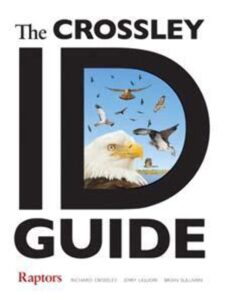
If you want to go deeper into raptors specifically, the Crossley ID Guide: Raptors is worth a look. It covers all 34 North American diurnal raptor species — males, females, juveniles, and color morphs — through 101 photographic composite scenes that place birds in realistic habitats.
That context matters. You’re not just memorizing markings; you’re learning what a Red-tailed Hawk actually looks like against a winter sky.
Quiz pages with mystery photos let you test yourself before you head out. At around $18, it’s solid value.
| Best For | Birders of all skill levels who want to sharpen their raptor ID skills at home before heading into the field. |
|---|---|
| Price | $18.44 |
| Weight | 2.06 lb |
| Page Count | 288 pages |
| Publisher | Princeton University Press |
| Language | English |
| Full Color | Yes |
| Additional Features |
|
- 101 composite scenes put birds in real habitats, so you learn to spot them in context — not just against a white background
- Covers all 34 North American diurnal species with males, females, juveniles, and color morphs
- Built-in quiz pages let you test yourself, making it a genuinely useful study tool
- No owls — if you want a complete birds-of-prey reference, you’ll need a second book
- At nearly 2 lbs, it’s more of a car or desk guide than something you’d stuff in a daypack
- Species accounts and plates are in separate sections, which can slow you down when you’re trying to ID something fast
3. KAVU Mini Rope Crossbody Sling
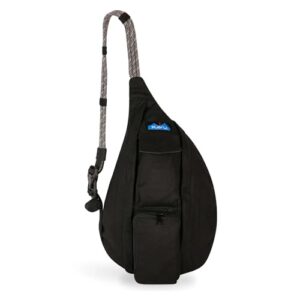
A good guide is only as useful as your ability to carry it. That’s where the KAVU Mini Rope Crossbody Sling earns its place in the field. At 16 × 9 × 4 inches and just over 10 ounces, it keeps your essentials—phone, wallet, small notebook, snacks—organized without slowing you down.
The adjustable rope strap (20 to 40 inches) fits most body types comfortably, while the water-resistant polyester withstands light rain without fuss.
Two zip compartments ensure quick access when a bird won’t wait.
| Best For | Birders, day-trippers, and outdoor enthusiasts who want a lightweight, organized bag for everyday essentials without the bulk of a full backpack. |
|---|---|
| Price | $19.99 |
| Weight | 0.65 lb |
| Page Count | N/A |
| Publisher | KAVU |
| Language | N/A |
| Full Color | No |
| Additional Features |
|
- Compact but surprisingly capable — two zip compartments plus extra pockets keep your phone, wallet, and keys easy to grab on the go.
- The adjustable rope strap (20–40 inches) works for a wide range of body types and can be worn cross-body, front, or back.
- Cotton canvas and polyester lining hold up well to light rain and daily wear without feeling precious.
- The single strap can shift on larger-chested wearers, so expect to readjust it throughout the day.
- Zippers feel a little stiff out of the box — give them a week or two to loosen up.
- No internal padding or key hook, so it’s not the best fit if you’re hauling anything heavier than the basics.
4. Browning Trapper Creek Sage Black Vest
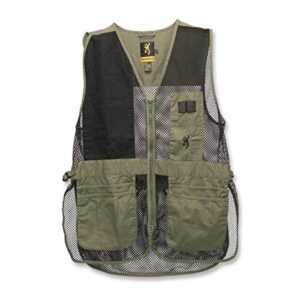
The Browning Trapper Creek Sage Black Vest manages the load well, ensuring comfort during extended outings. It features four front shell pockets, each holding two boxes, a rear hull pocket to catch spent casings, and a full-length shooting patch that cushions your shoulder through long sessions.
Side webbing allows you to adjust the fit over layers, while breathable mesh keeps things cool.
It runs small, so order a size up.
| Best For | Shotgun shooters who spend long days at the trap, skeet, or sporting clays range and need serious shell storage without hauling a bag. |
|---|---|
| Price | $57.96 |
| Weight | Not specified |
| Page Count | N/A |
| Publisher | Browning |
| Language | N/A |
| Full Color | No |
| Additional Features |
|
- Loads of pocket space — the big front pockets each hold two boxes of shells, so you’re set for a full round without digging around
- Double-ended zipper is a small detail that makes a real difference when you’re sitting or just want quick access
- Adjustable waist straps and side tabs mean it fits well over a jacket, which is handy on cold mornings
- Runs small — pretty much everyone says to size up, and even then the midsection can feel snug on bigger builds
- The recoil-pad pocket sits lower than most shooters expect, so you might need a separate pad anyway
- The color in the photos doesn’t always match what shows up at your door — the sage/black combo can look pretty different in person
5. National Audubon Society Birds of North America
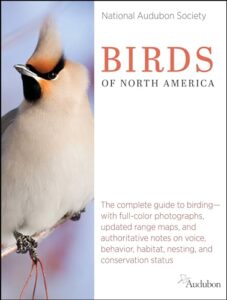
National Audubon Society Birds of North America earns its place on any serious birder’s shelf. With over 800 species covered across 912 pages and more than 3,500 full-color photographs, it’s built for depth.
Range maps reflect recent climate-driven shifts, ensuring you work with current data. Each species account includes conservation status, habitat, nesting, diet, and behavioral notes.
At about 4 pounds, it’s a desk reference more than a trail companion — but for study sessions, it delivers.
| Best For | Dedicated birders and nature educators who want a thorough, research-backed reference they can dig into at home or in the classroom. |
|---|---|
| Price | $28.19 |
| Weight | 4 lb |
| Page Count | 912 pages |
| Publisher | Knopf |
| Language | English |
| Full Color | Yes |
| Additional Features |
|
- Over 3,500 photos with multiple angles per species make identification genuinely easy
- Range maps updated to reflect climate-driven shifts, so the data actually feels current
- Covers conservation status and behavioral notes — way more depth than a basic field guide
- At 4 pounds, it’s not something you’ll want to haul down a trail
- Geographic coverage stops at North America, so it won’t help outside that range
- Published in 2021, meaning newer taxonomic updates or range changes won’t be reflected
6. Stokes Birds of North America Guide

The Stokes Field Guide to Birds of North America packs 853 species and over 3,400 photographs into a single volume—a serious achievement. What sets it apart is how the photos cover multiple plumages, flight views, and age classes side by side, eliminating guesswork about whether a bird is a first-year or adult.
Range maps are positioned next to each species account, clearly showing breeding, wintering, and migration zones at a glance.
At three pounds, it’s a hefty home-base reference, ideal for detailed study rather than fieldwork.
| Best For | Birders who want a thorough home-reference guide covering plumage variations, range maps, and audio learning—especially those doing vehicle-based or stationary birding rather than hiking. |
|---|---|
| Price | $17.90 |
| Weight | 3.05 lb |
| Page Count | 816 pages |
| Publisher | Little, Brown and Company |
| Language | English |
| Full Color | Yes |
| Additional Features |
|
- 3,400 photos covering multiple plumages, ages, and flight views make identification much easier than single-shot guides
- Range maps sit right next to each species, so you’re not flipping back and forth
- Includes a CD with 600 bird sounds—great for training your ear alongside your eye
- At 3 lbs and 816 pages, it’s too heavy to comfortably carry on a long hike
- Published in 2010, so newer taxonomic changes and range shifts aren’t reflected
- Western species get noticeably less coverage than Eastern ones, which can frustrate West Coast birders
7. Sibley West Bird Field Guide

If you’re birding west of the Rockies, this guide is built for your territory. The Sibley West Field Guide covers 715 species with over 5,000 illustrations showing perched, flight, and plumage variation views — all in a book that slips into your pack.
The 652 updated range maps use color-coded breeding, wintering, and migration zones, helping you confirm whether a bird actually belongs where you spotted it.
At $19.74, it offers practical value for serious field use.
| Best For | Birdwatchers of all skill levels who spend time in western North America and want a reliable, illustration-rich field guide without needing a phone or signal. |
|---|---|
| Price | $19.74 |
| Weight | 1.45 lb |
| Page Count | 504 pages |
| Publisher | Knopf |
| Language | English |
| Full Color | Yes |
| Additional Features |
|
- Over 5,000 illustrations covering multiple angles and plumage stages make ID much easier in the field
- 652 color-coded range maps help you quickly confirm if a sighting actually makes sense for your location
- At $19.74, it’s solid value for the depth of coverage you get
- The smaller page size shrinks illustrations and text, which can make fine details tricky to read
- At 1.45 lb, it’s noticeably heavier than slim pocket guides — something to think about on longer hikes
- A handful of species near the Western/Eastern boundary get left out, so edge-case rarities may require a second source
8. Sibley Field Guide Birds Eastern North America

Eastern birders, this one’s your pocket companion. The Sibley Field Guide to Birds of Eastern North America covers 650 species with more than 4,600 illustrations — depicting males, females, juveniles, and seasonal plumage in consistent lighting that photographs simply can’t match.
Over 600 updated range maps show exactly where and when to expect each species. The column-based layout makes side-by-side comparison straightforward in the field.
At $13.29, it delivers serious identification depth without weighing down your pack.
| Best For | Beginner and experienced birders exploring eastern North America who want a lightweight, illustration-rich guide they can actually take into the field. |
|---|---|
| Price | $13.29 |
| Weight | 1.35 lb |
| Page Count | 464 pages |
| Publisher | Knopf |
| Language | English |
| Full Color | Yes |
| Additional Features |
|
- Over 4,600 illustrations show males, females, juveniles, and seasonal plumage side by side — making tricky IDs way easier than flipping between photos
- 600 expert-revised range maps tell you exactly when and where to look, which is a huge help for trip planning
- Compact, affordable, and field-ready at just $13.29 — solid value for the depth you’re getting
- The text runs small, so it can be tough to read quickly in the field if your eyesight isn’t great
- Published in 2016, so any taxonomic updates or range shifts since then won’t be reflected
- No digital version or app integration — you’re working with a physical book, which means rain is not its friend
Frequently Asked Questions (FAQs)
How do I find the best bird identification book?
Ironically, the "best" bird guide is the one you’ll actually carry. Look for clear field marks, accurate range maps, and a format that fits your hand and habit.
What are the best bird field guide books?
Some top picks worth having: Sibley Birds Guide Second Edition, National Audubon Society Birds of North America, National Geographic Field Guide, and Stokes Birds of North America.
The Crossley Raptors Identification Guide is recommended for raptor specialists.
What is a good field guide?
A good field guide gives you fast, reliable answers in the field — clear visuals, accurate range maps, and behavioral clues.
These together help you confidently name the bird before it flies away.
What are the 5 S’s of birdwatching?
The 5 S’s are Size, Shape, Shade, Sound, and Space. Together, they give you a quick mental framework for identifying any bird you encounter in the field.
What are the 4 keys to bird identification?
The four keys to bird identification are size and shape, plumage pattern, behavior and habitat, and flight style.
Together, they allow you to narrow a sighting from hundreds of possibilities down to just a few.
How do beginner birders choose their first guide?
Start with your region. A guide covering local species keeps the list manageable.
Then check the illustrations — clear field marks matter more than photography.
Sibley’s or Stokes both work well for beginners.
Are digital apps better than printed field guides?
Both have their place.
Apps give you audio clips and live range updates.
Print never needs a charge.
Most serious birders use both — the app in one pocket, the guide in the other.
Can one guide cover multiple countries or continents?
Yes, a single guide can cover multiple countries or even an entire continent. Continent-wide editions group shared species under one regional framework, so you’re not juggling separate books at every border crossing.
How often are bird guides revised or updated?
Most print bird guides are revised every 5 to 10 years. The National Geographic Field Guide updates roughly every 5 to 6 years.
Digital guides refresh much faster, sometimes within months of new taxonomy changes.
What guides work best for children or young birders?
For young birders, Audubon and Stokes beginner guides shine brightest — large photos, simple color-coded tabs, and durable laminated pages make them genuinely kid-friendly.
Short captions and QR-linked audio clips keep curious minds engaged outdoors.
Conclusion
Here’s a curious thing: the moment you understand what features make a bird guide useful, you stop fighting your equipment and start actually seeing birds. That shift doesn’t take years—it takes the right tool in your hands at the right moment.
Every field mark, map, and behavior note works together like a well-tuned instrument. Choose a guide built for the field, not the shelf, and your next three-second glimpse through the canopy might finally make sense.
- https://betterwithbirds.com/blogs/bird-identification/understanding-field-guides?srsltid=AfmBOop5Fu0Frjk_7LwIoJwu3GLz1OrJe0KCkkE7porMuDboXQ8ZfGwr
- https://www.basicsofbirding.com/blog/how-to-identify-birds-four-features-in-a-bird-field-guide
- https://press.princeton.edu/books/paperback/9780691137278/the-bird-guide-north-america?srsltid=AfmBOorvlg8ttloePzb9L8mJYsMgy1OIMmwzqo00S6mzTzejG40pkNVh
- https://www.audubon.org/magazine/what-bird-guide-best-you
- https://seekadventuresblog.com/how-to-use-a-bird-identification-field-guide/