This site is supported by our readers. We may earn a commission, at no cost to you, if you purchase through links.
 When your feathered friend’s droppings turn watery, don’t panic.
Bird diarrhea treatment home remedies can offer quick relief while you monitor the situation.
Start by adding a single drop of raw honey to their water dish—it soothes upset stomachs naturally.
A pinch of cinnamon powder mixed into their regular food helps combat harmful bacteria that might be causing the issue.
Keep your bird warm and stress-free, as anxiety often worsens digestive problems.
Remove any fresh foods temporarily and stick to their basic seed mix.
These simple remedies work best for mild cases, but persistent symptoms signal deeper issues requiring professional attention.
Table Of Contents
- Key Takeaways
- Recognizing Bird Diarrhea
- Bird Diarrhea Treatment Home Remedies
- Causes of Diarrhea in Birds
- Signs and Symptoms of Bird Diarrhea
- Diagnosing Bird Diarrhea
- Natural Remedies for Bird Diarrhea
- Home Care and Prevention
- Managing Bird Diarrhea
- Reducing Stress in Birds
- When to Seek Veterinary Care
- Frequently Asked Questions (FAQs)
- What should I do if my bird has diarrhea?
- How do you treat Budgie diarrhea?
- How do you treat liquid poop in birds?
- What causes diarrhea in birds?
- What causes avian diarrhea?
- How can probiotics help a parakeet with diarrhea?
- How do you treat diarrhea in birds at home?
- What is the anti diarrhea for birds?
- What to do if my bird’s poop is watery?
- What do you feed a bird with diarrhea?
- Conclusion
Key Takeaways
- You can treat mild bird diarrhea at home by adding a single drop of raw honey to their water dish and mixing a pinch of cinnamon powder into their regular food to combat harmful bacteria naturally.
- You’ll need to create a stress-free environment by removing fresh foods temporarily, sticking to basic seed mix, and keeping your bird calm since anxiety worsens digestive problems.
- You should watch for warning signs like watery droppings, unusual colors, blood in stool, lethargy, or loss of appetite that indicate when home remedies aren’t enough and professional help is needed.
- You must seek veterinary care immediately if diarrhea persists beyond 24 hours, shows severe symptoms like blood or extreme lethargy, or if your bird becomes dehydrated since these conditions can become life-threatening quickly.
Recognizing Bird Diarrhea
You can spot bird diarrhea by checking their droppings for changes in consistency, color, or frequency.
Normal droppings have a semi-solid texture with brown or green feces and a white urate section, while diarrhea looks runny or watery and may include unusual colors.
Normal Bird Droppings
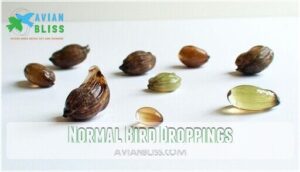
Normal bird droppings are tiny clues into your bird’s health.
Spotting what’s typical can save you from bird poop problems down the line.
Healthy droppings should include:
- Color: A balanced brown or green hue.
- Consistency: Semi-solid with a clear divider between solids and liquids.
- Urate Composition: A bright white section within the droppings.
- Dropping Frequency: Steady with your bird’s normal behavior.
- Shape: Well-formed, not runny or crumbly.
Diet influence and species variation play roles here.
If droppings seem off, explore bird diarrhea treatment or adjust their diet.
Keep a watchful eye for bird digestive issues to guarantee feathered friends thrive.
Abnormal Bird Droppings
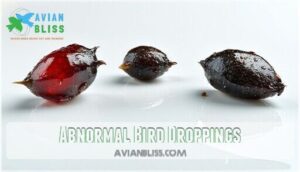
Abnormal bird droppings can tell you when something’s off. Look for dramatic color changes, unusual urate abnormalities, or a runny dropping consistency.
If droppings show undigested food or their frequency changes, your bird may have digestive issues. Persistent diarrhea isn’t just messy—it’s a red flag for bird poop problems that may need attention.
While home remedies for birds like probiotics can help, don’t skip consulting your vet if these signs stick around. Always prioritize their health!
Polyuria Vs Diarrhea
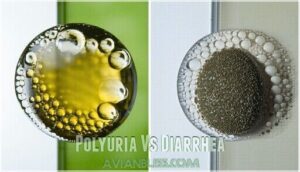
Spotting the difference between polyuria and bird diarrhea can save you from guessing games.
Both may involve watery bird droppings, but polyuria has a normal urate proportion with extra liquid, while diarrhea creates completely runny, abnormal bird droppings.
Dropping consistency helps reveal kidney function or digestive trouble, so keeping an eye out matters.
Misdiagnosis risks can hurt hydration levels or cause bigger problems.
Unsure? Your avian vet is the go-to for clarity.
Clean cages and a healthy diet also keep these troubles out of your bird’s routine, promoting overall well-being and preventing digestive trouble.
Bird Diarrhea Treatment Home Remedies
When your bird’s droppings take a turn for the worse, a few simple remedies can help set things right quickly.
Start with hydration—it’s key to recovery. Add a drop of aloe detox to their water; it’s a gentle, natural way to soothe their digestive system.
Offer a mix of herb salads too. Birds instinctively pick the ones they need, and these can aid in self-healing.
If you’ve got apple cider vinegar (ACV) handy, dilute a teaspoon in eight ounces of water—it balances gut health and fights harmful bacteria.
For extra support, try coconut oil—just a tiny amount mixed in food. It’s great for its antibacterial and antifungal properties.
Lastly, using a mild saline solution in fresh water helps combat dehydration. Still, if diarrhea lingers beyond 24 hours, consult a vet immediately. Prevention begins with prompt care!
Causes of Diarrhea in Birds
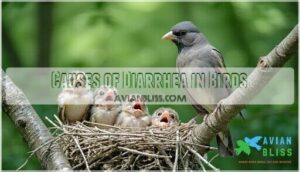
Diarrhea in birds happens for many reasons, including infections, parasites, and sudden diet changes. Stress, toxins, or even minor environmental shifts can upset their digestive system, leading to runny droppings.
Bacterial Infections
Bacterial infections, like those caused by E. coli, sneak into your bird’s cage via dirty food or water.
E. coli lurks in dirty bowls, waiting to wreak havoc on your feathered friend’s gut.
These infections upset their digestive system, leading to diarrhea. Probiotic therapy helps restore gut balance, while antibiotics, guided by an avian vet, tackle severe cases.
Prioritize hygiene—clean cages and dishes daily for infection prevention. Healthy habits = happy birds, and maintaining this balance is crucial for their well-being, which is why probiotic therapy is an essential tool.
Viral Infections
Viral infections like avian flu, Polyomavirus, Pacheco’s Disease, and Newcastle Disease can trigger diarrhea in birds.
These illnesses are highly contagious, so swift action matters.
To protect your birds:
- **Isolate sick birds immediately.
- **Disinfect cages and accessories thoroughly.
- **Avoid contact with wild or infected birds.
- **Provide balanced diets and stress-free environments.
Prevention is your best avian diarrhea remedy.
Fungal Infections
Fungal infections, like Aspergillosis, Candidiasis, or Macrorhabdus overgrowth, can upset your bird’s digestion, causing messy droppings and stress.
These infections often strike when immunity’s down or hygiene lapses.
Protect your feathered buddy through simple steps:
- Cleanliness Matters: Scrub the cage often to minimize fungal spores.
- Boost Immunity: Provide a balanced diet, adding probiotics or unsweetened yogurt for healthy gut bacteria.
- Spot Symptoms Early: Keep an eye on diarrhea, lethargy, or weight loss.
- Antifungal Medications: Talk to your vet about treatment options if symptoms persist.
Good hygiene and timely care guarantee your bird stays chirpy!
Parasites and Worms
Parasites like worms can wreak havoc, causing diarrhea and more.
Watch for Giardia symptoms like runny droppings or weight loss from worm infestation. Worm identification matters—tapeworms may leave segments in droppings, while coccidia prevention helps avoid stool changes and lethargy.
Use deworming treatments or prescribed drugs for bird parasites. Keep their environment clean to reduce intestinal parasite transmission. Monitoring is key!
Dietary Changes
In regards to bird diarrhea treatment, sudden changes in diet can be a major culprit.
Birds have sensitive stomachs, and abrupt shifts can lead to upset digestion.
To avoid trouble, always shift slowly.
Here’s what to watch for:
- Watery droppings appearing right after dietary changes.
- Unusual colors or consistency in their poop.
- Reduced enthusiasm for their typical food.
Stick to a balanced diet, steering clear of toxic foods such as avocado or raw beans.
Sudden changes also risk nutritional deficiencies or food allergies.
Moderation and gradual adjustments are key when introducing new foods.
Stress and Overstimulation
Stress can wreak havoc on a bird’s digestion, causing diarrhea.
Too much noise, handling, or chaos? It’s like a birdie emotional rollercoaster.
Try calming techniques: reduce stimuli by keeping noise low, limit handling to gentle, short sessions, and create a stress-free environment.
Add enrichment activities to their cage for comfort. A daily routine builds stability and improves stress management. Happy bird, happy home!
Signs and Symptoms of Bird Diarrhea
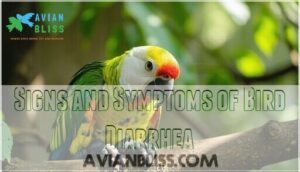
You’ll notice bird diarrhea through watery droppings, unusual colors, or stained feathers near the vent.
If your bird seems tired, stops eating, or shows any of these signs, it’s time to pay attention and act quickly.
Watery or Runny Droppings
Your bird’s droppings can say a lot about its health.
Watery droppings signal potential issues. Check these factors to spot problems early:
- Dropping Consistency: Are droppings loose without distinct urates?
- Color Changes: Unusual hues may indicate trouble.
- Frequency Increase: Frequent watery droppings risk dehydration.
Prompt care and simple bird diarrhea treatment, including home remedies, help recovery. Stay vigilant!
Lethargy and Loss of Appetite
When your bird seems low on energy and skips meals, it’s time to act.
Lethargy and appetite suppression in birds are serious weakness indicators and may lead to weight management issues.
Provide nutritional support at home like probiotics or soft foods, and keep an eye on droppings.
Don’t hesitate—schedule a vet visit promptly to address bird diarrhea and related concerns effectively.
Vomiting
Vomiting in birds isn’t always dangerous, but it’s worth understanding the cause.
Dietary mistakes, infections, or stress may lead to issues. Regurgitation differs—it’s voluntary and often harmless, while projectile vomiting signals bigger concerns, like infection.
Keep your bird hydrated and rested. Try home remedies like plain foods, but persistent vomiting needs a vet’s help to rule out bird illness complications.
Blood in The Stool
Noticing blood in stool? It’s urgent! Whether it’s melena’s black tarry look or subtle occult blood, act fast.
- Spot changes—blood hints at parasites, infections, or hemorrhage severity.
- Remove triggers—unsafe foods worsen bird illness signs.
- Act immediately—schedule vet care.
- Create comfort—balance diet, clean the cage, reduce stress.
bird treatment starts with quick, steady steps!
Diagnosing Bird Diarrhea
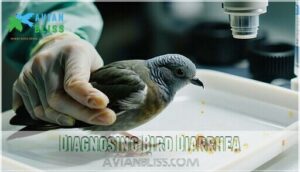
To diagnose bird diarrhea, you’ll need to examine their droppings closely and note any unusual changes in texture, color, or consistency.
Tests like fecal analysis and blood work can help identify infections or underlying health issues, so consulting a vet is key, which involves looking at complete concepts.
Fecal Tests
When symptoms appear, fecal tests become your diagnostic detective. These tests analyze bird droppings to identify hidden culprits causing intestinal problems. Sample collection requires fresh droppings in clean containers for veterinary labs to examine. Test accuracy depends on proper handling and timing.
| Analysis Type | Target Detection |
|---|---|
| Parasitology | Intestinal parasites, worms |
| Bacteriology | Harmful bacterial infections |
| Mycology | Fungal overgrowth issues |
| Cytology | Cellular abnormalities, inflammation |
Interpreting results helps pinpoint exact treatment needs for your bird’s recovery. This process is crucial for identifying the right course of action, and it relies on the accurate analysis of the test results.
Complete Blood Count
Your vet’s complete blood count reveals infection patterns through white blood cell analysis, making CBC interpretation straightforward for treating bird diarrhea.
This infection detection method also screens for anemia screening and checks hydration status while establishing baseline values.
When exploring home remedies birds need, understanding bird diarrhea causes through bird remedies starts with proper blood work analysis.
Serum Biochemistry Panel
After blood counts reveal infection markers, a serum biochemistry panel digs deeper into your bird’s internal health.
This thorough test examines liver enzyme analysis, kidney function tests, and spots electrolyte imbalances that often accompany bird diarrhea.
Key areas this panel evaluates include:
- Liver Enzyme Analysis – Detects liver damage or disease
- Kidney Function Tests – Monitors waste filtration efficiency
- Electrolyte Imbalances – Checks sodium, potassium, and chloride levels
- Dehydration Assessment – Measures protein concentration changes
- Nutritional Deficiencies – Identifies vitamin and mineral shortages
Your avian vet uses these results to pinpoint what’s causing abnormal bird droppings and create targeted treatment plans.
Endoscopy
After blood chemistry results, your avian vet might recommend endoscopy to examine your bird’s digestive tract directly.
This procedure offers clear endoscopy benefits by revealing hidden intestinal issues causing bird diarrhea.
However, endoscopy cost and endoscopy risks require careful consideration.
Endoscopy preparation involves fasting your bird beforehand.
Consider endoscopy alternatives like additional home remedies before proceeding with this invasive diagnostic tool for intestinal health.
Natural Remedies for Bird Diarrhea
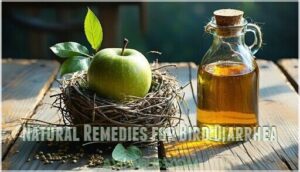
Once you’ve diagnosed your bird’s condition, natural remedies can provide gentle relief without harsh chemicals.
These time-tested solutions work with your bird’s natural healing processes.
- Apple Cider Vinegar (ACV Benefits): Mix one teaspoon of organic, unpasteurized ACV with eight ounces of water. This natural remedy balances gut pH and boosts immunity. Offer for up to three days to restore bird intestinal health.
- Aloe Detox: Add half a capful of pure aloe juice to one pint of fresh water daily. This soothes your bird’s digestive tract and aids hydration during recovery.
- Herb Salads: Create a mix of safe herbs like dandelion, plantain, and chickweed. Birds instinctively self-medicate by selecting what they need for natural bird care.
Coconut Oil can be mixed into food (quarter teaspoon) for its antibacterial properties.
Epsom Salt baths reduce stress while supporting these homemade bird remedies for superior intestinal health.
Home Care and Prevention
You can prevent most bird diarrhea cases by maintaining proper hygiene, providing balanced nutrition, and creating a stress-free environment for your feathered friend.
These simple daily practices work better than treating problems after they start, saving both you and your bird from unnecessary worry, which is why maintaining proper hygiene and providing balanced nutrition is crucial.
Providing a Balanced Diet
Natural remedies help, but your bird’s diet plays a bigger role in preventing diarrhea.
A balanced diet with quality pellets beats seed-only feeding every time.
Nutrient deficiencies from poor diets weaken intestinal health, making birds vulnerable to digestive upset.
Many owners find specialized bird pellets improve their bird’s health.
| Food Type | Benefits |
|---|---|
| High-quality pellets | Complete nutrition, prevents deficiencies |
| Fresh vegetables | Vitamins, fiber for digestive health |
| Limited seeds | Energy source, avoid excess fats |
Avoid toxic foods like avocado and chocolate.
Dietary diversity strengthens your bird’s gut naturally.
Keeping a Clean Environment
Clean environments are your bird’s first line of defense against diarrhea.
Daily cage disinfection with bird-safe cleaners prevents harmful bacteria buildup. Wash food hygiene bowls and water sanitation containers daily using hot, soapy water.
Don’t forget toy cleaning – scrub perches and accessories every other day. Change cage papers daily, lightly misting with disinfectant to reduce airborne particles.
Good air quality matters too. For effective cleaning, consider exploring options for products for disinfection.
These simple bird care habits create a healthy bird environment that reduces bird diarrhea risks substantially.
Quarantining New Birds
Beyond maintaining clean cages, quarantining new birds prevents disease prevention issues like bird diarrhea from spreading through your flock.
Smart bird care starts with proper isolation setup before introducing newcomers.
Here’s your quarantine checklist for effective bird treatment:
- Quarantine Length: Maintain separation for 4-6 weeks minimum
- Isolation Setup: Use separate room with dedicated cage
- Monitoring Behavior: Watch for illness signs daily
- Gradual Introduction: Slowly integrate after health clearance
These home remedies protect your entire flock.
Scheduling Regular Veterinary Checkups
Prevention beats treatment every time.
Annual checkups with an avian vet provide early detection of health issues before they become serious problems.
Regular veterinary checkups offer preventative care that saves money long-term while building trust with your bird.
Health monitoring through routine vet care guarantees your feathered friend stays healthy, giving you peace of mind.
Managing Bird Diarrhea
When your bird develops diarrhea, you’ll need to take immediate action to prevent dehydration and address the underlying cause.
Quick action saves feathered lives—hydration and treatment can’t wait when diarrhea strikes your bird.
Managing this condition effectively involves providing proper fluids, administering prescribed medications, and monitoring your bird’s response to treatment.
Fluid Administration
During diarrhea episodes, fluid administration becomes your bird’s lifeline against dehydration.
Watch for sunken eyes and lethargy—classic dehydration signs.
Electrolyte therapy through oral solutions helps restore balance, while severe cases need IV fluids from your vet.
Calculate fluid volume based on your bird’s weight.
Monitor hydration closely by checking skin elasticity and energy levels daily.
Antibiotic or Antifungal Medications
When bacterial infections or fungal infections cause your bird’s diarrhea, antibiotics or antifungal medications become essential tools.
Follow dosage guidelines strictly to prevent resistance development and minimize medication side-effects.
Your vet will prescribe appropriate treatments based on test results.
Consider probiotic supplementation during treatment to restore healthy gut bacteria.
Monitor your bird carefully for long-term effects throughout the medication course.
Endoscopy or Surgery
When antibiotics fail to address severe symptoms, your avian vet might recommend endoscopy or surgery for underlying health conditions.
These procedures carry endoscopy risks but offer vital diagnostic insights.
- Endoscopy allows direct visualization of internal organs without major incisions
- Surgical options become necessary when blockages threaten your bird’s life
- Post-op care requires dedicated monitoring and specialized recovery protocols
- Cost analysis helps you prepare financially for these alternative procedures
Medications for Intestinal Health
Veterinary-prescribed medications serve as your bird’s digestive system’s best allies.
Probiotics and prebiotics restore healthy gut bacteria, while antifungals combat yeast overgrowth that worsens bird diarrhea.
Your avian vet might recommend anti-inflammatories to reduce intestinal swelling or motility medications to regulate bowel movements.
These targeted treatments work alongside antibiotics when bacterial infections strike.
Consider using specific bird probiotics for ideal gut health.
Think of these medications as fine-tuning your feathered friend’s internal ecosystem back to perfect balance.
Reducing Stress in Birds
Stress can trigger diarrhea in birds, making it essential to create a calm environment that supports their recovery.
You’ll need to address factors like temperature, noise levels, and daily routines to help your feathered friend feel secure and heal faster.
Providing a Warm Environment
Beyond proper medication, creating a warm environment plays a key role in your bird’s recovery.
Set your ideal temperature between 75-80°F using reliable heat sources like ceramic heaters or heated perches. Place a monitoring thermometer near the cage for accuracy.
Focus on draft prevention by positioning the cage away from windows and air vents.
Maintain humidity levels around 50-60% to support respiratory health.
This stress-free environment promotes faster healing while reducing stress that could worsen diarrhea symptoms.
Minimizing Loud Noises
When your bird’s dealing with diarrhea, creating a stress-free environment starts with minimizing loud noises.
Soundproofing cages or relocating your bird location away from TVs and appliances helps tremendously.
Consider calming music at low volumes and choose quiet toys over noisy ones.
These noise reduction strategies support home remedies by keeping stress levels down during recovery.
Creating a Routine
When establishing a daily schedule, your bird thrives on predictability.
Consistent feeding times, regular playtime, and structured sleep patterns create security.
Include a weekly bathing routine to maintain health.
This stress-free environment prevents digestive issues like bird diarrhea.
Pair your routine with home remedies like a mild diet when needed.
Creating a routine becomes your bird’s foundation for wellness.
When to Seek Veterinary Care
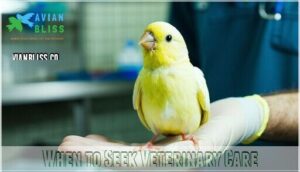
While home remedies can help with mild diarrhea, you’ll need professional veterinary care when symptoms persist beyond 24-48 hours or worsen despite treatment.
You should contact your avian vet immediately if your bird shows severe symptoms like blood in droppings, extreme lethargy, vomiting, or signs of dehydration, as these conditions can become life-threatening without proper medical intervention.
Persistent Diarrhea
The clock’s ticking when your bird’s diarrhea won’t quit after 24 hours.
Persistent diarrhea signals serious avian health concerns that home remedies can’t always fix.
Here’s what makes this condition urgent:
- Dehydration Risks escalate rapidly in small birds
- Chronic Infections may be silently spreading
- Malabsorption Issues prevent proper nutrition absorption
- Dietary Management requires professional adjustment
- Long-Term Prognosis depends on early intervention
Don’t wait—your vet can diagnose underlying causes and prevent complications.
Severe Symptoms
Some warning signs demand immediate veterinary attention.
Bloody Stool signals internal bleeding, while Extreme Lethargy means your bird can’t function normally.
Persistent Vomiting combined with watery droppings creates Rapid Dehydration.
Watch for Abdominal Pain – birds may hunch or avoid perching.
These severe symptoms aren’t just discomfort; they’re emergencies requiring professional care within hours.
Underlying Health Conditions
Severe symptoms often signal serious underlying health conditions that need immediate attention.
Your bird’s diarrhea might stem from kidney disease, liver failure, or toxic exposure that’s wreaking havoc internally.
Watch for these red flags:
- Metabolic disorders causing weakness and poor coordination
- Immune deficiencies making your bird vulnerable to infections
- Avian diseases requiring specialized bird disease treatment protocols
Don’t wait—seek professional help.
Frequently Asked Questions (FAQs)
What should I do if my bird has diarrhea?
First, isolate your bird and monitor closely.
Provide fresh water to prevent dehydration. Try apple cider vinegar in water or probiotics.
If diarrhea persists beyond 24 hours, contact an avian veterinarian immediately.
How do you treat Budgie diarrhea?
About 80% of budgie diarrhea cases stem from dietary issues or stress.
You’ll want to offer cold sweet black tea, add probiotics to their diet, make certain fresh water access, and monitor droppings closely for improvement.
How do you treat liquid poop in birds?
Liquid poop requires immediate attention since it’s often more serious than regular diarrhea.
You’ll need to provide electrolytes, guarantee hydration, offer probiotics, and contact your vet within 24 hours for proper diagnosis.
What causes diarrhea in birds?
Bacterial infections, viral illnesses, fungal problems, parasites, dietary changes, stress, toxins, and antibiotic use can trigger diarrhea in your bird.
Poor hygiene, contaminated food, and sudden environmental changes also disrupt their delicate digestive system, which can be affected by various factors including dietary changes.
What causes avian diarrhea?
Like a storm disrupting calm waters, avian diarrhea strikes when bacterial infections, dietary changes, parasites, stress, or viral illnesses upset your bird’s delicate digestive balance.
You’ll need proper diagnosis to identify the underlying culprit.
How can probiotics help a parakeet with diarrhea?
Probiotics restore your parakeet’s healthy gut bacteria balance, which diarrhea disrupts.
They’ll help firm up loose droppings, improve digestion, and boost immunity.
Add bird-specific probiotics to food or water daily until symptoms improve.
How do you treat diarrhea in birds at home?
You can help your bird recover by adding apple cider vinegar to water, offering probiotics, and providing activated charcoal in small amounts.
Always make certain fresh water access and consult a vet if symptoms persist.
What is the anti diarrhea for birds?
You’ll find antibiotics, antifungals, and probiotics work as anti-diarrheal treatments.
Your vet might prescribe specific medications, but you can also use apple cider vinegar, activated charcoal, or cornstarch as gentle home remedies.
What to do if my bird’s poop is watery?
Check your bird’s droppings immediately for color changes or blood. Provide fresh water to prevent dehydration. If watery poop persists beyond 24 hours, contact an avian veterinarian promptly for proper diagnosis.
What do you feed a bird with diarrhea?
Offer easily digestible foods like cooked rice, plain oatmeal, or spray millet instead of regular pellets.
Provide fresh water constantly and consider adding probiotics to restore healthy gut bacteria balance naturally.
Conclusion
Like a lighthouse guiding ships through stormy waters, these bird diarrhea treatment home remedies can help navigate your feathered companion’s digestive troubles.
You’ve learned to recognize warning signs, apply gentle solutions like honey and cinnamon, and create a stress-free environment.
Remember, these remedies work best for mild cases—persistent symptoms require professional veterinary care.
Your bird’s health depends on quick action and careful observation, so trust your instincts, monitor closely, and don’t hesitate to seek expert help when needed.