This site is supported by our readers. We may earn a commission, at no cost to you, if you purchase through links.
 When deciding where to place a bird bath, think like a bird seeking both safety and convenience.
Position your bath 3-10 feet from shrubs or trees, giving feathered visitors quick escape routes while maintaining clear sightlines for predator detection.
Choose a spot with morning sunlight and afternoon shade – birds appreciate the warmth but don’t want to overheat during their spa sessions.
Make certain the location offers stable, level ground that won’t wobble under landing birds.
You’ll want easy access for cleaning and refilling, making maintenance a breeze rather than a chore.
The perfect placement transforms your yard into a bustling avian social hub, but mastering the art involves understanding several key safety considerations.
Table Of Contents
- Key Takeaways
- Choosing The Right Location
- Best Places to Put a Bird Bath
- Factors Influencing Bird Bath Placement
- Predator Mitigation and Safety
- Landscaping and Bird Bath Placement
- Water Source and Plumbing Considerations
- Seasonal Considerations and Adaptability
- Practical Tips for Placing Your Bird Bath
- Balancing Aesthetics and Bird Needs
- Maintaining Your Bird Bath for Optimal Use
- Frequently Asked Questions (FAQs)
- Where not to put a bird bath?
- How far away from the house should a bird bath be?
- Where is the best place for bird bath?
- Where should a birdbath be located?
- How should a bird bath be placed?
- Should you install a bird bath in your yard?
- How do I get my bird bath started?
- Should you put a bird bath near a window?
- How to choose a bird bath?
- Should a birdbath be in sun or shade?
- Conclusion
Key Takeaways
- Position your bird bath 3-10 feet from shrubs or trees to give birds quick escape routes while maintaining clear sightlines for predator detection, and place it at least 3 feet high to deter ground predators like cats.
- Choose a spot with morning sunlight and afternoon shade to keep water cool and fresh – partial shade prevents rapid evaporation and algae growth while still attracting birds who need comfortable bathing conditions.
- Ensure you’ll have easy access for cleaning and refilling by placing the bath near a water source like a garden hose or downspout, since you’ll need to replace water every 3-4 days and scrub away algae buildup weekly.
- Keep your bird bath on stable, level ground away from bird feeders to prevent contamination, and maintain shallow water depth of 1-2 inches with gradual slopes so birds can wade in safely without drowning risk.
Choosing The Right Location
You can’t just plop your bird bath anywhere in the yard and expect feathered visitors to flock to it like it’s some magical watering hole.
Choosing the right spot involves balancing several key factors including your bath’s size and weight, your local climate conditions, and how easily you can keep the water clean and visible to both birds and yourself.
This decision requires considering complete concepts such as the bath’s maintenance and visibility, to ensure that it remains an attractive and safe spot for birds.
Size and Weight Considerations
Your bird bath’s size and weight create the foundation for successful placement.
Your bird bath’s foundation determines whether feathered friends will visit or fly right past your yard.
Heavier materials like concrete offer superior bird bath stability but present portability concerns when relocating.
Lightweight options risk bird bath tipping without proper weight distribution on level surfaces.
Consider material impact on durability—ceramic cracks easily while resin withstands weather.
Bird bath size affects bird comfort and determines placement limitations in tight spaces.
Match your bird bath weight to your yard’s terrain and your ability to maintain it properly.
Climate and Stability Factors
Your bird bath’s climate and stability needs careful attention to keep feathered friends happy year-round.
Water temperature fluctuates with sun exposure – too much heat stresses birds, while shade benefits include cooler, fresher water.
Ground level placement on stable surfaces prevents tipping, especially during windy conditions.
Winter weather demands extra tipping prevention measures.
- Scorching summers: Birds need cool refuge from heat
- Bone-chilling winters: Frozen baths offer no relief
- Gusty storms: Watching your bath tumble breaks hearts
Visibility and Cleanliness Importance
Why choose a spot where you can’t enjoy watching your feathered visitors?
Strategic positioning near windows guarantees easy monitoring for bird bath cleaning while maximizing bird enjoyment.
Good visibility prevents water contamination from hidden debris, while hazard minimization keeps predators from lurking nearby.
Smart bird bath placement creates a clean, safe oasis that benefits both you and your birds.
Best Places to Put a Bird Bath
Finding the perfect spot transforms your backyard into a bird paradise. Partial shade keeps water cool while providing comfortable sun exposure for your feathered visitors.
Here are four prime locations:
- Near shrubs (10-15 feet away) – offers predator visibility while providing quick escape routes
- Close to downspouts – guarantees easy refills during rainstorms
- Garden edges – creates natural bird bath placement that blends beautifully
- Multiple locations – multiple baths cater to different species’ preferences
Consider water depth of 1-2 inches for ideal safety and accessibility in your best bird bath location.
Factors Influencing Bird Bath Placement
When you’re choosing where to place your bird bath, several environmental factors work together to determine whether feathered visitors will actually use it.
You’ll need to take into account how sunlight, wind patterns, and noise levels in your yard affect both water quality and bird comfort.
Sunlight and Shade Balance

Getting the right mix of sunlight and shade for your bird bath placement keeps birds happy and water fresh.
Too much sunlight spikes water temperature, while constant shade encourages algae growth. Aim for partial shade to slow evaporation rates and keep water cool but not chilly.
Birds enjoy comfort, so try these tips:
- Place near dappled tree cover.
- Avoid deep, damp shade.
- Allow morning sunlight exposure.
- Balance for consistent water temperature.
By following these guidelines, you can create a bird-friendly environment that promotes comfort and freshness, making your bird bath a welcoming spot for birds to visit and enjoy.
Wind and Open Space Considerations
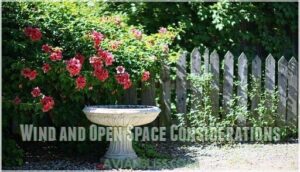
Wind Exposure affects your bird bath placement more than you’d think.
Strong gusts create ripples that spook birds and drain water quickly.
Position your bath where Open Visibility meets natural Predator Cover – near shrubs or fences that act as windbreaks.
This Bath Stability guarantees birds feel secure while maintaining the clear sightlines they need for Bird Security in any safe location.
Noise Levels and Bird Comfort
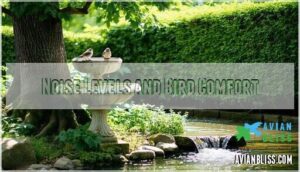
Beyond the visual appeal of your bird bath placement, noise levels dramatically impact bird comfort and usage.
Birds possess heightened sensitivity to ambient noise, making them skittish around traffic sounds and loud machinery.
Your feathered visitors need peaceful placement to feel secure while drinking and bathing.
Consider these noise-reduction strategies for ideal bird bath serene backyard positioning:
- Position away from busy streets to minimize traffic sounds
- Avoid areas near air conditioning units or pool equipment
- Choose spots sheltered by natural sound barriers like hedges
- Select locations distant from construction or loud machinery
- Create quiet zones using strategic landscaping and plant placement
Predator Mitigation and Safety

You’ll want to place your bird bath where feathered visitors can drink safely without becoming someone’s lunch.
Smart placement means positioning it 10-15 feet from shrubs for quick escape routes while keeping it at least three feet high to deter ground predators like cats.
Safe Heights and Locations
Smart bird bath placement means finding that sweet spot where feathered friends feel secure. Position your bath three to four feet high using a sturdy pedestal or tree stump for ideal Height Placement and Predator Protection.
This elevation provides excellent Predator Deterrence while allowing birds clear sightlines. You can also find a suitable bird bath designed to prevent predators.
| Height Range | Safety Benefits | Bird Access |
|---|---|---|
| 3-4 feet | Deters ground predators | Easy landing |
| Near shrubs | Quick escape routes | Natural cover |
| Shaded Areas | Cool, fresh water | Comfortable bathing |
Keep your bird bath location at least three feet from windows to prevent Window Collisions while ensuring bird safety through thoughtful positioning.
Shallow Water for Bird Safety
In regards to bird bath safety, shallow depth is your feathered friends’ lifeline. Most birds, especially tiny chickadees, can’t swim like ducks – they need shallow water that won’t become a drowning hazard. Aim for a water depth of one to two inches maximum, creating gradual slopes that act like a natural shoreline.
Stone placement transforms your bird bath into a multi-level oasis with varying depths. Flat rocks create stepping stones, giving birds confidence to wade in gradually. This bird bath water depth strategy prevents accidents while accommodating different species’ comfort levels.
Think of it as building a bird-sized beach resort – water level safety means every visitor, from wrens to robins, can enjoy an invigorating dip without worry. Drowning prevention starts with thoughtful design that prioritizes chickadee safety over aesthetics.
Balancing Aesthetics and Utility
You don’t need to sacrifice visual appeal for bird safety when choosing your bird bath ideal location.
Smart design harmony turns your bath into functional art that meets bird preferences while enhancing your space.
Natural stone materials and clever garden integration create an attractive location that birds trust.
These bird bath placement tips prove that bird bath aesthetics and utility work beautifully together.
Landscaping and Bird Bath Placement
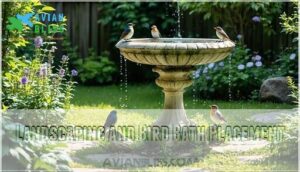
You can transform your bird bath from a simple water source into a natural focal point by thoughtfully integrating it with your existing landscape design.
Strategic plant placement around your bath creates the perfect microhabitat that birds crave, combining shelter, safety, and aesthetic appeal in one harmonious garden feature.
Blending in With Nature
Tuck your bird bath among existing foliage using natural camouflage techniques that create seamless habitat integration.
Choose materials like weathered stone or driftwood for your bird bath design, mimicking environment textures birds recognize.
This aesthetic harmony transforms an ordinary fixture into an attractive location that feels like nature’s own watering hole, enhancing bird safety through familiar surroundings.
Incorporating Plants for Birds
Surround your bird bath placement with native species that create the perfect birdfriendly yard.
Choose plants offering foliage cover like thorny bushes for plant safety—they’ll deter predators while providing shade.
Select varieties where berries attract songbirds year-round, creating a natural buffet.
Consider sourcing native plants to support local ecosystems.
These attracting birds strategies transform your space into a wildlife haven that birds can’t resist visiting.
Water Source and Plumbing Considerations

You’ll want to position your bird bath near a water source like a garden hose or outdoor spigot, making regular cleaning and refilling much easier than lugging heavy watering cans across your yard.
Placing it under a downspout or near automatic sprinklers can provide convenient water replenishment, though you’ll still need easy access for the weekly scrub-downs that keep your feathered visitors healthy.
Options for Water Supply
When choosing your bird bath’s water source, you’ll find several smart options that keep birds coming back for more:
- Automatic Refillers connect to your downspout or gutter system, using rainwater harvesting to maintain consistent water levels
- Solar Power fountains and misters create moving water that attracts birds while staying eco-friendly
- Winter Heating elements guarantee year-round water supply without complex plumbing installations
Cleaning and Maintaining Water Supply
Clean water isn’t just nice—it’s essential for feathered visitors.
Replace water every few days to prevent algae buildup and maintain quality. Scrub away mineral deposits with a stiff brush weekly.
Bird bath fountains need pump cleaning for ideal flow. Before winter hits, winterizing prevents cracking.
Skip harsh chemicals; birds prefer safe, natural cleaning methods for their drinking spots.
Seasonal Considerations and Adaptability

You’ll need to adjust your bird bath’s location throughout the year as seasons change, moving it to shadier spots during scorching summers and sunnier areas when winter arrives.
Portable bird baths offer the perfect solution for this seasonal shuffle, letting you relocate your feathered friends’ water source without the headache of permanent installation, which is a key aspect of maintaining a portable bird bath.
Adapting to Changing Seasons
Your bird bath needs seasonal tweaks to stay bird-friendly year-round.
Winter water requires heaters to prevent freezing, while summer shade keeps water cool and fresh.
During migration hydration peaks, birds desperately need accessible water sources.
Autumn cleaning becomes vital as falling leaves contaminate baths faster.
Adjust your seasonal placement strategy—move baths between bird bath shade and bird bath sunlight based on climate demands.
These seasonal considerations guarantee your feathered friends always find invigorating winter and summer relief.
Portable Bird Baths for Flexibility
When seasons shift, portable bird baths offer flexibility and charm.
They’re easy to relocate, letting you adjust bird bath placement for ideal sun, shade, or shelter. Plus, they’re perfect for winter storage or revitalizing your garden’s look.
- Material durability: Lightweight yet sturdy designs handle frequent moves.
- Aesthetic variety: Options fit any garden style.
- Cost effectiveness: Affordable solutions for dynamic setups.
Finding the right one is easy because many options are available. Movable bird baths guarantee birds stay hydrated, safe, and happy year-round!
Practical Tips for Placing Your Bird Bath

Getting your bird bath placement just right doesn’t have to feel like rocket science.
After considering seasonal needs, you’ll want these practical strategies that actually work in real backyards.
Start with the fundamentals that make or break your setup:
- Stability matters most – Choose level ground and sturdy surfaces to prevent costly tip-overs that’ll leave you cleaning up messes instead of watching birds
- Smart sunlight management – Position in partial shade to keep water cool while preventing rapid algae growth that turns your pristine bath into green soup
- Strategic predator protection – Maintain 10-15 feet from dense shrubs where cats lurk, but keep some nearby cover for bird confidence and quick escapes
- Easy automatic refills – Place near downspouts or sprinkler systems for hands-free water maintenance during busy weeks
- Multiple baths for garden integration – Scatter several throughout your landscape to accommodate different bird species while creating natural focal points
Consider pet/child safety zones and make certain good visibility from your favorite window.
Birds need time for discovery, so patience pays off.
Balancing Aesthetics and Bird Needs

You don’t have to choose between a beautiful garden feature and a functional bird habitat when placing your bird bath.
Creating an attractive water source that truly serves birds requires finding the sweet spot where visual appeal meets practical bird safety and comfort needs.
Ensuring Easy Access for Birds
Smart bird bath placement means rolling out the red carpet for your feathered visitors. Gradual slopes help birds wade in comfortably, while varying depths accommodate everyone from tiny wrens to chunky robins. Think of it as creating a bird-sized swimming pool with a shallow end.
Think of your bird bath as a five-star resort where every feathered guest deserves the perfect room with a view.
Bird Bath Height Water Depth Bath Shape Landing Area
Add perching spots like flat stones for confident landings. Multiple baths increase accessibility, ensuring winter access when water sources freeze.
Proper bird bath placement balances accessibility with bird safety from predators.
Bird Baths as Garden Ornaments
Beyond functionality, your bird bath can become a stunning focal point that enhances your entire yard layout.
Smart aesthetic integration transforms this practical feature into garden art that birds actually use.
Consider these ornament styles for seamless bird bath integration:
- Natural stone designs blend effortlessly with existing landscaping elements
- Ceramic finishes add colorful accents while maintaining durability
- Tiered fountains create visual interest through varied material choices
Maintaining Your Bird Bath for Optimal Use

Finding the perfect spot for your bird bath is just the beginning—keeping it clean and functional guarantees birds will actually use it.
You’ll need to replace the water every few days and scrub away algae buildup, but these simple maintenance tasks will transform your bird bath from a forgotten garden ornament into a bustling hub of avian activity.
Importance of Clean Water
Clean water in your bird bath isn’t just nice to have—it’s a lifeline for feathered visitors.
Dirty water breeds harmful bacteria and algae, causing waterborne illnesses that can devastate bird health.
Regular cleaning prevents algae growth and disease control issues, think of it as maintaining a mini oasis: fresh, sparkling water keeps birds coming back healthy and happy.
Regular Maintenance Made Easy
Clean water becomes your feathered friends’ safe haven with smart bird bath maintenance.
You’ll breeze through upkeep with these simple steps:
- Weekly Water Replacement: Fresh water every 3-4 days prevents bacteria buildup and keeps your bath sparkling.
- Easy Cleaning Tools: A stiff brush and biodegradable soap tackle stubborn algae without harming visiting birds.
- Winter Maintenance Schedule: Prevent freezing damage by checking daily during cold snaps.
Frequently Asked Questions (FAQs)
Where not to put a bird bath?
Don’t put all your eggs in one basket by placing bird baths under feeders, near windows, or in wide-open areas.
You’ll create contamination, collision risks, and predator exposure that’ll harm visiting birds.
How far away from the house should a bird bath be?
You can place your bird bath anywhere from right outside your window to across your yard.
The key isn’t distance from your house—it’s finding the sweet spot that balances bird safety with your viewing pleasure.
Where is the best place for bird bath?
Like finding the perfect neighborhood for your family, you’ll want to position your bird bath 10-15 feet from trees for cover.
Away from feeders, in partial shade, and on stable, level ground.
Where should a birdbath be located?
You’ll want to position your birdbath 10-15 feet from trees for cover, at least 3 feet high, in partial shade, and away from feeders to keep water clean and birds safe.
How should a bird bath be placed?
Set your bird bath on level ground to prevent tipping.
Mount it at least three feet high on a stable pedestal.
You’ll want it positioned securely so birds feel safe drinking and bathing.
Should you install a bird bath in your yard?
Yes, you should install a bird bath in your yard.
It attracts diverse bird species, provides essential hydration, and creates a lively backyard ecosystem.
That’ll bring joy year-round while supporting local wildlife.
How do I get my bird bath started?
Building your feathered oasis requires patience—birds discover new water sources gradually. Fill your bath with fresh, shallow water (5 inches deep), add flat stones for perching, and wait quietly nearby.
Should you put a bird bath near a window?
Avoid placing your bird bath directly near windows, as this increases collision risks.
Instead, follow the "rule of 3 or 30" – position it within three feet or farther than thirty feet from windows.
How to choose a bird bath?
Consider your space first – choose shallow basins under 2 inches deep with gentle slopes.
Look for sturdy materials like ceramic or stone that won’t tip easily, and pick designs that match your garden’s style, focusing on complete concepts to ensure harmony.
Should a birdbath be in sun or shade?
Partial shade works best for your birdbath.
You’ll keep water cool and fresh while preventing rapid evaporation and algae growth.
Full sun heats water too quickly, but complete shade won’t attract as many birds.
Conclusion
The proof is in the pudding regarding successful bird bath placement – your feathered friends’ behavior will tell you everything.
Remember, knowing where to place a bird bath involves balancing safety, accessibility, and maintenance needs.
Keep water fresh, position strategically near cover, and maintain clear sightlines for predator detection.
With proper placement and regular upkeep, you’ll create an irresistible oasis that transforms your yard into a thriving bird sanctuary year-round.
- https://www.thegardengates.com/blogs/beyond-the-garden-gates/location-is-everything-where-to-place-outdoor-birdbaths?srsltid=AfmBOoo8_X_iIm2vSjgUbuvW0kv22sqtUml53MhNBoXgIn2eyjx6kRe0
- https://www.reddit.com/r/landscaping/comments/17v8f7i/where_is_the_best_location_for_a_bird_feeder_and/
- https://www.thespruce.com/bird-bath-placement-385549
- https://www.allaboutbirds.org/news/attract-birds-with-birdbaths/
- https://www.rspb.org.uk/helping-nature/what-you-can-do/activities/make-the-perfect-bird-bath