This site is supported by our readers. We may earn a commission, at no cost to you, if you purchase through links.

Most birdhouses fail their occupants not at nesting time, but afterward—when old nesting material becomes a breeding ground for mites, bacteria, and parasites that drive away next season’s pairs.
A bird house with removable floor changes that equation entirely, giving you direct access to the interior without prying, unscrewing, or dismantling the whole structure.
Cedar construction, drainage holes sized between 3/8 and 1/2 inches, and species-matched entrance holes ranging from 1⅛ to 1½ inches all work together—but none of it matters if you can’t clean the box properly.
The five birdhouses ahead solve that problem from the ground up.
Table Of Contents
- Key Takeaways
- Key Features of Bird Houses With Removable Floors
- Top 5 Bird Houses With Removable Floors
- Benefits of a Removable Floor Birdhouse Design
- Installation and Maintenance Tips for Removable Floor Birdhouses
- Frequently Asked Questions (FAQs)
- Where not to put a birdhouse?
- Do birds prefer unpainted birdhouses?
- Where not to put a bird house?
- Should I put anything inside a birdhouse?
- Why won’t birds use my birdhouse?
- What kind of birdhouses will birds actually use?
- How does a removable floor benefit bird safety?
- Can a removable floor affect bird nesting behavior?
- What tools are needed to remove the floor?
- Are there disadvantages to a removable floor design?
- Conclusion
Key Takeaways
- A removable floor is the single most important maintenance feature in a birdhouse, giving you direct access to clear out old nesting material, mites, and bacteria before they drive away the next season’s birds.
- Species-matched entrance holes—1⅛ inches for chickadees, 1½ inches for bluebirds—combined with interior climbing grooves below the opening give fledglings a real shot at making it out safely.
- Cedar construction at ¾‑inch thickness, drainage holes between 3/8 and ½ inches, and high‑placed ventilation slots work together to keep the interior dry, breathable, and structurally sound across multiple seasons.
- Placement matters as much as the box itself—east‑facing orientation, a height of 5 feet or more, and a baffle‑equipped pole mount cut predator pressure and heat stress significantly.
Key Features of Bird Houses With Removable Floors
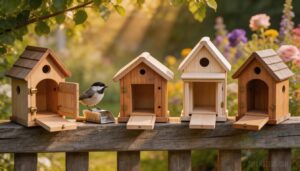
Not all birdhouses are built the same, and the right features can make a real difference in how well birds nest and how easily you maintain the box. The best removable-floor designs share a few key traits worth knowing before you buy.
If you’re starting from scratch, browsing a curated selection of functional birdhouse supplies online can help you spot which features actually matter before you commit to a design.
Here’s what to look for.
Removable Floor Panels for Easy Cleaning
When the nesting season ends, the last thing you want is a birdhouse you can’t properly clean. A removable bottom panel solves that problem directly — no tools, no struggle.
Hardware latch design keeps the panel sealed tight against wind and rain, while tool‑free removal makes birdhouse cleaning fast and straightforward.
Good moisture management starts here, protecting both the wood and next season’s residents.
Customizable Entrance Hole Sizes
Cleaning access matters, but so does who gets through the front door. That’s where custom entrance hole size makes a real difference.
Standard size charts recommend 1⅛ inches for chickadees, 1½ inches for bluebirds. Adjustable plate inserts let you swap sizes without replacing the whole house.
Hole shape impact and species-specific sizing work together, keeping the right birds in and predators out.
Following the east‑facing orientation(https://www.birdfy.com/blogs/blogs/birdhouse-hole-size-chart-by-species) helps keep the house cooler and reduces heat stress.
Integrated Drainage and Ventilation Systems
Once you’ve matched the entrance hole, water and heat management become the next line of defense. A solid integrated bottom drainage and ventilation system keeps the interior dry and breathable year-round.
- Drainage Hole Sizing: Four floor holes, roughly 3/8 to 1/2 inch, clear standing water fast
- Vent Placement Strategy: Ventilation holes sit high on side walls, just under the roofline, so rain stays out
- Moisture Control Design: Sloped, overhanging roofs and a removable bottom panel work together for weather-resistant performance
- Seasonal Sealing Techniques: Block those vents and drainage points in winter to trap warmth, then reopen them for easy cleaning come spring
Heat Regulation Mechanisms also benefit — upper vents let hot air escape without exposing the cavity to storms.
Interior Grooves for Fledgling Climbing
Good drainage manages the water — but what helps fledglings manage the climb out?
A grooved interior wall gives nestlings the foothold they need. Shallow horizontal cuts, about 1/8 inch deep with 1/4 to 1/2 inch spacing, run directly below the entrance hole, creating a natural ladder effect.
| Feature | Specification | Purpose |
|---|---|---|
| Groove Depth Guidelines | 1/8 inch deep | Grip without weakening panel |
| Spacing Ratio | 1/4–1/2 inch apart | Continuous toe placement |
| Groove Placement Tips | Below entrance hole | Direct fledgling exit path |
Species-specific groove design matters most for bluebirds and swallows. Surface roughness on a removable bottom panel also aids easy cleaning without disrupting this climbing surface.
Durable Materials and Construction Choices
Cedar Wall Thickness starts at 3/4 inch — thick enough to hold up through years of rain, heat, and repeated panel removal. Durable cedar construction resists rot and insects without chemical treatment.
That kind of lasting build quality makes cedar a smart pick for year-round setups, as covered in this guide to top-rated bluebird feeders for durability and easy maintenance.
A stainless steel guard protects the entrance from wear and predators.
Roof Overhang Design sheds water away from the front panel, while eco-friendly exterior coatings keep the wood weather-resistant season after season.
Top 5 Bird Houses With Removable Floors
Finding the right birdhouse with a removable floor doesn’t have to feel overwhelming. Each option below was chosen for its cleaning access, build quality, and bird-friendly design.
Here are five solid picks worth your attention.
1. Gray Bunny Cedar Birdhouse Outdoor
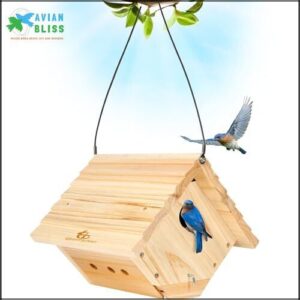
The Gray Bunny GB-6921 is a solid starting point if you want an affordable, no-fuss birdhouse that actually works.
Built from natural cedar, it measures 6 × 7 × 5.75 inches and weighs just over 10 ounces, making it easy to hang or relocate.
The slide-out bottom panel lets you clear old nesting material quickly after each season.
It’s sized for wrens and small cavity nesters, comes with a hanging wire, and the untreated wood keeps the environment safe for birds.
| Best For | Backyard birders who want a simple, affordable birdhouse that attracts small birds like wrens without a lot of setup. |
|---|---|
| Material | Cedar wood |
| Easy Cleaning | Slide-out bottom panel |
| Entrance Hole | Standard small bird |
| Predator Protection | No perch design |
| Target Species | Wrens, bluebirds |
| Mounting Style | Hanging wire |
| Additional Features |
|
- Natural cedar is weather-resistant and totally safe for birds—no toxic finishes to worry about
- The slide-out bottom makes end-of-season cleaning quick and painless
- Lightweight and easy to hang or move around as needed
- The roof is held on with thin pins that can loosen over time, so you may need to glue or nail it down
- No perch included, which can discourage birds from using it until you add one yourself
- A few buyers reported the house falling apart within months, especially in harsh weather
2. Predimeza Durable Bluebird House
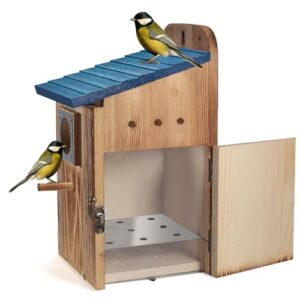
The Predimeza Durable Bluebird House (Model BH-001) is built for one job: giving bluebirds a safe, reliable place to nest.
At 5.4 × 5.4 × 10.3 inches with a 1.5-inch entrance hole, it fits Eastern bluebirds well and keeps larger birds out.
The copper predator guard adds real protection, and the clear side panel lets you monitor nesting activity without opening the box.
It arrives fully assembled, weighs just 2 lbs, and the cleaning door makes post-season maintenance straightforward.
Priced at $25.99, it’s practical and purposeful.
| Best For | Bird watchers and backyard enthusiasts who want a ready-to-hang bluebird house with built-in predator protection and easy monitoring. |
|---|---|
| Material | Treated pine |
| Easy Cleaning | Integrated cleaning door |
| Entrance Hole | Small bird optimized |
| Predator Protection | Copper predator guard |
| Target Species | Bluebirds, wrens |
| Mounting Style | Ready to hang |
| Additional Features |
|
- Copper predator guard gives nesting birds a real layer of defense against common threats
- Clear side panel lets you watch nesting activity without disturbing the birds inside
- Comes fully assembled with a cleaning door — no tools, no fuss, just hang it and go
- Pine wood can split or crack near the entrance over time, especially in rough weather
- The transparent side panel has been known to pop loose in strong winds
- Finish fades and glue can fail after rain exposure, so long-term durability is a concern
3. MOBYKE Wooden Clear Window Birdhouse
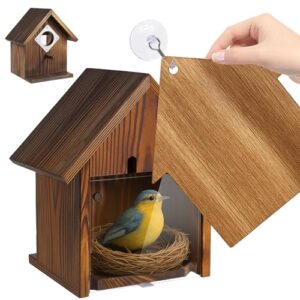
The MOBYKE Wooden Clear Window Birdhouse (MNB-004-2) is one of those designs that actually lets you watch the story unfold.
At 5.5 × 8.2 × 7 inches and just 1.61 lbs, it mounts easily on any porch or garden wall using adhesive hooks.
You get a stainless-steel predator guard, a transparent viewing panel, and a rotating shade panel to control light and limit stress on nesting birds.
The burnt-wood finish holds up outdoors year-round, all for $23.99.
| Best For | Anyone who wants to watch birds nest up close — especially families, nature lovers, or backyard birders who want a front-row seat without spooking their feathered guests. |
|---|---|
| Material | Heavy-burnt wood |
| Easy Cleaning | Removable components |
| Entrance Hole | Small cavity-nesting |
| Predator Protection | Stainless-steel guard frame |
| Target Species | Bluebirds, finches, chickadees |
| Mounting Style | Adhesive hooks/suction cup |
| Additional Features |
|
- The clear window lets you actually see what’s happening inside — eggs, chicks, the whole process
- Stainless-steel predator guard gives nesting birds a real shot at raising a successful brood
- Easy to hang and weather-resistant, so it works year-round without much fuss
- Birds can be picky — placement matters a lot, and some users never get any takers
- The window fogs up and collects grime over time, so you’ll need to clean it regularly
- The shade panel is a bit of a trade-off: great for the birds, but it blocks your view when attached
4. Church Style Wooden Birdhouse
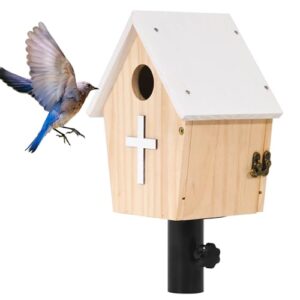
GAW Church Style Wooden Birdhouse brings a patriotic touch to your backyard without sacrificing function. At just 1.28 lbs and 5.1 × 6.5 × 8.3 inches, it’s compact but practical.
rust-proof metal mesh floor elevates nests above moisture, and the ventilated roof keeps airflow steady.
A 1.5-inch entrance suits wrens, chickadees, and bluebirds, while the included predator guard adds real protection.
The removable roof and side-door latch make post-season cleaning straightforward, and T-post mounting hardware is included.
| Best For | Backyard birders who want a functional, easy-to-clean nesting box with a decorative patriotic look for attracting small songbirds like wrens, chickadees, and bluebirds. |
|---|---|
| Material | Solid wood |
| Easy Cleaning | Removable roof/side door |
| Entrance Hole | 1.5 in. entrance |
| Predator Protection | Predator guard included |
| Target Species | Bluebirds, wrens, chickadees |
| Mounting Style | T-post hardware included |
| Additional Features |
|
- The elevated metal mesh floor and ventilated roof do a solid job keeping nests dry and well-aired.
- Cleaning is genuinely easy — flip the side latch, lift the roof, and you’re done.
- Comes ready to mount with T-post hardware included, so setup is pretty painless.
- The 1.5-inch entrance only works for smaller birds, so don’t expect to attract larger species.
- The roof can crack over time in really hot, sunny spots, so it may need some occasional TLC.
- The mounting hardware can be a bit fiddly and might not fit larger poles without some extra work.
5. Coveside Convertible Winter Roost Birdhouse
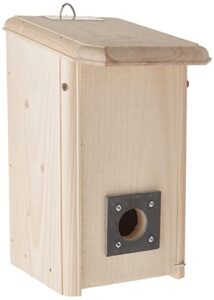
Few birdhouses pull double duty the way the Coveside Convertible does. Built from 1-inch Eastern White Pine and handcrafted in Maine, it flips between a winter roost and a summer nesting box by reversing the front panel.
In roost mode, the low entrance keeps warm air inside longer. In nesting mode, the 1.5-inch opening suits bluebirds and small woodpeckers.
Removable perches and interior components make seasonal cleaning simple, and the 1-year warranty gives you solid peace of mind.
| Best For | Backyard bird lovers who want one box that works year-round — sheltering birds through winter and supporting nesting come spring. |
|---|---|
| Material | Eastern White Pine |
| Easy Cleaning | Removable interior components |
| Entrance Hole | Small-to-medium bird |
| Predator Protection | Predator-guard accessory |
| Target Species | Small-to-medium birds |
| Mounting Style | Post, tree, wall, fence |
| Additional Features |
|
- Pulls double duty as a winter roost and a nesting box, so you’re not buying two separate products
- Thick Eastern White Pine keeps it well-insulated and sturdy through rough weather
- Removable parts make cleaning quick and easy twice a year
- Birds can be picky — placement really matters, and some users never get any takers
- Switching between modes takes a little manual effort (flipping the panel, swapping perches)
- Sized for smaller birds, so don’t expect larger species to move in
Benefits of a Removable Floor Birdhouse Design

A removable floor changes how you care for a birdhouse more than you might expect. It’s one of those features that sounds simple but touches everything—cleaning, bird health, monitoring, and pest control.
Here’s a closer look at the key benefits worth knowing before you pick your next box.
Simplified Cleaning and Maintenance
Because upkeep shouldn’t feel like a wrestling match, you benefit from removable panels, Tool-Free Disassembly, and a Quick Drying Design that lets debris fall out fast.
Weatherproof Seals keep the fit snug, while an Anti-Mold Coating and Modular Cleaning Kit support easy cleaning.
Follow simple maintenance tips and removable panel birdhouse maintenance cleaning routines to prevent disease after each season.
Reduced Risk of Disease and Pests
Clean nesting spaces do more than look tidy — they actively cut the cycle of disease. Removable panels let you clear out old material before mites and bacteria take hold.
Removable panels let you clear out old nesting material before mites and bacteria take hold
Features like Parasite-Resistant Flooring, Insect-Blocking Seals, and an Ant-Barrier Design close off the gaps pests exploit.
Pair that with Moisture Control, Ventilation and airflow importance for nests, and Antimicrobial Surface Treatments, and you’ve built a real line of defense.
Improved Bird Health and Fledgling Success
When disease risk drops, fledgling success climbs.
Removable panels make it easy to swap out worn Nutrient Bedding, support Temperature Control through proper Ventilation, and airflow importance for nests, and keep Humidity Management on track.
Shallow interior grooves give nestlings a grip when climbing toward the entrance.
Cavity Depth, Parasite Reduction, and Cleaning routines, to prevent disease all work together here.
Easier Monitoring of Nesting Activities
Healthy fledglings are easier to track when you’re not constantly opening the box. A clear viewing panel lets you check nest progress without disturbing a thing, and removable panels make camera setup quick.
With Remote Camera Integration and Motion Detection Alerts, smart bird monitoring fits naturally into your routine. Log visit notes using Data Logging Practices, and use Binocular Observation Techniques and Minimal Disturbance Scheduling to protect active nests.
Installation and Maintenance Tips for Removable Floor Birdhouses
Getting your birdhouse set up the right way makes all the difference in whether birds actually move in. From picking the right spot to keeping things clean between seasons, a few simple habits go a long way.
Here’s what you need to know to get it right.
Choosing The Right Location and Height
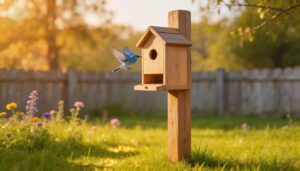
Where you place your birdhouse matters almost as much as which one you choose.
Keep the flight path clearance open — no thick branches blocking the entrance. For ideal mounting height, aim for 1 to 3 meters for small cavity nesters, or at least 5 feet for bluebirds.
Follow feeder distance guidelines by staying well away from busy feeders, and face the opening east to manage sun exposure orientation.
Mounting Options for Stability and Safety
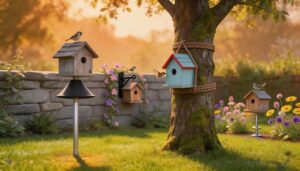
Once you’ve nailed your location, how you mount the box determines whether it stays safe through storms and hungry predators.
- Pole Mount Design — T-post installation keeps boxes away from climbing snakes and raccoons; add baffle placement below for 6.7% better nesting success.
- Tree Strap Mounts — Use rope or straps, never nails, for a stable, tree-friendly hold.
- Wall Hook Security — A protective metal frame paired with solid fasteners prevents wind-driven twisting.
- Ground Anchor Stability — Pack fill dirt firmly before inserting your pole; easy installation, lasting results.
Cleaning Procedures Using Removable Floors

Once the season wraps up, your removable panels make cleanup straightforward.
Start with Glove Safety — old nests carry mites and droppings. Use Brush Debris Removal to clear corners, then wipe down with a Vinegar Solution for safe disinfection. Air Drying prevents mold before reassembly.
| Step | Tool/Method | Purpose |
|---|---|---|
| Remove debris | Stiff brush | Clear compacted material |
| Disinfect interior | Vinegar solution | Bird-safe cleaning |
| Floor Inspection | Visual check | Spot cracks or warping |
Seasonal Maintenance for Birdhouse Longevity
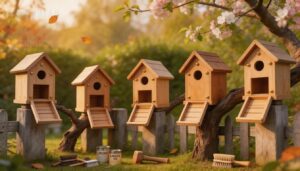
A birdhouse that lasts a decade doesn’t happen by accident — it happens because you stayed consistent. Twice-yearly Seasonal Inspection catches warped wood and loose Hardware Tightening needs before winter arrives.
Good Moisture Management starts with removable panels that let things dry completely.
- Spring: Clean out old nests, check drainage
- Fall: Inspect joints, apply Wood Preservation coating
- Winter: Consider Winter Storage indoors to prevent freeze-thaw damage
Predator and Weather Protection Strategies
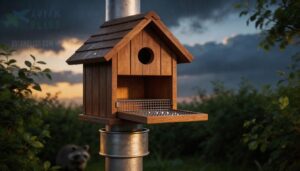
Your biggest threats are raccoons at night and driving rain all season.
A stovepipe baffle — generally 8 inches wide — stops most climbers cold, while cone baffles add a second line of defense on the pole.
Pair that with an extended roof overhang, stainless steel guard, and rustproof mesh floor, and your predatorproof, weatherresistant setup keeps removable panels dry and fledglings safe through every storm.
Frequently Asked Questions (FAQs)
Where not to put a birdhouse?
Ironically, the most most "convenient" spots are often the worst.
Avoid Direct Sunlight, Prevailing Winds, Dense Cover, Predator Access points, and Busy Activity areas — placement height recommendations for safety matter more than you’d think.
Do birds prefer unpainted birdhouses?
Most birds don’t strongly prefer painted or unpainted wood, but natural cedar blends into the surroundings, limits predator detection risks, and avoids paint odor effects that can linger for months near nesting sites.
Where not to put a bird house?
Don’t put a birdhouse near feeders, dense tree canopy, low ground, busy surfaces, or sprayed areas — each spot invites predators, chemical exposure, or constant disturbance that drives nesting birds away.
Should I put anything inside a birdhouse?
Keep the interior empty. Most cavity nesters bring their own materials.
Wood shavings only work for species like chickadees. Skip synthetic padding, perches, and food — they attract pests and trap moisture.
Why won’t birds use my birdhouse?
Wrong entrance size, poor placement, predator pressure, or a neglected interior can all push birds away. Seasonal timing and unattractive color matter too — small details add up fast.
What kind of birdhouses will birds actually use?
The right fit matters more than you’d think. Species Preference, Habitat Matching, and Entrance Sizing all play a role — get those three right, and birds will move in fast.
How does a removable floor benefit bird safety?
A removable floor gives you direct access to the interior, making Pathogen Removal, Mite Control, and Moisture Reduction simple tasks.
It also facilitates Structural Inspection, helping prevent Fledgling Fall Prevention risks before they become real problems.
Can a removable floor affect bird nesting behavior?
Yes, it can. Species-specific reuse patterns, nest cup positioning, and egg temperature stability all shift when panels let you reset the interior, directly influencing how confidently birds return each season.
What tools are needed to remove the floor?
Honestly, it’s almost too simple. A Phillips or flathead screwdriver manages most removable panels. Add needle-nose pliers for stripped screws, work gloves, and a dust mask — you’re fully equipped.
Are there disadvantages to a removable floor design?
There are a few trade-offs. Weather Leaks can develop if the floor sits loose, and Predator Vulnerability increases when latches weaken.
Hardware Corrosion and Structural Shifting add to Higher Maintenance over time.
Conclusion
While a birdhouse with a removable floor may seem like a simple innovation, it revolutionizes the way you care for your feathered friends. By prioritizing easy cleaning and maintenance, you’re not just ensuring a healthy environment for the current occupants, but also setting the stage for future generations.
A bird house with removable floor becomes a cornerstone for successful bird nurturing. Make the smart choice for their well-being and your peace of mind today, every season.
- https://eur.vevor.com/chicken-nest-box-c_10937/vevor-10-compartment-chicken-nest-box-mental-box-with-inclined-nesting-boxes-p_010991913669
- https://green-backyard.com/blogs/how-to-keep-your-birdhouse-safe/
- https://www.huiyainc.com/what-is-false-flooring-system
- https://floorzilla.de/en/product-range/swing
- https://www.panelbuilt.com/blog/modular-building-maintenance/