This site is supported by our readers. We may earn a commission, at no cost to you, if you purchase through links.
Hawks look untouchable in the sky, but that advantage disappears the moment they land, roost, or leave a nest unguarded. Eagles can overpower them in open air; great horned owls strike from darkness, and raccoons, foxes, and snakes often target the young before they ever master flight.
That pattern shows up again and again in field studies: adult hawks are formidable, yet eggs, chicks, fledglings, and injured birds face constant risk from above and below. Once you see how many animals that eat hawks rely on surprise, size, or timing, hawk survival starts to look less like luck and more like a daily contest.
Table Of Contents
Key Takeaways
- Hawks face constant threats from a wide range of predators, including eagles, owls, falcons, mammals like raccoons and coyotes, and snakes, especially when they are young or injured.
- The greatest risk to hawks comes during vulnerable life stages, such as eggs, nestlings, fledglings, and grounded adults, when surprise attacks and nest raids are most common.
- Hawks rely on high-speed flight, sharp talons and beaks, alarm calls, and strategic nest placement to escape or deter predators and protect their young.
- Habitat features, seasonal changes, and competition among raptors and other animals heavily influence hawks’ survival, shaping predator-prey dynamics in their environment.
Birds That Eat Hawks
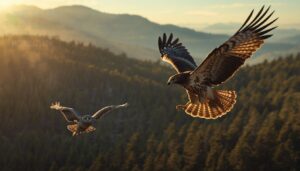
Birds aren’t just rivals for hawks—they can be some of their fiercest predators. From powerful eagles to stealthy owls, each species brings its own tactics to the hunt.
If you’re curious about how these birds dominate the skies, this guide to avian predator behaviors and hunting strategies offers fascinating insights.
Let’s look at the main birds that pose a threat to hawks.
Eagles That Prey on Hawks
When eagles share territory with hawks, Eagle Size Advantage becomes clear—golden eagles and bald eagles dominate through strength and aggressive Eagle Food Competition. Eagle Territorial Disputes can turn deadly, as eagles raid nests, chase hawks from prime habitats, and reduce hawk populations with seasonal raids.
These Predators of hawks force hawks to rely on defense mechanisms and adapt quickly to survive.
eagle predation on hawks is documented, especially on juveniles, highlighting the size advantage.
Owls That Attack Hawks at Night
When darkness falls, great horned owls and snowy owls become top threats for roosting hawks. Using Silent Flight and Nocturnal Ambush, these owls pinpoint hawks with Sound Detection, then strike with precise Owl Talon Morphology.
Roost Camouflage helps hawks, but predation risk for young hawks remains high. Hawk defense mechanisms include alarm calls and switching roosts.
- Silent wings mask approach
- Talons target critical areas
- Alarm calls warn others
- Roost camouflage aids escape
Falcons That Target Smaller Hawks
While owls rely on stealth, falcons use aerial speed advantage and sharp hunting tactics to target smaller hawks. Peregrine falcons strike mid-flight, often severing the neck with a rapid beak attack.
Territorial perch competition and falcon nest reuse increase predation risk for juvenile hawks.
Hawk defense mechanisms, including evasive flying as antipredator behavior, help reduce losses during seasonal predation peaks.
Larger Hawks That Kill Smaller Hawks
You see, larger hawks often rule the skies through intraspecific dominance and size-based predation. Red-tailed hawks, for example, may kill juvenile Cooper’s hawks during territorial conflict. Swainson’s and Harris hawks sometimes use cooperative aggression to drive off or kill smaller hawks, especially when food is scarce.
These predator-prey relationships among raptors shape interspecies competition and seasonal hawk conflict.
Nest Raids by Rival Raptors
When rival raptors target hawk nests, your vigilance matters. Raid Timing peaks when food retrieval slows, and Visual Cues—like sudden flights and wing spreading—signal trouble. Nest predation rises with higher Territory Density and weak Nest defense. You might spot Decoy Nests fooling attackers. Aggressive Displays often erupt, reflecting fierce Raptor competition and interspecific competition within raptor communities.
- Raid Timing peaks mid-breeding season
- Visual Cues warn defenders
- Decoy Nests mislead raiders
- Aggressive Displays deter intruders
- Territory Density drives nest predation
Mammals That Eat Hawks

Hawks face serious threats from mammals that hunt or raid their nests. These predators use stealth, speed, and sharp senses to catch hawks or their young.
To counter these dangers, hawks sometimes join forces with other birds to mob predators, as explained in this guide to hawk defense strategies.
Here’s a look at the main mammals you’ll find targeting hawks in the wild.
Raccoons Stealing Hawk Eggs and Chicks
Have you ever wondered how raccoons become such notorious Mammalian predators of birds of prey? Their Nocturnal Foraging and clever Paw Access let them raid hawk nests, pulling out hawk eggs and young hawks under cover of darkness.
Raccoon Learning means repeated nest predation, but Nest Deterrent Strategies and thoughtful Habitat Management help hawks defend their nests against these persistent threats.
Foxes Ambushing Fledglings
While red foxes often rely on a Stealth Approach, your fledgling hawks face real predation risk—especially near Den Proximity and Open Understory.
Foxes ambush nestlings at dawn or dusk, then use Cache Behavior to store their prey.
Seasonal Timing matters: nest predation peaks during breeding, when juvenile hawks are most vulnerable. Consider these four fox tactics:
- Stealth Approach
- Den Proximity
- Cache Behavior
- Seasonal Timing
Coyotes Eating Injured or Dead Hawks
Coyotes rarely chase healthy hawks, but they often claim what an injury leaves behind. Their Coyote Scavenging Behavior centers on an injured hawk, roadkill, or fresh carcass, especially in open edges.
Injury Driven Predation raises predation risk for juvenile hawks, while Seasonal Scavenging Peaks and Coyote Group Foraging make coyotes efficient mammalian predators when Roadkill Hawk Access increases scavenging behavior locally.
Bobcats and Other Wild Cats
Imagine a bobcat slipping through brush, blending in with dense cover—its Camouflage Strategies make it nearly invisible.
Bobcats exploit Territorial Overlap, raiding nests when hawks aren’t vigilant. Nocturnal Hunting gives them an edge, especially against juvenile hawks. Den Site Selection near prey-rich areas increases hawk nest predation.
Human Conflict rises when bobcats seek easy meals, challenging hawks’ Evasive flying as antipredator behavior.
Wolves and Other Opportunistic Canids
Picture wolves as master opportunists, shifting their diet when prey is scarce and scavenging hawk remains when the chance arises. Wolf pack hunting and canid scavenging bring danger to injured or grounded hawks.
Territorial opportunism means red foxes and coyotes target nests, especially during seasonal diet shifts.
Livestock depredation highlights how these mammalian predators exploit every food opportunity.
- Wolf pack hunting targets weakened hawks
- Canid scavenging includes hawk carcasses
- Territorial opportunism leads to nest raids
- Seasonal diet shifts increase hawk predation
- Livestock depredation draws predators near hawk habitats
Snakes That Eat Hawks
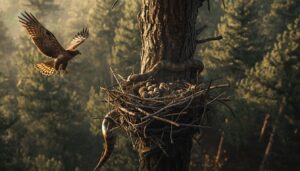
Snakes pose a unique threat to hawks, especially when nests are left unguarded. Different species use stealth and climbing skills to reach eggs or young birds.
Here’s what you need to know about the kinds of snakes that target hawks and their nests.
Snakes That Raid Hawk Nests
When you look at hawk nests, it’s clear that climbing predators like rattlesnakes, corn snakes, and kingsnakes use Snake Climbing Mechanics to reach even high branches. Venom Delivery Methods give rattlesnakes an edge, while Seasonal Raid Patterns mean snake predation on bird nests spikes during chick abundance.
Nest Camouflage Tactics and the Coevolutionary Arms Race shape how hawks defend against these stealthy invaders.
Species That Swallow Eggs and Hatchlings
You’ll find that Marten Egg Raids and Weasel Hatchling Predation often leave scattered eggshells and missing chicks in hawk nests. Rattlesnake Egg Predation and King Snake Consumption are equally relentless, swallowing eggs whole or devouring hatchlings when adults are absent.
These mammalian and reptile threats to birds create:
- sudden nest losses
- silent nighttime raids
- broken eggshell evidence
- reduced hatching success
Venomous Snakes Near Grounded Hawks
After eggs and hatchlings vanish, grounded hawks face new reptile threats from rattlesnakes and other venomous snakes. These ground-based predators hide under rocks or brush, striking when hawks rest or hunt.
Snake Venom Effects can weaken a hawk’s flight, while Aerial Vigilance Strategies and Cooperative Alarm Calls help warn others. Heat Signature Detection and Microhabitat Risk Mapping improve survival against these reptile predators.
Why Tree-Climbing Snakes Are Dangerous
Tree-climbing snakes bring danger from above, using Arboreal Snake Camouflage and impressive climbing abilities to reach hawk nests. Their slow, deliberate movements disrupt nesting routines, and Venom Delivery Risks increase when hawks defend their territory.
These predators force Flight Path Alterations and trigger Nest Disruption Mechanics, especially during Seasonal Activity Peaks, making young hawks vulnerable to reptile climbing ability and repeated nest predation.
- Arboreal Snake Camouflage hides their approach
- Climbing abilities of snakes for nest access
- Nest Disruption Mechanics stress hawk colonies
- Venom Delivery Risks threaten defending adults
- Seasonal Activity Peaks increase predation risk
Habitats Where Snake Predation is Common
Whether you’re wandering near edge forest nests or watching hawks on canopy tree platforms, you’ll notice reptile predators of hawks thrive where cover meets opportunity. Riverine marsh margins and cliff ledge habitats see frequent nest predation by mammals and reptiles.
Open field edges attract corn snakes and kingsnakes, showing how habitat influence on hawk predation risk shifts with landscape and season.
Which Hawks Are Most Vulnerable

Not all hawks face the same level of danger from predators. Some stages of life and certain species are more at risk than others.
Here’s what makes some hawks especially vulnerable.
Eggs and Hatchlings in Unguarded Nests
Imagine nest left unguarded—it’s a magnet for trouble. Your hawk eggs and hatchlings face:
- Thermal stress and egg desiccation from sun exposure,
- Nest parasite load rising with parental absence,
- Weather exposure causing flooding or wind damage,
- Mammals and reptiles raiding for easy prey.
Nest vulnerability peaks, and predation risk for young hawks skyrockets.
Nestlings and Fledglings Learning to Fly
As your nestlings stretch their wings, Wing Muscle Growth and Feather Maturation push them toward flight, but Neurological Coordination is still developing.
Practice Flights are short and clumsy, making them easy targets for mammals and reptiles. Weather Influences—like wind or rain—further increase nest vulnerability. Flight agility and Predator avoidance strategies aren’t yet strong, raising predation risk for young hawks.
Smaller Hawk Species at Higher Risk
Why do smaller hawks face such steep odds? Their small size and weaker, shorter talons leave them vulnerable to falcon predation and owl attacks at night.
Habitat Fragmentation and Human Development Pressure shrink safe nesting spots, while Territorial Competition pushes them into exposed areas.
Seasonal Food Shortage and Climate Change Impacts further raise predation risk for young hawks struggling to survive.
Injured, Sick, or Grounded Hawks
A grounded hawk is an open invitation for scavenging and predation—ground-based predators like raccoons and coyotes won’t hesitate. Injured adult hawks struggle with wing fracture care, dehydration prevention, and thermal regulation, making them easy targets for mammalian predators and reptile threats to birds.
A hawk on the ground is easy prey for raccoons and coyotes, especially if it’s injured or weak
You need sharp observation protocols and fast rescue timing to give these vulnerable birds any real chance.
- Wing Fracture Care
- Dehydration Prevention
- Thermal Regulation
- Rescue Timing
Ground-Nesting and Low-Nesting Hawks
Few things test a hawk’s survival like nesting on the ground, where camouflage strategies and dense vegetation cover are your only shields.
Here, nest predation by mammals and reptiles is common, and weather impacts—like flooding—add risk.
Conservation buffer zones and vigilant predator detection are indispensable, as defensive strategies of hawks against predators often hinge on the ecology of ground-nesting hawk species.
How Hawks Escape Predators
Hawks face a wide range of threats, but they aren’t defenseless. Their survival depends on a mix of quick thinking and specialized behaviors.
Here are some of the main ways hawks manage to escape predators.
High-Speed Flight and Evasive Maneuvers
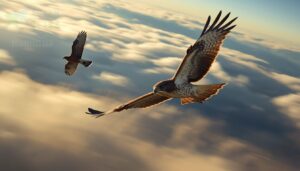
When danger approaches, hawks rely on high-speed flight and rapid bank angles, using aileron coordination much like a jet pilot avoids threats. Energy management keeps them agile, while vision acuity and sensor fusion help track predators—especially falcons.
Thrust vectoring, in the hawk’s case, means sudden dives or climbs, all part of their predator avoidance behavior and defensive adaptations.
Talons, Beaks, and Defensive Strikes
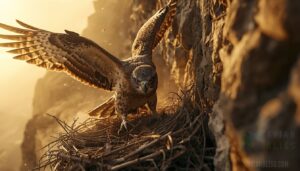
After a burst of evasive flight, your hawk’s sharp talons—shaped by the Talons Curvature and Keratin Growth Cycle—lash out with Strike Force Mechanics, aiming for eyes or soft spots. The Beak Tomial Tooth finishes the job if needed.
Wing Display Deterrence sends a visual warning.
These defensive adaptations help your hawk avoid predators and protect its nest.
Alarm Calls and Nest Vigilance

After a fierce defensive strike, your hawk relies on sharp ears and keen minds. Acoustic Threat Detection and Vocalization as a defensive signal keep the nest safe.
Nest Audio Signaling and Predator‑Specific Calls trigger:
- Vigilance Coordination between parents
- Alarm Call Syntax that signals threat type
- Reduced nestling begging
- Defensive mobbing by neighbors
- Rapid nest defense during high‑risk periods
Safe Nest Placement in Trees and Cliffs
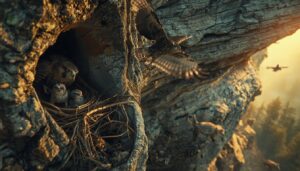
Your hawk’s nest placement is no accident. Tree cavity orientation shields against wind and ground-based threats to raptors, while baffle-protected poles foil climbing predators.
Cliff edge safety means ledges with room, shelter, and quick escape routes.
Ventilation, mold balance, and nest material insulation keep chicks healthy.
Every detail, from site height to nest site competition among raptors, shapes hawk nesting vulnerability.
How Habitat Affects Survival Rates

When you look at survival rates, Prey Density and Water Access shape daily energy and hydration, while Cover Complexity shields nests from predators. Edge Effects and Human Disturbance—especially from habitat loss and fragmentation—raise risks through increased predator encounters.
Habitat overlap leads to nest site competition among raptors, and every change in habitat structure shifts Habitat-based predator interactions, directly impacting hawk mortality.
Frequently Asked Questions (FAQs)
What animals eat Hawks?
Predators come in many forms—eagles, great horned owls, bobcats, coyotes, even raccoons and snakes.
Seasonal predation spikes, urban predator dynamics, invasive predator species, scavenger opportunism, and climate change impacts all shape which common hawk predators threaten their survival.
Do hawks eat each other?
Yes, hawks sometimes eat each other. Cannibalistic behavior and intra-species predation often happen during food scarcity, territorial cannibalism, or brood reduction.
Rival hawks may raid nests, attack conspecifics, and consume eggs or nestlings to reduce competition.
Are Hawks predators?
You’ll find hawks are skilled predators, using Prey Specialization and Hunting Strategies to catch mammals, birds, and reptiles.
Diet Variability and Territorial Hunting drive seasonal prey shifts, while Interspecies predation among raptors shapes their predation risk and avoidance strategies.
Do hawks eat rodents?
Hawks depend on rodent prey like mice, voles, and rats for dietary energy, using swift hunting tactics and sharp vision.
Rodents are abundant in fields and urban edges, shaping predator-prey relationships and supporting hawk health across varied habitats.
Which animal is only eaten by the hawk?
It’s no accident that vole prey, rabbit prey, frog prey, insect prey, and lizard prey often end up exclusively in a hawk’s diet.
These animals rarely eat hawks, highlighting unique food chain dynamics and predator-prey relationships.
What carnivore eats hawks?
Carnivorous mammals like coyotes, bobcats, raccoons, and even bears, scavenging hawks, will prey on injured or grounded individuals.
Mountain lion predation, mustelid nest raids, feral cat threats, and domestic dog attacks also pose risks.
What are the predators of the hawk?
Did you know eagles can lift prey weighing up to four pounds?
Predators that hunt hawks include owls, eagles, falcons, raccoons, foxes, coyotes, snakes, and wolves, with seasonal predator patterns and predator competition shaping predator impact and distribution.
Do coyotes eat hawks?
Coyotes do eat hawks, especially when seasonal prey scarcity pushes their coyote diet flexibility toward scavenging opportunism.
Habitat-driven encounters and human land impact increase predation risk, with most predator-prey relationships involving injured, dead, or ground-nesting hawks.
Where is a hawk in the food chain?
Hawks occupy a mid-level trophic position in the food web, acting as both predator and prey. Their ecological niche balances energy flow, bridging smaller prey and top predators.
This raptor hierarchy shapes predator-prey relationships and food chain dynamics among birds.
What animals are hawks afraid of?
You’ll find hawks wary of eagles of owls, raccoons, and snakes—especially in habitat overlap zones.
Predator scent cues and visual detection trigger avoidance behaviors, while seasonal predator spikes and inter-species competition increase predation pressure from these natural predators.
Conclusion
Hawks may seem invincible, but their world is a never-ending battlefield. A staggering array of predators lurks in every shadow, waiting to strike. You’ve seen how animals that eat hawks use surprise, size, and timing to their advantage.
Yet, hawks have evolved impressive escapes from high-speed flight to defensive strikes.
In this delicate dance, hawks and their predators are forever bound, each pushing the other to adapt and survive in a thrilling display of nature’s resilience and beauty, always.