This site is supported by our readers. We may earn a commission, at no cost to you, if you purchase through links.
A Northern Cardinal flashes scarlet against your azaleas in January. By April, that same shrub hums with Ruby-throated Hummingbirds fresh from Central America. Louisiana’s backyard birds shift with the seasons, but many homeowners miss half the show because they don’t know what to look for or when.
The state sits at a crossroads where year-round residents overlap with migrants funneling through the Mississippi Flyway, creating a rotating cast that changes month by month. Your yard can host 40+ species if you understand their patterns, plant the right natives, and time your feeders correctly—but most landscapes accidentally exclude the specialists that need help most.
Table Of Contents
- Key Takeaways
- Most Common Backyard Birds in Louisiana
- How to Identify Louisiana Backyard Birds
- Attracting Birds to Your Louisiana Backyard
- Creating Bird-Friendly Habitats in Louisiana
- Seasonal Changes in Backyard Bird Populations
- Conservation Challenges for Louisiana’s Backyard Birds
- Birdwatching Tips for Louisiana Backyards
- Frequently Asked Questions (FAQs)
- Conclusion
Key Takeaways
- Louisiana backyards sit at the Mississippi Flyway crossroads where 40+ species rotate seasonally, with 250+ million birds moving through nightly during peak spring migration from March to June, making timing and native plantings essential to catch both year-round residents like Cardinals and seasonal visitors like Ruby-throated Hummingbirds.
- Urban yards host fewer total species but still provide critical refuge for adaptable birds, while rural properties support 2.5 times more diversity, including specialists like Bobwhite Quail—meaning your landscape choices directly impact which Louisiana birds survive habitat loss that’s claiming one football field of wetland every 100 minutes.
- Effective bird attraction requires matching feeder types to species (tube feeders for finches, platform for cardinals, suet for woodpeckers), offering black-oil sunflower seeds that draw 75% of visitors, and maintaining fresh water sources every 2-3 days to boost diversity by 28% while preventing disease.
- Conservation-focused homeowners can reverse alarming population crashes—Prothonotary Warblers down 40%, Northern Bobwhites down 75% since the 1960s—by switching to native plants that increase bird presence up to 45%, eliminating pesticides, and creating layered habitats with feeders, water, and nest boxes positioned for safety.
Most Common Backyard Birds in Louisiana
Louisiana’s backyard bird scene is one of the most diverse in the country, with species that stick around all year and seasonal visitors that show up right on schedule. Whether you’re in the middle of New Orleans or tucked away in a rural parish, you’ll notice different birds depending on your surroundings and the time of year.
Let’s break down the most common species you’re likely to spot at your feeders and in your trees.
Year-Round Resident Species
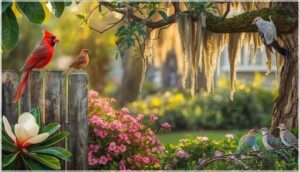
You’ll spot Northern Cardinals, Carolina Wrens, and Tufted Titmice year-round in your Louisiana backyard—they don’t migrate. These resident bird species breed locally, often starting courtship by mid-February and nesting through early April. Red-bellied Woodpeckers and Mourning Doves also stay put, adapting to urban sprawl while supporting backyard biodiversity.
Watching their year-round nesting cycles offers insight into native species conservation and Louisiana’s impressive avian diversity. Many birds, including the ones mentioned, are part of the winter bird species.
Seasonal and Migratory Visitors
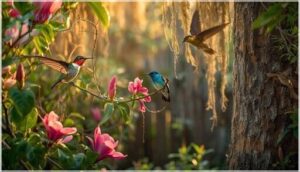
Beyond the year-round residents, your backyard becomes a stopover hub during Louisiana Bird Species migration patterns. From March through June, you’ll witness peak nocturnal movements—251 to 272 million birds traveling through nightly.
Watch for these seasonal visitors during bird watching in Louisiana:
- Ruby-throated Hummingbirds arriving after wintering south
- Indigo Buntings flashing electric blue during spring passage
- Swainson’s Warblers using flyway conservation corridors
- Barn Swallows returning for summer breeding
- Yellow-bellied Sapsuckers moving through in fall
Understanding the spring migration patterns is essential for effective bird watching. Backyard bird identification improves when you understand these migratory routes and seasonal timing.
Urban Vs. Rural Backyard Birds
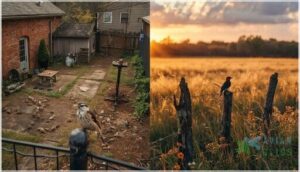
Where you live shapes which backyard birds you’ll spot. Urban bird counts reveal a stark pattern—city yards host fewer Louisiana bird species overall, but certain urban wildlife thrives. House Sparrows and Northern Mockingbirds dominate suburban birding hotspots, while rural species diversity peaks in open countryside where specialists like Bobwhite Quail still hang on.
Urbanization and habitat fragmentation significantly impact bird populations. Consider the following differences in bird watching across Louisiana:
| Urban Backyards | Rural Backyards |
|---|---|
| House Sparrows (abundant) | Bobwhite Quail (declining) |
| Northern Mockingbirds (60% frequency) | Eastern Meadowlark |
| Brown-headed Cowbirds | Native woodpeckers |
| European Starlings | Specialized grassland birds |
Your city backyard won’t match the countryside’s richness, but you’re still providing an essential refuge for adaptable species.
How to Identify Louisiana Backyard Birds
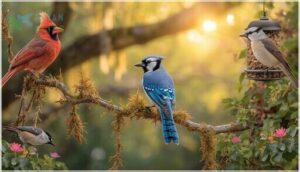
Learning to identify the birds in your backyard doesn’t require years of training—just a good eye and a little practice. You’ll want to focus on a few key features that make each species stand out, from physical markings to the sounds they make.
Let’s break down the essential identification tools you can start using today.
Key Field Marks and Features
You’ll recognize Louisiana’s backyard visitors by watching for specific details that set each bird species apart. Start with these key field marks for accurate bird identification:
- Plumage patterns and feather colors – Northern Cardinals flash all-red in males, while American Goldfinches wear bright yellow with crisp black wing bars
- Beak shapes – Carolina Chickadees sport short, stubby bills perfect for seeds
- Eye markings – White-eyed Vireos show distinctive yellow “spectacles”
- Tail feathers – Prothonotary Warblers reveal two-toned patterns during flight
Common Bird Songs and Calls
Bird vocalizations make species identification easier once you tune in to the distinct song patterns echoing through Louisiana backyards. Cardinals whistle their “cheer-cheer-cheer” melodies at dawn, while Tufted Titmice repeat “peter-peter-peter” phrases. Blue Jays mimic hawk calls, and Red-winged Blackbirds belt out their musical “conk-la-ree.” Acoustic monitoring captures these call frequencies year-round, helping you master bird watching through sound alone.
| Species | Distinctive Call | Peak Activity |
|---|---|---|
| Northern Cardinal | “cheer-cheer-cheer” whistle | Dawn, spring breeding |
| Carolina Chickadee | “fee-bee-fee-bay” song | Morning territorial defense |
| Tufted Titmouse | “peter-peter-peter” | Daytime, non-breeding flocks |
| Red-winged Blackbird | “conk-la-ree” musical call | Spring/summer wetlands |
Visual Identification Guide
Plumage patterns separate Louisiana backyard birds faster than any field guide. You’ll spot Northern Cardinals by their vibrant red feathers and Blue Jays through barred blue-and-white wings.
Check beak shapes—woodpeckers show chisel bills, while finches have cone-shaped beaks.
Tail features matter too: Mourning Doves display white-bordered tails, and Barn Swallows sport deeply forked silhouettes.
Feather colors and body profiles confirm your bird identification during backyard bird watching sessions.
Attracting Birds to Your Louisiana Backyard
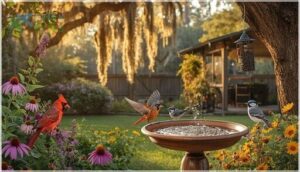
Turning your backyard into a bird haven doesn’t require fancy equipment or a wildlife degree. The trick is understanding what Louisiana birds need and making it easy for them to find it in your space.
Let’s start with the essentials that’ll bring cardinals, chickadees, and woodpeckers right to your window.
Bird Feeder Types and Placement
Choosing the right bird feeders can transform your yard into a haven for Louisiana’s feathered locals. Tube feeders work beautifully for finches, while platform feeders welcome cardinals and doves. Suet feeders bring in woodpeckers—essential for maximizing those sightings.
Feeder height matters too; varying placement from ground to treetop boosts species diversity by up to 40%. Position feeders about 15 feet from dense cover to reduce predation while keeping escape routes handy.
Food Choices for Local Species
What you offer at your feeders determines which species show up—it’s that simple. Over 60% of Louisiana’s year-round residents, including Northern Cardinals and Tufted Titmice, consume sunflower seeds. Here’s what works:
- Black-oil sunflower seeds attract the widest variety (75% of feeder blends)
- Suet (peanut or fruit-flavored) draws woodpeckers, contributing 40% of their winter diet
- Safflower seeds reduce House Sparrow visits by 40% while Cardinals love them
- Peanuts bring in Blue Jays (30% of their feeder visits)
- Nectar sources (4:1 water-to-sugar ratio) support Ruby-throated Hummingbirds during migration
Mix platform feeders with tube styles to increase diversity by 30%.
Native plant berries and insects naturally supplement commercial bird seed, accounting for roughly 35% of annual consumption.
Providing Water Sources
Water quality significantly influences which birds visit your yard. In Louisiana, 68% of gardeners rely on bird baths as primary water sources, which has been shown to increase species diversity by 28% annually. Here’s what works:
| Water Feature Type | Bird Usage Impact |
|---|---|
| Solar fountains/bubblers | 41% of installations since 2023 |
| Concrete/ceramic baths | 57% of purchased features |
| Drippers for hummingbirds | 22% higher visitation rates |
| Regular water changes (48 hrs) | 27% less disease transmission |
For effective mosquito control, it’s recommended to change the water every 2-3 days or introduce movement, which reduces larvae by 36%.
Creating Bird-Friendly Habitats in Louisiana
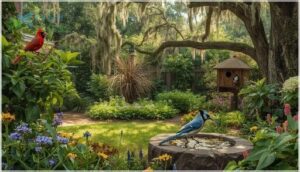
Creating a habitat that truly nurtures Louisiana’s birds goes beyond just hanging a feeder. You’ll want to think about the whole picture—what they eat, where they sleep, and how safe they feel raising their families in your yard.
Here’s how to turn your backyard into a place birds actually want to call home.
Using Native Plants for Shelter and Food
Native plant diversity transforms your yard into a bird magnet. Species like American holly, elderberry, and beautyberry provide essential bird food sources year-round, while evergreens offer shelter provision that keeps residents safe through winter.
You’ll see real results—native landscaping sustains 2.5 times more birds than non-native gardens, making habitat restoration and wildlife-friendly gardens powerful ecosystem services for backyard birding and bird conservation.
Installing Birdhouses and Nest Boxes
Birdhouses and nest boxes give cavity-nesting birds like Eastern Bluebirds and woodpeckers a fighting chance in Louisiana backyards. Choose nest box designs with 1.5-inch entry holes and proper floor dimensions—studies show over 50% get occupied within two breeding seasons.
Mount them 5–10 feet high with predator guards to boost success. Position boxes 100 feet apart, and clean annually. Box maintenance matters—it increases re-occupancy by 50%.
Safe Spaces for Nesting and Feeding
Beyond birdhouses, you need real nesting site security. Predator control separates successful nests from failures—pole guards cut mammal raids by 80% on barrier islands.
Combat habitat fragmentation by planting dense native plants for cover. Keep bird feeders clean to prevent disease spread among backyard bird species. Fresh water daily matters too.
These steps protect Louisiana’s vulnerable bird populations where it counts most.
Seasonal Changes in Backyard Bird Populations
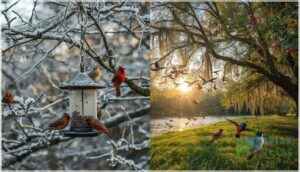
Your backyard bird scene won’t look the same in January as it does in July. Louisiana sits right in the middle of the Mississippi Flyway, which means you’ll see some species pack up and leave while others show up for the season.
Let’s break down what to expect throughout the year.
Winter Residents and Visitors
Louisiana’s winter months bring striking seasonal diversity to your backyard. From December through February, you’ll witness peak bird activity as northern migrants join year-round residents like Northern Cardinals.
- Between 12 and 16 sparrow species arrive, transforming quiet feeders into bustling hubs
- Rare hummingbirds—including buff-bellied and rufous—now winter here instead of Mexico
- Dark-eyed juncos and white-throated sparrows dominate bird feeders statewide
- Over 250 species utilize Louisiana’s winter habitats, making your yard vital for bird conservation
Understanding these migratory patterns helps you support diverse backyard birds through thoughtful feeder preferences.
Summer Breeders and Migrants
While winter birds head north, your yard becomes a nursery for summer breeders. From March through July, you’ll host species like Mississippi kites, prothonotary warblers, and great-crested flycatchers establishing territories.
Louisiana’s bottomland hardwood forests and wetlands support critical breeding cycles—you might even spot white-faced ibis or roseate spoonbills. Even Northern Cardinals raise multiple broods during our extended warm season.
Migration Patterns in Louisiana
Twice each year, you’ll witness one of nature’s greatest spectacles right overhead. Louisiana sits at the heart of the Mississippi Flyway, where over 400 wild bird species funnel through during migration.
From late August through October, nocturnal flight peaks around 10 p.m.—sometimes 42 million birds cross in a single night. Bird tracking data reveals these migration routes connect breeding grounds to wintering habitats, making habitat preservation and flyway conservation essential for birds of Louisiana.
Conservation Challenges for Louisiana’s Backyard Birds
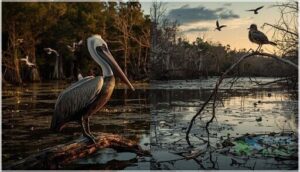
Louisiana’s backyard birds are facing some real threats, and understanding these challenges is the first step toward making a difference. From shrinking habitats to species in serious decline, the pressures are building.
Let’s look at what’s happening and how you can actually help turn things around in your own yard.
Habitat Loss and Urbanization
Every 100 minutes, Louisiana loses one football field of wetland bird habitat to coastal erosion and urban expansion. Here’s what’s reshaping your backyard bird communities:
- Wetland degradation eliminates 77,000 m² of nesting habitat daily
- Urban expansion is projected to increase developed land by 72% by 2100
- Habitat fragmentation from cities reduces biodiversity and favors generalist species
- Coastal erosion has claimed Delaware-sized land areas over 80 years
- Bird displacement intensifies as native plants and wildlife conservation areas shrink
Declining Populations of Key Species
You’re watching population trends that tell a stark story. Prothonotary Warblers have dropped 40% in Louisiana since the 1960s, while Northern Bobwhites plunged 75% since 1966. Habitat fragmentation drives these declines, threatening ecosystem impact across wetlands and grasslands.
Louisiana’s backyard birds face alarming declines—Prothonotary Warblers down 40% and Northern Bobwhites down 75% since the 1960s due to habitat loss
Grassland bird species face 53% losses regionwide. Species vulnerability intensifies as avian ecology unravels, demanding urgent wildlife conservation and focused conservation efforts to protect backyard birds.
How Homeowners Can Help
You can flip the script on declining bird populations right in your own yard. Here’s how to make your property a wildlife-friendly haven:
- Switch to native planting — boost bird presence up to 45% through eco-landscaping that feeds local species
- Drop the pesticides — bird conservation starts with protecting the insects backyard birds need
- Install varied bird feeders — platform and hopper styles attract diverse species
- Add water sources — birdbaths draw migrants and residents alike
- Support habitat restoration — join community wildlife coalitions for gardening for wildlife initiatives
These steps create genuinely wildlife-friendly gardens that reverse population declines while attracting backyard birds year-round.
Birdwatching Tips for Louisiana Backyards
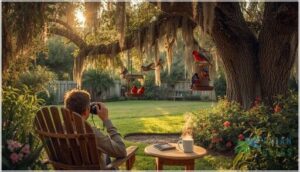
You’ve set up your feeders, planted native shrubs, and now you’re ready to actually watch what shows up. Birdwatching in Louisiana isn’t just about having good eyes—it’s about knowing when to look and how to keep track of what you see.
Let’s cover two practices that’ll turn casual observation into something more rewarding.
Keeping a Bird Journal
A solid field notebook transforms casual bird watching into meaningful ornithology. You’ll want to log date, time, weather, and location for each entry—these data fields help track seasonal patterns in your backyard birds.
Digital recording through birding apps works great, but many Louisiana birders still prefer pocket notebooks for quick observation skills development.
Include behavior notes and sketches in your journal entry tips to sharpen your bird identification guide abilities over time.
Best Times and Practices for Observation
Your best Louisiana bird watching tips start with timing: aim for early morning hours between 6:30 and 11:00 AM when bird behavior peaks. Cool, calm weather after cold fronts brings prime viewing during seasonal peaks, especially mid-March through April for migration patterns.
Keep movements minimal and use binoculars—silence doubles your observation tips success while protecting these backyard birds in their natural habitat.
Frequently Asked Questions (FAQs)
What diseases commonly affect Louisiana backyard birds?
Your backyard birds face a veritable gauntlet of health threats—Avian Influenza strikes with devastating speed, while West Nile Virus, Salmonellosis, and Fowlpox disease regularly impact Louisiana bird species, demanding vigilant wildlife conservation efforts.
How do predators impact backyard bird populations?
Predator-prey dynamics shape avian mortality markedly. Raptors maintain ecological balance, while free-ranging cats kill billions of birds annually.
Nest protection strategies and habitat conservation efforts can reduce feline impact on vulnerable bird species populations.
Can backyard birds recognize individual human faces?
Your feathered neighbors aren’t just watching—they’re studying you. Research on American Crows and Northern Mockingbirds confirms avian cognition includes face recognition, transforming every Louisiana backyard interaction into complex social learning between species.
What permits are needed for bird rehabilitation?
You’ll need both state licenses from Louisiana Wildlife and Fisheries and federal permits from U.S. Fish and Wildlife Service before handling migratory backyard birds at rehabilitation centers.
Wildlife regulations protect wild bird conservation under strict conservation laws.
How does weather affect daily bird activity?
Temperature effects and storm impacts drive major shifts in bird behavior. Cold snaps below 50°F stress cardinals and chickadees, while heavy rain halts feeding flights and forces Louisiana’s backyard birds into shelter.
Conclusion
Like a stage that rotates its cast with the sunrise, your Louisiana yard can host cardinals in winter, warblers in spring, and hummingbirds all summer—if you learn their cues.
Identifying backyard birds of Louisiana means matching habitat to season, planting what migrants need, and giving residents refuge.
The flyway won’t slow down, but your azaleas, feeders, and nest boxes can become the pit stop that tips survival in their favor.
- https://www.lsu.edu/seagrantfish/resources/factsheets/labirding.htm
- https://birdwatchingcentral.com/backyard-birds-in-louisiana/
- https://avianreport.com/identify-29-bird-species-visit-backyard-feeders-louisiana/
- https://stacker.com/stories/louisiana/most-commonly-seen-birds-louisiana
- https://data.pressconnects.com/most-sighted-winter-and-spring-birds/location/louisiana/22/june/?query=&page=