
This site is supported by our readers. We may earn a commission, at no cost to you, if you purchase through links.

That rhythmic hammering you hear at dawn isn’t your neighbor renovating—it’s a woodpecker treating your siding like a personal buffet. A single bird can drill 20 or more holes in one morning, and the damage compounds fast when you factor in moisture intrusion, insect access, and the structural rot that follows.
What most homeowners don’t realize is that the pecking itself is a symptom, not the problem. Something in or on your house is pulling that bird back, day after day.
Knowing how to stop woodpeckers from pecking your house means addressing both the bird’s behavior and whatever is attracting it—and the fix is more manageable than you’d expect.
Table Of Contents
- Key Takeaways
- Stop Woodpeckers With Humane Deterrents
- Find What Attracts Woodpeckers
- Block Access to Pecking Areas
- Repair Woodpecker Damage Quickly
- Call Professionals When Needed
- Frequently Asked Questions (FAQs)
- What is the penalty for killing a woodpecker?
- How do you get woodpeckers to stop pecking on your house?
- What is the best deterrent for woodpeckers?
- What time of day do woodpeckers peck?
- What smell do woodpeckers hate?
- How do I stop Woodpeckers from pecking my house?
- Do woodpeckers Peck on Your House?
- Why is my Woodpecker pecking on my house?
- How do you stop woodpeckers from pecking at your house?
- What does it mean when a woodpecker pecking your house?
- Conclusion
Key Takeaways
- Woodpeckers keep coming back because something is pulling them in — insects in your walls, rotting wood, or resonant metal surfaces — so fixing the attraction beats fighting the bird.
- Rotating visual deterrents like reflective tape and predator balloons every 7–14 days is what actually keeps them working, since woodpeckers adapt fast to anything that stays put.
- Physical barriers — bird netting, hardware cloth, and aluminum flashing — are your most reliable option when deterrents alone can’t hold the line.
- Persistent pecking is often nature’s way of flagging a hidden pest problem, so if the bird keeps returning after you’ve tried everything, get a professional to check for carpenter ants or termites inside your walls.
Stop Woodpeckers With Humane Deterrents
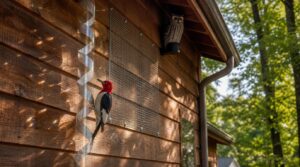
The good news is you don’t have to hurt a single woodpecker to protect your house. A handful of simple, legal deterrents can make your siding far less appealing without putting any bird at risk.
If you’re dealing with repeat damage, switching your siding material is one of the most effective long-term fixes—woodpecker-resistant siding options like vinyl and aluminum are worth a serious look.
Here’s what actually works.
Reflective Tape and Streamers
Hang holographic Mylar tape or reflective plastic streamers 12–18 inches from damaged siding, and you’ll cut woodpecker visits by up to 50%. microprismatic retroreflective vinyl reflects light up to 300 m, enhancing visibility. Color selection matters — avoid earth tones.
Visibility optimization comes from loose attachment, so wind keeps things moving.
- Installation tips: space strips every 12 inches
- Durability factors: choose UV-stabilized tape
- Maintenance schedule: reposition every two weeks
- Shiny objects lose effectiveness if left stationary
Predator-eye Balloons
Predator-eye balloons enhance protection when reflective tape falls short. These 15–20 inch vinyl or Mylar helium balloons feature a bold eye design—forward-facing, reflective pupils—to create a convincing predator illusion.
For optimal effectiveness, set placement height at bird eye level near damage zones. Employ a multi-balloon strategy and rotate locations every two weeks to maintain unpredictability.
Constructed from weather-resistant materials, the balloons withstand outdoor conditions. Inspect them monthly to ensure longevity and performance.
Moving Shiny Objects
Beyond balloons, everyday shiny objects pull double duty as moving reflections that throw woodpeckers off completely. Wind Reflectors, spinning mobiles, and silver-disc ornaments use seasonal light to cast unpredictable flashes across your siding.
Space Mirror Placement every 12–24 inches along damage-prone eaves, and choose Durable Materials that won’t rust. Follow Mounting Safety basics—secure fasteners, no blocked gutters—and these reflective visual deterrents stay working all season.
Rotate Deterrents Regularly
Even the best reflective visual deterrents stop working once woodpeckers figure out the pattern. That’s why a Rotation Schedule matters — swap tape, balloons, and shiny objects every 7 to 14 days, adjusting Deterrent Placement height and angle each time.
- Log swap dates for Effectiveness Tracking
- Align rotations with Seasonal Timing during breeding months
- Conduct Safety Audits to check for loose fasteners or gaps
- Cycle between scent-based repellents and visual options to stay unpredictable
Avoid Harmful Methods
Trapping, poisoning, or harming woodpeckers isn’t just cruel — it’s illegal under the Federal Migratory Bird Treaty Act. Stick to non-lethal techniques like visual deterrents, auditory deterrents, and safe chemical alternatives such as methyl anthranilate or capsaicin gels.
Eco-friendly barriers, bird-friendly materials, and habitat modification strategies — pruning branches, sealing cavities — keep birds away without putting you on the wrong side of wildlife law.
Find What Attracts Woodpeckers
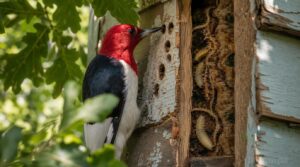
Before you can stop a woodpecker, you need to know what’s pulling it to your house in the first place. Most of the time, it’s not random — something specific is making your siding look like a great opportunity.
Understanding what’s attracting woodpeckers is the first step, and common reasons woodpeckers target homes often come down to insects, hollow sounds, or nesting opportunities hidden in your siding.
Here are the five most common attractants worth checking first.
Insects Inside Siding
Your siding might be the problem, not just the woodpecker. If carpenter ant tunnels, termite mud tubes, or powderpost beetle frass is hiding behind your walls, woodpeckers can detect the larvae and carpenter ant eggs through the wood.
They’re not being destructive — they’re hunting.
Poor moisture control and ventilation gaps make infestations worse. Turning your home into a buffet for insect damage prevention failures.
Soft or Rotting Wood
Rotting wood is basically a welcome sign for woodpeckers. Decay Rate Factors like moisture levels above 20 percent trigger soft rot fungi, leaving your siding with a spongy texture—compressible, weak, and easy to excavate. That’s what draws them in.
Your wood replacement options include fiber-cement or vinyl, which eliminate the soft entry points entirely. Pair any repair with humidity control, sealant application, and hard exterior materials to shut down the insect infestation cycle driving woodpecker damage for good.
Nearby Trees and Perches
That oak hanging over your roofline isn’t just shade — it’s a woodpecker highway. Canopy proximity and overhanging branches within 15 to 20 feet create ideal food sources, nesting sites, and launch points. Tree stressed insects from diseased or drought-weakened trees pull them even closer.
Perch management and habitat modification — like seasonal pruning to break seasonal perch patterns — are your first real line of defense.
Resonant Gutters and Trim
Metal surfaces hit differently when a woodpecker seeks a stage. Extruded aluminum gutters, copper trim, and metal flashing all boost drumming sound like a snare drum — and that resonance is the point.
- Gutter material resonance varies: Aluminum flashing rings loudest, while copper moderates over time as patina builds.
- Trim vibration dampening with caulk along fascia joints cuts acoustic feedback greatly.
- Acoustic gutter profiling — choosing K-style over half-round — reduces drumming sound mitigation opportunities for territorial birds.
Regular gutter cleaning removes debris that muffles sound, so don’t skip it.
Nesting Season Activity
Spring breeding season turns up the pressure fast. Longer daylight lengths trigger hormonal shifts that kick off courtship displays, territorial drumming, and material gathering almost overnight. By the time egg-laying begins in late April, woodpeckers have already claimed your siding as prime real estate.
Understanding these seasonal activity patterns helps you time physical barriers and deterrents. This proactive approach is crucial before parental feeding demands push their drilling activity into overdrive.
Block Access to Pecking Areas
Sometimes the best offense is a good defense—physically cutting off the woodpecker’s access to your siding works where other methods fall short.
If a bird can’t reach the wood, it can’t damage it. Here are the most reliable barriers you can put in place.
Bird Netting Under Eaves
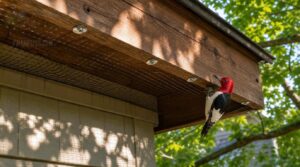
Installing fine-mesh plastic bird netting under your eaves is one of the most reliable ways to block woodpecker access without harming them.
Choose UV-stable materials with a mesh size between ¼ and ½ inch, and ensure proper tension installation so nothing sags or gaps. A solid bird netting installation should include:
- Access panels for reaching vents without dismantling everything
- Stainless steel fasteners every 6–12 inches to hold tension
- Biannual checks as your core maintenance routine
Hardware Cloth Barriers
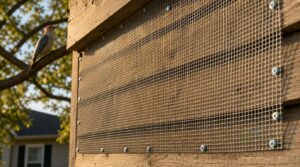
Where hardware cloth takes over, bird netting installation falls short. Galvanized steel mesh serves as a robust woodpecker deterrent for areas prone to frequent damage.
Mesh Size Selection is critical—opt for ¼-inch openings to ensure effectiveness. Proper installation relies on Edge Sealing Techniques and Corrosion-Resistant Fasteners secured every 6–8 inches, maintaining a tight barrier.
A UV-Resistant Coating significantly extends its lifespan beyond a decade, ensuring long-term protection against environmental wear.
Aluminum Flashing Covers
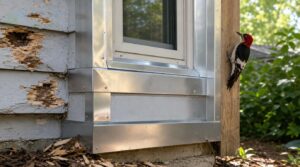
Where hardware cloth leaves off, aluminum flashing covers pick up the slack on high-impact zones.
Here’s why it works so well:
- Corrosion resistance keeps flashing intact through rain, humidity, and thermal expansion cycles without warping.
- Self-adhered variants bond directly over repaired siding—no extra fasteners needed, and fastener compatibility with aluminum or stainless avoids galvanic corrosion.
- Cutting and bending on-site lets you match any wall profile precisely.
Paint it to blend in, and you’ve got metal sheathing that delivers real structural damage prevention.
Protect Vents and Openings
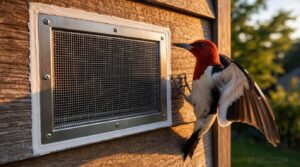
Vents are basically open invitations. Stainless steel mesh screens with openings no larger than 1/8 inch block woodpeckers and pests without cutting airflow. Pair that with vent baffle installation above each opening, adding a second line of defense.
Seal gaps around frames using fire-rated sealants or non-combustible caulk, then cap everything with ember-resistant caps.
Regular vent inspections keep the whole system tight.
Check for Trapped Birds
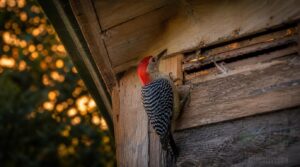
Before you seal everything up, inspect your home for any birds already trapped inside. Soffit gap detection starts with listening — wing noise clues like frantic flapping inside walls are early warning signs. Feather smudge signs around vents confirm repeated exit attempts.
Run a quick vent airflow test to spot blockages, then use a rescue light guide to direct any bird out through nesting holes or cavity inspection points.
Repair Woodpecker Damage Quickly
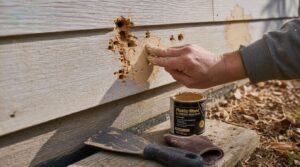
Once a woodpecker finds your siding, the damage doesn’t fix itself — and leaving holes open just invites more trouble. The good news is that repairs are straightforward if you tackle them in the right order.
Here’s what you need to do to close up the damage and keep it from coming back.
Fill Small Holes
A small hole left open is an open invitation — to moisture, insects, and more woodpeckers. Tackle pecking damage quickly by using exterior-grade epoxy filler or wood epoxy; both offer moisture resistance strong enough to outlast seasonal swings. Clean the hole, pack it slightly proud, then use a sanding technique with 120–220 grit for a flush finish.
- Apply wood putty or a wood plug for holes under ¼ inch
- Match color using tinted exterior-grade caulk or stained filler
- Prime within 24 hours — primer timing protects the repair before weather moves in
Replace Damaged Siding
Repairing pecking damage often requires more than patching—siding itself needs to go when woodpeckers damage multiple sections. Siding Material Options matter: fiber cement siding resists future drilling, while vinyl siding and metal siding withstand rot.
Always follow Sheathing Repair Procedures, checking for soft spots underneath. Prioritize Moisture Barrier Installation and Flashing Integration Tips to ensure durability. Finish with a strategic Color Finish Choice to deter future pecking and enhance aesthetics.
Seal Insect Entry Points
Insects are the real culprits — seal their entry points and you cut off the woodpecker’s food supply entirely. Work through these four areas systematically:
- Apply exterior-grade caulk for window frame caulking and siding gap fill around trim joints.
- Use polyurethane foam for foundation crack sealing and utility penetration seals near pipes.
- Install roof vent mesh to block beetle larvae nesting sites.
- Pack wood filler into damaged sections as part of insect vector control and termite prevention.
Paint Repaired Surfaces
Paint isn’t just cosmetic here — it’s your last line of defense. Start with solid surface preparation: clean, sand, and prime repaired wood filler or exterior-grade caulk with a latex primer suited for outdoor exposure.
Then apply a UV-resistant coating in a light, non-earth-tone shade for color blending that doesn’t mimic tree bark.
Some woodpecker deterrents in paints, like BeakGuard Repellent Paint, provide an additional level of protection worth considering.
Inspect Quarterly
Think of quarterly inspections as your damage trend tracker — a routine that keeps small problems from snowballing.
When you inspect your home each season, check for fresh peck marks, frass mapping along window headers, fastener corrosion, structural sag in joists, and moisture readings at framing points. Catching these early warning signs lets you stay ahead of seasonal woodpecker activity and shifting pecking patterns before repairs get costly.
Call Professionals When Needed

Sometimes DIY fixes just aren’t enough, and that’s okay to admit.
If the damage runs deep, the birds keep coming back, or you suspect a legal issue is in play, a licensed professional is your best next move.
Pick up the phone when it makes sense.
Extensive Structural Damage
When woodpecker damage runs deeper than surface siding, you’re looking at potential Foundation Cracks, Roof Sagging, or Wall Deformation that no caulk gun can fix. Beam Buckling and Moisture Decay from repeated exposure signal serious structural damage repair needs.
A licensed professional can complete a proper damage assessment, handling siding repair and roof shingle replacement safely, keeping your home sound and structurally reliable.
Active Nesting Concerns
If you find an active nest cavity, stop all deterrent activity immediately. Cavity nesting birds mid-brood are federally protected, and disturbing them carries real legal risk.
A professional understands nesting behavior and can assess Nest Site Selection, Parental Attendance patterns, and Noise Sensitivity before acting.
Watch for these red flags:
- Frequent parental trips indicating active brooding
- Chirping inside the nest cavity
- Predator Proximity stressing the nesting sites
- Temperature Regulation disruptions from damaged siding
Persistent Repeat Pecking
Once active nesting ceases, persistent repeat pecking becomes your next challenge. Pecking behavior habituation sets in fast — woodpeckers lock onto multiple hole hotspots along eaves and trim, returning daily. This drumming and territorial behavior won’t stop with one deterrent alone.
| Problem | Risk | Solution |
|---|---|---|
| Wood Surface Roughness ignored | Accelerated Water Intrusion Risk | Immediate sealing |
| Pecking patterns escalating | Structural Reinforcement Needs | Professional assessment |
| Visual/sound deterrents failing | Ongoing siding compromise | Combination strategy |
Call a professional before small holes become serious damage.
Pest Infestation Problems
Persistent pecking often signals something deeper — carpenter ant colonies or termite risk hiding inside your walls. Woodpecker behavior is fundamentally Nature’s early warning system for wood decay and moisture intrusion.
Persistent woodpecker pecking is nature’s early warning system for hidden carpenter ants, termites, and moisture damage inside your walls
A professional using integrated pest management can locate hidden infestations driving seasonal pest spikes that visual deterrents alone won’t fix.
Addressing these root causes is the real woodpecker control through non-lethal deterrent techniques that actually last.
Wildlife Law Compliance
Federal wildlife law — specifically the Migratory Bird Treaty Act (MBTA) — gives woodpeckers full legal protection, and ignoring that can mean real penalties. A licensed professional navigates these rules so you don’t have to guess.
They’ll handle:
- Permit requirements and local regulations
- Seasonal restrictions during nesting cycles
- Recordkeeping practices and exclusion standards
Staying compliant isn’t optional — it’s protection for you and the birds.
Frequently Asked Questions (FAQs)
What is the penalty for killing a woodpecker?
Killing a woodpecker can result in up to €50,000 in fines under Germany’s protected species law, and in serious cases, imprisonment risk is a real possibility.
They are legally protected wildlife, not a pest you can eliminate.
How do you get woodpeckers to stop pecking on your house?
Start with reflective tape, predator-eye balloons, and motion-activated sprinklers as visual scare devices.
Remove attractants like rotting wood, prune nearby branches, and apply chemical repellents during nesting season for lasting results.
What is the best deterrent for woodpeckers?
Reflective tape wins on cost, ease, and consistency. Pair it with predator decoys and rotate both weekly — woodpeckers adapt fast. Ultrasonic devices and scent deterrents alone rarely hold up long-term.
What time of day do woodpeckers peck?
Woodpeckers follow a predictable rhythm. Dawn drumming peaks within 30 minutes of sunrise, midmorning activity intensifies as insects warm up, and afternoon foraging fills energy gaps.
Nighttime inactivity is the rule — they’re strictly daylight operators.
What smell do woodpeckers hate?
Strong smells are your secret weapon. Peppermint oil, citrus oil, vinegar spray, garlic repellent, and ammonia solution all trigger avoidance.
Methyl anthranilate works especially well as a scented repellent for woodpeckers.
How do I stop Woodpeckers from pecking my house?
To stop woodpeckers from pecking your house, combine non-lethal deterrent techniques: reflective tape, physical barriers, and non-lethal repellents.
First, address what is drawing them—whether it’s insects, soft wood, or nesting season activity.
Do woodpeckers Peck on Your House?
Yes, they do — and it is more deliberate than you’d think. Their pecking patterns follow Acoustic Territory Signals and Seasonal Pecking tied to breeding cycles.
This drumming behavior, which turns your siding into a communication tower, serves as a critical form of interaction.
Why is my Woodpecker pecking on my house?
Your house is basically sending woodpeckers an open invitation.
Territory Drumming, Nest Cavity Seeking, Seasonal Insect Surge, and Roosting Necessity all drive this foraging behavior — and your siding just happens to check every box.
How do you stop woodpeckers from pecking at your house?
Hang reflective tape, install bird netting, and seal insect entry points. Nonlethal woodpecker deterrents like predator balloons and sensory deterrents work best when rotated regularly so the birds don’t adjust.
What does it mean when a woodpecker pecking your house?
A woodpecker pecking your house is sending a message.
It’s either territorial communication — drumming to attract a mate or warn rivals — foraging behavior targeting hidden insects, nesting intent, or seasonal activity tied to breeding season.
Conclusion
Find what’s drawing the bird in, block what’s giving it access, and fix what the damage has already done—handle all three, and you’ve broken the cycle for good. Knowing how to stop woodpeckers from pecking your house isn’t about winning a battle with one stubborn bird; it’s about making your home an unattractive target from the start.
Tackle the underlying issue, hold the line with rotating deterrents, and that early-morning hammering stops being your problem.
- https://en.wikipedia.org/wiki/Woody_Woodpecker
- https://www.orientaltrading.com/party-supplies/party-decorations/balloons/mylar-balloons-a1-552889-1.fltr
- https://www.allaboutbirds.org/guide/Pileated_Woodpecker/id
- http://www.bioone.org/doi/abs/10.2193/2006-491
- https://www.wolfsburg.de/en-us/umweltnaturschutz/naturschutz/artenschutz