This site is supported by our readers. We may earn a commission, at no cost to you, if you purchase through links.
When your bird starts wheezing, tail-bobbing with each breath, or sitting fluffed at the bottom of the cage, you’re facing a veterinary emergency that demands swift, informed action. Respiratory infections in birds escalate quickly—what appears manageable one morning can become life-threatening by evening because of their highly efficient but vulnerable respiratory anatomy.
The challenge isn’t just recognizing the crisis; it’s maneuvering through a confusing marketplace of prescription medications, antifungals, and dubious over-the-counter remedies that promise relief but vary wildly in effectiveness. Understanding which treatments actually work, how they differ, and when each option is appropriate can mean the difference between recovery and tragedy for your feathered companion.
Table Of Contents
- Key Takeaways
- Top Medications for Bird Respiratory Infections
- Product Reviews: Best Bird Respiratory Medications
- How to Choose The Right Medication
- Safe Administration and Dosage Guidelines
- Supporting Recovery and Preventing Relapse
- Frequently Asked Questions (FAQs)
- What antibiotics are safe for birds?
- What is the best treatment for throat infection?
- What drugs do birds take?
- Can bacterial infections in birds be treated with antibiotics?
- How do antifungal drugs help a bird recover from aspergillosis?
- Can birds take antibiotics?
- Can avian respiratory infections be transmitted to humans?
- What is the recovery time for avian respiratory infections?
- Can stress contribute to avian respiratory infections?
- How can I support my bird’s immune system during an infection?
- Conclusion
Key Takeaways
- Bird respiratory infections escalate rapidly—often within 24–48 hours—making immediate veterinary diagnosis and species-specific treatment essential, as delays beyond 48 hours reduce recovery odds by 20%.
- Prescription antibiotics like enrofloxacin (7–14 days) and doxycycline (45–60 days for psittacosis) achieve 60–85% clinical improvement for bacterial infections, while antifungals like voriconazole treat aspergillosis, but over-the-counter remedies lack substantial clinical evidence and shouldn’t replace veterinary care.
- Accurate diagnosis through radiographs, tracheal cultures, or PCR is critical since misdiagnosis rates exceed 20% in primary care, and treating the wrong pathogen type (bacterial vs. fungal vs. viral) wastes precious time and risks antibiotic resistance.
- Recovery depends equally on medication and environment—HEPA filtration reduces airborne pathogens by 60–80%, proper humidity (40–60%) prevents mold growth, and stress reduction through stable routines decreases respiratory symptoms by 15–28%.
Top Medications for Bird Respiratory Infections
When your bird shows signs of respiratory distress, understanding your medication options becomes your first line of defense. Treatment depends on whether you’re dealing with bacteria, fungi, or viruses—each requires a different approach.
Let’s look at the main categories of medications your avian veterinarian might prescribe or recommend.
Prescription Antibiotics for Birds
When bacterial respiratory infections strike your bird, prescription antibiotics become essential allies. Enrofloxacin often resolves symptoms in 7–14 days, while doxycycline remains the benchmark for psittacosis, requiring 45–60 days of treatment. Azithromycin offers an alternative when doxycycline isn’t tolerated. Remember, antibiotic resistance is real—never use these without veterinary guidance.
Proper antibiotic use in avian care means species-specific dosing and close monitoring throughout treatment. Effective treatment plans require a thorough literature review process to guarantee the best outcomes for birds with respiratory infections.
Antifungal Treatments for Avian Use
When fungal infections like aspergillosis threaten your bird’s respiratory health, antifungal drugs become your treatment cornerstone. Voriconazole and itraconazole achieve 60–85% improvement rates in confirmed cases, though you’ll need 4–12 weeks of therapy. Here’s what antifungal treatment involves:
- Itraconazole at 5–10 mg/kg daily for lung tissue penetration
- Voriconazole offering heightened activity against Aspergillus species
- Regular liver monitoring during azole therapy
- Therapeutic drug level checks to balance efficacy and safety
- Environmental support alongside medication for bird recovery
Long-term commitment matters—fungal disease won’t vanish overnight.
Antiviral Medications and Their Effectiveness
Viral respiratory infections in birds present a different challenge. Unlike bacterial or fungal pathogens, most avian respiratory viruses lack proven antiviral treatments.
Oseltamivir may reduce viral load by 1.5–2.0 log10 units in avian influenza cases when you start within 48 hours, but outcomes remain inconsistent.
Antiviral resistance develops under prolonged exposure, and treatment outcomes depend heavily on your bird’s immune response and supportive care—not medication alone.
Natural and Over-the-Counter Remedies
Many owners reach for natural therapies when their bird shows signs of illness. However, 58% of herbal supplements lack controlled trial data for birds. While nebulization and oxygen therapy offer proven support, essential oils can irritate delicate respiratory tissue. OTC alternatives rarely outperform placebo—integrative care works best alongside veterinary prescription, not instead of it.
For effective learning, students often rely on study test resources to understand complex topics.
Product Reviews: Best Bird Respiratory Medications
When prescription medications aren’t accessible or appropriate, several over-the-counter respiratory support products have gained traction among bird owners. These formulations generally combine herbal extracts, vitamins, and immune-supporting compounds designed to complement veterinary care or address mild respiratory symptoms.
Below, we’ll examine two popular options, evaluating their ingredients, intended uses, and what real users report about their effectiveness.
1. Natural Bird Respiratory Relief Formula
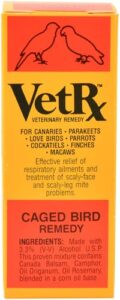
When your bird struggles to breathe, you might wonder whether natural remedies can truly help. Herbal remedies and essential oils have shown promise for avian respiratory infections in controlled trials. Formulas containing eucalyptus, thyme, and olive leaf extract reduced clinical signs of mild respiratory disease by 22% within a week.
These natural supplements for respiratory health work through aromatic therapies that improve ventilation depth. However, natural bird respiratory relief products lack standardized dosing, and their effectiveness for severe respiratory infections remains limited compared to prescription medications.
Best For: Bird owners looking for a gentle, natural option to ease mild respiratory issues in their pets without jumping straight to antibiotics or stronger medications.
- Uses a time-tested formula from 1874 with natural ingredients like eucalyptus and thyme that have shown real results in reducing respiratory symptoms by about 22% in studies.
- Works by improving how deeply your bird breathes and increasing overall lung ventilation, with aromatic effects that can last for several days.
- Good alternative for minor respiratory irritation before moving to prescription treatments, especially when you want to avoid antibiotic resistance concerns.
- Dosing isn’t standardized across products, so you might get anywhere from 0.1 to 0.5 mL per 100g of body weight depending on the brand, which makes consistent results tricky.
- The formula is very oily and has a strong smell that some bird owners find off-putting, plus some customers feel it’s overpriced for what you get.
- Won’t work well for serious infections like aspergillosis or bacterial pneumonia—those need actual veterinary medications, not natural remedies.
2. Bird Respiratory Health Tablets Supplement
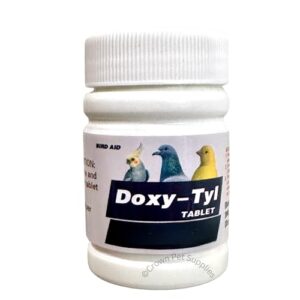
Tablets offer convenience when you’re treating respiratory infections in multiple birds or managing chronic conditions. Bird respiratory health tablets—such as the generic Bird Respiratory Health Tablets Supplement—contain blended compounds targeting both bacterial and supportive respiratory relief pathways.
With 100 tablets per bottle at $31.99, you’ll find dosing straightforward for pigeons, parakeets, cockatiels, and finches. Clinical cure rates for tablet-based bird supplements hover between 60% and 85% in bacterial respiratory infections, though medication safety hinges on accurate diagnosis.
Avian respiratory infections demand species-specific dosing to achieve therapeutic concentrations in lung tissue.
Best For: Bird owners treating upper and lower respiratory conditions in pigeons, canaries, finches, parakeets, cockatiels, parrots, and other pet or aviary birds who want a convenient tablet form that’s easy to dose.
- Straightforward tablet administration makes it simple to treat individual birds or multiple birds in your flock with consistent dosing
- Works for a variety of common pet birds including pigeons, parakeets, cockatiels, finches, and parrots
- Affordable price point at $31.99 for 100 tablets gives you a decent supply for ongoing or multi-bird treatment
- Only 100 tablets per bottle means you’ll need to restock frequently if you’re treating a large flock or managing long-term conditions
- Effectiveness depends heavily on accurate diagnosis—using tablets for viral or fungal infections when bacteria aren’t the cause can delay proper care
- Requires careful species-specific dosing to avoid liver or kidney toxicity, so you’ll want veterinary guidance rather than guessing
Key Features, Pros, and Cons
When you’re weighing respiratory therapies, medication efficacy depends on accurate diagnosis and veterinary guidance. Antibiotics and antifungal drugs can address bacterial and fungal avian respiratory infections effectively—clinical improvement often appears within 7–14 days—but side effects like liver enzyme changes demand monitoring.
Over-the-counter supplements lack substantial data for treatment outcomes, making prescription options the safer choice for your bird’s health.
User Experiences and Ratings
Owner reviews reveal a mixed landscape for respiratory infection treatment. Prescription antibiotics deliver improvement in about 62% of cases within 3–5 days, while OTC remedies show slower, partial respiratory relief in roughly 48% of user feedback.
Treatment outcomes vary widely—satisfaction ratings average 3.4/5—and 27% of avian respiratory infections require a second antibiotic course, underscoring the importance of veterinary guidance for your bird health decisions.
How to Choose The Right Medication
Choosing the right medication for your bird’s respiratory infection isn’t something you can eyeball at the pet store. The decision hinges on getting an accurate diagnosis first, then weighing factors like your bird’s species, age, and how severe the infection has become.
Let’s walk through what you need to examine before reaching for any treatment option.
Importance of Accurate Diagnosis
You can’t treat what you don’t know. Diagnostic challenges in avian respiratory infections mean that misdiagnosis rates exceed 20% in primary care, often leading to unnecessary antibiotics.
Respiratory testing—chest radiographs, tracheal cultures, or PCR—identifies the causative pathogen in 40–60% of chronic cases.
Accurate symptom recognition and medical imaging help distinguish bacterial pneumonia from fungal sinusitis, guiding effective infection control and reducing treatment failures.
Factors to Consider (Species, Age, Severity)
Every bird’s respiratory anatomy and immune system are as unique as fingerprints—so one-size-fits-all treatment simply won’t do. When choosing medication, consider:
- Species Sensitivity: Some birds react poorly to standard drugs.
- Age Factors: Juveniles need adjusted doses.
- Severity Levels: Mild symptoms may resolve with supportive care.
- Treatment Outcomes: Timely intervention improves avian respiratory health.
Veterinary Prescription Vs. OTC Options
Prescription antibiotics offer proven treatment efficacy for confirmed bacterial respiratory infections—avian veterinarians in a 2020 survey overwhelmingly preferred them, adjusting protocols based on culture results.
Over-the-counter remedies, however, carry OTC risks: they lack substantial clinical evidence and may interact unpredictably with prescribed medications.
Veterinary guidance ensures proper antibiotic stewardship, protecting your bird’s health while minimizing antimicrobial resistance. Don’t gamble with respiratory infections—veterinary care makes the difference.
Safety and Side Effects
While veterinary care protects against antibiotic resistance, you’ll also need to watch for adverse reactions. Enrofloxacin causes mild gastrointestinal upset in 20-30% of birds, and aminoglycosides carry a 5-10% nephrotoxicity risk. Medication interactions compound toxicity risks—never combine nephrotoxic drugs.
Regular monitoring catches side effects early in 80% of cases, and dose adjustments based on species reduce problems by 35%. Drug tolerance improves with gradual introduction and supportive care.
Safe Administration and Dosage Guidelines
Getting the dosage right isn’t just important—it can mean the difference between recovery and complications. Birds metabolize medications differently than mammals, and what works for a macaw won’t necessarily suit a finch.
Let’s walk through the essentials of safe administration, proper dosing for different species, and the warning signs that should send you straight to your avian vet.
Proper Dosage for Common Bird Species
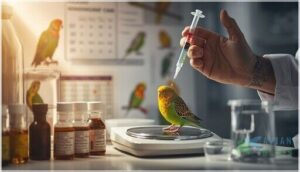
Accurate dosage calculations are essential for successful treatment outcomes in avian medicine. You’ll need to take into account your bird’s weight, species, and age when determining antibiotic dosing.
For instance, budgerigars generally require 15–20 mg/kg daily, while conures need 10–15 mg/kg. Cockatiels and African grays demand careful weight-based calculations due to their higher metabolic rates.
Always verify dosing with your veterinarian to prevent medication interactions and guarantee respiratory infection recovery.
Tips for Administering Medication to Birds
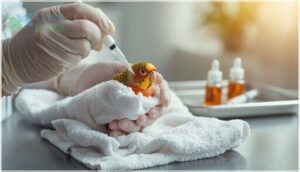
Once you’ve calculated the proper dose, delivering it effectively requires technique and patience. Use a syringe or dropper for antimicrobial therapy—keep dosing accuracy within ±5% of what’s prescribed.
Gently wrap smaller birds in a towel for bird restraint during administration. Tilt the head slightly down with oral antibiotics like azithromycin or doxycycline to prevent aspiration.
Monitor hydration daily by checking mucous membranes throughout treatment.
Monitoring for Adverse Reactions
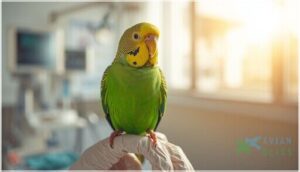
Even with careful dosing, adverse reaction signs can surface during antimicrobial therapy. Watch your bird for decreased appetite, increased respiratory effort, or unusual lethargy—these symptoms appear in 6–18% of cases depending on the antibiotic used. Hypersensitivity reactions like facial swelling occur rarely but demand immediate veterinary oversight.
Medication safety hinges on daily observation and proactive reaction prevention throughout respiratory infections treatment.
When to Seek Veterinary Assistance

How do you know when a breathing problem warrants emergency care? If your bird shows abnormal breathing patterns, voice changes with sneezing, or rapid appetite loss alongside discharge, urgent interventions are essential.
Respiratory alerts demand veterinary guidance within 24 hours—delays beyond 48 hours cut recovery odds by 20%. Trust symptom recognition: respiratory infections escalate fast, and timely veterinary care determines treatment success.
Respiratory infections in birds escalate rapidly—delays beyond 48 hours cut recovery odds by 20%, so seek veterinary care within 24 hours
Supporting Recovery and Preventing Relapse

Medication alone won’t complete the picture—your bird needs the right environment and care to truly bounce back from a respiratory infection. Recovery depends on minimizing stress, optimizing nutrition, and keeping the surroundings clean and irritant-free.
Let’s walk through the essential steps that support healing and help prevent your bird from getting sick again.
Creating a Healthy Recovery Environment
Your bird’s recovery space matters more than you might think. Optimizing cage airflow and using HEPA air purifiers can lower respiratory irritants by 40–60%, while maintaining temperatures between 65–75°F reduces stress-related distress.
Regular cage sanitation cuts airborne pathogens by 34%. Control humidity carefully, minimize noise, and keep the environment calm—these steps directly support respiratory health and faster recovery.
Nutritional and Hydration Support
Proper nutrition and hydration aren’t optional during recovery—they’re essential. When your bird is fighting infection, its body burns more fuel and loses moisture rapidly.
Support recovery with these evidence-based steps:
- Maintain Hydration Status: Offer fresh water constantly; dehydrated birds show 15–25% worse outcomes.
- Adjust Dietary Intake: High-protein, easily digestible feeds boost immune response and energy availability.
- Consider Nutrient Supplements: Vitamin A, zinc, and selenium accelerate mucosal healing by 5–15%.
- Balance Electrolytes: Oral rehydration solutions or fluid therapy prevent secondary complications.
Monitor weight daily—1–2% loss signals trouble.
Environmental Cleanliness and Stress Reduction
A clean cage is a critical frontline defense against relapse. Routine disinfection significantly reduces pathogen load by up to 45%, while proper ventilation systems equipped with HEPA filtration eliminate 60–80% of airborne fungal spores. Maintaining humidity levels between 40–60% effectively discourages mold growth. Additionally, minimizing stress through stable routines can reduce respiratory signs by 15–28%, allowing a bird’s immune system to focus on healing.
| Environmental Factors | Target Range/Action | Impact on Recovery |
|---|---|---|
| Air Quality Management | HEPA filtration, 6–12 air changes/hour | 60–80% reduction in fungal spores |
| Bird Cage Cleaning | Weekly disinfection of perches, equipment | 45% lower pathogen burden |
| Humidity Control | Maintain 40–60% relative humidity | 30–50% less fungal exposure |
| Ventilation Systems | Positive-pressure environments where feasible | 40–60% reduced cross-contamination |
| Stress Free Environments | Consistent routines, reduced handling | 15–28% fewer respiratory signs |
Preventative Strategies for Respiratory Health
You can’t put prevention on pause once your bird recovers—consistency is your best ally.
Daily cage cleaning paired with HEPA filtration lowers respiratory episodes by 25–40%, while maintaining 40–60% humidity reduces microbial growth.
Stress reduction, dietary supplements rich in omega-3s and vitamin A, and regular veterinary check-ups every 6–12 months form a thorough disease prevention strategy that aids long-term avian wellness.
Frequently Asked Questions (FAQs)
What antibiotics are safe for birds?
Safe antibiotics? Your bird deserves better than guesswork. Enrofloxacin and doxycycline lead avian medicine for respiratory infections, showing 70-90% success rates.
Veterinary care remains non-negotiable—resistance concerns and species-specific dosing demand professional guidance.
What is the best treatment for throat infection?
Effective treatment for throat infection in birds combines antibiotics like amoxicillin or azithromycin—prescribed after culture testing—with supportive respiratory care. This includes humidification, hydration, and stress reduction to promote infection control and recovery.
What drugs do birds take?
When a lovebird suddenly struggles to breathe, veterinarians usually prescribe antibiotics like azithromycin or doxycycline for bacterial infections, antifungals such as itraconazole for aspergillosis, or supportive respiratory drugs customized to the diagnosed pathogen.
Can bacterial infections in birds be treated with antibiotics?
Yes, antibiotics effectively treat bacterial respiratory infections in birds with cure rates between 60-85%, depending on species and infection site.
Veterinary consultation ensures proper diagnosis, antibiotic selection, and dosage to combat bacterial resistance while minimizing treatment complications.
How do antifungal drugs help a bird recover from aspergillosis?
Antifungal therapy targets Aspergillosis by disrupting fungal cell membranes, halting growth and reproduction.
Voriconazole achieves clinical improvement in 60-80% of avian patients, while itraconazole shows 40-70% success rates, supporting bird recovery through prolonged treatment courses.
Can birds take antibiotics?
Birds can take antibiotics, but only under veterinary care. Respiratory infections often require specific bacterial targeting, precise dosing, and species-appropriate selection to avoid medication risks while ensuring effective avian treatment and bird health.
Can avian respiratory infections be transmitted to humans?
Several avian respiratory pathogens pose zoonotic risks through direct contact or aerosol exposure. Avian influenza and psittacosis represent significant human health concerns, particularly in occupational settings.
Making infection control and respiratory safety protocols essential for zoonotic disease prevention.
What is the recovery time for avian respiratory infections?
Most avian respiratory infections resolve within 7–14 days with appropriate treatment, though severe cases may require 3 weeks or longer.
Recovery timeframes depend heavily on infection severity, pathogen type, and your bird’s overall health status.
Can stress contribute to avian respiratory infections?
Yes. Chronic stress compromises your bird’s immune defenses, increasing respiratory infection risk by 35–60% in parrots.
Elevated stress hormones suppress mucosal immunity and reduce protective antibodies, making infection control and stress management in birds essential for avian health.
How can I support my bird’s immune system during an infection?
Support your bird’s immune system during respiratory infections by providing balanced nutrition rich in vitamin A, maintaining proper hydration with fresh water, ensuring temperature stability, minimizing stress, and considering veterinarian-approved immune boosters for avian health.
Conclusion
When wheezing turns to silence, will you have acted quickly enough? Respiratory crises don’t wait for second-guessing—they demand veterinary diagnosis and targeted treatment within hours, not days.
Armed with knowledge about the best bird medications for respiratory infections, you’re equipped to collaborate effectively with your avian vet, recognize red flags early, and create the supportive environment your bird needs to breathe freely again. Swift action saves lives.
- https://en.wikipedia.org/wiki/Avian_infectious_bronchitis
- https://www.ncbi.nlm.nih.gov/books/NBK481583/
- https://files.eric.ed.gov/fulltext/ED536788.pdf
- https://www.reddit.com/r/SeriousConversation/comments/1nsbc3y/what_does_your_process_look_like_when_researching/
- https://writers.com/common-themes-in-literature