This site is supported by our readers. We may earn a commission, at no cost to you, if you purchase through links.
A bird breathing with effort is a bird in trouble—and time matters more than most owners realize. Respiratory infections move fast in small birds, sometimes turning a subtle wheeze into a crisis within 48 hours.
The catch is that not every infection reacts to the same treatment. A bacterial Mycoplasma infection calls for something like doxycycline; a fungal case needs an antifungal entirely.
Reach for the wrong medication and you won’t just waste time—you may make things worse.
Knowing which bird medications for respiratory infections actually work, and when to use them, is the difference between a full recovery and a much harder outcome.
Table Of Contents
- Key Takeaways
- Recognize Bird Respiratory Infection Symptoms
- Top 5 Bird Respiratory Medications
- Choose The Right Bird Medicine
- Administer Bird Medications Safely
- Support Recovery and Prevent Relapse
- Frequently Asked Questions (FAQs)
- How do you treat respiratory infections in birds?
- Why do birds need antibiotics?
- How do antifungal drugs help a bird recover from aspergillosis?
- What is the best treatment for a bird with respiratory distress?
- What is the best antibiotic for bird respiratory infection?
- What drugs are used to treat respiratory infections in poultry?
- What antibiotics are safe for birds?
- What is the best treatment for throat infection?
- What drugs do birds take?
- Can bacterial infections in birds be treated with antibiotics?
- Conclusion
Key Takeaways
- Using the wrong medication—like antibiotics for a fungal infection—won’t just fail; it lets the real infection advance and can make your bird sicker faster.
- Symptoms like open-mouth breathing, tail bobbing, and blue-grey skin aren’t "wait and see" signs—they’re same-day emergencies that need an avian vet immediately.
- Diagnosis before treatment isn’t optional: doxycycline targets Mycoplasma, antifungals target aspergillosis, and guessing between them costs your bird time it doesn’t have.
- Medication alone won’t carry the recovery—stable temperature, clean air, proper hydration, and a 30–45 day quarantine protocol are what keep relapses from sneaking back in.
Recognize Bird Respiratory Infection Symptoms
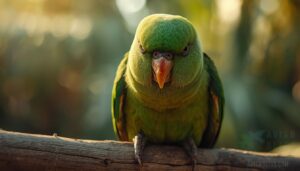
Respiratory infections in birds don’t always announce themselves loudly — sometimes the signs are easy to miss until things get serious. Knowing what to watch for can make the difference between catching an infection early and facing a full‑blown emergency.
A closer look at early signs of bird respiratory infection can help you spot the subtle shifts — like a change in breathing rhythm or unusual quietness — before they escalate.
Here are the key symptoms that tell you something’s wrong with your bird’s airways.
Wheezing, Coughing, Sneezing, and Clicking Sounds
When your bird starts making unusual sounds, pay attention — those noises are telling you something.
Wheezing mechanisms involve narrowed airways vibrating as air pushes through, often loudest on exhale. Cough types range from dry and clicking to wet and productive, while sneezing triggers generally point to nasal irritation. Persistent clicking causes concern when secretions thicken.
These sounds alone can help your vet determine whether doxycycline, enrofloxacin, or fluconazole is the right path forward.
Nasal Discharge, Watery Eyes, and Facial Swelling
Beyond sound, your bird’s face tells the story too.
Watch for these four warning signs:
- A runny nose with watery discharge — mucus characteristics matter, since thick or colored secretions suggest bacterial infection needing antibiotics.
- Watery eyes (epiphora) from nasolacrimal blockage or sinus inflammation.
- Facial edema triggers like swelling around the beak or eye sockets.
- Allergic rhinitis-like redness without obvious infection, which may still warrant antifungals or antivirals after diagnosis.
Tail Bobbing, Open-mouth Breathing, and Rapid Respiration
These three breathing effort indicators often appear together — and that combination matters.
| Sign | What You See | Urgency Level |
|---|---|---|
| Tail bobbing | Rhythmic tail movement synced with each breath | High |
| Open-mouth breathing | Bird breathes with beak open | Urgent |
| Rapid respiration | Faster-than-normal breathing at rest | High |
Tail bobbing significance shouldn’t be understated — it points directly to air sac involvement. Open-mouth breathing triggers an immediate red flag for emergency triage criteria. Don’t wait.
Recognizing air sac inflammation signs can prompt timely veterinary intervention.
Lethargy, Poor Appetite, and Weight Loss
Respiratory distress doesn’t always look dramatic. Sometimes your bird just gets quiet.
Lethargy, loss of appetite, and weight loss are subtler signs — but they’re just as telling.
Watch for behavioral changes like sleeping through the day, reduced feeding motivation, or disinterest in food.
Muscle atrophy follows quickly in small birds. Metabolic monitoring through weekly weigh-ins helps catch energy level drops early, long before antibiotics, antifungals, or antivirals enter the picture.
Emergency Signs That Need Immediate Vet Care
Some signs won’t wait.
If your bird shows blue grey discoloration on the skin or tongue — a cyanosis indicator — that’s a circulation and oxygen problems, not a stuffy nose.
Gasping pauses, flared breathing effort, open-mouth breathing, and sudden collapse all signal a failing airway.
Don’t monitor these at home. Get to an avian vet the same day.
Top 5 Bird Respiratory Medications
Not all bird respiratory medications work the same way, and picking the wrong one can do more harm than good. Your vet’s diagnosis should always guide your choice, but knowing what’s out there helps you ask better questions and act faster.
Here are five medications commonly used to treat respiratory infections in birds.
1. DOX Tyl Powder Medicine for Birds
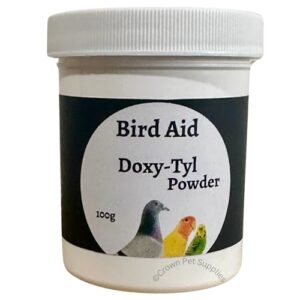
DOX Tyl Powder is one of the more practical options you’ll find for bird respiratory infections. It combines doxycycline and tylosin — two antibiotics that work well against Mycoplasma and ornithosis, both common culprits behind breathing problems in cage birds.
Mixing is straightforward: about 5 grams (one teaspoon) per gallon of drinking water, changed daily for 5 to 7 days.
It’s designed for a wide range of species, from canaries to parrots, and one 100-gram bottle can treat multiple birds at once.
| Best For | Bird owners dealing with respiratory infections across multiple species, from canaries and finches to parrots and cockatiels. |
|---|---|
| Target Condition | Respiratory infections |
| Formulation | Powder |
| Species Coverage | Pigeons, canaries, finches, parakeets, cockatiels, parrots |
| Administration Method | Mixed with food or water |
| Vet Consultation | Recommended |
| Price Range | Not specified |
| Additional Features |
|
- Treats both upper and lower respiratory issues, so you’re covered for most common infections
- One bottle handles multiple birds at once, which saves money and hassle
- Easy to use — just mix the powder into water or food, no fuss
- Only targets respiratory conditions, so it won’t help with anything else going on
- Dosage instructions can be vague, so you’ll likely want to check with a vet first
- No storage guidance on the label — you’ll need to keep it sealed and dry on your own
2. Poultry Respiratory Support Liquid
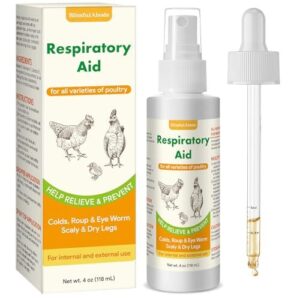
If you’re looking for a natural option, Poultry Respiratory Support Liquid is worth considering. It comes in a 4 fl oz bottle at $27.99 and uses an essential oil blend — eucalyptus, thymol, mint, and menthol — to help clear airways and ease congestion.
You can add it directly to drinking water or use the included spray top for aerial application.
It works across species: chickens, ducks, turkeys, and chicks.
Keep in mind: it won’t replace antibiotics for confirmed bacterial infections.
| Best For | Backyard flock owners who want a natural, daily-use respiratory supplement for chickens, ducks, turkeys, and other birds. |
|---|---|
| Target Condition | Respiratory infections |
| Formulation | Liquid |
| Species Coverage | Chickens, ducks, turkeys, gamefowl, chicks |
| Administration Method | Water additive or direct spray |
| Vet Consultation | Recommended for severe cases |
| Price Range | $27.99 |
| Additional Features |
|
- Dual-application design (water additive or spray) makes it easy to use however fits your routine
- Natural ingredients with no artificial fragrances, colors, or preservatives
- Works across multiple bird species, so one bottle covers a mixed flock
- Small 4 oz bottle goes fast with larger flocks, meaning frequent repurchases
- No clinical trials back the effectiveness claims — it’s mostly anecdotal
- Won’t cut it for serious bacterial infections that need actual antibiotics
3. DOX Tyl Bird Respiratory Tablets
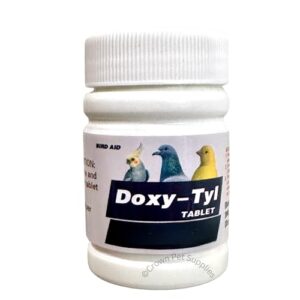
When your bird needs real antibiotic coverage, DOX Tyl Bird Respiratory Tablets deliver a dual-action formula. Each tablet contains 7 mg doxycycline and 25 mg tylosin — two antibiotics that together target Mycoplasma, Chlamydia, and other common respiratory pathogens. Dosing is simple: one tablet per bird daily for seven days.
The 100-tablet bottle runs $31.99 and works across species, from canaries to parrots. Just remember — fixed-dose tablets don’t adjust for bird size, so a vet check is smart before starting.
| Best For | Bird owners dealing with respiratory infections in pet or aviary birds who want a simple, fixed-dose antibiotic treatment they can administer at home. |
|---|---|
| Target Condition | Respiratory infections |
| Formulation | Tablet |
| Species Coverage | Pigeons, canaries, finches, parakeets, cockatiels, parrots |
| Administration Method | Oral tablet |
| Vet Consultation | Recommended before use |
| Price Range | $31.99 |
| Additional Features |
|
- Dual-antibiotic formula (doxycycline tylosin) targets common respiratory pathogens like Mycoplasma and Chlamydia
- Simple one-tablet-a-day dosing makes it easy to stay on schedule
- Works across a wide range of species, from small finches to larger parrots
- Fixed dosing doesn’t account for differences in bird size or weight, which could mean under- or over-medicating
- Only intended for a 7-day course, so chronic or recurring issues will still need a vet
- Active ingredients aren’t prominently disclosed on packaging, so you’ll want to do your homework before starting treatment
4. Goodwinol Natural Bird Respiratory Relief
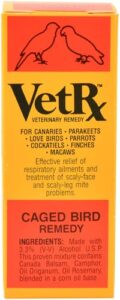
Not every respiratory case needs a prescription.
VetRx Bird Respiratory Relief takes a different route — an all-natural liquid formula that’s been around since 1874.
It combines Canada balsam, camphor, oil of oregano, and oil of rosemary in a corn oil base.
You apply a few drops under the wings, and your bird inhales the vapors through body heat.
At $15.99 for 2.4 oz, it’s an accessible first step for mild congestion or allergy-related breathing difficulty.
| Best For | Bird owners dealing with mild congestion or allergy-related breathing trouble who want a natural, low-cost option before going the prescription route. |
|---|---|
| Target Condition | Respiratory relief |
| Formulation | Liquid |
| Species Coverage | Chickens, canaries, parakeets, finches, macaws |
| Administration Method | Drops or drinking water |
| Vet Consultation | Recommended |
| Price Range | $15.99 |
| Additional Features |
|
- Time-tested formula that’s been used since 1874 — not some new experiment
- Easy to use: a few drops under the wings and the vapors do the work
- Works across a wide range of birds, from canaries to macaws, at a pretty affordable $15.99
- Only offers temporary relief — it won’t touch the root cause if there’s an infection or parasite involved
- That strong Vicks-like smell can be a lot, and it may leave feathers looking wet
- Results are hit or miss; some birds improve fast, others show no change at all
Best Uses, Key Features, Pros, and Cons
Each product fits a different situation — and knowing which one to reach for can make all the difference.
- Indication Guidelines: Antibiotics like amoxicillin target bacterial causes; antivirals and antifungals like itraconazole require a confirmed diagnosis
- Mechanism of Action: Varies from cell-wall disruption to vapor inhalation
- Dosage Flexibility: Tablets offer precision; powders suit flocks
- Side Effect Profile: Monitor for gut upset or reduced intake
- Cost Effectiveness: Natural options start low; prescription courses cost more but resolve faster
Choose The Right Bird Medicine
Picking the right medication isn’t just about what’s on the shelf — it’s about matching the drug to the actual problem. The wrong choice can waste time, stress your bird, or make things worse.
Here’s what to think through before you treat.
Bacterial Vs. Fungal Vs. Viral Infections
Not all respiratory infections play by the same rules. Bacteria, fungi, and viruses each have distinct pathogen mechanisms — and that gap shapes everything about treatment.
| Infection Type | Therapeutic Targets |
|---|---|
| Bacterial | Antibiotics (culture and sensitivity guides choice) |
| Fungal | Antifungals (long-course azoles) |
| Viral | Antivirals + supportive care only |
| Mixed | Confirmed via diagnostic tests before treating |
antibiotics against a fungal infection won’t help — and risks resistance development.
Why Diagnosis Matters Before Treatment
Treating without a diagnosis is like throwing darts in the dark. Targeted Therapy only works when you know what you’re targeting.
proper veterinary examination — including culture and sensitivity tests, blood tests, and radiographs — tells you whether you’re dealing with bacteria, fungi, or a virus.
That’s how you guarantee Safety Profiling, avoid Avoiding Resistance issues, improve Cost Efficiency, and set clear benchmarks for Monitoring Outcomes.
Species, Age, and Illness Severity Factors
Your bird’s species anatomy, age, immunity, and illness severity all shape antibiotic selection for avian respiratory disease.
A young bird’s immature immune system clears infections more slowly, while older birds have reduced metabolic tolerance.
Species-specific drug metabolism also affects administration routes and dosage considerations in avian patients — what works for one bird won’t suit another.
Match your treatment protocol for avian infections to the individual, not just the diagnosis.
Risks of Using The Wrong Medication
Getting the medication wrong isn’t just ineffective — it can make things worse. Misdiagnosis consequences are real: giving antibiotics for a fungal infection lets aspergillosis advance unchecked.
Wrong medication doesn’t just fail — it lets the real infection advance unchecked
Incorrect dosage toxicity can stress the kidneys fast.
Drug interaction hazards and improper administration route errors reduce drug levels or cause direct airway irritation.
Allergic reaction risks can escalate breathing difficulty faster than the original infection.
Administer Bird Medications Safely
Getting the right medication is only half the battle — how you give it matters just as much. The delivery method, dose, and timing can make or break your bird’s recovery.
Here’s what you need to know before you start treatment.
Oral, Injectable, and Nebulized Delivery Methods

How you deliver the medication matters just as much as which one you choose. Oral administration works well for alert birds, but absorption variability is real — food and calcium can blunt uptake.
Injectable antibiotics bypass that problem entirely.
Nebulization targets avian respiratory disease directly at the source.
Each method demands formulation compatibility, stress minimization, device sterilization, and dosage accuracy to make antimicrobial therapy actually work.
Dosage Considerations for Common Bird Species

Dosage isn’t one-size-fits-all. Species weight dosing means a cockatiel and a canary getting doxycycline or enrofloxacin need very different mg/kg calculations.
Age metabolic impact shifts how fast your bird clears drugs — juveniles burn faster, older birds accumulate.
Factor in severity-based adjustment and dehydration effect, since sick birds absorb oral meds unpredictably.
Drug interaction risk rises when combining trimethoprim-sulfamethoxazole, ketoconazole, or voriconazole.
Reweigh regularly.
Avoiding Interactions With Calcium and Food
Calcium quietly undermines your antibiotic’s effectiveness if you don’t plan around it. Doxycycline and enrofloxacin — two cornerstones of antibiotic selection for avian respiratory disease — both suffer reduced absorption when calcium-rich meals are given at the same time.
Solid absorption management comes down to simple timing rules:
- calcium-rich foods and supplements by at least 30 minutes from each dose
- Schedule dose timing around meals, not alongside them
- Practice supplement separation to prevent mineral binding in the gut
Watching for Side Effects and Intolerance
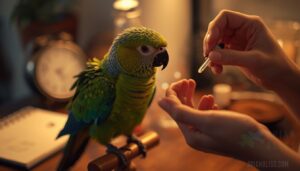
Every dose is a data point. Watch your bird closely in the hour after each antibiotic — that’s your best window for Reaction Timing. A simple Symptom Log catches patterns you’d otherwise miss.
| Sign | Likely Cause | Action |
|---|---|---|
| New wheezing after dose | Allergy Indicators | Call vet immediately |
| Loose droppings | GI side effect | Note timing, monitor |
| Facial swelling | Emergency Red flag | Seek urgent care |
Dose Adjustment decisions belong to your veterinarian — don’t self-correct.
When Treatment Should Be Stopped and Reviewed
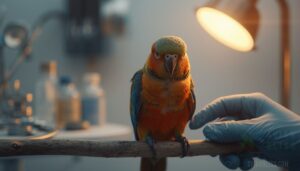
Knowing when to stop is just as important as knowing how to start.
If your bird shows Worsening Respiratory Signs — increasing open-mouth breathing, Cyanosis Appearance, collapse, or escalating wheezing — stop treatment and call your vet immediately.
No Improvement Timeline beyond 72 hours, Misdiagnosis Indicators, or Adverse Medication Effects like vomiting, all signal that the current treatment protocol for avian infections needs reassessment.
Support Recovery and Prevent Relapse

Medication alone won’t get your bird fully back on track. The environment and daily routine you provide during recovery carry just as much weight as the treatment itself.
Here’s what to focus on to keep a relapse from sneaking up on you.
Temperature, Humidity, and Clean-air Support
Think of bird’s recovery space as a controlled microclimate.
Keep a stable temperature range of 80–85°F and maintain humidity monitoring tools to stay between 40–60% — proper dew point management prevents mold without drying airways.
Use an air purifier with particle filtration efficiency to cut dust, and guarantee gentle airflow circulation through ventilation in cages without direct drafts, chilling your bird.
Hydration, Nutrition, and Stress Reduction
Beyond temperature control, your bird needs Electrolyte Rehydration and nutritional support for recovery. Dehydration concentrates body fluids quickly, especially with rapid breathing.
Focus on three priorities:
- Offer electrolyte supplements in small, frequent sips for hydration therapy.
- Provide High Calorie Feeding with soft, protein-rich foods for Amino Acid Support.
- Practice Low Stress Handling in a Quiet Sleep Environment.
This supportive care at home speeds healing greatly.
Cage Sanitation, Bedding, and Ventilation
Clean air starts with a clean cage.
Waste Removal Timing matters — pull soiled bedding before ammonia builds up. Use Low‑Dust Bedding to protect sensitive airways, and stick to a consistent Sanitization Schedule.
| Practice | Why It Matters |
|---|---|
| Daily spot cleaning | Limits ammonia buildup |
| Low-dust bedding | Reduces airway irritants |
| Ammonia Monitoring | Catches air quality problems early |
| Ventilation Flow Management | Prevents stale, damp air accumulation |
Quarantine Rules for New or Recovering Birds
A clean cage keeps the air fresh, but a clean barrier keeps your flock safe. When you quarantine new birds or recovering ones, stick to at least 30 days — longer if their background is unknown.
- Isolation Period: 30–45 days minimum, even if the bird looks healthy
- Entry Restrictions: limit who enters the quarantine space daily
- Equipment Sterilization: disinfect all gear before and after each use
- Daily Observation: track breathing, weight, and appetite every single day
Follow-up Care and Repeat Veterinary Checks
Quarantine buys time, but follow-up checks confirm your bird is actually winning the fight. Recheck timing generally falls two to four weeks post‑treatment, giving your vet a clear picture of treatment response and whether dosage modifications are needed.
| Visit Purpose | What’s Assessed | Action Taken |
|---|---|---|
| Recheck timing | Breathing, weight, energy | Confirm or adjust plan |
| Side effect monitoring | Appetite, droppings, behavior | Modify or stop medication |
| Record sharing | Full treatment history | Coordinate continuing care |
Frequently Asked Questions (FAQs)
How do you treat respiratory infections in birds?
Treating respiratory infections in birds means matching the right therapy to the right cause.
Bacterial infections call for antibiotics like doxycycline, fungal cases need antifungal therapy, and supportive care — including nebulization — helps across the board.
Why do birds need antibiotics?
Birds need antibiotics to target bacterial pathogens like Mycoplasma and Chlamydia, achieve therapeutic levels in the bloodstream, prevent organ damage from spreading infection, limit disease transmission, and mitigate resistance risk through proper veterinary diagnosis and culture and sensitivity testing.
How do antifungal drugs help a bird recover from aspergillosis?
Antifungal drugs like itraconazole target ergosterol in fungal cell membranes, basically cutting off Aspergillus at its roots. Consistent treatment duration matters — stopping early invites relapse.
Nebulization adds direct airway coverage alongside systemic therapy.
What is the best treatment for a bird with respiratory distress?
Start with oxygen therapy and supportive care first. Minimize handling, stabilize breathing with humidified oxygen, and use nebulization, antibiotics, or antifungal therapy only after identifying the cause through proper diagnosis.
What is the best antibiotic for bird respiratory infection?
There’s no single "best" antibiotic — it hinges on the pathogen. Doxycycline targets Mycoplasma; enrofloxacin covers gram-negatives. Without a diagnosis, you’re guessing, and antibiotic resistance grows fast.
What drugs are used to treat respiratory infections in poultry?
Common drugs include tetracyclines, tylosin and related macrolides, enrofloxacin, amoxicillin-clavulanate, azithromycin, and trimethoprim-sulfamethoxazole. Antifungal therapy treats aspergillosis, while combination therapy with bromhexine targets mucus alongside bacterial infection.
What antibiotics are safe for birds?
No two birds handle antibiotics the same way. Metabolism differences, species, and dose precision all determine safety.
Azithromycin, amoxicillin-clavulanate, and trimethoprim-sulfamethoxazole are commonly used — but only with veterinary guidance to avoid antibiotic resistance or toxicity.
What is the best treatment for throat infection?
Treatment depends on the cause. Bacterial throat infections need antibiotics, fungal cases need antivirals, and most benefit from hydration therapy and symptomatic relief.
Urgent care criteria apply if breathing worsens or swallowing becomes impossible.
What drugs do birds take?
Birds usually receive Macrolide Antibiotics, Fluoroquinolone Options, Beta‑lactam Agents like amoxicillin-clavulanate, Antifungal Azoles, Mucolytic Agents, trimethoprim-sulfamethoxazole, meloxicam, or targeted antifungal therapy depending on the diagnosed cause.
Can bacterial infections in birds be treated with antibiotics?
Yes, bacterial infections in birds respond well to antibiotics—but only when the right drug is chosen.
Culture sensitivity testing guides antibiotic selection, and dosage accuracy with proper treatment duration helps prevent antibiotic resistance.
Conclusion
Ironically, the birds most likely to hide their symptoms are the ones who need the fastest response. By the time you notice the labored breathing, the clock is already running.
The best bird medications for respiratory infections won’t work if the wrong one reaches the wrong infection.
Match the treatment to the diagnosis, follow dosing carefully, and keep recovery conditions clean and calm.
Get that right, and most birds bounce back stronger than you’d expect.
- https://www.furrycritter.com/pages/pharma/birds/_bp_birds.htm
- https://birdantibiotic.com/blogs/news/top-10-bird-antibiotics-and-what-they-treat-a-complete-owner-s-guide
- https://rjptonline.org/AbstractView.aspx?PID=2023-16-12-70
- https://pmc.ncbi.nlm.nih.gov/articles/PMC10064437/
- https://www.reptileknowledge.com/reptile-pedia/how-do-i-know-if-my-bird-has-a-respiratory-infection