This site is supported by our readers. We may earn a commission, at no cost to you, if you purchase through links.

Your canary starts dropping feathers like confetti, scratches constantly at prickly new growth, and suddenly treats your hand like a threat instead of a perch. Sound familiar? Molting catches many bird owners off guard, turning their cheerful companion into an irritable, disheveled version of themselves.
This natural process demands more from you than simply sweeping up feathers—your bird’s body is working overtime to generate entirely new plumage, and that metabolic marathon requires specific support. The right bird molt care advice makes the difference between a bird that struggles through weeks of discomfort and one that emerges with vibrant, healthy feathers.
From targeted nutrition to gentle handling techniques, you can ease your bird through this vulnerable phase while strengthening your bond.
Table Of Contents
Key Takeaways
- Molting is a natural, hormone-driven process where birds replace 100% of their feathers annually, requiring 30–200% more calories and targeted protein (especially methionine and cysteine) to support new feather growth.
- Your bird’s irritability and defensive behavior during molt stems from painful pin feathers—those blood-filled stubs that need gentle handling and consistent 12–14 hours of darkness nightly to heal properly.
- Stable temperatures (70–80°F), 40–60% humidity, and regular misting 2–3 times weekly prevent skin discomfort and support healthy feather regrowth without stressing your bird’s overtaxed system.
- Seek veterinary care immediately if molting extends beyond 3–4 months, bald patches persist without pin feather regrowth, or new feathers emerge deformed—these signal underlying health issues beyond normal seasonal shedding.
What is Bird Molting?
Molting is your bird’s natural way of trading in worn-out feathers for fresh, healthy ones—think of it as a seasonal wardrobe refresh that keeps them flight-ready and protected.
This process happens on a predictable schedule, driven by hormones, daylight changes, and life stages, though the timing and intensity vary quite a bit from species to species.
Understanding why molting happens, how these cycles work, and what makes your particular bird unique will help you recognize what’s normal and what needs your attention.
Why Birds Molt
Your bird isn’t losing feathers because something’s wrong—feather renewal is essential maintenance. Feathers can’t repair themselves once damaged, so birds replace them regularly to stay healthy. Think of molting as nature’s reset button, triggered by hormonal changes, seasonal shifts, and daylight patterns.
Molting is your bird’s natural reset button—a hormonal cycle that replaces worn feathers with fresh, healthy plumage
Here’s why the molting process matters so much:
- Flight performance: Worn feathers increase energy expenditure during flight, while fresh plumage restores efficient aerodynamics
- Temperature control: New feathers provide better insulation before cold weather arrives
- Camouflage and signaling: Seasonal adaptation helps birds blend in or attract mates through color changes
- Protection: Healthy feather growth shields skin and maintains the bird’s first line of defense
- Survival advantage: Wild birds replace nearly 100% of their feathers annually to stay competitive. Understanding bird molting processes is vital for providing the right care and environment for your bird.
Molting Cycles and Patterns
Most songbirds replace nearly 100% of their feathers annually—usually after breeding season when food’s abundant. Your bird’s molt timing depends on hormonal shifts and photoperiod changes. Temperate species usually undergo one complete annual cycle, while larger birds may spread feather replacement across multiple years.
The process of flight feather replacement is vital for maintaining flight ability.
| Bird Size | Molt Duration | Frequency |
|---|---|---|
| Small passerines (sparrows) | Several weeks | Once yearly |
| Medium birds (gulls) | Up to 4 months | Annual cycle |
| Large birds (swans, 3+ kg) | 2+ months | Spread over 2–3 years |
Small birds finish molting quickly; larger species need extended molting stages to avoid compromising flight ability.
Common Species Differences
Your parrot molting takes 5 to 12 weeks, but budgies and cockatiels often undergo multiple partial molts annually—that’s normal species variation.
Waterfowl patterns differ entirely: ducks and geese shed all flight feathers simultaneously during molting season, becoming flightless for weeks. Raptors replacement spans multiple years, replacing just a few primaries at a time.
Understanding these songbird cycles and species variations helps you recognize healthy feather loss versus concerning bird health issues.
Signs Your Bird is Molting
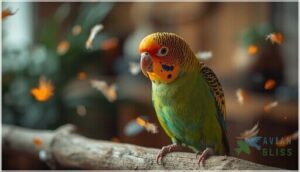
Molting isn’t always obvious at first, especially if you’re new to bird care. Your feathered friend will give you plenty of clues when molt begins, from physical changes you can see to shifts in mood and daily habits.
Here’s what to watch for so you can offer the right support when your bird needs it most.
Feather Loss and Pin Feathers
During molt, you’ll notice scattered feathers in the cage and new pin feathers—those small, dark blue or pink stubs—emerging where old feathers fell out. These blood feathers contain an active blood supply, so protect them from breakage against cage bars or toys.
Healthy molting birds show gradual, patchy feather loss with pin feathers appearing symmetrically, confirming normal feather regrowth rather than disease.
Mood and Behavioral Changes
Molting anxiety can transform your normally cheerful companion into a cranky housemate. Here’s what to expect during these emotional changes:
- Increased nippiness and defensive reactions when you try to handle sensitive pin feathers
- Withdrawal from social interaction, as up to 20% of behavioral consultations involve molt-related aggression
- Territorial cage behavior and resistance to step-up cues during peak feather replacement
- Reduced vocalization or increased screaming depending on individual stress responses
These behavioral shifts are temporary—not personality changes.
Appetite and Sleep Disturbances
During feather regeneration, you’ll notice your bird’s energy intake can surge by 30–200%, yet some birds paradoxically eat less due to molting stress. Watch for appetite shifts lasting beyond 24–48 hours—that’s when to worry.
Sleep patterns matter equally: aim for 12–14 hours of darkness nightly to support feather regeneration and stabilize mood, as inadequate rest intensifies irritability and compounds nutritional challenges during this demanding phase.
Recognizing Abnormal Molting
Vigilance separates routine shedding from molting disorders that demand intervention. Bald patches persisting beyond two to four weeks without pin feather regrowth, asymmetric feather loss, or skin showing redness and crusting signal abnormalities requiring avian dermatology assessment.
Structural defects in new feathers—fraying, curling, stress lines—or molt complications extending past two months warrant immediate bird molting care consultation.
Nutrition Tips for Molting Birds
Your bird’s diet plays a vital role during molting—think of it as fuel for rebuilding their feather coat from scratch. Since new feathers are almost entirely protein, what you feed now directly affects how smoothly and quickly your bird recovers.
Let’s look at the key nutritional strategies that support healthy feather regrowth and keep your bird comfortable through this demanding time.
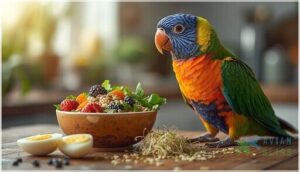
Protein-Rich Foods for Feather Growth
Think of feathers as living architecture—90% protein by composition—demanding specialized nutrition for molting birds during regrowth. Your bird’s feather health and maintenance relies on targeted protein sources and amino acids, especially methionine and cysteine for strong keratin structure.
Here are protein-rich foods that support feather growth:
- Plain cooked egg (once or twice weekly)
- Sprouted mung beans and chickpeas
- Cooked quinoa or buckwheat
- Garden peas
- Bird bread with egg
These molting diets provide complete nutrition for molting birds, delivering essential amino acids for efficient feather replacement.
Essential Vitamins and Minerals
Your bird’s body orchestrates a complex mineral ballet during molt—calcium balance and vitamin D3 work together to anchor each new feather securely in its follicle.
Vitamin A guards against brittle shafts, while vitamin E protects developing cells from oxidative damage. Feather minerals like zinc and selenium strengthen keratin structure.
Together with protein supplements and balanced molting nutrition, these nutrients transform raw materials into resilient plumage.
Safe Supplements for Molting Support
When seed-based diets fall short, targeted supplements bridge the nutritional gaps your molting bird faces. Consider these research-backed options:
- Amino Acid Supplements delivering lysine and methionine (50–80 mg/g) correct protein deficits during intensive feather regrowth
- Biotin Support combined with B-complex vitamins strengthens keratin synthesis
- Omega 3 Benefits from flaxseed or chia reduce inflammation and improve plumage quality
- Probiotic Molting aids support gut health and nutrient absorption during stressful replacement cycles
Dose supplements consistently throughout molt for peak Avian Health and Nutrition.
Foods to Avoid During Molt
While supplements support feather regrowth, certain foods sabotage your bird’s Molting Season efforts. High Fat Seeds like sunflower and safflower trigger liver disease, displacing Protein Rich Foods needed for plumage. Salted Snacks and Processed Treats—crackers, chips, bread—damage kidneys and disrupt electrolyte balance.
Toxic Food Sources (chocolate, avocado, fruit pits) and Moldy Ingredients (peanuts in shell) pose fatal risks.
Prioritize Bird Nutrition by eliminating these hazards, safeguarding Avian Health and Wellness during your bird’s most vulnerable weeks.
Creating a Stress-Free Environment

Molting takes a real toll on your bird’s body, and stress can slow down feather regrowth or even worsen behavioral issues. Think of this period like a recovery phase—your bird needs calm, consistency, and comfort to get through it smoothly.
Here’s how to set up an environment that aids healing and keeps stress to a minimum.
Maintaining Stable Temperatures
During molting, your bird’s body works overtime replacing feathers—making thermal comfort absolutely critical. Keep room temperatures steady between 70–80°F (21–27°C) to minimize stress, and avoid placing cages near vents, drafty windows, or direct sunlight.
Sudden temperature swings disrupt this energy-intensive process, while consistent climate management promotes healthy feather regrowth. Think of it as creating a stable sanctuary where your bird can focus on healing, not just surviving.
Humidity and Air Quality Management
Temperature control works hand-in-hand with humidity and air quality—the unseen factors that dramatically influence your bird’s respiratory health and feather care during molting. Aim for 40–60% humidity using room hygrometers and humidifiers, especially during dry winter months when indoor pollution concentrates.
Boost air purification with HEPA filters to capture feather dust and dander. Improve ventilation systems by opening screened windows, and always relocate birds when using aerosols or non-stick cookware—these emit fumes toxic to avian health. Clean air equals easier molting.
Five critical air quality steps:
- Monitor humidity daily with a hygrometer
- Use HEPA-filter air purifiers (avoid ozone models)
- Increase ventilation through safe window screening
- Remove birds before using strong cleaners or cooking sprays
- Offer regular misting to support bird health and wellness
Reducing Noise and Disturbances
Your bird’s ears are working overtime during molt, and excessive noise above 70 decibels can slow feather development and spike stress hormones.
Place cages away from televisions, appliances, and high-traffic zones to create quiet spaces that support bird calming. White noise machines provide gentle sound masking, blocking jarring household sounds.
Limit visitor disruptions and maintain consistent routines—predictability is key to stress minimization and bird wellness during this vulnerable period.
Safe Spaces and Enrichment
Enrichment acts like a reset button for your bird’s stress response. Dense vegetation zones or covered perches create psychological retreats where molting birds control their exposure to household activity.
Rotate foraging puzzles and chewable toys weekly—one Cambridge study showed structured foraging increased social behaviors while reducing feather-damaging habits.
Thoughtful aviary design with multiple perches fosters cognitive stimulation and transforms anxiety into engaged, species-typical bird behavior during this vulnerable molt period.
Bathing and Feather Care During Molt
During molting, your bird’s skin gets itchy and uncomfortable as new feathers push through. Regular bathing helps soothe that irritation and loosens old feathers that are ready to come out.
Here are three key practices that will keep your bird comfortable and protect those delicate new feathers coming in.
Bathing and Misting Techniques
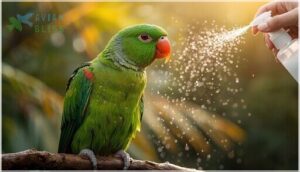
Proper bathing methods make all the difference during bird molting. You’ll want to mist your parrot 2-3 times weekly with room-temperature water, replicating natural rainfall while supporting feather hydration. Larger species benefit from weekly showers, while parakeets need 1-2 sessions per week.
This bathing frequency softens keratin sheaths around pin feathers and maintains ideal humidity control—around 55%—for healthier feather care and molting progression.
Managing Itchiness and Discomfort
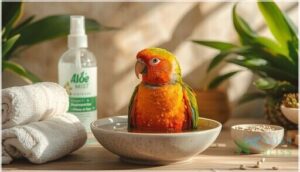
Discomfort during the molting process is real—those emerging pin feathers itch. You can provide molting relief through daily water baths or gentle aloe mist, which improves skin hydration and feather comfort.
Maintaining 40-60% humidity reduces pruritus control issues, while omega-3-rich foods like chia seeds support feather care from within.
Stress management for birds includes calm spaces and consistent routines, helping your molting bird cope with temporary irritation naturally.
Protecting Sensitive Blood Feathers
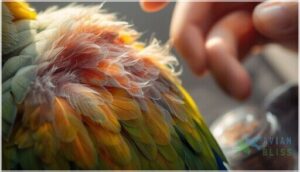
Those emerging pin feathers aren’t just tender—they’re actively vascular feather support systems that can bleed heavily if damaged. During the molting process, blood feather care becomes critical avian first aid.
Minimize feather trauma by avoiding tight handling near wings and tail, pad cage bars if your molting bird startles easily, and keep emergency hemostasis powder on hand. Gentle feather care during feather growth protects these fragile structures.
Handling and Socializing Molting Birds

Molting birds often feel tender, irritable, and more protective of their personal space than usual.
During this time, your approach to handling and socializing needs to shift to match their changing comfort levels.
Here’s how to keep interactions positive while respecting the physical and emotional changes your bird is going through.
Gentle Handling Guidelines
Think of molting as your bird wearing a prickly sweater—handling techniques matter now more than ever. During bird molting, you’ll want to cut back on non-essential touch and avoid pressing sensitive pin feathers.
Support your bird’s body gently rather than grasping wings or tail, and always watch for signs they’d rather be left alone. Short, predictable interactions reduce stress and protect delicate feather care needs while respecting bird comfort.
Managing Aggression and Mood Swings
Your bird’s crankiness isn’t rebellion—it’s biology at work. During molt, hormonal shifts and painful pin feathers can trigger aggression and mood swings.
Watch for early stress signals like slicked feathers or eye pinning, then give space. Positive reinforcement of calm behavior, combined with emotional support and stress management for birds, helps your feathered friend navigate this touchy phase while strengthening your bond through patient behavioral therapy.
Socialization With Other Birds
While solo birds may seem calmer during molt, conspecific bonding offers powerful group enrichment benefits. Research shows paired parrots display healthier bird behavior and psychology—less screaming, more environmental exploration—than isolated individuals.
However, bird compatibility matters: quarantine new arrivals for 45–60 days, introduce gradually with supervised contact, and monitor flock dynamics closely. Watch for feather damage or resource guarding that signals stress requiring separation.
When to Seek Veterinary Advice

Most molting issues resolve on their own with good care, but some warning signs shouldn’t be ignored. If your bird’s molt drags on for weeks without progress, or you notice inflamed skin or persistent bald spots, it’s time to call your vet.
Here’s what to watch for and when professional help makes all the difference.
Signs of Abnormal or Prolonged Molt
Normal molt duration ranges from six to ten weeks in most companion parrots. Watch for these health indicators that signal abnormal shedding:
- Molting persists beyond three to four months without clear regrowth periods
- Feathers emerge deformed, pinched, or fractured across multiple molting cycles
- Large bald patches appear suddenly with no pin feathers developing underneath
- Molt occurs completely outside your bird’s expected molting season and cycles
- Weight loss, lethargy, or respiratory changes accompany prolonged molting symptoms
These abnormalities warrant immediate veterinary evaluation.
Dealing With Bald Patches and Skin Issues
Bald patches during bird molting can stem from viral infections, mite infestations, or nutritional deficiencies—not just hormonal changes. If you notice symmetrical feather loss, crusty skin lesions, or bald spots that aren’t filling in with new feathers within weeks, schedule a veterinary visit.
Your vet can diagnose conditions affecting beak health and feather regrowth, then recommend targeted bald spot treatment.
Preventing and Addressing Feather Plucking
When skin problems have been ruled out, feather plucking causes often trace back to behavioral issues requiring a thorough approach. Your vet may recommend:
- Environmental enrichment with foraging toys and color-rich objects to combat boredom
- Nutrition counseling to address protein or amino acid gaps affecting feather care
- Stress management techniques including behavioral therapy for separation anxiety
Molting and feather loss are normal, but sustained plucking isn’t.
Frequently Asked Questions (FAQs)
Can molting affect my birds vocal abilities?
Yes, molting can temporarily reduce your bird’s singing or talking. During feather regrowth, energy shifts from vocal activity to new plumage, causing song suppression and quieter calls—but vocal recovery follows once molting stress ends.
How often should I clean during molt?
During the molting process, daily cleaning removes feather dust and debris, while weekly cage sanitation addresses deeper buildup.
Monthly disinfection and air purification complete your molting schedule, supporting ideal bird care and feather maintenance throughout.
Do young birds molt differently than adults?
Young birds undergo a preformative molt, replacing juvenile plumage with adult feathers—often partial rather than complete.
Adult molting birds follow annual cycles, replacing all feathers systematically while maintaining flight capability throughout the molting process.
Can I trim feathers during the molting period?
It’s strongly discouraged to trim during the molting process. Blood feathers—new, developing feathers with an active blood supply—pose serious hemorrhage risks if cut. Trimming can also damage follicles, causing permanent feather deformities.
What lighting schedule best supports healthy molting?
Think of sunlight as your bird’s internal clock—consistent 12-hour light and dark cycles support healthy circadian rhythms, feather growth, and orderly molting cycles.
Use timers to replicate natural photoperiod control for peak avian health.
Conclusion
Yes, molting demands extra effort when your schedule’s already packed, but the payoff—watching resilient feathers emerge and your bird’s personality return—makes it worthwhile.
Proper bird molt care advice isn’t about flawlessness; it’s about consistency in the basics: nutrient-dense foods, gentle handling, and a calm environment.
Your attention during this vulnerable window strengthens trust and sets the foundation for vibrant plumage. Support the process now, and your bird will thank you with every healthy feather that follows.
- https://dr.lib.iastate.edu/server/api/core/bitstreams/dc8ad198-7c67-44a9-b7f2-7a6764af2338/content
- https://www.hillviewvets.com/sites/site-5247/images/Healthy_Diet.pdf
- https://pubmed.ncbi.nlm.nih.gov/14511139/
- https://birdsupplies.com/blogs/news/how-to-help-your-bird-during-the-molting-process
- https://www.petassure.com/new-newsletters/bathing-your-pet-bird/