This site is supported by our readers. We may earn a commission, at no cost to you, if you purchase through links.

You don’t need to drive an hour to find quality bird food anymore. Bird seed and supply stores now dot nearly every region across North America, with over 1,850 independent shops, plus major chains like Wild Birds Unlimited operating 344 locations in 44 states.
These stores stock everything from shell-free sunflower chips to suet cakes designed for specific species in your area. Staff members know which seeds attract cardinals versus finches and can recommend feeders that actually work in local weather conditions.
Whether you’re stocking up on bulk millet or need advice on winter feeding strategies, dedicated bird supply retailers offer expertise you won’t find in the garden section of big-box stores.
Table Of Contents
Key Takeaways
- Over 1,850 independent bird supply stores and major chains like Wild Birds Unlimited (344 locations) now offer species-specific seed blends and expert advice that big-box stores can’t match.
- Shell-free sunflower chips and hearts reduce mess under feeders while providing 38% fat and 27% protein that cardinals, juncos, and blue jays need for energy.
- Matching seed types to your local birds matters—black oil sunflower attracts 75% of seed-eaters, safflower keeps squirrels away while feeding cardinals, and nyjer targets goldfinches specifically.
- Most stores now provide online ordering with same-day curbside pickup, ADA-compliant parking, and staff who’ll load heavy seed bags directly into your vehicle.
Top Bird Seed and Supply Store Chains
You’ll find several major chains that cater to bird enthusiasts across the country. These stores offer reliable access to quality seed and expert guidance when you need it.
Let’s look at the top retailers where you can stock up and get solid advice.
Wild Birds Unlimited Locations
Wild Birds Unlimited operates 344 stores across 44 states as of 2025. Texas leads with 29 locations, followed by North Carolina with 23. You’ll find franchise opportunities starting at $224,000. The company aids local communities through independently owned stores in urban and suburban areas.
Houston hosts three locations, making bird feeding supplies accessible. Expansion continues in high-demand regions, strengthening the brand’s impact on wild bird enthusiasts nationwide.
Some states, however, such as Wyoming, lack store locations.
Regional and Local Bird Supply Stores
Beyond national chains, over 1,850 independent wild bird shops operate across the United States. These retail locations offer Local Blend Benefits designed for your region’s species. You’ll find Regional Expertise through Community Workshops and individual advice. The market is seeing steady CAGR growth due to rising interest in backyard birdwatching.
Independent Advantages include:
- Custom seed mixes for local birds
- Store location details with convenient Curbside Pickup
- Educational events for birdwatchers
- Wild Bird Supplies suited to your climate
- Economic Impact supporting local jobs
Rural areas especially benefit from these trusted neighborhood stores.
Specialty Bird Food Retailers
Specialty retailers now hold 43.1% of the bird food market in 2025. You’ll discover product innovation like no-waste mixes and smart feeders. These shops build retailer partnerships with brands such as ZuPreem and Kaytee for exclusive launches.
Customer engagement stays strong through expert advice and educational content.
Regional insights show North America leads in premium bird food products and wild bird supplies adapted to local species.
Bird Seed Varieties Available in Stores
Walking into a bird supply store can feel overwhelming with all the seed options lining the shelves. Each type has a specific purpose and attracts different bird species to your yard.
Here’s what you’ll generally find available in bulk or packaged formats.
Bulk Sunflower Chips and Hearts
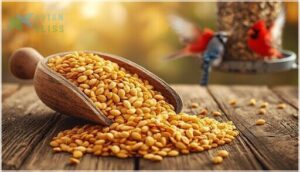
Sunflower chips and hearts are shell-free options that reduce mess under your feeders. These bulk bird seed varieties contain about 38% fat and 27% protein, making them excellent energy sources for cardinals, juncos, and blue jays.
You’ll find packaging options from 10 to 50 pounds at suppliers like Tractor Supply and local mills. Pricing fluctuations have driven costs higher in 2025, with seasonal demand peaking before winter and spring migration.
Premium Mixed Bird Seed Options
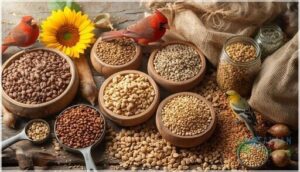
Premium mixed bird seed blends attract more species than single-seed options. These custom seed blends combine sunflower hearts, peanuts, and millet to meet seasonal needs and nutritional value requirements.
You’ll find organic blends commanding 20-35% higher prices than standard mixes. Most cost $8-22 per five-pound bag.
Bird seed varieties in these formulations draw cardinals, finches, and jays while reducing waste from filler ingredients.
Millet, Safflower, and Striped Sunflower Seeds
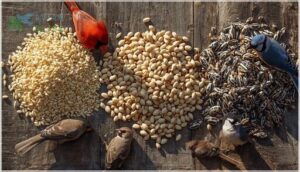
You’ll find three staple seeds at your local wild bird shop that target different species and reduce waste. White millet attracts ground-feeders like sparrows and juncos. Safflower wild bird seed draws cardinals while deterring squirrels. Striped sunflower seed suits larger-beaked birds such as grosbeaks and jays.
Here’s what makes each seed valuable:
- Nutritional benefits vary – millet provides moderate energy at 11-12% protein, while safflower delivers 38-40% fat for cold-weather fuel
- Seed preferences shape species attraction – larger birds crack striped sunflower shells efficiently, smaller species favor millet’s size
- Waste reduction improves when you match seed types to regional availability and target birds visiting your feeders
Suet Cakes and Peanut Products
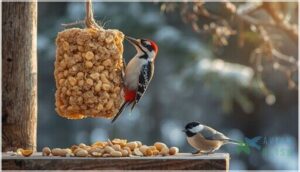
High-fat options fuel birds when insects disappear. You’ll discover suet cakes with peanut hearts bird food mixed in and raw peanuts that woodpeckers love. Pure suet cakes provide 480–520 calories per 100 grams. Peanut suet benefits include quick energy during winter when seasonal demand peaks.
Sustainable sourcing matters—regional preferences vary based on local bird populations, and suet cake ingredients affect nutritional value for visiting species.
| Product Type | Target Species | Best Season |
|---|---|---|
| Pure Suet Cake | Woodpeckers, nuthatches | Winter, migration |
| Peanut Hearts Bird Food | Chickadees, titmice | Year-round |
| Raw Peanuts | Jays, larger birds | Fall, winter |
| Shelled Peanut Pick Outs | Mixed species | All seasons |
In-Store Services and Expert Advice

Walking into a bird supply store gives you access to more than just products on the shelves. Staff members can help you figure out which seeds attract the species in your area and which feeders work best for your yard setup.
Many stores also offer guidance on installation and habitat improvements to turn your space into a bird-friendly environment.
Product Recommendations for Local Birds
You’ll get better results when you work with staff who know which birds live in your area. Seed blend analysis helps match products to your local species. Premium mixes with 35% sunflower seeds attract multiple birds at once.
- Black oil sunflower seed brings in over 75% of seed-eating backyard birds
- Safflower keeps squirrels away while feeding cardinals and grosbeaks
- Nyjer feeds goldfinches with 130,000 tiny seeds per pound
- Suet cakes provide 5x more winter calories than standard seed
- Seasonal feeding guides help you adjust offerings during migration periods
Budget birdseed options include bulk purchases of white millet and striped sunflower seeds. Staff provide feeder placement tips based on your yard layout. They’ll recommend specific bird food types that work best for attracting wild birds in your region.
Choosing Feeders and Accessories
You’ll find helpful guidance when choosing between plastic and metal bird feeders. Feeder material trends show plastic costs less while metal lasts longer.
Staff at your wild bird shop can show you hopper and tube options with capacity considerations for your flock size. Squirrel baffle use prevents theft on pole systems.
Many stores offer accessory bundling with feeders, bird baths, and bird feeding supplies at 15–20% off. Ask about feeder placement tips for your yard.
Installation and Setup Assistance
You can skip the guesswork with free pre-installation consultations at 68% of bird seed stores. Staff use regional data to recommend feeder placement tips for your yard.
Simple professional install costs run $30–$75 for pole systems and bird feeders. About 61% of stores offer in-home DIY setup guides covering maintenance service plans and troubleshooting common issues.
Expert advice for birds includes pole system installation and bird baths care.
Bird Bath and Habitat Supplies
Beyond feeders, you’ll find bird bath options in ceramic, metal, and concrete to match your yard. Water feature types include pedestal and hanging styles, with material durability ratings posted at 73% of stores.
Staff recommend drippers and misters for mosquito control through moving water.
Wild bird supplies support complete habitat integration, and regional demand drives stores to stock native plant lists alongside bird habitats essentials.
Online Ordering and Curbside Pickup Options
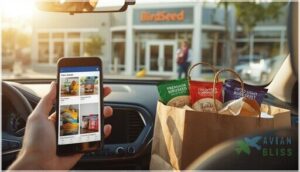
Most bird seed stores now let you order online and pick up at the curb. This saves you time and keeps things simple when you need to restock your feeders.
Here’s what you should know about browsing products online, placing orders, and getting your supplies without leaving your car.
Store Websites and User Experience
Most bird seed store websites now reflect careful attention to user experience. When you visit a quality site, you’ll notice features that make your online ordering experience smooth and inviting:
- Mobile optimization ensures quick access from any device you’re using
- Load speed averaging 2-4 seconds keeps you engaged without frustrating delays
- Website accessibility tools support navigation for all customers
- Customer engagement features like real-time chat answer questions instantly
- Online reviews from other bird enthusiasts guide your product choices
These elements combine to create satisfying website traffic flow and reliable service.
Online Inventory and Product Listings
Once you’re browsing a site, you’ll find substantial filtering options that let you narrow choices by bird species or feeder type. About 92% of major online retail platforms display nutritional data alongside stock status and price comparison tools.
Look for restock frequency indicators on popular items like black oil sunflower seed. These features simplify your online ordering experience and help you select the right bird feeding supplies before you add to cart.
Ordering, Payment, and Pickup Processes
After you add to cart, completing your online ordering experience is straightforward. You’ll find these payment methods accepted at most retailers:
- Major credit cards (92% of stores)
- Mobile wallets like Apple Pay (67% adoption)
- PayPal for online transactions
- Secure PCI-compliant processing
- Subscription auto-ship options
For curbside pickup, expect a text when your order’s ready—usually within the same day during peak seasons. Most stores verify your confirmation and load bags directly into your vehicle.
Customer Service and Support Channels
When you need help, most bird supply stores offer multiple Support Channels. You’ll find phone lines, email locations, and even social media options to get Expert Advice fast.
| Contact Method | Typical Response Times |
|---|---|
| Phone Support | 3-5 minute wait |
| Email Inquiries | Within 4 hours |
| Social Media | 6-8 hours average |
Customer Service Quality consistently scores above 4.5 out of 5. Digital Support tools and knowledgeable staff make sure your online ordering experience stays smooth from cart to curbside.
Store Locator, Hours, and Contact Information
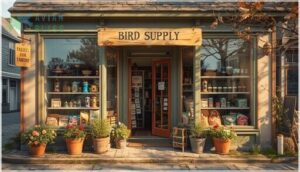
You need to know where your local bird supply store is before you can walk through the door. Hours change by location and season, so checking ahead saves you a wasted trip.
Most stores make it easy to find their contact details, parking options, and accessibility features on their websites.
Finding Nearby Bird Seed Stores
You can find local bird seed and supply shops using online store locator tools. Over 300 retail locations in North America are listed in smart databases that provide locations and real-time inventory.
Many websites now include delivery options, pricing comparison, and store amenities. Community reviews help you choose stores with the bird feeding supplies you need for your backyard birds.
Operating Hours and Holiday Schedules
Most stores operate from 9:00 a.m. to 6:00 p.m. on weekdays. Weekend schedules often shift, with Saturday hours ending at 5:00 p.m. and Sunday closures at 59% of retailers. Holiday closures include Christmas and Thanksgiving at all locations. Seasonal changes may reduce winter hours.
You’ll find updated operating hours and business information on store websites. Customer notification through email and social media keeps you informed about retail store schedules.
Contact Details for Inquiries
Phone lines reach you at 98% of stores during business hours. Live chat support connects you in under 12 minutes at specialty retailers. Social media channels operate at 74% of major chains. In-person customer service desks serve 79% of locations.
You can expect email responses within 8.4 hours on average.
Store websites display complete contact information, including address and phone numbers for direct inquiries.
Accessibility and Parking Information
You can count on ADA-compliant parking at over 90% of bird seed retailers. Accessible spaces meet minimum 96-inch width standards with slip-resistant surfaces. Store entrances provide 32-inch doorway clearance. Aisles maintain 36-inch width compliance for wheelchairs.
Digital accessibility features let you check parking and entrance details online before visiting. Staff offer customer assistance with heavy bags during business hours.
Frequently Asked Questions (FAQs)
How do I store bird seed properly at home?
Keep your bird seed in airtight containers at temperatures below 60°F. Low humidity prevents mold. Rotate stock regularly to maintain freshness.
Pest prevention matters—watertight bins block rodents and squirrels from contaminating nutritious bird food.
What seeds attract specific bird species best?
When choosing what to offer, birds have clear favorites. Black oil sunflower seed attracts over twenty species. Safflower targets cardinals while deterring squirrels. White millet draws ground feeders. Nyjer appeals to finches.
Are organic or pesticide-free options available in stores?
Yes, organic and pesticide-free bird seed options are widely available. Over 38% of specialty products now feature these labels.
Most supermarkets and specialty stores stock at least one certified organic or chemical-free brand.
How often should I refill my bird feeders?
Your bird feeders need refilling every 3 to 5 days on average. Small tube feeders require daily attention, while hopper models last longer.
Winter months demand more frequent refills when natural food becomes scarce.
Do stores offer squirrel-proof feeder solutions?
Most backyard bird stores stock weight-activated feeders with material durability features. These squirrel deterrents provide seed protection and cost savings.
Feeder effectiveness varies by design. Expect to find multiple wild bird feeding supply options.
Conclusion
Picture cardinals flashing red against fresh snow at your feeder or goldfinches clustering around thistle socks in summer. That’s what happens when you shop at bird seed and supply stores where staff actually know their stuff.
You’ll walk out with the right seed blend and a feeder built to last through storms. Your backyard becomes a place where birds thrive and you get a front-row seat to nature’s daily show.