This site is supported by our readers. We may earn a commission, at no cost to you, if you purchase through links.

Most backyard bird enthusiasts don’t realize that the humble black oil sunflower seed packs nearly twice the oil content of its striped cousin, making it the energy bar of the avian world. These small, dark seeds with their thin shells have become the widely accepted standard at feeders across North America, attracting everyone from chickadees to cardinals with their nutrient-dense kernels.
Beyond the birdfeeder, though, black oil sunflower seeds serve a surprising range of purposes—from livestock nutrition to biodiesel fuel—all thanks to their considerable 38-50% oil content and rich protein profile.
Whether you’re hoping to transform your yard into a wildlife haven or considering growing your own sunflower crop, understanding what makes these seeds special will help you make the most of their versatility.
Table Of Contents
Key Takeaways
- Black oil sunflower seeds contain 38-50% oil content—nearly double that of striped varieties—making them the most energy-dense and nutritionally superior choice for attracting over 40 species of backyard birds.
- These seeds serve multiple purposes beyond bird feeding, including livestock nutrition and biodiesel production, with more than 600 million pounds of U.S. sunflower harvest going to wildlife food supply annually.
- Growing black oil sunflowers is straightforward, requiring well-drained soil with pH 6.0-7.5, full sun, and proper spacing of 8-12 inches between plants, with harvest occurring 30-45 days after bloom when seed moisture drops to 10-13%.
- Their thin shells allow even small birds like finches and chickadees to crack them easily, while the high fat content provides critical energy for migration, winter survival, and breeding success throughout the year.
What Are Black Oil Sunflower Seeds?
If you’ve ever filled a bird feeder and watched cardinals and chickadees flock to it, chances are you’ve already encountered black oil sunflower seeds. These small, dark seeds stand out from their striped cousins in ways that matter to both gardeners and the wildlife they support.
Let’s take a closer look at what makes black oil sunflowers unique, how they compare to other varieties, and why they’ve become such a popular choice for backyard growers and commercial operations alike.
Botanical Characteristics and Growth Habits
Black oil sunflowers (Helianthus annuus) grow as unbranched annuals reaching 150–180 cm tall, sporting a single sturdy stem and broad, heart-shaped leaves. Their plant architecture features one large flower head instead of multiple branches, making them efficient for seed production.
You’ll notice they thrive in diverse environmental conditions, from sandy to clay soils, requiring full sun and completing their flowering phenology in 80–120 days after seed germination. These sunflowers are easy to grow as an annual plant.
Comparison With Striped Sunflower Seeds
When you compare black oil sunflowers to their striped cousins, the differences are striking. Black oil sunflower seeds pack roughly 38–50% oil content, while striped seeds generally hold only about 24% fat. The shell thickness matters too—black oil seeds have thin, easy-to-crack hulls that small birds love, whereas striped sunflower seeds feature much thicker shells requiring stronger beaks, making bird preference clear in most backyard feeders.
These seeds are a preferred food, and attract various species, including finches and chickadees.
Main Uses and Applications
With those qualities in mind, it’s no surprise that black oil sunflower seed shows up in birdseed blends, livestock feed, and even biodiesel production. You’ll find it in pet food, wildlife plots, and backyard bird feeding stations across the country.
In fact, roughly one-third of the U.S. oil-type sunflower harvest—over 600 million pounds annually—goes straight into the wildlife food supply chain.
More than 600 million pounds of U.S. sunflower seeds feed wild birds and wildlife each year
Nutritional Value and Benefits
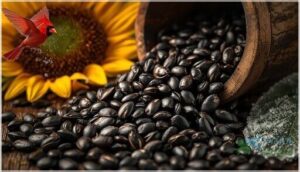
Black oil sunflower seeds pack more nutritional punch than you might expect, which explains why birds and wildlife can’t seem to get enough of them.
These dark, oil-rich seeds offer a powerhouse combination of protein, healthy fats, and essential vitamins that support everything from feather growth to winter survival.
Let’s look at what makes these seeds so valuable, both for the creatures that depend on them and for anyone considering them as a food source.
Protein, Fat, and Vitamin Content
You might think of black oil sunflower seeds as simple bird snacks, but they’re actually nutritional powerhouses. Each seed packs about 21% protein and 51% fat, making them energy-dense treats.
The fatty acid profile is rich in omega-6 polyunsaturated fats, while vitamin E benefits are outstanding—100 grams delivers 234% of your daily value.
Processing effects and nutrient variability depend on growing conditions and seed quality.
Benefits for Birds and Wildlife
When you fill feeders with black oil sunflowers, you’re supporting species diversity like few other birdseed options can—about 40 types of seed-eating birds visit regularly. The thin shell characteristics let even small finches crack them open, while the high fat content fuels winter survival when temperatures plummet.
You’re also helping birds maintain breeding support and condition during nesting, strengthening the ecosystem role your backyard plays in attracting birds and wildlife year-round.
Advantages Over Other Seed Types
When compared with standard seed mix recommendations, black oil sunflower seed delivers exceptional energy density—584 kilocalories per 100 grams versus 350–450 for most blends—making it nutritionally superior and the top choice in bird seed preferences.
Here’s why it outperforms other types of bird seed:
- Shell thickness: Thin hulls let small birds access kernels easily
- Species preference: Attracts 40+ songbird species consistently
- Uses: Serves wildlife feeding and poultry conditioning alike
Benefits of black oil sunflower seed include less waste and higher actual consumption per feeder refill.
Growing Black Oil Sunflowers
Growing black oil sunflowers is easier than you might think, even if you’re new to gardening. These cheerful plants aren’t picky about where they grow, but giving them the right conditions from the start makes all the difference.
Let’s look at what they need to thrive in your garden.
Ideal Soil and Sunlight Requirements

Your sunflowers need soil that drains well yet holds moisture, with a pH between 6.0 and 7.5—think of it like Goldilocks soil, not too soggy, not too dry.
Make sure your site gets at least six hours of direct sunlight daily, though eight is better for peak performance. Good soil drainage and aeration keep those deep taproots healthy and prevent waterlogging stress.
Planting Depth and Spacing Guidelines
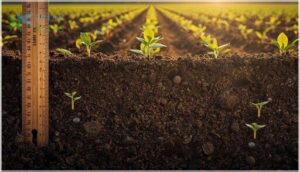
Getting your planting depth and row spacing configurations right sets the stage for strong emergence and yield. Sunflower planting techniques hinge on precision, so here are four growing tips to help your black oil crop thrive:
- Seed depth effects matter: Plant seeds 1 to 1.5 inches deep—deeper than 3 inches cuts emergence in half.
- In-row spacing: Space plants 8 to 12 inches apart for backyard plots, or widen to 12 to 16 inches in field settings.
- Row spacing configurations: Aim for 24 to 36 inches between rows to balance light and equipment access.
- Plant population targets: Shoot for 18,000 to 22,000 sunflowers per acre for best oil production.
Watering and Fertilization Tips
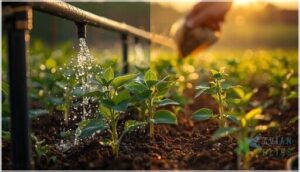
Water and nutrients are essential for the healthy growth of your sunflower crop. Think of them as a pair of wings—get either one wrong, and your plants won’t soar. During the first two weeks, seedling water needs are high, but you can reduce this to 1 to 2 inches weekly once the taproot establishes. Nitrogen fertilization should peak around 80 kilograms per hectare, enhancing both yield and soil health without overdoing it.
| Growth Stage | Watering Frequency | Nitrogen Application |
|---|---|---|
| Seedling (0–2 weeks) | Daily or near-daily | None (rely on soil reserves) |
| Vegetative | 2–3 times per week | Apply bulk of season total |
| Flowering | Every 2–3 days in dry spells | Minimal to none |
| Seed Development | Once per week | None |
| Maturation | Reduce or stop | None |
For established plants, irrigation should consist of deep, infrequent soaks that encourage drought-tolerant roots. As the sunflowers progress through growth stages, adjust watering frequency—more often during blooming, then tapering off. Practical management involves pairing drip lines with moderate nitrogen rates, ensuring your sunflowers remain strong without wasting resources or risking lodging problems.
Care and Maintenance Tips

Once your sunflowers are up and growing, a little routine care goes a long way in keeping them healthy and productive. The good news is that these plants don’t demand much fussing, but a few smart practices will help them reach their full potential.
Let’s look at some straightforward maintenance steps that’ll keep your sunflowers thriving from seedling to harvest.
Weed Control and Mulching
Weeds can quickly crowd out young sunflower seedlings, so you’ll want to stay on top of them early. Mulch weed suppression really shines here, and you’ve got some excellent options that do double duty for soil health:
- Black plastic or packing paper mulch – cuts weed density by up to 47%
- Sunflower residue incorporation (about 6 tons per acre) – reduces weeds by 44–57% while boosting soil moisture
- Conservation tillage with herbicides – maintains surface residue for ongoing weed control
Mulch also conserves moisture and, through allelopathic effects, naturally discourages weed germination—a win for organic gardening and soil health alike.
Pest and Disease Prevention
Once your weeds are under control, pests and disease will be your next concern. More than 150 insects target sunflowers, though only a handful reach damaging levels. Regular scouting every 3–7 days during flowering helps you catch problems early.
Here’s what to watch for:
| Threat | Key Signs | Prevention Strategy |
|---|---|---|
| Sunflower moth | 15–30% yield loss if unmanaged | Scout during R3–R5 stages; use biological controls like NPV sprays |
| White mold | Stem rot, head decay in wet conditions | Crop rotation (3–4 years); avoid poorly drained fields |
| Phoma black stem | Lodging, premature ripening | Hybrid selection with disease resistance; adjust planting dates |
| Storage pests | Beetles, moths in harvested seed | Storage hygiene; maintain low seed moisture |
Integrated pest management combines crop rotation, hybrid selection, and biological controls—like ground beetles that destroy 40% of overwintering larvae—to keep pest populations below economic thresholds. You’ll preserve beneficial insects while protecting your harvest, a smart approach for organic gardening enthusiasts and commercial growers alike.
Drip Irrigation and Sustainable Practices
Beyond pest management, drip irrigation techniques offer a sustainable path forward. You’ll conserve resources while maintaining healthy yields—and the numbers tell a compelling story.
Four smart reasons to think about deficit irrigation strategies:
- Water use efficiency jumps 15–18% under moderate deficit compared to full irrigation
- 80% water application maintains yields while saving roughly 20% of total water
- Fertigation efficiency improves when nitrogen reaches root zones directly through drip lines
- Drought-tolerant sunflowers thrive under controlled stress, with oil content rising about 5.6%
Space drip tape one meter apart, aligned with your rows. This drip system design creates ideal soil cleansing properties—salts move away from roots, protecting plants in challenging conditions. Flowering and grain-filling stages need consistent moisture, so time your applications carefully.
These sustainable gardening practices support ecosystem considerations too. Converting from surface irrigation cuts greenhouse emissions while nutrient cycling improves through precise fertigation. Your sunflowers get what they need, when they need it, without waste.
Harvesting and Storing Seeds
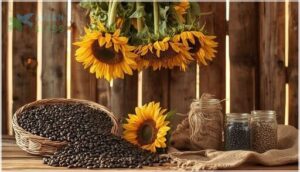
After weeks of watching your sunflowers grow, knowing when and how to harvest them makes all the difference in seed quality. The timing needs to be just right—too early and the seeds won’t be fully developed, too late and you’ll be competing with hungry birds for your harvest.
Let’s walk through how to recognize the perfect moment to cut those heavy seed heads, dry them properly, and store your bounty so it stays fresh for months.
Signs of Maturity and Harvest Timing
Knowing when your sunflowers are ready makes all the difference. You’ll notice the back of each head shifting from green to yellow, then browning—usually 30 to 45 days after bloom. Seed moisture drops steadily during ripening, signaling harvest readiness when it reaches about 10 to 13 percent.
| Visual Indicator | What to Look For | Timing Clue |
|---|---|---|
| Head Color | Back turns yellow, then brown | Physiological maturity reached |
| Leaf Condition | Base leaves dry, upper leaves fading | Nearing harvest window |
| Floret Shedding | Petals fall, seeds exposed | Ripening in progress |
| Seed Appearance | Plump, fully darkened kernels | Ready for cutting |
Watch for drooping seed heads and brittle stems—classic signs you’re in the sweet spot for seed saving.
Drying and Processing Techniques
Once you’ve cut those seed heads, air drying becomes your most reliable ally—hang them upside down in a warm spot with steady airflow for several days. For faster seed production, heated air at low temperatures (around 95–100 °F) speeds the process without scorching kernels.
Seed cleaning follows naturally: shake off debris, then use aeration systems or screens to separate chaff before seed saving.
Proper Storage Methods for Freshness
After drying, temperature control becomes essential—store your seeds below 70°F in airtight containers to prevent oil from going rancid. Keep humidity levels under 65%, and you’ll extend shelf life to around 6–12 months.
Watch for spoilage signs like musty odors or clumping; proper seed storage and care protects seed quality far better than leaving hulled sunflower seed exposed to warmth and moisture.
Using Black Oil Sunflower Seeds

Once you’ve harvested your black oil sunflower seeds, you’ll find they’re remarkably adaptable, whether you’re feeding backyard birds or exploring larger-scale uses. The small black shells and rich oil content make these seeds especially valuable for wildlife, but they also serve important roles in agriculture and even home gardens.
Let’s look at the main ways you can put your harvest to work, from attracting feathered visitors to understanding commercial possibilities.
Feeding Birds and Attracting Wildlife
Black oil sunflower seeds work like a wildlife magnet in your yard, drawing in the greatest variety of bird species compared to other birdseed types. If you’re setting up feeders, this single seed attracts finches, chickadees, nuthatches, grosbeaks, and cardinals year-round. Here’s why they’re the top choice for attracting birds to feeders:
- High oil content (near 40%) fuels migration and winter survival
- Thin shells make cracking easy for small birds
- Nutrient-dense kernels support healthy plumage and breeding
- All-season appeal keeps feeders busy spring through winter
Tube, hopper, or platform bird feeders all work well, and you’ll notice increased activity when seed quality stays fresh and dry.
Beyond songbirds, you’re also enhancing habitat for ground-feeding wildlife like turkeys, deer, squirrels, and chipmunks—turning your space into a thriving backyard ecosystem. For best results with seasonal feeding, keep feeders stocked consistently and choose suppliers offering minimal debris.
Home Use Vs. Commercial Applications
Your backyard feeding needs differ sharply from industrial-scale demand, and both drive sunflower seed production in distinct ways. Retail birdseed blends for home use claim roughly one-third of U.S. oil-type sunflower crops, while commercial processors focus on oilseed processing for cooking oil and animal feed.
Market growth in both sectors—home wildlife feeding and agricultural production—keeps seed production climbing to meet dual demand.
Recommended Seed Varieties and Purchasing Options
Where to buy black oil sunflower seeds matters as much as which variety you choose. Your best options depend on what you’re growing for and how much you need:
- Hybrid cultivars like AF3679HE and H47HO11EX are available through seed companies for growers targeting oil or birdseed markets simultaneously.
- Organic options certified pesticide-free suit bird feeders near pollinator habitats, with pricing factors ranging from $0.50 per pound in 30 lb bags to $0.37 in bulk totes.
- End-user criteria should prioritize fat content above 22% and thin shells for easy cracking.
Packaging sizes at Wild Birds Unlimited and farm supply stores let you match volume to need.
Frequently Asked Questions (FAQs)
Can black oil sunflowers grow in containers?
Think of container sunflowers as city dwellers—they’ll adapt if you give them space.
Black oil sunflowers grow successfully in pots holding seven to ten gallons, provided soil drainage, full sunlight needs, and careful watering frequency support them.
Do sunflowers need to be rotated annually?
Yes, you should rotate sunflowers every three to four years. Crop rotation prevents disease buildup in the soil, aids nutrient cycling, and helps maintain healthy yields by breaking pest cycles and encouraging better soil health overall.
Are black oil sunflower seeds safe for pets?
Plain, shelled sunflower seeds are generally safe for dogs and cats in small amounts, but avoid salted or flavored birdseed.
Birds thrive on them, though veterinary consultation helps prevent obesity risks in pets.
How do you extract oil from sunflowers at home?
Home oil pressing requires a manual or electric cold-press machine designed for seeds. You’ll dehull sunflower seeds first, then feed them through the press to extract oil, which generally yields around 440 grams per kilogram.
Conclusion
Picture a cardinal cracking open its first black oil sunflower seed at your feeder—that satisfying moment when nature meets intention. You’ve learned how these energy-packed seeds grow, what makes them irresistible to wildlife, and why they outperform alternatives.
Now you’re equipped to cultivate your own sunflower stand or stock feeders strategically. The birds will find you, drawn by those oil-rich kernels, and your backyard will transform into exactly what you envisioned: a thriving wildlife sanctuary.
- https://hiprofeeds.com/products/black-oil-sunflower-seeds/
- https://en.wikipedia.org/wiki/Sunflower_seed
- https://www.sunflowernsa.com/magazine/articles/default.aspx?ArticleID=3932
- https://straitsresearch.com/statistic/countries-with-the-highest-sunflower-seed-production
- https://www.bio-serv.com/product/SFS.html