This site is supported by our readers. We may earn a commission, at no cost to you, if you purchase through links.

That green slime coating your bird bath isn’t just unsightly—it can harbor bacteria that make visiting birds sick or drive them away entirely. Algae thrives in the warm, nutrient-rich water of bird baths, transforming a wildlife oasis into a health hazard within days.
When birds drink contaminated water or bathe in algae-covered basins, they risk exposure to harmful toxins, particularly from blue-green algae species.
The good news? You can clean bird bath algae effectively using common household items and prevent future growth with simple maintenance habits. Understanding what triggers algae blooms and which cleaning methods work best for your specific bird bath material will help you maintain a safe, inviting water source that birds actually want to use.
Table Of Contents
Key Takeaways
- Algae thrives in bird baths when sunlight exceeds 12 hours daily and water remains stagnant, with bird droppings providing nitrogen and phosphorus that trigger blooms within 24-72 hours.
- You can safely eliminate algae using diluted bleach (1 tablespoon per gallon) or equal parts white vinegar and water, but thorough rinsing is critical to remove all residues before birds return.
- Preventing regrowth requires changing water every 1-2 days, positioning baths in partial shade to reduce water temperature, and adding fountains or drippers to keep water moving and disrupt stagnant conditions.
- Regular maintenance protects bird health by eliminating harmful toxins from blue-green algae species and removing bacteria that accumulate in contaminated water.
What Causes Algae in Bird Baths?
Your bird bath looks like a green science experiment, and you’re not alone in this battle. Algae thrive when certain conditions align—sunlight, still water, and nutrients create the perfect storm for rapid growth.
Understanding what triggers algae helps you tackle the problem at its source and keep your feathered visitors safe.
How Sunlight and Stagnant Water Promote Algae
When sunlight strikes your birdbath for over 12 hours daily, algae growth accelerates two to three times compared to shaded conditions. Stagnant water worsens the problem—within just seven days, non-circulating baths can develop 60% algae cover in warm months.
Sunlight raises water temperature by 2–5°C, reducing dissolved oxygen and creating ideal biofilm growth conditions that make algae control increasingly difficult.
Regular maintenance is vital to prevent issues similar to cloudflare error from affecting other systems.
The Role of Nutrients From Bird Droppings
While water and sun set the stage, bird droppings fuel algae’s real explosion. Avian waste introduces nitrogen sources like uric acid and phosphorus levels that drive algal blooms in your birdbath—nutrient cycling happens fast in standing water. Here’s how bird droppings impact algae control:
- Nitrogen boosts protein synthesis in green algae
- Phosphorus triggers rapid bloom events within 24–72 hours
- Uric acid converts to ammonia, feeding cyanobacteria
- Trace minerals alter microbial communities
- Seasonal congregation periods concentrate waste inputs
Understanding AP Biology concepts can help explain the complex interactions in ecosystems. Regular birdbath maintenance breaks this nutrient cycle.
Types of Algae Found in Bird Baths
Identifying which algae you’re dealing with helps you tackle the problem faster. Green algae (Chlorophyta) form those familiar slimy films—they’re the most common culprits. Blue-green algae (cyanobacteria) create darker, sometimes toxic mats that smell foul. Brown algae and diatoms leave yellow-brown coatings on smooth surfaces. Chara resembles underwater plants and produces strong odors.
Recognizing these types guides your algae classification and cleaning approach for better water quality.
Step-by-Step Algae Removal Methods
Getting rid of algae doesn’t require fancy products or complicated procedures. You can clean your bird bath effectively with simple household items you probably already have on hand.
Let’s walk through the most reliable methods, starting with what works best for stubborn buildup and moving to gentler everyday solutions.
Using Bleach Safely to Clean Bird Baths
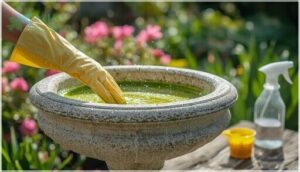
When tackling stubborn algae, you’ll find bleach an effective solution if handled correctly. Mix 1 tablespoon of household bleach per gallon of water—this concentration safely disinfects without harming birds when thoroughly rinsed.
Test a small area first, especially on painted surfaces. Let the solution sit for 5–10 minutes, scrub gently, then rinse until no chlorine odor remains. Complete drying prevents new growth.
Cleaning With Vinegar for a Natural Solution
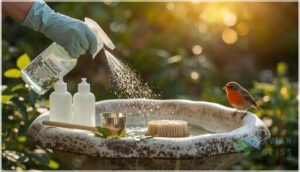
If harsh chemicals concern you, vinegar offers an eco-friendly alternative with proven acidic properties that disrupt algae.
Mix equal parts white vinegar and water, apply to your bath, and let sit 15–30 minutes. Scrub thoroughly—vinegar’s benefits shine when paired with mechanical action.
Rinse completely to guarantee vinegar safety for visiting birds, removing all residual acidity before refilling.
Scrubbing Techniques for Different Bird Bath Materials
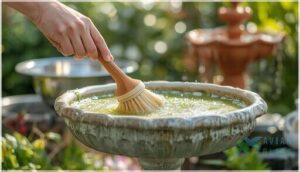
Your birdbath material dictates which scrubbing tools won’t harm its surface. Follow these guidelines:
- Metal baths: Use non-abrasive polysulfone brushes for 98% algae removal without corrosion
- Ceramic/concrete: Soft-bristle brushes prevent glaze damage while achieving 85% reduction
- Plastic: Avoid harsh compounds; microfiber cloths yield 70–90% effectiveness
- Glass-polymer: Medium-pressure scrubs maintain luster
- Terracotta: Gentle brushes protect porous surfaces (60–75% removal)
Material safety ensures long-term bird bath maintenance.
Rinsing and Drying The Bird Bath Properly
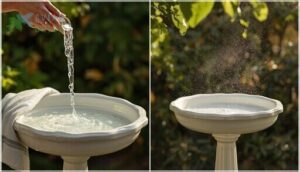
After scrubbing, a thorough rinse with clean water at 15–25°C removes 95% of cleaning agents and residual algae within 60 seconds.
Follow with towel-drying and 10–12 hours of air drying in partial shade with good airflow—this reduces surface moisture by 90% and cuts regrowth by 40%.
Proper drying techniques guarantee your bird bath stays algae-free longer between cleanings.
How to Prevent Algae Growth
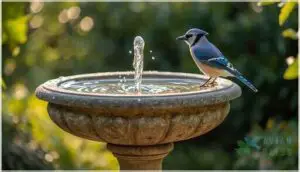
Once you’ve tackled existing algae, the real work begins—keeping it from coming back. Prevention isn’t complicated, but it does require a few smart habits and adjustments to your setup.
Here’s what actually works to maintain clear, bird-safe water.
Changing Bird Bath Water Regularly
One of the simplest algae prevention tips is swapping out your bird bath water every 1–2 days. This regular maintenance habit removes nutrients before algae can thrive, protecting bird health benefits.
In hot weather, daily water changes become essential—warm conditions accelerate growth dramatically. Think of fresh water as your first line of defense, far outpacing any cleaning product in effectiveness for ongoing water maintenance.
Placing Bird Baths in Partial Shade
Sunlight acts like fertilizer for algae—too much exposure triggers rapid blooms in your birdbath. Strategic shade placement drops water temperature by several degrees, slowing algal metabolism while keeping birds safe and comfortable.
Best shade patterns for algae control:
- Position your bird bath where morning sun meets afternoon shade, blocking peak midday irradiance
- Use nearby trees or shrubs 10–15 feet away for dappled coverage without excessive leaf litter
- Avoid full shade—partial shade benefits both water quality and bird safety by maintaining predator visibility
Adding Fountains or Drippers for Water Movement
Moving water disrupts algae like a breeze scatters dust—small decorative fountains can slash algal growth by up to 70% when run 6–8 hours daily. You’ll see clearer water for 1–2 weeks longer between cleanings.
Running a fountain just 6–8 hours daily disrupts algae like a breeze scatters dust, cutting growth by 70% and extending cleaning intervals by weeks
Solar fountain options cost nothing to operate, while drippers create surface ripples that block the stagnant conditions algae need to thrive.
Choosing Easy-to-Clean Bird Bath Materials
Material selection shapes your bath maintenance schedule more than you might expect. Concrete birdbaths resist algae better than glossy plastics—field trials show 40% less cleaning needed. Porcelain-coated metal cuts algae coverage from 45% to just 15% after four weeks.
Round, smooth basins beat textured surfaces every time, with acrylic showing 30% less biofilm. UV-stabilized plastics won’t crack during scrubbing sessions.
Bird Bath Maintenance for Healthy Birds
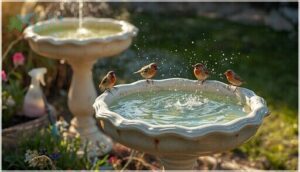
Keeping your bird bath clean isn’t just about aesthetics—it’s about protecting the health of the birds that rely on it. The frequency of your cleaning routine, the quality of the water you provide, and the methods you use all directly impact whether your feathered visitors stay healthy or face unnecessary risks.
Let’s look at the practical maintenance habits that create a safe, inviting water source throughout the year.
Cleaning Frequency by Season and Weather
You’ll want to adjust your cleaning schedule as seasons shift. During spring and summer’s heat, scrub your bird bath every two weeks with vinegar or diluted bleach—biweekly cleaning slashes algae by up to 70%. Winter’s cooler temperatures slow growth, so monthly maintenance usually suffices.
In scorching weather, daily water cycling prevents blooms. Monitor temperature alerts and adapt your routine accordingly.
Checking and Maintaining Water Quality
Beyond cleaning on schedule, you’ll want to check water quality regularly. Test pH weekly—target 6.5–7.5—since shifts outside that range accelerate biofilm formation.
Watch for turbidity spikes (4.5+ NTU) that signal algae monitoring needs. Nitrate and phosphate from droppings can exceed safe thresholds, fueling blooms.
In hot months, temperature checks above 25°C flag bacterial control priorities, keeping your filtration systems or pond maintenance routines effective.
Safe Cleaning Practices for Wildlife
Water quality matters, yet wildlife safety comes first. Always rinse your bath three times after using bleach or vinegar—residual chlorine or acid harms bird health. Let surfaces air-dry completely to prevent recontamination.
Eco cleaning means choosing natural cleaning methods over harsh chemicals when possible, and documenting your routine aids conservation tips.
Your ecofriendly gardening practices protect every visitor that stops by for a drink.
Eco-Friendly and Bird-Safe Cleaning Tips
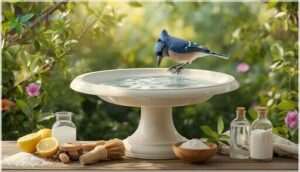
You don’t need harsh chemicals to keep your bird bath clean and safe for your feathered visitors. Natural cleaning methods work just as well while protecting birds from exposure to toxic residues.
Here are practical ways to maintain a healthy bird bath without compromising the environment or wildlife safety.
Natural Algae Control Alternatives
You can control algae growth without harsh chemicals by embracing natural remedies and eco-friendly methods. Vinegar and baking soda offer gentle yet effective natural cleaning methods that won’t harm visiting birds.
Here are proven biological control strategies:
- Install water circulation devices like solar fountains to keep water moving
- Position baths in partial shade to slow algae proliferation by 25%
- Introduce barley straw extract as natural algae prevention
- Maintain frequent water changes during warm weather
Avoiding Harmful Chemicals
Protecting your feathered visitors means steering clear of pesticides, ammonia-based cleaners, and concentrated bleach solutions that leave toxic residues. When disinfecting, dilute bleach to a 1:9 ratio and rinse thoroughly—anything stronger risks harming birds. Green alternatives like vinegar and natural cleaning methods offer chemical-free options that keep your bath safe while controlling algae effectively.
| Harmful Chemical | Risk to Birds | Safe Alternative |
|---|---|---|
| Pesticides | Respiratory distress | Vinegar solution |
| Ammonia cleaners | Tissue irritation | Baking soda scrub |
| Strong bleach (>10%) | Toxic residue | Diluted bleach (1:9) |
Sustainable Bird Bath Care Practices
Sustainability means marrying water conservation with eco-friendly cleaning routines. Reuse bath water to irrigate plants before refilling—you’re conserving resources while supporting bird safety.
Choose vinegar-based cleaning over harsh chemicals, and align your green practices with wildlife preservation by scheduling weekly refreshes that cut algae by 20–35%.
Each thoughtful step strengthens your bird bath care without compromising the environment.
Frequently Asked Questions (FAQs)
Can copper pennies prevent algae in bird baths?
Copper pennies show inconsistent algae control in bird baths. Their composition varies, and release rates depend on water chemistry. Additionally, copper toxicity risks can harm birds.
Regular cleaning with vinegar and water changes outperform pennies as safer, more reliable alternatives.
Do birds eat algae from bird baths?
No, birds don’t eat algae from bird baths—algae consumption plays no significant role in bird nutrition. While some species may incidentally ingest algae-contaminated water, they rely on insects and seeds, prioritizing water quality for wildlife safety.
Is rainwater better than tap for birds?
Both rainwater and tap water can work well for your bird bath—what matters most is keeping it fresh and clean.
Birds prefer clear water with minimal contaminants, regardless of the source.
How deep should a bird bath be?
Aim for 1 to 2 inches of water depth in your bird bath—shallow enough for safe bathing and drinking across most species, yet deep enough to discourage rapid algae buildup between cleanings.
Can algae make birds sick long-term?
Limited research suggests algae toxicity poses uncertain long-term effects on wild bird health. While some species produce harmful compounds, definitive avian diseases from sustained exposure remain unproven.
Regular cleaning and vinegar use safeguard wildlife safety in your bird bath.
Conclusion
The moment you notice that first green tint is exactly when prevention becomes easiest. By establishing a rhythm of regular water changes and strategic placement, you’ll transform your bird bath from an algae magnet into a spotless watering hole.
When you clean bird bath algae promptly and maintain consistent habits, you’re not just eliminating slime—you’re creating a sanctuary where birds can safely drink, bathe, and thrive throughout every season.