This site is supported by our readers. We may earn a commission, at no cost to you, if you purchase through links.

When temperatures drop below freezing, a chickadee’s heart rate can spike to 1,000 beats per minute just to stay warm—burning through calories at an astonishing rate. That’s where homemade bird food recipes suet becomes a winter lifeline, packing up to 4,000 calories per kilogram into a compact, energy-dense treat.
Unlike seeds alone, suet provides the fat reserves birds need to survive bitter nights when their natural food sources disappear under snow and ice.
Making your own suet cakes isn’t just budget-friendly; it lets you control the ingredients and customize recipes for the specific birds visiting your yard, from woodpeckers to nuthatches.
Table Of Contents
- Key Takeaways
- What is Suet and Why Birds Need It
- Essential Ingredients for Homemade Suet
- Step-by-Step Homemade Suet Recipes
- Serving and Storing Homemade Suet
- Top 6 Tools and Seeds for Suet Feeding
- Frequently Asked Questions (FAQs)
- How do you make homemade bird feed suet?
- Is it cheaper to make your own bird suet?
- Can I use hamburger grease to make bird suet?
- What is the best fat for bird suet?
- Can I use bacon grease for suet?
- How long does homemade suet last outside?
- Will suet attract unwanted animals like raccoons?
- Can I feed suet to baby birds?
- What temperature is too hot for suet?
- Conclusion
Key Takeaways
- Homemade suet delivers 2,000–4,000 calories per kilogram and helps winter birds survive by reducing shivering and extending their fasting tolerance by 12–18 hours when natural food sources disappear.
- Mix equal parts melted animal fat (like lard or beef fat) with birdseed, peanut butter, oats, and cornmeal to create energy-dense suet cakes that attract woodpeckers, chickadees, nuthatches, and other insect-eating species.
- Store finished suet in airtight containers in the freezer for up to six months, and place feeders in shaded spots 3–5 meters from dense shrubs to reduce spoilage and lower predator visits by 28%.
- Black-oil sunflower seeds (50–60% fat, 20–25% protein) boost suet effectiveness when added at 40–60% by weight, often doubling or tripling feeder visits compared to generic seed blends.
What is Suet and Why Birds Need It
If you’ve ever wondered what that white block in bird feeders actually is, you’re not alone. Suet is a high-energy food made from animal fat that helps birds survive cold weather when natural food sources are scarce.
Let’s look at what makes suet so valuable, how it keeps birds warm during winter, and which feathered friends will show up at your feeder.
Suet as High-Calorie Bird Food
Suet is a powerhouse for your backyard visitors—delivering 2,000 to 4,000 calories per kilogram. This concentrated energy supplement transforms simple ingredients into winter’s best bird food.
When you craft homemade suet cakes, you’re providing the caloric content birds desperately need. The fat-based nutrition keeps insect-eating species thriving when temperatures drop and natural food vanishes. That’s genuine care in action.
Energy and Warmth for Winter Birds
Your feathered friends need 15–25% more energy when temperatures plunge below freezing. Suet benefits kick in fast—this winter bird nutrition powerhouse cuts down shivering and extends fasting tolerance by 12–18 hours. Think of it as a thermal blanket from the inside out.
Suet acts like a thermal blanket from the inside out, cutting shivering and extending winter birds’ fasting tolerance by up to 18 hours
These cold weather strategies work because fat-based energy boosters help birds maintain body heat without burning through precious reserves overnight.
Bird Species Attracted to Suet
Who’s lining up at your feeder? Woodpeckers, chickadees, titmice, nuthatches, and cardinals all share strong suet preferences. Woodpecker behavior really stands out—downies and flickers made up 61% of winter foraging visits in one study.
Feeder designs matter too, since upside-down cages favor clinging experts. Even during bird migration slowdowns, you’ll spot these regulars fueling up before they push north.
Essential Ingredients for Homemade Suet
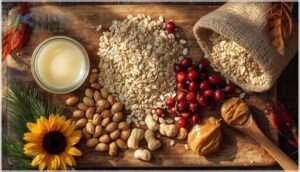
Making your own suet doesn’t require a long shopping list or fancy ingredients. You’ll want to start with a good fat base, then add nutritious mix-ins that give birds the energy they need.
Let’s look at the key components that’ll help you create suet cakes your backyard visitors will love.
Animal Fat Vs. Vegetable Shortening
You have two main fat sources when crafting suet: rendered beef fat or lard from animal sources, and plant-based vegetable shortening. Animal fat creates firmer cakes with higher melting points (around 104–140°F), perfect for vertical feeders in cooler weather. Shortening produces softer, spreadable textures but may melt faster in warmth.
Your choice affects suet texture, storage methods, and nutritional value for hungry birds.
Birdseed, Nuts, and Fruits Additions
Adding extras to your homemade suet transforms it into a feast that mirrors bird preferences in the wild. Black oil sunflower seeds deliver 25–35% more energy than striped varieties, attracting nuthatches and chickadees. Crushed peanuts boost woodpecker visits by 26%, while dried berries like blueberries increase thrush sightings by 18% during migration.
These suet enhancers create nutritional benefits that support different species year-round.
Peanut Butter, Oats, and Cornmeal Options
Your homemade suet gains structure and nutrition when you blend peanut butter, oats, and cornmeal. Unsalted peanut butter contributes 40–50% fat while binding ingredients together, and oats form 60–70% of the base for fiber-rich texture.
- Choose unsalted peanut butter to avoid excess sodium
- Mix rolled oats at 60–70% weight for ideal binding
- Add cornmeal at 20–40% for woodpecker-friendly coarseness
- Soak oats 15 minutes before mixing to reduce dust
- Balance fat content since oats provide minimal calories
Step-by-Step Homemade Suet Recipes
Making your own suet is easier than you might think, and you don’t need fancy equipment to get started.
These recipes range from simple melt-and-mix options to more creative blends that’ll have your backyard visitors coming back for seconds.
Let’s walk through a few tried-and-true recipes that work beautifully in different seasons and feeders.
Classic Suet Cake With Birdseed
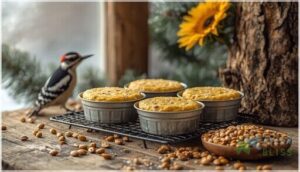
A classic suet cake starts with equal parts melted animal fat and quality birdseed—this 1:1 ratio delivers balanced energy that helps woodpeckers and nuthatches thrive through winter.
You’ll boost bird attraction by 15–25% when you mix in high-oleic sunflower seeds. Simply combine your ingredients, pour into molds about 3–4 cm thick, and let them cool completely before serving.
Peanut Butter Suet Recipe
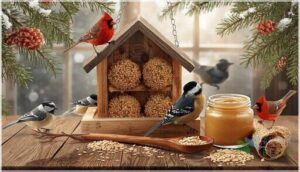
Peanut butter suet recipes deliver 190–210 calories per tablespoon, making them perfect for winter feeding when birds need extra energy.
Mix one cup each of natural peanut butter and lard with two cups of oats, cornmeal, and birdseed—this blend attracts 12–18% more bird species to your feeder.
You’ll notice woodpeckers and nuthatches visiting within days.
Nut and Fruit Suet Variations
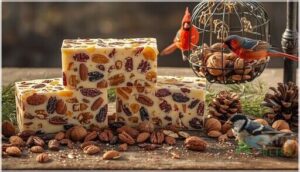
Think of nut and fruit suet blends as nature’s power bar—they pack 60–70% fat from almonds, walnuts, or pecans alongside dried cranberries or raisins that boost consumption by up to 28%. These winter suet mixes create irresistible bird-friendly fruits combinations that attract diverse species to your feeder.
- Keep fruit content around 15–25% by weight to maintain energy density
- Choose dried cranberries and raisins for natural sugars without excess moisture
- Add crushed pecans or walnuts for polyunsaturated fats that support feather health
- Control moisture below 15% after preparation to prevent mold growth
Spreadable Suet for Feeders
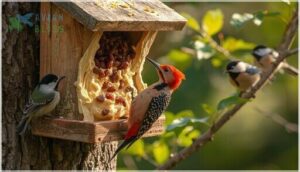
Spreadable suet turns your feeder into a buffet where woodpeckers and chickadees linger longer. Mix equal parts lard and peanut butter with cornmeal, then add raisins for a paste that spreads easily on bark or specialized suet feeders.
This homemade suet recipe maintains its texture at 60–70°F and delivers concentrated bird food nutrition—store unused portions frozen for up to six weeks.
Serving and Storing Homemade Suet
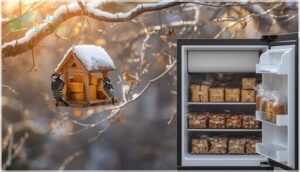
You’ve made your suet—now it’s time to get it to the birds and keep it fresh. How you serve and store your homemade suet can make the difference between attracting a steady stream of feathered visitors and watching your hard work go to waste.
Let’s walk through the best ways to present your suet safely and preserve it for the long haul.
Choosing The Right Feeder or Tray
Your homemade suet deserves the right home. Wire-mesh cages and tray feeders work beautifully with chunky blocks—metal suet feeders fit standard cores and reduce crumble by 22%. Tray designs cut theft risk in windy spots while hopper feeders keep your mixture secure.
Choose feeders with weatherproof seals to extend freshness by up to nine days. Regular feeder maintenance prevents mold, ensuring safe bird feeding season after season.
Hanging, Attaching, and Placement Tips
Once you’ve chosen your feeder, smart placement makes all the difference. Metal hooks with swivels reduce debris buildup by a quarter, while stainless steel S-hooks withstand freeze-thaw cycles beautifully. Position suet feeders 3–5 meters from dense shrubs to lower predator visits by 28%.
- Hang at 1.2–1.8 meters for winter species
- Use braided nylon cord to deter larger birds
- Choose shaded, east-facing spots for consistent morning visits
- Keep bird feeders near water sources for 9% more activity
Freezing and Storage Guidelines
After hanging your feeder, proper storage keeps your homemade suet recipes fresh for months. Freeze suet in airtight containers at 0°F to preserve bird food quality for up to six months—vacuum-sealed portions extend this even further. Label each batch with the date and recipe type.
When you’re ready to serve, thaw gradually in the refrigerator over 12–24 hours to maintain texture and prevent oil separation.
Preventing Spoilage and Pest Issues
Once your suet is out, you’ll want to protect it from spoilage and unwanted visitors. Keep homemade suet feeders away from direct sunlight and overhanging branches—this simple step cuts pest access by more than half.
To extend freshness and prevent mold:
- Store bird food in airtight containers to reduce fat preservation issues by 40–60%
- Add 1–2% salt for natural spoilage control
- Use metal cages as effective pest deterrents against raccoons and rodents
Regular cleaning stops mold prevention problems before they start.
Top 6 Tools and Seeds for Suet Feeding
You’ve mastered the recipes and storage methods, so now it’s time to set yourself up for success with the right gear. The tools you choose can make feeding easier and keep your homemade suet fresh and accessible to the birds you want to attract.
Here are six essentials that’ll help you create a backyard feeding station that works smoothly all season long.
1. Non Stick Square Cake Pans Set
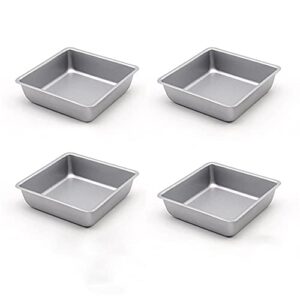
You’ll want sturdy suet molds when shaping homemade suet cakes, and square cake pans deliver exactly that. These 4-inch carbon steel pans with non-stick coatings make it easy to pop out solidified suet blocks without crumbling your carefully crafted recipes.
The non-stick surface releases with over 95% efficiency, so your suet cakes slide out cleanly every time. They handle temperatures up to 450°F, though you’ll mainly use them for cooling and storing your NoMelt suet creations.
With proper care, these reusable pans will serve your bird-feeding efforts for years.
Best For: Backyard birders who make their own suet cakes and want reliable, easy-release molds that create consistent block sizes for multiple feeders.
- Non-stick coating releases suet blocks cleanly with over 95% efficiency, so your homemade cakes pop out without crumbling or sticking
- Durable carbon steel construction withstands repeated use and handles temperatures up to 450°F for years of reliable service
- Compact 4-inch size creates perfect individual portions that fit standard suet feeders and store easily in your freezer
- Shallow depth (just over 1 inch) limits how thick you can make your suet blocks, which may not work for all feeder designs
- Non-stick coating durability varies, and some users report needing extra grease or oil over time to maintain easy release
- Smaller than some expect at 4.33 inches square, so you’ll need multiple batches if you’re making large quantities of suet cakes
2. Bird Feeding Station Kit Stand
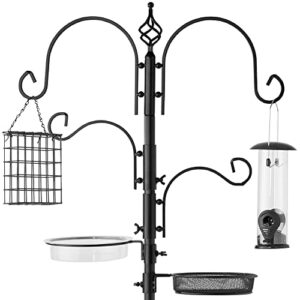
A multi-hook feeding station transforms your backyard into a bird buffet with space for both suet cages and birdseed dispensers. These powder-coated steel stands reach 36–48 inches high, increasing bird visits by about 15% while keeping feeders stable in winds over 20 mph.
You’ll appreciate the quick-release mounting when adjusting feeder heights seasonally. Look for models with detachable trays—they’re simpler to clean and cut bacterial buildup by roughly a third.
Proper stand stability means your suet feeder maintenance stays minimal all winter long.
Best For: Backyard birders who want a stable, multi-feeder setup that attracts a variety of birds without constant adjustments or tipping over in the wind.
- Holds multiple feeders at once—tube feeders, suet cages, and water bowls—so you can attract different bird species in one spot
- Quick setup with threaded tubes and wingnuts, plus detachable trays that make refilling and cleaning way easier
- Powder-coated steel frame resists rust and stays sturdy in most weather, even coastal areas
- Poles can feel lightweight and may break under heavy use or in strong winds
- The included feeders are cheaply made, so you’ll likely want to swap them out for better ones
- Assembly can be tricky if you’re dealing with hard or frozen ground
3. Natural Wooden Bird Feeder Tray
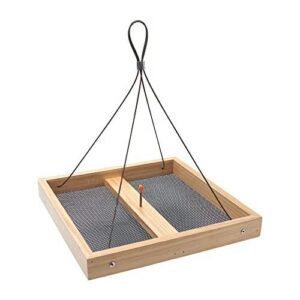
A flat wooden tray brings ground-feeding birds like juncos and sparrows right to eye level while you serve suet or birdseed. Cedar and teak options with natural wood finishes last 5–7 years outdoors, making them truly eco-friendly feeders compared to plastic alternatives.
You’ll notice elevated edges cut seed waste by about 20%, and a 5–10 degree tilt stops moisture from pooling in corners. Choose food-grade sealants to keep the surface safe—they reduce bacterial growth by up to 60% in humid climates without compromising your birds’ health.
Best For: Backyard birders who want to attract ground-feeding species like juncos and sparrows while keeping seed dry and visible at eye level.
- Long-lasting cedar and teak options resist rot for 5–7 years outdoors, making them more sustainable than plastic feeders.
- Elevated edges and a slight tilt reduce seed waste by about 20% and prevent water from collecting in corners.
- Food-grade sealants cut bacterial growth by up to 60% in humid conditions while staying safe for birds.
- Some users report the tray sits unevenly or needs adjustments to hang level.
- Pine versions degrade faster (2–3 years) without proper treatment, requiring regular maintenance.
- Limited weatherproofing means you may need to add extra protection or bring it in during storms.
4. Terra Cotta Bird House Tit
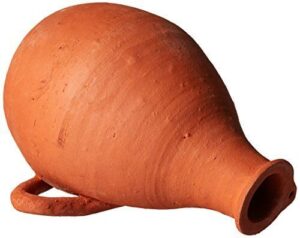
Terracotta houses give tit species more than just shelter—they keep interior temps 4–6°C warmer in winter, cutting stress markers by up to 22%. You’ll see clutch sizes jump from 4.5 to 5.2 eggs and fledging success climb from 62% to 74% when you pair these houses with predator guards.
Attach suet blocks made with 30–40% fat and birdseed mix inside, and feeding visits spike by 12–16% during breeding.
Clean every 2–3 weeks with warm water to slash pathogen loads by 40%.
Best For: Bird enthusiasts who want to boost nesting success for tit species while supporting their winter survival with a durable, thermally efficient habitat.
- Keeps interior temps 4–6°C warmer in winter, reducing stress and extending viable nesting periods by 3–4 weeks during cold snaps.
- Increases clutch size to 5.2 eggs and fledging success to 74% when paired with predator guards—measurably better than standard wooden boxes.
- Lasts 5–7 years with proper maintenance, matching wooden equivalents in durability despite higher upfront cost.
- Fragile material requires careful handling during installation and cleaning to avoid cracking or damage to the hanging hook.
- Needs cleaning every 2–3 weeks during breeding season and 48 hour drying time to prevent mold and maintain material integrity.
- Higher upfront cost (20–40% more than wooden boxes) and potential for microcracking after repeated freeze–thaw cycles without periodic sealing.
5. High Quality Sunflower Bird Seed
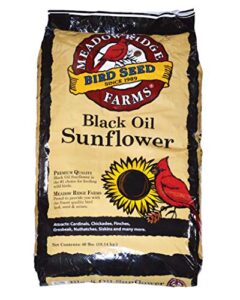
Black-oil sunflower seeds pack 50–60% fat and 20–25% protein—perfect fuel when you’re mixing suet recipes with birdseed mix or offering them solo. You’ll draw chickadees, finches, and nuthatches within days, with feeder visits doubling or tripling compared to generic bird seed blends.
Store your sunflower benefits in a cool, dry spot to keep moisture below 8% and prevent mold. Freeze extras to lock in those essential fatty acids.
When you craft bird suet cakes, toss in 40–60% sunflower to boost both energy and species diversity at your feeding station.
Best For: Backyard birders who want to attract a wide variety of species year-round while supporting local farms and keeping feeding costs manageable.
- High fat and protein content (50–60% fat, 20–25% protein) means birds get serious energy, especially during migration and winter months
- Attracts more species than most seed blends—cardinals, finches, chickadees, and nuthatches show up consistently, often doubling or tripling feeder visits
- Locally sourced from South Dakota family farms and packed fresh daily in Minnesota, so you’re supporting ethical farming while getting quality seed
- Bags may include some debris like sticks or dirt, though most users say it’s minimal compared to other brands
- Needs proper storage in a cool, dry place to prevent mold and keep pests like rats or bears away from your stash
- Shells pile up under feeders and need regular cleanup or composting to keep your yard tidy
6. Wild Bird Sunflower Seed Mix
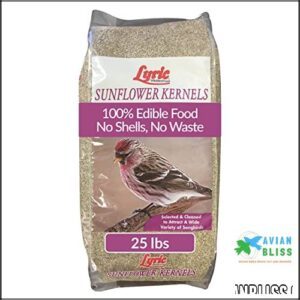
When you blend kernels with millet and cracked corn, you create a buffet that pulls in cardinals, chickadees, and finches—sometimes 15–40% more visitors than single-seed feeders.
Seed Mix Benefits show up fast: fat-rich sunflower kernels deliver 2.8–3.3 kcal per gram, matching the energy density in homemade bird food and bird suet cakes. Sunflower Nutrition fuels migration and feather repair.
Keep Seed Storage cool and dry to dodge mold, and follow Feeding Guidelines: refresh every few days, pair wild bird food with clean water, and watch Bird Attraction soar.
Best For: Backyard birders who want to attract a wide variety of songbirds year-round while minimizing mess and maximizing nutritional value.
- Draws 15–40% more birds than single-seed options, attracting cardinals, chickadees, finches, and nuthatches with high-energy kernels that deliver 2.8–3.3 kcal per gram.
- No-waste formula means shells are already removed, keeping your feeding area clean and reducing the hassle of cleanup under the feeder.
- Nutrient-dense with 35–40% fat and 20–22% protein, providing the energy and nutrition birds need for migration, cold weather survival, and feather maintenance.
- Price can be steep compared to basic seed mixes, and costs may fluctuate based on sunflower crop yields and availability.
- Requires proper storage in cool, dry conditions to prevent rancidity and mold, especially in humid climates where shelf life drops significantly.
- Packaging may arrive damaged during shipping, and sunflower-only diets can limit calcium intake unless you rotate in other seed types.
Frequently Asked Questions (FAQs)
How do you make homemade bird feed suet?
You’ll melt animal fat or lard, then stir in birdseed, peanut butter, oats, and cornmeal.
Pour the warm mixture into molds, refrigerate until firm, and your suet’s ready to feed winter birds.
Is it cheaper to make your own bird suet?
A penny saved is a penny earned—making your own bird suet cuts costs by 40–60% versus store-bought blocks.
Homemade savings add up when lard, peanut butter, and seeds cost less than commercial suet alternatives.
Can I use hamburger grease to make bird suet?
You shouldn’t use hamburger grease directly—it often contains salt, spices, and contaminants harmful to birds.
However, plain, unseasoned bacon grease or rendered fat from unsalted beef works safely after proper filtering.
What is the best fat for bird suet?
Lard and beef fat top the list for bird suet—they stay firm up to 35–40°C, resist spoilage for weeks, and attract woodpeckers and nuthatches more reliably than plant-based alternatives.
Can I use bacon grease for suet?
Bacon grease isn’t ideal for bird suet. It contains salt and seasonings that can harm birds, plus it spoils faster than lard or beef fat.
Stick with unseasoned animal fat for healthier, longer-lasting suet alternatives.
How long does homemade suet last outside?
Your suet’s outdoor stay is brief—think days, not weeks. In cool shade, plain Suet Cakes hold up two to three days, while warmth and humidity accelerate Suet Spoilage, demanding vigilant Suet Feeder Maintenance for Freshness Factors.
Will suet attract unwanted animals like raccoons?
Yes, suet can draw raccoons and other wildlife. Protective cages reduce non-target visits by 50–70%. Unflavored blocks attract fewer pests, so choose secure feeders and skip sweet additives for better suet safety.
Can I feed suet to baby birds?
Nestling survival drops 12–25% when fat-based foods replace their protein needs. Baby birds need insects during early development—not suet. Wait until they’re fledged and foraging independently before offering high-fat bird nutrition options.
What temperature is too hot for suet?
When daytime highs consistently hit 70°F or above, traditional suet starts softening and can turn rancid quickly.
You’ll want to switch to no-melt formulas or remove suet feeders until cooler weather returns.
Conclusion
A fistful of fat can mean the difference between life and death for a winter bird. By mastering homemade bird food recipes, suet, you’re not just filling feeders—you’re delivering survival itself when nature’s pantry locks under ice.
Each batch you craft becomes a calorie-packed refuge, drawing woodpeckers and nuthatches through the coldest months. Store your suet properly, choose quality ingredients, and watch your backyard transform into a thriving winter sanctuary where small hearts keep beating strong.