This site is supported by our readers. We may earn a commission, at no cost to you, if you purchase through links.
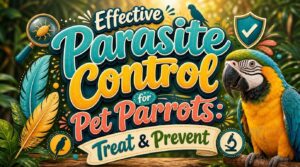
Parrots hide illness well—it’s a survival instinct hardwired from generations of living where showing weakness meant becoming someone else’s meal. By the time your bird looks obviously sick, a parasite infestation may already be weeks old.
A dull feather here, a little extra scratching there, droppings that don’t look quite right—these quiet signals are easy to dismiss as normal variation. They rarely are.
Effective parasite control for pet parrots starts long before you notice anything alarming, and knowing exactly what to look for changes everything about how quickly your bird recovers.
Table Of Contents
- Key Takeaways
- Spot Parrot Parasites Early
- Identify Common Parrot Parasites
- Confirm Infestations With Avian Vets
- Treat External Parrot Parasites Safely
- Control Internal Parasites Effectively
- Prevent Reinfestation in Bird Enclosures
- Schedule Long-Term Parasite Protection
- Frequently Asked Questions (FAQs)
- How to get rid of parasites in parrots?
- Is ivermectin safe for parrots?
- How do I deworm my parrot?
- Are parrots prone to parasitic disease?
- What are the different types of parasites in birds?
- Do parrots have mites?
- Do birds have parasites?
- How do birds eat parasites?
- Can you use mite spray on birds?
- How to treat parasites in parrots?
- Conclusion
Key Takeaways
- Parrots instinctively hide illness, so subtle clues like dull feathers, unusual droppings, or extra scratching often signal a parasite problem that is already weeks old.
- Each parasite type—mites, lice, worms, protozoa—leave distinct signs and needs a targeted, vet-confirmed treatment rather than a one-size-fits-all approach.
- Clearing an infestation isn’t enough; you have to treat the whole flock at once, clean the enclosure thoroughly, and stick to a seasonal deworming schedule to stop reinfestation.
- Daily droppings checks, weekly cage disinfection, strict 30-day quarantines for new birds, and routine vet visits are what separate a healthy parrot from one constantly battling parasites.
Spot Parrot Parasites Early
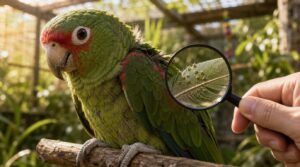
Parrots can’t tell you when something’s wrong, so you have to learn how to read the signs yourself. The good news is that parasites almost always leave clues — you just need to know where to look.
When something does seem off, knowing where to find emergency avian veterinary care can make all the difference for your bird.
Parrots can’t voice their pain, but parasites always leave clues for those who know where to look
Watch for these five warning signs that your bird may have uninvited hitchhikers.
Feather Damage and Itching
Feathers tell you a lot about what’s going on beneath the surface. When your parrot starts scratching more than usual, you’re often looking at feather mites, lice, dry skin, or allergic reactions to dust or cleaning products. Environmental irritants and nutritional deficiencies can quietly trigger feather damage and itching too. Behavioral plucking sometimes develops when the irritation goes unaddressed long enough to become a habit.
Scaly face mites can cause crusty lesions around the beak and nostrils.
Weight Loss and Weakness
Beyond weight loss and listlessness, these are serious clinical signs of parasitism that demand attention. Internal parasites disrupt nutrient absorption, triggering malabsorption consequences like muscle wasting and inflammatory cachexia.
Watch for the following symptoms:
- Visible keel bone prominence
- Reduced grip strength on perches
- Anemia symptoms like pale skin patches
- Dehydration risk from reduced food and water intake
- Progressive weakness and inactivity
Crusty Beak or Legs
Weakness and weight loss are red flags, but crusty skin on the beak or legs is equally telling. Knemidokoptes pilae causes scaly skin on the beak or legs in budgerigars and parrots, leaving a distinct Honeycomb Crust Pattern and, if untreated, a Coral‑like Mandible with serious Beak Deformity Risk.
| Clinical Sign | What You’ll Notice |
|---|---|
| Honeycomb Crust Pattern | White, thickening scales on cere or beak |
| Coral‑like Mandible | Tunneled, misshapen upper beak structure |
| Leg Scale Accumulation | Yellow-tan crusty buildup on toes and feet |
| Persistent Itching Signs | Repeated scratching around face and legs |
| Vent Crustiness | Scaly skin spreading toward the vent area |
Knemidokoptes mutans specifically targets the legs. Early mite control with external parasite sprays or prescribed treatment stops permanent damage before it sets in.
Breathing and Voice Changes
Crusty skin isn’t the only visible warning — your parrot’s breathing and voice can signal trouble just as clearly. Air sac mites are a serious parasite infestation that triggers noisy breathing, wheezing, and a croaky voice as tracheal swelling narrows the airway.
Watch for:
- Stridor episodes — a high-pitched wheeze mid-breath
- Vocal fatigue — calls that fade or go quiet unexpectedly
- Chest effort — visible flank movement with each breath
- Open-mouth breathing — a sign of significant respiratory issues in birds
Droppings and Diarrhea
Your parrot’s droppings tell a story. Watch for diarrhea — loose, watery, and smelly — as a red flag for worm infection in avians or protozoa. Stool color changes to dark green, brown, or reddish-black signal possible blood. Frequency, consistency, and odor all matter in monitoring health.
Hydration status drops quickly with fluid loss. A fecal flotation test and fecal examination confirms the cause, aiding in diagnostic testing for parasites.
Identify Common Parrot Parasites
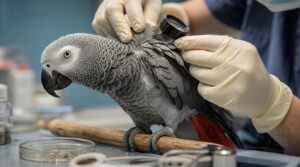
Knowing what you’re dealing with is half the battle in keeping your parrot healthy.
There are several common parasites that target pet birds, and each one affects your bird in a different way.
Here’s what you need to know about the most likely culprits.
Red Mites
Red mites (Dermanyssus gallinae) are sneaky — they hide in crevice hiding spots during the day and rely on nocturnal feeding to remain undetected.
Treatments like fluralaner and moxidectin have made it easier to fight back, though understanding the full picture of mite behavior and infestation patterns in birds helps you stay one step ahead.
These external parasites act as transmission vectors between birds, spreading through shared equipment and bedding. Egg viability extends their survival even without a host, so treatment timing matters enormously.
Smart mite control for your aviary starts with knowing your enemy.
Scaly Face Mites
Scaly face mites (Knemidokoptes pilae) burrow silently beneath the skin, feeding on keratin and triggering Progressive Hyperkeratosis, which produces the unmistakable Honeycomb Crust Texture around a bird’s beak and cere.
This Burrowing Tunnel Pathology causes permanent deformity if ignored.
Surface Transmission spreads the mite infestation easily between cagemates, so treat every bird together using vet-approved topical sprays like Avian Insect Liquidator.
Air-Sac Mites
Unlike most ectoparasites, air-sac mites (Sternostoma tracheacolum) live deep inside a parrot’s respiratory tract — completely invisible from the outside. That’s what makes them so dangerous. Watch for these warning signs:
- Clicking, wheezing, or croaky vocalizations
- Open-mouth breathing or labored breathing at rest
- Respiratory inflammation worsening after activity
- Sneezing or voice changes in previously healthy birds
Their life cycle stages complete entirely within the airways, and humidity survival outside the host facilitates Waterborne Transmission through shared dishes — making Treatment Scheduling and preventive parasite control essential for mite infestation control.
Lice and Ticks
Two very different creatures—lice cling to feathers and complete their entire life cycle on your bird, while ticks lurk in outdoor vegetation and attach firmly to skin.
| Feature | Lice | Ticks |
|---|---|---|
| Attachment Site Identification | Feather bases, skin surface | Head, neck, nape |
| Life-Cycle Timing | Entirely on host | Partly environmental |
| Host Grooming Impact | Feather wear, itching | Localized swelling |
| Environmental Reservoirs | Eggs on feathers | Bedding, vegetation |
Stress-Induced Susceptibility weakens your bird’s defenses, making both ectoparasites harder to control. Consistent ectoparasite control and topical parasite treatments keep both threats manageable.
Worms and Protozoa
Worms and protozoa are invisible threats working from the inside out. Roundworms spread through Egg Contamination Management failures — eggs survive in soil and contaminate perches fast.
Protozoa like Trichomonas gallinae and coccidiosis organisms follow a similar Life Cycle Insight: shed in droppings, ingested, and multiplying quickly.
Hygiene Monitoring, Nutritional Support, and timely deworming reduce Protozoa Drug Resistance risks before they escalate.
Confirm Infestations With Avian Vets
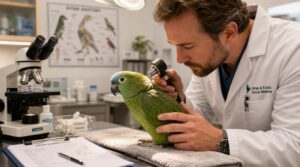
Spotting the signs is a good start, but a proper diagnosis takes more than a careful eye. Your avian vet has several reliable tools to confirm exactly what you’re dealing with, so treatment hits the right target from day one.
Here’s what that diagnostic process usually looks like.
Physical Feather Checks
Start with your hands. Run your fingers gently along each feather, checking shaft integrity and feather alignment for breaks, fraying, or uneven tips. Look for dust accumulation under the wings and near the vent — a classic sign of ectoparasite activity.
Scab identification around the neck and head, paired with behavioral cues like restlessness or frantic preening, often confirms feather plucking and clinical signs of parasitism before lab results do.
Skin Scraping Microscopy
Once your hands have done their job, the microscope takes over. A skin scraping from an active lesion edge—spreads evenly on a slide using a mineral oil mount—lets your vet scan for scaly face mites and other external parasites. Low-power scanning locates suspect areas first; then higher magnification confirms the find.
A KOH preparation catches fungal issues too, ensures accurate parasite detection every time.
Tracheal Swabs or Endoscopy
When your parrot’s voice sounds raspy or breathing seems off, the microscope alone won’t tell the whole story.
A tracheal swab reaches directly into the airway for parasite detection, while endoscopy adds real visualization benefits—letting your vet see lesions, swelling, or secretions in real time.
Endoscopy requires specialized equipment and is more invasive, but clinical indications like progressive respiratory distress make that extra diagnostic testing step absolutely worth it.
Blood Smear Analysis
Blood tests for parasites go further than most owners expect. Your vet will stain a blood smear using Romanowsky-type stains, then scan at low power to detect microfilaria or hemoparasites hiding in the sample.
Red cell inclusions, platelet morphology, and a full leukocyte differential rounds out the picture—giving your vet a clear snapshot of your parrot’s internal parasite load through careful microscopic examination.
Treat External Parrot Parasites Safely
Once you’ve confirmed what you’re dealing with, it’s time to take action.
Treating external parasites safely means using the right products in the right order, and there’s a clear path forward for each type. Here’s what works.
Ivermectin or Moxidectin
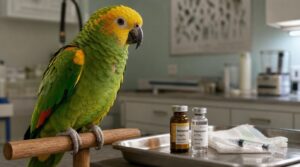
Both ivermectin and moxidectin follow macrocyclic lactone parasite control guidelines, but their pharmacokinetic profiles differ in ways that matter.
Moxidectin distributes more broadly into tissues, giving it longer activity and stronger comparative efficacy against mites — roughly six times more potent in early exposure tests.
Safety margins are favorable for both, but always follow your vet’s dosage guidelines to avoid resistance mechanisms developing over time.
Scaly Mite Treatment Schedule
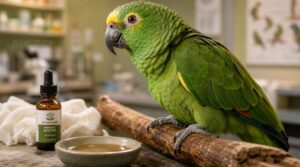
Scaly mites don’t surrender after one treatment — they burrow deep and hatch in waves. A four-week protocol gives you the best chance at full clearance:
- Start with a softening crust soak to lift debris
- Apply MoxiVet Plus with complete limb coverage
- Repeat every few days for four weeks
- Run healing progress checks weekly
- Move into escalated treatment phases if lesions persist
Schedule repeat treatment once every 3 months to stay ahead of reinfestation.
Safe Cage Sprays
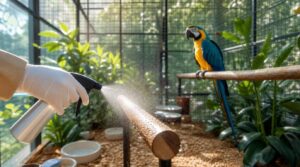
The right topical sprays for birds make a real difference in mite control for aviary setups. Pyrethrin-based formulas—often enhanced with a Piperonyl Boost—kill lice and mites on contact and deliver pyrethrin residuals lasting up to six weeks.
Maintain proper application distance, holding the spray 30–40 cm away, and always confirm complete drying time before returning birds.
Proper surface coverage prevents chemical toxicity and promotes safe antiparasitic use against avian ectoparasitism.
Red Mite Decontamination
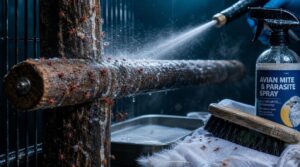
Red mites don’t live on your bird — they hide in the enclosure and sneak out to feed at night. That’s why treating your parrot alone won’t solve the problem. Your decontamination plan needs to target the environment itself.
- Start with a thorough Hot Water Wash and detergent scrub
- Follow with a Pressure Wash Cycle targeting every Crevice Treatment zone
- Dry completely before applying an insecticide with proper Residual Timing
- Practice Chemical Rotation to prevent resistance buildup
- Repeat environmental cleaning every few days as part of your biosecurity measures
Whole-Flock Air-Sac Treatment
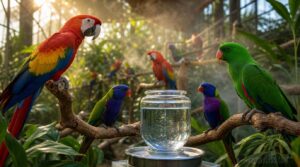
Air-sac mites spread silently through a flock before a single bird shows symptoms. That’s why whole-flock treatment is non-negotiable. MoxiVet Plus offers Broad Mite Spectrum coverage through Moxidectin-based treatments, targeting Air Sac mites with Low-Stress Application via drinking water — no stressful individual handling required.
| Treatment Factor | Guidance | Why It Matters |
|---|---|---|
| Dose Interval Scheduling | Repeat treatment once every 3 months | Breaks full parasite lifecycle |
| Water Stability Limits | Mix fresh; discard after 24 hours | Maintains treatment potency |
| Environmental Clean-up Timing | Clean immediately after dosing | Prevents aviary re-infestation |
| Low-Stress Application | Medicate water, not individual birds | Reduces handling stress |
| Broad Mite Spectrum | Targets multiple mite types simultaneously | Facilitates complete parasite eradication in pet birds |
Control Internal Parasites Effectively
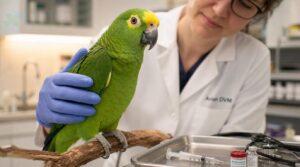
Internal parasites are sneaky—by the time your parrot shows obvious signs, the infection has often been building for a while. The good news is that the right medication, given correctly, can clear most worm and protozoan infections without much drama.
Here’s what you need to know to treat them effectively.
Roundworm Deworming Options
Roundworms — specifically Ascaris roundworm — hit hard, draining your bird’s energy and condition fast. Your vet will choose between a Fenbendazole protocol (Panacur given daily for several days), a Pyrantel regimen, or Moxidectin water therapy as the sole drinking source for 24 hours.
Weight-based dosing matters enormously here. Always clean droppings immediately, since egg contamination of surfaces can re-infect your bird before treatment finishes.
Tapeworm Treatment Choices
Tapeworms need a different approach than roundworms. Praziquantel Therapy is the go-to avian dewormer for intestinal tapeworm infections, and MoxiVet Plus combines Moxidectin with praziquantel for broad coverage.
Species Specific choices matter — your vet may recommend a Niclosamide Option for certain cases, or Albendazole Cyst Therapy when larvae have migrated beyond the gut.
Follow-up Monitoring confirms your parrot is fully clear.
Coccidiosis Medication Support
Coccidiosis is a protozoal infection, not a worm, requiring a distinct treatment approach compared to tapeworms. Cocci Amprol blocks the parasite’s nutrient uptake, effectively slowing the infection’s progression. This targeted medication forms the core of intervention, preventing the condition from escalating.
Supportive care is critical: Hydration Therapy and Nutritional Support are essential, as diarrhea can rapidly dehydrate birds. Addressing fluid and nutrient loss directly combats the infection’s draining effects on the bird’s health.
Stress Management significantly influences recovery—a stressed parrot recovers slower. Vets may recommend Oocyst Monitoring and Medication Rotation as part of comprehensive avian disease prevention and parasite treatments for birds, ensuring long-term health and resilience.
Repeat Dose Timing
Timing repeat doses matters more than most bird owners realize. Half-life intervals determine when drug levels drop low enough for parasites to bounce back, so steady-state timing keeps concentrations effective throughout lifecycle coverage. Give the second dose before protection fades.
For group synchronization, treat all birds on the same treatment schedule — staggered dosing leaves gaps that parasites exploit.
Avoid Unsafe Home Worming
Steady timing protects your flock, but the medicine must be correct. Over-the-counter wormers often fail to target the specific parasite your bird actually has, and incorrect dosing can strain the liver quickly.
Always use vet-prescribed medication, confirm product identification before opening anything, and run expiration checks every time.
Safe administration starts with accurate dosing — never guess, never improvise.
Prevent Reinfestation in Bird Enclosures
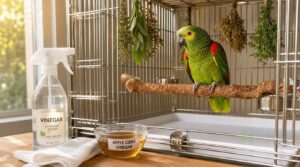
Treating parasites is only half the battle — keeping them gone is where the real work happens.
Your bird’s enclosure is either a shield or a source, depending on how well you maintain it. A few consistent habits make all the difference.
Daily Dropping Removal
Every day counts regarding bird cage hygiene. Remove droppings each morning using disposable gloves or paper towels — this is your daily observation routine, letting you spot fecal sample changes before they become serious. Practice proper hand hygiene afterward, and ensure waste containment by sealing discarded material in a closed bin.
Maintain tool segregation by using dedicated tools, and keep surfaces dry throughout the process to uphold hygiene standards.
Weekly Cage Disinfection
Once a week, take everything out — perches, toys, and dishes — and clean them separately with hot, soapy water before disinfecting. Good crevice spray coverage ensures no hidden spots are missed. Let your disinfectant dwell for the full contact time, then rinse thoroughly.
Ventilation during cleaning helps clear fumes, and drying before reassembly guarantees residue-free surfaces. That’s real bird cage hygiene.
Fresh Food and Water
What you put in that bowl matters more than most owners realize. Refresh your parrot’s water at least twice daily — fresh water cycles reduce contamination quickly. Always dilute medicated drinking water protocol solutions with clean drinking water per label instructions.
Rinse produce thoroughly before serving, keep portions small for food portion timing control, and remove uneaten food within two hours.
Bowl sanitation and temperature control handle the rest.
Thirty-Day Bird Quarantine
Any new bird entering your home is an unknown variable. Quarantine new birds in a separate isolation facility for a minimum of 30 days — no exceptions. Follow strict all-in-all-out biosecurity protocol: once a bird enters quarantine, it stays put.
Use hygiene barriers like dedicated clothing and footwear. Track daily observations through quarantine recordkeeping, and schedule pre-release exams early, not at the finish line.
Outdoor Aviary Biosecurity
Outdoor aviaries are a paradise for your birds — and a welcome mat for wild bird exclusion failures. Keep enclosures fully fenced and covered, remove wild bird carcasses promptly, and apply surface disinfection protocols to all walkways regularly.
Use insect pest management strategies, maintain feed water safeguards, and establish equipment traffic zones for essential personnel only.
Solid biosecurity protocol keeps external parasites from ever getting a foothold.
Schedule Long-Term Parasite Protection

Treating parasites is only half the battle — keeping them gone is where real protection starts.
A consistent long-term plan makes that possible, and it doesn’t have to be complicated. Here’s what a solid routine looks like for your birds.
Routine Veterinary Checkups
Think of routine checkups as your parrot’s early warning system. Your avian veterinarian will conduct Heart Auscultation, Respiratory Auscultation, Abdominal Palpation, and Body Condition Scoring — catching subtle changes before they spiral.
An Oral Examination flags beak irregularities often linked to mites, while fecal screening ensures comprehensive symptom monitoring and parasite prevention.
This approach transforms care for pet birds into a genuinely proactive rather than reactive strategy.
Seasonal Deworming Plans
Routine checkups reveal when to act — a seasonal worming schedule shows how often. Parasite pressure peaks during warm weather and rainy seasons, so aligning prophylactic parasite treatment with the Spring Deworming Window and Fall Treatment Cycle gives your parrot the strongest protection against internal parasites.
- Adjust outdoor access scheduling during humid months
- Start the Spring Deworming Window before temperatures climb
- Revisit the Fall Treatment Cycle as birds spend less time outside
Treat All Birds Together
Scheduling treatments bird by bird leaves gaps — and mites don’t wait. Synchronized dosing means every bird in your aviary receives prophylactic parasite treatment on the same day, every time. This approach eliminates delays and ensures consistent protection.
Pair that with unified hygiene and group handling protocols, alongside shared equipment sterilization between sessions. These integrated practices reinforce biosecurity, minimizing cross-contamination risks and supporting holistic flock health.
Maintain a treatment log to track scheduled treatments and environmental sanitation tasks. This documentation ensures your parasite control routine remains airtight across your entire aviary management plan, preventing oversight and sustaining long-term efficacy.
Monitor Treatment Resistance
Even with a solid treatment log in hand, the real test is whether the parasites are actually gone. Drug resistance in parasites is real, and catching it early matters.
Watch for these Treatment Failure Patterns:
- Weight Trend Analysis — no weight gain after a full Ivermectin course signals trouble.
- Symptom Recurrence Timing — parasites returning within weeks suggest survivors rebounding through lifecycle gaps.
- Drug Efficacy Logs — document which products worked, when, and for how long.
- Resistance Screening Tests — repeat skin scrapings or fecal checks confirm whether the same parasite persists.
- Resistance Management — your avian vet switches treatment protocols and consults diagnostic labs before repeating a failed drug class.
When to Seek Urgent Care
Sometimes respiratory issues aren’t the urgent issue—your bird is. Certain signs require immediate care, not delayed appointments.
| Warning Sign | Why It’s Urgent |
|---|---|
| Open-mouth breathing/wheezing | Air-sac mites risk suffocation |
| Sudden seizures/paralysis | Neurological crises worsen rapidly |
| Uncontrolled bleeding | Shock causes rapid collapse |
| Extreme dehydration/collapse | Immune failure accelerates deterioration |
Frequently Asked Questions (FAQs)
How to get rid of parasites in parrots?
Vet-guided treatment and MoxiVet dosing form the foundation of parasite elimination in parrots. This medical approach targets both external parasites and internal parasites effectively.
Complementing treatment, parasite prevention relies on regular cleaning, probiotic support, and humidity control. These measures create an environment hostile to parasite proliferation, ensuring long-term health for pet birds.
Is ivermectin safe for parrots?
Ivermectin can work for parrots, but species sensitivity makes dose precision non-negotiable. Neurological toxicity is real.
Always seek veterinary guidance on administration routes and dose calculations before giving any bird medication.
How do I deworm my parrot?
Deworming starts with identifying the parasite through lab testing. Match the medication to the specific worm, calculate the correct worm treatment dosage, and follow your vet’s oral administration instructions carefully.
Are parrots prone to parasitic disease?
Yes, parrots are highly prone to parasitic disease.
Their Housing Density, Stress Vulnerability, and Species Susceptibility make both internal and external parasites a constant threat to their Immune Competence and overall health.
What are the different types of parasites in birds?
Parasites plague parrots in surprisingly varied forms — mites, lice, worms, and protozoa — each exploits different host immunity gaps, parasite life stages, and environmental reservoirs.
With roundworms and coccidial infection spreading through vector transmission across wide geographic distribution.
Do parrots have mites?
Parrots can indeed get mites, including feather mites, scaly mites, and quill mites. These infestations pose real risks to their health.
Understanding the mite life cycle is crucial for protecting your bird and preventing problems before they arise.
Do birds have parasites?
Birds naturally harbor both internal and external parasites, including Protozoa, worms, mites, lice, and ticks.
These parasites pose significant risks by disrupting immune systems, creating environmental reservoirs, and demanding consistent parasitic disease management to keep your flock safe.
How do birds eat parasites?
During preening, your parrot uses beak filtering and scratch flushing to dislodge and ingest lice directly off feathers.
This behavior is a natural, instinct-driven form of self‑medication feeding that keeps ectoparasite loads in check.
Can you use mite spray on birds?
Yes, but only with a bird-specific formulation. Always follow label compliance, avoid sensitive areas like eyes and beak, use proper spray technique, and take inhalation precautions to prevent toxicity.
How to treat parasites in parrots?
Treating parasites in parrots starts with vet-prescribed medication. Ivermectin and Moxidectin cover most external and internal parasites, while targeted oral medication for birds treats worms and protozoa accurately.
Conclusion
Your parrot can’t tell you something feels wrong—but its body always leaves clues. Effective parasite control for pet parrots isn’t a single treatment you apply once and forget; it’s an ongoing rhythm of observation, prevention, and timely action. Build that routine now, before anything feels urgent.
Clean the cage, schedule the checkups, and trust what you’re learning to see. The birds that thrive long-term almost always have an owner paying quiet, steady attention.
- https://www.merckvetmanual.com/exotic-and-laboratory-animals/pet-birds/parasitic-diseases-of-pet-birds
- https://westtoowoombavetsurgery.com.au/bird-care/external-parasites-in-birds/
- https://birdvetmelbourne.com/parasite-treatments-for-birds-what-every-bird-owner-should-know/
- https://capcvet.org/
- http://www.dettol.com.au/