This site is supported by our readers. We may earn a commission, at no cost to you, if you purchase through links.
Watch a chickadee sip from a puddle at 33°F, then refuse a heated bath ten feet away, and you’ll start to understand how particular birds are about water. Drinking costs them little energy, even when the liquid hovers just above freezing. Bathing is a different story entirely, one that can turn deadly fast in the wrong conditions.
The difference comes down to thermoregulation, your body’s process for managing heat, and how much of it a wet bird has to spend staying warm afterward. A soaked chickadee loses its insulating air layer and burns through fat reserves trying to recover it.
Knowing where that line sits, between a quick drink and a risky soak, helps you set up water sources that keep your backyard visitors safe all winter long.
Table Of Contents
- Key Takeaways
- How Cold Before Birds Avoid Water?
- Birds Drink Near-Freezing Liquid Water
- When Cold Water Becomes Risky
- Keep Winter Water Bird-Safe
- Maintain Cold-Weather Bird Water
- Frequently Asked Questions (FAQs)
- Do birds need water in winter?
- How do you keep birds hydrated in cold weather?
- Do birds need to drink water every day?
- Can birds drink from frozen water?
- What temperature is too cold for birds?
- What is the 5 7 9 rule for bird feeders?
- Is cold water bad for birds?
- Should I put water out for birds in the winter?
- Do heated birdbaths attract unwanted pests or insects?
- How much electricity does a birdbath heater use?
- Conclusion
Key Takeaways
- Birds will drink near-freezing liquid water since it costs little energy, but they avoid bathing in freezing conditions because wet feathers strip away insulation and force the body to burn precious fat reserves staying warm.
- Melting snow for hydration wastes vital metabolic energy, so birds strongly prefer accessible liquid water over ice or snowpack whenever it’s available.
- Bathing safely requires air temperatures above freezing, shallow water of 2-3 inches, and sheltered placement, since wet plumage in cold or windy conditions raises hypothermia and even flight-failure risks.
- Keeping winter water sources safe means using thermostat-controlled heaters (around 36-40°F), moving water or bubblers, daily refills, weekly cleaning, and avoiding salt or antifreeze, which are toxic to birds.
How Cold Before Birds Avoid Water?
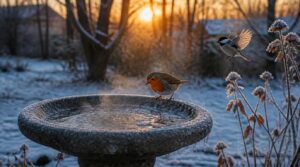
You might assume birds simply avoid cold water altogether, but the truth is a bit more complicated than that. Their tolerance depends on what they’re doing, drinking or bathing, and how the water is presented, whether liquid, near-freezing, or crusted with ice. Here’s what actually determines when birds step back from the water’s edge.
When temperatures drop below freezing, birds will often drink but skip bathing entirely, which is why setting up a safe bird bath for wild birds matters so much for cold-weather care.
Drinking Versus Bathing Thresholds
Why do birds sip icy water yet skip a bath on the same freezing morning? It comes down to energy trade-offs. Drinking costs little; bathing forces the body to rewarm soaked feathers, straining thermoregulation. Most species tolerate water near 0-5°C for hydration, but waterfowl need more energy reserves than small passerines to process the same cold intake safely.
Near-freezing Water Use
Liquid water, even near 0°C, still beats snow for hydration—melting ice costs precious metabolic energy. That’s why you’ll spot chickadees and goldfinches favoring dripping taps or sunlit puddles over frost-covered patches. Sheltered microhabitats offer steady refuge access when open sources ice over.
Timing matters too: birds often drink during warmer midday windows, conserving energy reserves for harsher morning and evening cold.
Ice-covered Water Sources
Once a pond or birdbath freezes solid, access to unfrozen water vanishes fast. Ice thickness matters less to birds than whether any surface stays liquid. Under-ice light can still fuel algae through thin, clear patches, but that’s no help for thirsty chickadees above.
Preventing ice buildup—through bubblers, deicers, or moving water—keeps winter bird survival odds much higher.
In moving river environments, frazil ice formations often appear as the first sign of freezing.
Species Tolerance Differences
Not every species experiences cold the same way. Genetic adaptation shapes cold tolerance, with enzyme function keeping cell membranes flexible in frigid water. Juvenile vulnerability runs higher than adults, and body size effects matter too:
- Larger species retain heat longer
- Smaller species chill faster
- Some show metabolic plasticity, adjusting over weeks
- Fat reserves boost avian physiology’s temperature regulation
Water temperature extremes test bird welfare differently across species.
Birds Drink Near-Freezing Liquid Water
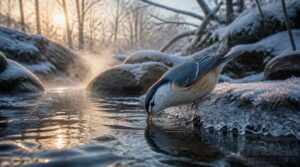
You might expect birds to steer clear of icy water, but that’s not quite true. Many species will happily drink from sources hovering just above freezing, as long as it stays liquid. Here’s why that matters, and what it costs them to keep hydrated through winter.
Why Liquid Water Matters
Why does temperature alone decide whether water gets used? Because avian hydration depends on liquid form, not just presence—supporting nutrient transport, thermal buffering, and biochemical reactions.
| Function | Role of Liquid Water |
|---|---|
| Metabolic hydration | Fuels digestion |
| Nutrient transport | Moves nutrients |
| Thermal buffering | Stabilizes body heat |
| Biochemical medium | Makes reactions possible |
Even near-freezing, accessible water sustains these essential processes birds can’t skip.
Regular bathing and drinking keep feathers clean and properly insulated, which is why understanding why birds need water in summer can help you support them through every season, not just the hottest months.
Snow Versus Cold Water
Why not just eat snow? It seems logical, but snow hydration efficiency lags far behind cold water, since melting demands energy birds can’t spare.
- Sublimation offers modest moisture on sunny days
- Snowpack insulation traps subzero liquid pockets below
- Metabolic melting costs drain essential winter reserves
- Cold water remains the faster, safer choice
That’s why accessible, unfrozen water beats snow whenever birds can find it.
Energy Costs in Winter
Melting snow burns calories birds desperately need for warmth, much like running a furnace nonstop drains your heating budget during a cold snap. That’s wasted energy neither can afford.
Just as insulation efficiency gains and smart thermostats curb heating bill spikes at home, seeking liquid water lets birds skip the metabolic cost of thawing ice, conserving reserves for actual thermoregulation.
Daily Hydration Needs
Think of a chickadee’s body as a tiny furnace that never quite shuts off, even at 0°F. That constant metabolic effort demands steady fluid intake, not just food.
A chickadee’s body is a tiny furnace that never quite shuts off, demanding steady fluid intake even at 0°F
Activity level, wind exposure, and body size all shift how much water a bird needs daily. Skipping hydration risks the same warning signs we see ourselves: sluggishness, weakened flight, poor thermoregulation when it matters most.
When Cold Water Becomes Risky
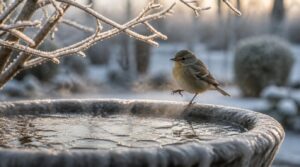
Drinking near-freezing water is one thing, but bathing in it is another story entirely. That’s where cold water stops being merely invigorating and starts becoming genuinely dangerous for birds. Here’s what you need to know about the risks lurking beneath a seemingly harmless splash.
Bathing in Freezing Weather
Ever watch a bird take a bath at 20°F and wonder if it’s a bad idea? It usually is.
Splashing raises thermal energy expenditure fast, and wet plumage strips away insulation right when a bird needs it most. That’s why most species stick to drinking near-freezing water instead, saving bathing for calmer days when hypothermia risk drops and proper preening can follow safely.
Wet Feather Dangers
A soaked feather does more than chill a bird, it opens the door to trouble.
Insulation loss leaves body temperature vulnerable, while damp plumage invites parasite growth and respiratory irritation.
- Bacterial and fungal risks on damp skin
- Slower preening and reduced feather insulation
- Higher energy conservation demands during thermoregulation
Even brief wetting taxes a bird’s reserves when every calorie matters for winter survival.
Frozen Wing Risks
Damp feathers that freeze mid-flight can shatter on impact, causing takeoff failure as ice-stiffened primaries crack under wingbeat force.
Frost damages feather barbules, gutting insulation and waterproofing, while ice crystals cause wing shaft abrasion during movement.
Weakened, iced wings also block quick escapes, leaving birds dangerously slow against predators when swift flight matters most.
Wind Chill Exposure
Wind does more than chill the air—it strips away the thin boundary air layer birds rely on for insulation, especially when feathers are wet.
Small passerines, with higher surface area to mass ratios, lose heat fastest. This forces energy demand spikes just to maintain body temperature, leaving less reserve for foraging, escaping predators, or simply staying warm through the night.
Safe Bathing Conditions
Given all this, when is bathing actually safe? Air temperature matters more than the calendar date. Aim for spells above freezing, ideally 0-15°C, with shallow depths of 2-3 inches and sheltered, predator-safe placement.
- Air temp stays above 32°F
- No wind chill during drying
- Shallow, sloped-edge basin
- Away from cat corridors
- Time for full preening before dusk
Keep Winter Water Bird-Safe
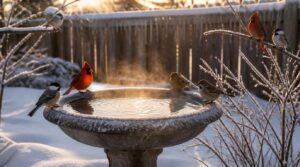
Keeping water safe for birds all winter takes more than good intentions—it takes the right setup. A few smart choices in equipment and placement make all the difference between a hazard and a lifeline. Here’s what actually works.
Ideal Heated Bath Temperature
What temperature keeps a bird bath both ice-free and safe? Aim for a thermostat-controlled range around 36 to 40°F, not the near-boiling numbers some heaters default to. Anything hotter risks distressing small songbirds or scalding sensitive skin.
A steady, moderate setting balances winter freeze prevention with comfort, letting chickadees and cardinals drink freely without shocking their systems—invigorating, not risky.
Use Bird Bath Deicers
Reach for a bird bath heater when temperatures dip below freezing—it’s often the simplest fix. Look for:
- Thermostatic control for automatic, energy-efficient operation
- Durable aluminum housing that resists corrosion
- Fully submerged heater placement for even heat distribution
Plug into a GFCI outlet, and rinse regularly to prevent mineral buildup, keeping water accessible all winter long.
Add Moving Water
Skip the deicer and try a small submersible pump instead—keeping water moving naturally slows ice formation at the rim. Choose an outdoor-rated pump with thermal protection, then adjust flow rate until you see gentle surface agitation, not splashing.
A bubbler also discourages mosquito breeding. Solar-powered options work well in sunny spots, giving birds reliable access to fresh water.
Choose Sheltered Placement
Where you place your water source matters as much as its temperature. Sheltered spots near shrubs cut wind chill while still deterring predator ambushes.
Consider:
- Windbreaks like evergreens or fences
- Proximity to perching branches, not directly under
- Southern exposure for natural warmth
Good placement makes it easy to access water without inviting hidden dangers, much like thoughtful habitat design balances safety with independence for any resident, feathered or otherwise.
Prevent Bathing Access
Some winters call for less bath, more sip. A non-metallic grille or woven sticks over the basin lets birds drink freely while blocking full-body soaks.
Pair this with moving water redirection, shallow depths, and sheltered placement, and you’ve built a setup favoring hydration over risky bathing.
Simple habitat tweaks, like this, keep cold water accessible without inviting frozen feathers.
Maintain Cold-Weather Bird Water
Setting up cold-weather water is only half the job. Keeping it clean, safe, and functioning through winter is what really protects your birds. Here’s what steady maintenance looks like.
Refresh Water Daily
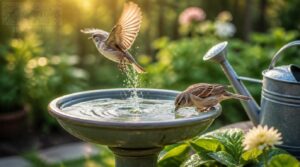
Fresh water every day keeps thirsty visitors coming back. Stagnant bowls breed bacteria fast, disrupting hydration continuity for juvenile songbirds especially.
Daily refills matter for three reasons:
- Pathogen buildup prevention in standing water
- Mineral balance stability birds rely on
- Debris removal that deters bathing altogether
Stick to a consistent daily refill schedule—your backyard regulars will notice the difference.
Clean Baths Weekly
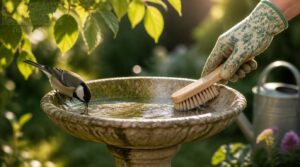
Daily refills handle debris, but algae and biofilm build up on bath surfaces even so. Give the basin a weekly scrub with a mild, bird-safe soap, rinsing thoroughly since soap residue can slick feathers and scare visitors off. Use a dedicated brush, never kitchen sponges, to prevent cross-contamination.
This weekly habit is central to real water sanitation, not just fresh water.
Avoid Salt and Antifreeze
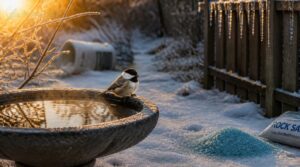
Skip the freezing hacks that seem harmless but aren’t. Salt draws birds in, yet causes kidney damage over time. Antifreeze is worse—ethylene glycol toxicity kills small birds with a single teaspoon.
- Never add salt or antifreeze to water
- Choose non-toxic, bird-safe deicers instead
- Rinse away chemical residue after winterizing
- Watch for road salt runoff nearby
Safer choices protect both hydration and avian health.
Use Shallow Water
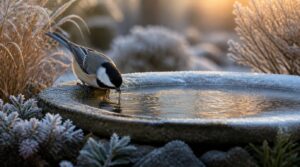
Depth matters as much as chemistry. A shallow water depth of 2 to 3 centimeters at center, with sloped entry, keeps birds stable and confident.
| Feature | Winter Benefit |
|---|---|
| Sloped edges | Easy exit, stable footing |
| Edge vegetation | Predator detection safety |
| Clear surface | Visibility and safety cues |
| Shallow center | Faster warming, easier hydration |
Clarity and cover matter more than volume for reliable bird hydration.
Protect Concrete Baths
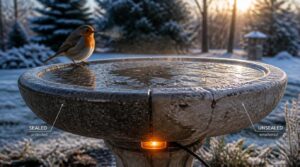
Concrete birdbaths freeze and crack without protection. A penetrating sealer blocks water absorption, cutting moisture penetration by up to 95%, while densifiers harden surfaces against infiltration.
- Hairline cracks widening into fractures
- Water pooling instead of draining
- Chipped edges from freeze-thaw cycles
- Stained basins losing their appeal
- Structural weakening near the rim
Reseal every 2-3 years, empty basins in winter, and pair with a reliable bird bath heater for year-round accessibility.
Frequently Asked Questions (FAQs)
Do birds need water in winter?
Snow may blanket the yard, but thirst never takes a winter break. Birds need daily water access for hydration and survival, since melting snow costs precious metabolic energy—making open, unfrozen water sources essential winter bird care during freezing temperatures.
How do you keep birds hydrated in cold weather?
Use a bird bath heater or de-icer to prevent ice formation, placed in a sheltered, sunlit spot. Add moving water for appeal, keep it shallow, and refresh daily—simple, safe hydration for cold climate wildlife care.
Do birds need to drink water every day?
Yes, daily and vitally so: fresh water access helps with hydration, digestion, and thermoregulation. Diet offers some moisture, but most species, especially granivores, still need direct drinking to avoid dehydration, regardless of season.
Can birds drink from frozen water?
Solid ice blocks liquid water access entirely, so winter birds can’t drink from it. They rely on ice edges or open patches instead, since melting snow internally raises hydration energy expenditure and dehydration risk during subzero conditions.
What temperature is too cold for birds?
Think of a chickadee as a tiny furnace: 32°F stresses most birds, but hardy species tolerate near-zero temperatures through rapid metabolic heat production, while juveniles and those lacking Arctic plumage face genuine hypothermia risk.
What is the 5 7 9 rule for bird feeders?
Picture your feeder setup like a safety triangle: 5 feet high, 7 feet from structures, and 9 feet from windows. This spacing curbs predator ambushes, reduces window strikes, and keeps access to fresh water nearby for thirsty, hydrated visitors.
Is cold water bad for birds?
Like a well-insulated coat shrugging off a chill, cold water itself isn’t the enemy—dehydration and thermal shock are. Liquid water near freezing maintains hydration and body temperature just fine, unlike ice, which offers birds nothing to drink.
Should I put water out for birds in the winter?
Yes, absolutely. Winter water can mean the difference between hydration and starvation for local species. Focus on preventing ice formation with a heated birdbath, placed near shelter but away from predator ambush spots, ensuring reliable water accessibility all season.
Do heated birdbaths attract unwanted pests or insects?
Not really. A heated bird bath stays safe when you pair warmth with movement and weekly cleaning, preventing stagnant water, algae, and bacteria growth that actually invite mosquitoes and other unwanted pests.
How much electricity does a birdbath heater use?
Most heated birdbaths draw 100 to 150 watts, thanks to thermostat cycling that activates only near freezing. Running half a winter day costs roughly 8 kWh—about $23 daily. Solar-powered options and insulated designs trim these costs further.
Conclusion
You don’t need fancy equipment to get this right. The real answer to how cold can water be before birds avoid it isn’t a single number, it’s liquid versus wet. Chickadees will sip from a near-frozen puddle without hesitation, yet won’t risk soaked feathers nearby.
Give your visitors fresh liquid water for drinking, and save heated baths for milder days. That balance, simple as it sounds, is what keeps wings dry and hearts beating through winter’s harshest mornings.
- https://blog.nature.org/2022/01/31/should-you-provide-birds-water-in-winter
- https://www.birdbathbubbler.com/how-to-stop-a-bird-bath-from-freezing
- https://www.birdsofwestcobb.com/post/how-to-stop-your-bird-bath-from-freezing-in-the-winter
- https://www.scienceofbirds.com/blog/how-birds-survive-in-winter
- https://www.ducks.org/hunting