
This site is supported by our readers. We may earn a commission, at no cost to you, if you purchase through links.

Your balcony rail measures eight inches wide, and every suet feeder you’ve eyed looks built for a backyard oak tree. That mismatch stops more small-space birders than any squirrel ever could.
Here’s the good news: woodpeckers, chickadees, and nuthatches don’t care about square footage. They care about a secure perch, a steady food source, and a clear flight path in. The right suet feeders for small spaces solve all three, often in a footprint smaller than a paperback book.
Whether you’re working with a narrow balcony rail or a single window ledge, the picks ahead cover feeders, materials, and placement tricks that turn cramped spots into genuine bird magnets.
Table Of Contents
- Key Takeaways
- Top 7 Suet Feeders for Small Spaces
- Small-Space Suet Feeder Buying Factors
- Best Feeder Types for Tight Areas
- Placement Tips for Balconies and Windows
- Squirrel and Pest Deterrent Features
- Seasonal Suet Choices for Small Spaces
- Cleaning and Safety Checklist
- Frequently Asked Questions (FAQs)
- What is the 5 7 9 rule for bird feeders?
- What kind of feeder do you put suet in?
- Do squirrels bother suet feeders?
- Do upside down suet feeders work?
- How often should suet feeders be refilled?
- Can suet feeders attract unwanted rodents at night?
- Do suet feeders work well in apartments?
- What suet flavors attract the widest variety of birds?
- Is suet feeding safe for birds year-round?
- Conclusion
Key Takeaways
- Small-space suet feeders succeed by offering a secure perch, steady food source, and clear flight path rather than requiring extra square footage.
- Compact designs like window suction-cup feeders, upside-down feeders, and tail-prop models fit tight balconies while still deterring squirrels and starlings through weight-sensitive perches and small grid spacing.
- Proper placement matters as much as the feeder itself, with recommended heights of 5-6 feet, shrub cover within 5-8 meters, and window mounting distances of 6-20 meters for best results.
- Matching suet type to season, such as high-fat blends in winter and no-melt formulas above 75°F, along with regular cleaning and rust checks, keeps feeding safe and effective year-round.
Top 7 Suet Feeders for Small Spaces
Living in an apartment or small yard doesn’t mean you have to skip suet feeding altogether. You just need feeders built for tight spaces, easy mounting, and low mess. Here are seven options worth considering for your balcony or window setup.
This guide to suet feeders for apartment balconies breaks down which designs hold up best against wind and squirrels in cramped outdoor spaces.
1. Kingsyard Double Metal Suet Feeder
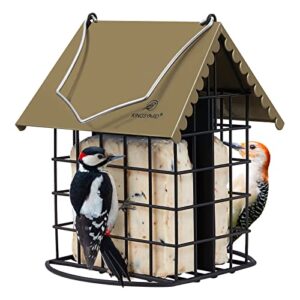
Two suet cakes, one sturdy home. This all-metal, powder-coated feeder resists rust and shrugs off wind and rain thanks to its weatherproof roof design.
Dual perches let woodpeckers, chickadees, and nuthatches feed side by side without jostling. At roughly 11-12 inches tall, it’s compact enough for patios or window mounts.
The removable roof makes refilling painless, and the heavy metal build makes squirrels work hard for a meal—though it’s not officially squirrel-proof.
| Best For | Backyard bird enthusiasts who want to attract clinging species like woodpeckers, chickadees, titmice, and nuthatches with a durable, weatherproof feeder. |
|---|---|
| Material | Metal |
| Weather Resistance | Weatherproof |
| Suet Capacity | 2 cakes |
| Hanging Method | Hook |
| Target Birds | Clinging birds |
| Cleaning Method | Manual |
| Additional Features |
|
- All-metal, powder-coated construction resists rust and withstands outdoor elements year-round
- Removable roof design makes refilling and cleaning quick and hassle-free
- Dual perches let multiple birds feed at once without crowding
- Not explicitly labeled or guaranteed as squirrel-proof
- Requires regular manual cleaning and refilling
- Mainly suited for clinging bird species, limiting appeal for other backyard birds
2. Hanging metal suet bird feeder
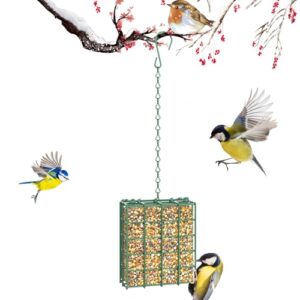
If your yard sees rowdy weather, a classic wire-cage design earns its keep. The wire or lattice cage holds the suet cake snug, so nothing falls apart or gets wasted on windy days.
A roof cap keeps rain off, and drainage gaps stop water from pooling inside. Most hang easily from a standard garden hook, with loaded weight staying under 5 pounds—light enough to sway without stressing your mounting point, yet sturdy enough for daily woodpecker visits.
| Best For | Yard and garden owners looking to attract woodpeckers, nuthatches, and other trunk-hugging birds with a durable, weather-ready feeder mounted near tree trunks. |
|---|---|
| Material | Metal |
| Weather Resistance | Weather-resistant |
| Suet Capacity | 1 cake |
| Hanging Method | Chain |
| Target Birds | Trunk-hugging birds |
| Cleaning Method | Manual |
| Additional Features |
|
- Powder-coated heavy steel construction resists rust and holds up well outdoors
- Basket-style cage lets birds perch and feed from all sides
- Adjustable hanging chain makes mounting near trees simple and versatile
- Suet cake is not included, so you’ll need to purchase it separately
- Requires a tree or sturdy mounting point with a hook, which not every yard has
- Holds only one suet cake at a time, limiting capacity for larger bird crowds
3. Metal Hanging Suet Bird Feeder
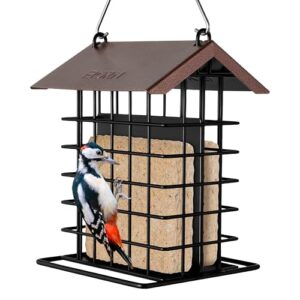
Steel and aluminum builds bring a different kind of toughness to the table, resisting warp and rust even after seasons of rain and wind.
Look for a removable roof to keep suet dry, plus a hook-and-chain setup that gives you flexibility in hanging spots—porch beam, shepherd’s hook, wherever works. Grid spacing matters too: small enough to block bully birds and squirrels, open enough for chickadees and woodpeckers to feed easily.
Powder-coated finishes add rust resistance, so the feeder stays sharp season after season.
| Best For | Backyard bird enthusiasts who want to protect suet from squirrels while keeping feed dry and mess to a minimum, even in rough weather. |
|---|---|
| Material | Metal |
| Weather Resistance | Weatherproof |
| Suet Capacity | Not specified |
| Hanging Method | Fixed hook |
| Target Birds | Various birds |
| Cleaning Method | Manual |
| Additional Features |
|
- Squirrel-resistant hook and reinforced design keep feed secure and cut down on wasted suet
- Weatherproof metal roof and six drainage holes protect against rain, snow, and mold buildup
- Bottom tray catches crumbs and offers birds a stable perch instead of a swinging string
- All-metal build adds extra weight compared to wooden feeders
- Needs regular cleaning to keep drainage holes and surfaces working well
- Fixed hook design offers less flexibility in hanging placement than a hook-and-chain setup
4. Single Hanging Suet Bird Feeder
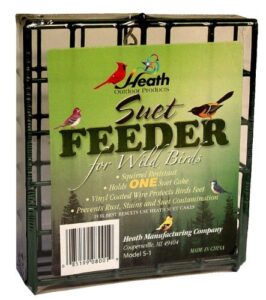
Sometimes the simplest option wins. A single suet feeder hangs from one sturdy point, keeping things light and stable, usually under 1.5 pounds when loaded.
That single-point design makes it perfect for tight balconies or a lone shepherd’s hook near the window. Galvanized steel or powder-coated frames shrug off rust, while a small perch lip guides chickadees and nuthatches right to the entry slot.
Look for adjustable chain length, so you can fine-tune hanging height without buying extra hardware.
| Best For | Backyard bird enthusiasts who want a simple, single-point suet feeder for tight spaces like balconies or a shepherd’s hook near a window. |
|---|---|
| Material | Vinyl-coated metal |
| Weather Resistance | Weather-resistant |
| Suet Capacity | 1 cake |
| Hanging Method | Chain |
| Target Birds | Multiple birds |
| Cleaning Method | Manual |
| Additional Features |
|
- Vinyl-coated metal construction resists rust and weather damage for long-term outdoor use
- Open front panel makes refilling quick and easy
- Multi-surface design lets birds feed from all sides at once
- Holds only one suet cake at a time, requiring more frequent refills
- Needs a separate hanging point or branch, as none is included
- Limited to suet or small seed cakes, so it’s not suited for loose seed or larger food blocks
5. iBorn Double Metal Suet Feeder
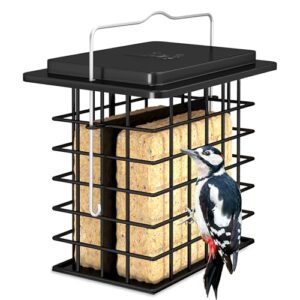
Two suet cakes, one feeder—that’s the appeal of the iBorn Double Metal Suet Feeder. Its double grid design holds twin cakes side by side, so woodpeckers get extended feeding time between refills.
Taller grids give bigger birds room to grip comfortably, while the all-metal build resists bending under their weight. A flip-top lid means one-handed refills, no removing the whole unit. The bottom board’s drainage holes catch crumbs and shed rainwater, keeping seed dry and your balcony tidier.
If you’re unsure where to position it, this guide on choosing the best spot to hang bird houses can help you find a height and location birds will actually use.
| Best For | Backyard bird enthusiasts who want to attract woodpeckers and other medium-to-large birds while keeping feeding sessions long and mess to a minimum. |
|---|---|
| Material | Metal |
| Weather Resistance | Weatherproof |
| Suet Capacity | Not specified |
| Hanging Method | Fixed hanger |
| Target Birds | Medium-large birds |
| Cleaning Method | Manual |
| Additional Features |
|
- Double grid design holds two suet cakes at once, meaning fewer refills and more feeding time for birds
- Flip-top lid allows quick, one-handed refilling without taking the whole feeder down
- Drainage holes in the bottom board keep seed dry and catch falling crumbs, cutting down on garden mess
- Suet cakes are sold separately and must be purchased on their own
- All-metal construction needs regular cleaning to stay sanitary for birds
- Fixed stainless steel hanger offers no adjustability for different mounting setups
6. C&S Wild Bird Suet Basket
 View On Amazon
Made in the USA since 1986, this vinyl-coated wire basket keeps things simple. A side-opening design lets you slide in a standard 5-inch suet cake without wrestling the whole feeder off its hook.
Multiple perches invite more than one bird at a time, and the coating protects tiny feet from sharp wire edges. Good airflow keeps suet from overheating too. It’s a no-frills option that’s easy to hang on any balcony hook or garden branch.
| Best For | This suet basket is best for backyard bird enthusiasts who want a simple, affordable way to offer suet cakes, fruit, or bread to wild birds year-round. |
|---|---|
| Material | Vinyl-coated wire |
| Weather Resistance | Weather-resistant |
| Suet Capacity | 1 cake |
| Hanging Method | Chain hook |
| Target Birds | Small birds |
| Cleaning Method | Manual |
| Additional Features |
|
- Vinyl-coated wire construction protects birds’ feet from extreme temperatures and sharp edges
- Lightweight and compact design (just 2.4 ounces) makes it easy to hang almost anywhere
- Integrated chain hanger and hook simplify setup
- Only holds one suet cake at a time, limiting capacity for larger flocks
- Requires separate hanging hardware not included with the basket
- Basic design lacks extra features like multiple feeding stations
7. Kingsyard recycled plastic suet feeder
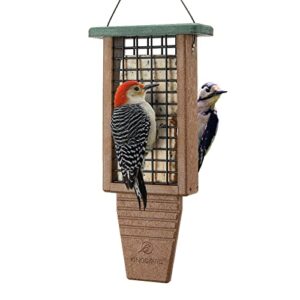
Rounding out our list is a feeder built for wet climates. Its recycled plastic body resists water absorption, so it won’t warp or soften after weeks of rain.
The tail prop lets woodpeckers brace themselves while feeding, and stainless mesh on both sides means two birds can dine at once. Standing 16 inches tall and 8 inches wide, it fits neatly in tight garden corners while holding up beautifully through winter and summer alike.
| Best For | This feeder is best for birdwatchers who want to attract clinging species like woodpeckers, chickadees, titmice, and nuthatches to their garden, yard, or farm. |
|---|---|
| Material | Recycled plastic/mesh |
| Weather Resistance | Weather-resistant |
| Suet Capacity | 2 cakes |
| Hanging Method | Hanger |
| Target Birds | Clinging birds |
| Cleaning Method | Manual |
| Additional Features |
|
- Weather-resistant recycled plastic construction won’t absorb water, warp, or soften even after weeks of rain
- Dual-sided stainless mesh and a tail prop design let multiple birds feed comfortably at once
- Removable top and sliding mesh panels make refilling and cleaning simple
- Designed specifically for clinging birds, so it won’t accommodate perching species
- Mesh and plastic components require manual cleaning to keep things hygienic
- Holds only 2 suet cakes at a time, which may mean more frequent refills for larger flocks
Small-Space Suet Feeder Buying Factors
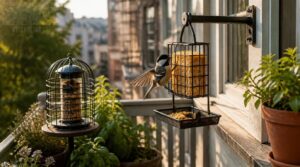
Picking the right suet feeder for a balcony or window ledge takes more than grabbing the first one you see. A few key factors decide whether it fits your space, holds up outdoors, and stays easy to fill and clean. Here’s what to look for before you buy.
Compact Mounting Footprint
Every millimeter counts on a tight balcony, so footprint is your first checkpoint before buying.
- Width: 15–30mm
- Length: 60–120mm
- Depth: 28–60mm
- Height above mount: under 100mm
Look for recessed housing, mounting boss symmetry, and rail attachment compatibility with 1-inch rails. Anti-slip feet add stability without bulk. This minimal protrusion design suits any hanging suet feeder, single suet cage, or double suet feeder alike.
Single Versus Double Capacity
Bigger isn’t always better on a balcony. A Single Suet Cake feeder needs refilling every 2–3 days, while a Double Suet Feeder stretches that to 4–7, but adds mounting weight and hardware stress.
| Factor | Single | Double |
|---|---|---|
| Refill frequency | Every 2–3 days | Every 4–7 days |
| Full weight | Lighter | 2x+ heavier |
| Bird crowding | Less | More |
| Spoilage risk | Lower | Higher if unrefilled |
Durable Weatherproof Materials
Your feeder faces rain, sun, and freezing nights, so material choice makes or breaks its lifespan. Look for corrosion-resistant metals like powder-coated steel or aluminum, plus UV-stabilized plastics that resist cracking. Cedar and treated timber add natural rot resistance too.
Selecting weather-resistant materials ensures your bird feeding station can withstand local temperature fluctuations and moisture.
A weatherproof roof and rust-resistant hardware keep suet bird feeders sturdy for years, not just one soggy season—real durability, not just a pretty finish.
Easy Refill Access
Refilling shouldn’t require a toolbox. Look for magnetic door convenience or press-tab releases that pop open in seconds—no screwdrivers, no wrestling with your mount.
Transparent viewing windows let you check suet levels at a glance, so you’re never caught off guard on a cold morning.
Tool-free designs with spill-resistant lips make one-handed operation possible, even when your other hand’s holding a coffee mug on the balcony.
Low-mess Cage Designs
A good suet cage keeps mess where it belongs—inside the cage, not scattered on your balcony floor. Look for perforated panel airflow, rounded corners for easy sweeping, and optimized mesh size that contains crumbs.
- Removable tray utility catches drips
- Slidable panel access speeds cleanup
- Rounded corners stop seed buildup
These squirrelproof bird feeder features turn messy suet cakes into tidy, mostly hands-off bird feeding supplies.
Best Feeder Types for Tight Areas
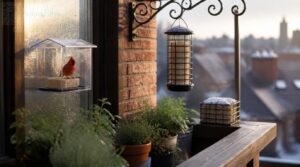
Not every suet feeder fits a balcony rail or a window ledge, so shape matters as much as style. Some designs hug the glass, some hang low and tuck out of the way, and others just make smarter use of the little space you’ve got.
Here are five feeder types worth knowing before you pick one.
Window Suction-cup Feeders
Nothing beats watching a chickadee peck seed just inches from your coffee cup. Suction seal integrity depends on clean glass—wipe away dust or residue first.
| Feature | Benefit | Tip |
|---|---|---|
| 4 suction cups | Wind resistance | Check seals monthly |
| Clear acrylic | Close viewing distance | Clean weekly |
| Weight limits | Prevents detachment | Don’t overfill |
Perfect for apartment dwellers craving backyard bird watching without a yard.
Hanging Suet Cages
Craving something sturdier than suction cups? A hanging suet cage answers with powder-coated steel and 1/2 to 1-inch mesh, letting chickadees cling while blocking bulkier pests.
Reinforced corners and quick-release hooks make it genuinely squirrelproof and easy to refill.
Weatherproof coatings resist rust for seasons, and the lightweight frame hangs from nearly any bracket—no yard required.
Upside-down Suet Feeders
Ever watch a nuthatch feed head-down like it’s defying gravity? That’s the magic of an upsidedown suet feeder—birds cling to bottom mesh while a weatherproof roof shields cakes from rain.
Starlings hate the inverted grip, so they skip it entirely. Choose an upside down double suet feeder for twice the capacity, with durable mesh that’s naturally squirrelproof and built to last seasons.
Tail-prop Compact Feeders
Downy and hairy woodpeckers need something sturdy to brace against while they work a suet cake, and that’s exactly what a tail prop delivers. This small paddle extension gives woodpecker stability on vertical surfaces, mimicking natural tree bark grip.
With a footprint under 12 inches tall, these compact hanging suet feeders fit tight balconies without sacrificing durability or squirrel-resistant mesh construction.
Combination Seed-suet Feeders
Why choose between seed and suet when one feeder does both? Dual-chamber efficiency packs a 4-pound seed hopper alongside two suet cages, giving you true integrated nutritional access for backyard birding.
This weatherproof dual-design allows for multi-species feeding with side ports and dual perches, all while keeping a compact feeding footprint perfect for narrow balconies and window mounts.
Placement Tips for Balconies and Windows
Having the right feeder is only half the job, where you put it matters just as much. A few smart choices about height, distance, and spacing can mean the difference between a feeder that gets ignored and one that draws birds daily. Here’s what to keep in mind when picking the perfect spot on your balcony or window.
Balcony Rail Positioning
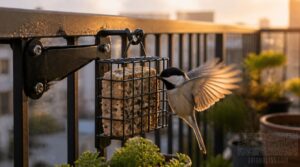
Rail height matters more than you’d think: most codes call for 36 inches minimum, and hanging a suet feeder there keeps it clear of clumsy wings and grabby paws.
- Peace of mind for your feathered visitors
- No more feeder swinging into your legs
- Confidence your setup meets code
- Freedom to enjoy birding without worry
Check anchor stability and baluster gaps under 4 inches before mounting anything permanent.
Window Viewing Distance
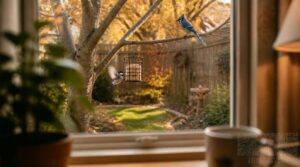
How far away should the action be? Research on window views points to an ideal view distance around 6 to 20 meters for satisfying backyard birding.
Mount your hanging suet feeder roughly that far from the glass, and you’ll get natural scenery benefits, better visual depth cues, and higher satisfaction than birds crowding right against the pane.
Nearby Shrub Cover
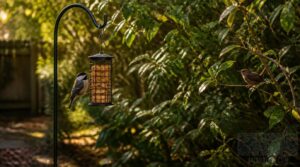
Birds don’t just want food, they want an escape route. Keeping your suet feeder within 5-8 meters of dense shrubs gives small songbirds familiar shelter cues and cuts predation risk dramatically.
Shrub edges also buffer wind, creating a warmer microclimate, while seasonal foliage offers natural camouflage. Chickadees and wrens especially favor this cover-feeder combo for safer, longer backyard birding visits.
Safe Feeder Height

Getting the height right matters as much as the shrub cover you just set up.
Mount your suet feeder 5 to 6 feet above ground—low enough for easy refilling, high enough to block cats and raccoons. Skip anything under 4 feet or over 7; you’ll lose either safety or songbird visits.
Use adjustable hangers on tall windows to lock in that sweet spot for stable, predator-resistant feeding.
Seed Feeder Spacing
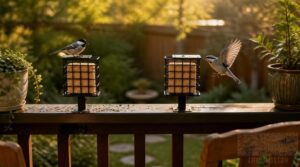
Now that height’s locked in, think about how far apart your feeders sit. Keep seed feeders 10 to 15 feet apart to cut disease transfer and stop dominant species from hogging every spot.
Tight balconies can trim that to 12 inches, easing seed spillage cleanup while still creating separate foraging zones.
Good spacing curbs species competition and makes for lively, low-stress backyard birdwatching.
Squirrel and Pest Deterrent Features

Even in a small space, squirrels and bully birds can find their way to your suet. The good news is a few smart design features keep your feeder for the birds you actually want to feed. Here’s what to look for before you buy.
Small Grid Spacing
Three-quarter-inch grid openings let chickadees and woodpeckers cling and peck while blocking squirrels and grackles from grabbing whole suet cakes. This small grid spacing on mesh feeders and suet cages captures fine detail around the cake’s edges, so smaller birds still get access without wasting capacity on pests.
It’s a simple, sturdy feature worth checking in any bird feeder buying guide.
Weight-sensitive Access
Perches that sag under a squirrel’s weight but hold steady for chickadees add another layer to squirrelproof bird feeders. Think of it like a bouncer checking ID: only lighter, legit visitors get through.
Weight-sensitive perches act like a bouncer, sagging under squirrels but holding steady for chickadees
This weight-sensitive access mirrors smart security systems using weight thresholds and distributed trust instead of one gatekeeper. Combined with small grid spacing, it’s a favorite pairing in any solid Bird Feeder Buying Guide.
Spicy Suet Blends
Squirrels hate heat, and that’s the trick behind capsaicin-infused suet cakes. Birds can’t taste it, so chickadees and woodpeckers keep visiting your suet bird feeders undisturbed.
The spicy aroma actually helps birds locate food faster, while mammalian repellent effects send squirrels packing. Fat content stays balanced, so this high-energy bird food still fuels backyard bird watching without sacrificing nutrition.
Squirrel Baffle Compatibility
Wondering if your suet feeder can handle a baffle? Check pole diameter first, since most squirrel-proof suet feeders fit 1/2 to 1 1/4 inch poles.
- Confirm pole diameter matches
- Choose wrap-around or sleeve mounting
- Decide hanging versus pole style
- Use universal adapters for odd sizes
- Match attachment hardware to your feeder
This pest control step keeps squirrel deterrent feeders working without constant refills.
Starling-resistant Designs
Ever notice starlings muscling out your favorite chickadees? Starling-resistant designs fix that with entrance holes sized 1 to 1.25 inches, plus weight-sensitive perches that snap shut under heavier birds.
Caged suet feeders with mesh spacing under 0.5 inches block big beaks entirely. Look for anti-roosting tops and spicy deterrent blends too. Between these features, your suet feeder stays squirrel proof and starling-free, feeding only the small songbirds you actually want visiting.
Seasonal Suet Choices for Small Spaces

Birds need different fuel as the seasons change, and your suet should change right along with them. What works to keep a chickadee warm in January won’t do much good for a nesting pair in April. Here’s how to match your suet choices to the calendar, month by month.
High-fat Winter Cakes
High-fat winter cakes are basically fuel for tiny furnaces, keeping chickadees and nuthatches warm through brutal cold snaps. Look for ideal fat ratios around 40-60% fat content, with cinnamon or nutmeg spice pairings adding warmth.
Suet cakes packed this way deliver high-energy bird food when birds need it most, supporting winter bird feeding without constant refills in your compact feeder.
Mealworm Spring Suet
Nothing says "welcome home" to nesting bluebirds like real mealworms folded into suet. This spring formula packs protein for fledglings and insect-analog fats right when your insectivores need it.
| Nutrient | Spring Suet Range |
|---|---|
| Crude Fat | 20–25% |
| Crude Protein | 11–20% |
It bridges winter reserves and spring foraging beautifully—perfect high-energy bird food for your suet bird feeders.
No-melt Summer Formulas
Once temperatures climb past 75°F, regular suet turns into a greasy puddle nobody wants.
No-melt formulas solve this with heat-resistant wax matrices—carnauba and candelilla blends that hold shape at 40°C. Stabilizing fat blends prevent oil separation while keeping that firm, crumbly texture birds can actually peck. You still get high-calorie bird food without the mess dripping through your suet bird feeders.
Fruit Blends for Songbirds
Swap the wax-based bricks for something sweeter, and you’ll pull in a whole new crowd. Dried berries and citrus peels delight orioles and robins alike, offering quick sugar energy for foraging.
- Cardinals pecking at bright fruit chunks
- Waxwings drawn in by cranberry scent
- Finches fueling up on raisins
- Bluebirds savoring plum bits
Keep blends sealed to preserve freshness, and rotate flavors monthly.
Year-round Feeding Balance
Once fruit blends fade, keep the momentum going by rotating suet cakes to match each season’s demands. Your feeder’s real value shows in consistent year-round feeding.
| Season | Suet Type | Purpose |
|---|---|---|
| Winter | High-fat | Warmth |
| Spring | Mealworm | Molting |
| Summer | No-melt | Stability |
| Fall | Balanced | Getting ready for change |
This steady rhythm keeps backyard bird watching rewarding, whatever the thermometer says.
Cleaning and Safety Checklist
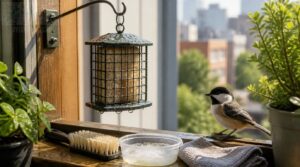
A clean feeder isn’t just tidier, it’s safer for every bird that visits your balcony or window ledge. Small spaces mean close quarters, so mold and rust can sneak up faster than you’d think. Here’s your simple checklist for keeping things fresh and secure all year long.
Weekly Warm-weather Cleaning
Rarely does mold get a chance when you stay ahead of it. In hot weeks, give your suet feeder a quick weekly once-over: brush off dust, check for buildup, and glance at ventilation around the cage.
- Dust on metal surfaces
- Sticky residue on ports
- Damp corners
- Trapped humidity
- Loose mounting screws
Good airflow speeds drying and keeps bird feeder maintenance simple, not stressful.
Warm Soapy Water Wash
Once that once-over is done, give the feeder a proper wash. Mix a teaspoon of dish soap per quart of warm water, then scrub ports and mesh in small circles to lift stuck-on grease, thanks to reduced surface tension.
Rinse thoroughly so no soap residue lingers, since leftover suds attract fresh dirt. Detachable parts make this easy, keeping bird feeder maintenance simple and thorough.
Bleach Solution Sanitizing
Sanitizing knocks out the germs soap alone can’t touch, which matters for real avian disease prevention at your feeder.
- Mixing ratio: 5 tablespoons bleach per gallon water
- Contact time: let surfaces stay wet 1 minute
- Rinse well to clear residual chlorine
Lower pH water boosts efficacy, so skip alkaline tap water when possible. Always ventilate and wear gloves.
Rust and Damage Checks
Rust and damage checks matter most where moisture collects: corners, welds, and seams. Grab a flashlight and inspect for pitting, flaking coating, or bare metal exposed underneath. Wiggle screws and hangers, since loose fasteners often mean hidden corrosion. Watch for bent frames or cracked welds too. Catching these signs early keeps your rust-resistant feeder safe for both birds and refills.
Mold Prevention Habits
Mold sneaks in wherever moisture lingers, so check that your feeder has drainage holes letting rain escape instead of pooling in the suet tray.
Wipe surfaces dry after storms, and pick weather-resistant materials like powder-coated metal for easier upkeep.
A quick hygrometer check nearby helps you gauge humidity—anything consistently damp invites trouble for both feeder and birds.
Frequently Asked Questions (FAQs)
What is the 5 7 9 rule for bird feeders?
Simple to remember, surprisingly effective in practice: the 5 7 9 rule spaces feeders 5 feet high, 7 feet from structures, and 9 feet from overhead branches, cutting squirrel jump distances and predator access while minimizing window collisions.
What kind of feeder do you put suet in?
You’ll want a suet cage or basket—galvanized metal mesh holding one or two suet cakes securely. Mesh material resists moisture, deters large birds, and works whether you choose a hanging suet feeder, window mount, or double-capacity cage design for busy feeding spots.
Do squirrels bother suet feeders?
Yes, squirrels scout feeders constantly and go straight for nut-enriched suet. Lightweight cages are easy targets for gnawing damage, so choose squirrel proof, weight-sensitive designs that shut down access fast for reliable pest control.
Do upside down suet feeders work?
They really do. Using gravity-based feeding, clinging birds like woodpeckers grip and peck from below while starlings avoid the awkward angle. This bottom-access efficiency naturally sorts species visitation, keeping suet cakes for the birds who’ve mastered the trick.
How often should suet feeders be refilled?
Like checking a telegraph line daily, keep tabs on your feeder often. Refill every 1-3 days in winter, 3-5 in spring, and every 2-4 days in summer heat to prevent spoiled suet cakes.
Can suet feeders attract unwanted rodents at night?
Suet’s rich in fat, so cooler nights spark temperature-driven foraging, drawing mice or rats toward exposed cake. Spilled crumbs beneath the feeder make matters worse.
Choose squirrel and pest-proofing cages with tight grid spacing to block climbing rodents entirely.
Do suet feeders work well in apartments?
Funny how a tiny balcony can out-attract a sprawling yard, but vertical foraging habits make it possible. Compact suet cages fit apartment rails, cutting clutter while drawing woodpeckers and chickadees close for genuine apartment viewing proximity and everyday backyard bird watching, right outside your window.
What suet flavors attract the widest variety of birds?
Blends mixing peanut protein, fruit bits, and mealworms pull in woodpeckers, chickadees, and thrushes alike. Safflower keeps grackles away while inviting cardinals, and nutty additions like roasted peanuts satisfy jays and titmice for true species diversity.
Is suet feeding safe for birds year-round?
Year-round, like the seasons themselves: yes, with smart adjustments. Use no-melt formulas above 75°F, keep feeders shaded, and balance high-calorie suet with fruits or insects so backyard birds get proper avian nutrition without excess fat.
Conclusion
Small space, small feeder, surprisingly big rewards. That eight-inch rail isn’t a limitation anymore; it’s just waiting for the right setup.
The best suet feeders for small spaces prove that chickadees and woodpeckers don’t need sprawling yards, just a secure perch and fresh suet. Pick a durable, easy-to-clean cage, mount it smart, and keep the cakes seasonal. Do that, and your balcony or window ledge becomes a genuine bird haven.
Watch closely: the visitors are already on their way.