This site is supported by our readers. We may earn a commission, at no cost to you, if you purchase through links.
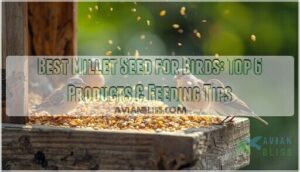
Most backyard birders don’t realize that the small, golden seeds they casually toss into feeders sustain nearly 40% of ground-feeding bird species across North America. Millet seed for birds isn’t just cheap filler—it’s a nutritional powerhouse that delivers 11% protein, 73% carbohydrates, and essential B vitamins that fuel migration, breeding, and daily survival.
Yet not all millet performs equally. White proso millet attracts doves, juncos, and sparrows like a magnet, while red millet often sits untouched until desperation sets in.
Understanding which type to buy, how to store it properly, and where to place it transforms your feeding station from a generic pit stop into a species-specific haven that birds return to season after season.
Table Of Contents
Key Takeaways
- White proso millet outperforms red and golden varieties by a significant margin—most backyard birds eat white seeds first and leave red millet untouched, making your seed choice directly impact which species visit and how much food gets wasted.
- Proper storage in airtight containers at cool temperatures (below 15°C) with 8–12% moisture content prevents mold growth and pest infestations that can turn your millet supply into a health hazard within weeks.
- Ground-feeding species like doves, juncos, and sparrows thrive when you scatter millet at low heights near protective cover, while tube feeders positioned higher attract perching birds like finches—matching feeder placement to bird behavior maximizes consumption and reduces waste.
- Millet delivers 11–12% protein, essential B vitamins, and roughly 2,675 kcal/kg with only 4% fat content, making it a lean energy source that supports migration, breeding, and daily survival without the obesity risks associated with high-fat seeds like sunflower.
Best Millet Seed Products for Birds
You want to feed your birds the best millet available, but with so many products on the market, it’s tough to know which ones are worth your money. The right millet seed can make all the difference in attracting wild birds or keeping your pet healthy and happy.
Here are six top-rated millet products that consistently earn high marks for quality, freshness, and bird appeal.
1. Natural White Millet Bird Seed
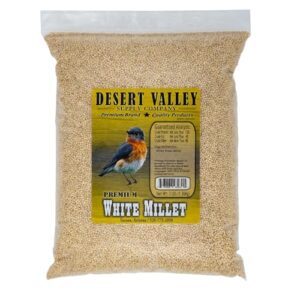
When you’re choosing white proso millet seed for your backyard flock, you want clean, nutrient-dense grain that won’t disappoint. Natural white millet bird seed delivers around 11% protein and 73% carbohydrate, fueling everyone from cardinals to finches with steady energy.
Look for triple-cleaned options hand-packed in small batches—seed quality matters because fresher millet means better bird nutrition and fewer wasted kernels.
Store your millet in airtight containers to lock in freshness, and you’ll see sparrows, juncos, and doves return again and again.
Best For: Backyard birders who want clean, USA-grown millet that attracts ground-feeding species like sparrows, cardinals, and doves without fillers or GMOs.
- Triple-cleaned and hand-packed in small batches to reduce debris and maximize freshness
- Nutrient-dense with around 11% protein and key vitamins that support bird health across all life stages
- Sourced from local U.S. farms and available in resealable bags from 3 to 10 pounds
- Some customers report the bags can tear or arrive damaged due to flimsy packaging
- Priced higher than budget millet options, which may not suit cost-conscious feeders
- May attract less desirable birds like cowbirds and blackbirds if used heavily in open feeders
2. High Quality White Millet Seed
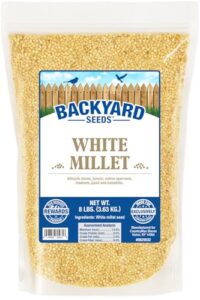
High-quality white proso millet seed stands apart through careful seed storage and rigorous cleaning. Premium batches remove dust and foreign material before packaging, so you’re feeding birds clean, nutrient-rich grain instead of wasted chaff.
You’ll recognize top-tier millet seed quality by its consistent kernel size and absence of debris, factors that directly impact bird nutrition and feeder hygiene.
Birdseed formulation experts recommend sourcing from regions with strong millet harvesting standards, where proper drying and handling preserve the 12% crude protein and B vitamins your backyard visitors need most.
Best For: Backyard birders who want to attract ground-feeding species like doves, sparrows, and juncos with a clean, nutrient-rich seed that’s grown in the USA.
- Attracts a wide variety of birds including finches, cardinals, and buntings with its high palatability compared to other millet varieties
- Provides 12% crude protein and essential B vitamins to support bird health during active periods and cold weather
- Versatile feeding options—works well in ground feeders, platform feeders, or scattered in open spaces
- Packaging problems reported by some customers, including broken bags that spill seeds and oversized boxes without adequate padding
- Quality consistency varies, with mixed reports on seed cleanliness and freshness across different batches
- Delivery delays can affect customer satisfaction and seed condition upon arrival
3. White Proso Millet Bird Seed
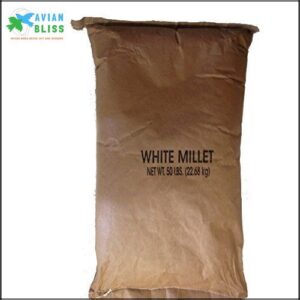
White Proso Millet bird seed earns its reputation as one of the most reliable wild bird feed options. Its 11–12% crude protein and ample B vitamin content deliver millet nutrition that aids everything from nervous system function to energy metabolism in sparrows, finches, and doves.
You’ll appreciate the bird attraction power of this small, creamy kernel—it’s a favorite among ground feeders and perching songbirds alike.
When you’re making bird seed selection decisions, white proso millet offers unbeatable millet benefits at a reasonable price.
Best For: Backyard birders who want an affordable, versatile seed that attracts ground-feeding species like doves, juncos, and sparrows while also appealing to finches and other small songbirds.
- Attracts a wide variety of birds including sparrows, finches, doves, and buntings, making it one of the most popular ingredients in wild bird mixes.
- Offers solid nutrition with 11–12% protein, B vitamins, and essential minerals at an economical price point compared to premium seeds.
- Works well on its own or blended with other seeds, giving you flexibility to create custom formulas for specific birds or feeding setups.
- Can attract unwanted pests like rats if not stored properly or if spilled seed isn’t cleaned up regularly.
- Prone to mold and spoilage when exposed to heat and humidity, requiring careful storage in cool, dry conditions.
- The heavy 50-pound bag can be difficult to handle and may be messy to dispense, with leftover seed potentially sprouting after rain.
4. Natural Millet Bird Treats
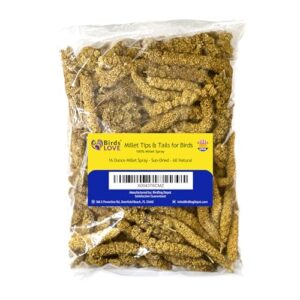
Spray millet treats break free from standard bird seed blends and tap into your bird’s natural foraging instincts. These sun-dried, single-ingredient sprays—often grown in the USA or France—deliver millet nutrition in a fun, interactive form that keeps parakeets, canaries, and cockatiels busy and mentally stimulated.
You’ll find them labeled as preservative-free and suitable for training, weaning, or appetite kick-starts. With about 7.5% protein and 2% fat, spray millet offers millet benefits without the heavy oil load of some seeds, making it a smart bird treat choice.
Best For: Bird owners looking for a natural, low-mess treat that keeps smaller birds like parakeets, finches, and canaries entertained while encouraging healthy foraging behavior.
- Sun-dried and preservative-free with a simple ingredient list—just 100% millet with no artificial colors or fillers.
- Encourages natural foraging and climbing, helping reduce boredom and support mental stimulation in caged birds.
- Works great as a training reward or weaning aid, and you can hang it or place it on the ground depending on your bird’s habits.
- Some buyers report inconsistent piece sizes—smaller sprays may not last long or satisfy larger birds or multiple-bird households.
- Quality and freshness can vary depending on how it’s been stored, and a few customers mention odd smells or durability issues.
- High energy content means you need to offer it in moderation to avoid weight gain, especially for indoor birds with limited flight time.
5. Natural White Proso Millet Seed
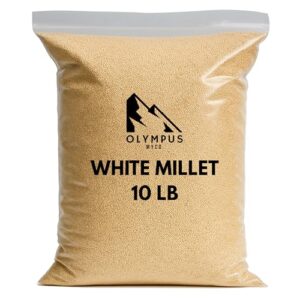
Bulk packaging unlocks serious value when you’re committed to feeding your backyard flock the right stuff. Natural White Proso Millet Seed in 10-pound bags—like the Olympus Myco option—delivers seed quality control straight from U.S. farms, attracting sparrows, doves, and finches with its 10–13% protein punch.
You’ll fine-tune your bird diet with millet nutrition benefits that support energy and growth, while millet harvesting practices guarantee consistent seed storage methods and wild bird nutrition.
Just scatter it on trays or broadcast near your bird feeder to invite ground-feeders into your space.
Best For: Backyard birders who want a budget-friendly, high-protein seed that attracts ground-feeding species like sparrows, doves, and finches while supporting a natural, additive-free diet.
- Delivers 10–13% protein and 70–77% carbohydrates, giving birds the energy and nutrients they need for daily activity and growth
- Attracts over 25 feeder species when paired with sunflower seed, from juncos and towhees to finches and buntings
- Sourced from trusted U.S. farms with no pesticides or additives, so you’re feeding clean seed straight from the field
- Some buyers report mixed results with bird interest, possibly due to regional preferences or feeder placement
- Packaging seal can be unreliable, making it tricky to keep seed fresh and avoid spills during storage
- May include occasional impurities like sunflower hulls or stems, requiring a quick check before scattering
6. Organic White Millet Bird Feed
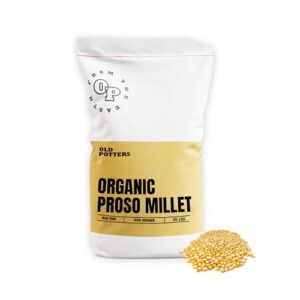
Certification matters when you’re serious about clean feeding. Organic White Millet Bird Feed—USDA-certified and non-GMO—brings eco-friendly peace of mind to your backyard setup, with white proso millet grown without synthetic pesticides.
You’ll support sustainable feeding while offering wild bird nutrition that finches, sparrows, and doves crave. Organic farming practices deliver roughly 12% protein and abundant B vitamins, though proper seed storage prevents mold in humid conditions.
Products like Old Potters’ 25-pound bags fuel ground-feeders and platform stations with bird nutrition rooted in seed certification you can trust.
Best For: Bird enthusiasts who want USDA-certified organic feed for finches, sparrows, and doves while supporting sustainable farming and avoiding synthetic pesticides.
- USDA-certified organic and non-GMO verification ensures clean, pesticide-free nutrition for backyard birds
- Attracts a wide variety of species including finches, sparrows, cardinals, doves, and buntings with nutrient-dense proso millet
- Bulk 25-pound packaging offers cost-effective feeding for larger setups and multiple feeding stations
- Some customers report issues with moths, dirt contamination, and inconsistent packaging quality
- Requires careful storage in cool, dry conditions to prevent mold growth due to limited fungicide protection
- Higher price point compared to conventional millet, with potential for elevated mycotoxin levels if storage conditions aren’t optimal
Key Benefits of Millet Seed for Birds
Millet isn’t just a filler ingredient—it’s a nutritional powerhouse that bolsters your birds’ health in ways you mightn’t expect.
From easy digestion to encouraging natural behaviors, this tiny seed punches above its weight.
Here’s why adding millet to your bird’s diet is one of the smartest moves you can make.
Adding millet to your bird’s diet is one of the smartest moves you can make
Nutritional Profile and Health Advantages
Millet nutrition powers your bird’s whole health story—protein for strong feathers, B vitamins driving avian metabolism, and magnesium supporting bone and nerve function. Each kernel delivers roughly 11% protein and 73% carbohydrate energy, making this nutritious bird food a lean, vitamin-rich choice.
You’re giving seed digestion that’s gentle, avian health that’s vibrant, and bird wellness that shows in every molt. The nutritional benefits of millet are further detailed in its raw nutrition facts.
Digestibility and Suitability for All Ages
You’ll find that millet’s soft hull breaks down easily in your bird’s avian gut, making it perfect for weanlings, molting adults, and seniors alike. White proso millet offers superb bird digestion across all life stages—no seed allergy concerns, just clean energy.
Its dietary balance aids bird seed choices that honor natural seed preferences while boosting avian health. Millet nutrition delivers gentle, age-friendly fuel without digestive strain. For peak health, consider consulting parrot diet experts to determine the best millet seed for your bird.
Supporting Natural Foraging Behaviors
When you scatter millet on the ground or hang spray millet in cages, you’re unlocking something bigger than a meal—you’re inviting birds to do what they’re wired for. Natural feeding through millet encourages true foraging techniques and behavioral stimulation:
- White proso millet mimics wild grass seeds birds hunt in leaf litter
- Spray millet promotes climbing, stretching, and seed selection
- Ground feeding stations support backyard bird feeding for sparrows and juncos
- Bird enrichment increases as your flock explores and manipulates seed heads
This simple bird seed transforms passive eating into active bird watching moments.
Low-Fat, High-Energy Treat for Birds
You want energy boosters that won’t pack on fat? White proso millet seed delivers roughly 2,675 kcal/kg with only 4% fat—making it the perfect bird nutrition choice for avian wellness without the obesity risk of sunflower seeds. Whether you’re supporting seed digestion during molting or encouraging feather health in recovering birds, this treat fuels bird-watching favorites from finches to sparrows with smart, controlled calories.
| Seed Type | Fat Content | Best Use |
|---|---|---|
| White Proso Millet Seed | ~4% | Daily treats, training rewards |
| Red Millet | ~4% | Ground feeding, mixed blends |
| Sunflower Seeds | 40–50% | Occasional only (high-fat risk) |
| Spray Millet | ~4% | Enrichment, weaning birds |
| Safflower | 35–45% | Limited use for specific species |
Types of Millet Seed and Bird Preferences
Not all millet is created equal, and the birds in your yard know the difference. White proso millet usually ranks at the top of most species’ preference lists, while red and golden varieties often get passed over.
Understanding which types attract specific birds—and whether they prefer to eat off the ground or from a perch—helps you create a feeding setup that actually gets used.
White Proso Millet Vs. Red and Golden Millet
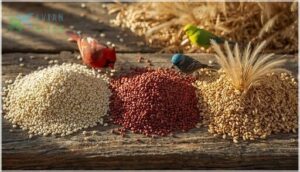
You’ll notice that white proso millet stands out in bird seed formulations—most backyard birds prefer it over red millet, eating white seeds first when both are offered. Red millet often gets left behind.
Golden (foxtail) millet, meanwhile, shines as a low-fat, easily digestible treat for small cage birds like finches and parakeets, supporting natural foraging behaviors.
Species Most Attracted to Millet
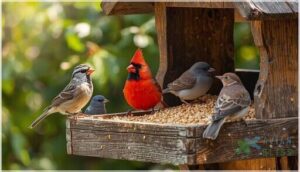
Understanding bird preferences helps you manage your bird feeder for better wild bird conservation results. White proso millet attracts native American sparrows—white-throated, fox, and chipping—plus dark-eyed juncos. Mourning doves, quail, and eastern towhees also show strong feeding habits favoring this seed.
Northern cardinals, indigo buntings, and blue grosbeaks regularly visit millet feeders, though you’ll notice brown-headed cowbirds, house sparrows, and starlings dominate when abundant.
Ground-Feeding Vs. Perching Birds
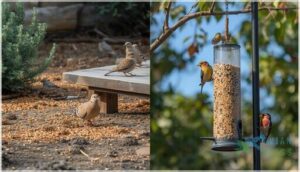
Where you place millet matters more than you might think. Ground feeders—doves, juncos, towhees, and quail—thrive when you scatter seed at ground level or on low platforms near cover. Perching birds like finches and grosbeaks access millet through tube feeders at higher heights. Adjusting feeder height and seed placement lets you manage which backyard birds visit, supporting smarter wild bird conservation and natural foraging behavior across species.
- Scatter millet directly on bare ground for doves and quail
- Use low platforms near shrubs to attract towhees and native sparrows
- Raise tube feeders higher to favor perching finches over cowbirds
- Match feeder height to target species for better bird feeder management
- Observe millet seed preferences to improve your feeding strategy
How to Use Millet Seed in Bird Feeding
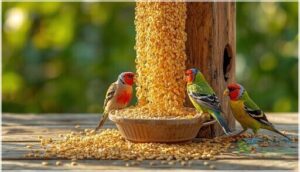
Getting millet into your birds’ beaks is easier than you might think, but the method you choose can make all the difference in how much they actually eat. You’ll want to think about feeder design, how to blend millet with other seeds, and how to keep everything fresh once you’ve opened the bag.
Let’s walk through the practical side of feeding millet so your birds get the most out of every kernel.
Choosing The Right Feeder or Feeding Method
You can transform your backyard into a bird-watching haven by matching your feeder to millet-loving visitors. Ground feeders work beautifully for sparrows and doves that naturally forage low, while elevated platforms keep seed dry and accessible for both ground-feeders and perching species.
Here’s how different feeding stations serve your feathered friends:
| Feeder Type | Best For | Key Advantage |
|---|---|---|
| Ground trays with drainage | Juncos, quails, doves | Mimics natural foraging behavior |
| Elevated platforms (3–5 ft) | Sparrows, finches, cardinals | Reduces moisture and predator risk |
| Hopper feeders with baffles | Mixed backyard birds | Controls flow, deters squirrels |
Position feeding stations about 10 feet from protective shrubs—close enough for quick escapes but open enough so birds can spot approaching cats. Drainage holes prevent millet from becoming a soggy, moldy mess that nobody wants.
When managing multiple feeding trays, space them out to reduce crowding and disease transmission. Clean seed dispensers every few days with a diluted bleach solution after scrubbing; it’s the difference between a safe buffet and a bacterial hotspot. Bird tables placed in partially sunny winter spots help prevent ice buildup, while summer shade slows spoilage in the heat.
Creating Custom Seed Mixes
Mixing your own blend puts you in control of what lands on your feeding station. Smart seed ratio optimization means you’re not stuck with filler nobody eats—just the nutritious seeds that bring in the birds you actually want to see.
Here’s a solid foundation for custom mix formulations targeting different groups:
- All-purpose backyard blend: Combine equal parts black oil sunflower, white proso millet, and sunflower chips for a three-ingredient recipe that feeds nearly everyone.
- Finch and small bird formula: Mix 2 parts sunflower, 1 part niger, 1 part white proso millet, and 1 part chips—millet hits about 25% of the total.
- Ground-feeder magnet: Go with 50% sunflower, 35% white proso millet, and 15% cracked corn to pull in sparrows, juncos, and doves.
- Budget-conscious DIY: Buy sunflower and white millet in bulk, skip the red millet and milo fillers, and watch waste drop below 10%.
Stick with white proso millet in your seed formulations—it’s the benchmark for bird species targeting. Red millet and milo often sit untouched, turning your feeder into a compost pile instead of a buffet. Millet blend strategies that emphasize white proso deliver better consumption rates and happier birds.
Seed mixing techniques don’t need to be complicated. Measure by volume using any container—coffee cans, plastic jugs, whatever’s handy. For a 10-pound batch of that ground-feeder magnet, you’d combine 5 pounds sunflower, 3.5 pounds white millet, and 1.5 pounds corn. Scale up or down based on how much bird food you go through each week.
Custom blends let you tweak for local preferences, too. Notice cardinals cleaning out the millet? Bump it to 40%. Gardening for birds becomes a feedback loop: observe, adjust, repeat. You’re not just scattering seed—you’re curating a menu that respects what your feathered visitors actually need.
Safe Storage and Handling Tips
Beyond the feeder itself, proper grain handling safety protects your birds from hidden dangers lurking in poorly stored seed. Seed moisture control is critical—keep millet between 8 and 12 percent to block mold.
Storage container tips include choosing airtight metal or heavy-duty plastic and raising them on racks. Pest prevention methods involve freezing seed for 48 to 72 hours before long-term storage. Feeder sanitization every two weeks prevents pathogen buildup that undermines even the best small bird care and seed formulations.
Here’s your quick-reference guide for gardening for birds with confidence:
| Storage Factor | Best Practice |
|---|---|
| Temperature | Below 15°C; refrigerate in hot seasons |
| Moisture | 8–12% grain moisture; use desiccant packets |
| Containers | Airtight metal or plastic; raise off floor |
| Rotation | Use within 2 weeks (warm) or 4 weeks (cool) |
| Inspection | Discard clumped, musty, or oily bird food immediately |
Millet Seed Trends and Availability in 2025
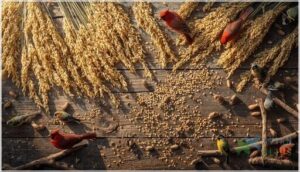
Millet supply has shifted quite a bit over the past year, and knowing where your seed comes from can help you make smarter buying decisions.
Production changes in North America and Europe are affecting both availability and what you’ll pay at checkout.
Here’s what’s happening with millet in 2025 and how it impacts your options for feeding backyard and pet birds.
Current Market Supply and Production Regions
Global production of millet reached approximately 30.9 million tonnes in 2022, with India supplying nearly 40% of the world’s harvest. Regional supply chains for millet seed—used in poultry feed and seed formulations—depend heavily on:
- North America’s proso millet belt across Colorado, Nebraska, and South Dakota
- Ukraine’s 180,000-ton European harvest supporting feed markets
- Poland’s 35% expansion in millet acreage
- Asia and Africa’s concentrated production base
These harvest forecasts directly shape your seed distribution options and market trends.
Factors Influencing Pricing and Quality
Several forces shape what you’ll pay for millet and how clean it arrives. Weather patterns—especially drought—can more than double wholesale prices, while rising fuel costs and supply chain snarls push freight expenses higher. Meanwhile, quality standards like the Wild Bird Feeding Industry’s 98% purity benchmark and organic certifications add layers of testing that bump up the final tag.
| Factor | Impact on Price & Quality |
|---|---|
| Production Costs | Fertilizer, fuel, and labor increase baseline millet pricing |
| Market Trends | Drought years double wholesale white proso millet costs |
| Quality Standards | 98% purity and moisture limits raise processing expenses |
| Supply Chain | Port delays and freight surcharges increase landed costs |
| Pricing Factors | Organic and non-GMO premiums command higher retail tags |
Sourcing Millet for Backyard and Pet Birds
Your local farm-supply store often stocks millet blends year-round, but online marketplaces now ship spray millet and bulk proso direct to your door—ideal for backyard birds and pet bird diet planning. Here’s where savvy bird watching tips lead you:
- Big-box retailers for budget seed distribution blends
- Specialty avian diet shops carrying organic millet suppliers
- E-commerce subscriptions delivering fresh millet harvesting batches
- Regional bird seed retailers with locally sourced grain
- Direct-from-farm channels for premium bulk orders
Frequently Asked Questions (FAQs)
Can millet seed germinate in bird feeders?
Ever wonder why grass sprouts beneath your feeder? Yes, millet can germinate—white proso stays viable and sprouts in 5–7 days when spilled seed meets moisture and warm soil, unlike heat-sterilized options.
How long does millet seed stay fresh?
Unopened millet usually stays fresh 8–12 months in cool, dry storage conditions, while opened packages remain usable for roughly 6 months.
Moisture effects, nutrient degradation, and freshness indicators like odor help determine actual seed shelf life.
Do wild birds prefer spray or loose millet?
Wild birds don’t universally prefer one form—loose millet suits ground-feeding sparrows, juncos, and doves, while spray millet attracts finches and cardinals to perches, supporting natural foraging behaviors in both garden birds and wildlife.
Is millet safe for baby birds to eat?
You might worry about choking risks, but millet is actually safe for baby birds once they’re weaned—around 3–4 weeks old.
Before that, stick with formula to support proper crop health and seed digestion.
What pests are attracted to stored millet?
Stored millet attracts grain beetles like khapra beetle and rice weevil, plus Indianmeal moths that leave webbing. Rodents raid improperly sealed containers.
Proper storage insect management—sealed bins, low moisture—protects your supply from these persistent pests.
Conclusion
Sure, you could toss whatever’s cheapest into your feeder and wonder why only pigeons show up. Or you could choose the right millet seed for birds—white proso over red, stored dry, scattered low—and watch juncos, doves, and native sparrows claim your yard as their own.
The difference isn’t luck. It’s intentional feeding that respects what birds actually need. Your feeder becomes refuge, not randomness. That’s how backyard conservation begins.
- https://www.springhausagro.com/post/millet
- https://tierfutterpro.de/en/benefits-of-millets-for-birds/
- https://www.pridemilling.co.za/news/make-the-most-of-millet-to-attract-more-birds-to-your-garden/
- https://www.tandfonline.com/doi/full/10.1080/00063657.2015.1089838
- https://www.wbu.com/products/straight-seeds/millet/