This site is supported by our readers. We may earn a commission, at no cost to you, if you purchase through links.
That flash of yellow above the eye isn’t decoration. It’s a field mark that can save you from misidentifying five different species in a single afternoon of birdwatching.
Five North American species carry yellow on the head, and each wears it differently. The Golden-crowned Sparrow flaunts a bold, continuous stripe, while the Savannah Sparrow shows just a small patch before the eye. Nelson’s and LeConte’s Sparrows add orange tones into the mix, making quick IDs trickier than they first appear.
Learning to read these subtle head markings turns confusion into confidence. You’ll start spotting differences in crown pattern, eyebrow intensity, and seasonal plumage that most casual observers miss entirely.
Table Of Contents
- Key Takeaways
- Sparrows With Yellow on Their Head
- How to Identify Yellow-Headed Sparrows
- Range, Habitat, and Migration
- Feeding Habits and Backyard Birdwatching Tips
- Nesting, Songs, and Conservation
- Frequently Asked Questions (FAQs)
- What is a sparrow with a yellow head?
- What does a Sparrow look like?
- How do you know if a sparrow is yellow?
- Do sparrows have yellow feathers on their heads?
- Where can I find Golden-crowned Sparrows?
- Where do Golden-crowned Sparrows migrate to?
- How can I attract Golden-crowned Sparrows?
- How to identify a Golden-crowned Sparrow?
- Are Golden-crowned Sparrows rare?
- What does a golden-crowned sparrow eat?
- Conclusion
Key Takeaways
- Five North American sparrow species show yellow head markings, each with distinct patterns: Golden-crowned (bold continuous stripe), White-throated (yellow lores), Savannah (small patch before the eye), and Nelson’s and LeConte’s (orange-tinged accents).
- Crown pattern, eyebrow intensity, and seasonal plumage changes are the most reliable field marks for telling these species apart, with colors brightening during breeding season and fading in winter.
- Each species favors a different habitat, ranging from Pacific coastal scrub and eastern woodlands to prairies and salt marshes, which helps narrow down identification based on location.
- Habitat loss from urban development, agricultural intensification, and wetland drainage is driving population declines, most notably a 31% drop in White-throated Sparrows over fifty years.
Sparrows With Yellow on Their Head
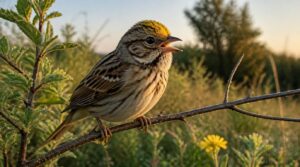
A splash of yellow on a sparrow’s head can turn a quick glance into a real identification win. Several species across North America carry this marking, each with its own pattern and habitat story. Here’s a look at five you’re likely to spot in the field.
Pay close attention to streaking, eye stripes, and wing bars too, since this guide to common sparrow species breaks down the subtle differences that separate look-alikes.
Golden-Crowned Sparrow
Picture a sparrow wearing a golden crown, and you’ve got this bird pegged. The Golden-crowned Sparrow flaunts a bold yellow stripe bordered by black during breeding season, fading gray by winter.
They occupy boreal bog breeding habitats during spring. You’ll spot them foraging in Pacific coastal scrub, often flocking with other sparrows, after nocturnal migrations from Alaska’s treeline breeding grounds.
White-Throated Sparrow
Once you’ve got the golden crown down, listen for a different bird: "Oh sweet Canada" whistling from the underbrush. That’s your White-throated Sparrow.
Look for yellow lores between eye and bill, plus a bold white throat. Two morphs exist—white-striped and tan-striped—each with distinct crown patterns.
They’re regular suburban feeder visitors, scratching leaf litter with both feet while foraging for seeds and insects.
Savannah Sparrow
Trade the underbrush for open fields, and you’ll spot the Savannah Sparrow—Passerculus sandwichensis—perched on fence posts. A yellow patch on its head, just before the eye, is your key field mark for species ID.
Ground foraging habits mirror its White-throated cousin. Watch for:
- Streaky brown plumage
- Pale eyebrow stripe
- Short grassland hops
- Regional song variation
- 17 recognized subspecies
Grassland conversion threatens this prairie specialist most.
Nelson’s Sparrow
Leave the fence posts behind, and Nelson’s Sparrow greets you in salt marshes and tidal wetlands. Its orange facial color stands out against a gray crown—yellow on their heads is subtler here.
Watch for marshland foraging near cordgrass, plus population variations between coastal and interior birds. Nesting materials come from nearby vegetation. Listen for its rasping, mechanical vocalization patterns.
LeConte’s Sparrow
Finding this bird takes patience, since secretive foraging habits keep it hidden among dense tussocks. LeConte’s Sparrow shows buffy orange patches above and below the eye, with yellow on their heads adding a warm accent to that streaked back.
- Buzzy trill songs, dry and quick
- Marshy meadow nesting sites
- Grassland habitat fragmentation pressures
- Ground-dwelling bird behavior year-round
Grassland loss threatens its breeding habitat preferences across the northern prairies.
Restoring even small patches of native grasses and wildflowers can offset these losses, as explained in this guide to designing bird-friendly urban habitats.
How to Identify Yellow-Headed Sparrows
Spotting a yellow-headed sparrow gets easier once you know exactly where to look. Field marks like crown patterns, eyebrow color, and body proportions separate one species from another in seconds. Here’s what you’ll want to check first.
Crown Stripes and Patches
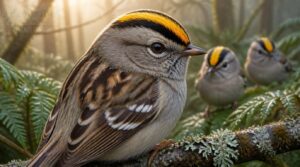
Think of the crown as a bird’s signature—no two species sign quite the same way.
Goldencrowned Sparrows show a continuous stripe, bill to nape, while others display segmented patches. Pigment distribution and feather structure iridescence affect intensity.
| Species | Crown Pattern | Color |
|---|---|---|
| Golden-crowned | Continuous stripe | Bright yellow |
| White-throated | Segmented patch | Pale yellow |
| Nelson’s | Paired patch | Gold |
Dimorphic pattern differences mean males show bolder head markings and larger crown size than females.
Yellow Eyebrow Markings
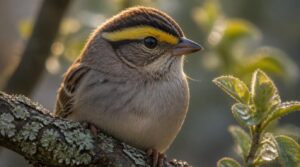
Once you spot the crown pattern, look just below it—the yellow eyebrow stripe offers another reliable field mark. It runs from bill to eye, brightest in fresh spring plumage but duller after autumn molt.
Watch for pigment fading and individual variation; some birds show a bold band, others just a hint.
Morning light reveals color best, aiding both ID and courtship signaling.
Seasonal Plumage Changes
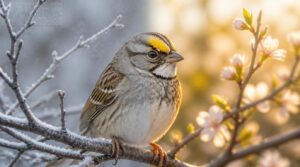
Yellow markings aren’t fixed—they brighten and dull with the calendar. Molt cycle timing drives this shift, replacing feathers twice yearly and swapping cryptic winter tones for breeding vibrancy.
- Carotenoid pigments intensify during breeding
- Winter brings seasonal plumage dulling
- Feather abrasion alters exposed tips
- Structure, not just pigment, shifts hue
- Camouflage yields to signaling in spring
Juveniles often lag behind, showing muted patterns before their first full molt.
Body Size and Shape
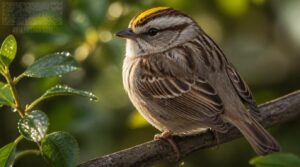
Compact and round describes these birds best—four to seven inches long, with a short neck and rounded chest built for quick bursts of flight.
Bill size scales with head size, wings span 18-22 cm for balanced maneuverability, and short legs suit perching over running. Among little brown jobs, this build aids passerine identification, especially when yellow markings fade seasonally.
Similar Birds to Compare
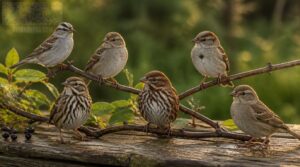
Confusing a Chipping Sparrow with a Golden-crowned juvenile happens often, but that white eyebrow and plain gray-brown back give it away fast.
American Tree Sparrows show a rusty cap with a dark center dot, while Fox Sparrows carry heavy chestnut streaking and a chunkier bill. Song Sparrows sport a bold malar stripe, and female House Sparrows simply lack any yellow entirely.
Range, Habitat, and Migration

Once you’ve nailed the field marks, the next step is knowing where to look. These sparrows split their time across coastlines, woodlands, prairies, and marshes, each spot shaping the birds you’ll spot there. Here’s a breakdown of where each species calls home, season by season.
Western Coastal Routes
Where does the Golden-crowned Sparrow spend its winters? Right along the Pacific Coast, riding migratory flyways tied to Western Coastal Routes from British Columbia to Baja California.
- Wind-swept dunes bordering coastal highways
- Rocky cliffs overlooking migration corridors
- Estuaries where storm surge management protects habitat
- Chaparral edges near tourist coastal towns
This coastal habitat preference helps both Pacific Coast migration patterns and regional tourism economic impact along historic maritime heritage routes.
Eastern Woodland Habitats
Head east from the coastline and you’ll trade dunes for eastern woodlands thick with oaks, maples, and beech. Whitethroated Sparrows thrive here, scratching through leaf litter insects along forest floors.
Canopy layer diversity and riparian zone benefits create ideal cover, while seasonal mast cycles and forest disturbance effects shape food supply, giving you plenty of field marks to study during migration stopovers.
Grasslands and Prairies
Trade the woodland canopy for open sky, and you’ll find grassland birds thriving where Prairie Fire Regimes keep woody plants at bay. Savannah and Grasshopper Sparrows nest in tall grass tufts here, relying on Native Grass Diversity and healthy Grassland Soil Health.
Herbivore Grazing Impact shapes cover density, so watch for ground foraging behavior among bluestem and buffalo grass—prime field marks for prairie birdwatching.
Marshes and Wetlands
Salt marshes and coastal wetlands pull you into a different rhythm than open prairie. Nelson’s Sparrow favors dense marsh vegetation here, weaving grass‑lined nests within its territory.
Wetland hydrology drives everything—tides flood and drain, shaping marsh biodiversity and feeding water purification. These systems support carbon sequestration and coastal protection too, while Seaside Sparrows and Yellowthroated Sparrows round out this soggy, salt‑tolerant neighborhood worth protecting through wetland conservation.
Wintering Areas
By December, you’ll find these sparrows settled into wintering site fidelity, often returning to the same fields and hedgerows for years. Southern climates offer stable food and milder temps (50-68°F).
Agricultural foraging opportunities and hedgerow cover sustain them, while stopover sites along their migration routes reveal migratory connectivity linking specific breeding grounds to particular wintering zones.
Feeding Habits and Backyard Birdwatching Tips
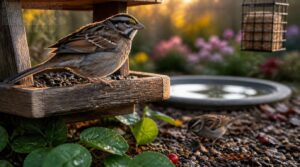
Yellow-headed sparrows change their menu with the seasons, and knowing what they eat helps you attract them to your yard. Their diet shifts between seeds, insects, and fruit depending on the time of year and their energy needs. Here’s what you’ll want to know about their feeding habits and how to set up your backyard for visits.
Seeds and Native Grasses
Want to turn your yard into sparrow central? Plant native grasses like big bluestem and little bluestem—they’re seed factories these birds can’t resist.
Aim for mixes with 30-60% native species; you’ll get richer Native Seed Diversity and better Grass Germination Success. Warm-season grasses drop seed through autumn, feeding sparrows while boosting Soil Stability Benefits for your whole garden.
Insects During Breeding
Once nesting starts, sparrows switch gears fast, chasing protein-rich larvae instead of seeds. Nestling dietary needs demand it—chicks grow quicker on bugs than grain.
You’ll notice insect availability shifts with weather, since rain triggers seasonal prey surges in:
- Caterpillars
- Ground beetles
- Ants
- Dragonfly nymphs
- Wasps
These foraging decision drivers explain why parents hunt insects even while stocking your feeders with seed.
Fruits and Berries
Sweet tooth in a feathered package? Golden-crowned Sparrows definitely have one, rounding out their seed and insect diet with apples, grapes, elderberry, and olives whenever they’re in season.
This diet flexibility matters most during seasonal diet variation, when fall fruit ripens right as birds fuel up for migration. You’ll spot them working berry thickets alongside sparrows favoring:
- Wild elderberries
- Ripe grapes
- Fallen olives
- Orchard windfalls
Their foraging also drives seed dispersal, spreading plant genetics across new habitat as they feed and move.
Ground Foraging Behavior
Watch the leaf litter closely, and you’ll catch these sparrows in action. Scratching techniques involve a quick one-foot kick to expose hidden seeds, especially along grassy edges.
Probing methods come next—bills dart forward into moist soil, hunting beetle larvae. Visual detection helps them spot movement fast.
Soil preferences lean toward loose, damp ground, with seasonal shifts boosting insect hunts each spring.
Feeders and Water Sources
Get the setup right, and your yard becomes a sparrow magnet. Best feeder styles matter most: platform and hopper feeders work best, loaded with sunflower seeds and millet.
Pair feeders with clean, shallow water—sparrows need both to thrive.
- Fresh water on hot afternoons
- Shaded basins that slow evaporation
- Gravel edges preventing mud contamination
- Low plants for shade and shelter
- Nearby perches for cautious approaches
Nesting, Songs, and Conservation
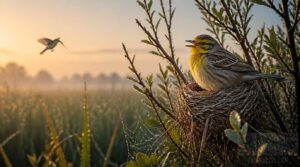
Once you’ve spotted and fed these birds, the next step is understanding how they live and breed. You’ll learn where they build their nests, what their calls sound like, and why some populations are shrinking. Here’s what to watch for as you dig deeper into their nesting habits and conservation status.
Ground Nest Locations
Down where leaf litter meets soil, these sparrows tuck their homes into ground depressions hidden by overhanging shrubs. Golden-crowned and white-throated sparrows both favor thicket edges, rarely nesting higher than 15 feet from cover.
Dense vegetation density matters most—it blocks predator sightlines while keeping nests camouflaged. This ground-hugging strategy trades height for concealment, a smart bet in predator-heavy habitats.
Eggs and Fledging
Once tucked into that hidden nest, a female lays 3 to 5 eggs, pale bluish-white, over consecutive days. Incubation runs close to two weeks, with warmer temperatures speeding hatch time.
Chicks double their weight within a week, then practice short wing-flaps before fledging around 9 to 16 days old. Parents keep feeding them well after they leave the nest.
Song Identification Clues
Long before those chicks ever fledge, you can already spot their parents by ear. Each species carries a signature cadence—Golden-Crowned’s staccato whistle, White-Throated’s descending trill—layered atop a 5-9 note-per-second tempo.
Dawn choruses offer your clearest listening window when pitch and rhythm ring loudest.
Learn these trills, and you’ll identify sparrows before you ever raise your binoculars.
Population Trends
Ears tuned to those dawn trills, you’re ready to ask a bigger question: how are these birds actually faring?
Golden-crowned Sparrows show modest declines across the Pacific Northwest, with population monitoring through Christmas Bird Counts confirming the slide. White-throated Sparrows face steeper trouble, dropping 31% over fifty years, driven mainly by habitat loss.
White-throated Sparrow numbers have fallen 31 percent in fifty years, mostly from vanishing habitat
Not every story is grim, though. Yellow-throated Sparrows hold steady across South Asia, thriving in farmland and gardens alike—proof that adaptable species can weather change when habitat stays workable.
Habitat Loss Threats
Where sparrows lose ground, decline follows close behind. Urban development impact eats nesting sites daily, while agricultural intensification effects strip seed sources and cover.
- Wetland drainage disrupting marsh nesters
- Grazing and fires shrinking prairie cover
- Predator population shifts near settlements raising nest losses
Habitat fragmentation isolates populations, slowing recovery. Yet wetland restoration benefits show real promise when corridors reconnect breeding grounds properly.
Frequently Asked Questions (FAQs)
What is a sparrow with a yellow head?
Don’t assume all sparrows look drab and brown. A yellow head marking simply means a species shows notable yellow on its crown, eyebrow, or face—like the Golden-Crowned Sparrow’s bright yellow crown, a key visual identification marker for birders.
What does a Sparrow look like?
Picture a compact, rounded body roughly 5–5 inches long, plump on low branches. A short squared tail and conical beak for cracking seeds finish the look, with streaky brown wings offering camouflage against grasses and shrubs.
How do you know if a sparrow is yellow?
A flash of sunlit gold against gray-brown feathers catches your eye first.
You’ll spot bright yellow crowns, a yellow patch in front of the eyes, or a yellow eyebrow stripe—clear head markings that confirm the identification, especially vivid during breeding season.
Do sparrows have yellow feathers on their heads?
Yes, but it’s species-specific — the Golden-Crowned Sparrow shows the boldest example, sporting a bright yellow crown from carotenoid pigments in its diet. Juveniles display duller versions, while subtle facial markings help distinguish others during seasonal plumage shifts.
Where can I find Golden-crowned Sparrows?
Real estate agents call it "location, location, location"—Golden-crowned Sparrows agree, just with feathers.
You’ll spot them in coastal brush from Baja to Oregon, boreal thickets near Alaska’s treeline, or hopping through your own overgrown garden hedges.
Where do Golden-crowned Sparrows migrate to?
After breeding in subarctic regions of Alaska and Canada, these birds migrate to the West Coast, following Pacific Coast routes to reach coastal wintering grounds stretching from British Columbia down to northern Baja California each fall.
How can I attract Golden-crowned Sparrows?
Think of your yard as a coastal foraging patch in miniature. Scatter black oil sunflower seeds on bare ground near shrubs, add a shallow water bath within 3–4 meters of cover, and keep pruning light.
How to identify a Golden-crowned Sparrow?
Look for a bright yellow central crown stripe with a narrower black border, plus that telltale yellow patch in front of the eyes. Juveniles show muted colors, making them trickier—compare against White-crowned Sparrows, which lack yellow entirely, for confirmation.
Are Golden-crowned Sparrows rare?
Millions strong, not a rarity in sight. This bird holds Least Concern status, with stable numbers across western breeding grounds and coastal wintering range. Rare vagrant sightings occur inland, but overall population trends stay solidly abundant.
What does a golden-crowned sparrow eat?
You’ll spot them scratching leaf litter for seeds like dock, sumac, and geranium, plus fruit like apples, grapes, and elderberry. Come nesting season, they switch to ants, beetles, and butterflies—protein nestlings need to grow strong and fledge on schedule.
Conclusion
Picture a field guide theory tested against real birds: does yellow always mean the same thing? Not quite. Each sparrow with yellow on its head tells its own story through crown width, eyebrow shade, and habitat choice.
Master these five species, and you’ll never confuse a Savannah’s dot for a Golden-crowned’s blaze again. That’s the real reward here—not just a name, but a sharper eye for every sparrow you meet afterward.
- https://scvbirdalliance.org/backyard-bird-blog/white-crowned-and-golden-crowned-sparrows
- https://kachemakbaybirders.org/blog/2018/06/01/golden-crowned-sparrow-june-2018-bird-of-the-month
- https://www.audubon.org/field-guide/bird/golden-crowned-sparrow
- http://10000thingsofthepnw.com/2021/04/09/zonotrichia-atricapilla-golden-crowned-sparrow
- https://www.birdsandblooms.com/birding/bird-species/sparrows/sparrows