This site is supported by our readers. We may earn a commission, at no cost to you, if you purchase through links.

You hang a new suet feeder on a chilly morning, and within minutes, a downy woodpecker clings to the wire cage, hammering away like it’s been waiting all winter for you to show up. That’s the magic of suet bird feeders for beginners: instant action, a front-row seat to nature’s small dramas, and a real shot at helping your backyard birds thrive when they need energy most.
But if you’ve ever watched squirrels raid your feeder or found a greasy mess melting in the sun, you know there’s more to it than just hanging a cake and hoping for the best. With the right setup, you can keep the birds happy, the pests frustrated, and your feeder running smoothly all season long.
Table Of Contents
Key Takeaways
- Choosing the right suet feeder—like squirrel-proof, upside-down, or tail-prop designs—helps attract your target birds while keeping pests at bay.
- Using rendered beef suet and high-energy seeds in your cakes gives birds the calories they need, especially during cold months, while avoiding salty fats protects their health.
- Hanging feeders five to six feet high, away from jumping points and in shaded spots, prevents spoilage and reduces pest problems.
- Cleaning feeders every two weeks with white vinegar and storing suet in cool, airtight containers keeps your setup safe and appealing for birds all season.
Choosing The Right Suet Bird Feeder
Not all suet feeders are built the same, and the one you pick will shape which birds actually show up in your yard. A few key designs dominate the beginner space, each with real tradeoffs worth knowing before you buy. Here’s a look at what’s out there.
For a deeper dive into matching feeder types to your backyard visitors, check out this.
Types of Suet Feeders for Beginners
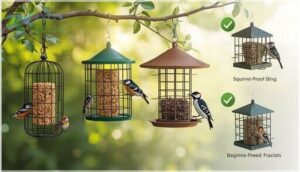
Four feeder types cover most beginners well. Wire cage feeders are the simplest — just a caged suet feeder holding one standard cake, hung and done. Upside-down designs make suet feeder selection a bit more strategic, since an upside-down feeder naturally filters out larger birds. Tail prop feeders support woodpeckers from below. A squirrel-proof feeder adds a cage-within-cage barrier worth considering early.
Advantages of Different Feeder Designs
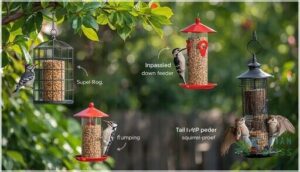
Each feeder design solves a specific problem. A caged suet feeder is dead simple — hang it, fill it, done. An upside-down feeder takes care of pest control almost automatically, since starlings can’t easily cling underneath. A tail prop feeder gives woodpeckers the balance they need to stay longer. A squirrel-proof feeder cuts food waste fast.
- Squirrel proofing blocks unwanted guests without extra effort
- Upside-down feeder design filters larger nuisance birds naturally
- Tail prop benefits include longer, steadier feeding sessions
- Weather protection roofs keep suet dry and fresh longer
- Easy maintenance designs mean quicker cleanups and healthier birds
Selecting a Feeder for Your Backyard
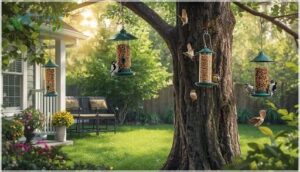
Knowing which feeder design works best comes down to four things: yard dimensions, pest challenges, climate factors, and your target birds.
A small yard with squirrel pressure? A squirrel-proof feeder saves you real frustration. Got woodpeckers visiting forest edges? Go with a tail-prop style. If starlings dominate, an upside-down feeder quietly solves that.
Match your suet bird feeder to your actual backyard — not someone else’s.
Essential Suet Ingredients and Preparation
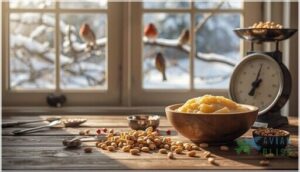
What goes into your suet matters just as much as the feeder holding it. The right combination of fat, seeds, and extras can mean the difference between a feeder birds ignore and one they visit all winter long.
Here’s what you need to know before you mix your first batch.
Selecting The Perfect Fat Source
The fat you choose makes or breaks your suet. Rendered beef suet — the classic pick — has higher fat melting points than lard, so it stays firm and won’t smear onto feathers on mild days. Lard works but softens faster above freezing.
For tips on picking the best fat and keeping your suet fresh, check out this.
Peanut butter binds well and birds love it. Skip bacon drippings entirely — the salt stresses their kidneys.
Adding Seeds, Nuts, and Extras
Think of your homemade suet as a recipe worth getting right. High-energy seeds like black oil sunflower — about 28 percent fat — give birds serious calories. Safe nut choices such as chopped peanuts add protein without choking risks.
Dried fruit benefits include attracting woodpeckers and wrens, though fruits mold faster in warm weather. Balance your suet cakes ingredients for season and species.
Step-by-Step Suet Cake Preparation
Start with fat rendering: melt beef suet or lard over low heat, stirring occasionally, then strain out the gristle. That’s your suet mixing base.
Stir in seeds, cornmeal, and peanut butter while it’s still warm.
Cake molding is straightforward — press the mix firmly into muffin tins or suet trays, then refrigerate until solid.
Making bird suet from scratch really comes down to those three steps.
Placement Tips and Pest Prevention
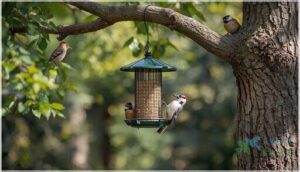
Where you hang your suet feeder matters more than most beginners expect. The wrong spot can mean fewer birds, spoiled suet, or a squirrel that treats your feeder like a personal buffet. Here’s what to think about before you pick your location.
Where to Hang Suet Feeders Safely
Ever wonder why some suet feeders attract more birds and fewer problems? Getting Feeder Height, Window Distance, and Predator Control right is key for safe backyard birding. Place your suet feeder:
- 5–6 feet high for bird safety and easy maintenance
- 10–15 feet from cover for quick escapes
- In shade or sheltered spots for Weather Protection and less spoilage
Strategies for Deterring Squirrels and Pests
Squirrels treat suet like buried treasure, but you can outsmart them with the right pest control methods. Try a squirrel-proof feeder with weight-activated access, or install a squirrel baffle on your pole.
Feeder placement matters—keep it 8–10 feet from launch points. Hot pepper suet offers natural squirrel deterrence, making your setup less appealing to furry thieves and other pests.
Avoiding Common Bird Feeding Problems
It only takes one mistake—like dirty suet or poor placement—for a suet bird feeder to become a problem instead of a pleasure. Disease Prevention hinges on Feeder Maintenance and hygiene; clean every two weeks and toss spoiled suet.
For Window Safety, keep feeders close or far from glass.
Smart Pest Control for bird feeders stops food waste and protects Bird Health.
Maintaining Clean and Safe Suet Feeders
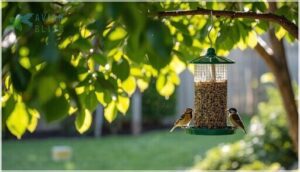
Keeping your suet feeder clean and safe is a simple habit that pays off for both you and the birds. It helps prevent illness, spoilage, and unwanted pests around your backyard.
Regularly cleaning your suet feeder keeps backyard birds healthy and protects your yard from illness, spoilage, and pests
Here’s what you need to know to stay on top of maintenance.
Cleaning Frequency and Methods
Did you know dirty feeders can spread disease faster than you think? Suet Sanitation isn’t just about appearances—it’s the backbone of Bird Health.
For feeder maintenance, follow these Cleaning Schedules:
- Clean feeders every two weeks, more often in warm weather.
- Use Feeder Disinfection with bleach or hot water.
- Store suet properly to prevent spoilage and maintain bird feeder hygiene.
Using White Vinegar for Feeder Hygiene
Once you’ve set a cleaning schedule, white vinegar steps in as your ally for feeder sanitizing. Mix one part vinegar to three parts water for routine suet cleaning—strong enough for bird health, gentle enough for feeder safety.
Soak cages for thirty minutes, rinse well, and let them dry. Vinegar dilution keeps clean feeders free from harsh chemicals, supporting ongoing bird feeder hygiene.
Storing Suet to Prevent Spoilage
Once your feeders are spotless, turn your attention to suet storage. Keep homemade suet or store-bought cakes cool—below 21°C—to slow fat oxidation and prevent melting.
Refrigeration tips: wrap cakes tightly, use opaque bins, and freeze extra blocks for longer shelf life.
Watch for spoilage detection signs like mold growth, sour smell, or mushy texture before refilling.
Top Suet Feeders and Supplies for Beginners
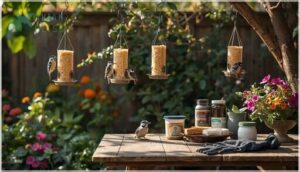
If you’re just starting out, picking the right feeder can make all the difference for your backyard birds. There are a handful of solid options that work well and keep things simple.
Here’s a look at some beginner-friendly feeders and supplies worth considering.
Brome Squirrel Buster Squirrel Proof Suet Feeder
Squirrel proof technology is more than a buzzword—it’s a game changer. The Squirrel Buster Suet feeder uses a weight sensitive mechanism that shuts access when heavy pests arrive, letting birds feed undisturbed.
Chew proof materials and a mess-free loading system mean less hassle for you. This weightactivated feeder delivers reliable pest control for bird feeders, elevating your bird feeding experience.
Nature’s Way Cedar Upside Down Suet Feeder
If you’re after a feeder that nudges your backyard toward clinging songbirds, the Nature’s Way Upside Down Feeder is a practical choice. Its cedar construction resists rot, and the upside down design limits access for larger pests.
With one suet cake slot and rustproof hardware, you get feeder durability and reliable bird species attraction without the fuss.
1. Birds Choice Hanging Suet Feeder with Tail Prop
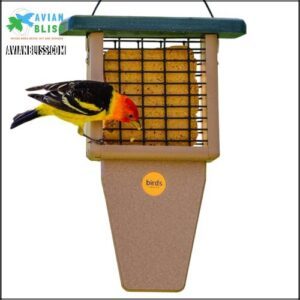
Balance is the secret behind the Birds Choice Hanging Suet Feeder with Tail Prop. Its sturdy recycled plastic body shrugs off rain and sun, while the five-inch tail prop gives woodpeckers a place to brace as they feed—so you’ll see them linger, not just dart in and out.
The vinyl-coated steel grid holds one suet cake and is easy for birds to grip. You hang it up in minutes, fill it fast, and clean it just as quickly when needed.
| Best For | Bird lovers who want an easy, eco-friendly way to attract woodpeckers and other backyard birds. |
|---|---|
| Material | Metal |
| Dimensions | Not specified |
| Capacity | 2 suet cakes |
| Mounting Type | Hanging |
| Color | Green |
| Target Species | Woodpeckers, Nuthatches, clinging birds |
| Additional Features |
|
- Durable, weatherproof recycled plastic lasts through seasons.
- Tail prop makes it comfortable for woodpeckers to feed.
- Quick to hang, fill, and clean.
- Not squirrel proof, so extra deterrents may be needed.
- Lid can sometimes come off too easily.
- Needs careful placement to avoid bear and squirrel damage.
2. Heath Double Suet Hopper Feeder
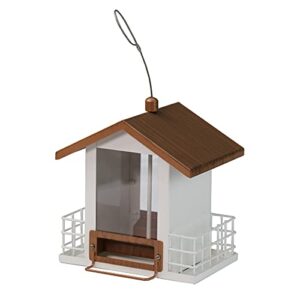
The Heath Double Suet Hopper Feeder offers versatility as its main draw. It features a central seed hopper with clear sides, plus two cages for suet or seed cakes, allowing you to mix flavors or attract different species simultaneously.
Its metal build ensures durability against weather conditions. The easy-open top and snap-close cages make refilling a breeze.
For optimal use, hang the feeder five to six feet up to keep birds safe. Its compact design ensures it won’t overwhelm your space, making it practical for beginners learning a feeding routine.
| Best For | Homeowners or bird lovers who want to attract cardinals and other clinging or perching birds with a feeder that’s easy to use and monitor. |
|---|---|
| Material | Cedar Wood |
| Dimensions | 8.5″L x 8.5″W x 4.13″H |
| Capacity | 1 suet cake |
| Mounting Type | Hanging |
| Color | Cedar |
| Target Species | Woodpeckers, titmice, chickadees, nuthatches |
| Additional Features |
|
- Clear hopper lets you see when seed needs refilling
- Holds both suet and seed cakes for variety
- Simple to fill, clean, and hang
- Needs regular washing to stay clean
- Limited to two suet or seed cakes per side
- Cakes may need frequent refilling depending on bird activity
3. Iberia All Natural Distilled White Vinegar
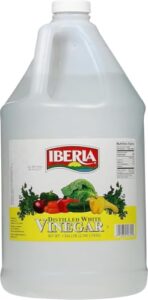
Cleanliness is the backbone of healthy bird feeding. Iberia All Natural Distilled White Vinegar, with its 5% acidity and all-natural formula, is your go-to for disinfecting suet feeders. It cuts through grime, combats bacteria, and leaves no harmful residue when rinsed well.
The one-gallon jug manages high-volume cleaning, so you won’t run out mid-season. If you’re serious about supporting local birds, using vinegar regularly keeps disease at bay and your feeders safe for every feathered visitor.
| Best For | People who want a natural, versatile cleaner and cooking staple for everyday household use and high-volume needs. |
|---|---|
| Material | Recycled poly lumber |
| Dimensions | 8″L x 3″W x 12″H |
| Capacity | 1 suet cake |
| Mounting Type | Hanging |
| Color | Taupe and green |
| Target Species | Woodpeckers, chickadees, finches, nuthatches, bluebirds |
| Additional Features |
|
- Made from pure, all-natural ingredients with no additives or preservatives
- Handles a wide range of tasks, from cleaning and laundry to cooking and pickling
- Large 1-gallon size is perfect for frequent use and bigger jobs
- The strong vinegar smell may be off-putting to some people
- Large jug can be bulky and hard to store in small kitchens
- Not intended for heavy-duty industrial or commercial cleaning
Frequently Asked Questions (FAQs)
What time of year to put out suet for birds?
If you think of suet like a warm sweater for birds, you’ll want to hang it out from late fall through early spring—when cold snaps and scarce insects make fat-rich food essential for survival and nesting.
Which suet attracts most birds?
Plain high energy suet cakes made from rendered beef fat, corn, millet, oats, and sunflower meal attract the widest mix of backyard birds.
Peanut suet draws even more species, especially woodpeckers, chickadees, titmice, and cardinals.
Which birds are most likely to visit suet feeders?
From bold woodpeckers like Downy and Hairy to quick chickadees and nuthatches, suet feeders draw a mix of birds.
Jays, wrens, and even robins may visit, each seeking high-energy fat, especially in winter.
Can suet feeders be used year-round?
Yes, you can use suet feeders year-round if you choose the right suet type and monitor for spoilage. “No melt” or “summer suet” cakes work well, but remove suet during extreme heat to protect birds.
Are homemade suet cakes safe for all birds?
Homemade suet cakes are like a custom suit—great for some, risky for others. They’re safest for woodpeckers and chickadees, but not all birds digest heavy fats well, and spoiled ingredients can harm any visitor.
How do you prevent suet from melting in summer?
To keep suet from melting in summer, hang feeders in deep shade, use no-melt suet recipes with oats and cornmeal, offer smaller portions, and freeze cakes before use. Refilling early or late helps birds eat before heat builds.
What signs indicate birds are using the feeder?
You might worry birds aren’t visiting, but look for suet crumbs on beaks, scratch marks, droppings beneath the feeder, or birds waiting nearby.
An empty or partially eaten suet cake means your feeder is getting real use.
Conclusion
Imagine if every backyard in your neighborhood became a five-star diner for woodpeckers and chickadees—your suet bird feeders for beginners could spark that kind of change.
Each feeder you hang, every batch of suet you mix, shapes the daily lives of birds that depend on you.
With a little care and consistency, your setup turns into a lifeline, not just a snack stop. That’s the quiet power you hold, right outside your window, every single day.