This site is supported by our readers. We may earn a commission, at no cost to you, if you purchase through links.
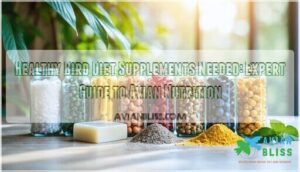 Your feathered friend’s health hinges on more than just seeds and scraps. Most healthy bird diet supplements needed include calcium sources like cuttlebones or mineral blocks, which keep bones strong and prevent egg-binding in females.
You’ll also want a quality vitamin supplement, especially if your bird’s diet isn’t perfectly balanced. Think of supplements as your bird’s insurance policy against nutritional gaps.
Pellet-based diets often reduce supplement needs, but seed-heavy diets require more support. Don’t forget about vitamin D3, which helps calcium absorption—crucial for indoor birds who miss natural sunlight.
The right combination depends on your bird’s species, age, and current diet composition, making a well-informed decision about diet supplements essential for your bird’s health.
Table Of Contents
- Key Takeaways
- Balanced Bird Diets
- Pellet Based Diets
- Vitamin Supplements
- Mineral Supplements
- Specialized Supplements
- Choosing Right Supplements
- Dietary Changes
- Maintaining Optimal Health
- Frequently Asked Questions (FAQs)
- What is the most critical nutrient to birds?
- What is the most common vitamin deficiency in birds?
- What are the nutritional needs of birds?
- Should I put vitamins in my bird’s water?
- Can supplements interact with bird medications?
- How long do opened supplements stay fresh?
- Are homemade supplement alternatives safe for birds?
- Do supplements affect bird breeding success rates?
- Which supplements help with seasonal dietary changes?
- Conclusion
Key Takeaways
- You’ll need calcium supplements like cuttlebones and vitamin D3 to prevent bone problems and egg-binding, especially for indoor birds who don’t get natural sunlight.
- Your bird’s supplement needs depend on their diet—pellet-fed birds need fewer supplements than those eating seed-heavy diets, which require more nutritional support.
- You can’t just guess what supplements to give your bird—work with an avian veterinarian to create a species-specific plan that matches your bird’s age, health, and dietary needs.
- You’ll need to monitor your bird’s behavior, feather quality, and energy levels regularly to adjust their supplement routine as they age or their health changes.
Balanced Bird Diets
You can’t just fill your bird’s bowl with seeds and call it a day, much like you wouldn’t survive on potato chips alone.
Birds need balanced nutrition just like you do—seeds alone won’t cut it for a healthy, thriving feathered friend.
Your feathered friend needs a carefully balanced mix of proteins, carbohydrates, healthy fats, vitamins, and minerals to maintain strong feathers, bright eyes, and that cheerful chirp you love.
Essential Nutrients for Birds
Your feathered friend’s body works like a finely tuned engine, requiring six essential nutrients to thrive.
Proteins build strong muscles and vibrant feathers, while carbohydrates fuel daily activities.
Fats support nutrient absorption and hormone production, and bird vitamins and minerals keep metabolic needs balanced, mimicking wild bird diets.
Water facilitates avian digestion, making food bioavailability ideal for parrot nutrition and overall bird health.
Importance of Variety in Diet
Your bird’s taste preferences mirror those found in wild bird diets, where variety prevents dietary boredom and guarantees the best bird nutrition.
Just like you’d get tired of eating the same meal daily, birds crave diversity in their balanced diet to avoid nutrient deficiency.
- Foraging enrichment stimulates natural behaviors while providing essential nutrients from different bird food variety sources
- Natural food sources like fruits, vegetables, and seeds replicate what birds consume in their native habitats
- Bird diet rotation prevents selective eating habits that can lead to nutritional imbalances over time
Consequences of Poor Nutrition
Poor nutrition hits your bird like a domino effect.
Balanced nutrition isn’t optional—it’s the foundation that keeps your feathered friend thriving for years to come.
Nutrient deficiency leads to reduced lifespan, feather problems, and increased infection risk. Malnourishment weakens your bird’s immune system, causing organ damage and behavioral issues.
These health issues compound quickly – what starts as dull feathers can escalate to serious avian health complications.
| Health Problem | Visible Signs | Long-term Impact |
|---|---|---|
| Feather Problems | Dull, brittle plumage | Poor insulation, flight issues |
| Infection Risk | Frequent illness | Weakened immune system |
| Organ Damage | Lethargy, weight loss | Liver, kidney failure |
| Behavioral Issues | Aggression, plucking | Stress, depression |
| Reduced Lifespan | Overall decline | Premature death |
Pellet Based Diets
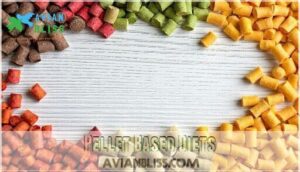
When you’re feeding your bird, pellets offer the most reliable way to guarantee complete nutrition, unlike seed-only diets that leave dangerous gaps in essential vitamins and minerals.
You’ll find two main types of pellets available, with extruded varieties providing better visual appeal and palatability, though you’ll need to monitor consumption carefully to guarantee your feathered friend receives full nutritional benefits.
Types of Pellets Available
Selecting the right pellets requires understanding your options.
Extruded vs Bound varieties offer different Palatability Factors – extruded pellets are more appealing with varied Pellet Shapes and colors.
Organic Pellets from brands like Harrison’s provide premium Pellet Ingredients without GMOs.
Species-specific bird pellets cater to unique nutritional needs, while bird pellet plans should match your feathered friend’s size and dietary requirements.
Some birds also enjoy chewy pellet options.
Benefits of Extruded Pellets
Extruded pellets offer several advantages over their bound counterparts.
The manufacturing process creates products that birds find more appealing and easier to consume.
Here’s why extruded pellets work better for your feathered friend’s nutrition:
- Improved Palatability – Birds prefer the taste and texture of extruded products
- Varied Shapes – Different forms keep birds interested during feeding time
- Enhanced Consumption – Better acceptance means your bird actually eats their complete nutrition
- Visual Appeal – Colorful, attractive pellets encourage regular eating habits
Monitoring Pellet Consumption
You can’t just fill your bird’s bowl and walk away.
Visual inspection helps track consumption amounts by checking what’s left versus what you offered. Weighing food before and after meals gives precise measurements for single birds or multiple birds sharing space.
Waste analysis reveals eating patterns—scattered pellets might mean your pet bird diet needs adjustment for better bird nutrition.
Vitamin Supplements
Even the healthiest pellet-based diet can’t provide every vitamin your feathered friend needs, especially if they’re picky eaters who pick through their food like they’re searching for hidden treasure.
You’ll need to supplement their diet with essential vitamins A, D, B complex, E, and K to prevent deficiencies that can lead to serious health problems, weakened immune systems, and poor feather quality.
This supplementation is crucial as it can lead to serious health problems if not addressed properly, making it essential for the overall well-being of your feathered friend.
Essential Vitamins for Birds
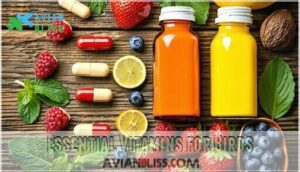
Your feathered friend needs specific vitamins to thrive, just like you do. Bird vitamin A deficiency can cause serious health issues, while proper avian supplements support everything from vision to immune function.
For more information about buying avian supplements, there are online resources.
The best bird supplements contain these essential nutrients:
- Vitamin A – Supports eye health, immune system, and respiratory function
- B vitamin complex – Boosts energy metabolism and nervous system health
- Vitamin C sources – Enhances immune defense and stress resistance
- Vitamin E uses – Protects cells and supports reproductive health
Soluble and Non-Soluble Supplements
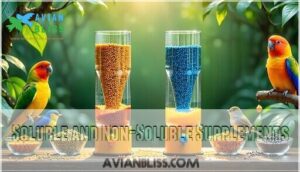
Bird supplements come in two main forms: soluble and nonsoluble supplements.
Soluble supplements dissolve in water for easy Water Supplementation, though some birds avoid drinking enhanced water due to Palatability Concerns.
Nonsoluble supplements mix into food for Food Supplementation, offering better Absorption Rates for picky eaters.
Consider your bird’s preferences when choosing between these avian supplements for maximum Supplement Effectiveness.
Tailoring Supplements to Bird Needs
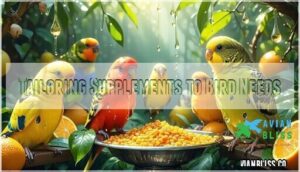
Every bird’s supplement needs vary like fingerprints—no two are identical.
You’ll need to evaluate species differences, age considerations, and health conditions when selecting bird nutrition supplements.
A young cockatiel requires different avian nutrition than an elderly macaw.
Activity levels also matter; active birds need more energy support.
Proper supplement timing guarantees your pet bird supplements work effectively for ideal bird dietary needs, considering proper supplement timing.
Mineral Supplements
You can’t build a strong house without the right foundation, and your bird’s bones need essential minerals like calcium and magnesium to stay healthy and strong.
These essential supplements work together with vitamin D to prevent fractures, support muscle function, and keep your feathered friend active throughout their long life, which is supported by the fact that they need a strong foundation for a healthy life.
Importance of Calcium for Birds
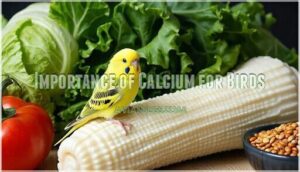
Calcium acts as your bird’s foundation stone, supporting everything from strong bones to proper muscle function.
Without adequate calcium, your feathered friend faces serious health risks that can impact their quality of life.
Here’s why calcium matters for your bird:
- Bone Health – Prevents fractures and maintains skeletal strength throughout their lifetime
- Muscle Function – Enables proper heart contractions and wing movement for daily activities
- Feather Growth – Supports healthy feather attachment and prevents plumage problems
- Egg Binding – Helps female birds lay eggs safely without dangerous complications
Role of Vitamin D in Bird Health
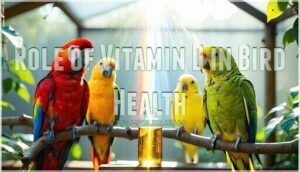
Without enough vitamin D, your bird’s world becomes fragile.
D deficiency signs include fractured bones, weight loss, and poor feather quality that’ll break your heart.
This sunshine vitamin makes calcium absorption possible, supporting strong bone health.
Modern windows block the UV rays birds need, so vitamin supplements birds receive become their lifeline for proper development.
UV Light Alternatives for Indoor Birds
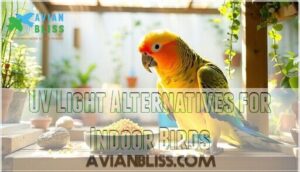
Since windows filter out essential UV rays, your feathered friend needs alternatives for vitamin D synthesis.
UVB bulbs placed 12-18 inches away work well, but replace them every six months. D3 pellets offer another solution when natural sunlight isn’t available.
Many owners source specialized avian bulbs for their pets. Consider supplement dosage carefully—avian physiology requires proper calcium absorption through adequate UV light exposure for healthy health, ensuring proper calcium absorption.
Specialized Supplements
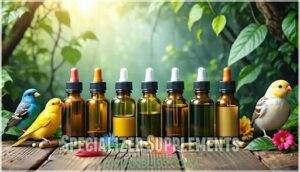
When your bird’s basic nutritional needs are met, you might find yourself dealing with specific behavioral or health challenges that require targeted solutions.
Specialized supplements address these unique concerns, offering natural calming aids for stressed birds, feather-enhancing formulas for molting season, and species-specific nutrients that help your feathered friend thrive beyond standard dietary requirements, with targeted solutions.
Calming Supplements for Birds
Sometimes your feathered friend acts like they’re having a bad day every day.
Calming supplements tackle behavioral issues like excessive screaming, destructive chewing, and aggressive biting through natural remedies that promote stress reduction.
These bird supplements for calming don’t sedate your pet—they gently ease avian anxiety disorders while maintaining normal bird behavior, though supplement safety varies across species differences.
Feather and Molting Supplements
Molting season can turn your cheerful bird into a stressed-out mess.
Feather Quality supplements containing amino acids and biotin support healthy bird feather growth during this challenging time.
These Growth Support formulas reduce Molting Stress while improving feather texture.
Canary Supplements often include specialized ingredients for ideal bird feather care, helping your feathered friend sail through molt season comfortably.
Species-Specific Supplements
Different bird species have unique nutritional needs that generic supplements can’t address.
Macaw supplements provide higher fat content, while Amazon parrot supplements offer lower fat formulations.
African Grey supplements include extra calcium and vitamin D3.
Canary supplements support singing ability, and finch supplements cater to smaller metabolisms.
Cockatiel supplements balance protein levels perfectly, and it’s crucial to choose species-specific formulas for ideal pet bird health and targeted avian nutrition.
Choosing Right Supplements
You can’t just grab any supplement off the shelf and hope it’ll work wonders for your feathered friend, since birds have unique nutritional needs that vary by species, age, and health status.
Working with an avian veterinarian and carefully evaluating supplement quality guarantees you’re providing the right nutrients without creating dangerous imbalances that could harm your bird’s health. This approach ensures you are giving your bird the best possible care by considering its specific needs.
Consulting With a Veterinarian
Your avian veterinarian becomes your nutrition navigator, offering expert diet advice suited to your bird’s species-specific needs.
Professional bird health consultation guarantees proper supplement dosage and health monitoring protocols.
Key veterinarian recommendations include:
- Initial assessment – Evaluating your bird’s current health status
- Custom supplement plans – Designing species-appropriate nutrition strategies
- Regular monitoring – Tracking dietary progress and adjusting dosages
- Emergency protocols – Recognizing when veterinary intervention becomes necessary
Evaluating Supplement Quality
Quality separates the wheat from the chaff when choosing bird supplements.
Look for third-party certifications and manufacturing standards that guarantee proper ingredient sourcing. Check expiration dates religiously, as vitamin potency degrades over time.
Bioavailability testing matters more than flashy labels—your bird’s body needs to actually absorb those nutrients for ideal avian nutrition and pet bird care.
Dietary Changes
Switching your bird to a healthier diet can feel like convincing a toddler to eat vegetables, but with patience and the right approach, you’ll succeed.
You’ll need to gradually introduce new foods while understanding that most birds resist change, making persistence and consistency your best tools for creating lasting dietary improvements.
Overcoming Resistance to New Diets
Switching diets can ruffle feathers, but a Gradual Introduction works wonders.
Start by Mixing Foods—blend new pellets with familiar ones.
Use Positive Reinforcement, like praise or treats, when your bird tries the change.
Persistence Needed; some birds resist, but patience pays off.
If struggles persist, Seek Expert Advice to guarantee your pet bird care aligns with proper avian nutrition and bird feeding practices.
Tips for Converting to Balanced Diets
Converting your feathered friend to balanced nutrition doesn’t happen overnight.
Patience pays off when you follow these proven strategies:
- Gradual Introduction – Mix small amounts of new pellets with familiar seeds
- Food Presentation – Offer colorful, varied textures during peak hunger times
- Positive Reinforcement – Praise and interact when they try new foods
- Minimize Stress – Keep routine consistent while introducing healthy bird food changes
Maintaining Optimal Health
You’ve established a solid nutritional foundation for your feathered friend, but maintaining peak health requires ongoing attention to their changing needs and careful observation of their daily behavior.
Think of yourself as your bird’s personal health detective, watching for subtle changes in appetite, feather quality, and energy levels that signal when it’s time to adjust their supplement routine, which is crucial for maintaining peak health and overall well-being, including monitoring their daily behavior.
Regular Health Check-Ups
Schedule regular vet visits for your pet birds every six to twelve months.
Your avian veterinarian will conduct thorough examinations focusing on Early Detection of health issues before they become serious.
These checkups include Weight Monitoring, Parasite Control, and assessments of how bird supplements and bird diet changes affect overall bird health.
Preventative Care catches problems early, and your vet can spot subtle Behavioral Changes you might miss.
Monitoring Bird Behavior and Appearance
Through daily observation, you’ll spot behavioral changes that signal health issues before they become serious problems.
Watch for shifts in activity levels, unusual vocalizations, or changes in feather condition.
Your bird’s droppings tell a story too—monitor color, consistency, and frequency.
These visual cues help you catch nutritional deficiencies early, keeping your feathered friend healthy and happy.
Adjusting Supplements as Needed
Your bird’s supplement needs aren’t set in stone—they evolve with time and circumstances.
Age considerations play a huge role, as older birds need different support than young ones.
Watch for these key adjustment triggers:
- Seasonal changes affecting appetite and energy levels
- Health conditions requiring specialized nutritional support
- Behavioral shifts indicating stress or dietary deficiencies
- Supplement interactions causing unexpected reactions
- Life stage phases demanding modified nutrition
Smart bird supplement management means staying flexible.
Frequently Asked Questions (FAQs)
What is the most critical nutrient to birds?
Poor nutrition reduces your bird’s lifespan by up to 50%.
Protein stands as the most critical nutrient, supporting feather development, muscle function, and immune health.
You’ll find it essential for growth, reproduction, and daily energy needs.
What is the most common vitamin deficiency in birds?
Vitamin A deficiency tops the list as your feathered friend’s most common nutritional shortfall.
You’ll notice poor feather quality, respiratory infections, and weakened immunity when this essential vitamin runs low in their diet, which can lead to a range of health issues, including weakened immunity.
What are the nutritional needs of birds?
Your feathered friend needs a balanced mix of protein, carbohydrates, healthy fats, vitamins, and minerals.
Think pellets as the foundation, plus fresh fruits and vegetables.
Water’s essential too—it keeps everything running smoothly inside.
Should I put vitamins in my bird’s water?
Adding vitamins to your bird’s water isn’t ideal since many birds avoid drinking treated water.
Instead, choose non-soluble supplements like vitamin-enriched pellets or powders sprinkled on food for better consumption and effectiveness.
Can supplements interact with bird medications?
Like telegraphing important news, you’ll need your vet’s guidance before mixing supplements with bird medications.
Drug interactions can affect absorption rates, effectiveness, and safety.
Always consult your avian veterinarian first to prevent complications and ensure the safety of your bird.
How long do opened supplements stay fresh?
Most opened bird supplements stay fresh for 6-12 months when stored properly in cool, dry places.
Check expiration dates and toss anything that smells off or changes color—your feathered friend deserves the freshest nutrition possible, with proper storage being key to maintaining quality.
Are homemade supplement alternatives safe for birds?
Playing with fire in the matter of homemade supplements isn’t worth the risk.
You can’t replicate the precise nutritional balance commercial products provide, and you might accidentally harm your feathered friend with incorrect dosages, which is a significant risk to take with homemade supplements.
Do supplements affect bird breeding success rates?
Proper supplements substantially boost your bird’s breeding success by ensuring ideal nutrition for egg production, fertility, and chick development.
Without adequate vitamins and minerals, you’ll likely see reduced hatching rates and weaker offspring.
Which supplements help with seasonal dietary changes?
Your feathered friend thinks they’re a sophisticated gourmet, but seasonal changes call for molting supplements during feather regrowth periods.
Vitamin D boosters are necessary when shorter days limit natural sunlight exposure indoors.
Conclusion
Remember, an ounce of prevention is worth a pound of cure regarding your feathered companion’s wellbeing.
Understanding healthy bird diet supplements needed guarantees your pet thrives rather than merely survives.
While pellet diets reduce supplement requirements, seed-heavy diets demand additional nutritional support.
Regular veterinary consultations help you tailor supplements to your bird’s specific needs.
Monitor your bird’s behavior and appearance closely, adjusting their supplement regimen as they age or their dietary habits change for peak health.
Regular check-ups and a balanced diet are crucial for your bird’s overall wellbeing.
- https://youtu.be/15hD13AhE70
- http://avianmedicine.net/wp-content/uploads/2013/03/31.pdf
- https://dr.lib.iastate.edu/server/api/core/bitstreams/dc8ad198-7c67-44a9-b7f2-7a6764af2338/content
- https://www.dvm360.com/view/how-i-diagnose-and-manage-nutritional-disease-birds-proceedings
- https://todaysveterinarynurse.com/nutrition/avian-nutrition/