This site is supported by our readers. We may earn a commission, at no cost to you, if you purchase through links.
A seed-only diet kills birds slowly. That’s not hyperbole—chronic micronutrient deficiency suppresses immune function, degrades feather quality, and compromises bone density in ways that don’t show up until the damage is already done.
Most aviary birds eating unfortified seed mixes receive less than 60% of their daily vitamin A requirement, and deficiency in a single fat-soluble vitamin can cascade into respiratory infections, poor molt recovery, and reproductive failure within a single breeding season.
Targeted vitamin supplementation closes those gaps with measurable precision—stronger immunity, denser bones, cleaner feathers, and eggs with better hatchability rates.
Table Of Contents
- Key Takeaways
- Benefits of Bird Vitamin Supplements
- Signs Your Bird Needs Supplements
- Choosing Safe Avian Supplements
- Top 5 Bird Vitamin Supplements
- Frequently Asked Questions (FAQs)
- What supplements should a pet bird take?
- What is a bird-specific vitamin A supplement?
- Do birds need vitamin supplements?
- What is a good source of vitamin A for birds?
- What vitamins do lovebirds need?
- Can wild-caught birds adapt to supplement regimens?
- Do seasonal changes affect birds vitamin needs?
- How do supplements interact with antibiotic treatments?
- Are organic vitamin sources better than synthetic ones?
- What role do probiotics play alongside vitamin supplements?
- Conclusion
Key Takeaways
- seed‑only diet quietly causes vitamin A, D3, and E deficiencies that suppress immunity, degrade feathers, and weaken bones long before you notice any visible symptoms.
- Targeted supplementation closes those gaps with measurable results—antibody levels can rise up to 40%, molt recovery improves, and hatchability rates climb when fat-soluble vitamins are dosed correctly.
- Species‑specific formulas matter: a parrot’s vitamin A requirements dwarf a finch’s, and generic blends rarely hit the mark for either bird.
- Oversupplementation is a real risk—fat-soluble vitamins accumulate in tissue, so precise weight-based dosing and periodic blood panels aren’t optional, they’re how you stay on the right side of toxicity.
Benefits of Bird Vitamin Supplements
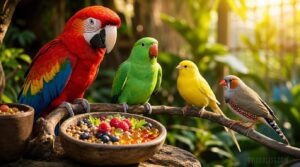
Most aviary birds don’t get everything they need from food alone — and the gaps add up fast. The right vitamin supplements can make a real, measurable difference in how your birds look, breed, and stay healthy.
That said, supplements work best alongside a solid foundation — check out these bird care food and supply essentials to make sure you’re covering all the basics first.
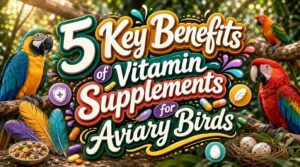
Here are five benefits worth knowing.
Immune System Support and Disease Resistance
Think of vitamins as your bird’s first line of defense. Targeted supplementation drives measurable results:
- Innate Immunity Boost — macrophage activity strengthens against unfamiliar pathogens
- Antibody Production — vitamin A, E, and selenium combinations raise antibody levels up to 40%
- Zinc Vitamin C Synergy — helps white blood cell maturation and immune competence
- Gut Microbiota Balance — proper nutrition stabilizes intestinal flora, directly reinforcing immune health
Better Feather Growth and Molt Recovery
Immunity is just the beginning. Molt puts real metabolic pressure on your bird — feathers are nearly pure keratin, so protein enrichment and amino acid balance become non‑negotiable during regrowth. Probiotic support improves nutrient uptake, while hydration management keeps follicles functioning. Omega‑3 fatty acids reduce follicular inflammation, and proper mineral ratios sharpen feather quality noticeably. Feeding birds an optimal molt feed protein of around 18% promotes rapid feather regeneration.
| Molt Nutrient | Role in Feather Growth |
|---|---|
| Protein / Amino Acids | Builds keratin structure in pin feathers |
| Vitamin E | Antioxidant protection during regrowth |
| Omega-3 Fatty Acids | Reduces follicle inflammation |
| Probiotic Support | Enhances nutrient absorption efficiency |
| Mineral Ratios | Sustains skin and follicle integrity |
Consistent vitamin supplementation protocols make the difference between a clean, full molt and patchy, delayed regrowth.
Stronger Bones With Vitamin D3 and Calcium Support
Feathers aren’t the only structure under pressure. Bones face constant remodeling demands — and that’s where vitamin D3 activation and calcium work as a team.
Without proper Skeletal Mineral Density, your bird risks metabolic bone disease, fractures, and soft perching posture. The Calcium-Phosphorus Ratio should sit at 2:1 to 2.5:1, supporting the Bone Remodeling Process and healthy Eggshell Calcium Deposition through adequate bone mineralization.
Improved Fertility, Hatchability, and Egg Quality
Bone density sets the stage, but reproductive success depends on what happens inside the egg itself.
Vitamins A, D3, and E directly influence Sperm Viability, Hormonal Regulation, and Yolk Nutrient Transfer — the trio that determines whether a fertile egg becomes a healthy chick.
- Eggshell Thickness improves with ideal egg production and calcium needs met through vitamin D3
- Incubation Gas Exchange depends on structural shell integrity
- Yolk composition reflects the hen’s micronutrient status weeks before laying
- Omega fatty acids support embryo membrane development
- Balanced supplementation reduces embryonic mortality and lifts hatchability measurably
Antioxidant Protection and Stress Resilience
Every molt, transport event, or temperature swing floods your bird’s cells with reactive oxygen species — and that’s where antioxidant vitamins earn their keep.
Vitamins C and E are especially critical here — explore avian diet plans built around antioxidant support to help your bird recover faster from oxidative stress.
Vitamin E and vitamin C drive Glutathione Recycling and Enzyme Cofactor Support, while Carotenoid Dietary Sources activate the Nrf2 Pathway, lowering Oxidative Stress Markers measurably.
Together, these antioxidant benefits for bird vitality build genuine stress resilience via nutritional support that no seed bowl alone can provide.
Signs Your Bird Needs Supplements
Your bird can’t tell you something’s wrong, but its body usually does. Dull feathers, cloudy eyes, fragile bones, and low energy are all quiet signals worth paying attention to.
Your bird cannot voice its struggles, but dull feathers, cloudy eyes, and low energy speak volumes
Here are the key signs that your bird’s diet may be falling short.
Dull Feathers and Poor Plumage Condition

Dull plumage is one of the earliest vitamin deficiency impacts on avian health you’ll notice. Poor pigment deposition, disrupted molt timing, and reduced feather oil production all signal nutritional gaps — often tied to low vitamin A or inadequate omega-3 fatty acids.
Watch for these warning signs:
- Feathers that look faded, rough, or lack their normal sheen
- Reduced preening behavior, leaving plumage misaligned and dull
- Compromised feather structure integrity during or after molt
Eye, Skin, and Respiratory Problems
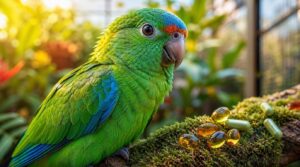
When vitamin A drops too low, your bird’s body starts cutting corners — and the eyes, skin, and airways are first to suffer. Corneal health maintenance falters, mucosal barrier integrity weakens, and respiratory cilia function slows, letting irritants settle in.
Vitamin E’s antioxidant capacity keeps tissues resilient.
Together, these nutrients deliver real immune system support — controlling eye discharge and restoring skin moisture balance before vitamin deficiency impacts on avian health compound further.
Weak Bones, Fractures, or Soft Eggshells
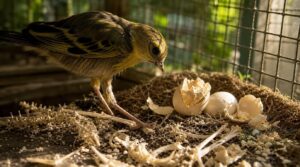
Soft eggshells and hairline fractures aren’t bad luck — they’re your bird’s skeleton sending an SOS. Metabolic bone disease, driven by Vitamin D Deficiency and a broken calcium-to-phosphorus ratio, quietly hollows bone before you notice anything wrong. Calcium Transport Issues and Uterine Calcification Deficit further reduce Eggshell Thickness in laying females.
Watch for:
- Rubbery or thin-shelled eggs
- Spontaneous fractures in adult birds
- Bowed legs or soft keel bones in juveniles
The role of calcium and vitamin D3 in bone health is non-negotiable — without both, calcium and vitamin D3 can’t do their job.
Muscle Wasting and Low Energy
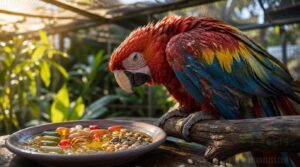
A bird losing muscle isn’t just aging — it’s often a sign that B‑vitamin metabolism has stalled, cutting off mitochondrial ATP production at the source. Without that cellular energy, protein utilization drops, lean tissue breaks down, and lethargy follows.
Inflammation fatigue compounds the problem.
Recovery nutrition — including omega‑3 fatty acids and vitamin D3 supplementation — helps restore nutrient absorption and rebuild what’s been lost.
Seed-based Diet Deficiency Risks
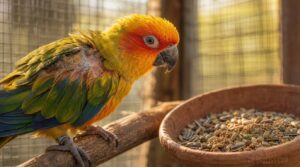
Seeds look complete — they’re not. A seed-based diet creates layered deficiencies that compound quietly before you notice symptoms.
- Vitamin A Deficiency — deteriorating respiratory lining and eye discharge
- Calcium D3 Imbalance — impaired bone mineralization despite calcium presence
- Fat-soluble Vitamin Gaps — chronic immune and tissue vulnerability
- Essential Amino Gaps — poor feather development and muscle loss
- Phytic Acid Effects — blocked zinc and iron absorption
Vitamin supplementation protocols correct what diet formulation alone can’t fix.
Choosing Safe Avian Supplements
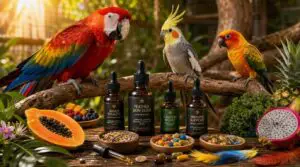
Not every supplement on the shelf is worth your bird’s trust. The right choice comes down to a few non-negotiable factors — species-specific formulation, correct dosing, and proper storage among them.
Here’s what to look for before you buy.
Species-specific Formulas for Different Birds
Not every bird thrives on the same formula. A parrot’s vitamin A needs dwarf those of a finch, while cockatiel B complex requirements differ from raptor protein blend ratios or waterfowl calcium ratios.
Species-specific supplement requirements exist because bird species diet composition varies dramatically.
Match your avian vitamin supplementation protocols to your bird’s actual taxonomy — generic blends rarely cover species-specific nutritional requirements accurately.
Water-soluble Versus Fat-soluble Vitamins
Formula type matters as much as formula content.
Watersoluble vitamins — B complex and Vitamin C — don’t accumulate; the body clears them fast, so consistent Supplement Scheduling fills gaps daily.
Fatsoluble vitamins — Vitamin A, Vitamin D3, and Vitamin E — depend on Dietary Fat Influence for absorption and carry real Toxicity Potential through Body Storage buildup. Their Absorption Pathways run through fat tissue, not water.
Correct Dosing to Avoid Over-supplementation
Knowing your vitamin type is only half the equation — the other half is getting the dose right. Oversupplementation causes real toxicity: orange skin discoloration, soft‑tissue calcification, impaired clotting.
- Follow the Label Verification Process exactly — never double up to compensate for missed days.
- Use Precise Drop Counting or Accurate Scoop Calibration; measuring errors shift delivered amounts substantially.
- Practice Avoid Nutrient Stacking — two products sharing vitamins A, D3, or E can push totals well beyond safe thresholds.
Weight-Based Dosing, supplement dosing, and safety guidelines from your avian veterinarian, confirmed through blood tests, keep things safe.
Fresh Mixing and Proper Storage
Dosing precision only matters if what you’re measuring is still potent.
Water-soluble vitamins degrade fast — mix only what your bird needs per feeding (Batch Size Control), and discard leftovers immediately. Practice Label Date Tracking: write the open date on every container.
Temperature Stability and Moisture Prevention matter equally — store supplements cool, dry, and sealed. Tool Hygiene completes the picture; always use dry, clean scoops.
Avian Veterinary Guidance and Blood Panel Checks
Before you commit to any supplement routine, loop in an avian veterinarian — your bird’s blood work tells a story that labels can’t. A proper panel combines CBC Interpretation, Calcium Panel review, and Liver Enzyme Assessment against Species Baseline Values to catch Nutritional Deficiency Flags early. Plasma analysis and monitoring avian health with blood panels keep supplement dosing and safety guidelines grounded in real data, not guesswork.
- Anemia or infection hiding behind a "healthy" appearance
- Silent calcium deficiency slowly weakening bones and eggs
- Liver stress building undetected from over-supplementation
Top 5 Bird Vitamin Supplements
Not all bird vitamins are created equal, and the brand you choose matters more than you’d think. After reviewing formulas, bioavailability, and species-specific suitability, five products consistently stand out.
Here’s what’s worth keeping on your shelf.
1. VITOFARMA Bird Multi Vitamin Supplement
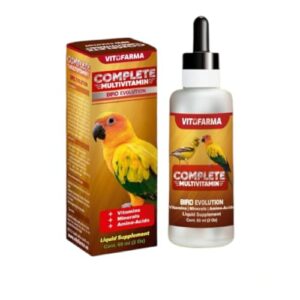
VITOFARMA’s liquid multivitamin packs a full spectrum of vitamins, minerals, and amino acids into a compact 2 oz bottle — practical for daily use without the mess of powders.
You add 3–4 drops directly to your small bird’s water or feed, which makes consistent dosing straightforward.
It’s especially useful during winter months when vitamin D synthesis drops off.
Immune support, plumage conditioning, and appetite stimulation are the primary targets here.
Just don’t eyeball the dose — precision matters.
| Best For | Small bird owners who want an easy, no-fuss way to cover their pet’s daily vitamin needs — especially during winter or for birds that are picky, aging, or recovering. |
|---|---|
| Form | Liquid |
| Vitamin Count | Full spectrum |
| Vitamin C Included | Yes |
| Administration | Water or feed |
| Target Species | Small-breed birds |
| Feather Support | Yes |
| Additional Features |
|
- Full-spectrum formula (vitamins, minerals, amino acids) in one small bottle — no mixing multiple supplements
- Super easy to use — just 3–4 drops into water or feed, done
- Noticeably helps with feather quality and appetite, especially in younger or older birds
- Color varies batch to batch, which can be confusing and make it hard to tell if something’s off
- Results are mostly anecdotal — don’t expect overnight changes
- Picky birds may flat-out refuse treated water, making consistent dosing tricky
2. Oasis Multivitamin Drops For Small Birds
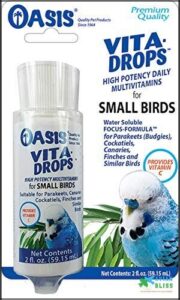
Oasis Vita Drops covers the full NRC-recommended vitamin lineup for birds under 200 g — parakeets, cockatiels, budgies, finches, and similar small species.
liquid dropper format makes precise daily dosing simple: one drop per ounce of drinking water, or applied directly to high‑moisture food.
It includes vitamins A, D₃, E, C, and a complete B complex.
If your bird is ill and not drinking, one drop straight to the beak works too.
Store it cool and dry to maintain potency.
| Best For | Small bird owners (parakeets, budgies, cockatiels, finches, and similar species under 200g) who want a simple, all-in-one daily vitamin supplement. |
|---|---|
| Form | Liquid |
| Vitamin Count | All NRC vitamins |
| Vitamin C Included | Yes (sodium ascorbate) |
| Administration | Water or food |
| Target Species | Birds under 200g |
| Feather Support | Yes |
| Additional Features |
|
- Covers the full NRC-recommended vitamin lineup including A, D₃, E, C, and a complete B complex — solid all-around coverage for small birds.
- Liquid dropper makes dosing easy — a few drops in water or food, and you’re done.
- Great for sick or recovering birds, since you can apply it directly to the beak if they’re not drinking.
- The small bottle runs out fast if you have multiple birds or use it daily.
- Exact vitamin concentrations aren’t disclosed, so precise dosing is hard to verify.
- Not ideal for birds sensitive to ingredients like vitamin K₃ or sodium benzoate.
3. Lafeber AviEra Bird Vitamin Powder
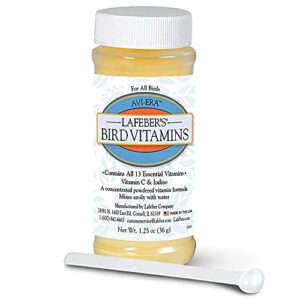
Lafeber’s AviEra packs all 13 essential avian vitamins — plus iodine and vitamin C — into a clean powder with no artificial colors or flavors.
It’s developed by avian veterinarians, which matters when you’re filling real nutritional gaps.
Mix 2 scoops per ounce of drinking water daily, or use half that amount stirred into moist food. During illness or stress, double the dose.
Store it below 72°F and keep it sealed. It won’t replace a balanced diet, but it’s a solid safety net.
| Best For | Bird owners whose pets eat mostly seeds or are picky eaters and need a simple, vet-developed vitamin boost. |
|---|---|
| Form | Powder |
| Vitamin Count | 13 essential + C |
| Vitamin C Included | Yes |
| Administration | Water or food |
| Target Species | All bird ages |
| Feather Support | Yes |
| Additional Features |
|
- Covers all 13 essential avian vitamins plus vitamin C and iodine — great for plugging gaps in seed-heavy diets.
- Easy to give; just mix into water or moist food, no wrestling with your bird required.
- Developed by avian vets and nutritionists, so you know it’s built around real bird biology.
- The powder can be slow to dissolve, so you might need to stir it a bit or keep a second water bowl handy.
- The measuring scoop sometimes doesn’t make it into the package, which is annoying when you’re trying to dose accurately.
- It’s a supplement, not a fix — you still need a solid diet and regular vet checkups to keep your bird truly healthy.
4. Nekton S Bird Multi Vitamin
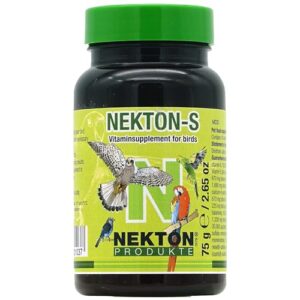
Nekton S covers ground that most single-vitamin products can’t. This 75 g powder delivers 13 vitamins — A, D3, E, K3, the full B complex, and C — alongside 18 free L-form amino acids and trace minerals including zinc, manganese, copper, and iodine. That’s a broad net for one scoop.
Mix 1 g per 250 ml of drinking water daily, or stir it into soft food at the same ratio. For stressed or ill birds, double the dose for five to seven days.
| Best For | Bird owners who want an all-in-one daily supplement, especially those feeding seed-heavy diets or managing stressed and molting birds. |
|---|---|
| Form | Powder |
| Vitamin Count | 13 vitamins |
| Vitamin C Included | Yes |
| Administration | Water or food |
| Target Species | All cage birds |
| Feather Support | Yes |
| Additional Features |
|
- Covers a wide range of nutrients in one product — 13 vitamins, 18 amino acids, and trace minerals
- Flexible dosing: mix it into water or food, and bump the dose up when birds are sick or stressed
- Works for all cage-bird species and life stages, so one container covers the whole flock
- The included scoop is tiny — precise measuring is a bit of a hassle without extra tools
- Getting the dilution wrong can leave the water looking discolored, which some birds may avoid
- Not a substitute for vet care if your bird is actually unwell
5. Hari Hagen Prime Parrot Vitamin Supplement
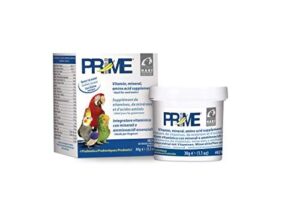
Hari Hagen Prime fills the gaps that seed-heavy diets leave behind.
Its powder format delivers 14 vitamins, 9 minerals, and key amino acids — lysine and methionine — directly coating seeds and soft foods for consistent intake.
Added digestive enzymes, acidifiers, and Lactobacillus probiotics improve bioavailability where absorption often breaks down.
Vitamins A, D3, and E target the most common deficiencies in parrots.
At $14.40 for 40 g, it’s compact but effective for single-bird households.
| Best For | Bird owners with seed-heavy feeders who want an easy, no-fuss way to plug nutritional gaps — especially those with a single parrot or cockatiel. |
|---|---|
| Form | Powder |
| Vitamin Count | 14 vitamins |
| Vitamin C Included | Yes |
| Administration | Seeds or soft food |
| Target Species | Parrots, seed-eaters |
| Feather Support | Yes |
| Additional Features |
|
- Covers a lot of ground — 14 vitamins, 9 minerals, amino acids, enzymes, and probiotics all in one powder
- Easy to use; just coat seeds or soft food and you’re done
- Real-world results reported — owners notice better feather color and more energy
- Tiny container (~40g) runs out fast if you have more than one bird
- The scent throws some birds off, which defeats the purpose
- No third-party testing info, so you’re taking the label at face value
Frequently Asked Questions (FAQs)
What supplements should a pet bird take?
Most pet birds benefit from a multivitamin covering vitamin A, D3, E, and B-complex. If your bird eats mostly seeds, filling those nutritional gaps becomes especially important for long-term health.
What is a bird-specific vitamin A supplement?
bird-specific vitamin A supplement is a targeted formula designed for avian physiology — usually a powder or drop containing measured vitamin A, often paired with D3 and E, calibrated to your bird’s dietary gaps.
Do birds need vitamin supplements?
Yes — most captive birds do. Unlike wild birds foraging freely, your bird depends entirely on what you offer.
Seed-heavy diets miss critical vitamins A, D₃, and E, making targeted supplementation genuinely necessary.
What is a good source of vitamin A for birds?
Orange vegetables are your best bet — carrots, sweet potatoes, and squash all deliver beta-carotene that converts to usable vitamin A. Dark leafy greens like kale work well too.
What vitamins do lovebirds need?
Lovebirds need vitamins A, D3, E, K, and B complex.
Each one covers a different system — vision, bones, immunity, clotting, and metabolism — so no single vitamin can carry the whole load.
Can wild-caught birds adapt to supplement regimens?
Yes, they can — but it takes patience. Wild-caught birds need time to adjust their gut microbiome and accept new foods. Start slow, stay consistent, and monitor droppings closely.
Do seasonal changes affect birds vitamin needs?
Seasonal shifts do affect your bird’s vitamin needs. Shorter winter days reduce natural vitamin D3 input, while breeding season spike the demand for calcium and fat-soluble vitamins.
Adjust supplementation to match each phase.
How do supplements interact with antibiotic treatments?
Timing matters more than you’d think. Mineral supplements can bind to antibiotics in the gut, lowering drug absorption. Space them at least two hours apart to protect treatment effectiveness.
Are organic vitamin sources better than synthetic ones?
Not necessarily. Both can correct deficiencies effectively if the form and dose are right. Organic sources often include helpful cofactors, but synthetic versions offer more consistent potency per unit.
What role do probiotics play alongside vitamin supplements?
Vitamins open the door; probiotics make sure nutrients actually walk through.
Certain strains improve absorption of calcium, B12, and folate — maximizing what your supplements deliver rather than letting them pass unused.
Conclusion
Nutritional gaps don’t announce themselves—they accumulate quietly, reshaping your birds’ health long before the signs become visible.
The benefits of vitamin supplements for aviary birds aren’t optional enhancements; they’re the difference between a flock that merely survives and one that genuinely thrives.
Targeted supplementation, dosed correctly and chosen with species-specific precision, gives your birds what seed alone never will.
Start there, and the results will speak clearly enough on their own.