This site is supported by our readers. We may earn a commission, at no cost to you, if you purchase through links.
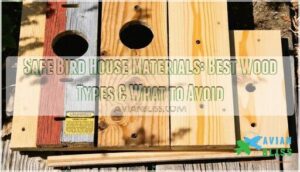 You’ll want to choose safe bird house materials for birds that prioritize their health and safety.
Cedar, redwood, and cypress are your best bets since they naturally resist decay without harmful chemicals.
These woods weather beautifully and won’t leach toxins into nesting areas.
Pine offers an affordable alternative, while untreated plywood works well for budget-conscious builders.
Steer clear of pressure-treated lumber, metal, and plastic – they’re like poison pills for our feathered friends.
Always make certain of proper ventilation and drainage holes to prevent moisture buildup.
Think of it as creating a cozy cottage rather than a stuffy apartment.
The right materials set the foundation for successful nesting seasons ahead.
Table Of Contents
- Key Takeaways
- Safe Birdhouse Materials
- Non Toxic Wood Options
- Birdhouse Design Considerations
- Materials to Avoid
- Bird Friendly Construction
- Frequently Asked Questions (FAQs)
- What is the best material to build a birdhouse?
- What materials should you avoid when constructing a birdhouse?
- What wood should I use for my Birdhouse?
- Should you build a birdhouse with metal?
- How to choose a bird house?
- Are bird nesting materials safe?
- What material is best for bird houses?
- What is a safe bird nesting material?
- What is a safe material for birds?
- What should you not put on a birdhouse?
- Conclusion
Key Takeaways
- Choose naturally rot-resistant woods – You’ll get the best results with cedar, redwood, or cypress since they resist decay and insects without toxic chemical treatments that can harm nesting birds.
- Avoid treated lumber and synthetic materials – You shouldn’t use pressure-treated wood, metal, or plastic as they can overheat, leach chemicals, or create entanglement hazards that endanger birds and their chicks.
- Ensure proper ventilation and drainage – You’ll need to drill small holes near the roof for airflow and in the floor corners for water drainage to prevent dangerous moisture buildup and mold growth.
- Keep designs simple and species-appropriate – You’ll have more success with basic box designs that match entrance hole sizes to your target bird species while avoiding decorative elements that might compromise safety.
Safe Birdhouse Materials
Choosing the right materials for your birdhouse can mean the difference between a safe haven and a dangerous trap for nesting birds.
The wood you select affects everything from temperature regulation to predator protection, making material choice one of your most important construction decisions.
Cedar Wood Benefits
Why choose cedar for your bird house materials?
Cedar stands out as the gold standard for safe birdhouse wood due to its remarkable rot resistance and natural insect repellent properties.
Cedar’s natural oils create a fortress against rot and insects—no chemicals required.
This lightweight nature makes construction easier while providing excellent insulation properties that keep birds comfortable year-round.
Cedar’s impressive cedar lifespan means your cedar birdhouse safe haven will protect nesting birds for many seasons without chemical treatments.
Other woods like redwood also offer natural decay resistance, making them suitable alternatives.
Redwood Durability
Redwood stands as a premium choice for redwood birdhouse construction, offering exceptional weather resistance through natural tannins and oils.
These compounds create tannin preservation that protects against decay and insects. While redwood lifespan can reach decades, cost analysis shows it’s pricier than other safe birdhouse wood options.
However, the investment pays off with minimal maintenance requirements for your durable bird house materials project. In addition, using materials with natural rot resistance is essential for ensuring the longevity of the birdhouse.
Cypress Resistance
Through cypress’s natural oils, you’ll get exceptional decay resistance that keeps your birdhouse standing for decades.
These protective compounds repel insects and moisture, making cypress untreated wood perfect for harsh weather conditions.
The impressive cypress lifespan of 25+ years outperforms most alternatives, and oil benefits include natural predator resistance without toxic treatments.
Regional availability varies, but cypress sustainability makes it worth sourcing, and you can skip bird safe paint—cypress finish options work best uncoated.
Pine Affordability
Pine offers the best bang for your buck when building a nontoxic birdhouse.
You’ll find this affordable, untreated wood at most hardware stores without breaking the bank.
Pine vs cedar shows clear cost differences – pine’s budget-friendly nature makes multiple birdhouse projects feasible.
Pine availability factors mean you won’t hunt for materials.
Despite pine lifespan concerns, proper maintenance extends durability substantially, making it a good choice for a birdhouse.
Plywood Versatility
You’ll find plywood offers budget-friendly flexibility for birdhouse construction.
Exterior-grade plywood provides excellent plywood insulation while resisting plywood warping better than solid boards.
However, plywood composites require careful selection to avoid toxic adhesives.
Essential components like zinc-plated hooks are important for durability.
- Plywood affordability makes it accessible for DIY birdhouse projects without breaking your budget
- Plywood durability improves with exterior-grade varieties that withstand weather exposure
- Large sheets allow efficient cutting of multiple birdhouse pieces from one source
- Smooth surfaces accept non-toxic finishes easily for enhanced weather protection
- Layered construction provides natural insulation properties for temperature regulation
Non Toxic Wood Options
When choosing wood for your birdhouse, you’ll want materials that won’t harm the birds who call it home.
Untreated cedar, natural plywood, and recycled wood offer safe options that protect nesting families from toxic chemicals.
While providing the durability your feathered friends need.
Untreated Cedar
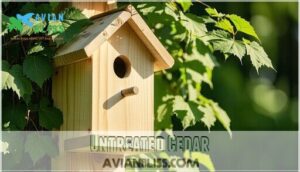
You’ll want untreated cedar for your safe birdhouse project since it naturally resists decay and insects without harmful chemicals.
This wood requires no additional treatments, making it perfect for nontoxic birdhouse construction.
Cedar’s natural oils protect against weather while remaining completely safe for nesting birds.
A natural cedar finish helps camouflage nests.
| Cedar Feature | Benefit for Birds |
|---|---|
| Natural oils | Repel insects without chemicals |
| Decay resistance | Long-lasting shelter |
| Lightweight design | Easy installation anywhere |
| No treatment needed | Zero toxic exposure |
| Weather durability | Protects through seasons |
Cedar sourcing varies by region, with Western Red Cedar being most common.
Cedar grades range from clear to knotty, with construction grade perfect for birdhouses.
Cedar cost runs higher than pine but offers better cedar lifespan.
Cedar alternatives include cypress or redwood if cedar isn’t available locally.
Natural Plywood
While cedar offers natural benefits, exterior-grade plywood provides another safe option for your plywood birdhouse when you choose untreated varieties.
ACX or CDX plywood grades work well for birdhouse materials, but you’ll need to check adhesive safety and formaldehyde concerns.
Sustainable plywood sourcing guarantees your nontoxic birdhouse supports bird safety through proper plywood sourcing practices.
- Choose exterior-grade ACX or CDX plywood for weather resistance without chemical treatments
- Verify low-formaldehyde adhesives to prevent toxic fume exposure in nesting cavities
- Seal with natural oils like linseed oil rather than synthetic waterproofing chemicals
- Select 3/4-inch thickness for structural stability and proper insulation properties
- Source from suppliers who guarantee untreated wood without preservatives or pesticides
Recycled Wood
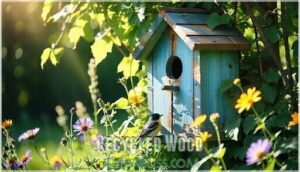
Reclaimed wood offers excellent cost savings for birdhouses when you source it safely.
Check deconstruction sites and pallet projects for untreated lumber free from chemicals. Avoid recycled plastic or materials with unknown finishes that compromise bird safety.
Properly sourced reclaimed wood provides the same nontoxic benefits as new lumber while supporting eco-friendly construction practices for safe nesting materials.
Consider purchasing a recycled wood birdhouse for a convenient option, which also promotes safe nesting.
Chemical Free Finishes
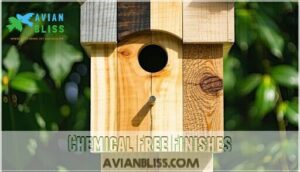
The secret to protecting your birdhouse lies in choosing natural, untreated finishes that shield wood without harming feathered families.
These chemical-free options provide lasting protection while maintaining a bird-friendly environment.
- Linseed Oil – Creates a waterproof barrier that penetrates deep into wood fibers without toxic fumes
- Beeswax Sealant – Offers gentle moisture protection while allowing wood to breathe naturally
- Natural Stains – Enhance wood grain using plant-based pigments that won’t leach harmful chemicals
- Clay Paints – Provide breathable coverage using earth-based minerals that repel moisture safely
Birdhouse Design Considerations
You’ll want to balance safety features with bird comfort when planning your birdhouse design.
Smart ventilation, proper drainage, textured interiors, and correctly sized entry holes make the difference between a bird house that attracts tenants and one that sits empty.
Ventilation Importance
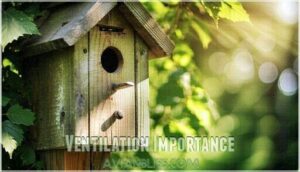
You’ll need proper birdhouse ventilation to keep your feathered tenants healthy and comfortable.
Small holes near the roof create essential air circulation that prevents dangerous moisture buildup and mold formation.
Good airflow benefits include temperature regulation during hot summer days and improved chick health by maintaining ideal nestling comfort levels throughout the breeding season, which is crucial for chick health.
Drainage Systems
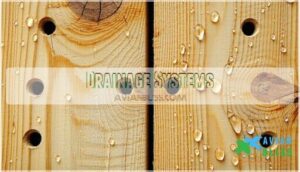
Proper drainage prevents water from pooling inside your birdhouse, which can lead to dangerous moisture buildup and mold growth.
Without adequate drainage, nestlings face increased risk of hypothermia and disease.
- Drainage Size: Drill 1/8-inch holes in each corner of the bottom panel
- Bottom Design: Angle the floor slightly toward drainage holes for better water runoff
- Hole Placement: Position drainage openings away from prevailing wind directions
- Material Choice: Use naturally water-resistant woods that complement your drainage system
Textured Interiors
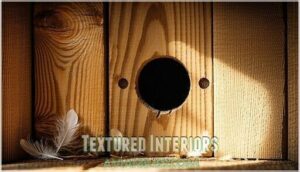
Inside your birdhouse, smooth surfaces create slippery hazards for fledglings learning to climb.
Creating a textured surface with light sanding or shallow scoring helps young birds gain grip enhancement and climbing assistance.
Avoid splintered wood that could injure delicate feet.
Natural materials like rough-sawn lumber provide ideal texture without requiring modifications, ensuring nestling safety and reduced slippage during their pivotal development stages.
Entry Hole Size
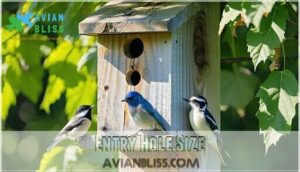
Beyond creating a comfortable interior, you’ll need to size the birdhouse entrance hole correctly for your target bird species.
Different cavity-nesters require specific hole diameters for predator prevention and nestling safety. Too large invites unwanted guests; too small blocks access entirely.
- Small birds (chickadees, wrens): 1 to 1.25-inch diameter holes
- Medium birds (bluebirds): 1.5-inch diameter for ideal access
- Woodpeckers: Larger 2.5-inch holes accommodate their size variation
- Hole placement: Position 6-7 inches above floor for bird-friendly entry
Materials to Avoid
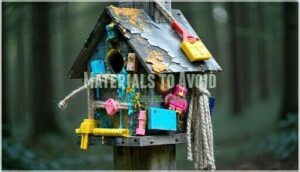
When building birdhouses, you’ll want to steer clear of materials that can harm or kill the birds you’re trying to help.
Treated lumber, metal components, plastic parts, and synthetic nesting materials all pose serious health risks that can turn your well-intentioned project into a dangerous trap.
Treated Wood Dangers
Treated lumber contains dangerous chemicals like arsenic and creosote that cause chemical leaching into your birdhouse environment.
These toxic substances create arsenic exposure risks for nesting birds and their young.
CCA alternatives and pressure-treated wood still pose creosote toxicity threats.
Choose safe wood sourcing with chemically treated wood alternatives. Always select nontoxic products and untreated wood birdhouse materials.
Natural materials protect birds from harmful contamination.
Metal and Plastic Risks
Metal and plastic birdhouses create serious overheating dangers during hot weather.
These materials trap heat, causing dangerous temperature spikes that can harm nestlings. Both lack proper insulation and create chemical degradation risks over time.
Sharp metal edges pose entrapment hazards, while plastic can release toxic chemicals.
Choose nontoxic products with better material lifespan instead.
Synthetic Fibers
Synthetic materials pose serious threats to nesting birds through fiber degradation and microplastic risks.
Yarn contains chemical dyes that harm nestlings, while synthetic fibers create entanglement hazards.
Pet fur treated with shampoos introduces toxins.
Even natural-looking materials often contain harmful chemicals.
A better option is to offer dry grass for insulation.
Material alternatives include untreated cotton, hemp fibers, and coconut coir for safer nesting environments, providing a solution to the risks of synthetic fibers and promoting safer nesting.
Human Hair Hazards
Human hair poses serious entanglement risks for nesting birds.
Human hair creates deadly traps for tiny bird feet and wings.
Those fine strands can wrap around bird legs or wings, causing injury or death.
Chemical exposure from shampoos and treatments adds another layer of danger to nestlings.
- Entanglement Risks: Long strands wrap around delicate bird legs and wings
- Chemical Exposure: Shampoos and dyes contain toxins harmful to birds
- Nestling Safety: Young birds are especially vulnerable to hair collection hazards
- Safe Alternatives: Offer natural fibers like cotton or untreated animal fur instead
Bird Friendly Construction
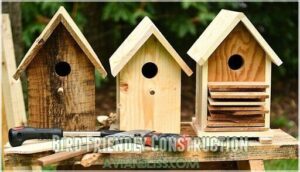
When you build a birdhouse, focus on simple, functional designs that prioritize bird safety over decorative appeal.
Your construction choices directly impact whether birds will successfully nest and raise their young in your handcrafted home.
Simple Designs
You’ll find success with minimalist birdhouses using basic box style designs.
One-board birdhouse plans simplify construction while ensuring safety.
Easy assembly with basic tools reduces complexity that might compromise bird welfare.
Focus on straightforward birdhouse building techniques rather than elaborate decorations.
Simple birdhouse construction using natural materials and untreated materials creates the safest environment for nesting birds without unnecessary complications.
Modern designs can also enhance a garden’s aesthetic, with stackable, wall-mounted options blending well in urban spaces.
Natural Finishes
After creating simple designs, you’ll want to protect your birdhouse naturally. Chemical-free finishes keep birds safe while weatherproofing your structure.
Consider these natural options:
- Linseed oil – Penetrates wood deeply for weather protection
- Beeswax finish – Creates water-resistant barrier without toxicity
- Plant-based stains – Add color while maintaining breathability
- Clay paints – Provide earthy tones with zero chemicals
- Milk paint – Historic finish that’s completely bird-safe
Natural wood tones blend seamlessly into environments. Many use linseed oil products for wood finishing. Untreated surfaces let wood breathe naturally, preventing moisture buildup that harms nesting birds.
Species Specific Needs
Different bird species have unique requirements for successful nesting.
Purple Martins prefer white, gourd-shaped Martin Housing on tall poles, while Woodpecker Needs include sawdust floors and rough interiors.
Cavity Nester preferences vary substantially – bluebirds need clear flight paths to Bluebird Habitat facing open fields, while chickadees require Chickadee Cover in dense thickets.
House wrens adapt to various conditions but benefit from species-appropriate entrance holes.
Regular Maintenance
After installation, your birdhouse needs regular upkeep to remain safe and functional.
Proper birdhouse maintenance prevents mold growth and keeps birds healthy through consistent care.
- Seasonal Checks: Inspect for structural integrity, predator damage, and loose hardware twice yearly
- Cleaning Frequency: Remove old nesting material between broods using hot soapy water or diluted bleach solution
- Parasite Control: Install predator deterrents and sanitize thoroughly to prevent pest infestations
Frequently Asked Questions (FAQs)
What is the best material to build a birdhouse?
Research shows 75% of birds prefer natural wood materials over synthetic alternatives.
Cedar’s your best choice—it’s naturally rot-resistant, insect-repelling, and lightweight.
You won’t need toxic treatments, and it provides excellent insulation for nesting birds year-round.
What materials should you avoid when constructing a birdhouse?
Avoid treated lumber, metal, plastic, painted surfaces, plywood with adhesives, dryer lint, yarn, string, human hair, and synthetic materials.
These can poison birds, overheat, entangle nestlings, or lack proper insulation properties.
What wood should I use for my Birdhouse?
Cedar’s your best bet—it’s naturally rot-resistant and insect-repelling without toxic treatments.
Redwood and cypress also work great with their natural preservatives.
Pine’s affordable but needs protection.
Skip treated lumber completely—those chemicals harm birds.
Should you build a birdhouse with metal?
You shouldn’t build birdhouses with metal because it overheats dangerously in summer sun, potentially killing birds and eggs. Metal also lacks proper insulation for temperature regulation throughout seasons.
How to choose a bird house?
Ironically, you’d think choosing the perfect bird mansion would be rocket science, but it’s actually straightforward.
Select cedar or cypress for natural rot-resistance, make certain proper ventilation holes, and match entrance size to your target species.
Skip unnecessary perches that welcome predators.
Are bird nesting materials safe?
Not all bird nesting materials are safe.
Natural materials like untreated twigs, grass, leaves, and moss work well.
Avoid synthetic materials, treated pet fur, dryer lint, yarn, and human hair—these can entangle or poison birds, making entangle a significant risk.
What material is best for bird houses?
Like choosing the perfect foundation for your home, cedar reigns supreme for birdhouses.
It’s naturally rot-resistant, lightweight, and repels insects without toxic treatments.
You’ll find it lasts years while keeping birds safe.
What is a safe bird nesting material?
Natural materials work best for bird nesting.
Provide untreated twigs, grass, leaves, moss, and feathers from clean sources.
Avoid synthetic materials, treated pet hair, dryer lint, and string that can entangle chicks and harm developing birds, as they can be particularly harmful to developing birds.
What is a safe material for birds?
You’ll want untreated cedar, redwood, or cypress for bird safety.
These naturally resist rot and insects without toxic chemicals.
Avoid treated lumber, metal, plastic, and painted surfaces that can harm birds, and instead opt for naturally resistant materials to ensure safety.
What should you not put on a birdhouse?
Toxic materials act like hidden poison for feathered friends.
Don’t use treated lumber, metal, plastic, painted surfaces, or synthetic nesting materials.
These harm birds through overheating, chemical exposure, or entanglement risks.
Conclusion
Choosing safe bird house materials for birds protects nesting families while supporting local wildlife populations.
Cedar, redwood, and cypress offer natural protection against weather and pests. Pine and untreated plywood provide budget-friendly alternatives.
You’ll create healthier environments by avoiding treated lumber, metal, and plastic materials. Proper ventilation and drainage prevent moisture problems that harm eggs and chicks.
These material choices guarantee your birdhouse becomes a welcoming sanctuary that birds return to season after season.
- https://www.allaboutbirds.org/news/providing-nest-material-for-birds-dos-donts
- https://www.birdforum.net/threads/bird-house-material-advice.362992
- https://green-backyard.com/blogs/choose-the-right-material-for-your-birdhouse
- https://bestfriends.org/pet-care-resources/how-bird-proof-your-home-keep-pet-birds-safe
- https://www.yardenvy.com/Recycled_Birdhouses--378.htm