This site is supported by our readers. We may earn a commission, at no cost to you, if you purchase through links.
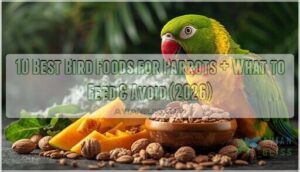
Your parrot’s lifespan—and honestly, their happiness—comes down to what you put in that food bowl every day. Most commercial seed mixes? They’re basically the fast-food equivalent for birds: tasty, addictive, and nutritionally bankrupt.
Wild parrots spend 60-80% of their day foraging for a diverse buffet of fruits, flowers, nuts, and leafy greens—not chomping through sunflower seeds like there’s no tomorrow!
The good news: choosing the best bird food for parrots doesn’t mean you need a PhD in avian nutrition. Whether you’ve got a chatty African Grey or a feisty conure, this guide breaks down the top-rated pellets, safe fresh foods, and feeding strategies that’ll keep your feathered friend thriving (not just surviving) for decades to come.
Table Of Contents
- Key Takeaways
- Top 10 Best Bird Foods for Parrots
- 1. Kaytee Parrot Food Blend
- 2. ZuPreem FruitBlend Bird Pellets Food
- 3. Lafeber Classic Nutri Berries Bird Food
- 4. RoudyBush Daily Bird Food Pellets
- 5. Lafeber Avi Cakes Parrot Food
- 6. LaFeber’s Avi Cakes Bird Food
- 7. ZuPreem Pure Fun Bird Food Blend
- 8. Kaytee Bird Greens Chia Sweet Potato
- 9. Dr Harveys Parrot Food Blend
- 10. ZuPreem Natural Parrot Food
- Essential Nutritional Needs for Parrots
- Pellets Vs. Seeds: Choosing The Right Base
- Safe Fresh Foods for Parrots
- Foods and Ingredients to Avoid
- Best Feeding Practices for Parrot Health
- Frequently Asked Questions (FAQs)
- What is the best food for a parrot?
- What are the best parrot food brands?
- What is the best brand of parrot food?
- What is the healthiest food for birds?
- What bird food do birds like the most?
- How to transition parrots to a new diet?
- What are common signs of food allergies in parrots?
- Can parrots eat homemade bird food safely?
- How does age affect a parrot’s diet?
- What are the best methods to store bird food?
- Conclusion
Key Takeaways
- Wild parrots spend 60-80% of their day foraging diverse foods, so most commercial seed mixes act like fast food—tasty but nutritionally bankrupt—while quality pellets should form 60-75% of your bird’s diet alongside fresh vegetables and fruits to prevent deficiencies like fatty liver disease and calcium imbalance.
- High-quality pellet brands like ZuPreem FruitBlend, Lafeber Classic Nutri Berries, and RoudyBush Daily Maintenance deliver complete nutrition in every bite, eliminating selective feeding that creates dangerous vitamin gaps and supporting long-term health with balanced protein (10-16%), essential vitamins, and omega fatty acids.
- Toxic foods including avocado (contains deadly persin), chocolate, caffeine, and high-salt/sugar/fat human snacks can trigger seizures, organ failure, or death in parrots, while harmful additives like BHA, BHT, and artificial dyes lurk in many commercial foods—always choose natural preservatives like vitamin E instead.
- Gradual diet transitions work best when you mix 25% new food with 75% familiar food every two weeks, pair pellets with foraging enrichment activities, and maintain consistent meal timing while monitoring weight twice weekly to ensure your parrot thrives on the nutritional upgrade.
Top 10 Best Bird Foods for Parrots
Finding the right food for your parrot can feel overwhelming with so many options out there, but don’t worry—we’ve done the legwork for you! Whether you’re looking for a complete daily diet or healthy treats to keep your feathered friend happy, this list has got you covered.
From premium pellets to organic seed mixes, our guide to safe bird food for parrots breaks down exactly what to look for when shopping for your bird.
Let’s break down the top 10 bird foods that’ll help your parrot thrive in 2026.
Starting with nutritious seeds for parrots gives you a solid foundation before exploring other essential food groups.
1. Kaytee Parrot Food Blend
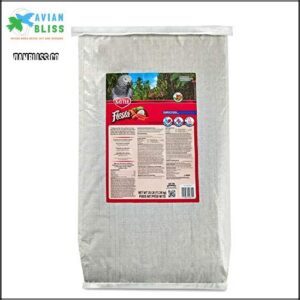
Kaytee Nutrition gives your parrot serious food variety in one scoop! Kaytee Fiesta Parrot Food packs safflower, sunflower, pumpkin, flax, and canary seeds alongside dried pineapple, coconut, berries, carrots, and peppers—creating a complete diet your bird won’t get bored with.
For even broader variety, pair this blend with an organic birdseed mix for parrots that rotates seed types weekly.
With 15% protein, omega-3s for heart health, and live probiotics (around 100,000 CFU per gram!), this blend quality covers parrot nutrition and diet in a single, colorful bowl.
Feeding guidelines are simple: adjust portions by your parrot’s size, refresh daily, and watch them forage happily through each textured bite.
| Best For | Parrot owners looking for a nutritionally complete, varied diet that keeps their birds engaged and supports overall health with omega-3s, probiotics, and natural ingredients. |
|---|---|
| Brand | Kaytee |
| Age Range | Adult |
| Item Form | Extruded, Seeds, Other |
| Weight | 2.5 Pounds |
| Nutritional Focus | Omega 3s, Prebiotics |
| Primary Ingredients | Seeds, Nuts, Fruits |
| Additional Features |
|
- Packed with diverse textures and flavors (fruits, nuts, veggies, seeds) that prevent mealtime boredom and encourage natural foraging behavior
- Fortified with omega-3s for heart and brain health, plus prebiotics and probiotics (100,000 CFU/gram) for digestive support
- High protein content (15%) and antioxidants help maintain healthy feathers, skin, and immune function
- Contains peanuts and tree nuts, which aren’t safe for parrots with allergies or sensitivities
- Some customers report quality control issues and more filler seeds than premium ingredients for the price point
- More expensive than basic seed mixes, which may not fit all budgets for daily feeding
2. ZuPreem FruitBlend Bird Pellets Food
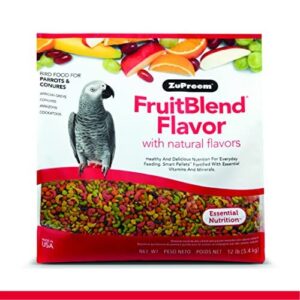
If you want something closer to nature’s blueprint, ZuPreem FruitBlend pellets deliver complete avian nutrition in every colorful bite! Each pellet packs 14% protein, essential vitamins A, D, E, and a B-complex lineup that promotes feather growth, immune strength, and energy metabolism—all while tasting like real fruit.
The FruitBlend benefits shine when you’re converting picky eaters from seed-only diets, because those bright colors and sweet banana, grape, apple, and orange flavors make parrot food feel like a treat.
Feeding guidelines recommend pellets cover 60% of your bird’s daily intake for ideal bird health!
| Best For | Bird owners with medium to large parrots (like Conures, African Greys, or small Cockatoos) who want a nutritionally complete pellet diet that’s easier to feed than seeds alone. |
|---|---|
| Brand | ZuPreem |
| Age Range | All Life Stages |
| Item Form | Pellet |
| Weight | 12 Pounds |
| Nutritional Focus | Vitamins, Minerals, Amino Acids |
| Primary Ingredients | Fortified Pellets, Fruits |
| Additional Features |
|
- Complete nutrition with 14% protein, vitamins A, D, E, and B-complex for healthy feathers, immunity, and energy
- Fruit colors and natural flavors (banana, grape, apple, orange) make it easier to convert picky birds from seed-only diets
- Made in the USA and suitable for all life stages, so you don’t need different foods as your bird ages
- Some birds pick out only their favorite colors and waste the rest, which gets expensive with a 12 lb bag
- Freshness can be hit-or-miss—some buyers reported receiving stale products or bags close to expiration
- Requires proper storage to stay fresh, and may not work for birds with special dietary restrictions
3. Lafeber Classic Nutri Berries Bird Food
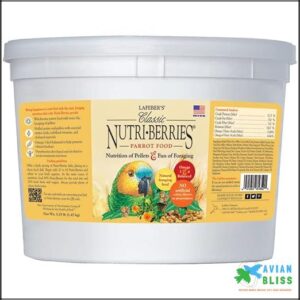
Looking for the best of both worlds—pellet nutrition plus foraging fun? Lafeber Classic NutriBerries deliver exactly that! Each berry blends hulled white proso millet, corn, oats, peanuts, and safflower with 16.5% pellet pieces, so your parrot gets 12.5% protein, omega-3s, vitamin A, D3, and chelated minerals in every bite.
Nutri Berry Benefits shine brightest during mealtime: those round, textured berries encourage natural grasping, peeling, and pulling, turning bird nutrition into mental enrichment. Feed 10–20 berries per meal depending on size—African Greys, Amazons, and macaws love them!
| Best For | Parrot owners who want complete nutrition combined with foraging enrichment to keep their birds mentally stimulated and physically healthy. |
|---|---|
| Brand | LAFEBER’S |
| Age Range | All Life Stages |
| Item Form | Nutri-Berries |
| Weight | 3.25 Pounds |
| Nutritional Focus | Antioxidants, Omega 3&6 |
| Primary Ingredients | Seeds, Grains, Fruits |
| Additional Features |
|
- Combines pellet nutrition with natural foraging textures that encourage beak exercise and reduce boredom-related behaviors like feather picking
- Made with high-quality, non-GMO, human-grade ingredients fortified with omega-3s, antioxidants, and essential vitamins for healthy skin, feathers, and immune function
- Versatile for multiple parrot species (African Greys, Amazons, macaws, conures) and can be used to hide medication for easier administration
- May arrive crumbled or broken during shipping rather than in intact berry form
- Higher price point compared to standard seed or pellet options, though many owners find it worth the investment
- Parrots can be messy eaters and may waste some of the food during foraging activities
4. RoudyBush Daily Bird Food Pellets
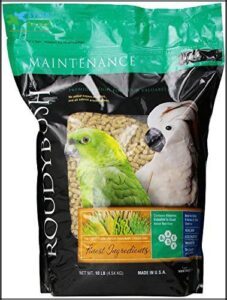
If you want clean-label pellet nutrition without the fuss, RoudyBush Daily Maintenance is your go-to! These medium pellets pack ground corn, wheat, soybean meal, and natural preservatives like rosemary extract—zero artificial colors, sugars, or animal by-products.
With 11% protein, 6% fat, and omega-3s, they support bird health for macaws, cockatoos, and Amazons year-round.
These nutrient-dense pellets offer balanced lovebird balanced nutrition that helps prevent deficiencies common in seed-only diets.
Gradual conversion? Mix one-quarter RoudyBush with three-quarters seed for two weeks, then flip the ratio. Your parrot gets consistent avian wellness in every steam-pelleted bite!
| Best For | Bird owners with large parrots like macaws, cockatoos, and Amazons who want a clean-label, daily pellet diet free from artificial additives. |
|---|---|
| Brand | RoudyBush |
| Age Range | All Life Stages |
| Item Form | Pellet |
| Weight | 10 Pounds |
| Nutritional Focus | Omega 3&6 |
| Primary Ingredients | Corn, Wheat, Soybean |
| Additional Features |
|
- Clean ingredients with no artificial colors, flavors, or animal by-products
- Balanced omega-3 and omega-6 fatty acids support overall health and vibrant plumage
- Medium pellet size works well for large bird species and gradual diet transitions
- Some birds may reject the pellets if they’re used to seed-based diets
- Requires careful storage to prevent flour moth infestations
- Birds may drop pellets in water bowls, causing fermentation and odors
5. Lafeber Avi Cakes Parrot Food
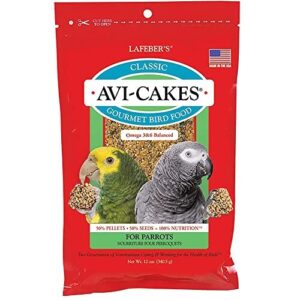
Square cakes that turn snack time into a treasure hunt! Lafeber Avi Cakes blend 50/50 seeds and pellets—think ground corn, canary grass seed, hulled oats, plus fortified pellets with vitamins A, D3, and E. At 12.5% protein and 4.5% fat, this parrot food delivers complete diets without boring your bird.
Keep treats like Avi-Cakes safe by checking our healthy bird food guide for what’s nutritious versus toxic to parrots.
The chewy texture encourages parrot foraging, so your macaw or Amazon shreds, twists, and works for every bite. It’s like Lafeber NutriBerries’ fun cousin—same Lafeber ingredients quality, different shape. Avian diet benefits meet beak play!
| Best For | Parrot owners who want to keep their birds mentally stimulated and physically active while providing complete nutrition in a fun, foraging-friendly format. |
|---|---|
| Brand | LAFEBER’S |
| Age Range | All Life Stages |
| Item Form | Avi-Cakes |
| Weight | 12 Ounces |
| Nutritional Focus | Antioxidants, Omega 3&6 |
| Primary Ingredients | Corn, Seeds, Grains |
| Additional Features |
|
- Combines seeds and pellets in a unique square shape that encourages natural foraging behavior and prevents boredom
- Made with non-GMO, human-grade ingredients fortified with essential vitamins and balanced omega fatty acids for healthy feathers and immune support
- Works for parrots of all life stages and comes with a 100% satisfaction guarantee
- May be too large for smaller birds and require cutting into smaller pieces before serving
- Higher calorie content means it should be used as a treat or supplement rather than the sole food source to avoid weight gain
- Some customers have reported delivery and packaging issues, and certain birds may not enjoy the chewy texture
6. LaFeber’s Avi Cakes Bird Food
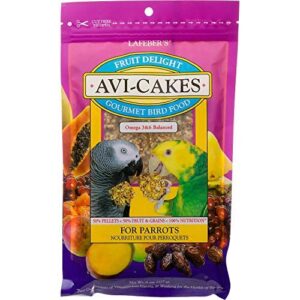
You’ll notice this formula is crafted by avian veterinarians using non-GMO, human-grade ingredients—a safety standard your flock deserves! LaFeber’s Avi Cakes pack 12.5% protein and balanced Omega-3 & 6s into each square, supporting healthy feathers and immune systems.
The pellet-and-seed blend creates smart parrot diet plans: your bird can’t pick out favorites, so avi cake nutrition stays complete.
Use these as foraging strategies by clipping squares to cage bars—suddenly mealtime becomes beak exercise and mental enrichment.
No artificial colors or preservatives means pure avian health benefits in every bite!
| Best For | Parrot owners looking for a complete nutrition option that doubles as enrichment, especially if their bird tends to get bored or picks out favorite seeds. |
|---|---|
| Brand | LAFEBER’S |
| Age Range | All Life Stages |
| Item Form | Avi-Cakes |
| Weight | 8 Ounces |
| Nutritional Focus | Antioxidants, Omega 3&6 |
| Primary Ingredients | Seeds, Fruits, Vegetables |
| Additional Features |
|
- Formulated by avian vets with human-grade, non-GMO ingredients and no artificial additives
- Square shape encourages foraging and beak exercise, helping prevent boredom and feather picking
- Balanced omega-3 and omega-6 fatty acids support healthy feathers, skin, and immune function
- Some customers receive broken or crumbled squares instead of intact pieces
- May not work for all bird species—budgie owners have reported issues
- Subscription orders can be inconsistent, and there’s no return policy for defective products
7. ZuPreem Pure Fun Bird Food Blend
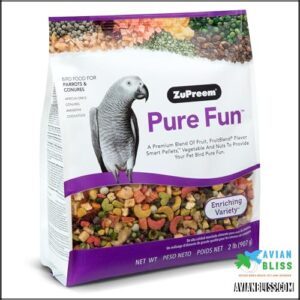
This blend turns every meal into playtime! ZuPreem Pure Fun mixes colorful FruitBlend pellets with pistachios, dried pineapple, bananas, and safflower seeds—creating instant parrot enrichment toys in your bowl.
The seed pellet mix delivers 10% protein and essential vitamins while encouraging natural foraging, but remember: it’s designed as up to 30% of weekly intake, not a complete parrot diet.
Pair it with ZuPreem Natural or another pellet base for proper nutrient balance, and watch your bird shred, toss, and explore every bite—fun feeding methods meet solid bird nutrition!
| Best For | Parrot owners looking to add enrichment and foraging variety to their bird’s diet while encouraging natural play behaviors. |
|---|---|
| Brand | ZuPreem |
| Age Range | All Life Stages |
| Item Form | Pellet |
| Weight | 2 Pounds |
| Nutritional Focus | Premium Ingredients |
| Primary Ingredients | Seeds, Pellets, Vegetables |
| Additional Features |
|
- Combines nutrition with entertainment—the mix of pellets, seeds, and dried fruits keeps birds mentally stimulated during feeding time
- Premium ingredient variety including pistachios, pineapple, and bananas appeals to picky eaters and adds flavor diversity
- Works for multiple bird sizes from conures to larger parrots, making it versatile for multi-bird households
- Can’t be used as a standalone diet—you’ll need to buy a separate pellet base since this should only make up 30% of weekly food
- Higher price point compared to basic seed mixes due to the premium dried fruits and nuts included
- May create messier feeding sessions since birds tend to toss and shred the larger pieces during foraging play
8. Kaytee Bird Greens Chia Sweet Potato
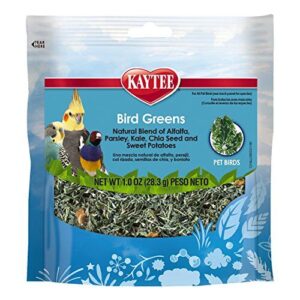
Your parrot needs more than pellets and fresh fruit—they crave leafy greens that spark natural foraging behavior! Kaytee Bird Greens Chia Sweet Potato delivers 21% protein through dehydrated alfalfa, parsley, kale, chia seed benefits, and sweet potato value in a 1-ounce blend that rivals any Kaytee Fiesta mix for variety.
Sprinkle 1-3 tablespoons (depending on species) over whole grains or pellets to create instant foraging toys, turning mealtime into enrichment while boosting parrot nutrition. It’s affordable bird supplements done right—no artificial colors, just real parrot nutrition tips you can see!
| Best For | Bird owners looking to add natural leafy greens and nutrient variety to their parrot’s diet while encouraging healthy foraging instincts. |
|---|---|
| Brand | Kaytee |
| Age Range | All Life Stages |
| Item Form | Bag |
| Weight | 1 Ounce |
| Nutritional Focus | Digestive Support |
| Primary Ingredients | Alfalfa, Kale, Sweet Potato |
| Additional Features |
|
- High protein content (21%) from real dehydrated vegetables like alfalfa, kale, and parsley with added chia seeds and sweet potato
- Works as both a meal topper and a foraging enrichment tool to reduce boredom and stimulate natural behaviors
- No artificial colors or fillers—just wholesome ingredients suitable for birds at all life stages
- Packaging may not reseal properly, which could affect freshness after opening
- May trigger allergies or respiratory issues in humans when handling the dried product
- Not ideal for birds with specific dietary restrictions or sensitivities to certain greens
9. Dr Harveys Parrot Food Blend
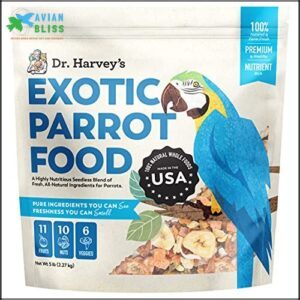
If your parrot deserves restaurant-quality ingredients instead of processed mystery meals, Dr Harveys Parrot Food Blend brings 11 fruits, 10 nuts, and 6 vegetables to their bowl with zero synthetic additives!
This seedless whole-food mix promotes bird wellness through 15% crude fat and 8% crude protein, giving you natural ingredients you can actually recognize—macadamias, mangos, broccoli, bell peppers—for excellent diet balance and parrot nutrition tips that champion food variety over fillers.
| Best For | Parrot owners who want to give their birds premium, whole-food nutrition with recognizable ingredients and are willing to invest more for their bird’s long-term health. |
|---|---|
| Brand | Dr. Harvey’s |
| Age Range | All Life Stages |
| Item Form | Seeds, Nuts, Dried Fruits |
| Weight | Not specified |
| Nutritional Focus | Ultra-Premium Ingredients |
| Primary Ingredients | Fruits, Nuts, Vegetables |
| Additional Features |
|
- Contains 27 whole ingredients (11 fruits, 10 nuts, 6 vegetables) with no synthetic additives, chemicals, or preservatives
- Supports natural foraging behavior while promoting vibrant plumage and overall health across all life stages
- High-quality nutritional profile with 15% crude fat and 8% crude protein from real, recognizable foods like macadamias, mangos, and bell peppers
- Significantly more expensive than standard parrot food options
- May not appeal to very picky eaters who prefer simpler foods
- Ingredients are so appealing that some owners struggle not to snack on it themselves
10. ZuPreem Natural Parrot Food
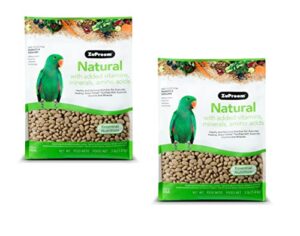
Your parrot won’t spot any artificial dyes or synthetic preservatives in ZuPreem Natural Parrot Food—just ground corn, soybean meal, vegetables like carrots and celery, plus blueberries and cranberries for natural pellet nutrition!
With 14% crude protein and 4% crude fat, this formula promotes parrot digestion, feather health, and beak strength through added vitamins (A, D3, E) and minerals (zinc, selenium, manganese).
Perfect for African Greys, Amazons, and Eclectus parrots seeking pellets with recognizable natural ingredients.
| Best For | Medium to large parrot owners who want a nutritious pellet made with natural ingredients and no artificial colors for daily feeding. |
|---|---|
| Brand | ZuPreem |
| Age Range | All Life Stages |
| Item Form | Pellet |
| Weight | 6 Pounds |
| Nutritional Focus | Vitamins, Minerals, Amino Acids |
| Primary Ingredients | Corn, Soybean, Millet |
| Additional Features |
|
- Made with real vegetables and fruits like carrots, celery, blueberries, and cranberries instead of artificial dyes
- Fortified with essential vitamins and minerals to support feather health, digestion, and beak strength
- Suitable for multiple medium-large parrot species including African Greys, Amazons, and Eclectus parrots
- Some picky eaters may refuse pellets at first and need a gradual transition period
- Not ideal for parrots with corn or soy sensitivities since these are primary ingredients
- The 6-pound size might be too much for single-bird households before expiration
Essential Nutritional Needs for Parrots
Your parrot needs more than just birdseed to thrive—they require a carefully balanced mix of macronutrients, micronutrients, and minerals that work together to keep them healthy and vibrant!
Understanding what goes into a complete parrot diet helps you make better choices at mealtime and prevents serious deficiencies down the road.
Let’s break down the essential building blocks your feathered friend needs every single day.
Proteins, Fats, and Carbohydrates
Your parrot’s engine runs on three fuel types—and getting the mix right changes everything! Macronutrient balance matters because proteins build feathers and muscle, fats power fat metabolism and deliver concentrated energy sources, while carbohydrates fuel the nervous system.
Here’s what nutritionally balanced parrot nutrition advice looks like:
- Protein: 10–16% depending on species (African parrots need less, active conures more)
- Fat: 2–10% to support energy without obesity
- Carbohydrates: Primary fuel from grains, fruits, legumes
- Dietary fiber: Essential for digestion and gut health
- Nutrient ratios: Balanced formulas prevent selective eating and deficiencies
A vital aspect of parrot care is providing a to ensure overall health and longevity.
Vitamins and Minerals
Beyond macros, your bird needs a powerhouse lineup of micronutrients! Fat soluble vitamins A, D3, E, and K protect eyes, bones, and blood, while the B complex drives energy and feather health.
Quality pellets deliver nutritionally balanced doses, preventing vitamin deficiency that shows as scaly beaks or brittle plumes.
Antioxidant benefits from vitamin E and selenium boost immunity—real parrot nutrition advice your flock deserves! Learn more about the importance of a nutritionally balanced parrot diet to support overall health.
Calcium and Phosphorus Requirements
Two minerals power bone health in your flock—calcium and phosphorus—and their ratio matters more than you think! Most parrots thrive on about 2:1 calcium to phosphorus, keeping bones strong and preventing seizures or egg-binding.
Seed-heavy diets flip this upside down (sometimes 1:10!), stealing calcium from bones. Leafy greens, quality pellets, and natural sunlight support mineral balance for lasting parrot nutrition and wellness!
Species-Specific Dietary Variations
Not all parrots eat alike—African Greys need extra vitamin A from carrots and pumpkin, while Eclectus parrots thrive on high-fiber, fresh-plant parrot diets with limited pellets. Amazons do best when pellet diets make up 60–75% of intake, and lories require specialized nectar formulas!
Tailoring parrot nutrition and feeding strategies to your bird’s species unlocks ideal avian nutrition, wellness, and longevity.
Pellets Vs. Seeds: Choosing The Right Base
Here’s the thing: pellets or seeds? It’s the biggest debate in parrot nutrition, and honestly, the answer isn’t one-size-fits-all. Your bird’s species, size, and health all play a role in what works best as their dietary foundation.
Let’s break down the pros and cons of each so you can make the right call for your feathered friend!
Advantages of Pelleted Diets
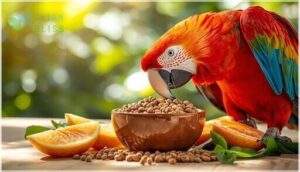
Why do so many avian vets push pellets? Because high-quality pellet diets deliver complete balanced nutrition in every bite—no more selective eating that leaves gaps! You get better nutrient control, easier portion management, and a reliable foundation for your parrot’s health. Plus, they simplify diet management while supporting long-term wellness.
| Benefit | What It Means for You | Health Impact |
|---|---|---|
| Complete nutrition | Every pellet has the same vitamins, minerals, and protein | Prevents hidden deficiencies |
| No selective feeding | Your parrot can’t pick out only favorites | Consistent daily intake |
| Weight management | Lower calories, higher nutrients than many seed mixes | Healthier body condition |
Risks of Seed-Heavy Diets
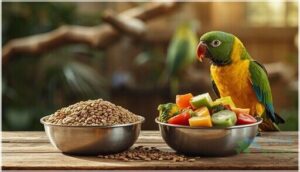
The appeal of seed is real—parrots love it—but relying on seed-heavy diets is basically malnutrition in a bowl. Seeds are high in fat and dangerously low in vitamin A and calcium, setting the stage for fatty liver disease, brittle bones, egg-binding, and immune collapse. You’re not just risking nutrient deficiency—you’re shortening your bird’s lifespan.
Seeds may be irresistible to parrots, but a seed-heavy diet is malnutrition in disguise—inviting fatty liver disease, brittle bones, and a shortened lifespan
| Health Risk | What Happens |
|---|---|
| Fatty Liver | Fat replaces healthy tissue, leading to organ failure |
| Vitamin Deficiency | Weak immunity, dull feathers, respiratory infections |
| Calcium Imbalance | Bone loss, seizures, egg-binding in females |
Best Practices for Combining Pellets and Seeds
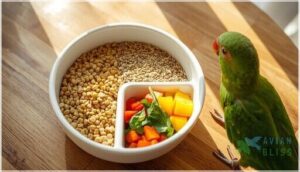
Gradually shifting your parrot to a balanced diet plan works best when you follow a clear pellet-seed ratio—aim for 60% pellets, 20% seeds, and 20% fresh foods. Start with a 50:50 mix, then reduce seeds weekly over one to three months while monitoring weight and droppings. Seed mix quality matters too; choose low-fat blends with millet and canary seed, not sunflower-heavy mixes.
| Feeding Shift Tips | Week 1–2 | Week 3–8 |
|---|---|---|
| Pellet portion | 50% of dry food | Increase to 60–70% |
| Seed portion | 50% of dry food | Reduce to 10–20% |
| Fresh foods | Introduce alongside | Maintain 20% daily |
| Nutrient supplementation | Monitor weight twice weekly | Adjust portions as needed |
Safe Fresh Foods for Parrots
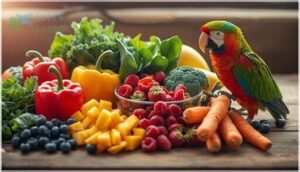
Fresh foods are where your parrot’s diet really comes alive! Fruits and veggies don’t just add variety—they deliver vitamins, minerals, and natural moisture that pellets alone can’t provide.
Let’s look at the best fresh options you can safely offer, plus how to prep them the right way.
Recommended Fruits for Parrots
Think of fresh fruit as nature’s multivitamin for your feathered friend! Offering two or three fruits daily—like mango, apple, and berries—gives you superb fruit variety while supporting vitamin balance and parrot hydration.
Bright choices such as papaya and cantaloupe deliver vitamin A for gorgeous feathers and strong immunity, plus firmer fruits like pear promote beak health through natural chewing.
Just keep fruit to 10–20% of total parrot food for ideal bird nutrition.
Nutritious Vegetables to Include
Vegetables pack more nutrient-density per calorie than fresh fruit, so you want them front and center! Leafy greens like kale and dandelion give calcium and vitamin A, while cruciferous options (broccoli, cauliflower) offer immune support and foraging fun.
- Vitamin A sources: Bright carrots, sweet potato, and pumpkin fuel feathers and eye health
- Legume benefits: Green beans and peas deliver plant protein without excess fat
- Colorful variety: Mix deep greens, oranges, and purples to cover every mineral your parrot needs for peak nutrition
Proper Preparation and Serving Tips
Fresh foods need a quick rinse under running water for 30 seconds to wash off pesticides and dirt.
Chop vegetables into fingernail-sized pieces so your parrot can grab them easily, and offer a portion about the size of their head once or twice daily—morning works best!
Remove uneaten fresh foods after two to three hours to stop bacteria from growing.
Foods and Ingredients to Avoid
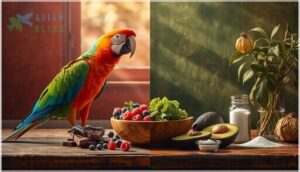
Your parrot’s safety depends on knowing what NOT to feed just as much as what to include! Some foods are downright toxic to parrots, while others contain sneaky additives or unhealthy ingredients that can cause serious health problems over time.
Let’s break down the dangerous foods and ingredients you need to keep far away from your feathered friend.
Toxic Foods (Avocado, Chocolate, Caffeine)
Avocado toxicity, chocolate poisoning, and caffeine risks are the three biggest food dangers your parrot faces!
Avocado contains persin, which can cause heart failure and death in small doses. Chocolate and caffeine overstimulate your bird’s nervous system, triggering seizures and cardiac arrest.
If your parrot eats any of these, seek emergency veterinary care immediately—toxic food signs appear fast!
Harmful Additives and Preservatives
Beyond those toxic foods, hidden synthetic additives sneak into many commercial bird foods and can harm your parrot over time!
Watch out for these harmful preservatives lurking in pellets and treats:
- BHA, BHT, and ethoxyquin – synthetic antioxidants linked to cancer (BHA is a possible human carcinogen!)
- Artificial dyes like Red 40 and Yellow 5 – contaminated with carcinogens, zero nutritional value
- Sulfur dioxide in dried fruits – triggers breathing trouble and allergic reactions
Choose foods preserved with natural vitamin E and mixed tocopherols instead!
High-Salt, High-Fat, and High-Sugar Foods
Just as dangerous as chemical preservatives? Everyday human snacks loaded with salt, fat, and sugar! Your parrot’s kidneys weren’t built to handle 180 mg of sodium from a single chip, and fatty seeds can trigger liver disease faster than you’d think.
Here’s what to watch on nutrition labels:
| Ingredient | Why It’s Harmful |
|---|---|
| High Salt | Raises blood pressure, stresses kidneys |
| Excess Fat | Causes obesity, disrupts fat metabolism |
| Added Sugar | Creates sugar addiction, spikes blood glucose |
| Processed Snacks | Combine all three risks in one bite |
| Sweetened Pellets | Hide sugar under “natural” marketing claims |
Check parrot food labels carefully and choose healthy alternatives—fresh foods, plain pellets, and vet-approved treats keep your bird’s diet and nutrition on track! Skip the pretzels and offer carrots instead.
Best Feeding Practices for Parrot Health
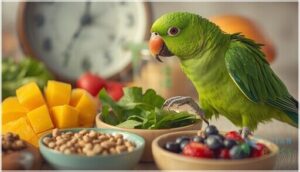
Feeding your parrot the right foods is only half the battle—how you feed them matters just as much! The best feeding practices keep your bird healthy, mentally stimulated, and thriving for years to come.
Let’s break down portion sizes, daily routines, hygiene essentials, and fun enrichment strategies that’ll make mealtime exciting for your feathered friend.
Portion Sizes by Species and Age
Your parrot’s portion isn’t one-size-fits-all! Body weight management starts with species-specific feeding: budgies thrive on 10–18 grams daily (about 10% of their weight), while cockatiels need 7–17 grams for nutrient balance.
Age-based diets matter too—juvenile parrots burn more energy growing, so they often get slightly larger portions than adults. Weighing your bird regularly helps fine-tune parrot food amounts and perfect parrot care and nutrition!
Feeding Frequency and Routine
Consistency builds healthy habits! Meal timing shapes your parrot’s dietary balance and overall well-being—most thrive on 2 to 3 main feeding schedules each day, with light foraging strategies in between to mirror wild avian diet patterns.
- Morning and late afternoon meals sync with natural daily routines and boost nutrient balance
- Frequent small portions prevent overeating and support parrot care and nutrition goals
- Foraging strategies during meals add mental stimulation while promoting bird nutrition and recipes variety
- Adjust timing for young or active parrots needing extra parrot food and treats throughout the day
Clean Water and Dish Hygiene
Fresh water isn’t optional—it’s life! Replace it daily to prevent bacterial growth, and wash bowls with hot, soapy water after each use. Weekly dish sanitizing with diluted bleach (rinsed thoroughly!) keeps hydration tips simple and effective.
Freshness checks matter: filtered water beats chlorinated tap for parrot health and hygiene. Clean bowls equal thriving birds—your pet bird care routine starts here!
Enrichment With Foraging and Treats
Wild instincts don’t disappear in captivity—that’s why foraging techniques and toy rotation keep your parrot mentally sharp! Hide pellets in puzzle feeders, paper cups, or shreddable boxes to mimic natural food-hunting. Rotate three to five foraging toys weekly for maximum behavioral benefits.
Limit healthy bird treats (unsalted popcorn, small nut pieces) to 5–10% of daily intake, and watch boredom vanish as enrichment routines transform mealtime into adventure!
Frequently Asked Questions (FAQs)
What is the best food for a parrot?
The best diet combines high-quality pellets as the foundation—about three-quarters of daily intake—with fresh vegetables and fruits filling the remaining quarter, plus clean water available constantly for peak parrot wellness.
What are the best parrot food brands?
You’ll find standout brands like ZuPreem FruitBlend Pellets, Lafeber Classic Nutri Berries, and RoudyBush Daily Bird Food Pellets delivering high-quality pellet formulations that balance parrot nutrition with species-specific dietary needs.
What is the best brand of parrot food?
Lafeber Classic Nutri Berries stands out for balanced bird nutrition facts—their fruit-coated pellets deliver essential vitamins and minerals your parrot needs for peak avian health tips and pet bird wellness without artificial junk!
What is the healthiest food for birds?
A high-quality pelleted diet paired with fresh vegetables like broccoli, carrots, and leafy greens provides balanced nutrition—not seed-heavy mixes!
Add safe fruits, nutrient supplements, and organic options for ideal avian health and wellness.
What bird food do birds like the most?
Most parrots gravitate toward naturally sweet, crunchy foods—think ripe mango, grapes, and raw carrot sticks.
Flavored pellets like ZuPreem FruitBlend and seed-nut mixes consistently win over plain options when you offer variety.
How to transition parrots to a new diet?
Many birds resist change like toddlers at dinnertime! Gradually swap 25% of their current food every two weeks, pairing new pellets with familiar favorites.
Use positive reinforcement and maintain consistent meal times for smooth dietary recommendations and shift strategies.
What are common signs of food allergies in parrots?
Watch for feather changes like plucking or dull patches, digestive issues such as loose droppings, respiratory problems including sneezing, and behavioral signs like restlessness—all key allergy symptoms affecting parrot health.
Can parrots eat homemade bird food safely?
Yes, but with caution! Homemade bird food recipes can work as supplements when you prioritize nutritional balance, avoid toxic ingredient awareness hazards like avocado, and maintain healthy feeding habits alongside quality pellets.
How does age affect a parrot’s diet?
Baby nutrition relies on hand-feeding formulas, then juveniles shift to pellets and fresh foods.
Adult diet emphasizes balanced maintenance, while senior care lowers calories.
Breeding needs boost calcium for egg production.
What are the best methods to store bird food?
Store pellets and seed mixes in airtight containers at cool temperatures under 70°F to prevent moisture, pests, and rancidity.
Practice food rotation, check for mold weekly, and keep fresh foods separate for best bird diet quality.
Conclusion
Switching to the best bird food for parrots might just be the single most life-changing decision you’ll make for your feathered companion! Those few extra minutes researching labels, prepping fresh veggies, and ditching the seed-only habit? They’re buying your parrot decades of vibrant health, glossy feathers, and that sassy personality you adore.
Your bird can’t choose what goes in their bowl—but you can. Make it count!
- https://www.birdstreetbistro.com/blogs/parrot-blog/the-vitamins-and-minerals-parrots-need-to-stay-happy-and-healthy-for-life
- https://jedds.com/products/parrot-essentials-pellets-vetafarm
- https://parrotessentials.co.uk/blog/7-toxic-parrot-foods-you-should-avoid
- https://www.kaytee.com/learn-care/small-animals/kaytee-charity-donations
- http://parrotnation.com/recipe-posts/