This site is supported by our readers. We may earn a commission, at no cost to you, if you purchase through links.
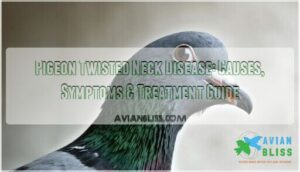 When you’re dealing with pigeon twisted neck disease, you’re likely seeing paramyxovirus (PPMV) in action.
This viral infection attacks the nervous system, causing pigeons to twist their necks at odd angles, tremble, and lose coordination.
It’s like your bird’s internal GPS got scrambled.
The virus spreads rapidly through flocks via droppings, respiratory droplets, and contaminated surfaces.
While the dramatic head-twisting looks alarming, many pigeons can recover with proper supportive care, isolation, and time.
The key lies in distinguishing PPMV from other causes like injuries or parasites.
Understanding the subtle differences between viral and mechanical causes can mean the difference between effective treatment and prolonged suffering.
This distinction is crucial for the well-being of the pigeons, and time is of the essence in providing the right care.
Table Of Contents
- Key Takeaways
- Pigeon Neck Twisting Causes
- Symptoms of Pigeon Paramyxovirus
- Diagnosing Pigeon Twisted Neck
- Treating Pigeon Twisted Neck
- Preventing Pigeon Neck Twisting
- Frequently Asked Questions (FAQs)
- What causes neck twisting in pigeons?
- Do pigeons have twisted necks?
- How to treat pigeon neck twisting?
- What is Newcastle’s disease in Jersey pigeons?
- What happens if a bird’s neck twists?
- Do pigeons have trauma?
- How to cure pigeon neck twisting?
- Can pigeons recover from paramyxovirus?
- What is the survival rate of pigeon paramyxovirus?
- How do pigeons get paramyxovirus?
- Conclusion
Key Takeaways
- You’ll recognize paramyxovirus through twisted necks, head tremors, green diarrhea, and difficulty eating – these neurological symptoms often affect multiple birds simultaneously and spread rapidly through your flock
- Isolate affected birds immediately for at least six weeks – provide supportive care with warm housing, deep feeding dishes, electrolytes, and veterinary consultation since there’s no cure for viral causes
- Prevention beats treatment every time – vaccinate at 3-4 weeks with annual boosters, maintain strict hygiene, disinfect regularly, and quarantine new birds for 30 days before introducing them
- Get proper diagnosis through veterinary testing – distinguish between viral, bacterial, parasitic, or mechanical causes since each requires different treatment approaches for effective recovery
Pigeon Neck Twisting Causes
Pigeon twisted neck disease stems from several distinct causes that you’ll need to identify for proper treatment.
Mechanical trauma, toxic exposure to substances like benzimidazoles, and infectious agents including Paramyxovirus, bacterial pathogens, and parasites such as Sarcocystis calchasi can all trigger the characteristic neck twisting symptoms in your birds.
These causes can be grouped into three main categories: mechanical, toxic, and infectious agents, each requiring a different approach to treatment.
Mechanical Causes of Twisting
Trauma Impact from accidents or Physical Stress can cause pigeon neck problems and coordination issues.
Head injuries, Neck Injury from collisions, or Spinal Damage affect your bird’s balance and movement.
Toxic Exposure to substances like benzimidazoles also triggers pigeon twisted neck symptoms.
These mechanical causes create neurological damage, leading to pigeon balance loss and abnormal head positioning without infectious agents being involved.
Pigeon owners should be aware of viral disease causes to take preventive measures for their birds.
Infectious Causes of Twisting
Unlike mechanical trauma, infectious agents pose a more complex threat to your pigeons’ neurological health.
Paramyxovirus represents the most significant viral transmission risk, spreading rapidly through fecal contamination and direct contact between birds.
Bacterial infections can migrate from respiratory systems to the central nervous system, while parasitic diseases like Sarcocystis calchasi target neural pathways.
These pigeon neurological diseases often strike multiple birds simultaneously, making early identification critical for effective parasite control and flock protection.
Understanding avian head tilting is essential for recognizing the symptoms and treating the condition effectively, which is key to flock protection.
Paramyxovirus Transmission
Paramyxovirus spreads like wildfire through pigeon flocks via direct contact and contaminated environments.
Paramyxovirus spreads rapidly through direct contact and contaminated surfaces in pigeon flocks.
You’ll find the virus in infected birds’ saliva, droppings, and respiratory secretions. Shared water sources, feeding areas, and equipment create perfect transmission highways.
The virus survives weeks on surfaces, clothing, and transport crates, making disease control challenging without strict pigeon hygiene protocols.
Effective disease management requires understanding of pigeon paramyxovirus to prevent outbreaks.
Symptoms of Pigeon Paramyxovirus
You’ll recognize paramyxovirus in your pigeon when neurological and digestive symptoms appear together, often affecting multiple birds simultaneously due to the disease’s highly contagious nature.
The twisted neck position becomes the most obvious sign, but you’ll also notice green diarrhea, trembling, and difficulty eating that can quickly lead to starvation if left untreated.
Clinical Signs of Neck Twisting
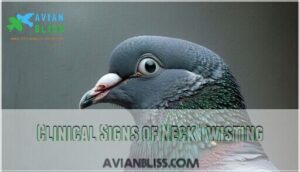
Twisted-neck syndrome manifests through distinctive clinical signs that you’ll recognize immediately.
Your pigeon’s twisted neck signals immediate neurological distress requiring urgent attention.
Your pigeon’s neck twisting into unnatural positions, including the characteristic "star gazing" posture where the head tilts skyward, signals neurological distress.
Head tremors accompany this torticollis, while eye discharge creates visible crusting around the orbital area.
These pigeon neck problems progress rapidly, making early identification essential for effective intervention.
Nervous System Symptoms
After spotting classic neck twisting, you’ll often see more troubling neurological signs.
Pigeon wry neck, head tremors, and pigeon head tilt reflect nerve damage from brain infection.
Birds may circle, stagger, or lose balance—classic pigeon coordination issues.
Severe cases show seizures, partial paralysis, or persistent ataxia.
These pigeon nervous system symptoms can linger, making pigeon twisted neck disease a real test for any flock.
Digestive System Symptoms
Gastrointestinal distress hits hard when pigeon twisted neck disease strikes your birds.
You’ll notice vomiting causes dehydration quickly, while green-colored diarrhea becomes a telltale sign of paramyxovirus infection.
Digestive issues manifest as polyuria and polydipsia, creating watery droppings that complicate fecal analysis.
These gut health problems weaken infected pigeons substantially, making proper supportive care critical for recovery.
Understanding the viral infection routes is essential to prevent the spread of disease among birds.
Diagnosing Pigeon Twisted Neck
When you suspect pigeon twisted neck disease, getting an accurate diagnosis requires working with an avian veterinarian who can perform differential diagnosis to determine the exact cause.
Quick tests are available for paramyxovirus detection, and blood tests can confirm PPMV antibodies to provide definitive results.
Differential Diagnosis Methods
When you suspect twisted neck disease in your pigeon, proper diagnostic tests become your roadmap to recovery.
Veterinarians use clinical exams to observe pigeon circling patterns and neurological responses. Medical imaging helps rule out trauma-related causes, while lab results distinguish between pigeon viral infection and bacterial diseases.
Case studies show differential diagnosis requires examining pigeon disease symptoms systematically, comparing findings against known conditions to pinpoint the exact cause of twisted neck disease. This process is crucial for effective treatment and recovery, emphasizing the importance of proper diagnostic tests.
Quick Tests for Paramyxovirus
Rapid antigen tests revolutionize paramyxovirus detection, delivering results within 15-30 minutes using diagnostic tools that identify viral proteins.
These test kits offer high sensitivity for pigeon paramyxovirus screening, enabling veterinarians to quickly diagnose twisted neck disease before pigeon circling worsens.
Lab analysis through rapid testing provides immediate answers when paramyxovirus symptoms appear, making viral detection efficient and accessible.
Blood Tests for PPMV Antibodies
When blood tests reveal PPMV antibodies, you’ll get concrete answers about your pigeon’s condition and vaccination status.
Blood sampling provides definitive serology results that quick tests might miss, with the presence of PPMV antibodies established through postal testing services.
- PPMV diagnosis through antibody testing confirms exposure to pigeon paramyxovirus
- Blood test results help determine vaccine efficacy in your flock
- Serology results distinguish between natural infection and vaccination response
Understanding the avian health issues is essential for effective treatment and prevention of pigeon diseases.
Treating Pigeon Twisted Neck
When treating a pigeon with twisted neck, you’ll need to focus on supportive care, targeted medications, and strict isolation to prevent disease spread.
This is vital to tailor your approach based on the underlying cause, as viral, bacterial, and parasitic conditions each require specific interventions for ideal recovery.
Supportive Care for Infected Pigeons

Providing effective pigeon supportive care requires immediate cage management adjustments.
You’ll need calming measures through soft flooring and controlled lighting to reduce stress during neck twisting treatment. Proper pigeon cage equipment, including pigeon cage systems, is essential for recovery.
| Care Component | Implementation | Benefits |
|---|---|---|
| Cage Setup | Warm environment, soft flooring, brick perch | Prevents injury, aids comfort |
| Feeding Support | Deep seed dishes, narrow water containers | Enables eating despite twisted neck |
| Medical Care | Electrolyte therapy, nutrient supplements | Supports pigeon rehabilitation recovery |
| Monitoring | Regular veterinary consultation, isolation protocol | Guarantees proper pigeon paramyxovirus management |
Medications for Parasitic Conditions
When parasitic conditions cause neck twisting in your pigeon, specific antiparasitics target the root problem effectively.
Veterinary diagnosis determines which pigeon medication works best for your bird’s particular parasitic infection.
Treatment options include:
- Parasite Drugs – Target internal worms and protozoa causing neurological symptoms
- Antiworm Meds – Eliminate roundworms and tapeworms affecting the nervous system
- Fungal Treatments – Address aspergillosis infections spreading to brain tissue
Avian medications require precise dosing for pigeon health problems, making professional guidance essential for successful pigeon parasitic conditions treatment.
Vaccination and Prevention

While paramyxovirus has no cure, prevention strategies offer your best defense against pigeon twisted neck disease.
Inactivated vaccines provide over 95% protection when administered at 3-4 weeks, with annual boosters maintaining immunity.
You’ll need strict biosecurity measures including 30-day quarantine for new birds and regular loft disinfection.
Vaccination against paramyxovirus combined with proper disease control creates effective prevention strategies for your flock’s health.
Understanding neurological disorder causes is vital for developing an extensive prevention plan.
Preventing Pigeon Neck Twisting

Prevention serves as your strongest defense against pigeon neck twisting, requiring consistent application of proven biosecurity protocols and vaccination strategies.
You’ll need to establish thorough hygiene standards, implement strict isolation procedures, and maintain proper vaccination schedules to effectively protect your flock from paramyxovirus and other infectious agents that cause neurological symptoms, utilizing proven methods and vaccination strategies.
Maintaining Hygienic Loft Conditions
A clean pigeon loft serves as your first line of defense against twisted neck disease and other health threats.
Regular sanitation practices create an environment where harmful pathogens can’t establish themselves, protecting your flock’s wellbeing. Effective loft maintenance relies on proper loft cleaning tools to prevent disease.
- Daily loft cleaning removes droppings and contaminated feed that harbor Paramyxovirus
- Weekly disinfection methods using approved solutions eliminate lingering disease organisms
- Proper ventilation systems prevent moisture buildup that encourages bacterial growth
- Strategic pigeon hygiene protocols including clean water systems reduce transmission risks
Vaccination and Biosecurity Measures
Beyond maintaining spotless loft conditions, you’ll need robust vaccination schedules and biosecurity protocols to protect your flock.
Inactivated pigeon paramyxovirus vaccines provide 100% protection when administered in two doses, four weeks apart. Start vaccinating at four weeks of age with annual boosters.
Implement strict biosecurity measures including controlled loft access, routine disinfection, and quarantining new birds for two weeks before introducing them to your existing flock.
Effective pigeon health relies on proper vaccine administration techniques to prevent disease outbreaks, ensuring the overall well-being of your pigeons.
Isolating Infected Pigeons
Most infected pigeons need immediate quarantine for at least six weeks to prevent spreading pigeon paramyxovirus to healthy birds.
Effective isolation techniques require separate housing with proper ventilation and strict biosecurity protocols.
Your disease containment strategy should include dedicated feeding equipment and hand-washing stations.
Remember, pigeon segregation isn’t just about physical barriers—it’s your first line of defense against twisted neck disease outbreaks.
Frequently Asked Questions (FAQs)
What causes neck twisting in pigeons?
When twisted necks strike your pigeons like a broken compass, you’re facing paramyxovirus, bacterial infections, parasites like Sarcocystis, or toxic exposure from substances like benzimidazoles affecting their nervous system.
Do pigeons have twisted necks?
Yes, pigeons can develop twisted necks, though it’s not their natural state.
You’ll notice affected birds holding their heads at odd angles, spinning in circles, or struggling to eat properly due to neurological damage from infections.
How to treat pigeon neck twisting?
Isolate your bird immediately in a warm, quiet cage with soft flooring. Provide deep dishes for seeds and water to prevent drowning. Consult an avian veterinarian for supportive care.
What is Newcastle’s disease in Jersey pigeons?
Newcastle’s disease affects Jersey pigeons through paramyxovirus transmission, causing neurological symptoms like neck twisting, paralysis, and greenish diarrhea. You’ll notice staggering, difficulty eating, and potential death without proper veterinary intervention.
What happens if a bird’s neck twists?
When a bird’s neck twists unnaturally, it’s experiencing neurological dysfunction that disrupts balance, coordination, and feeding ability.
You’ll notice difficulty eating, drinking, and flying as the bird loses normal head positioning and spatial awareness.
Do pigeons have trauma?
Trauma can affect pigeons through physical injuries, toxic exposure, or psychological stress from predators. You’ll notice behavioral changes, disorientation, or physical symptoms when they’ve experienced traumatic events requiring veterinary attention.
How to cure pigeon neck twisting?
Unfortunately, you can’t cure pigeon neck twisting caused by Paramyxovirus—there’s no specific treatment.
However, you can provide supportive care: isolate the bird, offer electrolytes, vitamins, and deep feeding dishes to help recovery.
Can pigeons recover from paramyxovirus?
Like a phoenix rising from ashes, you’ll find that pigeons can recover from paramyxovirus with proper supportive care.
Recovery takes several months with isolation, electrolytes, and veterinary monitoring, though some neurological symptoms may persist permanently, which can be a significant consideration for recovery.
What is the survival rate of pigeon paramyxovirus?
Mortality rates vary by transmission route, ranging from 33-100%.
With adequate supportive care, mortality typically stays under 5%, making proper nursing and isolation essential for your bird’s survival during this challenging illness.
How do pigeons get paramyxovirus?
Picture contaminated droplets dancing through the air like invisible daggers—pigeons contract paramyxovirus through direct contact with infected birds.
Contaminated water sources, dirty transport cages, and fecal matter from sick pigeons are also means by which the disease spreads rapidly, acting like invisible daggers.
Conclusion
Like a puzzle missing pieces, pigeon twisted neck disease challenges you to identify its cause—mechanical or infectious.
Recognizing symptoms such as torticollis, tremors, or digestive changes enables swift intervention.
By isolating affected birds, maintaining strict hygiene, and employing diagnostic tests, you reduce transmission risks.
Supportive care and targeted treatment improve recovery odds.
Vaccination and biosecurity remain your best defense.
With vigilance and evidence-based action, you’ll protect your flock from the disruptive effects of pigeon twisted neck disease.
- https://www.justanswer.com/bird-vet/mts4p-pigeon-neck-twisted-found-street-day-ago.html
- https://birdcareco-shop.com/neck-twisting-and-poor-flying/
- https://www.thepoultrysite.com/articles/new-paramyxovirus-in-pigeons
- https://www.daera-ni.gov.uk/articles/avian-avulavirus-1-aavv-1-pigeon-paramyxovirus
- https://www.gardenwildlifehealth.org/portfolio/pigeon-paramyxovirus-1/