This site is supported by our readers. We may earn a commission, at no cost to you, if you purchase through links.
Most bird owners fill the bowl with seeds and feel good about it. Seeds look natural, birds love them, and the dish empties fast—so it seems like everything’s working.
But that eagerness at the feeder masks a slow, quiet problem: seeds alone can’t sustain a healthy bird. They’re calorie-dense and fat-heavy, but they leave critical gaps in vitamins, minerals, amino acids, and antioxidants your bird needs every day.
A parrot living on sunflower seeds is a little like a person surviving on crackers—alive, but running on fumes. Understanding the essential nutrients missing from a bird seed diet is the first step toward turning things around.
Table Of Contents
- Key Takeaways
- Why Seed-Only Diets Fall Short
- Vitamins Missing From Bird Seed
- Mineral Imbalances Seed Diets Cause
- Protein and Amino Acid Gaps
- Missing Fats, Fiber, and Phytochemicals
- Signs Your Bird Lacks Nutrients
- Fixing Bird Seed Nutrition Gaps
- Frequently Asked Questions (FAQs)
- What are the 7 common nutrient deficiencies?
- What do birds eat if you don’t have bird seed?
- Which bird species thrive best on pellet diets?
- How does gut bacteria affect nutrient absorption in birds?
- Are organic seeds nutritionally superior to conventional ones?
- How does age affect a birds nutritional requirements?
- Conclusion
Key Takeaways
- Seeds are calorie-dense but nutritionally hollow, leaving your bird short on Vitamin A, D3, calcium, omega-3s, and essential amino acids that keep its body running properly.
- The calcium-to-phosphorus imbalance in seed-heavy diets quietly pulls minerals from your bird’s bones over time, raising the risk of fractures, soft eggshells, and metabolic bone disease.
- Visible signs like dull feathers, scaly feet, lethargy, and overgrown beaks often trace back to nutrient gaps from a seed-only diet, and catching them early makes a real difference.
- Transitioning gradually to pellets, rotating fresh vegetables daily, and providing safe UVB light are the most effective steps to close the nutritional gaps seeds can’t fill.
Why Seed-Only Diets Fall Short
Seeds might seem like a complete meal for your bird, but they’re missing more than you’d think. The gaps in a seed-only diet go beyond just vitamins — they touch on fat balance, minerals, and even species-specific needs. Here’s what’s actually falling short.
Those gaps add up fast, and understanding which vitamins birds actually need helps explain why a seed bowl alone keeps falling short.
Seeds Are Nutrient-Incomplete
Most bird owners don’t realize that seeds, while convenient, are fundamentally incomplete foods. They’re missing key vitamins, amino acids, fiber, and antioxidants your bird needs daily.
A seed-only diet creates quiet, cumulative dietary deficiencies — ones that often don’t show up until your bird’s health has already taken a hit. This is because many seeds lack the nine essential amino acids required for health.
High Fat, Low Balance
Seeds are calorie-dense but nutritionally hollow. Sunflower seeds, a staple in most mixes, pack heavy fat loads that push calorie surplus management out of reach fast. Your bird can overeat fat while still starving for micronutrients.
Seeds let birds overeat fat while silently starving for the nutrients that actually matter
Here’s what a seed-heavy diet disrupts:
- Fat-protein ratio skews badly, leaving muscles underfed.
- Omega-6 to Omega-3 balance tips toward inflammation.
- Liver health strategies become urgent when fatty acids accumulate unchecked.
Without a balanced diet, weight gain prevention becomes nearly impossible.
Poor Calcium-To-Phosphorus Ratio
The fat problem bleeds directly into mineral imbalance. Seeds are loaded with phosphorus but offer almost no calcium, and that gap matters more than most owners realize.
A poor calcium-to-phosphorus ratio triggers a parathyroid hormone surge, pulling calcium from bones just to keep blood levels stable. Over time, that quiet process quietly dismantles long-term bone health from the inside out.
Limited Antioxidant Variety
Mineral loss isn’t the only quiet damage happening. Antioxidant gaps are just as serious, and seed-only diets fall short here in ways most owners never consider.
Seeds simply don’t deliver carotenoid diversity, flavonoid variety, or the polyphenol sources birds need to defend against oxidative stress. What’s missing matters:
- Carotenoids like beta-carotene and lutein come from colored plants, not seeds
- Flavonoid variety narrows greatly without fresh fruits and vegetables
- Antioxidant metabolism depends on having diverse parent compounds entering the body
- Vitamin E isoform coverage becomes skewed toward whatever the seed carries
Species-Specific Diet Risks
Not every bird faces the same risks on a seed-only diet. Species-specific nutrition matters enormously here.
A toucan accumulating iron differs entirely from a budgie missing iodine. Calcium breeding demands spike for prolific layers, while lories face fat metabolism challenges sunflower-heavy mixes worsen.
Understanding your bird’s natural diet is the first step toward filling the right gaps.
Vitamins Missing From Bird Seed
Seeds are pretty low on vitamins — lower than most bird owners realize. A bird living on seeds alone is quietly running short on several nutrients that keep its body working as it should. Here are the key vitamins your bird’s seed bowl is most likely missing.
Vitamin a Deficiency Risks
Vitamin A deficiency is one of the most common and damaging consequences of seed-only diets. Seeds simply don’t deliver enough of this essential nutrient. Without it, your bird can develop vision impairment early on, progressing toward night blindness and, in severe cases, full blindness. The cornea and surrounding eye tissues deteriorate quietly, often before you notice anything is wrong.
Beyond the eyes, Vitamin A deficiency weakens the mucous membranes lining your bird’s respiratory and digestive tracts. That breakdown opens the door to immune suppression, making infections far more likely and harder to recover from. Reproductive failure and growth retardation are serious risks too, particularly in younger or breeding birds with higher nutrient absorption demands.
Vitamin D3 and Calcium Absorption
Think of Vitamin D3 as the key that unlocks calcium’s door. Without it, your bird can’t absorb calcium properly — no matter how much is present in the diet. Active Vitamin D triggers intestinal calcium transport through specialized pathways, including calcium binding protein synthesis, to move minerals from the gut into the bloodstream, supporting bone mineralization throughout your bird’s life.
Seeds provide virtually none of this. Birds synthesize D3 through UVB lighting exposure, so indoor birds kept away from natural sunlight face a compounding problem: a poor calcium-phosphorus ratio combined with impaired absorption through the vitamin D receptor pathway. The result is weakened bones, soft eggshells, and escalating skeletal damage over time.
Vitamin E for Reproduction
Few nutrients quietly do as much for your bird’s breeding success as Vitamin E. It acts as a reproductive antioxidant, shielding egg cells and sperm from oxidative damage that seed-only diets simply can’t prevent.
Since seed-heavy diets are often the hidden culprit, understanding how bird seeds affect overall bird health helps you make smarter choices before deficiencies quietly take hold.
Without it, avian reproductive health suffers — from poor egg quality to reduced sperm motility. Adding a reliable source through nutritional supplementation makes a real difference.
Vitamin K and Blood Clotting
Blood clotting sounds like a background function — until it fails. Vitamin K deficiency prevents proper clotting because it drives gamma carboxylation, a process that activates the specific proteins your bird’s liver needs to stop a wound from bleeding freely. Seed-only diets rarely supply enough.
- Clotting factor activation depends on factors II, VII, IX, and X
- Vitamin K recycling keeps the coagulation cycle running continuously
- Protein C regulation prevents dangerous over-clotting
Without consistent vitamin supplementation, your bird’s hemostatic balance suffers quietly.
B Vitamins and Biotin
B vitamins and biotin are water-soluble essential nutrients your bird burns through daily — and can’t store. They act as B vitamin coenzymes in energy metabolism, nerve function, and amino acid processing. Biotin’s carboxylase role facilitates fatty acid synthesis and gluconeogenesis.
Bird seeds are inconsistent sources, so micronutrient deficiency here is common. Without regular vitamin supplementation, enzyme pathways quietly stall.
Mineral Imbalances Seed Diets Cause
Vitamins aren’t the only concern with seed-heavy diets — minerals tell an equally important story. What your bird eats every day shapes bone strength, thyroid function, feather quality, and more. Here are the key mineral imbalances a seed-only diet can quietly create.
Calcium Deficiency Symptoms
Calcium deficiency hits birds fast and hard. Without enough calcium, your bird risks soft, fragile eggshells, painful muscle cramps, and even seizures.
Seeds offer almost no usable calcium, and their high phosphorus content actively disrupts calcium absorption. A cuttlebone or calcium supplement helps, but only if your bird’s overall calcium-to-phosphorus ratio stays balanced.
Iodine and Thyroid Health
Seed-based diets are nearly iodine-free, and that creates a real problem for thyroid function. Without enough iodine, your bird’s thyroid can’t produce adequate hormone, leaving metabolism sluggish and growth disrupted.
One visible result is goiter — a swollen thyroid that can cause wheezing. A mineral supplement or iodine block goes a long way toward preventing that.
Zinc for Feathers
Zinc quietly keeps feathers healthy, and seed-only diets rarely deliver enough of it. Zinc deficiency disrupts feather follicle regeneration, leading to poor feather coverage and skin abnormalities.
Here’s what low zinc looks like in practice:
- Dull, slow-growing feathers
- Patchy or uneven plumage
- Scaly skin near follicles
- Poor feather recovery after molting
- Weakened immune response alongside feather loss
Zinc supplementation—including adding it to drinking water—promotes recovery noticeably.
Phosphorus Overload Problems
Most seeds carry high phosphorus levels, and that creates a silent problem. When the calcium-to-phosphorus ratio tips out of balance, your bird’s body struggles to regulate minerals properly.
Over time, this strain can trigger metabolic bone disease, weakening bones and raising fracture risk — especially in species already prone to dietary imbalances.
Iron-Sensitive Bird Species
Not all birds handle iron the same way. Species like toucans and mynah birds are especially prone to Iron Storage Disease, where excess iron accumulates in the liver and causes serious organ damage.
Even seed-only diets with moderate iron levels can pose a risk, since bioavailable iron is absorbed more readily than expected — making a Low-Iron Diet Plan essential for these sensitive species.
Protein and Amino Acid Gaps
Seeds are surprisingly low in protein, and what little they offer often lacks the amino acids your bird actually needs.
Most people don’t realize that protein gaps can show up in ways that look like completely different problems — dull feathers, muscle loss, even mood changes. Here’s what’s missing and why it matters.
Adult Bird Protein Needs
Protein doesn’t get enough attention in bird nutrition conversations, but it matters more than most owners realize.
Adult maintenance protein usually falls between 10% and 20% on a dry-matter basis, depending on species and activity level. Seed-only diets rarely hit that range consistently, and protein bioavailability varies — even when total protein looks adequate, poor digestibility means your bird may absorb far less than the numbers suggest.
Breeding Bird Protein Needs
During breeding season, your bird’s protein requirements can nearly double. Seed-only diets sitting at 8–12% crude protein simply can’t meet the demand — breeding may require up to 20%.
- Egg formation pulls heavily from dietary amino acids
- Chick tissue growth demands sustained daily intake
- Protein quality matters as much as total amount
Poor amino acid balance means even moderate protein levels fail.
Lysine and Muscle Health
Lysine bioavailability makes all the difference in muscle health. Even if your bird eats enough total protein, a lysine shortfall quietly limits protein deposition — the process that builds and repairs muscle tissue. Seed-only diets often create this gap. Without adequate lysine, muscle maintenance slows, recovery after stress suffers, and amino acids from other sources go to waste.
| Lysine Status | Effect on Muscle Health |
|---|---|
| Adequate | Promotes full protein deposition and growth rate |
| Low intake | Slows muscle protein rebuilding |
| Deficient | Reduces lean mass and muscle function |
| Severely low | Causes visible muscle tissue loss |
| Corrected | Restores recovery after stress |
Methionine for Feather Quality
Feathers are pure keratin — and keratin depends on sulfur amino acids like methionine. Seed-only diets run short here, slowing feather growth rate and causing rough, sparse plumage.
Methionine matters because it:
- Drives keratin synthesis directly
- Promotes follicle development during early growth
- Restores feather quality when nutrient balance is corrected
Methionine supplementation closes the amino acid gap that seeds simply can’t fill.
Tryptophan and Bird Behavior
Most bird owners don’t realize that a tryptophan deficiency can quietly shift how their bird thinks and acts. This amino acid fuels serotonin production, and without enough of it, feeding behavior, aggression modulation, and even cognitive performance can all drift in unpredictable directions.
Seed-only diets are rarely adequate here, leaving a behavioral gap that’s easy to miss until it becomes a real problem.
Missing Fats, Fiber, and Phytochemicals
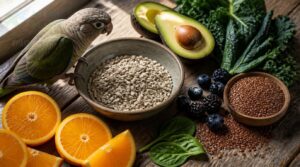
Seeds aren’t just low on vitamins and protein — they’re also missing some of the fats, fiber, and plant compounds your bird genuinely needs to thrive. These gaps are easy to overlook because they don’t always show up as obvious symptoms right away. Here’s what’s actually absent from a seed-heavy diet and why it matters.
Omega-3 Versus Omega-6 Balance
Most seed mixes are loaded with omega-6 fatty acids and offer almost no omega-3. That imbalance matters because both fats compete for the same enzymes during conversion, so high omega-6 intake crowds out omega-3 pathways.
Over time, seed-only diets can push your bird’s system toward a more pro-inflammatory state, affecting skin quality, feather condition, and immune response.
Sunflower Seed Fat Concerns
Sunflower seeds are a favorite for most birds, but their fat caloric density is worth watching closely. At roughly 584 calories and 51g of fat per 100g, they’re calorie-packed — and seed-only diets built around them can quietly push your bird toward obesity risk and metabolic strain before you notice any obvious signs.
- Fat caloric density makes overfeeding easy when sunflowers dominate the bowl
- Seed fat rancidity becomes a real concern if stored in warm or humid conditions
- Omega-6 fatty acids already run high, adding more fat without balance worsens the ratio
- Gut motility slows when high-fat feeding replaces fiber-rich fresh foods
- Imbalanced diets heavy in one fat source reduce variety of protective plant compounds
Poor storage worsens things further — seed fat rancidity reduces palatability and can cause digestive upset, quietly compounding the effects of an already unbalanced fatty acid profile.
Carotenoids for Plumage
Color fades quietly on seed-only diets. Birds can’t make carotenoids — they depend entirely on dietary carotenoids from fresh, pigment-rich foods. Without them, carotenoid deposition into growing feathers drops, shifting plumage toward dull, washed-out tones.
Since color also signals health through condition-dependent coloration, a faded bird isn’t just less vibrant — it’s showing you something real.
Fiber for Digestion
Plumage isn’t the only thing that suffers quietly on seed-only diets. Gut health takes a hit too.
Seeds are naturally low in dietary fiber, and that gap shows up in your bird’s digestion. Without enough soluble and insoluble fiber, gut transit slows, stool hardens, and the beneficial bacteria that depend on fermentable fiber lose their primary food source.
Plant Antioxidants Birds Need
What seeds simply can’t offer is antioxidant diversity. Fresh fruits, leafy greens, and vegetables supply carotenoids, anthocyanins, and polyphenols your bird needs for immune support, plumage quality, and cellular protection.
Berries are especially valuable — birds naturally seek out deeply pigmented fruits rich in anthocyanins. These compounds, alongside vitamin E and carotenoids from orange produce, work together in ways no seed mix can replicate.
Signs Your Bird Lacks Nutrients
Your bird can’t tell you something’s wrong, but their body usually can. Nutritional gaps tend to show up in ways you can spot during daily handling or routine observation. Here are the most common signs to watch for.
Dull or Broken Feathers
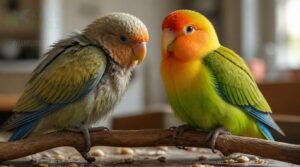
Your bird’s feathers are one of the clearest windows into their overall health. Dull, faded plumage is often the first visible sign that something’s off nutritionally. On a seed-only diet, vitamin A deficiency and protein deficiency are common culprits — both directly impair feather quality and slow proper molting support.
Watch for stress bars, those faint horizontal lines crossing a feather’s shaft. They signal that growth was interrupted — usually by poor nutrition during that molt cycle. Barbule alignment breaks down too, leaving feathers looking ruffled or rough rather than smooth and sleek. Environmental toxin impact can worsen this further, irritating skin and triggering feather-destructive behavior. Restoring feather sheen restoration starts with fixing what’s missing at the root.
Scaly Feet or Beak
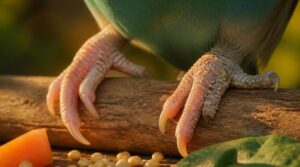
Scaly patches on your bird’s feet or beak are a red flag worth paying attention to. Two causes show up most often: vitamin A deficiency from seed-only diets, and Knemidokoptes mite infestation, where mites burrow into keratin tissue around the beak, nostrils, and legs.
Here’s how to tell them apart and what to watch for:
- Mite-related beak crusting often produces a honeycomb-textured buildup around the corners of the beak and nostrils, especially in budgies and finches.
- Scaly leg mite signs appear as white, powdery, or crusty encrustations lifting away from the legs and toes.
- Nutrition-related dry flaking usually appears more evenly distributed — dry, flaky skin without the raised crust pattern typical of mite damage.
- Deformity risk increases when either condition goes untreated, sometimes leaving permanent beak or leg deformities even after treatment.
- Calcium absorption gaps and low vitamin A together weaken keratin integrity, making skin and structural tissue more vulnerable to both irritation and infection.
Don’t guess — a vet can confirm mites through a simple skin scraping. For nutritional causes, gradually switching to pellets and adding fresh vegetables rich in beta-carotene promotes healthy keratin from the inside out.
Lethargy and Irritability
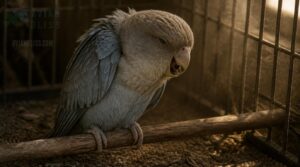
A lethargic bird that snaps when approached isn’t just having a bad day — it may be signaling nutrient-driven distress.
Seed-only diets can cause energy fluctuations tied to poor glucose regulation, pushing birds toward sluggish inactivity one moment and irritability the next. Deficiencies in vitamin A, vitamin D, and protein all contribute to this stress response, quietly disrupting mood regulation before more obvious signs appear.
Overgrown Beak or Nails
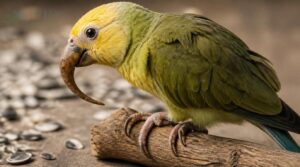
An overgrown beak or nails aren’t just cosmetic — they’re often the body’s way of flagging something deeper.
Seed-only diets link directly to this problem. Poor calcium, vitamin A deficiency, and protein deficiency all affect keratin regulation, which controls how the beak and nails grow. When nutrition falls short, growth can outpace natural wear.
Watch for these warning signs:
- Beak tip curving downward, crossing in front of the lower beak
- Nails becoming sharply pointed or hooked, making perching uncomfortable
- Beak length visibly longer than healthy birds of the same species
- Gradual changes only visible through regular growth monitoring with photos over time
Underlying medical causes like liver disease, mites, or fungal infection often accompany an overgrown beak, so trimming alone isn’t enough. Beak trimming techniques require a vet — improper cuts risk bleeding or misalignment.
For nails, perch surface selection matters enormously. Natural wood perches with varied widths offer better nail wear solutions than uniform plastic dowels. Even so, persistent overgrowth warrants a clinical evaluation.
Appetite and Dropping Changes
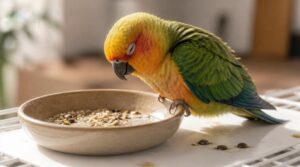
Appetite and droppings tell you a lot.
On a seed-only diet, birds may eat normally yet still lose condition — the seeds fill the stomach without meeting real nutritional needs. When essential nutrients are missing, appetite often drops further, and droppings turn inconsistent or darker. Both changes together signal it’s time for a vet.
Fixing Bird Seed Nutrition Gaps
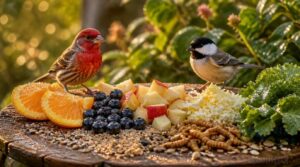
The good news is that most seed-diet gaps are fixable with a few consistent changes. You don’t need to overhaul everything at once — small, steady shifts make a real difference. Here’s where to start.
Transition Gradually to Pellets
Switching your bird off seed-only diets cold turkey rarely works — and often backfires. Start with a 25% pellet, 75% seed mix, keeping pellets available between meals for free-choice sampling. After one week, reduce seeds by 10% and keep adjusting in gradual steps. Only move forward once you confirm your bird is actually eating the pellets.
Key steps for a smooth dietary shift:
- Mix pellets into seeds at every meal so pellets feel familiar, not foreign
- Reduce seeds by 10% every one to two weeks, not all at once
- Offer pellets between meals so your bird can explore them without pressure
- Watch actual intake before advancing — acceptance monitoring protects against refusal
Patience here pays off. A balanced diet built around essential nutrients takes weeks to establish, and that’s perfectly fine.
Add Fresh Vegetables Daily
Once pellets are gaining ground in the bowl, fresh vegetables become your next best move. Daily veg rotation fills the nutrient gaps seeds and pellets alone can’t fully cover.
Leafy greens, carrots, and other colorful veg choices each bring different carotenoids, antioxidants, and minerals — rotating them expands your bird’s veg nutrient spectrum without much effort.
Use Supplements Carefully
Fresh vegetables cover a lot of ground, but sometimes gaps still remain — and that’s where supplements come in. Use them carefully, though. Supplements work best when they’re filling a confirmed gap, not just added "just in case," which can tip the balance toward over-supplementation risks.
- Follow supplement dosage guidelines — dose by species and body weight, not guesswork.
- Choose third-party verified products to confirm label accuracy and screen for contaminants.
- Use age-specific formulas — breeding birds and juveniles have different needs than adults.
- Coordinate vet-supervised use when your bird is unwell or already on a seed-only diet with known nutritional deficiencies.
Fat-soluble vitamins accumulate in the body, so stacking multiple supplements can quietly cause toxicity. Dietary balance — not volume — is the real goal.
Provide Safe UVB Exposure
Supplements handle internal gaps, but vitamin D3 is one nutrient your bird’s body can only produce through light. That’s where UVB lighting becomes part of the daily routine.
A proper UVB lamp setup emits wavelengths between 280–315 nm. Position it 12–18 inches away and limit sessions to 20–30 minutes daily to keep exposure mild without risking skin damage.
Track Weight Weekly
Weight is one of the clearest windows into your bird’s health. A weekly weighing routine using a gram scale catches early drops before they become serious problems. Weigh at the same time each day, on the same surface, to keep readings comparable.
Long-term weight records help you spot whether a seed-only diet or nutritional deficiencies are quietly taking a toll.
Frequently Asked Questions (FAQs)
What are the 7 common nutrient deficiencies?
Seeds look wholesome, yet they quietly starve your bird. The 7 common deficiencies are Vitamin A, Vitamin D3, Vitamin E, Iodine, Omega-3, Protein, and essential fatty acids — each silently undermining health.
What do birds eat if you don’t have bird seed?
Birds can eat mealworms, insects, and suet when seed runs out. Sliced fruit, berries, and plain cooked rice also work well. Even sugar-water feeders keep hummingbirds nourished between seed refills.
Which bird species thrive best on pellet diets?
Ironically, the pickiest eaters often thrive most. Parrots and doves adapt well to pellet diets, getting consistent vitamins and minerals per bite — something seeds simply can’t guarantee.
How does gut bacteria affect nutrient absorption in birds?
Your bird’s gut isn’t just a passageway — it’s a living ecosystem. Gut flora directly shapes how well nutrients get absorbed, making avian gastrointestinal health far more influential than most bird owners realize.
Are organic seeds nutritionally superior to conventional ones?
Organic seeds may offer slightly higher antioxidant levels, but they don’t fix core nutritional gaps. Vitamins, minerals, and amino acids remain insufficient regardless of farming method. Diet balance matters far more than certification.
How does age affect a birds nutritional requirements?
Age quietly rewrites the rules. Digestive Efficiency Decline means older birds absorb less from the same food, while younger birds in growth or breeding phases demand far more protein, calcium, and antioxidants than a standard diet commonly provides.
Conclusion
A ship running on half its fuel can still leave the dock—but it won’t complete the voyage. Seed bowls work the same way. The essential nutrients missing from a bird seed diet are exactly what separate a bird that merely survives from one that genuinely thrives.
Small, deliberate changes—pellets, fresh greens, safe sunlight—steadily close those gaps over time. Your bird can’t tell you what it’s missing. But now, you finally can act.